The Railwayman

Again this year, I know I’ll receive warm hugs and kisses from my daughters in recognition of yet another Father’s Day, the fifty-first such occasion.  It never grows old.

We fathers grow old, however, despite our best efforts.  And in so doing, we lose our own fathers as they board the last train to glory, to borrow from Arlo Guthrie.  My dad departed the station twenty years ago, but he remains with me almost daily in my reveries.  And never more so than on Father’s Day.

When I was a young boy, he would take me to local railroad crossings to watch the big steam locomotives and their endless caravans go storming by.  I treasured those occasions because I would have his undivided attention, a not-so-frequent circumstance in a family that eventually numbered five children. I’ve often wondered if, during those times with me, he might have been fondly remembering standing by the rails with his own father. 

He enjoyed the time with me, too, I’m sure; but he loved those trains even more than I did, a boyhood fascination he never lost.  If he could have been anything else in life but an insurance executive, I believe he’d have been an engineer on one of those behemoths. He was truly a railwayman, if only in his dreams.

https://s-media-cache-ak0.pinimg.com/736x/23/67/c0/2367c020ad92968a83fc8070d32a375d.jpg

At the time of his passing, I wrote these lines to commemorate what he meant to me, to express my love for him, and they comfort me still—

The Railwayman

You’d take me down beside the rails to watch the trains go storming by,

And tell me all those wond’rous tales of engineers who sat on high,

In cabs of steel, and steam, and smoke; of firemen in their floppy hats,

The coal they’d move, the fires they’d stoke, as o’er the hills and ‘cross the flats

The locomotives huffed and steamed, their whistles blowing long and loud.

And one small boy, he stood and dreamed beside his daddy, tall and proud.

Terrifying monsters were they, bearing down upon us two, who

Felt their force on that steel highway, hearts a-racing---loving, true.

I’d almost flinch as on they came toward us, with their dragon-face

A-belching, spewing, throwing flame and steam and smoke o’er ev’ry place.

But you’d stand fast beside the track, and, oh! the spectacle was grand.

So, unafraid, I’d not step back, ‘cause you were there holding my hand.

Oh, Railwayman, oh, Railwayman, I’m glad you knew when you grew old,

How much I loved you---Dad, my friend---who shared with me your dreams untold.

Oh, Railwayman, oh, Railwayman, if I, beside you once again,

Could only stand safe in your hand, awaiting with you our next train.

All aboard, Dad…all aboard!

And Happy Father’s Day to all who, like me, are both fathers and sons.  We are blessed.

[Slightly different versions of this tale have been published here twice before.]

Simple?

There are most likely no simple answers to the myriad questions our world faces today, nor simple solutions to the plethora of problems confronting us.

Think of such issues as: sanctity of life, including abortion, cloning, and assisted-death; religious liberty; traditional vs. non-traditional gender roles, and how they affect such institutions as marriage and parenting; education, which determines what and how young people learn about their history; human rights, especially for the millions of displaced persons worldwide; or our right to free speech, and whether or not it includes hate-speech, pornography, and incitements to violence.

Being a somewhat simple person, I do wonder if there is a basic reason that might account for the rising discord and rancor all around us.  Would it be too simplistic of me to attribute the cause of such trials and tribulations to one fundamental factor—namely, the reluctance of so many of us to abandon the comfortable past we long for, to embrace the changes that imbue the inexorable forward march of history?

I was born in North America shortly before the end of WWII, too early to be considered a baby-boomer, too late to be thought a part of the greatest generation.  I was raised from boyhood to adolescence during a period from the late-40s to the early-60s, a time when all the so-called truths seemed self-evident.  Either that, or no one took the time to question them.

Such broadly-accepted truths have been encapsulated in Moral Foundations Theory1, which postulates five ethical categories, each with its own set of prized qualities and traits.  These are:

  • purity-based morality, anchored in sanctity and piety;
  • authority-based morality, valuing duty, deference, and social order;
  • fairness-based morality, the flip-side of authority-based, embracing equality, impartiality, and tolerance;
  • in-group-based morality, founded on loyalty to family, community, and nation; and
  • harm-based morality, embracing care, compassion, and safety.

For the purpose of my search for a simple answer in this essay, let’s assume that these categories encompass the range of behavioural virtues we live by.  Scholarly examinations of the Google Books database have shown that morality in general was a much more frequently-discussed issue of concern at the dawn of the twentieth century than it was by 1980, although that trend has slowly reversed since.

The purity-based category followed almost the same trajectory during that interval, and there was a noticeable increase in individualism-based values that placed greater emphasis on me than on us, reducing the impact of collectivism-based values.

Authority-based morality declined during the first half of that same century, rebounded dramatically when the established order was threatened in the late 60s, then resumed its decline during the 70s before levelling off.

In-group-morality charted upward throughout the twentieth century as people tended to cluster in like-minded groups, a trend that continues to this day, and is exacerbated when people feel threatened or challenged by new ideologies and practices, or by outsiders.

Harm-based morality, sometimes labelled the ‘bleeding-heart’ syndrome, has risen steeply since the 80s as moderation and tolerance have become more pronounced in daily life and, in many areas, in political ideologies.

Alone among the five categories, fairness-based morality with its egalitarian emphasis, demonstrated no significant increase or decrease during the same time period.

In my simple terms, this would indicate that, despite a general shift of viewpoint from the collective to the individual (the me-firsters), society in general has moved from routinely accepting authority to challenging it, and by so doing, has come to view the notion of wrongness in terms of suffering, maltreatment, and deprivation. There is a greater acceptance of ‘others’ among the majority, a more rational, irreligious, and scientific approach to how we confront matters of right and wrong.

In short, an evolving approach to communal society and those who populate it is underway.

There is, however, a contrary narrative embracing what has been called re-moralisation, a wish to go back to what many think of as a golden age, the ‘good-old days’.  Elements of our communal society are becoming increasingly censorious and defensive, more outraged by the changes confronting them, which is evidenced by the growing polarisation of political debate that highlights their oft-excessive self-righteous approach.

In short, the liberalizing changes to society are jeopardizing the inherent values and beliefs such people hold dear.  Hearken to the call we hear from many of them—You shall not replace us!

Simply speaking, then, fear of change is the greatest impediment to finding solutions to our problems—solutions that will satisfy the moral foundations of all of us, at least to the greatest extent possible.

Alas, despite my reading and thinking on the subject, my simple brain has yet to come up with an idea that might work.  How do we convince and reassure change-resistant people that moving with the times does not require them to bend their moral codes.  After all, in a free society, we are all at liberty to choose what to believe.

We are not, of course, free to impose our choices on those who believe otherwise, but surely there is room for all of us to co-exist.

Simple?  No, but, let us hope, not impossible.

Tick-tock!

  1. Haslam, McGrath, & Wheeler, University of Melbourne, 2007

Delayed Penalty

I’m excited to let you know that my brand-new novel has just been released—Delayed Penalty. It joins nine previous novels, along with eight collections of tales, in my published portfolio.

The gripping story unfolding in Delayed Penalty, the tenth book in my acclaimed Maggie Keiller/Derek Sloan crime series, is set against the backdrop of allegations of sexual assault against players from junior hockey teams who have represented Canada in international competitions.

Since 1989, an unspecified number of players have been the subject of sexual assault investigations, and more than twenty such incidents have been brought to the attention of Hockey Canada.  In many cases, the organization settled matters by paying millions of dollars to the victims, in exchange for signed, non-disclosure agreements, the effect of which kept the public at large from hearing about the scandalous behaviours.  In 2022, the federal government announced an inquiry into the affairs of Hockey Canada, and froze its funding, pending the outcome of the investigation.

The fictional story in this book, intended for mature audiences, begins with the sexual assault of a female student by three members of the provincial champion Port Huntington High School TimberKings.  Today—four years after that assault—the victim, now a young woman intent on seeking justice, launches a civil suit against the perpetrators—and against a number of prominent people who aided and abetted them—which unleashes a firestorm of retribution and turmoil in the community.

Maggie and Derek become inextricably involved in the events that follow—she by supporting the young victim in a dangerous quest for justice, he by taking a hand in the provincial government’s inquiry into the secretive operations of OPHSHA, the Ontario Public High School Hockey Association.

As you might expect, further turmoil and violence explode to the surface, while Maggie and Derek, drawn into a perilous sequence of events, remain determined to ensure the wrongdoers are finally held accountable—in hockey parlance, a delayed penalty.

The book is available for preview and purchase at this safe link— https://www.lulu.com/spotlight/precept

If you have enjoyed previous books in the series, or if you are a regular reader of my blog, you will surely relish this latest story.  As one beta-reader reported, “I couldn’t put it down, couldn’t wait to finish it…and then was sorry when it was over.  More like this, please!”

An Easter Haiku

The weekly prompt from my Florida writers’ group was to write a story or poem on the theme, “I’m not here!”. This is my response to that prompt—a haiku of three-line stanzas, the lines comprised of 5 – 7 – 5 syllables.

It is adapted from an earlier poem I wrote, titled ‘Love in the Morning’, which won a prize in the SouthWest Florida Writers’ Group contest a year ago, and which is #10 in the list of previous posts in this blog.

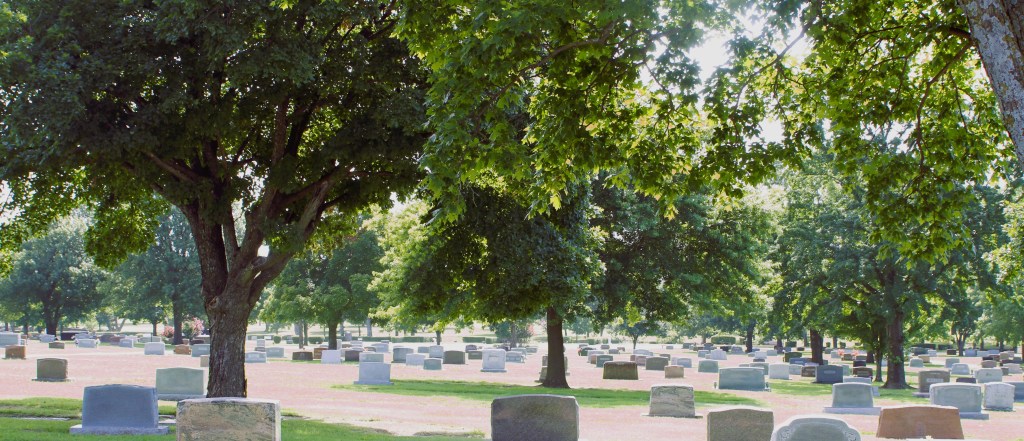
“I’m not here,” I say
to those who stand above me,
on top of the grass.

“I’m not here, below
where you gather to mourn me,”
I cry joyously.

“I am in breezes
that blow gently in the night,
rustling your curtains.”

“I am the soft rain
that wakes you in the morning,
whispering your name.”

“I’m not here,” I say
to those who weep at my grave,
lamenting my soul.

“I’m not here, below
this hallowed ground you stand on,”
I shout happily.

“I am dawn’s first beams---
diamonds dancing on water,
bright angels of light.”

“I am shade on trees,
shape-shifting ‘cross leaves turned up
to welcome the sun.”

“I’m not here,” I say
to dear ones who believe I’m
in the cold, cold ground.

“I’m not here as if
I’ve died and left forever,”
I call blissfully.

“I am the music
we listened to together
that stirs in your souls.”

“I am the laughter
you hear from children playing,
just as we once played.”

“I’m not here,” I say
to you---especially you, 
who miss me so.

“I’m not here, apart 
from you, loving hearts sundered,”
I declare raptly.

“I am every thought,
every prayer, every promise
you have ever made.”

“I am part of each 
breath you draw, each step you take.
I’m with you always.”

“I’m not here,” I say
to all at my sepulchre. 
hoping they will heed.

“I’m not here!” I cry---
a joyous, rapturous shout;
“I dwell in you now.”

I Have Never

I am a straight, white, elderly, married man.  In all my years, I have never had a friend who is anti-Semitic.  I have never had a friend who is racist or homophobic.  Nor have I ever had a friend who is misogynistic or xenophobic.

In all my life, I have never had a friend who is regressive or punitive.  I have never had a friend who is a bully or cruel.  Nor have I ever had a friend who is narcissistic or egomaniacal.

From time to time, I’ve encountered people who exhibit some of these attributes, of course, but I’ve always and quickly exiled myself from their presence.  Except when I’ve had no recourse, I have steadfastly abjured their company.

Throughout my life, I have had friends who are religious—and from several faiths—or atheist, even agnostic.  I have had friends who espouse differing political sentiments than I, but never aggressively so.  I have had friends with points of view different from mine on such issues as pro-life/pro-choice, gender equity, capitalism/socialism, green energy, global warming, pandemic mitigations, famine, warfare/diplomacy, the likelihood of life eternal after death, and more besides.

I have even had friends who disagree with me about my lifelong support of the Toronto Maple Leafs hockey team, for goodness sake!

But never have such disagreements interfered with our friendship because those I consider friends have at no time lowered themselves to crude, ignorant, or abusive rhetoric and behaviour in our discussions and encounters.  Nor have they ever resorted to violence to advance their views.

Rather, they have relied on logic, facts, and persuasion to win the day—as I have always tried (sometimes unsuccessfully) to do.

That’s less easy today, though, because of a problem we face with our global society—the unprecedented proliferation of supposed facts presented across the wide range of media outlets available to us.  Some of these deliberately masquerade as the truth, which promotes confusion and conflict—forcing us to question what is information, what is misinformation, what is disinformation—and as a result, to begin to query our own values and principles.  Critical thinking skills have never been more crucial, it seems to me—and in many quarters, alas, more lacking.

Healthy skepticism has always been a positive thing, I think, a part of those very critical thinking skills.  But noxious skepticism, knowingly force-fed to a naïve public by pernicious purveyors of media in pursuit of their own, oft-malign agendas, has the effect of reducing the level of societal discourse to the lowest common denominator.  Loud, vituperative, violent acts against each other and our governing bodies are increasingly the result.

In any free society founded on the people’s faith that their government will act in the public interest, such discord cannot be good.  Because when the public loses faith in our civil institutions, those institutions will crumble from within.  And they will take down with them the very foundations upon which they have been built and thrived—citizens’ rights and responsibilities, the rule of law, equality of opportunity for all.

There is little doubt that, as a collective, we could do a better job of acknowledging our responsibilities (rather than just demanding our rights), and of ensuring equality of opportunity for the dispossessed and marginalized among us.  But lacklustre performance aside, the bedrock values are legitimate.

In recent times, unfortunately, I have seen people elected to public office— ostensibly to serve the citizenry—speak and behave in ways that are definitely anti-Semitic, racist, homophobic, misogynistic, xenophobic, regressive, punitive, cruel, and narcissistic.  I have witnessed their acolytes and followers, to no one’s surprise, then ape them.  And they are all doing so—increasingly, it seems—in more extreme language and deed. 

Disturbingly, I no longer believe I can respectfully disagree with those folks about their points of view, as should be the norm in any democracy; instead, I fear I would be shouted down, verbally abused, perhaps physically attacked.

Such people are not my friends.  Nor, in my opinion, should they be yours.  We should be electing and supporting the very best from among us, not the opportunists, grifters, and self-seekers.  But to do that, we must bestir ourselves and, at the very least, engage in the process and cast our votes on election days.

Plato wrote, The heaviest penalty for refusing to engage…is to be ruled by someone inferior to yourself.

I have never wanted that.

From This Moment On

Some folks worry about getting old.  And they bemoan the passage of time.

But once upon a very long time ago, nobody kept track of the years.  People in their nomadic, tribal clusters got up when the day dawned and went to sleep when it got dark.  They did it every day, over and over again, until, inevitably, they didn’t awaken from their final sleep.  Nobody ever worried about getting old; they just lived until they died, and the tribe moved on without them.

Even today in this wide world of ours, there are still countless numbers of people who don’t worry about aging.  They live in unforgiving climes where their every effort is bent toward eking out a subsistence-level existence.  Or they’re driven from their homes by ravaging armies—persecuted for their beliefs, their skin colour, their ethnic origins, and often enslaved by their captors.  They, too, live only until death frees them, far too burdened to worry about the realities associated with getting old.

Yet here are we, inured from such extreme conditions—secure, some of us, in our developed, civilized world, inundated by the availability of all the essentials and luxuries we might desire—and what do we do?  We worry about getting old.

Not all of us, of course.  Many young people appear to have the same nonchalant, carefree attitude I probably had at their age—back when immortality was a given.  The halcyon days of youth seemed destined to last forever.  Only old people were old. 

Others of us, the more elderly, have learned a sterner truth.  Youth lasts only until it’s over, only until our bodies begin to betray us.  The rosy morning of youth gives way, grudgingly, to a more austere noontime of life, and then, inexorably, to a deepening dusk we all are destined to enter. 

Some folks accept that truth more gracefully than others, some more stoically, some more fatalistically.

But some, of course, do not accept it at all.  In the words of the poet, they rage, rage against the dying of the light.  Nips and tucks; silicone, botox, collagen, and dye; enhancements and reductions; diets and purging; even exercise—all undertaken by men and women in a fruitless pursuit of everlasting youth.

Why is this so, I wonder, here in our world of plenitude?  Well, perhaps it’s because we have become obsessed with measuring time.  After all, time’s passing itself is neither our friend nor our enemy.  It’s just there, it’s always been there, and it will forever be there.  So, I’ve come to believe it’s the keeping track of time that plagues us, wreaking havoc on our youth, eventually forcing us to an acceptance of the stark reality that we are going to get old.  And we are going to die.

But remember, we are the first cohort of people since the dawn of time who has ever had the luxury of worrying about that.

From this moment on, perhaps we shouldn’t.

To Make An End

For last year’s words belong to last year’s language.  
And next year’s words await another voice.
And to make an end is to make a beginning.
                                                                    - T. S. Eliot

As another year draws to an end, and with it the approaching close of my eighth decade on this journey, I know I am among the most fortunate of my fellow-travellers.  For sixty years of my passage, I’ve been accompanied by the wonderful young woman I first met when she was but sixteen.  She is young no more, of course, but as W. B. Yeats wrote in When You Are Old (almost as if he had her in mind)---

How many loved your moments of glad grace,
And loved your beauty with love false or true,
But one man loved the pilgrim soul in you,
And loved the sorrows of your changing face.

I still do.

Also with me for fifty-plus years of my journey have been the two magnificent daughters who have graced their mother and me with their love, their friendship---and increasingly now, their protection against the failings of age.  When they were little, we made a pact to hug them close for as long as we could, then let them go when time dictated.  As you might expect, the hugging was easy; the letting-go was hard.

But it has been written that when we love someone, we should set them free, and if they come back, then their love is ours forever.  That has certainly been the case for us, for which I’m eternally grateful.  Our girls are women now, but as I’ve often told them, although they are no longer children, their mother and I will never stop being parents.

In due time, those women brought two wonderful men into our lives, and with them produced five wonderful babies of their own---four granddaughters and a grandson for us.  It was as if the cycle started up again, but with my wife and I one step removed this time---loving them, wishing the best for them, but somewhat distant from the immediacy of their lives.  We strive to remain relevant, of course, and they, in return, take pains to make it so.

Kahlil Gibran wrote of that in his meditation, On Children---

You may give them your love but not your thoughts,
For they have their own thoughts.
You may house their bodies but not their souls,
For their souls dwell in the house of tomorrow, 
Which you cannot visit, not even in your dreams.
You may strive to be like them, but seek not to make them like you.
For life goes not backward nor tarries with yesterday.

And in that last line lies the very essence of the joy and sadness, both, that are implicit in our lifelong journey.  Things begin.  Things end.  Things begin anew.  Or so it has always been for me, and will be for some time to come, I fervently hope.  But there will eventually come a moment, I know, when no next beginning will follow the final end.  Despite my reluctance to face that day, I do not fear it.  My approach to its inevitability is summed up in this final stanza from one of my own poems, I Haven’t the Time--- 

I haven’t the time for anger or rancor, or grumbling, self-pity, or frown.
Life’s about living, getting and giving full measure before it winds down.
When that day is nigh, as ‘twill be by and by, I hope it will be widely said,
That as man and boy, I strove for the joy of living until I was dead.

My closest companions along the way have certainly brought that hope closer to reality than it might otherwise have been.  To paraphrase the late Queen Elizabeth II, my dear family have been my strength and stay the entire way.  As we enter into 2023, I hope for all of you who read these posts that you will feel as blessed as I, and that the ending of this old year, no matter its triumphs or tragedies, will be a new and happy beginning for you.

To make an end is to make a beginning.

Happy New Year! 

You’re So Vain

This week’s prompt from my Florida writers’ group is to write a story, fewer than five hundred words, for STROLL, a local publication.

A friend I met sixty-five years ago in high school will soon celebrate his eightieth birthday, as I will shortly afterwards.  We stood up for each other at our weddings, and I did that again at his second wedding, a few years after his first wife passed.  He named his first son after me.  I have two daughters, neither of whom is named for him, but they love him dearly.

A long-since retired art teacher, he is a painter of some renown, with water-colours hanging in the homes of several distinguished collectors, including the recently-crowned King Charles III.  Likewise retired, I am the author of eighteen books of fiction, with worldwide sales numbering…I don’t know, in the hundreds?  Maybe?  Anyway, both of us garner numerous hits on various search-engines.

My friend was always a personable and handsome man, and he knew it.  In our younger years, it used to be said of him that he never met a looking-glass he didn’t like.  Mutual friends would joke that he’d never be alone as long as he could find a mirror.  When we’d stroll downtown together, I’d laughingly reproach him for constantly checking his reflection in storefront windows.

“It’s never going to get any better,” I’d chide.  “Gravity wins!”

He’d flash his trademark crooked smile.  “Yeah, but we don’t have to let it pull us down, right?”  And he’d steal another quick glance at the window.

I met my friend for coffee at The Forum the other day, and as I was parking, I saw him waiting on the sidewalk for me, studying his image in the restaurant’s plate-glass window.  Indeed, I saw myself growing larger in that same reflection as I walked over to join him.

Clapping an arm around his stooped shoulders, I crooned an off-key variation on a Carly Simon hit from days gone by—You’re so vain, you prob’ly think you look amazing…

Leaning into me, he chuckled ruefully.  “Yeah, once upon a time, I guess.  But d’you know what I was thinking just now, watching you come up behind me?”

“Let me guess,” I ventured.  “You were probably hoping this weird-looking old guy approaching you would spring for coffee today.”

“Not a bad idea,” he laughed.  “But no, I was actually thinking how happy I am to see you.  The day is coming when one of us will be staring at a reflection like this, and the other one won’t be there.”

“There’s a happy thought,” I said.  But, alas, I knew it to be true.

For several moments, both of us examined our images in the glass—slightly bent, frailer than we’d like, each leaning a little on the other.  When we turned to hug one another, it was a long hug.  A moist-eyed hug.

And then we went for coffee.  My treat.

Lilt and Flow

There are few things I find more pleasurable than hearing the lilt and flow of poetry read aloud, especially if read by a skilled orator or by a loving family member.

My father was both, and it was he who read one of my abiding favourites, The Night Before Christmas, a classic tale by Clement Moore, on every one of the sixty Christmas times we shared before his death. Here are the beginning stanzas—

My siblings and I would lie in our beds, literally quivering with anticipation as we listened to that familiar tale, and I miss hearing my Dad read it to this day.

Another favourite poetic tale is The Highwayman by Alfred Noyes, which I first heard read aloud by a high school English teacher who loved her calling.  Here is the first stanza—

The final stanza before the coda sent shivers up and down my spine as I sat listening in the classroom, and so it still does—

That same teacher also introduced me to one of my favourite poets, Robert Service, whose rhythmic cadences entrance me even now, especially The Cremation of Sam McGee.  Here are the first two stanzas

So enamored am I of that rhythm and rhyme scheme that I have even written similar poems of my own, pale comparisons, but still a joy to read aloud.  Here is a stanza from one example, I Haven’t the Time

As a young father, I would often read this excerpt from Kahlil Gibran’s poem, On Children, to my own daughters as I tucked them into bed.  Although too young to grasp its full meaning, they seemed to enjoy the sound of my voice as I pondered the deeper implications of the verse—

I think my all-time favourite poem is When You Are Old, penned by my all-time favourite poet, William Butler Yeats. It speaks of the eternal nature of love and loss, and evokes in me both sadness and an abiding happiness each time I hear it—

I think I shall die before I am finished discovering more and more poetry whose lilt and flow lifts my soul, and I wonder if doing so will still be possible in the afterlife.  What joy I would find meandering the roads of eternity while listening to symphonic music from the maestri, and hearing great poetry from the masters read aloud.

And who knows, perhaps that is the way it will be, as this stanza from J.R.R. Tolkien’s poem, Roads Go Ever On, might imply—

Whether it will be so or not, I have always loved the lilt and flow of the spoken word. I hope you do, too.

The Issue

A sage once opined that when we persist in arguing over and over again with a stupid person, we reveal ourselves as the stupid one.  Nevertheless, I have long engaged in fruitless discussions with an old-time friend, to the point where I’m beginning to suspect the adage is true.  I’m the stupid guy.

The problem I have is that this friend always strays from the issue at hand, deflecting my well-reasoned arguments by taking us off topic.  For instance, if I were to suggest to him that it’s raining outside, a fact easily verified by looking out the window, he might well claim he sees no one with an umbrella.

“That’s not the issue!” I would protest.  “You’re changing the subject.  Whether or not you spy an umbrella has nothing to do with whether it’s raining or not.”

He would probably just smile and ignore my argument.

Or if I were to offer an opinion that wages for the working-class haven’t kept pace with rising costs, his comment might be to tell me he has more money at hand now than he’s ever had.

“That’s not the issue!” I would probably object.  “You might well be better off than ever, but that doesn’t change the fact that costs are rising.”

He’d likely smile again, placidly this time, and not concede my point.

Perhaps I wouldn’t find this habit of his so maddening if it didn’t seem to me that he blithely assumes he’s had the better of me when these discussions happen.  Without ever directly rebutting something I’ve said, he inevitably counters with a peripherally-related argument, thereby appearing to satisfy himself that the matter is settled.

And yet, stupid me, I keep arguing with him.

A while back, we were talking about whether or not the scarcity of cold and ‘flu medicines on drugstore shelves is a problem.  “I’m told it’s a supply-chain issue,” I stated.  “And that’s exacerbated by a heavier-than-usual demand for the stuff because of the prevalence of illness now that school is back.  So, it’s a real problem right now.”

“I don’t use over-the-counter remedies,” my friend said.

“Yeah, but that’s not the issue,” I replied.  “The issue is that there’s a shortage of those products at a time when people need them.  That’s a problem!”

Another casual shrug was all I got.  And that smug smile.

We’re both aged athletes with an abiding interest in sports, and while watching a televised ballgame together a few nights ago, I said, “Boy, the Blue Jays look really good tonight.  It’s only the fourth inning, and they’ve already got seven hits and four runs in.  They’re hot!”

My friend replied, “Yeah, but they’re not playing the Yankees!”

“That’s not the issue,” I exclaimed, maybe a bit heatedly.  “So what if they’re not playing the Yankees?  They could be playing Casey at the bat in Mudville, for all I care.  They’re playing really well tonight.”

My friend shrugged as if it didn’t matter.

More recently, we were talking about the government’s removal of masking requirements for air-travel.  “I think they must consider the pandemic over,” I complained.  “They figure no mitigations are needed now, but I think that puts all of us at risk.”

“I don’t fly,” my friend said.

“That’s not the issue,” I fired back.  “Lots of people don’t fly.  But for those who do, the issue is they’re being placed in harm’s way.”

My friend shrugged off my assertions.  “But not if they don’t fly,” he said.

“That’s not the issue…” I began, before giving up.  How stupid can I be?

Yesterday, over a couple of beers and Reuben sandwiches, I decided to tell my friend why, during many of our conversations, his continual diversions from the subject at hand are bothering me.  “It’s almost as if you’re ignoring my point,” I said, “as if what I’m saying doesn’t matter to you.”

“Why would you think that?” he asked, squarely on point.  It caught me by surprise because I’d expected him to offer one of his usual non sequiturs.

“Well…you never seem to respond directly,” I stammered.  “You usually mention something only superficially related to whatever I’ve said, and then assume you’ve won the argument.”

“Argument?” he repeated.

“Well, not argument,” I demurred.  “More like discussion.  And you ignore the points I’m making.”

“And you think I’m doing that in order to win…what, exactly?”

“The…the argument.”  I smiled weakly over my beer at the absurdity of it all.

My friend smiled back.   “Did it ever occur to you that I might be conceding your point in these discussions, agreeing with you, and simply offering up another thought to keep the conversation going?”

Drawing a deep breath, I said, “Oh!  I guess not, no.  I sort of assumed you were just trying to one-up me and win…you know, the argument.”

“Well maybe, that’s the issue then,” he said.

And at that point, we ordered another beer and moved on to a much less-stupid, more pleasant conversation, all issues set aside.