Brown Paper Bags

My wife and I will soon be off for our annual, six-month sojourn in Florida, where we will join with our American friends on Veterans Day, 11 November, to honor the women and men who have sacrificed themselves in defence of freedom. This poem, published here once before, is intended as an homage to those brave souls. It can be read silently, read aloud, or sung to the chorus of the old, Irish ballad, ‘Black Velvet Band’.

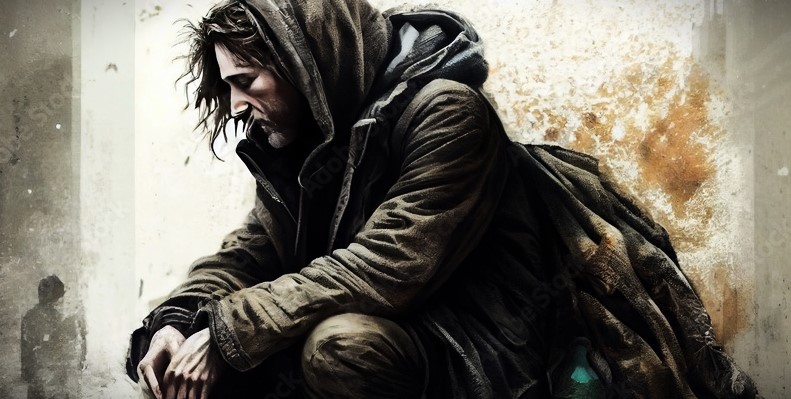
His hair hung down to his shoulders,
His shirt was a tattered old rag.
Faded chevrons adorned both his worn, torn sleeves,
And his hands clutched a brown paper bag.

Gunny was the name we all called him,
A veteran, ‘though he never did brag.
He’d wander the streets of the neighborhood,
Snatching sips from his brown paper bag.

His only true friend was old Jarhead,
A mongrel with no leash or tag.
When he died, he left Gunny alone again,
Alone with his brown paper bag.

We never saw Gunny get angry,
He was never a scold or a nag.
When we passed him by, he would nod a sad smile,
And drink from his brown paper bag.


In the summers we often would see him,
With the kit-bag that held all his swag,
On a park bench alone in the warm sunshine,
Holding tight to his brown paper bag.

Then last winter with snowstorms a-swirling,
And temperatures starting to sag,
Gunny died forlorn in the homeless camp,
He’d drunk his last brown paper bag.

When they opened his kit, they discovered
A folded American flag,
And a Congressional Medal of Honor,
Sealed tight in a brown paper bag.

They tried hard to find Gunny’s family,
But their efforts all hit a snag.
So, they buried him with full honors,
With his Medal and brown paper bag.

Gunny rests now with his fallen comrades
‘Neath a cross in a field filled with flags.
UNKNOWN BUT TO GOD and those warriors—
Free at last from those brown paper bags.

Semper Fi, Gunny!

Alone Again!

[NOTE: IF THIS COMPLETE BLOG-POST LIES IN THE BODY OF AN EMAIL, CLICK ON THE TITLE TO READ IT IN ITS NATURAL ENVIRONMENT ON MY BLOG-SITE. IF ONLY A LINK IS PROVIDED IN THE EMAIL, CLICK ON THAT.]

Have you ever found yourself absolutely alone in a crowded room—at a family gathering, perhaps, or a business function, a party with friends, a community meeting?  It would seem hard to accomplish that when one is surrounded by so many people, but I manage it all the time.

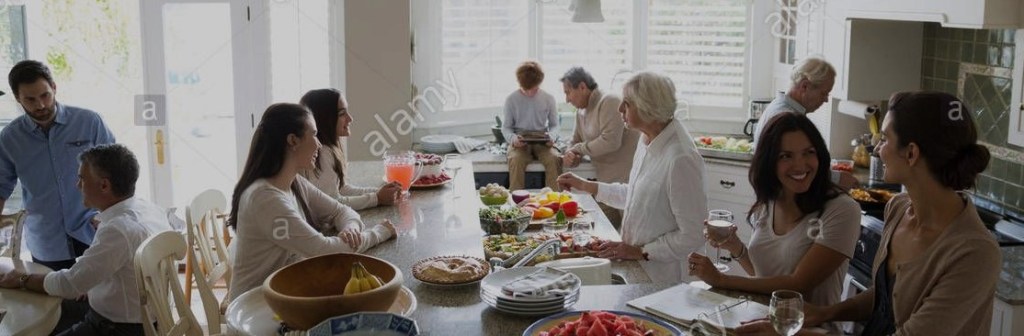
At a recent Mothers Day gathering with my two daughters, their husbands, my five grandchildren, two of their boyfriends, and my wife all in attendance, conversations were animated, exuberant, and loud.  I know, because there I was, perched on a stool around the large island in the middle of the kitchen (always our family’s favourite gathering place), surrounded by this multitude, yet strangely not involved in any of the conversations.  Nursing a glass of wine, I found myself eavesdropping on each different group in turn, quite interested in the latest news they all were sharing with one another about their work and school activities, yet not contributing a word myself.

But this is not a new phenomenon.  In fact, having become almost invisible on so many such occasions, I’m rarely even asked to contribute.

Over the years, I’ve often wondered if I’m naturally introverted, or maybe anti-social by nature.  From time to time, I’ve questioned my conversational skills or lack thereof.  I’ve even fallen prey every now and then to doubting my innate charm and charisma, and I’ve worried that perhaps no one holds me in high esteem.

Too many times, it seems, I’m at a restaurant with three or four couples, and I look up from my soup to find myself alone at our table.  I wonder if the others might be at the salad bar or in the washroom, perhaps—but all of them?  At the same time?

Or I might be at a dance, ten of us sharing a table, and I suddenly realize I’m sitting by myself again, while the others are up dancing or table-hopping.

The tedious jokes flow at these moments, naturally.  Seeing me alone, someone will ask in a loud voice if I’m dining tonight with all my friends.  Or someone will wonder if I said something to offend everyone in my party.

The problem is, I’ve never had an answer.

What I do know, however, is that I’m not one to blithely accept blame for my own perceived shortcomings.  I am a loving and capable person, after all—or so I want to believe—and I have choices.  For example, if people are ignoring me—or worse, don’t even realize I’m present—I can choose to consider it a flaw on their part, not mine.  The problem with that approach, however, is that many of them are people I love and admire, so it’s difficult to malign them, even secretly.

A better choice, I’ve discovered, is to adopt the stance that I am freely choosing to be alone in these various situations.  I’m doing it on purpose.  And why?  Well, because I’m a writer of fiction, and it’s a well-established fact that, to be effective, writers like me, who make stuff up, have to be keen observers of human nature.  After all, if we’re going to create believable characters out of whole cloth in our stories, we absolutely must possess a keen sense of what makes people tick in real life.  And the best way to do that, I’ve convinced myself, is by observing those around me, listening to them, getting a feel for them through what they do and what they say.

Interacting with people, I believe, is not good because I will inevitably corrupt the essence of who they are through my own conversational filters.  But by choosing to stand back, remaining aloof, I am better able to ascertain who they really are in their daily interactions.  They remain unblemished by any preconceived notions I might apply to them, and it is those untarnished attributes I will then bring to the creation of my own fictional characters, thereby improving the quality of my writing.

Or so I tell myself.

Nevertheless, I confess to a lingering and puzzling disappointment whenever I find myself alone again in large groups.  Recently, on the advice of someone I trust, I arranged to see a therapist renowned for helping folks like me.  My first appointment was yesterday, but to my surprise, it was a group-session—not something I had counted on.  After fetching the obligatory coffee, I took a seat in the circle and listened as each person in turn explained why he or she was there, what their last week had been like, how the others in their lives continued to let them down…and so forth and so on.  I found it fascinating, and was soon busy tapping notes surreptitiously into my phone.  I wasn’t sure that was allowed, but happily, no one seemed to notice what I was doing.

After an hour or so, I was fully-engrossed in reading over these notes, optimistic that I’d uncovered a gold-mine of observations I could use back at my writing-desk.  I looked up, eager to listen to whoever was next, and…well, you can probably imagine my shock when I discovered I was alone in the room.  The session had ended, the circle was broken, and no one had asked to hear from me.

Not knowing whether to laugh or cry, I chose the former.  These therapy sessions, I told myself, were going to prove a treasure-trove of inspiration for my writing.  And best of all, I was going to be able to gather whatever information I wanted with no one even knowing.  As in so many other instances, I was virtually invisible in the group.

No wonder I’m such a good writer!

Alone again! 

The Sorrows

The weekly prompt from my Florida writers’ group was to take a snatch of lyric from a song, or a phrase from a poem, and write a story around it. This piece of fiction is inspired by When You Are Old, by W. B. Yeats—and is in memory of my mother, whose birthday this is, and who first introduced me to the poet’s work.

The old man died sometime during the night, alone, peacefully.  His careworn face, wrinkled and wizened under the weight of so many years, seemed suddenly younger somehow, and his lips were curled in what might have been taken as a smile.

On the table by the near-side of the bed—the side long occupied by his recently-departed wife—lay a note lovingly penned by his frail hand, an aged quill beside it, the ink caked dry on its tip.  It was unmistakably a love-letter to her, intended not for anyone else, fated now to be his last word to all who had loved the two of them.

This is what he wrote—

And now you are gone, off to another adventure, but this time without me.  How I wish I had been ready in time to accompany you, as on every occasion in the past.

There have been so many wonderful journeys upon which we did embark, each more glorious than those before it.  How I remember the sparkle in your eyes, the flush of your cheeks, the lilt of your joyous laughter, as off we went each time, hand in hand, bound for who knows where, never knowing that which we would encounter, but secure in our belief that, together, we would meet and conquer all.

And so we did.  Eloping when there seemed no other way in the face of families opposed, living abroad, scratching an existence from the fruits of our creative gifts, buoyed by our love and our belief in one another.  We could not have known, both so young, that your brush and my pen would eventually find favour with the audiences who discovered us.  And yet, undaunted, off we had whisked on that first great adventure into the wide world, happy, confident, ready for whatever fate had in store for us, surpassingly serene in each other’s bosom.

Every new work on your easel, every new draft in my notebook, carried us on to more adventures as we painted and published our way to heights heretofore unimagined.  What happiness we found in talking over our creative endeavours as they unfolded, in offering critiques and suggestions—shyly at first, and then more confidently as we grew in each other’s esteem.  Heralded as artists by the world beyond, we found our muses within ourselves and shared them.  Together.

Later came the children—Patrick, who died too soon; Liam, an accomplished actor now with dreams of his own; and Maeve, a musician who reminds me so strongly of her mother with such grace and sweetness masking that steely courage I ever found in you. What an adventure they provided us as our troupe grew to five, and then, sadly, diminished again to four.  What heights of joy we experienced, what depths of despair!  And yet, throughout, we sallied forth, ever determined to pass through each gateway, to follow each new path, to crest each succeeding hill.  Always together.

Inevitably, we became two again as the children, not unexpectedly, began to pursue their own adventures.  The years continued ever on and on, of course, but we, never ones to be mindful of constraints that seemed to bind so many others, paid them scant heed.  Yet even we—we, with all our bravissimo and essenza—even we could not slow the relentless ravages of time, the toll it took upon our bodies.  Even as our spirits remained as strong and audacious as ever, our bodies, increasingly and annoyingly, slowed us.  But at least we were together.

Before I knew, I had become an old man, bent and slowed.  And I watched as the weight of years pressed down upon you, too—never enough to douse the fire that burned within your soul, but tamping its fierce flames to glowing embers.  Never enough to quell the desire within us to begin our next great adventure, but sufficient to forestall our getting underway. 

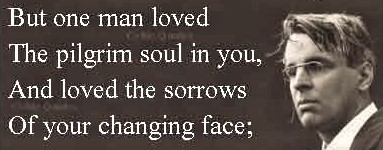
Nevertheless, even in our dotage, we found ourselves, blessedly, still together.  And I was ever the man who loved the pilgrim soul in you, and loved the sorrows of your changing face.

But now, beloved Pilgrim, for the first time, you have started a new adventure without me, alas.  And I am bereft, forsaken and left here in this too-much-travelled, mortal confine.  Would you have waited for me if you could, I wonder?  I think so.  Perchance, are you waiting still, there on that other side somewhere, knowing assuredly I shall be along when I can?

I write this now in hope it is so, that we shall reunite in glory to resume our way across the universe, amid a crowd of stars.….

Something I Said?

It happens sometimes at a restaurant where three or four couples are dining together.  I look up from my soup to find myself alone at our table, the others at the salad bar or in the washroom, perhaps.

alone

Or it could be at a dance, nine or ten of us sharing a table, and I’m suddenly sitting by myself while the others are up dancing, or maybe table-hopping.

The tiresome jokes flow at these moments, naturally.  Some wise guy will ask in a loud voice if I’m dining tonight with all my friends.  Or some other wit will wonder if I did something to offend everyone in my party.

I laugh, of course, perfunctorily—but somewhat puzzled, too—for it is curious that this crops up with me so frequently.  Was it something I said?

It may happen to others, too, I suppose, but hardly ever when I’m around.  And although the jokes are stale from repetition, they do take my mind away from a somewhat more sombre realization—that someday, we know not when, one of us in our gang will, indeed, be left alone.

We’re at an age where many of the things we used to take for granted are likely not in the cards for us anymore.  How many of us will purchase a new house, for example, with a twenty-year mortgage?  Do we really care if the 2040 Olympic Games are held in this city or that?  Are hair transplants or facelifts really such an attractive option now?  How many more new cars will we buy?

how-to-get-a-discount-on-new-car_orig

We’re not yet at the stage where we won’t buy green bananas (another old joke) or make plans for some holiday cruise two years from now.  But those days are coming.

Aging is a simple, yet so mysterious a process.  Simple, because it creeps up on us without any conscious intent on our parts.  We start school, we graduate, we marry and become parents.  We raise our children, sadly (or not) bid them adieu when they embark upon the world, and exult in the joys of grandparenthood when they begin their own families.  Eventually, we retire and reach out for new and exciting pastimes.

Granted, it took years for me to do all this, and the work was palpable while I was doing it.  But when it finally hit, my seventy-fifth birthday seemed to have materialized out of nowhere.  Getting there was a simple matter of waiting.

But aging is mysterious, too, because so many odd things transpire.  For instance, although I feel like the same person I always was, my friends are obviously getting older.  Occasionally, when I happen to spy one of them unexpectedly, I see first an old man or woman—only to realize belatedly it’s my friend.  I suspect the same thing might be true in reverse when they have a chance encounter with me.  We’re all too polite to tell each other that, though.

A lyric from the musical, Fiddler on the Roof, seems to capture it:  I don’t remember growing older, when did they?

fiddler

A few years ago, I underwent some serious surgeries, not necessarily age-related, and spent several months in follow-up visits with the medical people who treated me.  When reading my files one day, I was quite surprised to discover a letter from a referring physician to a specialist who had treated me.  After the usual introductory paragraph, the letter stated, “This elderly gentleman presents with symptoms congruent with…”

My attention was riveted on those first three words.  I thought I had opened someone else’s file!  Elderly?  Surely not I!  And yet, at the tender age of sixty-four, it was true—at least from the perspective of those young professionals.

And so, here we are, I and all my friends, firmly ensconced in our senior years.  None of us talks morbidly about the inevitable end of our lives; more likely, we’re comparing our golf scores, sharing the latest stock market activity, or showing off pictures of our grandchildren.  We’re a pretty happy lot, all told.

One of us, a retired funeral director, jokes that he used to sign his letters Yours eventually.  “They’re gonna get us in the end,” he says with a wink.

hearse2

I do think about the end-stages of life, however.  Like finding oneself left alone at the table in the restaurant, or at the dance.  A close friend from boyhood never got to experience that aloneness, dying before his time just over a year ago, surrounded by family and embraced in the thoughts of his many friends.

My parents, on the other hand, lived well into their nineties—not a guarantee of longevity for me, I grant you, but a pretty good genetic gift.  At the end of her life, my mother had outlived her husband, all her siblings, and all her friends.  Despite the visits from children and grandchildren, I know her final years were painfully lonely.

We cannot know the hour or manner of our own passing, so it’s futile to fret about it.  Yet I occasionally ponder whether it would be best to go first, before everyone else has passed, or be the last one standing (or sitting, or lying down…whatever).  So much of the joy of life comes from those around us, family and friends, and so much would be missing without them.

I’m unable to decide with any certainty which option I’d prefer.  I waver from one to the other, depending on my mood.  Vacillation can be a comfort.  Truth be told, there is no definitive answer to be found; what will be, will be.

old man dying

But honestly?  I don’t think I want to be the last one at the table, wondering in vain if it was something I said.