I Can Help With That!

Well into middle-age, I would often ask my parents questions about our family’s history.  Most of the time, those questions were based on simple curiosity, but occasionally they’d be prompted by something more important, like the medical history of family members that might impact me or my children.  Aging aunts and uncles were also a source of information, and always seemed happy to reminisce about such things.

Old photo albums were a rich source of material, too, as were scrapbooks and journals, and I remember poring over them as a child, eager to soak up the ethos and culture of my family.  Alas, when I look at some of those monochrome snapshots now, I find I recognize hardly anyone.

But now, of course, there’s no one to ask.  Both my parents and all my aunts and uncles are long departed, and I am the eldest of my family.  My three younger sisters will sometimes remember events from our shared past quite differently than I, but now we have no arbiter to call upon.

My two daughters, in their fifties now (Egad!), have taken to asking me and my wife the same sort of questions about our respective families that I used to ask my elders.  We answer them to the best of our memories, but our memories aren’t the best anymore.  I come away from some of those conversations with the uneasy feeling that I might have made stuff up to fill the gaps.

One of our daughters suggested recently that we sit down for a few interview sessions with her, where she could record our recollections.  We’ll be happy to do that, but the suggestion prompted another idea, one I immediately acted on.
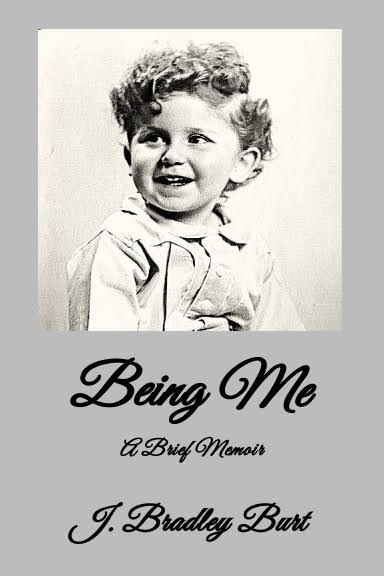
I’ve written a memoir, a brief history of my life intended for family only—my wife, my daughters and their husbands, my five grandchildren, and my three sisters—plus one friend of almost seventy years.  The book, a mere 135 pages in length, is titled Being Me, and is not meant to be an exhaustive examination of my life to date.  Rather, it’s a glimpse at who I was as a boy, who I became as a husband, father, and educator, who I am well into a blissful retirement, and who I strove to be throughout my life. It deals with those events I deem significant, things that might be of interest now or in future to my limited audience.  The challenge I faced was not trying to decide what should be included, but what should be left out.

I’d love to think there’ll be enough yet to come to justify a sequel, but that seems rather unlikely.  Dying holds no fear for me, but I will harbour a sizable amount of regret if that grim reaper lurches in too soon, for I’m having too much fun to want to leave.

It’s been said no one is ever truly dead to the world until the last person who remembers her or him is gone, and I think there’s something to that.  My paternal grandfather died just before Christmas 1948, when I was five years old.  But because I still remember him, vaguely—the only one in my family who does—he’s still alive in a way.  When I finally pass, so, too, will he.

But I’m hopeful I’ll live on, as he has for me, in the memories of those precious ones I leave behind.  And I pray those memories will be fond ones, at least for the most part, and that they’ll evince more laughter than tears.

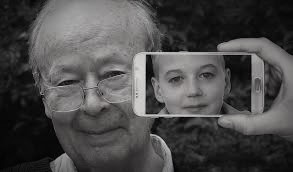
I have more yesterdays now than tomorrows, but the inevitability of aging is but one aspect of life.  If we so choose, we can relegate aging to a mere physical phenomenon, not one that has to affect our emotional outlook.  The person looking out on the world from behind my eyes today is not the man whose image I see in the bathroom mirror every morning; rather, he is still the boy I always was—

from my aging eyes,
the boy I once was looks out---
hardly changed at all.
the sails of my youth,
once hoist, are often furled now,
‘though the winds still blow.

The winds do still blow, and I welcome them and am inspired by them, even if I can no longer respond as once I did.  My children and grandchildren, thankfully, are caring enough to include me in their lives; my next adventure with Donna is always just over the horizon; my next book is already forming in my febrile  imagination.  These are the winds I speak of, and the physical frailties that age sends to plague me are unable to fully constrain me.

Prompted by our daughter’s interview idea, my wife also decided to write her memoir, titled My Story, and has asked me to help.  As I read her recollections, I find many of the events she deems significant are those I also considered important.  That shouldn’t be surprising, I suppose, considering we’ve been a couple since our first date in 1963, and married for fifty-seven years.

Neither memoir, of course, will answer all the questions our daughters or their families may ask about their heritage.  But with any luck, they’ll go some way to filling in a few of the blanks.  And who knows? Maybe on some far-off day in the future, long after I’ve gone on to my next adventure, one of my grandchildren—or perhaps one of their children—will want to know something about the old-timer who preceded them by a generation or two.  No one will likely remember, but they’ll have my memoir to refer to for the answer.

I like to think it will be as if I’m still there to hear the question.  And to answer by responding, “I can help with that!”

A Loss For Words

[NOTE: IF THIS COMPLETE BLOG-POST LIES IN THE BODY OF AN EMAIL, CLICK ON THE TITLE TO READ IT IN ITS NATURAL ENVIRONMENT ON MY BLOG-SITE. IF ONLY A LINK IS PROVIDED IN THE EMAIL, CLICK ON THAT.]

Most people who know me would likely tell you I am rarely, if ever, at a loss for words.  But they would also assure you, I trust, that I am far from being a blabbermouth.  My own opinion is that in most social situations, I can hold my own in conversation without becoming annoying or overbearing.

Most of the time, I listen; when appropriate, I ask questions.  If prompted, I will hold forth on a subject (if I know something about it), but not to the point of boring my friends to tears…I hope.

There is one situation, however, where all of the above is not true, perhaps the only circumstance where I find myself virtually unable to get a word in edgewise.  This unfortunate state of affairs occurs every time I find myself on a FaceTime call with my wife and daughters.  I hustle into the den with my iPad, leaving my wife with her screen in the living-room, so we won’t get feedback during the call.

When I say ‘unfortunate’, I mean for me, of course; for all I know, the ladies find it delightful when I sit, practically mute, at my end of the line.

The problem arises, not because my wife and daughters ramble endlessly on and on, not because they’re rude or inconsiderate, not because they delight in ignoring me, even politely.  Nothing could be farther from the truth.  In fact, they are all among the most considerate of creatures on the face of the earth, and they love me dearly.

No, the problem occurs almost every time we’re on a call because they appear to react faster than I do.  And to think faster, too, I suppose.  Regardless of the subject, I’m usually listening attentively as they express their various points of view, waiting for my brain to kick into gear as I consider an appropriate response.  The sad fact is that, by the time I have a response, one of them has already jumped back into the conversation ahead of me.

Another issue causing me a problem is their propensity to change subjects at the drop of a hat.  We might have spent five minutes batting a particular topic back and forth—the three of them talking while I listen—and Boom!  Without warning, one of them will introduce a brand-new thread, or ask about something entirely different from what we’ve been discussing. 

Even as my brain registers the change, a part of it is crying, silently and forlornly, that I haven’t yet kicked in my two cents’ worth on the first topic.

But they aren’t rude, as I have said, so at some point (perhaps noticing my silence), one of the girls might say, “What do you think, Dad?” 

“Ah…let’s see,” I reply, “can we go back to that first thing we were talking about?  I had a thought about that, but I couldn’t get in.”

The three of them laugh and roll their eyes at this, chide me to ‘keep with the tour’, then blithely resume their three-way conversation.  It’s probably just as well, I guess, because by the time I’m asked to chime in, I’ve often forgotten the point I wanted to make, anyway.

I must admit, though, all modesty aside, that I generally look surprisingly good on those FaceTime calls.  I sit up straight, look right into the camera (with an occasional peek at my own image), and keep myself centred in the screen.  They, by contrast, let the screen wobble all over the place as they walk from room to room tending flowers, picking up dirty clothes, starting early prep for supper, training their camera on their dogs.  It drives me crazy, but I can never worm my way into the conversation to ask them to stop.

I’ve explored various strategies to help, but none seems to.  I’ve tried holding up my hand, for example, when I want to cut in, but all I get is a return wave, as if they think I’m leaving the conversation.  “Bye, Dad!”

On more than one occasion, I’ve cut my video feed for a few seconds, hoping they’ll wonder if I’m okay, but all I hear is, “Looks like Dad has left the conversation!  Was it something we said?”

“No!” I want to shout, as I turn the video back on.  “It’s because I haven’t said anything!”  But they’re already talking about something else, so once again I can’t get in.

I recognize that the limitations of the FaceTime technology, marvellous though it is, play a part in exacerbating my dilemma.  The offset between audio and video transmission makes it difficult for me to pick the right moment to jump in—like watching a TV commentator interviewing someone far away, each of them experiencing a delay in hearing the other, resulting in dead air.  If I speak up too soon, while one of the girls is still talking, no one hears me; if I wait ‘til she’s finished, someone else has already started.

Still, I persist in taking part in these FaceTime calls, not only to hear what the girls have to say, but to look at them as they’re saying it.  And I console myself that, if ever I had anything pertinent and crucial to share with them, I probably did it years ago.  Whatever I might add now is probably just more of the same.

The ironic part of the whole thing, though, is after we’ve ended the call, I’ll wander back into the living-room and my wife will say, “Are you okay?  You didn’t have much to say today.”

And that always leaves me at a loss for words.

Keep On Keepin’ On

[NOTE: IF THIS COMPLETE BLOG-POST LIES IN THE BODY OF THIS EMAIL MESSAGE, CLICK ON THE TITLE TO READ THE PIECE IN ITS NATURAL ENVIRONMENT ON MY BLOG- SITE. IF ONLY A LINK TO THE PIECE IS PROVIDED IN THE EMAIL, CLICK ON THAT TO TAKE YOU TO THE SITE.]

It has been postulated by persons wiser than I that time does not exist, neither past, present, nor future.  If our lives were a metaphorical hourglass—the top bulb representing the past, the middle stricture the present, the bottom bulb the future—we would find ourselves at the middle, living in the moment.  That moment, however, would be but the instant it takes for one grain of sand to pass through the stricture, followed by the next, and the next, ad infinitum, each gone too rapidly for us to grasp.  And therefore, the theory goes, the present cannot actually exist.  Similarly, because we have no conception of the bulb above us or the one below, no way to perceive them, the past and future also do not exist.

Perplexing, no?  But not a theory I agree with, and I would urge those who espouse it not to tell me time doesn’t exist. 

Given my longtime fascination with and study of history, I’ve always believed there to be a past.  Mind you, I’m able to consciously recall it only from the late 1940s onward; everything that happened before that, I must accept as it’s been told to me. 

I’ve always believed in the present, too, perceiving it not as a mere instant in time, but as a continuous progression or sequence of events in which I play a part—at least while I’m awake.  While sleeping, of course, I have no awareness of the present.

The existence of a future is something I’ve always taken for granted, as well, though I have more yesterdays behind me now than tomorrows ahead of me.

My parents, whose lives spanned parts of ten decades, nonagenarians when they died, are part of the past I remember.  My wife and two children are part of the present I inhabit.  And my grandchildren represent the future, most of which, alas, I shall never see.  But it’s my comprehension of these three elements—past, present, and future—that allows me to carry on.

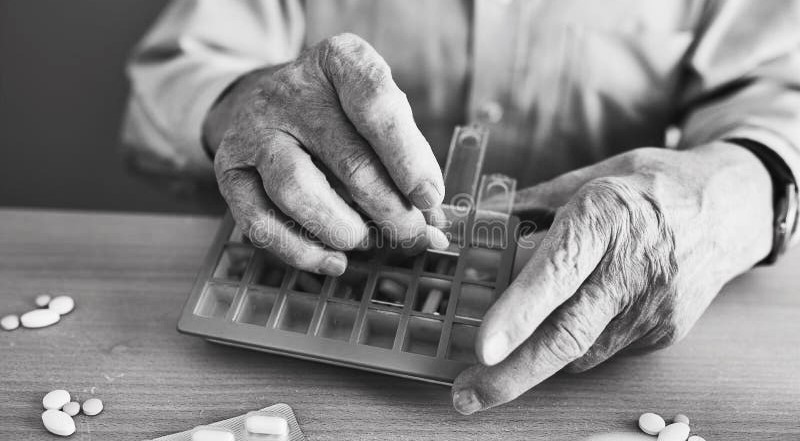
I remember visiting my father as he neared the end of his life, and hearing him complain (for the zillionth time) about the number of prescribed medications he was taking.  He had a small, plastic pillbox to keep them organized on a weekly basis, a device I silently laughed at, so cocksure and smug in my late forties.

“I saw the doc last week,” my father said, “and I told him to take me off some of these damn pills.”

“What did he say?” I asked.

“Said he’d do that if I told him which ones to cut out.  Said he wasn’t sure which might be the ones keeping me alive.”

“So, what did you say?”

“I told him, in that case, forget it.  I’ll carry on with all of ‘em.”

“Good move, Dad!” I said.  “Keep on keepin’ on.”

We had that conversation thirty-five years ago, and my father’s been gone for more than twenty of those, a part of my past forever.  To my everlasting astonishment, I’ve now entered my own ninth decade, the octogenarian I never contemplated becoming, and my present looks more and more to me like his did to him back then.

I, too, have a plastic pillbox now to organize the eight medications I take daily, five of which are prescribed to control cholesterol, regulate blood pressure, promote prostate function, and bolster bone density.  The other three are over-the-counter supplements I like to think will help me compensate for my lost and lamented youth.

Oh, how the mighty have fallen!  I imagine my father, wherever he is, must be chuckling knowingly at my plight—my past making fun of my present.

I have a friend whose espoused goal in life is to live more years retired than he spent working.  It’s a noble goal, one I share, and that moment will arrive for me seven years from now.  Another of my goals is to accomplish what my parents did, living into a tenth decade, which will happen when I hit ninety, a mere nine years off in the future.  Both my folks remained mentally acute and physically viable almost to the end, a state I devoutly wish for myself. 

A third goal is to live life fully right up until I die—a sentiment I wrote a poem about, I Haven’t the Time, which you will find and enjoy at this safe link—

https://tallandtruetales.blog/2020/01/08/i-havent-the-time/.

Our two daughters visited us for a week in Florida recently, without their husbands and children.  Although we love being with them all, this annual visit from our girls is part of a future we look forward to every year, our ‘core four’ together again.  But the realities of past and present do have a way of inserting themselves. 

I encountered both of them on their first morning with us as I lurched into the kitchen—unshaven, hair askew, eyes still half-shut.  They offered a cheery good morning and warm kisses as I plugged in the kettle for my green tea—decaffeinated, of course—and watched me spill my pills into my hand from the pillbox.

“How many pills do you take every day, Dad?” the eldest asked.

I told her, explaining what each was for in more detail than she probably wanted to hear.

“Do you really need to take that many?” her sister asked.

“Maybe, maybe not,” I said, an unbidden image of my father flashing before my eyes.  “But I don’t know which might be the one I need to keep me alive, so I just carry on with all of ‘em, y’know?”

“Good decision, Dad!” the eldest said.

“Yeah,” her sister echoed.  “Just keep on keepin’ on!”

And so I shall—proud of the past, relishing the present, anticipating the future. Given what I know to be true, no one can tell me they don’t exist!

And Off We Go

The weekly prompt from my Florida writers’ group was to write a piece containing the phrase, “shall we go…”.  This fictitious tale is my response.

“Shall we go?”  The sepulchral voice is solemn, portentous, and it reverberates ominously in my ears.

Not yet…not yet!  I’m not ready.

I hear other voices, too, softer voices…my daughters, named for our favourite flowers so many years ago.  They’re talking quietly over me as I lie in a bed I cannot feel in a hospital room I cannot see, unable to speak or move.

“He can’t open his eyes,” Veronica says, “but I can see them moving behind his eyelids.”

“Yeah, I see that,” Jasmine agrees.  “I think he can hear us.”

“Can you, Dad?” Veronica asks softly.  “Can you hear us?”

Yes, yes, yes!  I’m right here!

“He can’t answer you, Vee,” Jasmine says sorrowfully.

She’s right, I can’t.  Everything was fine until…until…whatever day it was, I can’t remember…and that red wave washed over me, collapsing me on the floor for I don’t know how long.  And now here I am, wherever this is.

“Shall we go?” the voice resounds in my ears again, a honeyed basso-profundo, not at all impatient, yet determined nonetheless.

No, not yet!  It’s too soon.

“Keep stroking his hair, Jazz,” Veronica says.  “He always liked that.”

I did always like it, but I can’t feel a thing now.  I can only imagine how it feels, and the thought warms my heart.  I laugh inwardly, knowing my hair must be all askew.

“I love you, Daddy,” Jasmine whispers.  “I hope you know that.”

“He knows we love him, he knows,” Veronica says, and I imagine she is holding my arthritic hands in hers, gently massaging them, terribly weakened now when once they were so strong.  But I can feel nothing.

I lifted you high in these hands, Vee, high up over my head.  And Jazz, too!  And now…and now…

“Shall we go?”  The voice asks again, persistent though not offensive.

Not yet!  No!

“You don’t have to worry about us, Dad,” Veronica whispers.  “We’ll be fine.”

“She’s right, Daddy,” Jasmine adds.  “You and Mummy were the best, and we’ll be just fine.”

I know, I know…but I don’t want to go.

They’re right, of course, they will be fine, both with their own wee families now.  The little ones were here earlier with their daddies…at least I think they were…maybe not…but I’m sure I heard those four tiny voices telling me they love me.  I wanted to say it back to them, to wrap my arms around them, but…

“And don’t forget, Dad,” Veronica continues, “Mum said she’d be waiting for you to find her, remember?  She’ll be watching for you.”

Ah, their mother, my wife, my lifelong love…how I’ve missed her.  Despite a valiant struggle against the disease that wasted her, she left us a few years ago.  And yet, she never truly left us, you know?  I wonder if Vee is right, if she really will be there, wherever there is…my darling Clementine…

“Shall we go?”  The voice is relentless, insistent, though not unkind.

No, please!  Not yet.

“I’m sure Mummy’s been missing you, Daddy,” Jasmine murmurs, and I can hear the sob catching in her throat.  “You were meant to be together for all time.”

“Exactly!” Veronica says, trying to lighten the mood.  “Like apple pie and cheese!  Like mustard and relish!”  She laughs softly as she gropes for more examples.

Jasmine joins in her sister’s laughter, and my heart dances to the sounds of their lilting voices.  “Yeah, or like Abbott and Costello!” she says.  “Like Jack and Jill!”

“Lady and the Tramp!” Veronica offers, and the laughter grows louder.  “Romeo and Juliet!”

“Omigod!” Jasmine gasps, their laughter rolling freely now.  “Tweedledum and Tweedledee!  Lancelot and Guinevere!  Sweet and sour!”

“Yin and yang,” Veronica says, and they stop on that one, as if it’s the perfect one to describe me and Clemmie.

“Shall we go?” the voice asks again…but it’s a different voice this time.  Frozen inside my immobile body, I cannot move, but I feel as if I’m turning around and there is Clemmie…as young and as fair as the first rose of summer.  She’s standing in the midway at the State Fair, pointing at the Tunnel of Love attraction, the one where we had our first, tentative kiss, where the sense we’d found something special first dawned on us.

“Shall we go?” she asks again, and her eyes are sparkling, her smile warm and welcoming.

“It’s okay, Dad,” Veronica whispers, “it’s okay to go.”

“Goodbye, Daddy,” Jasmine breathes.  “We love you.”

Goodbye, goodbye…I love you both…

And I reach for Clemmie’s hand, and off we go.

A Party? No Thanks!

Another birthday, the eightieth since my actual day of birth, is looming.

If I have my way, there will be no party celebrations to mark the occasion—no gathering of friends, no gifts, and most mercifully, no public rendition of that ubiquitous birthday song by a bored, yet dutiful, cadre of restaurant servers.  Rather, the occasion will be marked by a fond embrace from the one who has been alongside for all but the first twenty of those eighty anniversaries.

For me, the party tradition has gone on too long.  It’s not only over now, it’s overrated.

The last big celebration I remember was on my twenty-first birthday, when my parents planned a party to honour the passage of their firstborn from boyhood to manhood—as if it had happened all at once on that given day. 

In 1802, Wordsworth memorably observed, The child is father of the man…, and so it has always seemed to me.  But truth be told, in all the years spent being a man since then, I don’t believe I ever left the boy behind.  He lurks behind the adult mask, only rarely emerging, as though fearing he’s no longer welcome.  But I still search him out sometimes, if only to reassure him.

I don’t really remember that twenty-first birthday party, of course, it having occurred almost sixty years ago.  But I do have photographs to remind me of the momentous occasion—washed-out Kodachromes of people who meant the most to me back then—some gone now to their spiritual reward, others, like me, to lingering adulthood.

My mother and dad grace several of the photos, beaming with parental pride (I’ve always chosen to assume), both of them decades younger than I am now.  How can that be, I wonder, and where did those years go? 

My siblings—a brother and three sisters—all stand with me in other pictures, our arms around each other, full of that relentless, youthful optimism that has not yet encountered the eroding onslaught of time.  It did assail us eventually, of course, but so far, all but my brother have survived.

A couple of close friends were present at that party, too, both mere weeks older than I, and eminently wiser (or so I imagined, given their earlier entry into manhood).  Both remain  fast and true friends to this day—and they, too, like me now, have reached the end of their eighth decade.  Imagine!

Most dear of all in those faded photos is my high school sweetheart, smiling happily, if a tad uncertainly, still getting to know the large, somewhat strange family whose son she was keeping company with. 

On that day, we were still two years removed from the moment when she would accept my offer of marriage, and she, I’m sure, had no idea right then that such a fate awaited her. Even I, it must be said, had only begun to suspect she might be the one. That longed-for wisdom prevailed, I suppose.

Anyway, that’s the last big celebration I recall.  There have been many so-called milestone birthdays along the way—the thirtieth (Never trust anyone over thirty!), the fortieth (Forty is the new thirty!), the fiftieth and sixtieth (the golden years, so dubbed by those who couldn’t avoid them), and even the seventieth (entry point to the last of the three stages of life: youth, adulthood, and You’re Lookin’ Good!). 

But the milestone birthdays never impacted momentously on me.  Each was just one more marker in a so-far-endless progression of years, gratefully attained, yet no more important than any of the others.

Among the most special greetings I receive on every birthday are those from my two daughters, both of whom endearingly insist that I’m not old, I look terrific, and I’m every bit as good as I once was.

“Hmm,” I tell them, “maybe I’m as good once as I ever was!”

For the past twenty-one years, I’ve been further blessed to hear from a younger set, my grandchildren, five in number now, who cannot for the life of them understand why there won’t be a big party on my special day, with balloons, and cake, and lots of presents.  Not to mention the goodie-bags they used to get at their friends’ birthday parties when they were younger.

“Don’t you like parties, Gramps?” one of my granddaughters once asked.

“Don’t you have any friends, Grandpa?” my grandson chimed in.

But I always told them I’ve had more birthdays than I have friends and family combined, and that on my birthday, I’m more than content just to have my grandchildren loving me.

“Oh, we love you, Gramps,” they affirm.  “But grown-up goodie-bags might still be a good idea, y’know.”

I do know.  My goodie-bag has been overflowing for eighty years.

To Make An End

For last year’s words belong to last year’s language.  
And next year’s words await another voice.
And to make an end is to make a beginning.
                                                                    - T. S. Eliot

As another year draws to an end, and with it the approaching close of my eighth decade on this journey, I know I am among the most fortunate of my fellow-travellers.  For sixty years of my passage, I’ve been accompanied by the wonderful young woman I first met when she was but sixteen.  She is young no more, of course, but as W. B. Yeats wrote in When You Are Old (almost as if he had her in mind)---

How many loved your moments of glad grace,
And loved your beauty with love false or true,
But one man loved the pilgrim soul in you,
And loved the sorrows of your changing face.

I still do.

Also with me for fifty-plus years of my journey have been the two magnificent daughters who have graced their mother and me with their love, their friendship---and increasingly now, their protection against the failings of age.  When they were little, we made a pact to hug them close for as long as we could, then let them go when time dictated.  As you might expect, the hugging was easy; the letting-go was hard.

But it has been written that when we love someone, we should set them free, and if they come back, then their love is ours forever.  That has certainly been the case for us, for which I’m eternally grateful.  Our girls are women now, but as I’ve often told them, although they are no longer children, their mother and I will never stop being parents.

In due time, those women brought two wonderful men into our lives, and with them produced five wonderful babies of their own---four granddaughters and a grandson for us.  It was as if the cycle started up again, but with my wife and I one step removed this time---loving them, wishing the best for them, but somewhat distant from the immediacy of their lives.  We strive to remain relevant, of course, and they, in return, take pains to make it so.

Kahlil Gibran wrote of that in his meditation, On Children---

You may give them your love but not your thoughts,
For they have their own thoughts.
You may house their bodies but not their souls,
For their souls dwell in the house of tomorrow, 
Which you cannot visit, not even in your dreams.
You may strive to be like them, but seek not to make them like you.
For life goes not backward nor tarries with yesterday.

And in that last line lies the very essence of the joy and sadness, both, that are implicit in our lifelong journey.  Things begin.  Things end.  Things begin anew.  Or so it has always been for me, and will be for some time to come, I fervently hope.  But there will eventually come a moment, I know, when no next beginning will follow the final end.  Despite my reluctance to face that day, I do not fear it.  My approach to its inevitability is summed up in this final stanza from one of my own poems, I Haven’t the Time--- 

I haven’t the time for anger or rancor, or grumbling, self-pity, or frown.
Life’s about living, getting and giving full measure before it winds down.
When that day is nigh, as ‘twill be by and by, I hope it will be widely said,
That as man and boy, I strove for the joy of living until I was dead.

My closest companions along the way have certainly brought that hope closer to reality than it might otherwise have been.  To paraphrase the late Queen Elizabeth II, my dear family have been my strength and stay the entire way.  As we enter into 2023, I hope for all of you who read these posts that you will feel as blessed as I, and that the ending of this old year, no matter its triumphs or tragedies, will be a new and happy beginning for you.

To make an end is to make a beginning.

Happy New Year! 

A Canadian’s American Thanksgiving

“You’re Canadian, right?  From Canada.”

“Right,” I replied.  “And right again.”

My neighbour from across the street continued, “So you celebrate two Thanksgivings, right?  One at home and one here in Florida.”

“Right again,” I smiled.  “On both counts.”

“Well then, I sure hope you got enough to be thankful for,” he said as he sauntered away.

I found myself thinking about that as I lay barely awake in bed this morning, long before dawn, wishing I were still asleep.  In Canada, we celebrate Thanksgiving on the second Monday of every October, and this year we had gathered, as usual, with our two daughters’ extended families—numbering twenty-two with our granddaughters’ boyfriends added to the mix.

I first dated my wife when she was a lissome lass of sixteen, and neither of us ever went with anyone else after that.  For sixty years, we have celebrated Thanksgivings together, and once upon a long time ago, hosted the family events.  But we are honoured elders now, along with the other grandparents, and at our age, find the celebrations a tad tiring, if still wonderfully joyous.  When someone asked what we are thankful for this year, we agreed on the big five—our family, our friends, our two homes, our financial security, and our continued good health.  And then we raised a glass to the hope they will continue for some time to come.

American Thanksgiving falls on the fourth Thursday of every November, some six weeks after ours, and so, being in Florida by then, we celebrate it, too.  More quietly, though, as if somewhat apologetic (as Canadians are wont to be) for our privilege and good fortune.

As I lay abed this morning, pondering these thoughts—half-awake, wanting to be asleep—I could sense more than see my wife beside me.  Both of us were lying on our backs, she snoring ever so gently—as I had likely been doing, too, before stirring.  And it slowly dawned on me that we were holding hands, our fingers loosely interlaced by our sides.

I smiled quietly into the darkness of the pre-dawn bedroom, acknowledging, not for the first time, that this is what I am most thankful for.  No matter where I am.

Happy Thanksgiving!

Fathers, Fathers Everywhere

There’s going to be a gathering of three clans at the home of my eldest daughter and son-in-law this coming Father’s Day—Burt, Cherry, and Whittington.  With a combined age of 233 years, the three patriarchs (of whom I am one) boast of seven children (four of whom are themselves fathers) and nine grandchildren in total (some of whom are shared).

Those grandchildren, in addition to their patriarchal lineages, share ancestry from six families on the distaff side—Arnold, Eaton, Romig, Rowsell, Sakeris, and Wrigglesworth.  We are a discrete gathering, to be sure, but one big family, and it will be a happy coming-together.

Father’s Day has changed for me since I was a child, the eldest of five siblings.  In the beginning, I suspect I didn’t truly know what we were celebrating, given that all of us loved our father every day.  It was simply a party-day for some reason, and we all joyfully joined in to present Dad with our homemade gifts and cards.  He appreciated those more, I think, than the presents we purchased for him as we grew older—although he always had a softness for candy.

It wasn’t until I became a father myself that I began to appreciate what it meant to be somebody’s Daddy.  The enormous responsibility that entails was never lost on me, but it paled in comparison to the happiness and sense of fulfilment it brought.  And so, as my own daughters grew into young women, so too grew my appreciation of my own father and his role in shaping my life.

He lived into his 92nd year, mentally sharp to the end, and never lost his sense of humour.  Near the end, my mother asked him in a gentle whisper if he’d like her to sing to him.  “Not particularly!” he whispered back, the ghost of a smile gracing his face.

She sang him out, anyway, as he must have known she would.

Until I became one, fathers were always older men than I.  With remarkably few exceptions, I remember the fathers of my childhood friends being much like my own father—distant at times, there when it mattered, working-men dedicated to providing for their families.  They embarrassed us on some occasions, swelled our hearts with pride on others, and we never doubted their love for us—except maybe occasionally when they wouldn’t let us borrow the car.

I felt the same about the man who became my father-in-law—whom we lost way too soon—and I consciously tried to model my own behaviour as a father on those two men who were most prominent in my life.

It seems to me, even now, that it took a whole lot longer for me to grow up and move out from under my father’s purview than it did for my daughters to do the same.  My childhood lasted forever, or so I remember it.  But my girls were there—those precious, sweet babies—for such a short time, and then, in the blink of an eye, they were gone to men of their own.  To this day, I have a picture of the two of them, aged four and two, on my dresser.

“You’re not children anymore,” I tell them now.  “But I’ll never stop being your father.”  And I cling to that certainty.

I suspect the same sentiment is true for the other two patriarchs who’ll be joining me this coming Sunday.  One of them has three sons, the other a son and daughter.  All of those sons are themselves fathers now, which has led us to the startling realization (at least to me) that fathers are no longer the older men in our lives.  With the passing of our own fathers, it is younger men who now fill the role.

And in that reality, we old men are blessed.  The four sons, as fathers, are all loving husbands, dedicated to their families.  Hard as it is to believe, two of them are already retired from their life’s work, and branching out into other pursuits.  And without exception, they have loved and honoured their fathers and fathers-in-law from the beginning.

Over the next few years—years I trust I will be around to enjoy—I suspect there will be even younger fathers joining our combined families.  Grandsons and the young men who will marry our granddaughters may, with their partners, bring more children into our midst, great-grandchildren who will grace our lives.  At this point, I find it a happy circumstance that the number of fathers in our families is likely to increase.

By a matter of mere weeks in one case, and by a few years in the other, I am the eldest of the three patriarchs—the seniorem patrem familia, I suppose—but there is no doubt that such a distinction matters little.  All three of us are held in equal esteem by our respective children and grandchildren.

This coming Sunday, if everyone were able to attend, including sons- and daughters-in-law (and perhaps boyfriends), we would number twenty-five in all—seven of whom would be fathers, three of those, grandfathers.  Alas, some are too far distant, some grandchildren will be working, some in-laws may be with their own fathers at similar gatherings.  But whether with us or not, all will be there in spirit, and we shall raise a glass to the fathers among us.

There may come a few moments on Sunday when we three old men will find ourselves sitting off to the side, watching and listening to the antics of the younger ones, no longer as integral a part of the hubbub as once we were—a few moments when we may look at one another, smile knowingly, and silently acknowledge our shared status, a status none of us, perhaps, ever imagined we would occupy.

In so many ways now, I believe I have become my father.  And that accomplishment makes me happy.  I think Dad would be happy, too.

Happy Father’s Day to all of us who are blessed to be fathers and sons.

Babysitting

As a sometimes-hapless father, one of the things I learned about parenthood is there really wasn’t a lot that was new.  Most of it was just the same stuff I experienced in childhood, happening to my own children with me in the role my father once occupied.

I took a certain delight in discovering that.  It was fun to watch as my daughters encountered many of the same situations I faced when I was at their ages.  And it was comforting when I saw them reacting to circumstances in much the way I had.  It reinforced the notion that the values and beliefs my wife and I espoused were being passed along to them.

The tough part, of course, was watching what happened on the few instances when they made an unwise decision and had to face the consequences of their mistake.  I often wondered if my parents had felt the same conflicting emotions as I did on those occasions.

The hardest thing of all was resisting the temptation to tell my daughters what to do in every situation, to provide them a shortcut to what I’d had to find out on my own, sometimes through bitter experience.  But I’d managed to convince myself that keeping quiet was often safest, that the process of figuring out the best way to proceed was more important for them than just being given the right answer.

“They learn best through discovery,” I would tell myself.  “Not by being instructed.”  And I made myself believe that.

But the difficulty with that stance was brought home to me on the occasion of my oldest daughter’s first babysitting job.  Watching her go out the door, climb into someone else’s car, and drive off without so much as a backward glance was a bit of a wrench.

I could still remember how it felt when I went out like that.  From the time I was thirteen until I finished high school, I regularly picked up extra money by babysitting little kids in the neighbourhood.

Mostly, it involved spending time with them before bed, then packing them off before the Saturday night hockey game started on TV.  After getting them settled, I’d sit on the sofa, munching peanuts, sipping a cola until the parents came home.

To me, babysitting seemed like such a simple job back then.  Nothing ever went wrong.  And even if it had, there was always the telephone with the prominently-displayed number where the parents could be reached.  And in a pinch, I knew I could always call my mother.  Babysitting was easy!

But when it came my daughter’s turn, I was no longer so sure of that.  Seeing my little girl go off to her own first job caused me some worry.  At thirteen, she seemed awfully young to me!

Mind you, she was certainly well-prepared.  She’d enrolled in a babysitting course with several of her friends in order to prepare herself for the role, and had proudly received her certificate as proof of her readiness.

During the next few months, she’d taken on a couple of pseudo-babysitting jobs, looking after young children while their parents were still in the house.  By all accounts, she was a competent, confident, and caring babysitter.

I remember watching her pack her tote bag before going out on that first job.  She put in a couple of storybooks she thought the youngsters might like, a deck of playing cards, two of her favourite stuffed toys, note paper and a pen, along with sundry other items.  The only thing she didn’t have by the time she left was any doubt about her ability!

Nevertheless, I worried.

I remember leaping for the phone (uncharacteristic of me!) when it rang a couple of hours later.  But there was no problem.  She’d called only to let us know the kids were in bed, sleeping peacefully, while she was listening to one of her portable cassette tapes, and reading.

When she arrived home around midnight, flushed with the success of her first assignment, elated at the windfall of cash she had earned, I breathed a sigh of relief.

“Babysitting’s easy, Dad,” she said, and I heard the echo of my own younger sentiments.  “There’s nothing to worry about.”

There hadn’t been for her, I guess, just as there hadn’t been for me when I was doing it.  But her experience drove home the fact that, for me as a father, those babysitting jobs weren’t so easy after all!  And when her sister joined the babysitting ranks a couple of years later, those same worries carried on apace.

But now, our lives have sallied through another cycle, and my daughters’ children are striking out—babysitting, weekend jobs, summer employment.  I don’t fret so much about my grandchildren, though—partly because I’m more removed from them as a grandpa than I was as father to my own girls, partly because they have good fathers of their own to do the worrying, and mostly because the five of them are so darned competent at everything they do.

“Babysitting’s easy, Dad,” my daughter had said.  And looking back on it now, on the whole parenting thing, I can almost convince myself she’s right.

King of the Hill

I saw some stately old trees being cut down recently to make room for yet another house-building project in our already overly-dense community.  Their uprooting seemed such a shame, and it took me back to a much happier time.

My wife and I used to live in a house on top of a hill overlooking a valley with a river running through it.  It was a steep hill—so steep that, even when I was still able to run down it, I had long since stopped trying to run up.

The view was magnificent, stretching for miles across forest and field.  From my perch on the back-deck of the house, I commanded a vista of at least one-hundred-and-fifty degrees across the river-valley.  It was one of life’s rare pleasures to sit there of a summer evening, surveying the tranquil, pastoral scene.  It wasn’t a great stretch of imagination to pretend I was a sort of feudal lord, gazing out and down upon my kingdom.

Yet, in truth, I was never king of the hill.  That honour fell to another resident of the yard.  Down the sloping lawn from the house, almost at the edge of the property line by the river, stood a glorious weeping-willow tree.  Two smaller trees flanked him, seeming to pay homage as they curved up and away from the panoply at the centre.

The willow came to our yard almost by accident.  A neighbour casually mentioned to a group of us, assembled after a mid-summer night’s game of softball, that he was planning to cut out a tree in his yard to make room for a swimming pool.  A subsequent examination ‘neath the light of the moon revealed a tree not yet grown to the extent that it couldn’t be dug out and transplanted in a new location.

And so it was.  A day or two later, after much digging and tugging—punctuated by the occasional epithet—the tree was resurrected in my yard.  It did not flourish in the beginning, for it had to be pruned dramatically.  In fact, it gave scant notice of the glory that was to come.

The following spring, two saplings were planted on either side of the solitary sentinel, both smaller and slenderer.  In the several years following, they grew alongside the willow by the riverbank, two beautiful courtiers flanking a majestic, burgeoning king.

A visitor once remarked that the trees at the bottom of our yard should be cut down because they were blocking what would otherwise be a splendid view.  I merely nodded, as though in agreement; but secretly, I couldn’t help thinking she had missed the essence of what she was looking at.

That willow tree wasn’t blocking any view.  To the contrary, it was a significant part of the panorama.  It was magnificent.  Bursting skyward from its riverside foundation, fanning out in a wind-tossed cacophony of greens and yellows, the supple branches thrust themselves out and away from the main trunk, then bent earthward to caress the grassy slopes beneath.

I can remember when I’d go down on a warm summer’s afternoon to sit under the o’ervaulting limbs, virtually invisible inside the green vault.  The grass was sweet and soft, the sanctuary shaded and cool.  The only sounds were the leaves murmuring in the summer’s breeze, and the gentle gurgle of the river’s flow.  If I was alone, I’d often take a book with me, although I did not always read; it was merely a sham, a means of explaining my presence there to anyone who might have discovered me.

Best of all were the times my young daughters came to sit there with me.  In such a tranquil setting, encased in an emerald palace, we told each other our stories.  And they felt free to open up about their lives, to express their hopes and fears, to tell me of their triumphs and, sometimes, their failures.  Although I well remembered my own pre-teen years, I did not try to instruct them from that experience; rather, I listened and I learned.  Safe in our sylvan retreat, we fostered and strengthened the bonds that tie us together to this day.

The noble and aloof willow suffered us in majestic forbearance, of course, seemingly indifferent to our presence—at once apart and yet a part of us.  Although I shoved aside the thought, I understood even then that a time would come when my girls would no longer be eager to join me.  And I recognized, too, that the day would eventually arrive when even I would not be there. 

But I comforted myself in the knowledge that the resplendent willow would reign over the valley for years on end, unmindful of my absence—glorious and supreme, the once and future king of the hill.

And I gratefully rested at the foot of his throne while still I could.