More and More Every Day

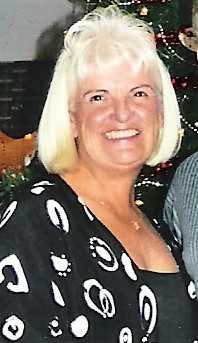
Earlier this week, I celebrated my wedding anniversary—fifty-eight years, all married to the same woman, the lissome lass I first dated when she was but sixteen.  We married four years later, embarked upon fulfilling careers, raised two lovely daughters, and retired to the life we now enjoy together…sixty-three years gone in the blink of an eye, it now seems. Egad!
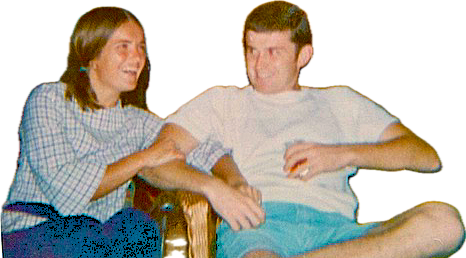
Friends probably view the longevity and success of our union from my wife’s point of view as a triumph of iron will over probability. From my viewpoint, however, it’s unquestionably a victory of blessed good fortune over whatever random fate I would otherwise have encountered.

Recently, at the behest of our daughters, we each decided to write a short memoir of our lives, intended only for family and close friends.  Mine, titled Being Me, is finished and in the hands of those I care most about; hers, titled My Story, is nearing completion. The trick, as we discovered in the writing, lay in knowing, not what to include, but what to leave out.

As we wrote, we shared memories sparked by old photos, slides, and home-movies produced through the years.  We were amazed by how much we had forgotten over time, and by how different our fuzzy memories sometimes were as we discussed the same events.

“That’s not how it happened!” I found myself declaring more than once, only to have my wife show me a faded snapshot that proved otherwise.  Admittedly, I’ve always had trouble remembering dates, so casting back to those bygone years wasn’t child’s play for me.

By the way, that trouble with dates persists even now, alas.  I recently showed up for a colonoscopy procedure after enduring the requisite purging prior to the visit, only to find I had the right day, the right time, but the wrong year! I was a whole year early! I’m still living that one down.

Through most of our marriage, my wife and I were enthusiastic participants in sports—baseball, curling, golf, hockey, tennis, skiing, swimming, to name but a few—both competitively and recreationally.  As we eased our way through middle age, entering inevitably into our senior years, many of those began to fall away. We found we could no longer glide across the arena or playing field with the same visions of grace and glory we’d previously enjoyed.  Father Time vanquishes everyone, we discovered, no matter how skilled or practised we might be.

An example for me was falling down in my follow-through a few times on the tee-boxes while smoking drives I’d always hit routinely…well, maybe not always, but occasionally.  My playing partners advised me to start wearing a bicycle helmet if I wanted to continue playing.

My exercise today consists of activities where I can’t fall down or off something. I favour the rowing machine, the treadmill (if I hang on), the stationary bike, or exercises conducted while lying on the floor.  Although not a Latin scholar, I find myself chanting under my breath as I work out: sic transit gloria mundi!

As with many things in a long marriage, my wife and I found we had to adjust and change to meet these new demands.  She spends the bulk of her time now, when she’s not reading or doing jigsaw puzzles, making gifts for family and friends out of clay, dichroic glass, and wood, an accomplished artisan.  I call her my boon companion in the arts.

Much of my time, of course, is spent writing—novels, anthologies of tales and poems, and posts on my blog—and listening to classical music.  I’m a prolific reader, as well, and give thanks constantly for online libraries.

Perhaps the biggest change for us is that we no longer find our children and grandchildren to be part of our lives, sharing our experiences; rather, we have become part of their lives, eagerly sharing their accomplishments and happenings. It is we who are the supporting actors now, and they the stars in the unfolding movies of their lives.  We’ve also discovered that this change is very comforting, to be loved and cared for by these essential people in our lives, even as ours wind down.

We still look ahead, however, to each new adventure that might come our way. One of my haiku poems illustrates that philosophy quite clearly—

more yesterdays now
than tomorrows, but it’s the
tomorrows that count


the sails of our youth,
once hoist, are mostly furled now---
though the winds still blow

Back in 1964, when we were still dating prior to marrying, a popular singer, Al Martino, released one of his biggest hits, I Love You More and More Every Day. We adopted that as ‘our song’, and we used to sing snatches of it to each other.  Over the years, it faded for some reason from our minds, although we never abandoned its premise.  But I thought of that song on my recent anniversary day, and began to sing it to myself.  I had to look up the lyrics, of course, after all this time, but the melody was etched in my memory.

On a whim, I decided to record myself singing it on a karaoke track to present to my wife. Although I used to sing bass in a men’s a cappella barbershop chorus, my octogenarian voice is a tad quavery and shrill now, and my range is somewhat limited.  Nevertheless, the sincerity of my singing has not abated, and she at least recognized the song. Sort of.

As I think back to when she and I first met, as I try to remember all that has happened since, as I marvel at the lasting of our union, I find myself overwhelmingly grateful that we celebrated this latest anniversary together, and I offer this haiku to her to reflect those sentiments—

impossible dream!
many might have thought so, but
you made it come true

trusting all that’s passed,
moving forward in good faith,
hands clasped as always
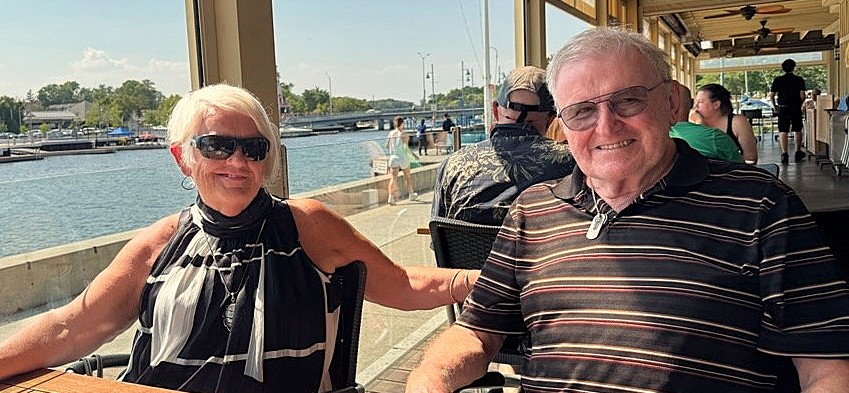
It Was You/It Was I/It Was We

It was you who dwelt inside me, it was I who knew you best.
It was you who warmed my spirit, it was I with whom you’d rest. 
It was you who shared my burden, it was I whose love was true.
It was you who’d lift me higher, it was I who soared with you.

It was I who lived inside you, it was you who made me whole,
It was I who’d lift your spirits, it was you who held my soul.
It was I who stood beside you, it was you who never failed, 
It was I who gave you purpose, it was you whose love prevailed.
It was we who were together, it was we who were o’erjoyed,
It was we who’d not be broken, it was we whose lives were buoyed.
It was we who faced the music, it was we who shared the blame,
It was we who clasped each other’s hands, it was we who overcame.

It was you who lived inside me. It was I who dwelt in you.
It was I who shared your burden. It was you whose love was true.
It was we who were e’er faithful. It was we who’d never bow.
It was we who stood, as still we do. It is we who’ve kept our vow.

The Gun

The August prompt from my Florida writers’ group is to use a “hook” within the first few lines to draw readers/listeners in to the story.  This is my offering—

I discovered the gun in the drawer of my husband’s bedside table this morning.  I’d been looking for the bottle of Xanax he’d borrowed from me last night, and I found it lying beside the gun.

To say I was shocked would be an understatement.  I sat down numbly on the bed, staring vacantly at the gun, wondering why on earth my husband would have such a thing.

It looked huge—an ugly, metallic-sheened obscenity lying there like a wide, upper-case L, one arm shorter than the other, a curled stem sticking from between its two arms like an erect, male appendage.  The shorter arm was pebbled with three shallow curves on its inside edge, obviously the arm someone would use to hold the gun and point it.  The longer arm was straight, with a round, black hole at its end.

Loath to touch it at first, I eventually gave in and picked it up between thumb and forefinger.  It was heavy, and oily to the touch, almost reptilian.  After a moment, I clasped it in my other hand and pointed it at my reflection in the mirror on the back of the bedroom door opposite.

The sight frightened me to the point I cried out and dropped the gun on the carpet.  It landed with a soft thud, then lay at my feet, pointing back at me.  Gingerly, I stirred it with my toe to point it away.

Why does Frank have this…this thing in his drawer?  What’s he afraid of?  And why didn’t he tell me he has it?

The gun was still on the carpet when I came back upstairs after lunch.  I knew I couldn’t just leave it there, but I had no idea what to do with it.  Without knowing why Frank even had the thing, I couldn’t put it back where I’d found it.

What if he’s planning to use it on me?

Sitting on the bed again, I swallowed a Xanax from the bottle still lying in Frank’s drawer, then tossed the bottle to my side of the bed.  As I did, a light went on in my anxious brain.  I picked up the gun carefully, walked around to my bedside table, and put it in my own drawer.  The pill bottle followed it, and I closed the drawer firmly.

There!  Problem solved!

Downstairs again, I couldn’t stop asking myself why Frank had the gun in the first place.  We’ve had our share of arguments over the years like any married couple, maybe more in the past few months.  But there’s never been anything leading either one of us to contemplate violence.

What am I missing?  Is there something different lately?  Is he tired of me?  Is there someone else?

Dinner was unusually silent, mostly because I replied to Frank’s conversation in monosyllables.  By dessert, he’d stopped trying, and he scurried off to his den afterwards to watch a game.  I busied myself reading in the living room.  Or tried to.

Why is he so quiet?  What’s he planning?

The old grandfather clock in the vestibule was chiming eleven as I climbed the stairs, dreading entering the bedroom, not knowing what might be waiting for me.  Frank had headed up half an hour ago, so if he had something planned, he’d had time to get ready.  I wondered if he’d found the gun in my drawer.

He was lying in bed reading when I came in.  “I took another Xanax from your bottle,” he said sleepily.  “Had a rough day.”

I slowly got undressed before visiting the bathroom, not understanding how he hadn’t found the gun when he got the pill from my drawer. 

Maybe he did!  Maybe he’s got it under the covers…

When I came back from the bathroom, his light was off.  I carefully crawled in beside him, lay quietly for several minutes until I could no longer hold it in.  “Frank?  Are you still awake?”

“I am now,” he mumbled.

“Frank, why do you have a gun in your drawer?”

“A what?”

“A gun!  Why is there a gun in your drawer?”

“What are you on about?” he said, his voice sharper now.  “I don’t have a gun!”

“I found it this morning,” I said, my own voice rising.  “Don’t tell me you don’t have a gun!  It’s right here in my drawer now.”

Rolling over, Frank opened one eye.  “Have you been taking your meds?  You’re talking crazy!”

“Crazy?  Crazy?  Okay, then what’s this?”

I slid out of bed, yanked open my drawer, pulled out the gun.  Pointing its ugly snout at him, I said, “This is a gun, Frank!  And I found it in your drawer this morning.”

He stared at me in disbelief for a moment, then rolled his back to me again.  “You’re delusional, Emma.  Take your pill and let me get some sleep.”

Infuriated by his nonchalance and denial, I took a deep breath, closed one eye, and pulled the trigger.  The gun jerked violently in my hand, hurting me, and the loud Bang! deafened me.  And then…and then…

I wakened in a cold sweat.  Frantic, I turned to my husband, but he was snoring peacefully beside me.  And despite my frenzied search in the darkened room, there was no gun to be found. 

When I awaken again, it’s almost ten o’clock.  The sun is streaming its narrow beams around the edges of the shades, still pulled down, and I see dust motes floating lazily in its warmth.  Frank has dressed and gone to work.  I lie there for a few minutes, reliving the dream.

Thank God that’s all it was!  Imagine if it had been real!

As I’m washing my hands in the bathroom, I wince at a tinge of pain in my right palm, and I see that it’s lightly bruised.  After dressing, I remember to take my pill before heading downstairs.  On the way out of the bedroom, I hesitate a few moments at the door.

Don’t be stupid!  There’s nothing there!  Forget it!

 Nevertheless, I decide to check, and to my horror, I discover the gun in the drawer of Frank’s bedside table.

Tonight!

Each week, my writers’ group issues a prompt for a piece of writing. This short tale is prompted by the song ‘Tonight, Tonight’ from West Side StoryIf you wish, you can listen to an audio clip of my men’s choral group singing the song as you read the story—

The ring burned a hole in Tony’s pocket all day, from the time he picked it up just before noon until he found his way to the roof of Maria’s apartment building shortly after dark.

She knew he was coming, of course, just as he had for several nights over the past few months.  It wasn’t easy because her brother and his friends—all members of the gang that fought Tony’s crew almost daily on the mean streets of the city—would make short work of him if they found out.

Tony’s Jets, unaware of his repeated visits to enemy territory, would avenge him if her brother’s Sharks harmed him, but they would never approve of, nor understand, his love for Maria.  The star-crossed lovers were on their own.

The ring itself wasn’t much, not on the salary Tony earned as a car-jockey at Smitty’s Garage, but it had sparkled and gleamed under the light in the pawn shop where he’d discovered it.  He hoped it would do the same under the full moon tonight.

The fact that it was probably stolen property being fenced through the pawnbroker bothered Tony not at all.  He’d had to shell out a good chunk of his hard-earned dollars for it, and that was all that mattered.  He didn’t think Maria would care, either, although he had no intention of telling her.

All he wished for as he made his way stealthily up the fire-escape ladder to the roof was that the ring-stone would reflect brightly in Maria’s eyes when he slipped it on her finger.

At the top, he slithered over the concrete abutment to crouch on the gravel rooftop, almost invisible in the dark, glancing furtively this way and that, hoping to see nothing amiss.  And then, after a few seconds, he spied the miss he had come for, practically indistinguishable in the moon-shadows by the stairwell door beside the elevator shaft.

Maria saw him at the same moment, and even in the darkness he saw her face light up.  He thought she must surely hear his heart pounding, despite the distance between them.  A few heartbeats later, they were entwined in each other’s arms, Tony’s face buried in her hair, its smell like sweet caramel and spice.  Their eager bodies radiated heat as they pressed against one another, softly proclaiming their love in English and Spanish.

O mi amor! Maria whispered.  La luz de mi vida!

I have something for you! Tony said, reaching into his pocket.

As he had hoped, the small stone atop the ring caught the moon’s light, seeming to release a small, silvery fire.  He knew he would never forget the small gasp that escaped Maria’s lips when she saw it, a heartfelt response to last a lifetime.

Marry me, Maria.  I love you more than life itself.  

Maria’s eyes shone wetly as she looked deeply into his.  Si mi amor, me casaré contigo!  Te amo más que la vida misma!

They moved out of the shadows, closer to the parapet, and Maria leaned against the abutment as Tony plucked the ring from the box.  Carefully, lovingly, he took her hand in his, lifted her finger, and…

Oh shit!  Shit!

The ring, rather than slipping onto her finger, slipped from his hand, bounced once on the concrete ledge, and disappeared into the blackness twelve storeys below.  Tony made a wild stab for it, balancing precariously over the edge, realizing too late he was going to fall.  Maria grabbed his arm, his shirt, but he was too heavy and she was pulled backwards with him into the void.

No one was in the dark, garbage-strewn alley when they landed.  They were discovered the next morning—two lifeless rag-dolls embracing each other, arms still intertwined.

A small, cheap rhinestone ring was lying on the pavement between them. It was quickly purloined.

On the State of My Parents’ Marriage

As the 107th anniversary of my father’s birth approaches, I’ve been reflecting on the state of his marriage to my mother.  Their union was ended after sixty-one years when he passed away in 2003.  They had been temporarily separated several times during their life together, mostly during business trips my dad undertook, but never for more than a few days.  His last trip, at age ninety-two, is the only one from which he never returned.

My mother lived another seven years, until ninety-four, the longest period of her life without him since they married in 1942.

As I look back, they seem to me to have been an unlikely couple.  He was the only boy in his almost-Victorian family, coddled (if not spoiled) by his parents and sisters.  He wasn’t arrogant by any means, but he possessed a certain sense of entitlement, a sense that he was born to live at the centre of his universe.  Understandable, I guess, given that he lived at home until he married, looked after by doting parents.

Billy-Boo at 32 2

My mother, who had three sisters and a brother, was raised by a Presbyterian mother and a Roman Catholic father—themselves an unlikely match—who taught her you had to earn what you wanted.  Nobody was about to give you anything for nothing.  Taking the lesson to heart, she became determined to succeed at whatever she did.  My mother had the strongest will of anyone I’ve ever known.

unnamed3

I’m still not sure how two such different people—she a high-powered woman, he a less highly-driven man—could find each other, wed each other, and remain with each other for so many years.

During their marriage, she left him on very few occasions, mostly on excursions with family or friends, and never for long.  She was fearful, I suppose, of leaving him alone to cope with five children.  After all, we could eat only so much oatmeal porridge, grilled-cheese sandwiches, canned spaghetti, and jello.

12509160_10153395824301705_5125226544804302947_n

Not that my father couldn’t cook; he could.  He could also house-clean, do the laundry and ironing, shop for groceries, help with homework, perform small repairs around the house, or do any other chore necessary to sustain a family of seven.  But he preferred not to—not if someone else would.  I was a grown man before I realized he had mastered the art of feigned incompetence.

Mind you, that might have been a reflexive defence-mechanism.  My mother didn’t make it easy for him, being something of a perfectionist.  Although she believed in the adage that it was better to teach people to fish, rather than giving them a fish—trusting they would therefore become self-sufficient and proficient—she also had the annoying habit of checking everything my father did after he did it, to ensure it was done to her exacting standard.  I think he figured it was better most of the time to let her do the various tasks herself, rather than suffering through her re-doing of his attempts.

They were loving parents, although their parenting style evolved over the years between my birth and that of my youngest sister, eleven years later.  My mother never lost her sense of high hopes for all of us, but she became more tolerant, more forgiving of our shortcomings as we, and she, grew older.  It wasn’t easy for her, though, because her expectations of herself never lessened.  I loved her for that.

My father, on the other hand, entered parenthood with a blissful belief that everything would work out fine.  And I think, despite the contrary evidence we five children provided from time to time, he maintained that belief throughout his life.  Of course, he became exasperated on occasion—on dozens, even scores, of occasions, actually.  To this day, I can hear his favourite expression of frustration when I had somehow messed up again.

Crooked cats!” he’d say, shaking his head dolefully.  But he was ever quick to forgive.  I loved him for that.

He usually called my mother Dorothy—never Dote, as her sisters did, and never Dot.  His favourite pet-name for her was just that, Pet.  She called him Bill; if she ever used another form of address, I can’t recall it.  I never heard endearments for each other, such as Sweetheart, Darling, or Honey, from either of them.  Yet I never doubted their love for one another.

Perhaps it was their sense of humour that sustained them through difficult times and enriched the many joyful times.  I remember overhearing my mother’s admonition to my father, whispered from a hospital bed where she was recuperating from a near-fatal heart attack at age eighty-five.

“I guess this means no more wild sex for awhile,” she teased.

Crooked cats, Dorothy!” was all my ninety-year-old father could say, shocked that she would say such a thing in front of me.

Even at the end of his life it was there, that shared, loving camaraderie.  As my father lay moments from death, my mother leaned close to him and said, “Would you like me to sing to you?”

Without opening his eyes—which would have been twinkling if he had—he muttered, “Not particularly!”

It was their final secret joke.

unnamed2

So that’s how I remember them and their life with one another.  And I choose to believe they’re together again, forever, their separation ended.

That’s just how it was with the state of their marriage.

She Married Her Father-in-Law!

Around the community where we live, I am known to most of our neighbours as Donna’s husband.  This, I think, is due more to my wife’s friendly, caring nature with everyone she meets, than it is to my somewhat more reserved approach.

I don’t mind, of course, because it garners me automatic entry into the circle of regard in which she is held.  I benefit from instant credibility, instant relevance, instant acceptance.

“Oh, you’re Donna’s husband!” is an exclamation I often hear, followed quickly by a wide smile from the speaker, sometimes even a hug.

hugging

Among my own family, however, my identity has morphed into something I never quite anticipated.  Increasingly now, whenever I encounter sisters, nieces and nephews, or other extended family members, I am told I look like my father.

“You’re just like him,” they declare.  “You even sound like him.”

They’ve heard me sneeze, you see, which reincarnates my father every time.

Although I loved him very much while he was with us, I confess I never aspired to be exactly like him.  I wanted to be my own man—not so unusual a desire, I suppose, for sons of successful, admired fathers.

As a young man encountering people who knew him, I would often hear, “Ahh, you’re Bill Burt’s boy.”

And I would struggle to suppress the haughty reply, “Actually, he’s my father.”

But now, happily entrenched in my mid-seventies, I am no longer possessed by that same hubris.  Just as I am inordinately proud to be both a father and grandfather in my own right, I am more than happy to be recognized as my father’s son.

IMG_3824

My beautiful picture


Still, it comes as something of a shock to be reminded by those who knew him that, more and more, I behave just like he used to.  In photographs, I gaze at the camera with the same bemused expression he always had.  I remember thinking he was trying for a mix of casual and noble at the same time; I don’t know what I’m attempting to do, but I somehow attain the same inane facial expression.

My mouth, at rest, turns downward at the corners, making me appear grouchy, when I am anything but.  I try to smile broadly for the camera, as he did, if for no other reason than to dispel that impression.

In many pictures, I’m sitting the way he did, or standing with the same posture.  As my jowls begin to droop, as my hair turns white, my profile shots are becoming eerily similar to his.

In videos, I walk the way he used to, shoulders hitched slightly high, strong chin tucked in, eyes peering out from under raised eyebrows.

And (somewhat depressingly, I must admit), I feel awkward now as I clamber from my easy chair to my feet, as I try to step into my trousers without falling over, as I walk slowly upstairs one-step-at-a-time—just as I remember my father doing at my age!

upstairs

I must confess, however, that I do like it when the comparison is reversed; for example, when my grandchildren see a picture of my father (whom none of them remember), and say, “Wow, Grandpa, he sure looks like you!”  That turns the corners of my mouth up every time.

And I appreciate the truth now in the lines from William Wordsworth—

…So was it when my life began,

So is it now I am a man;

So be it when I shall grow old…

The Child is father of the Man.

No one in our community ever knew my father; but if they were ever to see a picture of him, I’m sure I’d no longer be known as Donna’s husband.

Instead, the whispers would be, “Can you believe it?  She married her father-in-law!”

Threescore and Ten

When we were very young, the biblical threescore-and-ten seemed a lifetime away—as, indeed, it has been.  But in a few short days, my partner, my lover, my wife, will complete her seventieth year, thus beginning her eighth decade.  C’est incroyable!

We met when she was sixteen, courted for five years, then married, a loving relationship that carries on to this day—fifty-four years from high school to septuagenarian sweethearts.

 donna-1970-2


A few years ago, when we lived in a forest home on a lake, I wrote this poem for her, and I include it here to mark my best friend’s seventieth birthday—

Sunlight,

Slowly streaming, peering, through tree branches

Seeming reaching up and out to touch it

And be touched.

Dark shade-spots, never-lasting, shift on forest-run

And up the stretching trunks,

To dance ‘cross leaves turned up to see the sun.

Water,

Reflecting morning back to bluing sky

Above, from fiery diamond-dance of light

Atop the waves.

The lake awakes as light turns trees of green to gold

And traps their images

In mirrored mere, quicksilver, green and cold.

Mist,

Wet, wraithlike trails of dew that do not seek

The morn, but rather gather, clutched, and drift,

And look to hide

Until, discovered by the sun’s relentless rays,

Surrender to the light

That thrusts elusive phantoms from its gaze.

Breezes,

Approaching shyly, coming on to shore,

From jigging o’er the watertops and waves

That lap the land.

With sighs they softly rise to stir the trees awake,

Then us, through mesh that screens

The out from in, and stubborn sleep from wake.

I stir,

And lying on the bed in my repose,

With eyes still closed, I draw a morning breath

Into my soul.

And then, eyes opening to the world dawning anew,

I also turn to see the morning sun…

And it is you.

donna-dec-03

It is you, indeed!