Nature Will Prevail

Many years ago, my wife and I followed after the outgoing tide in the Bay of Fundy, along with our two young daughters, marvelling at the wonders we spied on the surface of the seabed.  We laughed as our footprints gradually disappeared behind us in the spongy, soaked sand, and we strayed unmindfully farther and farther from shore. 

When the tide reversed its course and began to flow back in, we dallied until the water was sloshing around our ankles before turning for shore.  To our surprise, the rising surge outpaced our progress, the four of us able to move no faster than two pairs of tiny legs could muster.  When the water got to our mid-calf level, we picked the girls up in our arms and picked up our pace, more than a touch anxious that we had underestimated our own capabilities.

We finally made it safely to higher, drier ground, but not before the water had soaked our buttocks, and to this day, I remember the knot of fear that had settled in my stomach, the certain knowledge that I was powerless against the relentless force of nature pursuing us shoreward.

Nature is like that—unrelenting, uncaring, inexorable.  In our arrogance, we humans like to call it Mother Nature—in the same way we have anthropomorphized so many presumed deities and abiding mysteries.  But nature is the furthest thing from a maternalistic, loving parent.

Since our planet first began its orbit around the sun, a natural environment has existed, an environment that eventually spawned life in its most primitive form.  We humans are but a relatively-recent expression of that life-force, and we fancy ourselves its most highly-developed manifestation.  From our very beginnings, we have sought to discover, understand, and control our surroundings—and to be fair, we have certainly done that to some extent.

Nevertheless, we find ourselves still subordinate to the forces of nature—feasts and famines, pestilence and disease, floods and droughts, tides and winds, wildfires and glacial melting, rising sea-levels, earthquakes and volcanic eruptions, to name a few.  We have managed to mitigate the damage of such events to some degree, but we have not been able to eliminate them.  In fact, the cataclysmic effects of nature’s actions have, over time, led to the extinction of many forms of life; taxonomists estimate that more than ninety-nine percent of all species that have ever existed are extinct.  And so, the question naturally arises, could that same fate await our species?

The International Union for Conservation of Nature (IUCN) publishes a Red List of Threatened Species, an inventory of the global conservation status and extinction risk of biological species.  It includes 2.16 million current animal species, almost surely an underestimate, the most numerous of which is insects, almost half the total.  In descending numerical order, the other groups are: molluscs, arachnids, crustaceans, fishes, reptiles, birds, amphibians, mammals, and corals.

We humans are just one species among the mammals, the second-smallest of the ten groups, a mere 0.003 percent of the total.  Our group numbers more than 6500 recognized species, and of those, we are the most numerous (with rats being second).

In addition to the 2.16 million animal species on the planet, there are more than sixty thousand other species of life, including protozoa, plants, chromists, fungi, bacteria, and archaea.  Among these, bacteria—the smallest, simplest, and most ancient cells—exert a tremendous influence on human life. 

In our bodies, bacteria inhabit our digestive system, live on our skin, and contribute to our general wellbeing.  But there is a downside, too; infectious diseases caused by bacteria have killed more than half of all humans who have ever lived, through pandemics such as the bubonic plague.  Other examples of disease caused by bacteria include tuberculosis, whooping cough, sexually-transmitted infections, and e-coli.  Because bacteria can reproduce themselves in less than an hour, mutations can emerge and accumulate rapidly, causing significant change, such as resistance to antibiotics.

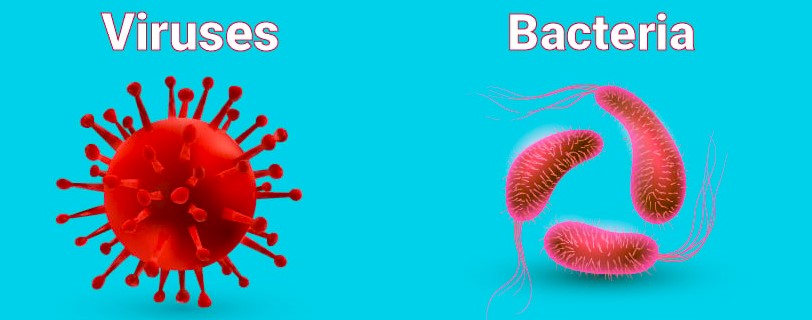
Viruses, by contrast, are not living organisms.  Rather, they are an assembly of different types of molecules that assume different shapes and sizes, but they can be as dangerous to human life as bacteria.  Unlike bacteria, they cannot reproduce on their own, but need to enter a living cell to replicate and evolve.  Once inside, they take over the cellular machinery of their host and force it to make new viruses.  They can infect humans, other animals, plants, and even bacteria, and are able to evolve and jump from other animal forms to humans.  They cause diseases like the flu, the formidable common cold, and SARS-CoV-2.
In the face of many perceived threats to our survival, a group of prominent researchers in Australia, the Commission for the Human Future, identified a list of risks to life on the planet: climate change, environmental decline leading to species extinction, nuclear weapons proliferation, resource scarcity (especially water), food insecurity, dangerous new technologies (such as AI), overpopulation, chemical pollution, pandemic disease, and denial and misinformation.  Six of the ten are clearly within nature’s purview; the other four would be the result of human miscalculation.

What our species does about these ten existential threats in the next few years will determine whether present and future generations face a safe, sustainable, and prosperous future or the prospect of collapse and even extinction, the report said.

It also stated, Understanding science, evidence, and analysis will be key to adequately addressing the threats and finding solutions. An evidence-based approach has been needed for many years.  Under-appreciating science and evidence leads to unmitigated risks…

Shaping [the human future] requires a collaborative, inclusive, and diverse discussion.  We should heed advice from political and social scientists on how to engage all people in this conversation…

Imagination, creativity, and new narratives will be needed for challenges that test our civil society and humanity.

I confess to some doubt as to whether our species, tribalistic and combative as we are, will be able to manage that collaborative approach.
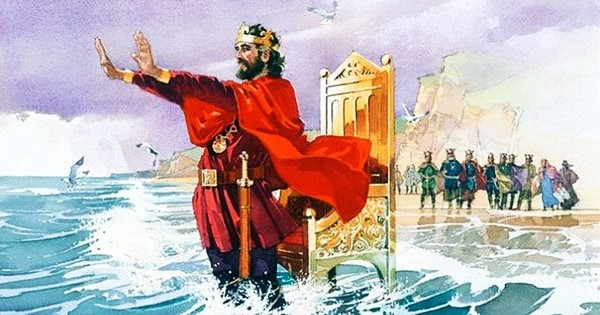
And I think back to the apocryphal story of King Canute, trying to hold back the tide—knowing full well he could not—in an attempt to teach his flattering courtiers that an earthly monarch could exert no control over the natural elements.  True or not, the story illustrates the conceit of humankind in thinking we can ever be in control of nature.

As my wee family found out so long ago on the shores of the Bay of Fundy, we are most definitely not.

Nature will prevail, I fear.  And the planet will continue its evolutionary journey around the sun, perhaps without us, until that star, too, is extinguished.

Green Fishing

Each month, wordpress.com, the host of my blog, issues a writer’s prompt. This month’s prompt is the word GREEN, and this is my submission.

I’m often asked by old friends about my retirement to the green fields of Florida, and what I do to amuse myself all the livelong day.  Knowing me well, many of them assume I do a lot of fishing—because it’s true, there are few pleasures in life to compare to the solitary joys of fishing.  But only, of course, if it’s done properly.

It’s probably true that there are as many ways to fish as there are people who go fishing.  So the right way will be defined differently by each of us, meaning how I do it could be totally inappropriate for anyone else.

But as a younger man in the evergreen wilds of northern Ontario, my routine was perfection, itself—or almost, since there was one flaw, which I shall come to. 

As I remember, the proper fishing excursion would begin quite early in the morning, when all save the birds were still asleep.  I’d rise quietly, so quietly as to pass unnoticed by comrades on my way from the cabin to the water’s edge.  My weathered, green canoe, already laden with the necessary gear, would be launched smoothly into the mist-enshrouded lake.  My body would stretch exultantly as the paddle cut deeply through the water’s mirrored, green surface.  The pleasure had begun.

I’d be well offshore when the sun first brought the forest alight in lively greens, bouncing and dancing its way through the translucent leaves.  I’d watch as the mist lifted, a curtain rising before an entranced audience of one.

As the green water parted before my craft, bowing away in widening ripples to lap gently against the shore, the lilting lament of a loon might be all that broke the silence.  Great granite slabs, topped by lush, green bush and trees, plunged down into the lake, which tossed back their image from its glassy, green depths. 

Peace, rampant upon nature’s field.  The pleasure was full-known.

Alas, it would not last.  For to fish is to interrupt the sylvan sequence of morning life, to disturb the natural ebb and flow.  Yet, not to fish would have denied the ostensible purpose of the visit.

And therein lay the flaw in my perfect way to fish.  The act would have been almost a sacrilege in nature’s green cathedral of calm, and devoid of any joy.  All the pleasure would have been shattered by my clumsy intrusions.

Thus, I had to adapt in order to come to grips with the incongruity of being a fisherman who doesn’t like to fish.  My battered, green tackle box always contained a book or two—a novel, perhaps, or a favourite book of verse.  It held my harmonica, that ‘one-man band’ with which I could while away countless hours.  And there was always a camera, loaded and ready.

In short, I still went fishing, but I did not fish.  When I reached my special, green-encircled fishing cove, I’d cease paddling, sink back in the bottom of the canoe, and just drift ‘til it was time to go back.

Metallic-green waterbugs would skitter their erratic dash across the water, an occasional, green-and-blue-bejewelled fish would jump with a splash.  And whenever a kingfisher darted down to stand on the prow of the canoe, I would know I’d become a piece of the peaceful scene I was observing—as one with my surroundings, at once apart and a part of them.

There were the inevitable questions from the greenhorns, of course, when I’d return from each excursion.  “Where’d you fish?  What were you using?  Did you catch anything?”

“Catch and release,” I’d explain modestly. Or I’d say, “Nothing was biting, just a few nibbles.”

In that respect, I guess, I was like a true fisherman.  I would never tell anyone where I’d been when I was fishing.

That would have spoiled everything.

Tracks in the Sand

One long-ago February, when winter’s white enveloped the north, one of our daughters came with her family to visit us in Florida.  The favourite activity for our grandson and granddaughter (the third of the clan being still an infant, unable to express her opinion) was going to the ocean, to the beach.

Our usual routines were fairly standard.  We’d park and unpack the car, each of us carrying the beach necessities according to our age and abilities.  We’d trudge the access path, through the dunes adorned with sea oats, pass through the rickety snow fence, and pick a spot that suited us all.

In short order, the umbrellas would be unfurled, the chairs unfolded, the blankets spread, and the toys strewn across the sand.  Peace would reign for Nana and Grandpa, watching the sleeping baby while her parents and older siblings hit the water.

beach-sand-grass-sunshine_tn2

On one such occasion, a small incident occurred which didn’t have much significance at the time.  In retrospect, however, it has become quite meaningful for me.

My daughter, my wife, and I embarked on a walk along the beach after the kids had finished splashing in the ocean.  Their dad stayed with them, helping build grand castles in the sand.

We decided to hike through the dunes on the way out, and come back along the shoreline.  I led off, sinking ankle-deep into the soft sand, feet clad in sandals to protect from the heat and the sandspurs.  After a few minutes, we came upon tracks in the sand, apparently made by some small creature, perhaps a mole.

What made the discovery unusual was that they suddenly stopped in a small depression in the sand, as if the mole had simply vanished.  The tracks ended without a trace.

My daughter suggested what might have happened.  The mole, she reckoned, had been taken by a predator, likely one of the falcons that frequent the area.  Indeed, on closer inspection, we could detect brush-marks in the sand, caused by the beating of a bird’s powerful wings.

We wended our way slowly, backtracking along the poor victim’s trail.  It occurred to me that, a scant few yards before the depression in the sand, the mole would have had no inkling it was about to die.  It was alive until it wasn’t.

Apparently, though, it knew it was under attack, for we found another, earlier depression in the sand where the bird had struck unsuccessfully.  The mole had jumped sideways, scurried under the protection of some sea-oats, then emerged again to flee along the sand.

Our backtracking ended when the trail curled away from the beach, into dense, long grasses, whence the mole had come.  We soon forgot about it as we continued our stroll, eventually heading back along the water’s edge to our grandchildren.

A few days later, I chanced to hear someone on the radio airily proclaiming that, if we all discovered the world was to end tomorrow, telephone lines everywhere would be jammed by people calling home to say all those things they had forgotten to say while there was still time.  Social media sites on the internet would crash from the traffic.  It made me think again of the mole whose tracks we had seen in the sand.

When it left its burrow for that final time, did it have its life in order?  Had it said all those things that matter to those who matter?  Or were there things it had left undone that should have been looked to sooner?

And I thought of myself.  Does my journey through life leave tracks in the sand for some other eye to see?  Am I subject to a mortal strike from some hidden foe?  And if, or when, it happens, am I prepared and at peace with those who care about me?

When I got right down to it, I didn’t see much difference between that mole and me.  Except one.  I’m still making tracks in the sand.  I still have time to ready myself for whatever is to come, and to be at peace with all who matter.

Such are the thoughts that arose as a result of a stroll along a sunny beach in Florida.

Love in the Morning

Sunlight,

Slowly streaming, peering, through tree branches

Seeming reaching up and out to touch it

And be touched.

Dark shadespots, never-lasting, shift on forest-run

And up the stretching trunks,

To dance ‘cross leaves turned up to see the sun.

Water,

Reflecting morning back to bluing sky

Above, from fiery diamond-dance of light

Atop the waves.

The lake awakes as light turns trees of green to gold

And traps their images

In mirrored mere, quicksilver, green and cold.

Mist,

Wet, wraithlike trails of dew that do not seek

The morn, but rather gather, clutched, and drift,

And look to hide

Until, discovered by the sun’s relentless rays,

Surrender to the light

That thrusts elusive phantoms from its gaze.

Breezes,

Approaching shyly, coming on to shore,

From jigging o’er the watertops and waves

That lap the land.

With sighs they softly rise to stir the trees awake,

Then us, through mesh that screens

The out from in, and stubborn sleep from wake.

I stir,

And lying on the bed in my repose,

With eyes still closed, I draw a morning breath

Into my soul.

And then, eyes opening to the world dawning anew,

I also turn to see the morning sun…

And it is you.