Round Tables

It is no mean feat for writers to create an imaginary world that readers will come to see as true and historically accurate.  Fashioning something from one’s imagination that resonates with readers, a tale that merges with their perception of reality, is not easily done.

Two relatively recent examples of such efforts are Tolkien’s Lord of the Rings and Martin’s Game of Thrones, both of which have convinced many an avid reader of their legitimacy.
As a young boy at the dawn of the 1950s, it was the magical tales of King Arthur and the Knights of the Round Table that captured my fancy.  I first read them in The Boy’s King Arthur, a version of Malory’s Le Morte d’Arthur, which abridged and bowdlerized items from the original text, sexual and otherwise, that were deemed unsuitable for children.

I was completely captivated by the legends of the Lady of the Lake, Arthur’s conception at Tintagel, his seizing of the sword Excalibur, his alliance with the magician Merlin, his ultimate battle with Mordred, and his laying to rest in Avalon.  Most intriguing of all was the notion that he had not died, that he was merely sleeping, that he would rise again, the ‘once and future king’.

I eventually graduated to the reading of unexpurgated versions, but in the beginning I fancied myself as many of those brave warriors:  Lancelot, until I learned of his treachery with Arthur’s queen, Guinevere; Gawain, who bravely faced the Green Knight in a chivalric romance told in Middle-English alliterative verse; Perceval and Tristram, whose feats of derring-do enthralled me; and of course, Galahad, whose sacred quest for the Holy Grail seemed the most inspired.
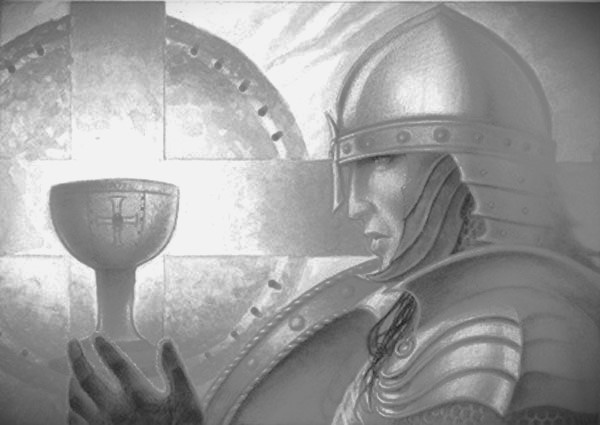
I subsequently read about that storied quest in other works, and learned from more than one that two phrases in French—san graal and sang royale, pronounced almost identically—translate to two different things: Holy Grail and royal blood.  This assertion expostulated the theory that following Christ’s death, his wife and children fled to France, where his bloodline continued anonymously, eventually merging with the Merovingian dynasty, then the Carolingian dynasty, all the way to William the Conqueror—who, in a tidy completing of the loop, came to rule over Arthur’s ancient kingdom.

True or not, the story affirmed for me that the greatest Arthurian quest came to fruition in the merging of these two fanciful tales, one religious, the other mythical.  And for a long time in my youth, I believed.

The lasting impression I took from this childhood reading, however, was the concept of the Round Table.  In its simplest form, I thought it presented an ideal way of governing or managing a kingdom, an empire…or any enterprise.  Everyone sat around the circular table, each facing everyone else, and all had an equal say in the decisions that were made—all but one, of course.  The King, by virtue of his position, reserved the right of veto.

In such a setting, the objective of any group’s deliberations is always to achieve consensus on matters discussed, the theory being that everyone will have a greater commitment to decisions made when they feel they’ve contributed to them.  The process involves give and take, it usually means no one gets all of what they want, but it allows everyone to get some of what they hoped for.  Some might call that win/win.

As a young teacher in the mid-1960s, chock-full of enthusiasm for and faith in the teaching/learning paradigm, I furnished my classroom with circular tables, not individual desks.  My thirty-plus students sat in groups of five or six around these tables, groups whose membership rotated periodically, based on their accomplishments and interests. 
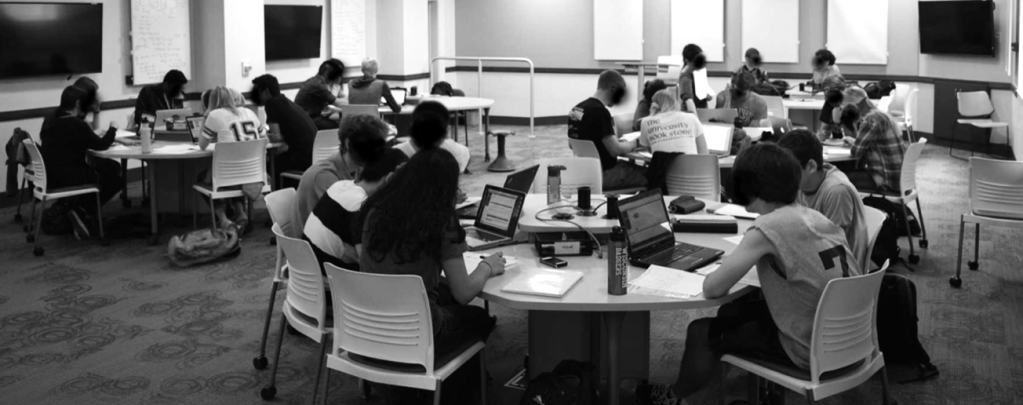
Our interactions, the teachings and learnings we shared, usually (but not always) were conducted with me sitting around a table with them.  To this day, I find it remarkable how much self-discipline, cooperation, and independent learning took place among the young people at those tables.  Only rarely did I ever have to exercise my right of veto.

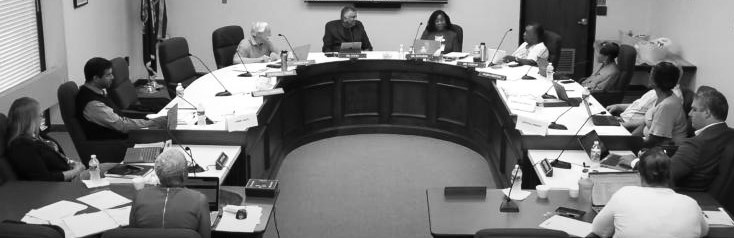
Twenty years after leaving the classroom, installed as the CEO of a school board district, I still favoured round tables.  In my office, senior staff met weekly around a large, circular oak table, where everyone had a valued voice.  We didn’t always agree on how best to proceed with certain matters, but when we concluded our discussions, each of us felt we’d had the opportunity to make known our views.  And all of us acted on the consensus decisions with total commitment.  And again, I almost never had to decide arbitrarily on a course of action.

In the boardroom, where elected trustees met weekly to discuss and make policy, they sat at desks arranged in a circular shape, each of the fourteen with a direct view of the others.  The chairperson of the board managed the meetings according to established rules of order, and only occasionally overruled a colleague.  Decisions were made by voting, as required by the Education Act, but only rarely were those votes disputatious…and never acrimonious.  I believe there was something about sitting in the circle formation that elevated the level and tone of discussion, that enabled consensus decision-making.
As a young father, I sat with my wife and two daughters around a circular kitchen table, virtually every night, for dinner together.  Any of us might miss now and then, given our respective work and school commitments, but sitting down around that table was the established custom, one we all honoured until the girls headed off to university.  Our discussions centred on what all of us were doing at any given moment, and everyone contributed freely.  No topic was off-limits (although when the girls were very young, some issues were covered only cursorily, appropriate to their age).  Looking back now, I consider the learnings we all experienced with each other as indispensable to our family’s enduring ties.

And to think, it all began for me with my fascination for the Arthurian legends I first read as a boy, stories of the Knights of the Round Table that imbued me with a sense of romanticism and chivalry that I still value today.

I remain eternally grateful to all writers who have managed to create a world that I and other readers consider enjoyable and aspirational…even if imaginary.

 And I still wonder, even at this great age, if Arthur is merely sleeping at Glastonbury Tor, as the legends maintain, and if we shall ever see his like again, holding forth at his great Round Table.
A Better Story

Can bad decisions lead to better stories?

Let us suppose for the purpose of crafting an entertaining story that your lead character’s dotty, old Aunt Hilda—whom he hasn’t seen in forty years, and who recently died at the impossibly-old age of 103—left him, her only heir, the sum of twenty-five million dollars, all in bearer-bonds, and twenty-five cats who shared her last abode.

Your protagonist is elated, of course, and only mildly sorry he hadn’t taken time to visit the old gal from time to time.  After placing the cats out for adoption and depositing one million of those dollars in his personal chequing account to cover immediate lifestyle changes, he now needs to decide how to properly invest and grow the remaining twenty-four million.

To whom does he turn for advice?

He could enlist the help of reliable, established bankers, investment counsellors, financial gurus, and market analysts, all of whom would be eager to serve.  He knows he could safely rely upon these learned and experienced people, whose profession it is to help other people make money—being handsomely reimbursed for their efforts, naturally.  Let us call this the elite option.

But if he has never considered himself an elite, he might decide to call on twenty-five of his closest friends who—in return for the chance to celebrate (and perhaps share in) his great, good fortune—tell him they will devise a sure-fire strategy to determine how he will invest the bulk of his new-found wealth.  That strategy, in order to be enacted, need only be approved by a simple, majority vote of 13–12, swayed perhaps by the most voluble, the most persuasive of the group, rather than by the most knowledgeable.  

Let us call this the populist option, and if your protagonist deems himself a man of the people, he might well choose this second course.

Or, let us suppose for the purpose of creating another entertaining story that your lead character has been recently diagnosed with a life-threatening illness, out of the blue, and that she has very little time to decide on the best medical option that might save her life—although there are no guarantees, of course, from any of them.

To whom does she turn for advice?

She could, in addition to talking with her loved ones, consult with her physician and the specialists to whom the physician refers her, all experts in their field.  Before choosing her treatment plan, she might seek second, third, even fourth opinions from people who have studied their entire lives to deal with critical situations such as hers.  Let us call this, again, the elite option.

But let us suppose again, if she does not reckon herself among the elite, she might gather together concerned family members and friends, all of whom love her and wish her only the best, to ask, by majority vote, which treatment plan they believe she should follow—the established medical option, a naturopathic or homeopathic approach, or maybe an experimental route (which might require travel to a foreign country for procedures not approved in her home and native land). 

Let us call this, again, the populist option, and if she fancies herself of the people, she might choose this second course.

In these examples (deliberately simplistic, I know), there are dilemmas confronting these two characters and the decisions they would have to make.  To whom would they turn in such critical situations, the elites or the populists?

The authors of such stories, too, face these same dilemmas, these same decisions.  Which path should they choose for their protagonists to follow in order to compel their readers to stay locked in to the story?  And will those decisions prove good or bad?

In one telling of the first example, the lucky heir to the twenty-five million dollars might turn to the wise counsel of the investment community, prosper as his fortune grows, and live in a cloistered castle to a ripe, old age.  End of story.

But in another telling, he might seek the advice of his friends, invest and lose his entire inheritance based on their advice, realize belatedly the error of his ways, embark on a driven quest to recoup his lost fortune, clash and joust with pillars of the financial community, rise and fall again and again, only to triumph at the end—a true Horatio Alger story.  Or perhaps, in a cruel twist of fate, he might lose it all yet again and die miserably in an abject state of poverty.

Only the author can decide.

In one telling of the second example, the stricken person might rely upon the medical establishment and, after a period of treatment and rehabilitation, survive to live a long and happy life.  End of story.

But in another telling, the person might turn to family and friends for a decision, choose unwisely, see her condition worsen unto the point of death, only to be miraculously saved by the last-minute intervention of a handsome, dedicated doctor who refuses to be rebuffed by quackery.  The patient’s health improves dramatically, she marries her saviour, and goes on to live well into her nineties.  Or perhaps, in a cruel twist of fate, she is assailed by a recurrence of her disease, against which she vies valiantly, time and again, only to succumb in the end—a true Shakespearian tragedy.

Only the author can decide.

In either example, which do you suppose might offer the more entertaining story, the first version or the second?  The authors make their decisions in the initial writing, of course, but in the end, it is the readers who decide if those decisions are good or bad.

So, can bad decisions lead to better stories?

You tell me.

The Great Pur-tenders

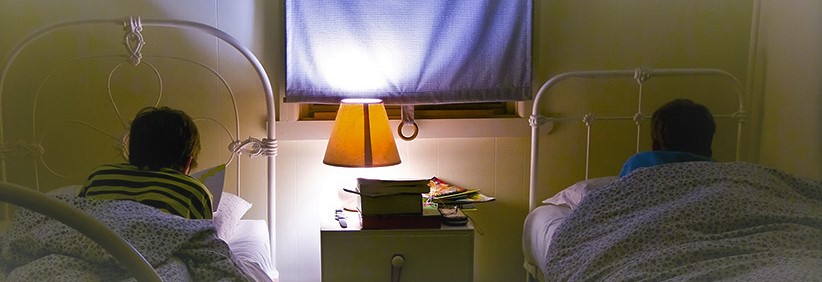
I see them reading in bed when I come in to say good night.

“Let’s play the pur-tend game, Gramps!” Jacob suggests, burrowing down under the covers, brown curls framing his sweet face, his book cast aside.

“It’s pre-tend,” I say.  “And sure, we can play one game before you guys go to sleep.  Three turns each.”

“You go first, Gramps,” Travis says, snuggling into his own bed, a smaller replica of his older brother, his book also forgotten.

“Okay,” I say, screwing my face into what I hope resembles a fearsome snarl.  “I’ll huff an’ I’ll puff ‘an’ I’ll blow your house down!”

“The big, bad wolf!” Travis shouts immediately.  At six years old, he is ever competitive and eager to beat Jacob, older by a year, to the answer.

“Right,” I smile.  “Your turn.”

“Okay…hmmm…”  After a moment, using his deepest voice, he says, “Fee, fie, foe, fum, I smell the blood…”

“The giant!” Jacob cries before he can finish.  “The giant at the top of Jack’s beanstalk.”

“You hafta let me finish, Jake,” Travis complains, indignant at being cut off.

“Don’t worry, Trav,” I say soothingly.  “If Jake can guess them early, it means you’re doing a good job, right?”

Travis smiles triumphantly, pleased by this revelation.  “Right!” he says.  “I’m a good pur-tender.”

“Pre-tender,” I say patiently.  “And now it’s Jake’s turn.”

Jacob has his riddle all ready.  “Mirror, mirror on the wall, who’s the fairest of them all?”

Travis doesn’t reply right away, furrowing his brow as he tries to come up with the answer, so I say, “Sleeping Beauty.”

“Wrong!” Jacob crows.  “I get another turn.”

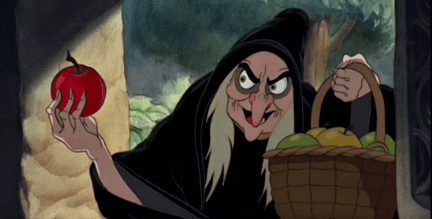
“Wait, wait, I know it now,” Travis argues.  “It’s the wicked, old queen who gave Sleeping Beauty the poison apple. She turned into an old hag!”

“Not fair!” Jacob pouts.  “Gramps gave it away!  He pur-tended to know the answer so you could get it.”

“Hey,” I protest, “that was my best guess.  And it’s pre-tended…which I didn’t do, by the way.”

“Okay, my turn,” Travis says, oblivious to my persistent corrections.  “You won’t get this one!   Wah…wah…what’s up, Doc?”

“Bugs Bunny!” Jacob says.  “That was easy!”

Crestfallen, Travis says, “Yeah, but only ‘cause I can’t stutter!”

“Bugs Bunny doesn’t stutter,” Jacob says.  “That’s Porky Pig.”

“Okay your turn, Jake,” I intercede quickly, heading off a potential squabble.  “This is your third round.  Make it a good one.”

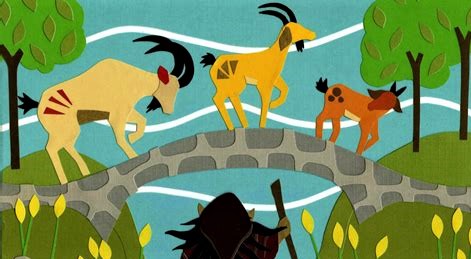
“Okay, here it is.”  In a harsh, threatening rasp, he bellows, “Who’s that clip-clopping across my bridge?”

“Billy Goats Gruff!” Travis exclaims.  “That’s the troll under the bridge!”

“Very good, Trav,” I say.  “Now it’s your third turn.  Can you stump us?”

Adopting a lilting, sing-song tone, he says, “Hi-ho, hi-ho, it’s off to work we go!”

“The seven dwarfs,” Jacob shouts, eager to beat me, even though he’s used his last turn.

“Which one?” Travis says, wanting to stump his brother.

“All of ‘em, right, Gramps?”

“I think so,” I say.  “They all went to work, unless Sleepy slept in.”  My intended joke falls on deaf ears.

“Okay, that’s three for me an’ Trav,” Jacob says.  “But you got two pur-tends left, Gramps.”

This is the standard pattern when we play, which usually allows me to end the game without complaints from them about having to go to sleep.

“I have two pre-tends left,“ I say, “so here’s my second one.”  In my best attempt at a high-pitched cackle, I croak, “Who’s that out there, eating my house?”

“The witch, the witch!” the boys yell in unison.  “Hansel an’ Gretel!”

“Right,” I smile.  “You guys are great at this game!”

“Yeah,” Travis agrees.  “We’re the great pur-tenders!”

Pre-tenders!” I say, for what feels like the umpteenth time.  “You guys are great pre-tenders.  You remind me of an old song, and I’m going to use it for my final riddle.  Then it’s bedtime.”

“Sing it, Gramps,” Jacob urges.  “Sing it for us.”

They’ll endure anything to avoid having to go to sleep, I figure, but I sing the song anyway, tailored just for them.

Oh-oh-oh, yes, you’re the great pre-te-en-ders,

All cozy and ready to sleep,

You’ve played your games and you’ve guessed the names,

And now you must lay down your heads,

Pre-tending you’ll start counting sheep!

“That’s Little Bo-Peep!” Jacob yells, excited to have an answer for the last one.  “She lost her sheep, right?”

“You got it,” I laugh, hugging him, feeling his fleeting kiss on my cheek.

When I bend to hug Travis, he whispers, “I love you, Gramps.  We don’t have to pur-tend ‘bout that.”

Softie that I am, I feel my eyes filling up.  And this time, I don’t attempt a correction.

I Fixed ‘Em All!

An important objective for writers, so I’m told by those who are good at it, is to avoid clichés in one’s writing.  Clichés are used by a lot of us in normal discourse because they provide a verbal shorthand when we are engaging in conversation.  If our goal is to avoid confrontation when we want to express a strong opinion, for example, using a cliché can be just the ticket.

In writing, though, especially if we aspire to be original, clichés are to be avoided.

Clichés may be defined as: phrases or opinions that are overused and betray a lack of original thought; trite or stereotyped phrases or expressions; or expressions that have become overused to the point of losing their original meaning or effect, especially when at some earlier time they were considered meaningful.

As a means to improve my own writing, I have been attempting to purge it of clichés.  The best judge of my success will be my readers, of course, but here are some of the efforts I’ve made:

  • I’ve cleaned all the writing off the wall;
  • I’ve wiped up the spilt milk;
  • I’ve placed my eggs in two different containers in the fridge;
  • I’ve removed all the covers from my books;
  • I now make sure I’m reading on the lines;
  • I make sure my knickers are neatly folded; and
  • I don’t own a grindstone.

Thanks to my efforts, the characters I write about in my books no longer sleep on the wrong side of the bed, they’ve stopped circling back or leaning in, and I’ve made sure there is no thorn in their sides, no mote in their eyes.  They know that at the end of the day, it gets dark, but it’s not necessarily darkest just before the dawn.

Although many of my characters do drink, I make sure they never end up three sheets to the wind, nor do I allow them to put new wine into old bottles.  They know nothing smells like a rose, regardless of its name, although that conclusion was not something they would have jumped to without me.

In fact, because of me, they never jump at all—not down your throat, not in with both feet, not onto the bandwagon, and not with a hop and a skip.  Nor do they ever jump the gun, because that might give away the ending of the story.  Being my heroes, I never let them throw in a towel, grind an axe, bend over backwards, or get down and dirty.

I’ve worked hard to ensure my characters are neither brave enough nor stupid enough to grab a bull by its horns, burn a candle at both ends, bite a bullet, burn a bridge, or endure trial by fire.  Those things can bring a load of hurt! 

Instead, thanks to me, they are far more likely to avoid dealing with loose cannons, rocking anyone’s boat, barking up someone’s tree, sneezing at nothing, or opening a can of worms.  They are not lazy by any means, but they certainly would never work like a dog, attempt to leave no stone unturned, or go an extra mile (or even the whole nine yards).

In my books, I make sure the heroic characters are unafraid of their own shadows.  They are smart enough not to wait for cows to come home, they do not turn over random stones, they avoid yanking anyone else’s chain, they never get down and dirty, and they avoid anything resembling a plague.

So as you can see, dear reader—and it doesn’t go without saying—I have worked my fingers…well, not to the bone, I guess, to rid my writing of clichés.  For what it’s worth, push no longer comes to shove for me, nor do I ever consider going back to some mythical drawing-board.  Whenever I’m seized by an annoying urge to employ a cliché, I try to nip the urge…umm, somewhere other than in the bud, so to speak.  And in my proofreading, rather than attempting to weed them out, I simply expunge them.

In fairness to myself, I must point out that the struggle to eliminate clichés is a never-ending one.  I’ve discovered that being original in my writing is much more fun than being banal or hackneyed, but it’s ever so much harder. 

So in closing, let me just quote this piece of doggerel from an online commentator, a sentiment to which I heartily subscribe—

For what it’s worth,
At the end of the day,
It is what it is:
A cliché’s a cliché.

Lying? No, Storytelling!

“What’s the most interesting thing that happened to you today?” he’d ask.  My grandpa, puffing on his pipe.

Pleased to have his attention, and anxious to keep it, I’d rack my brain for a response.  Growing up in the suburbs in the 1950’s was pretty mundane.  Nothing of great interest ever seemed to happen to me.

So, I’d make things up.  Not lying, exactly.  Storytelling.

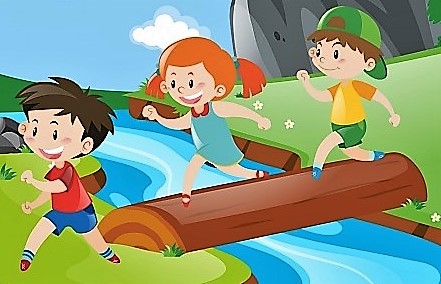
“I fell in the creek today,” I might tell him.  “Tried to walk across the log, but my foot slipped off .”

kids-crossing-a-river_1308-616

“How’d you get out?” he’d ask, wisps of smoke curling around his head.

“Wasn’t deep,” I’d say.  “But don’t tell my Mum.”

“Nope,” he’d say.  “Be best not to go near the creek anymore, though.”  And he’d give me a broad wink.

On another occasion, I might tell him that my bike got stolen, but I managed to get it back.  Heroically.

“Wasn’t it locked” he’d ask.

“Yeah, the lock was across the forks of the back wheel.  But the guys who took it just picked it up and carried it.  That’s how I caught up to ‘em.”

“What did you say to them?”

“Nothin’ Grandpa.  When they heard me comin’, they dropped the bike and ran away.  I guess I scared ‘em off.”

“Sounds like,” he’d say.  “Maybe you should fasten your wheel to the bike rack from now on.  Be hard to take that.”  His blue eyes would sparkle, and I’d love that I made that happen.

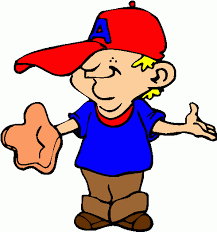
He never tired of asking the same question, and I never got tired of answering.  I might have told him how I won the game for our team when I made the game-ending catch of a long fly-ball in centrefield.

“Jus’ like Willie Mays!” I’d say, omitting the fact that I had actually stumbled and fallen, slid to an ignominious stop, only to have the ball land on my stomach, where I frantically clutched it.

ballplayer

“Mays is one of the greats,” he’d say.  “You caught it over your shoulder, like he did?  Wish I could have seen it.  Next time, though, try to keep the ball in front of you.  Those over-the-shoulder catches are pretty rare.”  And he’d flash me a knowing smile.

As a grandfather myself now, I know he knew I was padding the truth.  But I didn’t know back then.  I thought it was okay, because it brought us closer together.

He lived to a ripe old age, and in the last few years before he died, he was slowed considerably.  When I’d visit with him, it seemed our roles were reversed.  Now it was I asking the questions, and he searching for answers that would keep me there longer.  I always asked the old chestnut.

“So, what’s the most interesting thing that happened to you today, Grandpa?”

He no longer smoked his pipe, but he’d stroke his mouth as if still holding it, and I could almost hear the gears meshing inside his head.

“Nothing much today,” he’d say.  “But did I ever tell you about the time I saved your father from drowning?  Fell off the dock while we were fishing at the lodge up near Bala, no life-preserver.  I reached down, grabbed his collar, and hauled him straight out of the water.  Poor little guy cried like a baby.  That was pretty interesting, I’ll tell you.”

dock3

I’d heard the story many times, of course, and my father had debunked it every time.  “The water was shallow,” he told me.  “I jumped in, and waded ashore.  And I did have a life-preserver on.  Dad loves to tell the story, though.”

Of course, I never let on that I didn’t believe what my grandpa was telling me.  I remember hearing how he met the King, back in 1939, when he and the Queen, on their tour of Canada, visited the hospital where my grandpa was recuperating from surgery.

“I had a picture of the two of us,” he’d say.  “Don’t know what ever happened to it.  Your grandma must’ve thrown it out.  But that was really interesting!”

Grandma would only smile when I asked about that picture.  “Grandpa was in the hospital in 1937,” was all she’d say.

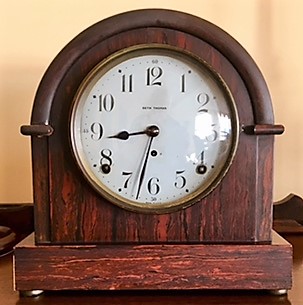
I heard about the lawn-bowling championship he won, the skip of a Dominion championship team in 1909.  According to him, the mantel clock that still sits in my home was the prize awarded for the victory.

clock2

“There’s no plaque on it, Grandpa,” I once told him.  “How come they didn’t put your name on it?”  The wistful look he gave me made me wish I hadn’t asked.

“Ah, they gave us all a letter,” he said.  “Signed by the prime minister, Mr. Borden.  That’s why your father’s middle name is Borden.  No idea where that letter is now.  But that’s pretty interesting, don’t you think?”

I nodded in agreement, and was circumspect enough not to mention that the prime minister in 1909 was Wilfrid Laurier.  My father was born in 1911, right after Robert Borden’s election.

By then, my grandpa’s eyes no longer sparkled as in days of yore.  But he’d still wink at me while telling his stories, and smile whimsically.  Kind of like my smile now, when I listen to my own grandchildren telling me about the momentous events in their lives.

And when they ask me about the interesting things in my day, I try not to lie to them.  Elaborating is not the same as lying.

“Nothing much today,” I tell them.  “But did I ever tell you about the time I saved my brother from the big kid across the road who was beating him up?  I ended up with a bloody nose and a black eye, but that kid never picked on my brother again.  That was pretty interesting.”

400-08651135

“Really, Gramps?” they marvel.  Or pretend to.

Of course, I don’t tell them the real reason my brother was safe afterwards; the kid’s family moved away.

To this day, I have a warm feeling inside when I remember my grandpa, and those conversations we used to have.  And I love the exchanges now with my grandchildren, swapping tales about our lives.

Not lying, exactly.  Storytelling.

Which is what I do.