Love, Through Their Eyes

The weekly prompt from my Florida writers group was to write a piece about seeing things ‘through their eyes’, and this is my offering—

Two short poems, each exquisitely written, capture exactly—exactly—how I feel about this brief moment in time I know as my life, about the relationship I have with the love of my life, and about what will happen when I am gone.

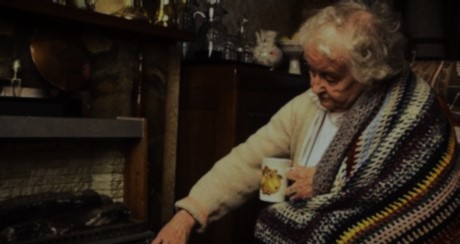
The first, When You Are Old, by William Butler Yeats, the greatest of the Irish poets, portrays a woman through the eyes of her departed husband, as he speaks of his love for her, even beyond death, and where she might find him—

When you are old and gray and full of sleep
And nodding by the fire, take down this book
And slowly read, and dream, of the soft look
Your eyes had once, and of their shadows deep.

How many loved your moments of glad grace,
And loved your beauty with love false or true,
But one man loved the pilgrim soul in you,
And loved the sorrows of your changing face.

And bending down beside the glowing bars,
Murmur, a little sadly, how love fled
And paced atop the mountains overhead,
And hid his face amid a crowd of stars
.

I find that sentiment so uplifting, so reassuring, that love, triumphant over death, is waiting ‘midst a crowd of stars.

I no longer believe, as I did as a child, in life eternal, in the idea of earth and heaven, the now and hereafter.  Rather, I believe the life-force presently empowering me—what I might call a soul—is but a fragment of the energy that fuels our expanding universe, a spark of light presently encased in my mortal being.  And when I, the shell that hosts the spark, will have finished my course, when I have expired, that life-force animating me will simply rejoin the universe.  It will be as if I am carrying on beyond death, but with no memory of my life—just as I have no memory now of what came before my birth.

The mortal I shall die, but my life-force will not, for if it did, the universe would shrink at the loss of that fragment of energy.  Science tells us, however, the universe is expanding, not shrinking, so it must be that no energy is ever lost.
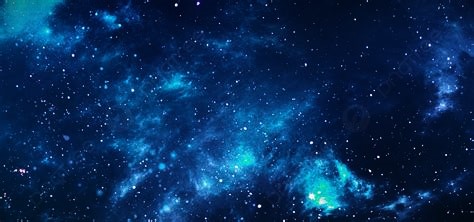
But where will my immortal life-force go, and in what form, I wonder?  And what of my love whom I will have left behind?  Happily, I find an answer to these questions in the second of the poems I number among my favourites.  Written by David Jones, a Liverpool poet, from his collection titled Love and Space Dust, I find it moving and profound—

And in the end
I will seek you
Out amongst the stars.

The space dust
Of me will
Whisper ”I love you”
Into the infinity
Of the universe.

So, no life eternal, but something better—love eternal.  According to these two poets, as seen through their eyes, the pilgrim soul who shares this life with me will find my spark of energy—my soul—waiting somewhere in the stars for her, calling I love you into the void until she hears me.

And I choose to believe she will hear me.

David Jones: https://www.goodreads.com/author/quotes/5241391.David_Jones

W. B. Yeats: https://www.poetryfoundation.org/poets/william-butler-yeats

No Longer There

The weekly prompt from my Florida writers’ group was: tell a story from the point of view of an inanimate object.  This is my offering—

I first espied your home millennia ago, long before your primitive, bi-pedal predecessors first walked upon your insignificant rock and thought to look up at me.  And you, the survivors of eons of mingling and melding with each other, can see me still, as I wend my way to you across billions of years from a source no longer there.

That source, my home—originally anonymous, a mere speck in the vast cosmic dust of the universe—would have been invisible to you, had it not finally flamed out and vanished into a massive black hole of anti-matter, succumbing to the irresistible, terrible pull of gravity.

But I, the sole survivor of that massive, thermonuclear firestorm, endured to bear witness to its existence.  A blast of energy and light radiating out from its core, I traverse the interstellar darkness at the speed of light, my destination unknown ad infinitum.

At some distant point in time-past, one of your forebears was the first to spot my leading edge.  From that creature’s vantage-point, I was but one of uncounted pinpoints of light in the night-time panoply overhead, each of which, like me, had begun its journey after a cataclysmic conflagration—very much like the one your own star will eventually experience.

Along the way, I was assigned a name by one of your ancestors—although I remain undistinguished in the infinite reaches of the cosmos, which is indifferent to the affairs and conceits of your species.  I am but one of billions upon billions of similar bursts of energy, light-sources too numerous even to catalogue, let alone adorn with a patronym.

I have seen you for some time with my leading edge, and if you look into the darkened sky, you will spot me there—a seemingly-static but ultimately-endless burst of light.  You and your entire species will be lost to the annals of time, of course, long before my trailing edge arrives in your vicinity—at which point I, too, will vanish from the view of living things, if any, that might be left on your rock to notice.

But, unlike your species, I will not perish.  My light, from leading to trailing edge, will speed on forever, relentlessly pursuing the far reaches of the ever-expanding universe, which knows no bounds.

Much like the person who named me to honour one of the fanciful gods your species has pretended to worship in order to satisfy the unanswerable questions you persist in asking, you fancy yourself at the centre of existence, the very master of all you perceive.  But you were nothing before my infinite journey even began, and you will be nothing again in the blink of a cosmic eye.

If my leading edge could speak to my trailing edge when it eventually reaches what is left of your earthly abode, it might ask, “What do you see?  Is anyone there?”

“Nothing!  I see nothing,” my trailing edge will answer.

To which my leading edge might reply, “I saw them when I first passed by—a self-absorbed species busily erecting their ant-hills and lauding their advances, even as they warred upon one another and suffocated their planet.”

“Well, there is no one now,” the trailing edge will observe uncaringly.  “If once life existed on this barren rock, it is no longer there.”

Pity, that.

I Dreamed…

A recent prompt from my Florida writers’ group was to use the phrase, “I dreamed last night…”. This was my submission—

A reminder to those who receive my complete posts in your email, rather than just a link—if you click on the title, you’ll be able to read the post in its proper format on my actual website, rather than in the body of your email.

I dreamed last night of a universe vast,
Extending the future from some unknown past,
Throbbing, emitting, exploding in heat,
Its energy vibrant, its fate incomplete
As onward it rushed, this dream in my head
Rendering me rapturous, there in my bed.

I dreamed last night.  And I wondered if I
Might perhaps be a part of that darkened sky,
From genesis unto eternity,
Unceasing, undying, the infinite me---
My spirit indwelled with life, and a mind
Pushing e’er forward from a past left behind,
Seeking out answers as questions unfold,
Traversing the nothingness, fearless and bold.
I dreamed last night I was mounted astride
A life-force impelling its own suicide.
For how could I, a mere mortal, defend
A beginning without eventual end?
How could we persons, predestined to die
Believe in a universe beyond the sky?

I dreamed last night.  When I wakened again
To face the day’s dawning, the truth appeared plain.
There’s no need for proof of life after death,
For we do not die after our final breath.
We’re integral to that miasmic cloud,
That cosmos of energy, bursting and loud.
We’ll live evermore, just not in this state--- 
We need but to trust, let our faith not abate.

Yes, I dreamed last night of a universe vast,
Informing our future through present and past,
Accepting us gladly, just as we are,
Propelling us forward from near and afar.
Mortality ends, but life still goes on,
And we shall be part of it, unto anon.

Life and Death

Just what is it that makes life worth living, anyway?  Is there a universal, one-size-fits-all answer, or is the answer situational, dependent upon the circumstances in which we each find ourselves?

And what might that answer be?  Is it happiness?  Good health?  Sex?  Wealth?  Perhaps the ultimate aphrodisiac, power?  Or some combination of these?

The existentialists among us might claim the answer is personal fulfilment, harmony with the world around us, inner peace.  Alone though we are, they might say, we are nevertheless connected to others, but on our own terms.

The religious among us might declare life’s significance arises from a meaningful relationship with one’s creator, in whatever form that creator might be rendered.  At this point in time, however, they seem unable to reconcile their competing visions with everyone else’s.

The afflicted and dispossessed peoples of the world might proclaim that life, being an endless procession of hunger, thirst, and terror, is not worth living at all.  And who is any of us, never having experienced their realities, to disagree?

But let us suppose, cheerfully, that everyone we know has found ample reason to live, to carry on, to survive.  In the face, sometimes, of personal tragedy, severe illness, serious setbacks of whatever ilk, they have persevered, even prospered, and gladly proclaim life to be the greatest gift of all.  They are, from all appearances, joyful, optimistic, and strong.

I recognize myself among this happy crew.  Wanting for none of the necessities of life, surrounded by family who love me, blessed with friends who are supportive and caring, I rise each day with a positive outlook, sure this blissful state will continue for years to come.  To state the obvious, life is to be lived.

So what do I make of the current debate swirling around us about a person’s right to an assisted death when the time comes?  How do I square my belief in the meaning of life with a possible wish to end that life at some point?  Are these two concepts even compatible?

For me, it comes down to a fundamental, primal instinct that life exists beyond this earthly planet we inhabit.  The vast universe in which we float is, itself, alive—a pulsating burst of energy, ever-expanding, interminably large.  And an infinitely small fragment of that energy, in whatever form it manifests itself, is what powers life in me.  It is my life-source.  Some, more religious than I, might call it a soul.

So when my time is up, as surely it will be someday, I take it as an article of faith that my spark of life will rejoin the universe from which it sprang—still alive, still burning, but in a vastly different form.

universe1

Comforted by this belief, I do not fear death’s inevitability.  I do, however, harbour apprehensions about the manner in which that death might transpire.  Having been blessed, so far, to live a life worth living, I have no wish to spend whatever number of months or years in a diminished state, waiting helplessly for my life-source to reattach itself to that whence it came.

Perhaps I shall die suddenly one fine day.  Here one moment, gone in the next instant, no assistance required.  Still alive in the universe, to be sure, but departed from this realm.  I’d be happy about that—but not too soon, of course.

Lingering on, however, past the stage where my mortal coil can function properly, holds no attraction.  So I have come to the conclusion that I should be allowed and empowered to facilitate the escape of my spark of life from my failing body, and set it once again on its eternal journey in the universe.

The true meaning of life for me, it turns out, is the power, not to end it, but to release it from a failing, earthly body—freeing it to roam, as the poet, W. B. Yeats, once wrote, “…among a cloud of stars.”