Poetry and Song

Every child is an artist (Pablo Picasso).

In an era when the Arts are under attack in our schools, depriving young people of the opportunity to develop and nurture their creative wellspring—the very thing that will sustain them throughout their lives—it is a joy to be able to spread good words in poetry, pictures, and song.

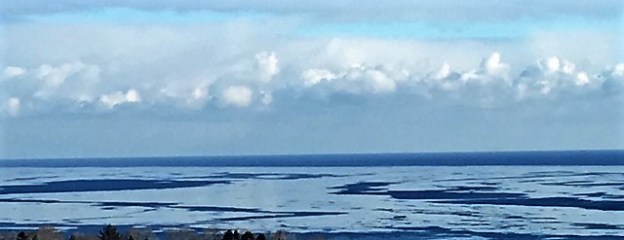
ice on the water,

white sheets atop the blue deeps—

reflecting the sun

ice on lake

imagination—

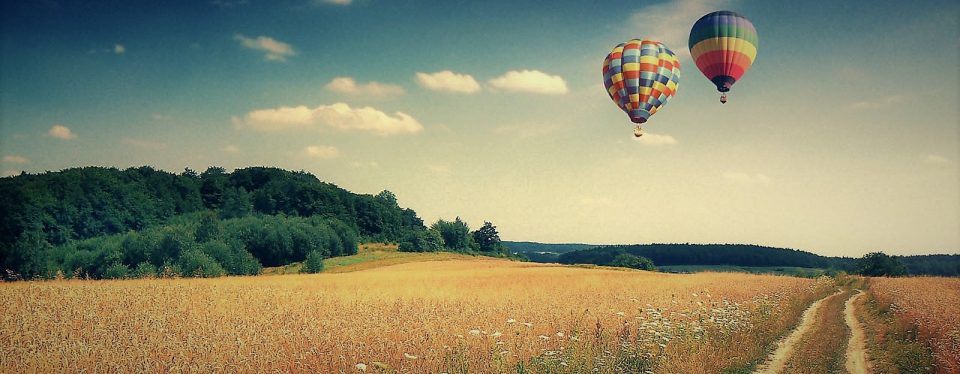
like hot air balloons, slipping

bonds that tie me down

balloons

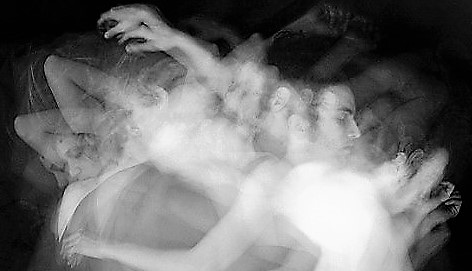
asleep together,

intertwined, we bind our souls

with each breath we take

asleep

impossible dream?

many might have thought so, but

you made it come true

in the rain

more yesterdays now

than tomorrows, but it’s the

tomorrows that count

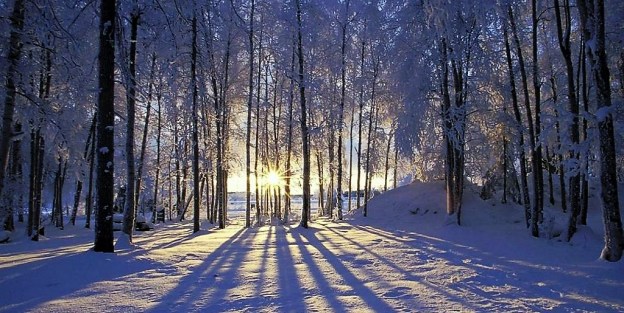
dawn3

shoulder to shoulder,

a capella voices raised—

united in song

Art enables us to find ourselves and lose ourselves

at the same time (Thomas Merton).


He Can Trump That

Among my more liberal, left-leaning friends, especially those who reside for some portion of the year in the USA, there is a visceral, shuddering abhorrence for all that Donald Trump represents.  It is almost incomprehensible to these fine people that such a boor could ever have been elected president.

I also have friends who inhabit the right (or right-centre) side of the political spectrum, and many appreciate some of the man’s actions in office—such as tax cuts, immigration reform, and a more robust foreign policy.  Yet they, too, are repelled by his personal character.

trump2

It has occurred to me, however, that I have a lot in common with the self-proclaimed saviour of the free world.  It gives me no satisfaction to admit this, but the commonalities are too numerous to ignore.  Let me list a few of them here.

Like the president, I have never had a sexual encounter with the porn star, Stormy Daniels.  Nor did I ever carry on an extra-marital affair with Karen McDougal, the former Playboy bunny.  And I know he didn’t either because he says so.

Not once, ever, have I grabbed a woman by the…..well, you know.  And neither have I ever chomped on tic-tacs to freshen my mouth before pressing myself against a woman and kissing her without her consent.  The president claims—despite a prior candid conversation with one Billy Bush, taped on a tour bus—that he’s never done those things, either.

He often boasts of the tremendous support he gets from women, and that is true of me, too.  In my case, those women are my mother, my sisters, my wife, my daughters, and some long-standing friends.  The president doesn’t really identify who his are, but it must be true, right?

I’ve never fired a director of the FBI because an investigation about my conduct was a witch hunt and total hoax.  Neither did the president do that, by his own admission.

comey

I’ve told everyone I know that the tax cuts enacted by the president won’t help me at all financially.  He has said that, too, about himself.

I have never publicly mocked a disabled person.  I never supported the American war in Iraq.  I have never made my income tax returns public.  Never did I mislead or defraud students through a fake, diploma-mill university.  He says he didn’t do any of those, either.

Like the president, until the news media made a big deal of it, I had never heard of WikiLeaks.  Nor did I know anything about David Duke and his KKK affiliation.

Neither have I ever stayed overnight in a Moscow hotel, or been entertained by Russian strippers.  I have never made money from business dealings with Russian interests.  Nor, so he says, has the president.

I have absolutely no pecuniary involvement in any Trump-related business, just like the president, who, as he has himself avowed, completely divested himself of his interests after his election.

None of the following people have ever played a major role in my life—George Papadopoulos, Rick Gates, Paul Manafort, Roger Stone, or Steve Bannon.  Unlike me, the president does admit knowing them, but not to the point where they could exert a significant or lasting impact on his behaviour.

There are so many commonalities between us.

But, as you read through this list, one significant difference might have occurred to you.  Every one of the statements in the list pertaining to me is true.  The statements regarding the president are not.

trump

He lies.

Which brings me to a final similarity—somewhat embarrassing for me to admit.  I confess that, just like the president, I also tell lies.  These might include falsehoods about my weight, my golf score, my book sales, the number of followers of my blog, that sort of thing.  Not all the time, but sometimes.

The president makes me look like an amateur in this arena, however.  By some estimates, he has told more than three thousand lies since taking office fifteen months ago.  That’s an average of two hundred lies a month, almost seven a day.  Very few people ever hear my fabrications; but the president’s falsehoods are tweeted almost daily, and repeated endlessly by the mainstream media, social media, and self-serving political hacks and special interest groups.

And sadly, many people believe them.

I would characterize myself as an occasional liar—or, to put it more charitably, one who sometimes utters misleading statements, tenders alternative facts, or (in the president’s words), offers truthful hyperbole in lieu of the truth.  Nothing that really matters to anyone but me and my fragile ego.

As I tell my friends, I’m a writer of fiction.  I make stuff up.

author2

But the president can trump that.  A congenital characteristic is not something inherited, but rather a feature so ingrained, so strong, that we cannot imagine it changing.  The president is, I believe, a congenital liar, one who cannot help himself, one who believes in his own infallibility.  He doesn’t think he’s making stuff up; he just believes whatever he says.  So, if his lips are moving…

The old adage has it that there are lies, and there are damned lies!  Perhaps the same is true of liars.

[sigh]


Empress of the Garden

Very recently, I came upon some pictures of the neighbourhood where my parents purchased the last home they would ever own—a home where I spent the final ten years of my boyhood.  The pictures, old black-and-whites, had been taken before all the homes were built, and the streets were still dirt-tracks.  No one yet occupied any of the finished homes.  The cars and construction vehicles parked helter-skelter were like a virtual museum of 1950’s-era vehicles.

home

It wasn’t long, however, before we and our new neighbours were moving in—into freshly-painted homes, with tidy lots of newly-laid grass, driveways of impossibly-white gravel, and (for the most part) no trees.

But my family was singularly fortunate in that, along our side of the rear property line, a row of mature trees stood, there for years before the developer arrived, perhaps marking the boundary between some long-ago farmer’s fields.

Our house was set amidst them—tall, ancestral trees, most of them, old enough that they could have known our grandparents’ names, and their parents before them.  To my young eyes, they seemed to reach endlessly to the sky, then bow over, protectively, to shield us from the world.

In short order, my parents established a garden around and beneath those trees.  Some were big trees, with trunks wide enough to hide behind, others were smaller, with branches dipping low enough to allow us to climb.

trees 5

On the hottest of summer days, my siblings and I could return from playing in nearby parks to collapse in the cool, welcoming shade.  In the crispness of autumn afternoons, we could jump and hide in (and scatter) the piles of fallen leaves my father had spent hours raking together.  He never seemed to mind.

At dusk on a cold winter’s evening, we could stare through frosted windows at the skeleton branches, stark against the darkling sky.  And in the rebirthing spring, we could search out budding maple-keys, housing seeds, peel them back, and stick them on our noses.

They were of many kinds, our trees.  The maple, which we tried to tap one spring to make syrup, but unsuccessfully.  An oak, scattering acorns on the ground for us to collect, and which brought the squirrels.  A beautiful beech, with its lovely bark and spreading foliage.  And a large, gnarled weeping willow that we used to hide under, its branches trailing snakily along the ground.

The oldest and most important of all our trees, however, was an elm.  Standing firmly on a small rise at the back of the garden, she reigned over the other trees (in my mind’s eye, anyway).  Encircling her base was a large rockery, broken in one spot by a narrow walkway of flagstone steps leading from the lawn up to the base.  At the top sat an old bench, which we always referred to as our throne.

But we rarely played our games in or around the elm tree, as we did with all the others.  At various times, we had swings attached to sturdy branches of some, and knotted ropes hanging from others.  For a while, we had a treehouse roosting in one of our trees, complete with a crude ladder nailed to the trunk.  And, of course, we climbed in as many of them as we could, playing at being pirates, or Tarzan of the Apes, or Robin Hood’s merry men.

elm 4

But, we didn’t play in the elm tree.  Somehow, she seemed too stately to suffer our nonsense gladly.  She rose, tall and columnar, to a great height, before spreading her branches, fan-like, over the trees around her.  They looked to be paying homage to her, perhaps because she’d been there forever.  For us, she made the yard a wonderful and safe place to be.

The empress of our garden.

But then, one sad summer, her leaves turned brittle and brown, and began to fall before their time.  During the other trees’ glory of autumn-colour, she was already bare.  When the following spring arrived, she budded only partially as disease spread through her limbs, and in the ensuing summer she shed her leaves early again.  When next the spring came with its hope of new life, she was dead.

For us, so young, her death seemed incomprehensible.

She remained standing for another year, maybe two, a haunting, spectral reminder of what she had been.  When her rotting branches began to break and fall off with increasing frequency, she had to be taken down.  And then, all that remained of her former grandeur was a large, wide stump on top of the small rise.

I still remember, quite clearly, sitting on the ground one day beside that forlorn nubbin.  I was simply looking at our garden, when it suddenly struck me just how small it really was.  Our trees no longer seemed so grand without their empress, nor so inviting.

boy 3

It was about that time, I think, that I began to put away my childhood games.

Something I Said?

It happens sometimes at a restaurant where three or four couples are dining together.  I look up from my soup to find myself alone at our table, the others at the salad bar or in the washroom, perhaps.

alone

Or it could be at a dance, nine or ten of us sharing a table, and I’m suddenly sitting by myself while the others are up dancing, or maybe table-hopping.

The tiresome jokes flow at these moments, naturally.  Some wise guy will ask in a loud voice if I’m dining tonight with all my friends.  Or some other wit will wonder if I did something to offend everyone in my party.

I laugh, of course, perfunctorily—but somewhat puzzled, too—for it is curious that this crops up with me so frequently.  Was it something I said?

It may happen to others, too, I suppose, but hardly ever when I’m around.  And although the jokes are stale from repetition, they do take my mind away from a somewhat more sombre realization—that someday, we know not when, one of us in our gang will, indeed, be left alone.

We’re at an age where many of the things we used to take for granted are likely not in the cards for us anymore.  How many of us will purchase a new house, for example, with a twenty-year mortgage?  Do we really care if the 2040 Olympic Games are held in this city or that?  Are hair transplants or facelifts really such an attractive option now?  How many more new cars will we buy?

how-to-get-a-discount-on-new-car_orig

We’re not yet at the stage where we won’t buy green bananas (another old joke) or make plans for some holiday cruise two years from now.  But those days are coming.

Aging is a simple, yet so mysterious a process.  Simple, because it creeps up on us without any conscious intent on our parts.  We start school, we graduate, we marry and become parents.  We raise our children, sadly (or not) bid them adieu when they embark upon the world, and exult in the joys of grandparenthood when they begin their own families.  Eventually, we retire and reach out for new and exciting pastimes.

Granted, it took years for me to do all this, and the work was palpable while I was doing it.  But when it finally hit, my seventy-fifth birthday seemed to have materialized out of nowhere.  Getting there was a simple matter of waiting.

But aging is mysterious, too, because so many odd things transpire.  For instance, although I feel like the same person I always was, my friends are obviously getting older.  Occasionally, when I happen to spy one of them unexpectedly, I see first an old man or woman—only to realize belatedly it’s my friend.  I suspect the same thing might be true in reverse when they have a chance encounter with me.  We’re all too polite to tell each other that, though.

A lyric from the musical, Fiddler on the Roof, seems to capture it:  I don’t remember growing older, when did they?

fiddler

A few years ago, I underwent some serious surgeries, not necessarily age-related, and spent several months in follow-up visits with the medical people who treated me.  When reading my files one day, I was quite surprised to discover a letter from a referring physician to a specialist who had treated me.  After the usual introductory paragraph, the letter stated, “This elderly gentleman presents with symptoms congruent with…”

My attention was riveted on those first three words.  I thought I had opened someone else’s file!  Elderly?  Surely not I!  And yet, at the tender age of sixty-four, it was true—at least from the perspective of those young professionals.

And so, here we are, I and all my friends, firmly ensconced in our senior years.  None of us talks morbidly about the inevitable end of our lives; more likely, we’re comparing our golf scores, sharing the latest stock market activity, or showing off pictures of our grandchildren.  We’re a pretty happy lot, all told.

One of us, a retired funeral director, jokes that he used to sign his letters Yours eventually.  “They’re gonna get us in the end,” he says with a wink.

hearse2

I do think about the end-stages of life, however.  Like finding oneself left alone at the table in the restaurant, or at the dance.  A close friend from boyhood never got to experience that aloneness, dying before his time just over a year ago, surrounded by family and embraced in the thoughts of his many friends.

My parents, on the other hand, lived well into their nineties—not a guarantee of longevity for me, I grant you, but a pretty good genetic gift.  At the end of her life, my mother had outlived her husband, all her siblings, and all her friends.  Despite the visits from children and grandchildren, I know her final years were painfully lonely.

We cannot know the hour or manner of our own passing, so it’s futile to fret about it.  Yet I occasionally ponder whether it would be best to go first, before everyone else has passed, or be the last one standing (or sitting, or lying down…whatever).  So much of the joy of life comes from those around us, family and friends, and so much would be missing without them.

I’m unable to decide with any certainty which option I’d prefer.  I waver from one to the other, depending on my mood.  Vacillation can be a comfort.  Truth be told, there is no definitive answer to be found; what will be, will be.

old man dying

But honestly?  I don’t think I want to be the last one at the table, wondering in vain if it was something I said.

April

Geoffrey Chaucer, in the late 1300’s, wrote about April in his Canterbury Tales, praising its rains and warm winds for the restoration of life and fertility after the endless winter—

Whan that Aprille with his shoures soote/ The droghte of March hath perced to the roote…

But T. S. Eliot, another British poet, took quite a different view in 1922, in The Waste Land, where he savaged the month—

April is the cruellest month, breeding/ Lilacs out of the dead land, mixing/ Memory and desire, stirring/ Dull roots with spring rain…

The same month, two opposing points of view, left to the reader to determine which is the most apt.

My own outlook varies from time to time, depending, I suppose, upon my mood, the weather, and the company I keep.  I have often longed for the coming of April with its showers sweet, its promise of spring, only to be disappointed by its refusal to let go of winter.

Poetry is one means I employ to give voice to my feelings, sometimes optimistic, full of hope, and other times doubtful and despairing.  I find the Japanese haiku form especially appropriate—three lines of five, seven, and five syllables, respectively—to convey my conflicted state of mind.

By way of example, here are five haiku I have written dealing with April, each with a picture in harmony with my outlook.  I, too, leave it to you, the reader, to decide which of my moods is being conveyed by each—

peekaboo

sun plays peekaboo,
dancing ‘cross the wint’ry lake—
heralding the spring

peekaboo

teasing

april is cruel—
so the poet says—teasing
us falsely with spring

springtime

spring

joining in our walk,
tentatively, yet warmly—
sweet spring has returned

pring walk2

april fool

april can’t fool me,
that false harbinger of spring—
may is the gateway

rainy april

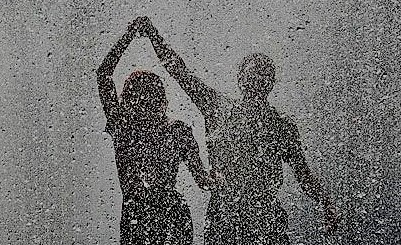
in the rain

dancing in the rain,
neither of us wet or cold—
warmly wrapped in love

in the rain

May the spring blossom anew for you…..in April, or whenever it arrives!


Where’s Your Winker?

When our eldest daughter was not yet four years old, we had a shared babysitting arrangement with the couple across the street from us.  Their young son would stay overnight with us when they were away, and they would reciprocate when we needed help.

At our place, we often put the two kids in the tub together at bedtime and watched them splash around for awhile before bathing them.  They were good pals, used to playing together, and the bathroom was always filled with squeals of delight and happy splashing.

two-little-kids-boys-playing-together-bathtub-happy-siblings-twins-children-water-taking-bath-home-kid-having-fun-80132107

We were surprised one evening, though, when the little boy had a new question for our daughter.  “Where’s your winker?” he asked.  We understood immediately what he was enquiring about (in all innocence), but she didn’t.

We had to stifle our laughter when she began scrunching up her face in an attempt to wink at him.  He kept asking, and she kept winking, first one eye, then the other.

I don’t recall now if he ever got an answer to his question, but what my wife and I realized was that his parents had chosen not to use anatomically-correct terms for his sexual body-parts, at least not at that age.  We had no problem with that—he was their son, after all—but we had deliberately opted to do it differently.

Unlike some of our friends, we began almost immediately with both our daughters to use correct terminology for all their body-parts.  Nose wasn’t sniffer, for example, nor hands feelers.  Their stomachs weren’t tubbies, nor their toes piggies—except in the nursery-rhyme they came to love.

In the same way, their anus wasn’t a poo-poo bum, and their urethral opening wasn’t a pee-hole.  A bowel movement was just that, or a BM, but never a shit.  And they always used a toilet, never a toidy—even when they had their own mini-version.

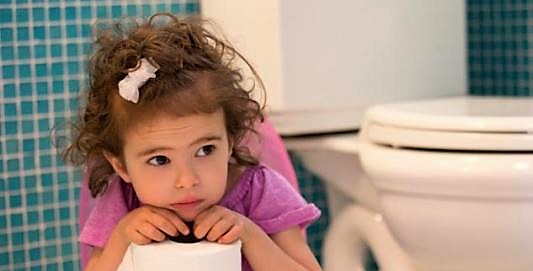
toilet-training

By the time both our daughters were in mid-elementary school, they knew the correct names, and were aware of the differences between female and male anatomies.  They knew, for instance that Daddy had a penis, but they and Mummy had vaginas instead; that all of us had breasts and nipples, but theirs, unlike mine, would grow larger as they got older; that pubic hair was normal for everyone beyond a certain age.

As time went on, as it became appropriate for them to know, they learned other terms, too—testicles, scrotum, clitoris, vulva—and were unembarrassed about them.  That was a critical point for us, that they would not giggle nervously, or be mortified to ask us, when they began to have questions about their burgeoning sexuality.

Even after a certain, respectful distance had developed between me and them as they matured into young women, they remained unafraid to engage both of us in their conversations on sexual matters.

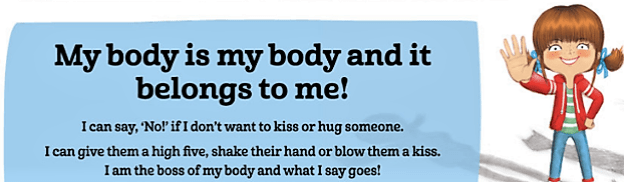
Along the way, we tried to ensure they understood that certain body parts were private—whatever is covered by your bathing-suit, we told them.

We didn’t ignore the fact that people often use different terminology, however.  In order that our girls not appear unduly geeky to their friends, we made sure they knew about various slang-terms they might hear for female parts, even as we encouraged them not to use them.  Such terms included: vajayjay, muff, pussy, beaver, hooters, knockers, or jugs.  We wanted them to be, not shocked or judgmental when they heard these words, but aware and prepared.

619-06468194

The sex curriculum in schools today, at least in progressive districts, uses correct terminology.  In the jurisdiction we live in, the objective is to promote physical and emotional health and safety, wholesome relationships, and mutual respect among the learners.  The curriculum deals with such issues as:  stages of childhood development, naming body parts accurately, puberty, personal hygiene, the reproductive system, sexual orientation, choosing wisely about sexual activity, STD’s, pregnancy prevention, relationships and intimacy, consent and personal limits, and mental health.

Many parents today believe that schools are not the places where such instruction should be given.  The child’s parents should be the ones to do that, they say, and in the child’s home.  Some of our politicians, vying for election, are pandering to such folks by threatening to rescind the curriculum.

The problem with that, as I see it, is that too many parents would not provide their children with an adequate sex education—perhaps because it contradicts their beliefs, perhaps because they find it embarrassing, or perhaps because they, themselves, don’t know how.  But their children will learn of these things, regardless, and their instructors will be schoolmates, video-games, internet porn purveyors, or other unscrupulous parties.

girls-at-computer

How is that better for children?

And that is the question that should always be at the forefront.  Too often, we make decisions on behalf of children for reasons that are not in their best interest, but instead, to justify our own opinions and beliefs.

From the vantage point of a grandfather now, I can agree that home might be the best place for children to learn what they need to know about their sexual beings, just as I believed—and put into practice—when I was a young father.  But what of those homes where it will not happen, and what of the children who live in those homes?  Do they not deserve the opportunity to acquire the same knowledge, the same self-respect, the same appreciation of others’ circumstances granted to those in homes where the information is provided?

Do they not deserve the same opportunity to protect themselves and their bodies from those who would prey upon them?

My daughter still laughs when we recall the winker story, even though she doesn’t really remember the bathtub encounter.  But never once in their lives has either of our girls had to plead ignorance or embarrassment when conversations of a sexual nature have arisen among their friends.  They’ve always known the truth.

And now, thanks to their parenting, so do our grandchildren.

body-safety

Silly-gisms

The current occupant of the White House in Washington has stated on more than one occasion that Mexican immigrants are rapists and criminals.  If true, it would logically follow that, if your father was an immigrant from Mexico, he was, unarguably, a rapist and criminal.

This is an example of a faulty, nonsensical syllogism, an illogical construct I like to call a silly-gism.

A bona fide syllogism is defined as a formal argument in logic, comprised of two statements—a major and a minor premise—followed by a conclusion.  If the two statements are true, the conclusion must also be true.  Take this Socratic example: all women are mortal; my sister is a woman; therefore, my sister is mortal.  Or another: all daffodils are flowers; I am holding a daffodil; therefore, I am holding a flower.  Because both premises in each example are indisputably true, both examples are authentic Socratic syllogisms.

socrates3

However, if I were to alter that second example—all daffodils are flowers; I am holding a flower; therefore, I am holding a daffodil—the conclusion would not necessarily be true.  The flower I am holding might very well be a rose.

True syllogisms abound in literature, in public discourse, and in everyday conversations.  Alas, so, too, do false ones, the silly-gisms.

Some of these can sound almost logical, given our habit of reading with a non-critical eye.  To wit: all crows are black; the bird in my cage is black; therefore, I have a crow in my cage.  Or this one:  I ride a bicycle; I am a man; therefore, all men ride bicycles.

Silly-gisms are bandied about by all and sundry, particularly on social media, and especially when controversy surrounds them.  The problem, as I see it, is that far too many people fail to distinguish between what is truly logical and what is patently absurd, blindly accepting whatever they read as true.  Individuals who are untrained in critical thinking skills—who are used to being told what to do, say, and think—tend to accept what they hear or read from a source they trust.

Major news organizations report the facts accurately; Breitbart is one such major news organization; therefore, Breitbart is reporting the news accurately.  In this example, only the second premise is demonstrably true, so the conclusion cannot be relied upon.  Nevertheless, it is Breitbart reporting that provides many citizens their news, and it is amazing how many people buy it.

breitbart

The same might be said of other news disseminators (CNN, Fox News, the Wall Street Journal, the Toronto Star, et al) —that they pander to their audience’s predilections, aiming their reporting squarely at those who automatically believe anything that matches their preconceived opinions on a subject.  Except that, responsible news organizations deliberately present opposing points of views in their broadcasts and in their pages, striving for fair balance in these op-ed pieces.  The question is, how many viewers and readers actually take the time needed to explore alternative viewpoints?

Given the ubiquitous social media presence in our lives, and given the relative non-regulation of these online sources, it is scarcely surprising that so many of us get our daily dose of news from Facebook or Twitter.  And too often, that news is so unverified, uncorroborated, and unsubstantiated, that it might better be called un-news!

The real problem, as far as I am concerned, is not that these silly-gisms proliferate; rather, it is that they are deliberately broadcast and published by unscrupulous agents seeking to influence the public.  If I am repeatedly told by an automobile company, for example, that beautiful, young women are attracted to men who drive luxury cars, and if that becomes my primary reason for purchasing such a car, I may (more likely, will) be extremely disappointed with the result.  Nevertheless, no lasting harm is being done to anyone but me, and no one else is to blame for my lack of critical reflection before buying.  It is a matter of caveat emptor—the buyer must be wary.

model2

As the old saying has it:  Fool me once, shame on you; fool me twice, shame on me.

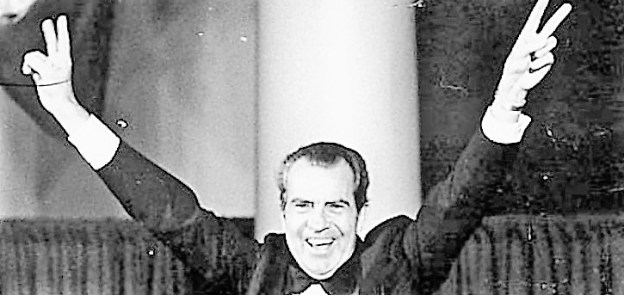
However, when the silly-gisms are widespread and malevolent, maliciously intended to mislead, great harm can be done.  Consider this blast from the past, before the advent of social media:  people elected to high office are above chicanery and corruption; Richard Nixon was elected U.S. president; therefore, Nixon was not a crook.  How did that work out?

But if Nixon were president today, how many people would choose to believe he was above reproach if they read it over and over again on media they trust?  Can anyone doubt that would be the message his acolytes would be spreading?

nixon2

Here is a silly-gism from the current president:  Our country used to be great; it is broken now, so badly that no one knows what to do; therefore, only I can fix it!

Only I can fix it!  How many times have we heard that mantra from his followers, and from media outlets that support him?  More importantly, how many of his country-men and -women believe it?  Do they have evidence to support his claim?  Do they even seek it?  Or, like lemmings to the sea, do they blindly follow the leader?

Here is another example:  governments derive their just powers from the consent of the governed; in the last presidential election, the people consented to be governed by this man; therefore, he has the mandate to fix it any way he sees fit.

Syllogism or silly-gism?  Time will tell, I suppose.

In the meantime, it behooves us all to try not to believe everything we are told.  For there is increasingly the distinct possibility that the people can, indeed, be fooled all the time.


1-800-GET-LOST

One of the most annoying things in life—ranking right up there with unsolicited calls from telemarketers—is having to call a service provider to report a problem.  No matter who it is, the cable provider, the bank, or the phone service itself, their customer-service department never seems able to take my call immediately.

I find myself pressing button after button in response to a robotic voice guiding me, supposedly helpfully, through a menu of confusing choices—when all I want is to talk to a live human being.  By the time I’m able to do that, sometimes as long as forty minutes later, I am yelling angrily, almost incoherently, at the person unlucky enough to have drawn me.

angry2

It bothers me because I resent being rendered inchoate.

So, out of frustration, and because I harbour a latent evil streak, I have recently begun to fight back.  But, like all good generals, I fight on a battlefield of my choosing—and that field is not when I have called them, only to end up stuck on IGNORE…or, as the service-providers call it, HOLD.

No, the ground I fight on is when they call me.  And believe me, they’re always calling—the cable service with a new package of channels they feel I won’t want to miss; the bank with an incredible savings opportunity, offering, for a limited time only, 0.05% with a minimum $5000 deposit; the duct-cleaners, promising they can rid my home of the nasty critters living in the HVAC system, poisoning the very air I breathe; the hucksters telling me in tones of barely-suppressed excitement that I’ve won a free trip to Hawaii, if I will first agree to attend an investment seminar.

call-center

They are omnipresent, these people, lurking on the other end of every solicitation call I receive.  But they have finally met their match in me.  Once I realize it’s a sales rep on the line, the ensuing conversation goes something like this—

REP:  Good afternoon, sir…

ME:  Excuse me, before you begin, would you prefer English, français, or Español?

REP:  Ahh, English please.  Are you…

ME:  Are you calling with regard to existing accounts, bill payment, customer service, technical assistance, sales, or some other service?

REP:  I’m calling to interest you in…

ME:  Okay, sales.  Before you go further, let me place you on HOLD for a brief moment.  I have someone on my other line, but I can assure you your call is important to me, so please don’t go away.

hold

I then go away for as long as two or three minutes, leaving the caller dangling on the line.  When I come back, if he or she is no longer there, I gently end the call.  On occasion, however, the unfortunate caller has chosen to wait, and so the conversation resumes.

ME:  With whom am I speaking, please?

REP:  Me?  Ahh, I’m Hector, and I’m calling to…

ME:  Before we continue, Hector, I have to inform you that this call is being recorded to ensure quality service and customer satisfaction.

REP:  Recorded?

ME:  Of course.

REP:  Sir, that is highly unusual…

ME:  Yes, I’m sure.  Also, I must ask you a couple of questions to confirm your identity.  What is the name of your firm, what is your employee number, and at what number may I reach you on a call-back?

REP:  Sir, we don’t give out that…

ME:  You don’t?  But you will ask for similar information from me, will you not?

REP:  Yes, of course, but that’s for your own…

ME:  Hector, I know you have something very important to tell me about, but before you do, I want to let you know about my brief survey.

REP:  Survey?

ME:  At the end of this call, when you’ve finished your sales pitch, I’m going to ask you five short questions, each of which will have a choice of three answers.  For each question, you will choose either A, B, or C, whichever best describes your experience on this call with me today.  Do you agree to take this survey?  Please answer yes or no.

REP:  [frustrated] Sir, I think we have a misunder…

frustrated call center man

ME:  [impatient] I’m sorry, Hector, was that a yes or a no?

REP:  [desperate] Sir, we don’t respond to…

ME:  [hectoring]  Ex-cuse me!  You do remember that this call is being recorded, right?  Is it not important to you that our conversation reflect a high level of satisfaction on my part?

REP:  [whimpering]  Sir, please, this is…

ME:  [pityingly]  Hector, do you know what number you’ve called?

REP:  [thoroughly cowed]  No, sir, I’ve called so many today…

ME:  [wickedly]  This is 1-800-GET-LOST.  Now, is there anything else I can help you with today?

REP:  ~click ~

My wife tells me this sort of curmudgeonly behaviour on my part is unbecoming a man of my supposed intelligence.  She tells me it’s unfair to take advantage of someone who is trying to earn an honest living.  And, somewhat reluctantly, I concede that she is, as usual, probably right.

Anyway, I’ve told her I’ll stop doing it after the next time I have to call in to a service provider for help with a problem, and I’ll stop immediately, but only on one condition—that I manage to get a real, live person on the line on my first try.

What are the chances, do you suppose?
on hold

Scratching My Back

As I creep up on my seventy-fifth birthday, somewhat apprehensively, I have discovered I can’t scratch my own back anymore.  It used to be that I could get at any itch, anywhere, with a few grunts and gyrations.  But now, my arms are no longer able to reach those remote regions where I itch the most.

backscratch

Over my shoulder, with either hand, I manage to get no more than one hand-span below my neck.  Pushing down on my overhead elbow with the other hand doesn’t help much; in fact, it usually brings on a muscle cramp.

Reaching behind to stretch a hand up from my waist isn’t any better.  The itch I’m itching to scratch is always just above my outstretched fingers, lying irritatingly in that band of skin that connects between my shoulder blades.

I’ve noticed other things, too, that I used to be able to do, none of which comes as easily anymore.  Getting out of bed in the morning, for instance, can sometimes be quite a chore.  My back might be aching, for example, though for what reason I’m unable to say.  Our mattress is comfortably firm, and relatively new.

On other days, my knees might be stiff, or my neck could be kinked.  This, despite the fact I sleep with a small pillow between my knees for proper alignment, and have tried the so-called natural-shape pillows.  Perhaps it’s my natural shape that’s misaligned.

elderly-man-sitting-on-bed

It seems on mornings like these—most mornings, in fact—I have to stand slowly, uncurling myself, moving ever so carefully, just to give everything a chance to jiggle and drop back into its accustomed place.  There isn’t any pain, really—although it hurts to hear the clicking and popping sounds my body makes.

Even on those days when there isn’t any discomfort, I find I’m exercising more than I used to—exercising more caution, that is.  I don’t run downstairs two-steps-at-a-time anymore.  In fact, I don’t even run up the stairs with the same reckless abandon I once displayed.  I’ve learned from experience that doing so now is just…well, reckless.  My toes seem to nick the edge of one of the steps at the most inopportune moment.

It strikes me as too ridiculous that I’m falling up the stairs!

There are other minor tasks, acts requiring only the simplest degree of motor coordination, that I can’t handle anymore, either.  Pulling on a sweater, for example, has become a major endeavour.  It seems a short time ago that it was a relatively smooth operation—both arms into the sleeves, up and over the head, then down around the waist.  Increasingly now, I seem to become trapped inside the sweater enfolding me like a cocoon, a helpless larva struggling to get free.  On more than one occasion, I’ve even had to call for help.

It’s the same with tying my shoelaces.  For more than seventy years, I’ve been tying bows with flair.  Lately, I fume and fumble with fingers that don’t seem to flex and follow my poor brain’s instructions.  I haven’t yet resorted to wearing shoes with velcro tabs, but I fear the day is nigh at hand.

And don’t get me started on buttonholes!

Once upon a not-so-long-ago time, I could read the smallest print while sitting in semi-darkness, and never feel the strain.  Now, even with the three-way lamp turned to its highest setting, I find the words are invariably out of focus—with my reading glasses on!  I’m forever leaning in closer to the page, or to the laptop screen, trying for a better angle.  It’s even become a problem in the bright, outdoor light!

KONICA MINOLTA DIGITAL CAMERA

Other changes abound, as well, both subtle and insidious.  I’d mention them here, but—most alarmingly, perhaps—I can’t always remember what they are; I forget things much more often than I used to.

At least, I think I do—when I remember to think about it at all.

Of course, I’ve tried out various measures to compensate for all these lapses.  For example, whenever something important is decided by my wife and me, I write little notes to myself so I won’t forget.  The trouble is, I often forget where I stored the notes.

I do try not to let myself become too upset by all these changes.  After all, one’s golden years are supposed to bring freedom from stress and anxiety.  Getting older is a natural process, and I remind myself of that repeatedly—repeatedly, because I usually don’t remember that I’ve already reminded myself.  Alas, there’s nothing to be done about that.

But fortunately, if I really try, I can look at it all as rather amusing.  It’s kind of fun, occasionally, to step outside my skin (figuratively speaking) and look at myself as an objective bystander might.

And what do I see?  I see a reluctantly-elderly gentleman, a grandfather, often bespectacled, striving to stay erect and trim, who, in his heart, wants to believe he still feels and acts like a young man, able to do all the things he used to do.

Problem is, he can’t remember how!

Anyway, if you’re out for a stroll in the park one day and chance to run into an old man sitting on a park bench, and if you notice he’s shimmying manically side to side, as if demented, please don’t be dismayed.  It’s probably just me, trying to scratch that infernal itch in the middle of my back!

Man sitting on a bench under a tree


Of the People

Ranking at or near the top of any list of definitions of democracy is this one from Abraham Lincoln:  …government of the people, by the people, for the people.

The phrase was part of his dedicatory remarks at the Soldiers’ National Cemetery in Gettysburg, Pennsylvania in 1863, when twenty-five states of the Union were locked in a great civil war against eleven states that had seceded to form the Confederacy.  It was a short speech, ten sentences in length, forever after regarded as a plea for true equality for all people of the American nation.

One problem with the definition, however, is that it also aptly described the government of the enemy, which was elected in 1861—presumably of the people, by the people, and for the people of the Confederate states.

flags-of-the-union-and-confederacy-vector-1460707

And complicating the case further, under both governments, almost without exception, only white males were deemed citizens with full voting rights.  Where was equality for all?

The lesson I take from this is that any definition of democracy is only as legitimate as the people who profess it.

No one anywhere ever said that democracy is a form of government imposed upon a people whose traditions run to the autocratic, totalitarian model, for that would betray the very notion espoused by Lincoln, that democracy is of the people—that is, arrived at through the exercise of their own free will.

Nevertheless, many nations have tried over hundreds of years to do that very thing, and many still do so today.  It rarely takes. Until those under the yoke of oppression decide of their own volition to rise up, to throw off that yoke, and to determine their own form of self-government—as it was with the signing of the Magna Carta—there will be no democracy for them.

magna-carta-signing_0

Look at it this way.  If you tell me that your objective is to help me learn how to think for myself, and if together we are successful, what will happen when you realize that my independent thinking leads me to a different end-point than yours leads you on substantive issues?  Will you applaud, despite our contrarian viewpoints?  Or will you seek to correct me, to bring my thinking in line with yours?

If the latter, you will likely succeed if you are more powerful than I.  But by forcing me back into your own thinking, will you not have failed in your original objective?

Democracy is like that.  If it is truly of the people, it almost certainly will not look the same in every society claiming to embrace it—because people, despite our biological similarities, are shaped by our environment, our experiences, our learning, and our culture.  And those are distinct from place to place to place.

flags-of-the-world-collection_1057-351

Even within one democracy—our own, for example, or that of the great republic of Lincoln—there are differences among the governed people.  Because majority rules in democratic elections, there will always be those happy with their government, and those in opposition.

Joseph de Maistre, a nineteenth-century writer and diplomat, wrote that, in every democracy, people get the government they deserve.  I suspect that is true, even more so today, given the woefully-low voter turnout in our elections.

He also wrote, …false opinions are like false money, struck first of all by guilty men and thereafter circulated by honest people who perpetuate the crime without knowing what they are doing.  In our democracy, we can choose what we want to believe, and we are free to espouse it.  Many of us, alas, have no idea of the origin or veracity of the so-called truths we champion.  We simply echo them, as if truth can be created through the repetition of a lie.

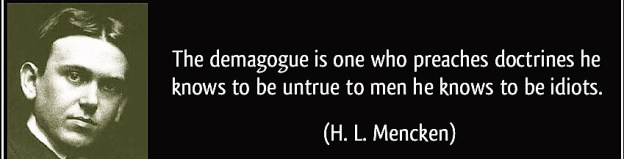
Being intellectually lazy, many of us choose to accept, with no critical reflection, what we are told by our democratically-elected leaders.  Or, if we don’t like the sound of that, we opt for what we are told by those who democratically oppose our leaders.  A few of us choose neither, opting instead to believe what we hear from demagogues and the lunatic fringe.

demagogue

And so, we find ourselves in a metaphorical darkness—facing each other in a circle of sorts, hunkered around the fire of our democracy—chanting our respective mantras back and forth, as if in a ritual war-dance, none of us listening to the other.  To those lurking in the dark, beyond the flickering light cast by the fire, our chants must sound like caterwauling—loud, nonsensical, and pointless.  And if those lurkers mean us harm, our brayings must also sound welcome.

In 1944, Winston Churchill said, …[the people] together decide what government, or…what form of government, they wish to have in their country.  When the people of any democracy, including our own, decide through their actions—through the exercise of their civic responsibilities, one of which is to become informed—the majority will rightfully have its way.

But we can also decide not to act, thereby abrogating our democratic opportunity to choose the government we prefer.  And when we do that, we leave the right to choose in the hands of others—others whose opinions and beliefs we may not agree with.  In that case, we have no right to bewail the government we end up with.

In the end, I suppose, it comes down to one simple truth.  If we are to get the government we deserve, we had better be sure we represent the sort of people we want to be choosing it.

voting