The Sandbox

Over a period of years a long time ago, on my daily walks to and from work through a local community park, I used to watch groups of pre-schoolers playing in a very large sandbox.  I was always struck by their singular focus on the primitive sculptures and projects they were building.  Oblivious to events going on around them in the park, they directed all their energy towards the activities in the sandbox.

A few of the kids looked to be cooperating with each other, working diligently in pursuit of whatever objective they had settled on.  Their interactions were punctuated by short bursts of conversation, lots of smiles, and the occasional whoop of glee when something came to fruition.

Most of the others in the group played alone, apparently unconcerned with the endeavours of their companions—typical of that age and stage of development.  Quick flares of temper occasionally gushed forth, and angry exchanges, when one person’s endeavours somehow impinged upon another’s, but on the whole, the mass of children in the sandbox managed to coexist.

Their mothers—no fathers, alas—watched with a mix of pride and bemusement as their offspring played, secure and happy in the park.

As time passed, those children got older and left the sandbox, but they were replaced by a seemingly inexhaustible supply of similar youngsters, and the pattern remained the same.  And everyone in the sandbox was concerned only with what was happening within its confines, no one with the goings-on in the rest of the park.

I noticed changes in the park at large, however.  In the early years, it had been a sylvan haven for children and families—a place to gather with friends, to cool off under the trees on mid-summer weekends, to escape the pressures of the daily grind.  As time passed, though, I began to miss the family gatherings, as many of those parents, some of them working two jobs, were no longer able to come.  And at the same time, more and more older children began to frequent the area, not playing the sorts of games I was familiar with from my own childhood, but just hanging out.  Loud music could often be heard, smoke hung over many of the conclaves, and occasional fist-fights would erupt between different groups.  In time, the park became, not so much a family destination, as a place for the neighbourhood’s teenage kingpins to gather.

The children in the sandbox were affected by these changes, of course.  Now, they had to avoid issues with the older kids if they hoped to play their games.  But, for the most part, they were able to do that, and in their exuberance and innocence, they continued their childish pursuits, interacting with one another as their predecessors always had.  None of them cared that the de facto ownership of the park had been co-opted.

To be sure, it never became a dangerous place, one to be avoided.  I continued my daily walks with no fear, but I was aware of the changed dynamic, even if the sandbox urchins were not.

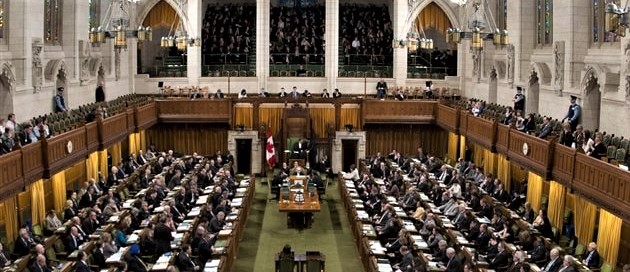
Today, long-since retired and no longer walking in that park, I think of it as an allegory of sorts to the present situation with our government.  When I watch Question Period, for example, whether federal or provincial, the elected denizens of Parliament focus so much of their energies and time on what seems to me nothing more than spurious activities, full of sound and fury, signifying nothing, as Shakespeare wrote.  As I watch and listen, I see again those pre-schoolers in their sandbox, engrossed in the small world they are occupying.

To be sure, legislation does get passed, much of it to the benefit of the country or province as a whole, even if never fully satisfying everybody.  And that’s good.  But I find it akin to the completion of those sandbox projects and sculptures that so pleased their creators—not insignificant, beneficial to their future growth and development, but accomplished only with such fuss and foofaraw as to be laughable.

A more serious situation, however, has developed outside the sandbox—the Parliament—in terms of who is really in control.  While elected officials busy themselves with their daily perambulations, much as those pre-schoolers did, private-sector interests are busy trying to take over the park, so to speak.  Be it wealthy, corporate entities, land-developers and real-estate companies, foreign-based media ownership, legal, banking, and financial firms, or myriad other lobbyist organizations, the environment around Parliament has undergone a radical change.

The ownership and culture of a local park are things to be gained or lost by the residents of the community in which it sits, according to their wishes and level of activism.  Depending upon how a community responds, their sandbox may be lost.

But the ownership and culture of our provincial and federal Parliaments are embedded in our constitutional rights—they belong to us, the citizens of this country.  Do we want to lose them?  Have we entrusted them to the finest possible stewards, our best and brightest?  Is there a fix for the encroaching, pernicious influence of the big-moneyed interests? What are we to make of foreign influence on our government?

More of us need to pay more attention to these questions, or all of us may end up losing our sandbox altogether.

Simple?

There are most likely no simple answers to the myriad questions our world faces today, nor simple solutions to the plethora of problems confronting us.

Think of such issues as: sanctity of life, including abortion, cloning, and assisted-death; religious liberty; traditional vs. non-traditional gender roles, and how they affect such institutions as marriage and parenting; education, which determines what and how young people learn about their history; human rights, especially for the millions of displaced persons worldwide; or our right to free speech, and whether or not it includes hate-speech, pornography, and incitements to violence.

Being a somewhat simple person, I do wonder if there is a basic reason that might account for the rising discord and rancor all around us.  Would it be too simplistic of me to attribute the cause of such trials and tribulations to one fundamental factor—namely, the reluctance of so many of us to abandon the comfortable past we long for, to embrace the changes that imbue the inexorable forward march of history?

I was born in North America shortly before the end of WWII, too early to be considered a baby-boomer, too late to be thought a part of the greatest generation.  I was raised from boyhood to adolescence during a period from the late-40s to the early-60s, a time when all the so-called truths seemed self-evident.  Either that, or no one took the time to question them.

Such broadly-accepted truths have been encapsulated in Moral Foundations Theory1, which postulates five ethical categories, each with its own set of prized qualities and traits.  These are:

  • purity-based morality, anchored in sanctity and piety;
  • authority-based morality, valuing duty, deference, and social order;
  • fairness-based morality, the flip-side of authority-based, embracing equality, impartiality, and tolerance;
  • in-group-based morality, founded on loyalty to family, community, and nation; and
  • harm-based morality, embracing care, compassion, and safety.

For the purpose of my search for a simple answer in this essay, let’s assume that these categories encompass the range of behavioural virtues we live by.  Scholarly examinations of the Google Books database have shown that morality in general was a much more frequently-discussed issue of concern at the dawn of the twentieth century than it was by 1980, although that trend has slowly reversed since.

The purity-based category followed almost the same trajectory during that interval, and there was a noticeable increase in individualism-based values that placed greater emphasis on me than on us, reducing the impact of collectivism-based values.

Authority-based morality declined during the first half of that same century, rebounded dramatically when the established order was threatened in the late 60s, then resumed its decline during the 70s before levelling off.

In-group-morality charted upward throughout the twentieth century as people tended to cluster in like-minded groups, a trend that continues to this day, and is exacerbated when people feel threatened or challenged by new ideologies and practices, or by outsiders.

Harm-based morality, sometimes labelled the ‘bleeding-heart’ syndrome, has risen steeply since the 80s as moderation and tolerance have become more pronounced in daily life and, in many areas, in political ideologies.

Alone among the five categories, fairness-based morality with its egalitarian emphasis, demonstrated no significant increase or decrease during the same time period.

In my simple terms, this would indicate that, despite a general shift of viewpoint from the collective to the individual (the me-firsters), society in general has moved from routinely accepting authority to challenging it, and by so doing, has come to view the notion of wrongness in terms of suffering, maltreatment, and deprivation. There is a greater acceptance of ‘others’ among the majority, a more rational, irreligious, and scientific approach to how we confront matters of right and wrong.

In short, an evolving approach to communal society and those who populate it is underway.

There is, however, a contrary narrative embracing what has been called re-moralisation, a wish to go back to what many think of as a golden age, the ‘good-old days’.  Elements of our communal society are becoming increasingly censorious and defensive, more outraged by the changes confronting them, which is evidenced by the growing polarisation of political debate that highlights their oft-excessive self-righteous approach.

In short, the liberalizing changes to society are jeopardizing the inherent values and beliefs such people hold dear.  Hearken to the call we hear from many of them—You shall not replace us!

Simply speaking, then, fear of change is the greatest impediment to finding solutions to our problems—solutions that will satisfy the moral foundations of all of us, at least to the greatest extent possible.

Alas, despite my reading and thinking on the subject, my simple brain has yet to come up with an idea that might work.  How do we convince and reassure change-resistant people that moving with the times does not require them to bend their moral codes.  After all, in a free society, we are all at liberty to choose what to believe.

We are not, of course, free to impose our choices on those who believe otherwise, but surely there is room for all of us to co-exist.

Simple?  No, but, let us hope, not impossible.

Tick-tock!

  1. Haslam, McGrath, & Wheeler, University of Melbourne, 2007

I Have Never

I am a straight, white, elderly, married man.  In all my years, I have never had a friend who is anti-Semitic.  I have never had a friend who is racist or homophobic.  Nor have I ever had a friend who is misogynistic or xenophobic.

In all my life, I have never had a friend who is regressive or punitive.  I have never had a friend who is a bully or cruel.  Nor have I ever had a friend who is narcissistic or egomaniacal.

From time to time, I’ve encountered people who exhibit some of these attributes, of course, but I’ve always and quickly exiled myself from their presence.  Except when I’ve had no recourse, I have steadfastly abjured their company.

Throughout my life, I have had friends who are religious—and from several faiths—or atheist, even agnostic.  I have had friends who espouse differing political sentiments than I, but never aggressively so.  I have had friends with points of view different from mine on such issues as pro-life/pro-choice, gender equity, capitalism/socialism, green energy, global warming, pandemic mitigations, famine, warfare/diplomacy, the likelihood of life eternal after death, and more besides.

I have even had friends who disagree with me about my lifelong support of the Toronto Maple Leafs hockey team, for goodness sake!

But never have such disagreements interfered with our friendship because those I consider friends have at no time lowered themselves to crude, ignorant, or abusive rhetoric and behaviour in our discussions and encounters.  Nor have they ever resorted to violence to advance their views.

Rather, they have relied on logic, facts, and persuasion to win the day—as I have always tried (sometimes unsuccessfully) to do.

That’s less easy today, though, because of a problem we face with our global society—the unprecedented proliferation of supposed facts presented across the wide range of media outlets available to us.  Some of these deliberately masquerade as the truth, which promotes confusion and conflict—forcing us to question what is information, what is misinformation, what is disinformation—and as a result, to begin to query our own values and principles.  Critical thinking skills have never been more crucial, it seems to me—and in many quarters, alas, more lacking.

Healthy skepticism has always been a positive thing, I think, a part of those very critical thinking skills.  But noxious skepticism, knowingly force-fed to a naïve public by pernicious purveyors of media in pursuit of their own, oft-malign agendas, has the effect of reducing the level of societal discourse to the lowest common denominator.  Loud, vituperative, violent acts against each other and our governing bodies are increasingly the result.

In any free society founded on the people’s faith that their government will act in the public interest, such discord cannot be good.  Because when the public loses faith in our civil institutions, those institutions will crumble from within.  And they will take down with them the very foundations upon which they have been built and thrived—citizens’ rights and responsibilities, the rule of law, equality of opportunity for all.

There is little doubt that, as a collective, we could do a better job of acknowledging our responsibilities (rather than just demanding our rights), and of ensuring equality of opportunity for the dispossessed and marginalized among us.  But lacklustre performance aside, the bedrock values are legitimate.

In recent times, unfortunately, I have seen people elected to public office— ostensibly to serve the citizenry—speak and behave in ways that are definitely anti-Semitic, racist, homophobic, misogynistic, xenophobic, regressive, punitive, cruel, and narcissistic.  I have witnessed their acolytes and followers, to no one’s surprise, then ape them.  And they are all doing so—increasingly, it seems—in more extreme language and deed. 

Disturbingly, I no longer believe I can respectfully disagree with those folks about their points of view, as should be the norm in any democracy; instead, I fear I would be shouted down, verbally abused, perhaps physically attacked.

Such people are not my friends.  Nor, in my opinion, should they be yours.  We should be electing and supporting the very best from among us, not the opportunists, grifters, and self-seekers.  But to do that, we must bestir ourselves and, at the very least, engage in the process and cast our votes on election days.

Plato wrote, The heaviest penalty for refusing to engage…is to be ruled by someone inferior to yourself.

I have never wanted that.

Will Wishing Make It So?

We humans have a boundless, perhaps fatal, propensity to gravitate towards, not reality, but what we wish reality to be.  Collectively, we opt to ignore what our senses and intuition are telling us in order to satisfy our desire for gratification and fulfilment.

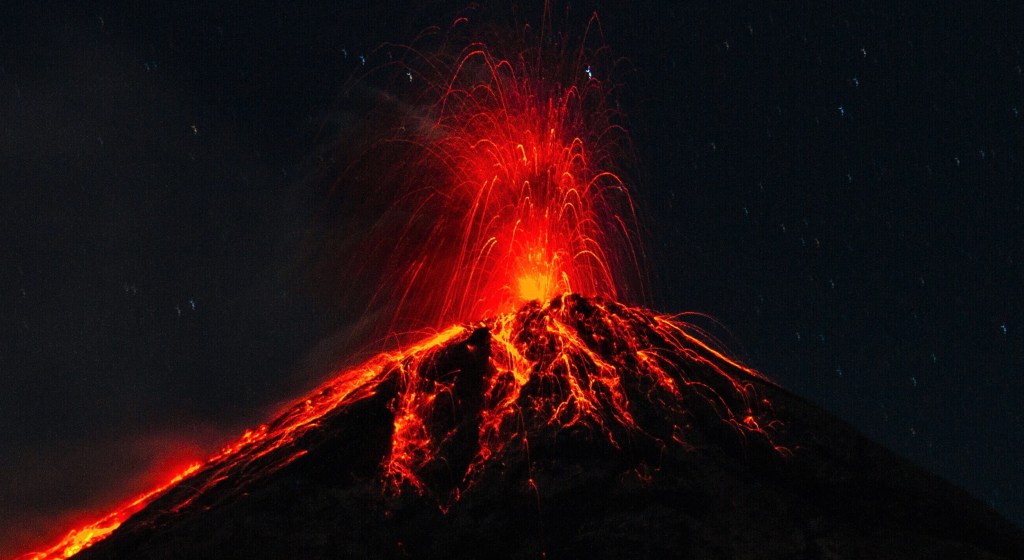
A few years ago, I was on a golf vacation in Guatemala with family and friends.  We played the magnificent Fuego Maya Golf Course at La Reunion, situated on the side of a mountain near the colonial city of Antigua.  The course, located in Guatemala’s Ring of Fire, was surrounded by four volcanoes, the only active one at the time being El Fuego.

Each time we played the course, El Fuego was erupting—benignly, we wanted to think—and it provided a magnificent backdrop to our games as its smoky plume rose high in the blue sky, its gray streams of lava spilled slowly down its side.  At night, it was spectacular, and frighteningly so—tremendous, booming explosions of fiery sparks shooting skyward, the ground trembling under our feet, red ribbons of molten rock spewing sinuously from its yawning maw. 

Within weeks of our return home, El Fuego blew its stack in a major eruption, propelling ash nearly four miles into the sky across a sixty-mile span, completely destroying the magnificent Fuego Maya golf resort, burying it in a pyroclastic flow as once Pompeii and Herculaneum had been entombed.  The golf resort is gone forever.  Nearby villages were wiped from the face of the earth, countless people died or fled from the volcano’s fury.  And yet, when we were there, we had chosen to ignore the signs, believing they were simply part of nature’s show, mounted for our pleasure.

In a similar vein, people across the globe delude themselves into thinking their actions are benign—allowing the deliberate dumping of raw sewage into our oceans and waterways, for example, or toxic, chemical slurry from mining operations and munitions manufacturing.  Such actions are bringing our planet to the brink—and probably beyond—of a severe threat to our survival.  We ignore this at our peril.

Consider this list of issues currently facing humankind, and the potential calamities they may visit upon us: global warming, ozone layer depletion, loss of biodiversity, ocean acidification, water and air pollution, soil degradation, deforestation, natural resource depletion, overpopulation, urban sprawl, inadequate public health response to once-and-future pandemics, generation and disposal of unsustainable waste, so-called artificial intelligence, and the rise of ultra-right-wing autocracy.   

Do you deny the existence of these?  Do you choose to turn a blind eye to them, not wishing to focus on anything but your own indulgence?  Perhaps you do not, but too many of us do.

Whether we ignore it or not, our mother-Earth is at an existential tipping-point, vulnerable to disasters and tragedies both now and in the future, a state of planetary emergency.  The planet itself, this lump of rock suspended in our galaxy, will survive in some form, of course.  The issue is whether we, as a species, will do so. Are we too ignorant? Or too arrogant?

Our first-world economy is nowhere near as healthy as reported by the media.  The poverty gap is not shrinking dramatically, regardless of what the numbers say.  In an increasingly-technological society, low-skill jobs are gone forever, so state-of-the-art education and innovative entrepreneurship are of utmost importance if the situation is ever to improve.  Are we investing in these?

Racism and bigotry are pervasive and, it sometimes seems, part of the human DNA; there is no quick fix for that, only generational change brought about by relentless pressure and, unfortunately, oft-violent protests.  Terrorism is part of our world, and (whether foreign or home-grown) unlikely to be eradicated any time soon; there are too many disenfranchised people in the world, with too many grievances, too much hatred, and too many weapons. 

The leaders of nations—elected or appointed, allies and foes alike—are not so much interested in international cooperation as in their own national aspirations, or their own political survival.  Large, multinational corporations are less concerned with the common good than with their own, often obscene, profits and dividends.  And it is they—not we, the people—who will continue to exert an overweening influence on the state of international relations.

We, the people, are all too often willing to be shunted to one side, caught up in our own pursuits, perhaps so overwhelmed by the sheer magnitude of the crises in front of us that we deliberately shut our eyes to their significance.  Once upon a time, many of us would pull the covers over our heads when the night-monsters invaded our bedrooms, wanting desperately to believe we would thus be kept safe from harm.  And back then, for the most part, we were.  But we were children then, and the time has come to set aside childish beliefs.

There are those who toil diligently on our behalf to face up to the crises facing us, of course, but they are too often scorned or left bereft of support.  And the deliberate and pernicious presentation of disinformation by malignant forces against people too naïve or unwilling to think critically works against the best efforts of the best among us to counter the threats.

So, we have a choice.  We can ignore our problems—just as I and my companions, in our arrogance, chose to ignore the threat from El Fuego. But unless we consciously choose to acknowledge and address these various issues seriously, to take action to support those who do so choose, we shall never solve them, never make them go away.  

Will wishing make it so?

I think not.

From This Moment On

Some folks worry about getting old.  And they bemoan the passage of time.

But once upon a very long time ago, nobody kept track of the years.  People in their nomadic, tribal clusters got up when the day dawned and went to sleep when it got dark.  They did it every day, over and over again, until, inevitably, they didn’t awaken from their final sleep.  Nobody ever worried about getting old; they just lived until they died, and the tribe moved on without them.

Even today in this wide world of ours, there are still countless numbers of people who don’t worry about aging.  They live in unforgiving climes where their every effort is bent toward eking out a subsistence-level existence.  Or they’re driven from their homes by ravaging armies—persecuted for their beliefs, their skin colour, their ethnic origins, and often enslaved by their captors.  They, too, live only until death frees them, far too burdened to worry about the realities associated with getting old.

Yet here are we, inured from such extreme conditions—secure, some of us, in our developed, civilized world, inundated by the availability of all the essentials and luxuries we might desire—and what do we do?  We worry about getting old.

Not all of us, of course.  Many young people appear to have the same nonchalant, carefree attitude I probably had at their age—back when immortality was a given.  The halcyon days of youth seemed destined to last forever.  Only old people were old. 

Others of us, the more elderly, have learned a sterner truth.  Youth lasts only until it’s over, only until our bodies begin to betray us.  The rosy morning of youth gives way, grudgingly, to a more austere noontime of life, and then, inexorably, to a deepening dusk we all are destined to enter. 

Some folks accept that truth more gracefully than others, some more stoically, some more fatalistically.

But some, of course, do not accept it at all.  In the words of the poet, they rage, rage against the dying of the light.  Nips and tucks; silicone, botox, collagen, and dye; enhancements and reductions; diets and purging; even exercise—all undertaken by men and women in a fruitless pursuit of everlasting youth.

Why is this so, I wonder, here in our world of plenitude?  Well, perhaps it’s because we have become obsessed with measuring time.  After all, time’s passing itself is neither our friend nor our enemy.  It’s just there, it’s always been there, and it will forever be there.  So, I’ve come to believe it’s the keeping track of time that plagues us, wreaking havoc on our youth, eventually forcing us to an acceptance of the stark reality that we are going to get old.  And we are going to die.

But remember, we are the first cohort of people since the dawn of time who has ever had the luxury of worrying about that.

From this moment on, perhaps we shouldn’t.

So Wrong!

Pandemics are awful, I’ve had a craw-full,
So many still shut in alone.
Lonely and cut off, they’ve worked their butts off,
Miserable, clear to the bone.

Tough though it may be, they strive to be free,
Rid of the pandemic wave.
Emerging all bright-eyed into good health-side,
Evading the forbidding grave---
Saluting good health with a wave.
People are crying, all of them trying
Against all odds to be well.
Like a great hero, reducing to zero
This virus’s terrible spell.

Tell me it’s over, we’ll soon be in clover,
Really, it’s been way too long!
Everyone’s ready, trying to hold steady,
Each of us praying to be strong---
Sadly, this is so wrong!

The Issue

A sage once opined that when we persist in arguing over and over again with a stupid person, we reveal ourselves as the stupid one.  Nevertheless, I have long engaged in fruitless discussions with an old-time friend, to the point where I’m beginning to suspect the adage is true.  I’m the stupid guy.

The problem I have is that this friend always strays from the issue at hand, deflecting my well-reasoned arguments by taking us off topic.  For instance, if I were to suggest to him that it’s raining outside, a fact easily verified by looking out the window, he might well claim he sees no one with an umbrella.

“That’s not the issue!” I would protest.  “You’re changing the subject.  Whether or not you spy an umbrella has nothing to do with whether it’s raining or not.”

He would probably just smile and ignore my argument.

Or if I were to offer an opinion that wages for the working-class haven’t kept pace with rising costs, his comment might be to tell me he has more money at hand now than he’s ever had.

“That’s not the issue!” I would probably object.  “You might well be better off than ever, but that doesn’t change the fact that costs are rising.”

He’d likely smile again, placidly this time, and not concede my point.

Perhaps I wouldn’t find this habit of his so maddening if it didn’t seem to me that he blithely assumes he’s had the better of me when these discussions happen.  Without ever directly rebutting something I’ve said, he inevitably counters with a peripherally-related argument, thereby appearing to satisfy himself that the matter is settled.

And yet, stupid me, I keep arguing with him.

A while back, we were talking about whether or not the scarcity of cold and ‘flu medicines on drugstore shelves is a problem.  “I’m told it’s a supply-chain issue,” I stated.  “And that’s exacerbated by a heavier-than-usual demand for the stuff because of the prevalence of illness now that school is back.  So, it’s a real problem right now.”

“I don’t use over-the-counter remedies,” my friend said.

“Yeah, but that’s not the issue,” I replied.  “The issue is that there’s a shortage of those products at a time when people need them.  That’s a problem!”

Another casual shrug was all I got.  And that smug smile.

We’re both aged athletes with an abiding interest in sports, and while watching a televised ballgame together a few nights ago, I said, “Boy, the Blue Jays look really good tonight.  It’s only the fourth inning, and they’ve already got seven hits and four runs in.  They’re hot!”

My friend replied, “Yeah, but they’re not playing the Yankees!”

“That’s not the issue,” I exclaimed, maybe a bit heatedly.  “So what if they’re not playing the Yankees?  They could be playing Casey at the bat in Mudville, for all I care.  They’re playing really well tonight.”

My friend shrugged as if it didn’t matter.

More recently, we were talking about the government’s removal of masking requirements for air-travel.  “I think they must consider the pandemic over,” I complained.  “They figure no mitigations are needed now, but I think that puts all of us at risk.”

“I don’t fly,” my friend said.

“That’s not the issue,” I fired back.  “Lots of people don’t fly.  But for those who do, the issue is they’re being placed in harm’s way.”

My friend shrugged off my assertions.  “But not if they don’t fly,” he said.

“That’s not the issue…” I began, before giving up.  How stupid can I be?

Yesterday, over a couple of beers and Reuben sandwiches, I decided to tell my friend why, during many of our conversations, his continual diversions from the subject at hand are bothering me.  “It’s almost as if you’re ignoring my point,” I said, “as if what I’m saying doesn’t matter to you.”

“Why would you think that?” he asked, squarely on point.  It caught me by surprise because I’d expected him to offer one of his usual non sequiturs.

“Well…you never seem to respond directly,” I stammered.  “You usually mention something only superficially related to whatever I’ve said, and then assume you’ve won the argument.”

“Argument?” he repeated.

“Well, not argument,” I demurred.  “More like discussion.  And you ignore the points I’m making.”

“And you think I’m doing that in order to win…what, exactly?”

“The…the argument.”  I smiled weakly over my beer at the absurdity of it all.

My friend smiled back.   “Did it ever occur to you that I might be conceding your point in these discussions, agreeing with you, and simply offering up another thought to keep the conversation going?”

Drawing a deep breath, I said, “Oh!  I guess not, no.  I sort of assumed you were just trying to one-up me and win…you know, the argument.”

“Well maybe, that’s the issue then,” he said.

And at that point, we ordered another beer and moved on to a much less-stupid, more pleasant conversation, all issues set aside.

Get the Message?

“So, lemme get this straight,” my companion says.  “If your phone rings, doesn’t matter where you are, you don’t answer it?  Not even if you know who it is?”

“Right,” I reply, “most of the time, anyway.  Unless it’s my wife or kids, or grandkids.  For them, I always answer.”

We’re walking along the lakefront on a sunny late-afternoon, enjoying the scenery, the other strollers, the kids flashing by on bikes and scooters, the sailboats out on the water.  A light breeze keeps us comfortable enough in the heat.

“So, what if it’s an emergency?” my friend asks.

“I figure whoever it is will call right back,” I say, “or leave a voicemail message.  Robocalls don’t do that, but people calling in an emergency will.  If nobody answers a bot’s call, it just moves on to the next random number.”

“You always check your voicemail?”

“I do,” I say.  “Maybe not immediately after the call, but frequently enough.”

“What if it’s a relative or close friend?”

“Same drill,” I tell him.  “I mean, I may choose to answer, but it depends on what I’m doing at the time.  I figure the phone is my servant, not the other way around.  It’s a tool that does its thing when I say so, but I don’t jump to its bidding.”

“Yeah, but it’s not the phone demanding your attention,” my companion protests.  “It could be a friend!”

“That’s right,” I nod.  “But if another friend called me right now, I wouldn’t ignore you to answer the call.  Why should you play second-fiddle when you’re right here with me?”

“Yeah, I can see that,” he concedes, before adding, “So, I imagine you never answer unknown callers, either.”

“Right.  Same logic.  But if they leave a message, I’ll soon know if I need to return the call or just forget about it.”

“Seems like an imperious attitude to me,” my companion says.  “What if everybody did that to you when you’re calling them?  How’d you like it?”

“Actually,” I say, “I wouldn’t mind.  Far as I’m concerned, it works the same both ways.  If my reason for calling is urgent, I’ll leave a voicemail message.  If it’s an emergency, I’ll still do that, but I’ll also keep calling—twice, three times, four, one right after the other.  I figure in that case, the person I’m calling will realize she or he should answer, that the calls aren’t random.”

“And if they don’t?”

I shrug.  “Well, some things are beyond my control,” I say.  “The important thing in cases like that is I try to get through and leave a message.”

“Seems like it’d be easier if everybody just answered every call,” my companion says.  “That way there’d be no wasted time.”

I shrug again.  “Depends, I guess.  Some people—like me, for instance—would think answering every call is a waste of time.  Every call?  C’mon!”

We walk in silence for awhile, pausing to let a flock of geese cross our path on their way from the water to the park lawn.

“So, if I call you, I won’t get an answer, right?” my companion says, still thinking about our conversation.  “And then, I hafta leave a message and wait for you to get back to me.  But what if I’m the one who’s busy when you do that?  Then what?”

“Then I can leave a message for you,” I argue, “which I’d do if my call was important.  But if I were just calling to touch base, I might not leave a voicemail at all.  No problem.  Either way, the ball’s in your court at that point.”

“And this works for you?”

“So far,” I grin, gently edging my friend to one side to let a couple of bicycles flash past, bells ringing loudly.

“Maybe I should give it a try,” he says uncertainly.  “I get a lotta calls, and sometimes I really wanta let ‘em go, y’know?  You think it could work for me?”

“You won’t know if you don’t try,” I reply.  “I had to work at it when I first…”

I’m interrupted by the insistent jangling of my companion’s phone.  With a stricken look on his face, he pulls it from his pocket, checks the screen, then puts it to his ear, turning his back as he does so.

I walk on, unperturbed, leaving him in privacy to deal with the call.  A hundred metres or so further along, I hear him call my name.  Turning, I see him, phone still fixed to his ear, motioning for me to wait.

In response, I put my hand to my own ear, pinkie and thumb cocked in the universal signal for Call me!, then carry on my merry way. 

I know I’ll get his message.

There Oughta Be A Law

The prowling panthers pose an existential threat to the almost two hundred ostriches inhabiting the colony.  The panthers, in their single-minded quest for food, are indifferent to the fate of the ostriches they are stalking.  The hapless birds represent only one thing to the powerful predators—survival.

The bigger, more powerful ostriches will flee in face of the threat, and most will make good their escape.  And once removed from danger, the threat will be dismissed from mind.  Others will attempt to fight back, but only a very few will emerge without lingering wounds, damage that may eventually prove fatal.

Still others among the colony, refusing to acknowledge the threat at all, are reputed to bury their heads in the proverbial sand.  By making the problem invisible, by denying its existence, they must think (if they think at all), they will render it harmless.  The panthers feast on those misguided birds, of course, and the ostrich colony is diminished in the ensuing slaughter.

Among the inhabitants of the ostrich world, there are none so blind as those who will not see.

If you were there to witness the panthers’ predatory onslaught, you might well turn away in horror, exclaiming, “This is terrible!  There oughta be a law!”

To which I would reply, “There is a law.  It’s the natural law of survival of the fittest, immutable and eternal.”

On a global, human scale, political corruption, pestilential pandemics, and pernicious climate change are but three of the menaces currently posing an existential threat to the almost two hundred nation-states inhabiting our planet.  These plagues, in their single-minded quest for domination, are indifferent to the fate of the human species they are stalking.  We hapless human beings represent only one thing to these malignant marauders—survival.

The richer, more influential among us will avoid such threats, at least for a while, by cloaking themselves with their wealth and power.  Others, less fortunate, will fight back, but despite their defiance, many of the resisters will nevertheless fall prey to the pervasive perils.  Those who overcome, if any, will inevitably be victimized by such lingering maladies as political oppression, ongoing illness, or severe-weather calamities. 

Still others among us, refusing in the face of all evidence to acknowledge these threats at all, will bury their heads in the proverbial sand.  It seems they believe that, by ignoring the clear and present danger such threats present, by denying their existence, they will render them harmless.  The mindless scourges feast on those misguided souls, of course, and the human species is diminished.

There are those among us who, witnessing the onslaught of rampant corruption, emerging pandemics, increasing climate danger—not to mention scores of other existential threats—react with horror, exclaiming, “This is terrible!  There oughta be a law!”

To which I reply, “There is a law.  It’s the natural law of survival of the fittest, and it’s immutable and eternal—unless, that is, we as a species take immediate, concerted action to change it.” 

“We’ve been trying that,” some protest.  “Doesn’t work.”

“Nevertheless,” I counter, “we are one colony on this planet, despite the fact we live in almost two hundred distinct nation-states, and our very survival depends upon our willingness and ability to work together.”

“We’ve tried that,” some say again.  “Didn’t work.”

It seems such a shame that, despite the magnificent evolutionary journey our homo sapiens species has carved out during our two million years on the planet,  we appear doomed to bring it to a premature end ourselves, through our wilful ignoring of the empirical dangers we face right now—burying our heads in the sand.

It seems such a shame that there are none so blind as those who will not see.

The Simpler Option

Growing up, my brother and I slept in twin beds in a shared bedroom, an arrangement that worked well for the most part.  But both of us suffered from seasonal allergies, he more than I, and as little boys, those caused a few summertime disagreements between us.

As we were trying to fall asleep, I’d often hear my brother sniffing repeatedly in a vain effort to stop his nose from running.  I’d try to block out the sound, even burying my head under my pillow, but to no avail.

“Blow your nose!” I’d hiss.  Another annoying sniff would be my answer.

“Stop sniffing or I’ll smack you!” I’d threaten after a few more minutes.  “Just blow your nose!”  Another sniff would invariably follow, and then a few more for good measure.  My brother was stubborn, if nothing else.

So in a rage, I’d bound out of bed and follow through on my promise.  He’d yell angrily and punch back, and we’d end up rolling and thrashing on his bed until my father arrived to administer a small rat-a-tat-tat on our backsides with the short, leather strap kept for such occasions.

These episodes always ended with my brother and me, both crying, back under the covers, and my  father warning us there better be no more fighting.  “And blow your nose!” he’d order my brother, handing him a tissue from the box on the table between our beds.  Chastened, my brother would do as he was told.

Falling asleep a while later, I’d wonder resentfully why he’d never comply when I told him the same thing.  So much anguish and pain would have been spared us both if he had chosen the simpler option.

“He’s so stupid!” I’d tell myself.  Things seemed simple when we were little boys.

But almost seventy years later, I find myself wondering the same thing about our population at large with respect to the SARS-CoV-2 virus that’s been afflicting us over and over and over again since late 2019. Viruses like these evolve their genetic codes over time through mutations or recombination during replication of their structure, and COVID-19 is no exception.

SARS-CoV-2 variations have been grouped by medical trackers into four broad categories: variants being monitored, variants of interest, variants of concern, and variants of high consequence.  The latest VOC lineages are Omicron BA.4 and BA.5, with a newer one on the horizon, BA.2.75.  Epidemiologists, immunologists, and virologists tell us these variants demonstrate transmissibility increases; more severe disease manifestation, as evidenced by increased hospitalizations or deaths; a marked reduction in protection from antibodies generated during previous infection or vaccination; and a reduced effectiveness of treatments or vaccines.

Sounds clear-cut to me—we’re becoming increasingly less-able to withstand the onslaught even as the viruses are mutating to avoid our defences.

Based on everything I’ve read from reputable sources—i.e. those whose mission is to present public health information based on evidence, as opposed to those who take a more relaxed approach based on political considerations—there are several practical measures we could be taking to mitigate the effects of the metamorphosing virus across the population.  Such measures require a degree of self-discipline and consideration for others, however—attributes that, so far, have been missing en masse.  Perhaps that’s why we have been singularly unsuccessful in reducing the disease to more a manageable endemic status.

Such simple mitigations have been grouped by the Centers for Disease Control and Prevention (CDC) into three types: personal controls, administrative controls, and engineered controls.  The first type requires each of us to assume responsibility for our own health by obtaining vaccinations and keeping them up-to-date, masking when in large groups indoors, testing when symptoms appear, informing those with whom we may have been in contact when we test positive, and isolating for ten days once afflicted.

The second type includes such measures as government mandating of up-to-date vaccinations for people wishing to attend certain venues and activities where others gather, and mandating mask-wearing for those same venues and activities.  These measures do not force people to get vaccinated or wear a mask, but they do establish those actions as prerequisites for participation.  And that only serves to protect the general welfare, surely a primary objective for any elected government. 

Enacting minimum requirements for paid sick-leave among the work-force would be another example of how administrative measures could work to reduce the spread of the disease.  Also, a greater commitment to communicating information about such measures to the public, coupled with more effective methods of doing so, are surely measures any responsible government would want to implement.  No?

The third type, engineered controls, would include, among other things, improving ventilation in buildings where the public gathers; providing ample supplies of testing kits and masks to public agencies; maintaining and improving the supply chains that keep our economy running smoothly; and planning intelligently to forestall the inevitable rise of future pandemic diseases.

Which situation is worse, I wonder?  Is it one where an economy slows precipitously because small businesses have to shut down for want of customers objecting to vaccine and mask mandates?  Or is it one where an economy slows ruinously because too many customers, not to mention employees, of businesses, hospitals, and other essential services are absent due to sickness?

Both are bad, but the first less so, if the simple mitigations described earlier could be put in place to ensure a shorter period of deprivation for all of us.  We could take advantage of that option if enough of us would decide to adopt the preventive measures that will forestall an endless repetition of SARS-CoV-2 surges, one after the other ad infinitum.

It’s unfortunate that too many of us, like my stubborn brother so many years ago, will not follow the simpler option.  The long-term consequences of their intransigence will be far worse for our collective well-being than the short-term pain inflicted by that leather strap on our tender buttocks was for my brother and me.