Making Friends

Almost a half-century ago, an older colleague advised me to surround myself with friends who were, not only my age, but younger and older, as well. “With friends your age and younger, you’ll be sharing memories you’ve made together while still able to create new ones. And when you make friends with older people, you’ll learn a lot from their sharing with you the experiences they’ve had.” He didn’t tell me one is silver, the other gold, but I got the drift.

His advice made a lot of sense to me, and to this day, my wife and I can claim friends who are in their nineties and others in their twenties. “You never want to see older friends die,” my colleague said, “but they will. And when that happens, you’ll find solace in the company of the younger ones.”

 That same colleague also told me, tongue-in-cheek, “I don’t need to make more friends. I have trouble keeping up with the friends I already have!”

I didn’t get it at the time, but nearly fifty years on, I better understand what he was saying. We have many friends we barely get to see anymore, given the obligations we all have, the distance we live away from each other, and the vicissitudes of getting older. If it weren’t for social media, I doubt we’d even be in touch with some of them. It’s not that we don’t consider them friends anymore; rather, it’s an inability to keep up.

I first met the friend I’ve known longest when we were fifteen, and sixty-seven years later, that friendship endures. But we see each other in person only two or three times a year now, and even those few meetings seem to require a good deal of advance planning. Moreover, there’s always the chance that one or other of us will have to cancel because of unexpected illness.

I remember my mother in her later years, living longer than my father and most of her friends. Near the end, there was but one longtime friend left, and their children would drive them to an afternoon get-together. Eventually, though, even that proved impossible, and they were reduced to talking by phone—a poor substitute. I dread that day’s arrival for me and my friend.

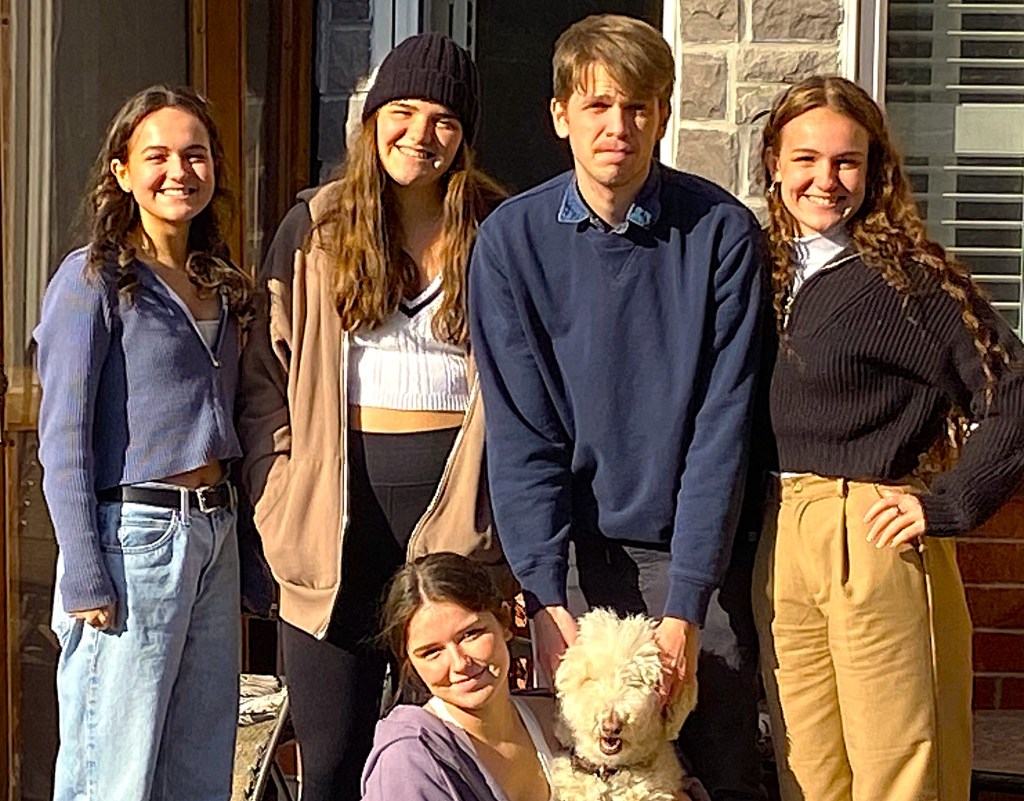
On a brighter note, my wife and I have acquired five new adult friends over the past half-dozen years. Our five grandchildren have all attained the age of majority now, and are attending university or, having graduated, are working full-time. They all live away from home—two from our eldest daughter and her husband, three from our youngest and hers—but close enough to us that we see them frequently on holidays and family occasions.

When they were children, we interacted with them lovingly, but with the slightly patronizing manner typical of conversations between elders who’ve seen and done it all and youngsters who are still finding their way. We never spoke to them in ‘baby-talk’, always recognized their unique intellect and agency, and considered them, not friends, but beloved grandchildren. And they regarded us, I think, as loving grandparents.

It’s different now, though. They’re still beloved by us, of course, and we by them; nothing could change that. But as they’ve grown into adulthood, they’ve become friends, not just grandkids. They’ve developed their own sets of values—thankfully, not identical to ours, nor to each other’s, but not in contradiction, either. They have their own viewpoints on issues facing them, and feel free to discuss those with us. They no longer accept everything we say as gospel, but they’re polite in their disagreements. And they back up their points of view with rational thought.

No longer are they participants in our world; instead, we have become participants in theirs.

As a young teacher, I remember cautioning parents of my students that, by helping children learn to think critically, we must accept the likelihood that they’ll think differently than we do about many things. It’s a delight now to find that is the case with our grandchildren. And a greater delight that it’s given us so much to talk about.

Three of them have come to visit us in Florida during the past year or so, all with boyfriends. So, we’ve been included in their conversations with each other, heard what they think about goings-on in the world, which has opened up new avenues of perspective for us. We’ve listened to their music, and they to ours. We’ve gone with them to the beach, to the mall, to restaurants, to the pool—all things we used to do with our older friends in years gone by.

When my colleague first told me the wisdom of cultivating friends of all ages, I confess I never anticipated some of those would be our grandchildren. But so it has turned out, and we are blessed.

As the familiar ditty advises, Make new friends, but keep the old…

Past, Present, Future

In 1905, George Santayana famously wrote, Those who cannot remember the past are condemned to repeat it. The statement is from his five-volume book, The Life of Reason: The Phases of Human Progress.

In 1943, Eugene O’Neill wrote, There is no present or future—only the past happening over and over again—now. That declaration is from his stage play, A Moon For the Misbegotten.

In his 1950 novel, Requiem For A Nun, William Faulkner echoed the notion when he wrote, The past is never dead. It’s not even past.

Although I could never be confused with those three literary giants, I too wrote on the same theme, more poetically: What’s past is the past—so quickly it passed—But it’s not where I want to stay. Those are the last two lines in the third stanza of my seven-stanza poem entitled, I Haven’t the Time

https://ppens1blog.wordpress.com/2025/07/01/i-havent-the-time/

But I also wrote of the future in that same poem: When all has been said, I still look ahead /To life’s next opening curtain. The premises of the poem are that life marches resolutely forward, that I haven’t the time to concern myself with its past, that I eagerly embrace its future.

Nevertheless, I’ve often wondered if there even exists a past or a future. Perhaps, as James Joyce stated in a 1935 interview with Jacques Mercanton, There is not past, no future; everything flows in an eternal present.

It may be, perhaps, that my poetic curtain is opening, not on some ephemeral future, but only on more of the ever-morphing present. I’ve long appreciated the analogy that life’s progress is akin to riding a train from one’s point of embarkation to one’s final destination, with innumerable stops along the way. People get on, share the ride with me, and every now and then, some get off—perhaps because their journey has ended, perhaps to continue their journey on another train. Indeed, I change trains from time to time myself, although my journey still continues.

My train moves from whence to hence, but I, gazing through its windows at the passing parade, remain aboard in my encapsulated present. The views change constantly, but my surroundings on the train remain, for the most part, constant and familiar. Locales no sooner flash by the window into the past in one direction, than future ones appear from the other. Riding the train is like being everywhere at once while never leaving the same place—Joyce’s eternal present.

Despite these musings, however, I find myself reflecting on the past more often these days—because of my age, maybe, now that my tomorrows are vastly outnumbered by my yesterdays. Although memory is an increasingly unreliable tool, it’s still easier to remember what’s transpired than it is to predict what’s yet to come.

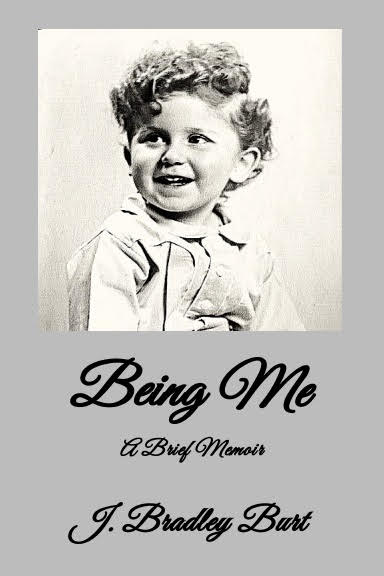
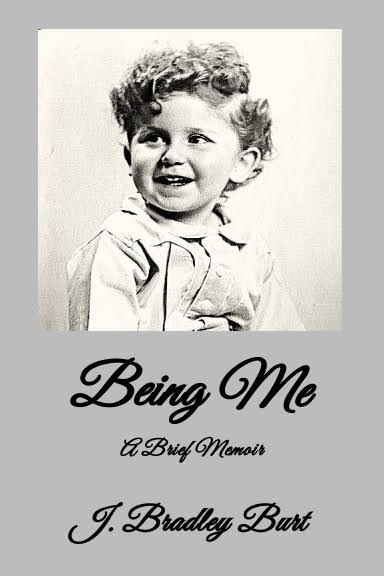
I recently published a short memoir for family and close friends, Being Me, and the exercise both surprised and cheered me. For instance, I re-affirmed that I have lived a blessed and privileged life to this point, surrounded by people who love me. And happily, I discovered I have almost no regrets about events from the past. The few I do have are less the consequence of my own actions and more the result of external forces acting on me, forces I could not control. With the exception of those, I realized there’s virtually nothing I would seek to change, had I the power to do so.

Writing the memoir took me back to places I’d been along the way, and I grasped anew how much I had enjoyed being there—my parents’ hearth, my own homes with my wife and daughters, our trips to foreign lands, my various career stops. I have no wish to return to any of them, to be sure, for I enjoy where I am right now too much. But I greatly appreciate that I had those experiences and opportunities—even if I see them now as only images flying past the windows of my train.

The future holds no fear for me. Curiosity? Anticipation? Of course! Those next opening curtains still claim my attention. I have no idea when my train will drop me at my final destination, but the present journey continues to be enjoyable and fulfilling. I have no clear understanding of what awaits when I shall disembark for the last time, although I do suspect the past, present, and future all will end at once. After all, Einstein held that the distinction between the past, present and future is only a stubbornly persistent illusion.

I imagine there to be an entirely different matrix awaiting after my consciousness has ceased, where time has no meaning, where eternity reigns…well, eternally. In the meantime, I hearken to this advice from St. Luke: …live for today, because yesterday is gone and tomorrow may never come.

My journey’s end will come, however, and I look to it in this fashion—

When that day is nigh, as ‘twill be by and by,
I hope it will be widely said,
That as man and boy, I strove for the joy
Of living until I was dead.

Them and Us, They and We

It’s always them, it’s never us
We like to blame for all the fuss
We must contend with on our way---
It’s never We, it’s always They.

It’s always They, it’s never We
Who take us out on stormy sea,
Into weather, harsh and grim---
It’s never us, it’s always them.

It’s always them, it’s never us
Who make us swear, who make us cuss
The sea on which we sail each day---
It’s never We, it’s always They.

It’s always They, it’s never We
Who cause our pain and tragedy,
Shake our wee boat, gudgeon to stem---
It’s never us, it’s always them.

It’s always them and never us?
That’s what we claim. Why is it thus?
Is there a chance the truth would say
It’s mostly We, not always They?

It’s not just They, it’s mostly We!
When will we learn, when will we see
Who rigs our sails, adjusts our trim?
The captain’s us, it’s never them.

What to Believe?

For all readers, this post will first appear as an email in your inbox.

For those whose email contains a link, click on it to access the post in its true blog setting.

For those whose email simply shows the post in its entirety, click the title to read it in its true setting.

I was raised a Christian lad, not by proselytizing parents, but by a father and mother who passively practised the religion they’d been taught by their own parents.  As an infant, I was baptized in the Church of England; as a boy, I attended Sunday School, where I learned the Anglican liturgy. In my early teens, I publicly professed my learned faith in a confirmation ceremony; as a young man, I married my bride in a Christian church.

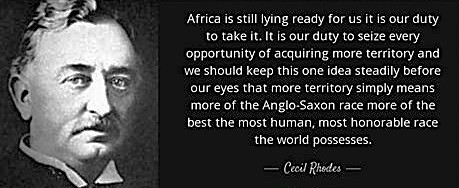
Growing up, I was enamoured of the tales of derring-do by British adventurers who set out to dominate the world—Richard the Lionheart and the Crusader knights; Sir Francis Drake and other explorers and privateers; Sir Cecil Rhodes and the rapacious conquerors of Africa and Asia. All of them ventured forth under the cross of St. George, ostensibly to bring Christianity to the heathen masses. Or so I was taught.

I wasn’t dissuaded by the troubling outcomes that sometimes occurred to me, arising from those teachings. For example, had I died before being baptized, I was taught I would not have gone to heaven; I was told that children of other faiths, unless they converted to Christianity, would not go to heaven; I believed none of us, being sinners, would go to heaven if we did not sincerely repent and swear never to repeat our sinful actions; and it was ingrained in me that those who did not go to heaven would be damned to eternal hellfire.

It didn’t dawn on me until much later how ludicrous it was that the God of love held dominion over me through fear. Still, I’ve never had doubts about the essential teachings of Jesus, as I understand them from the several writers of the Bible who have reported them—love; forgiveness; humility and service; empathy and trust; repentance and redemption; compassion and mercy. It seems to me that if everyone, Christian or not, practiced those teachings, the issues that plague our world would disappear.

From earliest times, my favourite part of being in church was listening to and singing the glorious hymns, accompanied by the mighty strains of a pipe organ. Because of the early, emotional indoctrination I experienced through my parents, they prickle my skin to this day when I hear them rendered—to name a few: Abide With Me; Blessed Assurance; Guide Me, O Thou Great Redeemer; Jerusalem; Joyful, Joyful, We Adore Thee; Nearer My God to Thee; O God, Our Help In Ages Past; and Rock of Ages.

A good number of hymns, I discovered later, were written by British lyricists and set to the melodies of classical composers, many of them Germanic. One of those, Glorious Things of Thee Are Spoken (by John Newton, who also wrote Amazing Grace), is sung to the same Joseph Haydn melody that graces the German national anthem, Deutschlandlied (formerly Deutschland über Alles).

Given the 20th century history of conflict between those two nations, I always found it strange that they shared a love for such glorious music. Even more so, I found it preposterous that soldiers of both Christian countries were killing each other on battlefields, in direct contravention of their shared God’s commandment.

Yes, God is with us! Nein, Gott ist mit uns!

But perhaps that isn’t so strange, given the militaristic character of many of those hymns. Take these lyrics for example—

Stand up, stand up for Jesus! ye soldiers of the cross;
Lift high His royal banner, it must not suffer loss:
From vict’ry unto vict’ry, His army shall He lead,
Till every foe is vanquished, and Christ is Lord indeed.

Implicit in those words is the instruction that good Christians must overthrow those who do not believe. I found that to be in contravention of the Christly teachings mentioned earlier, which always struck me as invitational rather than compulsory. I was taught, after all, that God had gifted us with free choice.

Mind you, George Duffield, Jr., the American clergyman who wrote the lyrics in 1858 and set them to an original melody by Franz Schubert, may not have intended them to sound militant or jingoistic. But that is how they ring in my ear. And it is such sentiments that crusaders and conquerors of the past cited to justify their conquests.

If you doubt it, consider also the lyrics of such hymns as Onward, Christian Soldiers, We’ll Go Out and Take the Land, or The World Must Be Taken For Jesus.

In fact, many Christian buccaneers and swashbucklers set out to plunder the world for reasons far more crass than what they professed. Bringing Christianity to the heathen masses was, at best, a by-product of their colonialist ravages, and at worst, an excuse for them. As for those Indigenous peoples subjected to the messianic zeal of 19th century Christian missionaries, I’ve always wondered how their forced conversions could be deemed proper when similar depredations imposed on Christian victims during the 8th century Moorish invasion of Europe were considered barbaric. Did both aggressions not have the same effects on those who suffered and died? Were they not the same thing, save for the religious faith driving them?

Might makes right, some say. To the victors go the spoils. And history—the history I grew up learning—was written by those victors. The synoptic gospels have Jesus saying, “Render unto Caesar the things that are Caesar’s…” A venerable phrase translated from the Latin has Caesar claiming, “I came, I saw, I conquered!” The emphasis, of course, is on that final word.

So now, with more yesterdays accumulated than tomorrows to anticipate, I find I am no longer the Christian lad I once was…not with how Christianity, particularly the degraded, evangelical sort, has come to be defined in this 21st century. I do believe in free choice, and I choose not to believe Jesus was all about conquest and subjugation.

Further, I do believe in the wisdom of the aforementioned teachings of Christ, although I do not need the backing of a supernatural mythology to support my belief. I regard those as universal truths shared by Christianity, Islam, Hinduism, Buddhism, and Judaism, among other religions…and indeed, by many folk who profess no religion. Those teachings promote adherence to the Golden Rule, compassion for and kindness to others, the valuing of family and community, and the pursuit of a moral life.

I’ve long believed that the evils of this world are caused, for the most part, by extremism—unbridled nationalism, greedy capitalism, and apocalyptic religions. How might it be if only we gave those universal truths a chance to show what they could do instead?

In closing, lest this screed be mistaken for apostasy or advocacy, let me assure you it is no more than a statement of personal belief, refined over many years of observation and experience. Despite the sage admonition not to believe everything I think, I have always felt that believing in something is important, so as not to fall for anything.

The question, of course, is knowing what to believe. And for me, seeking that knowledge will be an ongoing journey until, inevitably, the road comes to an end.

More and More Every Day

Earlier this week, I celebrated my wedding anniversary—fifty-eight years, all married to the same woman, the lissome lass I first dated when she was but sixteen.  We married four years later, embarked upon fulfilling careers, raised two lovely daughters, and retired to the life we now enjoy together…sixty-three years gone in the blink of an eye, it now seems. Egad!

Friends probably view the longevity and success of our union from my wife’s point of view as a triumph of iron will over probability. From my viewpoint, however, it’s unquestionably a victory of blessed good fortune over whatever random fate I would otherwise have encountered.

Recently, at the behest of our daughters, we each decided to write a short memoir of our lives, intended only for family and close friends.  Mine, titled Being Me, is finished and in the hands of those I care most about; hers, titled My Story, is nearing completion. The trick, as we discovered in the writing, lay in knowing, not what to include, but what to leave out.

As we wrote, we shared memories sparked by old photos, slides, and home-movies produced through the years.  We were amazed by how much we had forgotten over time, and by how different our fuzzy memories sometimes were as we discussed the same events.

“That’s not how it happened!” I found myself declaring more than once, only to have my wife show me a faded snapshot that proved otherwise.  Admittedly, I’ve always had trouble remembering dates, so casting back to those bygone years wasn’t child’s play for me.

By the way, that trouble with dates persists even now, alas.  I recently showed up for a colonoscopy procedure after enduring the requisite purging prior to the visit, only to find I had the right day, the right time, but the wrong year! I was a whole year early! I’m still living that one down.

Through most of our marriage, my wife and I were enthusiastic participants in sports—baseball, curling, golf, hockey, tennis, skiing, swimming, to name but a few—both competitively and recreationally.  As we eased our way through middle age, entering inevitably into our senior years, many of those began to fall away. We found we could no longer glide across the arena or playing field with the same visions of grace and glory we’d previously enjoyed.  Father Time vanquishes everyone, we discovered, no matter how skilled or practised we might be.

An example for me was falling down in my follow-through a few times on the tee-boxes while smoking drives I’d always hit routinely…well, maybe not always, but occasionally.  My playing partners advised me to start wearing a bicycle helmet if I wanted to continue playing.

My exercise today consists of activities where I can’t fall down or off something. I favour the rowing machine, the treadmill (if I hang on), the stationary bike, or exercises conducted while lying on the floor.  Although not a Latin scholar, I find myself chanting under my breath as I work out: sic transit gloria mundi!

As with many things in a long marriage, my wife and I found we had to adjust and change to meet these new demands.  She spends the bulk of her time now, when she’s not reading or doing jigsaw puzzles, making gifts for family and friends out of clay, dichroic glass, and wood, an accomplished artisan.  I call her my boon companion in the arts.

Much of my time, of course, is spent writing—novels, anthologies of tales and poems, and posts on my blog—and listening to classical music.  I’m a prolific reader, as well, and give thanks constantly for online libraries.

Perhaps the biggest change for us is that we no longer find our children and grandchildren to be part of our lives, sharing our experiences; rather, we have become part of their lives, eagerly sharing their accomplishments and happenings. It is we who are the supporting actors now, and they the stars in the unfolding movies of their lives.  We’ve also discovered that this change is very comforting, to be loved and cared for by these essential people in our lives, even as ours wind down.

We still look ahead, however, to each new adventure that might come our way. One of my haiku poems illustrates that philosophy quite clearly—

more yesterdays now
than tomorrows, but it’s the
tomorrows that count


the sails of our youth,
once hoist, are mostly furled now---
though the winds still blow

Back in 1964, when we were still dating prior to marrying, a popular singer, Al Martino, released one of his biggest hits, I Love You More and More Every Day. We adopted that as ‘our song’, and we used to sing snatches of it to each other.  Over the years, it faded for some reason from our minds, although we never abandoned its premise.  But I thought of that song on my recent anniversary day, and began to sing it to myself.  I had to look up the lyrics, of course, after all this time, but the melody was etched in my memory.

On a whim, I decided to record myself singing it on a karaoke track to present to my wife. Although I used to sing bass in a men’s a cappella barbershop chorus, my octogenarian voice is a tad quavery and shrill now, and my range is somewhat limited.  Nevertheless, the sincerity of my singing has not abated, and she at least recognized the song. Sort of.

As I think back to when she and I first met, as I try to remember all that has happened since, as I marvel at the lasting of our union, I find myself overwhelmingly grateful that we celebrated this latest anniversary together, and I offer this haiku to her to reflect those sentiments—

impossible dream!
many might have thought so, but
you made it come true

trusting all that’s passed,
moving forward in good faith,
hands clasped as always

I Can Help With That!

Well into middle-age, I would often ask my parents questions about our family’s history.  Most of the time, those questions were based on simple curiosity, but occasionally they’d be prompted by something more important, like the medical history of family members that might impact me or my children.  Aging aunts and uncles were also a source of information, and always seemed happy to reminisce about such things.

Old photo albums were a rich source of material, too, as were scrapbooks and journals, and I remember poring over them as a child, eager to soak up the ethos and culture of my family.  Alas, when I look at some of those monochrome snapshots now, I find I recognize hardly anyone.

But now, of course, there’s no one to ask.  Both my parents and all my aunts and uncles are long departed, and I am the eldest of my family.  My three younger sisters will sometimes remember events from our shared past quite differently than I, but now we have no arbiter to call upon.

My two daughters, in their fifties now (Egad!), have taken to asking me and my wife the same sort of questions about our respective families that I used to ask my elders.  We answer them to the best of our memories, but our memories aren’t the best anymore.  I come away from some of those conversations with the uneasy feeling that I might have made stuff up to fill the gaps.

One of our daughters suggested recently that we sit down for a few interview sessions with her, where she could record our recollections.  We’ll be happy to do that, but the suggestion prompted another idea, one I immediately acted on.

I’ve written a memoir, a brief history of my life intended for family only—my wife, my daughters and their husbands, my five grandchildren, and my three sisters—plus one friend of almost seventy years.  The book, a mere 135 pages in length, is titled Being Me, and is not meant to be an exhaustive examination of my life to date.  Rather, it’s a glimpse at who I was as a boy, who I became as a husband, father, and educator, who I am well into a blissful retirement, and who I strove to be throughout my life. It deals with those events I deem significant, things that might be of interest now or in future to my limited audience.  The challenge I faced was not trying to decide what should be included, but what should be left out.

I’d love to think there’ll be enough yet to come to justify a sequel, but that seems rather unlikely.  Dying holds no fear for me, but I will harbour a sizable amount of regret if that grim reaper lurches in too soon, for I’m having too much fun to want to leave.

It’s been said no one is ever truly dead to the world until the last person who remembers her or him is gone, and I think there’s something to that.  My paternal grandfather died just before Christmas 1948, when I was five years old.  But because I still remember him, vaguely—the only one in my family who does—he’s still alive in a way.  When I finally pass, so, too, will he.

But I’m hopeful I’ll live on, as he has for me, in the memories of those precious ones I leave behind.  And I pray those memories will be fond ones, at least for the most part, and that they’ll evince more laughter than tears.

I have more yesterdays now than tomorrows, but the inevitability of aging is but one aspect of life.  If we so choose, we can relegate aging to a mere physical phenomenon, not one that has to affect our emotional outlook.  The person looking out on the world from behind my eyes today is not the man whose image I see in the bathroom mirror every morning; rather, he is still the boy I always was—

from my aging eyes,
the boy I once was looks out---
hardly changed at all.
the sails of my youth,
once hoist, are often furled now,
‘though the winds still blow.

The winds do still blow, and I welcome them and am inspired by them, even if I can no longer respond as once I did.  My children and grandchildren, thankfully, are caring enough to include me in their lives; my next adventure with Donna is always just over the horizon; my next book is already forming in my febrile  imagination.  These are the winds I speak of, and the physical frailties that age sends to plague me are unable to fully constrain me.

Prompted by our daughter’s interview idea, my wife also decided to write her memoir, titled My Story, and has asked me to help.  As I read her recollections, I find many of the events she deems significant are those I also considered important.  That shouldn’t be surprising, I suppose, considering we’ve been a couple since our first date in 1963, and married for fifty-seven years.

Neither memoir, of course, will answer all the questions our daughters or their families may ask about their heritage.  But with any luck, they’ll go some way to filling in a few of the blanks.  And who knows? Maybe on some far-off day in the future, long after I’ve gone on to my next adventure, one of my grandchildren—or perhaps one of their children—will want to know something about the old-timer who preceded them by a generation or two.  No one will likely remember, but they’ll have my memoir to refer to for the answer.

I like to think it will be as if I’m still there to hear the question.  And to answer by responding, “I can help with that!”

Making the Bed

~ CLICK ON THE TITLE IN THE BODY OF THIS EMAIL NOTICE TO READ MY BLOG POST IN ITS NATURAL SETTING ~

Do you make your bed right after you get up in the morning?  Or after you’ve washed and dressed?  Or at all?

I do, and have for almost eighty years.  It’s the first thing I do after stumbling out of bed—or maybe the second if the bathroom beckons urgently.  The only exception to the rule is if my wife is still abed when I awake, but that is not a frequent occurrence.

It was my mother who got me started, around the time I was five years old if memory serves.  She was a stickler for cleanliness and neatness, and I, being the eldest of five siblings, was her first opportunity to test her mothering skills.

Her instructions were quite specific, and I still follow them to this day.  Begin by brushing wrinkles out of the bottom sheet with my hand, then tuck in its corners—no contoured sheets in those bygone days.  Next, pull the top sheet up to neck-level, then do the same with the blankets on top of it (usually two in number), smoothing them as I go.  Plump up my pillow and straighten the pillowcase, then centre it below the headboard.  And finally, drape the bedspread atop everything, ensuring it hangs evenly off the floor on both sides of the bed, and at the bottom, then tuck the top neatly under the front edge of the pillow.

Complicating matters was the fact that my bedcover had three wide, brown stripes running top to bottom on its beige base colour, and woe betide me if those stripes didn’t run parallel to the edges of the bed when I was finished.  I can remember mornings when I was sent back upstairs from the kitchen two or three times to remake the bed before I was allowed to start eating.  I hated cold oatmeal, so it didn’t take me long to learn the valuable lesson that a job worth doing is worth doing right…the first time!

My brother, three years younger than I, eventually faced the same challenges.  I can still see that little boy studying me intently, trying to mimic my every move on the twin bed that sat opposite mine.  He didn’t like cold oatmeal either!

My mother’s bed, shared with my father, was always made up immaculately, of course, except on washing day, when she’d strip the bed down to the mattress, turn it or flip it if she thought it necessary, then remake the bed with a clean set of sheets.

The day came when my brother and I had to do the same with our beds, another learning exercise we didn’t enjoy.  Eventually, so too did my sisters, but I always thought they were given more leeway than my brother and I received.

I’m sure I asked my mother more than once why we had to go through this exercise every day.  “We’re gonna hafta un-make it tonight!” I probably whined.

As best I recall, her reasoning ran like this: making my bed when I got up meant that, no matter what else I might do that day, I’d have accomplished something!

In the beginning, I probably had to ask what that big word meant, but I must have got the gist pretty quickly.  My mother was all about accomplishment, achievement, the attaining of goals, and she imbued her five children with that attitude.

Nevertheless, now that I’ve attained a ripe, old age, the question could be asked why I persist to this day in making my bed.  The answer might be habit, I suppose, and an aversion to change, for I do value predictability and stability.  Or perhaps I’m secretly trying to please her still, long after she has left the stage.  Maybe I possess the same inner drive for order and perfection that defined her, that impelled her.  Whatever the reason, it seems a little late in the game for me to learn to love a messy, unmade bed.

The bed I make up now is quite different from the one I started with, of course.  A king-size model, it requires me to climb atop it to straighten the sheets and blankets in the middle, where I can’t reach them while standing on the floor.  Manhandling the bedcover into place—now called a sham, a coverlet, a counterpane—is a man-sized chore, even as my man size is diminishing steadily.

Rather than one pillow, or even two, to plump and place, there are ten in all—two my wife and I rest our heads on overnight, two larger ones in fancy slipcases to be placed in front of those, and six smaller ones to place on the bed, not haphazardly, but precisely, symmetrically, and balanced.

There are days when I feel I need a nap after pulling it all together, but alas, I lack the will to pull the covers down when I’ve just made them up.

So, I soldier on, making my bed every morning, always glad when I enter the bedroom later in the day to see the display of my fidelity to the lessons I was taught.  And best of all, it allows me to think of my mother every day, to thank her for the lessons she insisted I learn.

I must confess, though—I have never learned to fancy cold oatmeal!  

Singin’ the Songs

Regular readers here will know of my love for music in my life, whether performed by professional musicians in a concert hall or robust amateurs at a party.  I have genres I prefer, of course, as do most people, and I generally fancy instrumental versions of favourite songs to vocal renditions.  I find them more soothing, more conducive to creative thought and activity.

Most of my listening time occurs when I’m writing, as is the case right now, penning this essay, my head clad in earphones.  My first and abiding love is classical music—likely due the influence of my father, who often fell asleep with me on my bed at night as we listened to radio broadcasts of the great symphonies.  He frequently had stories to accompany the music, too, which made it all the more special.

When I started school, one of my favourite activities was song-time, when the teacher would teach me and my classmates a new song.  Not all of us were thrilled, of course, but I was ever enthralled.  To this day, I love to join in the enthusiastic chorusing of the old songs with a group of friends.

And I can still remember (and occasionally sing to myself) some of those silly, little ditties we were taught in kindergarten and grade 1—

Your pail and shovel and wheelbarrow bring,
Let’s plant us a garden this morning in spring.
Dig little trenches, pull out all the weeds,
Pour in some water, and drop in the seeds.

Or this one—

Little yellow bird, little yellow bird,
Come flying with me.
We will build us a cozy corner
In the old apple tree.

There was one I particularly liked, although the lyrics saddened me—

“Come away,” sang the river to the leaves on the trees.
“Let me take you on a journey, and the world you will see.”
So, the leaves gently falling from the trees on the shore
Float away on the river, to come home nevermore.

It might have been the final phrase that bothered me, that they would never find their way home.  But the melody was lovely.

Making friends was very important to one just starting school, so this song had special meaning—

Make new friends, but keep the old.
One is silver, and the other gold.

At my advanced age now, the inherent truth of that sentiment has been borne out countless times.

Our earliest foray into the magic of the French language began with this song about a skylark, Alouette—

Alouette, gentille alouette,
Alouette, je te plumerai.
Je te plumerai la tête,
Et la tête, et la tête,
Alouette, Alouette
Oh-h-h-h-h...
Alouette, gentille alouette,
Alouette, je te plumerai.

There were several verses to this one, substituting le bec, le cou, les ailes, le dos, les pattes, and la queue for la tête, and the chorus had to include every one of them as they were introduced.  But we loved the challenge!

As little ones, we were always encouraged to be active and happy, and to let people know how we felt.  This song allowed us a way to do just that—

If you’re happy and you know it, clap your hands!
If you’re happy and you know it, and you really want to show it,
If you’re happy and you know it, clap your hands!

There were many variations on clapping your hands as we sang that one, and all of them caused much joy and laughter.

One of the songs I especially liked was this one, seeking love and happiness—

You are my sunshine, my only sunshine,
You make me happy when skies are gray.
You’ll never know, dear, how much I love you.
Please don’t take my sunshine away.

Over these past few years, I’ve been fortunate enough to spend many happy hours singing with a men’s chorus, and a fuller version of this is still one of our staples.  I’ve included a video clip that you will surely enjoy—

It’s seventy years and more since I learned many of these songs, and I’m amazed by the joy they still bring me.  After all this time, there are fewer things more fun than singin’ the songs.

A Musical Gift of Love

And here she is, the singing rage, Miss Patti Page, with her latest hit, Tennessee Waltz…

The year was 1951, and my brother and I were home in bed with chickenpox, the longest week we’d ever spent in our young lives.  To help our mother avoid losing her mind as she coped with our whimpering and complaining, Dad had moved the large, Motorola console radio from the living room to our bedroom.  It was heavy, and I still remember his red face, and the huffing and puffing, that accompanied the move down the long hallway to our room.  It took a while to adjust the antenna, too, to ensure we got proper reception.

With the entertainment that radio provided during those seemingly-endless days in bed—together with toys, comics, children’s books, and board games—my brother and I managed to allow Mom some brief periods of respite.

All that week, we fell asleep at night to broadcasts of The Lone Ranger, Mark Trail, Amos ‘n’ Andy, and The Shadow.  Having that radio in our bedroom was almost enough to make us wish the chickenpox would hang around a while longer.  Almost!

The bedroom was small, with one dormer window, and our twin beds were separated by a table whose top was taken up by a small lamp and two coasters, upon which sat our water glasses.  On the two shelves underneath, one for each of us, our respective playthings were stored…my brother’s haphazardly, mine orderly.

The first time we heard Tennessee Waltz on the radio, my brother immediately piped up, “That’s my favourite song!”, thus preventing me from claiming it.  Not to be undone, however, I quickly claimed Patti Page’s other big hit, Mockin’ Bird Hill, as my property.  Every time either song came on the air, our bedroom would become eerily quiet as we listened avidly, singing along silently in our tousled heads.

When we eventually dared to accompany the singer aloud, neither of us was allowed to sing the other’s song.  Singing along in our heads was permitted, but by mutual consent, our live performances were strictly proscribed.

As if to ensure our claim to our song would not be usurped by a treacherous brother, each of us would reiterate our ownership every time our favourite came on.  “Tennessee Waltz is my song!” my brother would insist, and for good measure one day, he added, “An’ Patti Page is my favourite singer!”

He was in love with this woman we had never seen, and truth be told, so was I.

By some unspoken rule, however, we both understood that the singer herself could not be claimed as one’s own, and so the next time Mockin’ Bird Hill came on, I chirped, “That’s my favourite song, an’ Patti Page is my favourite singer!”  And, while our mother was in the room one day, I added, “She’s prob’ly as pretty as Mom!”

Mom smiled at that.

But my brother immediately protested, “No, she’s not!  Mom is prettier!”

Our mother smiled at that, too.

The chickenpox finally ran their course, of course, and life went back to normal.  But to this day, I can still sing the entire Tennessee Waltz, and all three verses and the chorus of Mockin’ Bird Hill.  I’m probably off-key in a few spots here and there, but it’s seventy-five years ago that I learned them, so that’s not too shabby.

My brother is gone now, as is Patti Page, but whenever I sing those two songs, usually just to myself, out of filial loyalty and respect for those childhood rituals, I always kick off Tennessee Waltz with the preface, “my brother’s favourite song”.  And if he were still here to hear me, he’d probably say, “Damn right!”

And I know he’d settle back and listen politely as I announce, “An’ here’s my favourite song, Mockin’ Bird Hill!” before launching into it. I won’t do that here, of course, but here’s the lady herself to sing it.

We were lucky, my brother and I, to have shared that musical gift of love.

The Lonely, Silvery Rain

The thirteenth novel in my Maggie Keiller/Derek Sloan crime series will be published later this year, titled The Lonely, Silvery Rain. Here is an excerpted chapter from that book, slightly modified for this blog-post. If you have read previous books in the series, you will recognize the two characters here.

When Old Scratch, as Senator Nicholl disdainfully referred to death, came calling for the final time on a warm, drizzly, late-morning in October, he found Nicholl dozing in his favourite rocking chair on the wide, open-air verandah of his century home.  The rain was thrumming on the shingled roof, dripping off the overhanging eaves, spilling like a shimmering, crystalline waterfall to the gardens below.

Before his spectral visitor crept in, Nicholl had been engrossed in a pleasant dream, delivering a stem-winder of a stump speech on another political campaign trail, surrounded by a throng of friends and constituents in someone’s farmyard.  Balancing on a rickety, upside-down milking-bucket, he stood above everyone, so even those at the far reaches of the crowd could see him.  He felt he’d never been in finer voice until, gearing up for the customary, full-throated culmination to his peroration, he discovered he’d forgotten what he was about to say.  The shock was profound.

Groping vainly in his dream to remember the remarks eluding him, his mouth continued moving, though no sound emerged.  Then, without warning, the bottom abruptly dropped away beneath him, as if someone had kicked the bucket out from under his feet.  The world whirled and spun dizzyingly as he toppled, flinging his arms out in a futile attempt to catch himself.  Despite the confusion and fear engulfing him, however, he still tried to finish, a campaigner to the end.

Wait!  My speech!  I’m purt’ near done…

But the dream turned nightmarish, and a misty, reddish haze descended across his eyes, and then…and then…

Senator Milford Nicholl, the simple, hometown boy-made-good, eased back in his rocking chair, sighed a fare-thee-well, and went to his eternal rest.

The many well-wishers who stopped in later that afternoon found Gloria, his wife of sixty years, shaken but composed, unbelieving but accepting, sad but relieved that her husband’s travails were over.

“He knew he was on borrowed time,” she told them softly, “and I could tell he knew his days were winding down.  A wife always knows these things…”  Her throat filled up, and she stopped to wipe away tears. 

“Just a few days ago,” she whispered after a moment or two, summoning a small smile, “we talked about the possibility of one of us dying.  And you know Milly’s sense of humour.  He said something to the effect that he wasn’t afraid to die, he just didn’t want to be there when it happens.”  

The mourners laughed at that, and a few shared more of the homespun witticisms they remembered flowing from Nicholl’s febrile mind.  Eventually, Gloria told them she really would like time alone.  “I’ll pray a little,” she said, “cry a little, laugh a little.  There’ll be time enough later to reminisce some more.  And I’ll call you if I need to, I promise.”

As everyone took their leave, Gloria waved from the verandah, then sat and rocked slowly in her husband’s favourite chair, his abandoned walker standing forsaken beside it.  The rain was gentler now, but its sibilant pit-a-patting on the roof was still audible, its runoff still dripping off the eaves into the lush gardens below, covered by sodden, autumn-hued leaves.  The unseasonably warm breeze caressed her, enveloping her in a blanket of solace.

She already understood she’d be missing Milly constantly from now on—his irrepressibility, his cornball turns-of-phrase, his devotion to the community—and most of all, his love for her, his very presence.  She counted herself lucky to have been his partner and to have known such happiness.

Her grief over losing him would linger long, of course.  She knew mourning is not something that can be quantified or measured by time.  But at this particular moment, she was at peace with his passing, attuned to the happy memories she would cherish forever, resigned to the loneliness she knew would envelop her from time to time.  They were all part of everyone’s journey through life.

But for right now, she was snuggled in Milly’s chair, at one with the inevitable rhythms of life and death, at one with herself, her soul in harmony with the comforting cadence of the rain.

The lonely, silvery rain.