Being the Same

The highlight of the last spring-break holiday for two of our granddaughters was, unquestionably, a week-long visit from a friend of theirs.  They hadn’t seen each other since her family moved from their old neighbourhood more than two years ago, to one of the middle-east oil states where her parents are both employed.

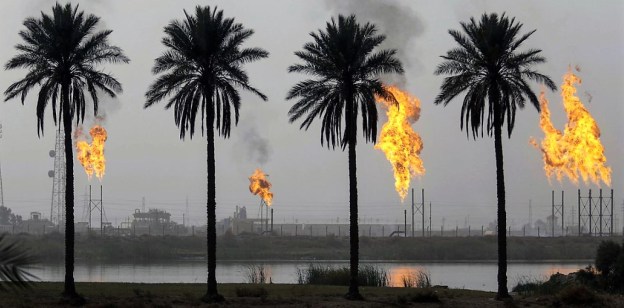
Iraq oil facility AFP

The visit had been arranged months in advance—a period of time which passed like centuries, I’m sure, for our granddaughters.  During the weeks leading up to the arrival, the girls became quite concerned about something, and it simmered inside for a while.  Nana and I happened to be with them when they decided to talk about it.

“Gramps,” the youngest began, “do you think when Susie gets here, she’ll be just the same as she was?”

I tried to respond honestly, but without causing undue concern.

“No, I don’t think she’ll be exactly the way you remember her, because she’s been gone for quite awhile.  She’ll probably be a little different, just as you guys are a bit different than you were then.  You’re older now, you’ve experienced things without Susie, and all of that has changed who you used to be.  And remember, she’s had a whole lot of different experiences, too, since you last saw her.”

“But, Gramps,” declared the eldest, “I don’t want her to be different!  I want her to be the same!”

It’s an old dilemma, one I recognize from my own life.  I often find myself wishing something could be the same as it used to be.  Usually, it’s something nostalgic, and generally, I’m remembering it more fondly than I should.  The arc of the universe, for me, seems to curve towards rose-coloured glasses.

nostalgia 2

My memories frequently play tricks on me, and I tend to believe things were better way back when.  But in fact, I probably had more things to worry about, and not as many blessings to be thankful for, as I have at present.

“Why don’t you wait ‘til Susie gets here,” I suggested to our granddaughters, “and see for yourself if anything’s changed with her?  I bet you’ll find everything’s okay.”

Their apprehensive faces told me they weren’t feeling reassured, but they gamely accepted my counsel.

Well, the big day finally arrived.  According to their mother, our granddaughters’ worries seemed to evaporate in the heat of joy and excitement when they met Susie and her parents at the airport.  There was a good deal of kissing and hugging, some surreptitious sizing-up on the part of all three girls, and a great deal of nervous giggling.

Their first few hours together were spent asking and answering questions—the questions tumbling out almost more quickly than the ensuing answers.  My daughter told us later that, at first, the questions appeared to focus on similarities, the things the kids still had in common.  Only later, after these had been confirmed—a comfort level established—did the questions turn to what Susie’s new home was like, what was different about her school, and who her new friends were.

friends 2

By the second day, apparently, they were thick as thieves, just as they had always been.

The next time I saw our granddaughters, I asked how the visit had gone, and how they felt, now that they’d seen their old friend again.  I wondered aloud if they felt their fears had been warranted.

“You were right, Gramps,” the eldest replied.  “Susie was different than she used to be.  But she was sort of the same, too.”

“Yeah,” her sister chimed in.  “And she thought the two of us had changed, too.  But, that’s okay.”

“We figure it’s like this, Gramps,” the eldest said.  “Always being the same isn’t so important when you’re still friends.”

I liked that observation.  And I told them so.

friendship-day

No Cavities!

“Look, Ma!  No cavities!”

You might remember this loud boast.  It was shouted by a kid I really came to hate every time I saw him in a television commercial many long years ago.  The kid’s face seemed split in two, the upper and lower halves separated by a wide row of perfect, pearly teeth.  His was the smile of one who had never known pain.

Norman-Rockwell-Crest-Mark-Barnett

I also envied that kid.  Not just because of his check-up results, but because he would never need to face the needle, the drill, and the pick.  For him, the dentist’s torturous tools were virtually unknown.

Today, there are cavitydetectors available in the modern dentist’s office.  Through the use of a small, micro-electric current, the device locates cavities at the earliest stage of their development, thereby enabling the dentist to employ preventative medicine, rather than restorative piecework.

Alas, this news comes as no great comfort to me.  I usually receive good reports when I visit the dentist—but not because I’m using the miracle toothpaste that kid on television was hawking.  For whatever reasons, I haven’t had a new cavity in several years; however, the operative word in that statement is new.

It’s the old ones that cause me the problems.

When I was a small boy, the age of that other kid, I suffered from what my mother called ‘soft teeth’.  That meant I was going to have cavities despite all the safeguards she could set up.  It was in no way reflective of her parenting.  I just had ‘soft teeth’!

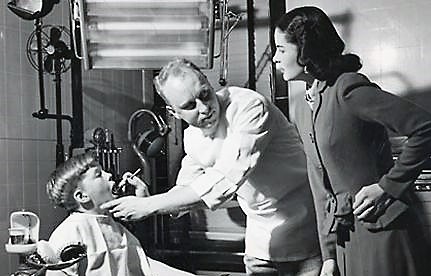
Every six months, I was trundled off to have my mouth opened unnaturally wide, and stretched, probed, and pulled by my dentist, a kindly, grandfatherly gentleman.  He always seemed genuinely glad to see me.

old dentist

“This isn’t going to hurt, young fella,” he’d say, as he tied the drool-bib around my neck, my mother hovering nearby.  “Just lie back and relax, while we see how you’re doing in there.”

Of course, he’d always find something wrong, something to fix.  Out would come the needle to freeze my mouth.  Out would come the array of picks and hooks.  And, worst of all, out would come the drill.

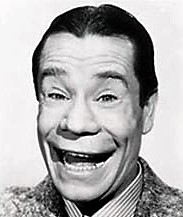
Mostly, I guess, my dentist was right.  It didn’t really hurt in the classic sense of pain.  After my face went numb, he would insert both hands into my yawning mouth (or so it would seem), and begin his excavating.  I used to imagine I resembled an old-time comedian named Joe. E. Brown, whose trademark was his oversized mouth.

joeebrown02

My dentist’s drill was a far, far cry from the high-speed marvel of today.  Back then, it droned along at a leisurely pace, sending vibrations on a journey up and across the bony structure of my skull.  I used to close my eyes and go with it—until, that is, I would smell the smoke.  When the drill got that hot, when I could smell part of me burning, I invariably began to gag.

That usually signaled the end of the heavy drilling.  The rest of the visit would be taken up with packing, shaping, and tamping a new filling in place—an amalgam of mercury mixed with silver, tin, zinc, and copper.  Then the ordeal would be over, at least until the freezing came out.

Fortunately, aided by fluoride in the water, my own children never had a cavity.  Nor, to my knowledge, have my five grandchildren ever had one.  Cleaning, yes.  Orthodontic work, yes.  Whitening, yes.  But nary a cavity.

And today, happily retired, I am just like them—no new cavities.  When I visit my dentist, a young woman, it’s to have my original fillings, some more than sixty years old, replaced with porcelain, tooth-coloured fillings.  I lie back comfortably on her contoured couch, breathe sedating-gas deeply through a nose-piece, cleansing me of all fear and anxiety, and listen groggily to her  talking through her mask about her latest trip to Europe.

dentist

Occasionally, I drift off during the monologue—happily mellow, free-floating, with not a care in the world.  And sometimes in these reveries, I dream about that kid on television.  I wonder, if he were still that age now, what he would do in a world of no cavities, a world where teeth are ever-perfect, a world where regular cavity check-ups are a thing of the past.

And I find myself hoping the little braggart will grow up to become a dentist, only to find himself with nothing to do!

I really didn’t like that kid!

I Won’t Go Back Again

On the day I visited Venice, the city was flooding—a precursor, I fear, of what is to come.  Some of the streets alongside the canals were underwater, deep enough that I couldn’t venture into them without rubber boots.

In the Piazza San Marco, the main square of the city, raised boardwalks had been erected to allow tourists to pass from one side to the other.  Outdoor cafes, their tables waiting for customers, were untended because they sat in several inches of water.  A few children romped and splashed in the accidental lake that covered much of the square, their squeals of delight piercing the general hubbub.


I wondered, sadly, how much longer tourists would be allowed to visit the legendary city.

I made a point of visiting the famed Rialto Bridge spanning the Grand Canal—to say I’d been there, of course, but also because my youngest daughter accepted a marriage proposal on that very spot several years ago.  I found it quite romantic, despite the crowds.

venice 10

Until, all of a sudden, it wasn’t!

I had stopped to take pictures at the top of a staircase from the bridge to the street below, when I was roughly jostled from behind.  I almost dropped my cellphone.

“Outta the way!” a voice growled.  “You’re blocking the way!”

The speaker, about my age, held the hand of a little girl, perhaps six or seven, and they started down the steps past me.

More out of surprise than belligerence, I said, “Yeah, I guess I am.  Too bad!”

The man stopped, turned, and came back towards me, the little girl drawn along.  Standing one or two stairs below, he had to look up as he spoke to me.  He appeared to be somewhat younger than I, but old enough that I assumed the child was his granddaughter.

“What did you say?” he demanded, his English accented but fluent.  And angry.

“I’m taking pictures,” I said.  “You should watch where you’re going.”

“You shouldn’t even be allowed to come here!” he exclaimed.  “You’re spoiling our city, all you people!”  He was quite excited by then.

“Why don’t you calm down?” I said, wondering where this was headed.  “Before you frighten your granddaughter.”  The little girl was clutching his hand tightly.

600-00038982

“I’ll calm down when I punch you in the nose,” he said, still looking up at me.

“You won’t do that,” I said, slipping my phone into my pocket, bracing, wondering if he would.

There was a momentary pause.

*  *  *  *  *  *  *

I say momentary because an awful lot of thoughts were flashing through my mind at that precise moment.

Who is this guy?

Why’s he so mad?

What if he takes a swing?

If he does, I’ll push him, and he’ll fall down the stairs.

Yeah, but what about the little girl?  What if she gets hurt?

And what if the police come?

How do I get into these messes?

*  *  *  *  *  *  *

The man apparently thought twice about it.  Turning away abruptly, he started down the stairs, the little girl in tow.  “We can’t even walk around our own city anymore,” he complained loudly, one arm gesticulating.  “All you people, you come here, you block the streets, you ruin everything.  You should stay home, stay wherever you come from…”

His voice faded away, and within seconds he and the little girl were swallowed up in the crowded street, lost to sight.  No one else seemed to have noticed the altercation.

venice 4

I was shaken, of course, although convinced I had done nothing wrong.  After a few minutes, I resumed my walking tour of the remarkable city.

Later that evening, reflecting over a glass of wine, I wondered if the man’s anger was not so much with me, as with the fact that I was but one of hordes of tourists overrunning his city, even as the marshy land it sits on sinks into the sea.  In fact, more than 30 million people visit Venice each year, a city with a population of approximately 50,000 souls.

In his anger, I heard echoes of complaints from people in nations all over the world—people opposed to the influx of immigrants and asylum-seekers to their countries, people afraid their jobs will be taken, their culture destroyed, their language lost.  Their fear is real and their resentment palpable.  Politicians cater to it.

And I wondered if those same fears had been voiced, in vain, by the indigenous peoples whose homelands had been invaded by the rapacious colonizers who appeared on their shores four centuries ago.  

Plus ça change, plus c’est la même chose.

I’m awfully glad I visited Venice when I did, and I’m happy I stood where my daughter did almost twenty years ago when her beau proposed to her.  It is an indelible memory for us both.

venice 12

But I won’t go back again.

Those Were the Days

Let me list some life-threatening things that have befallen us, my wife and me, along our way together through these many years—

  • a head-on collision that totalled our car, from which we walked away shaken, scathed, but alive;
  • a diabolical attempt on our lives by an unhinged assailant, foiled only by the most fortunate of circumstances;
  • a last-minute, lifesaving operation in the wee dawn hours by a dedicated surgeon who removed my colon before the disease ravaging it could snuff me forever;
  • the onset of cancer, that most insidious of diseases—once for me, twice for her—held successfully at bay, so far, by equally dedicated doctors;
  • a severe lacunar stroke that struck her without warning, treated as quickly as possible, from which she has recovered to the point of resuming her tennis and golf endeavours.

OR2

It’s a grim list, to be sure, not one we enjoy recalling.  And yet, here we are, still alive, still able to remember each and every event.

Let me cite now another list, this one of life-altering blessings we have been allowed to experience together on our journey—

  • two amazing daughters and their loving husbands, who love and esteem us beyond what we deserve;
  • five loving grandchildren, only just awakening to the limitless possibilities dawning before them;
  • siblings, six in total now, whom we have known and loved for more years than seems possible;
  • fast and faithful friends, both new and old—as the children’s song says, the one silver, the other gold;
  • a beautiful home on a lake in Ontario, another on a freshwater pond in Florida, each a place of inspiration and respite;
  • a creative penchant that allows us the opportunity to craft things where there was nothing before—pottery and glass-sculpting for her, music and writing for me.

This is a much happier list than the first for so many reasons, the most important being that, where the first comprises things from our past—never to be revisited, we hope—the second embraces blessings we continue to enjoy.  And that enjoyment follows from a belief that, as Robert Browning wrote, …the best is yet to be.  Through the hardships, it is that belief that sustained us.

An old Russian folk-tune (for which English lyrics were composed several years ago) speaks to the reminiscences of people my age upon their vanished youth, and recalls their once-cherished romantic idealism—

Those were the days, my friend, / We thought they’d never end…

I’m happy to say that, so far, they haven’t.  We’re still singing and dancing.

days

He Was My Brother

My brother died today, the first of our generation to go.

We weren’t close, he and I—brothers by birth, but distant in life.  He was a complex man, troubled by emotional problems and addiction issues, and hard to help.

Since learning of his passing, I’ve been reflecting on his life and how it intertwined with mine.  As is often the way with me, it helps to write it down and share it.

The best parts of our relationship were during our childhood, so long ago now that I have to think hard to remember them.  We didn’t see each other much over the past five decades, nor did we speak very often by phone—telephone phobia being one of the fears he struggled with.  The last time I met with him, he looked older than I who am his elder by three years—hair gone white, walking only with assistance, racked by a persistent, phlegmy cough.

When we did meet over the years, it was almost always when he needed help.  I checked him into rehab clinics on three different occasions, lent him money, gave him a temporary bed, and after our parents’ deaths, managed his financial affairs—always feeling, I’m sorry to say, somewhat put-upon.  I could never understand why he seemed unable to respond to the many, well-intentioned interventions mounted by his sisters and me.

I have pictures of him as a young boy, nestled in the cocoon of parents and siblings, but almost no pictures of his adult years.  He always had a dreamy expression on his face in those pictures, as if he couldn’t quite grasp the notion that the onrushing realities of life would have to be faced.

He was highly intelligent, but seriously unable to apply his intellect to everyday problems and situations.  He wanted to be liked, but his social skills were lacking, to the point that he would frequently offend people without intending to.  And when he became frightened or frustrated, as he often did, he had a temper.

But he could display a quirky, astute sense of humour, too, and would smile quietly as the rest of us laughed at some of the things he said.  When at his best, he was unfailingly polite, almost Victorian in manner, and spoke deliberately in the most precise English.  Even when I, impatient with the pace of the conversation, would finish his sentences for him, he would continue on to finish in his own way, as if I hadn’t interrupted.  He could be a charmer.

He was a keen devotee of chess, a game at which he beat me regularly in our childhood, much to my chagrin.  He loved classical music, a trait we both learned from our father.  I remember listening to each other’s LP records and arguing about which was best—Tchaikovsky’s 1812 Overture or Rimsky-Korsakov’s Capriccio Espagnol; Bach’s Brandenburg Concertos or Mussorgsky’s Pictures at an Exhibition; Mozart’s Eine Kleine Nacht-Musik or Beethoven’s Piano Concerto No. 5, ‘Emperor’.  I find now that I love them all, and am glad we listened together.

clef

Reading was another of his passions, as it was for me, although our tastes were not the same.  Nevertheless, it was my brother who introduced me to Edgar Allen Poe and William Butler Yeats, two favourites to this day, and it was he who gave me my first copy of J.R.R. Tolkien’s trilogy, Lord of the Rings, perhaps my all-time favourite story.

It would have been nice if all that had continued into adulthood.  But it didn’t, and no amount of wishing will make it so.

Given his afflictions and general health near the end, I feel little sorrow at his passing—rather, I am grateful that his problems are over and he is at peace.  I picture him now, embarking upon the next phase of his eternal journey through the universe, unencumbered by his mortal restraints, free and open wide to whatever may come.

If I choose to remember him only through the good things from our time together on this earth, so be it.  If I choose to believe we loved each other despite the many obstacles, then it is so.  He was more than his illnesses and sufferings, after all.

He was my brother.

The Mile of Gold

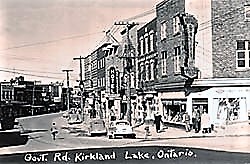
As a child, I spent many a summer vacation with my aunt and uncle, themselves childless, in the northern Ontario mining town of Kirkland Lake.  But not just a mining town, mind you—a gold mining town.

To my young eyes, it was the most romantic place ever, evoking visions of places I had only read about—the California gold rush in 1849, the Klondike gold rush in 1896.  Chasing the allure of gold, hundreds of thousands of prospectors, all sure they would strike it rich, embarked on a long, arduous, often-fatal trip to California or the snowy Yukon, most of them to be sorely disappointed.

Kirkland Lake was like one of those destinations for me, akin to the wild west of my imagination.  Why, it was there I first saw the Gold Range Saloon (from afar), looking just like the ones I saw in the movies, but more real.  And it was there I spied my first drunk, a poor soul passed out on a bench in front of it.

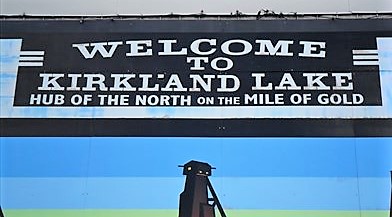
As you entered the town, a prominent arch over the roadway proudly proclaimed:  Kirkland Lake – Hub of the North on the Mile of Gold.  A whole mile of gold was beyond my ken.

hub

I was puzzled, though, that there seemed to be no Kirkland Lake in Kirkland Lake, and I asked my uncle about that.  He was a mining engineer who regularly inspected the  mines in the area, many with fabled names, at least in my estimation—Teck-Hughes, Lakeshore, Wright-Hargreaves, Toburn, Macassa, and Upper Canada among them.  They’re gone now, or subsumed by the modern mining conglomerates whose names evoke none of the romance of the period.

“There used to be a lake over there,” my uncle told me, pointing to the northwest, “but it got filled in by tailings long ago.”  Tailings, I came to understand, were the residue of the mining industry.  Slag.

From their house, my aunt and uncle could see the tall headframes of three of the mines, and their chimneys from which smoke almost always rose.  I was amazed how my aunt would check the direction of the wind by noting which way the smoke was blowing, determine falling or rising air pressure on her barometer, and forecast the weather for the next day or so.  That was extremely important to me, because a sunny day almost always meant a trip to the golf course where I would caddy for her or my uncle.

Like most Canadian boys back then, I was an avid hockey fan, and my favourite team was the Toronto Maple Leafs.  On one joyous day, my uncle played golf with one of the team’s young stars, a hometown boy named Dick Duff.  For me, that was like being in the presence of a god!

duff

Kirkland Lake was the birthplace of dozens of professional hockey players in those good old days, including Duff, Ted Lindsay, Ralph Backstrom, Mike Walton, Bob Murdoch, Tom Webster, Daren Puppa, Floyd Curry, Dick and Mickey Redmond, the three Plager brothers (Bill, Bob, and Barclay), and the three Hillman brothers (Floyd, Larry, and Wayne).

Gold itself was an abstract commodity to me at my tender age, nothing more than the justification for the town’s existence, and therefore the reason I was able to spend my idyllic summers there.  To this day, a watercolour of the Teck-Hughes headframe hangs in my home.  I loved Kirkland Lake, but not for the gold.

teck-hughes-south-peter-midtskogen

My interest in gold was sparked many years later, however, upon my aunt’s passing, when I inherited a small amount of bullion which she and my uncle had purchased over the years.  They believed in investing in commodities that would retain their value, if not increase it.

The price they paid was significant to them, I’m sure, but not nearly what it would cost today.  For a variety of reasons, not the least of which is the steady erosion of fiat currencies around the world, gold and other precious metals have tended to hold on to their value over the past fifty years.

Those currencies—which are really nothing more than IOU’s from the government that prints them—can fluctuate wildly in value, compared one to another, and are subject to both inflationary and deflationary cycles, depending upon their availability or scarcity, and the vagaries of the global economy.

fiat-money-overview

It has long been held that, as the spending power of currencies declines, the worth of gold and silver increases.  One of the causes for this is the limited amount of these precious metals worldwide; one estimate has it at seven billion ounces of gold, one billion ounces of silver.  Moreover, it is becoming increasingly expensive to extract more of the metals from the ground.

Currencies, on the other hand, tend to lose spending power over time.  An identical basket of goods selling for one dollar in 1946, for example, might sell today for almost twelve dollars, twelve times as much.  In that same year, the major powers determined to fix the price of gold at US$35/ounce, in an attempt to ensure stability in world financial markets.  That standard was abandoned after 1971 because many of the leading industrial nations were printing more money than their gold reserves would support.  Too much scrip, not enough metal.

Using the same 1946 – 2014 inflation calculation, the price of gold today would be worth approximately US$420/ounce.  The reality, however, is that gold is currently valued closer to US$1300/ounce, and has been as high as US$1900/ounce, a testament to people’s declining confidence in fiat currencies.  Investors know that governments can’t print precious metals.

gold

Now I wouldn’t call myself savvy in the ways of the financial world.  I have, however, returned to those Kirkland Lake roots over the past several years, and begun to supplement the gold left to me by my aunt and uncle.  Real metal, mind you, not paper promissory notes.  The seed they planted has blossomed and will, I devoutly hope, eventually bear fruit.

I haven’t been back to Kirkland Lake in half a lifetime.  Those iconic headframes may no longer stand, stark against the sky, and the chimneys may no longer spew their acrid smoke.  But I metaphorically look to them to see which way the wind is blowing, I check the barometrics of precious metal prices, and I try to predict the financial forecast.

I hope my aunt and uncle would be proud of me.

kirkland

‘Though the Winds Still Blow

Reflections are imperfect, it’s true, but instructive, nonetheless.  They allow us to look back over those roads we followed in our youth, with a mind to mapping the ones we have yet to encounter.  Here are a few of mine, in haiku form—

from my aging eyes,

the boy I once was looks out—

hardly changed at all

portrait-of-boy1

Or so it can seem.  I know he’s with me, although I encounter him less frequently now in my daily pursuits.  Perhaps he struggles, as do I, against the inexorable weight of the years—

the boy is within

the man, still, but hard to find

as age o’ertakes him

boy 3

Despite that, however, the persistent, exuberant boy I once was still urges me forward on his youthful quests, unfettered as he is by the physical restraints enshrouding the me who is me now—

the sails of my youth,

once hoist, are often furled now,

‘though the winds still blow

sailing-ship

Do I regret that I can no longer join that boy to play as once I did, that I cannot oblige him as he coaxes me onward?  Of course!  But, do I regret the choices I made, whether wise or foolish, when I was him those many years ago?  Well, I have scant time to dwell on that—

regrets?  some, maybe—

but I can’t go back to change

the pathways I’ve trod

two-roads-diverge

It’s the mapping of the road ahead that is most important to me now, however short or long it may prove to be, and the welcoming of each new adventure that awaits—

the uncertainty

of finishing pales next to

the joy of starting

fear 2

So, in spite of my inability now to cavort and engage in those many pursuits I all too often took for granted, I still search out that boy each day—hoping he will not tire of my company, welcoming his encouragement, remembering how I loved being him—

now well beyond my

diamond jubilee, the

man is still the boy

images


On the Road Again

If you were born and raised in Canada, you are doubtless familiar with sounds that typify our country—the quavering call of a loon across a lonesome lake, for example; the eerie, chilling howls of a wolf-pack under a cold, starry sky; or the absolute sound of silence in a colourful, autumn woods.

For me, the most iconic sound of all is the shrill warning cry from a group of kids playing hockey on the street when an approaching vehicle is spotted—

CA-A-A-A-R-R-R!

Back in the 1950’s (yes, dear reader, that long ago!), I was one of those kids.  Every day after school, all day on Saturday, and on Sunday after church, the neighbourhood boys—no girls back then—would assemble on our street in what was then North Toronto, hockey sticks in hand, to play road-hockey.

road hockey

If we all showed up together, we’d choose teams the fairest way possible.  Gathered in a circle, both fists held to the centre, we’d listen to one of us count off, tapping every fist:  One-potato, two-potato, three-potato, four, five-potato, six-potato, seven-potato, more!  The boy whose fist was tapped on the eight-beat would step back, waiting for the next kid, and the next, until half the boys were out.  Those would be the teams.

Kids who showed up late jumped right in, joining the team with the fewest players at that moment.  Our sticks were sawed-off wooden models, many of the blades worn thin from the constant scraping on the asphalt.  Our puck was a scuzzy tennis ball, no longer white and fuzzy, and I remember how that ball could sting, especially when frozen, if it hit an unprotected spot.

Everyone at some point played with tears in his eyes, waiting for the pain to abate.  Nobody laughed at the crying kid, though, because we all knew only too well how it felt.  But no one ever quit.

In truth, we had scant protection—no helmets, no padded gloves, no shin pads.  Toques, thick mittens, and lined jeans were all we wore, along with sturdy boots.  Inadvertent whacks on the shins and hacks across the fingers were merely occupational hazards we all endured.

prohibited

We didn’t care that road-hockey was technically forbidden, even when, once in a while, a police car would roll down the street.  We’d simply scatter up any of the myriad driveways between the houses, sticks in hand, until the danger was past.

Makeshift goal-markers would be set up at each end of the stretch of street we had claimed—sometimes small piles of snow, sometimes mounds of frozen horse-turds left behind by the stoic steeds that pulled the carts of the milkman, the bread-man, and the ice-man.  The youngest kids’ sticks were requisitioned to gather and pile the turds—a sort of rookie hazing, I suppose.

When those intrusive cars would dare to interrupt us, we’d trudge begrudgingly to the side of the road, glaring at the offending drivers as they passed, and yelling at them if they managed to squash one of the goal-markers.  Repairing it was gross if it was one of the turds.

There were few rules:  no slashing, no high-sticking, no deliberate bodychecking.  That left lots of room for incidental body contact, however, especially when the number of boys playing was particularly high.  When that was the case, we had to move the goal-markers back, lengthening the playing area to fit everyone in.

By and large, all the boys played by the rules, governed by a commonly-understood code of fair-play.  The odd kid who might repeatedly play dirty was not assessed a penalty time-out for his transgressions, though; he was simply told to go home.  Adult supervision was not required.

rules

With no goal-nets and no end-boards, the ball would sometimes roll halfway down the street after an errant shot.  The youngest among us were designated to chase it, but we never minded.  It was a chance to practice our stickhandling as we came back up the street, unhindered by the other boys hungering to steal the ball from us.

Most of us had nicknames, some ethnic in origin, which nobody regarded as a slur back then.  All that mattered is if you could play.  There were Boo and Dinny, the Draper twins, Paul (Puppy) Jackson, and Terry (King) Clancy, son of the Maple Leafs’ hall-of-famer—all of whom would go on to win a Memorial Cup in 1961 with the St. Michael’s Majors.  We had the twins’ older brother, Mike (Meatball), and Gary (Swampy) Marsh, who would win an Allan Cup in 1973 with the Orillia Terriers.  No one knew of the fame some of the gang would find, of course, not then.  But we all harboured our own dreams of grace and glory.

We played with Kraut, whose parents owned the Salzburger Deli on Eglinton Avenue; Mick, whose parents owned Murphy’s Meats nearby; and Dago, whose family owned Carradona’s Fresh Fruits and Vegetables.  Our mothers all shopped those stores, two or three times a week, back in the days when icebox-chests, not refrigerators, were still the norm for many of us.

groceries

Other players included Boomer, he of the hard shot; Skinny, the guy who could slip through any defenders; and Magic, the kid who could stickhandle in a phone-booth.  I think I was mostly known as Hey Kid!

I vividly remember reaching the age where my parents let me go back out after supper to play under the dim glow of the streetlights—it seemed a rite of passage, somehow.  And I can still see the ethereal wisps of steam from all the panting mouths, dissipating into the darkness overhead.  But I’ve lost track of how many Stanley Cups we won on that darkened, winter street, running and passing and shooting with reckless abandon.

There’s an old barbershop-quartet song titled, That Old Gang of Mine, and part of the lyric-lines come to mind when I think back to those long-ago good times with boyhood chums—Gee, but I’d/Give the world/To see them all again…

But I can see them, really, whenever I choose, stretched out in my recliner, eyes half-closed, ears attuned to the inimitable sounds echoing in my brain.  It feels like I’m on the road again, under the streetlights, hearing the shouts of those indefatigable hockey players.

Calling loudly for a pass—Here!  Here!

Yelling at a teammate to take a shot on goal—Shoot!  Shoot!

Celebrating a score—It’s in!  It’s in!

And hearing that most urgent shout of all, the iconic warning we all would heed, no matter what—

CA-A-A-A-R-R-R!

car 9

A Panhandler’s Christmas

[first posted December 2016]

After we retired to Florida some years ago, we discovered that Christmas there is as jolly a season as any we enjoyed up north, enveloped by snow.  It was especially joyous when our grandchildren came to visit.

Merry_Christmas_on_the_Beach

One evening during our last Christmas season in the sunny south, we all went out to dinner—my wife, our daughter and her husband, and three of our grandchildren.  We’d spent the afternoon shopping at a large, regional mall, and were looking forward to enjoying the cheer of the season and the pleasure of each other’s company.

During dinner, we talked of our plans for their holiday with us.  Unlike the north, where tobogganing, skating, snowball fights, and warm fires were the order of the day, in Florida the beach, the pool, and the golf course were all on the agenda.  We were looking forward to an old-fashioned holiday with lots of singing, plenty of fresh air and exercise, good food, and family to enjoy being around the tree with.

By the time we finished dinner, sharing our happy plans, we were all feeling very fine—warm, full, comfortable.  We left the restaurant, chatting amiably, and began the walk back to the parking lot where we had left the car.

As we waited to cross the intersection, guided by flashing green and red traffic lights that added to the festive Christmas air, we were accosted by a stranger.  He meant us no harm, but his sudden approach startled us out of our contented state.

He was tall and quite thin, and his face jutted out from under a worn cap.  His beard was unkempt, his eyes red and rheumy.  He wore faded jeans, tattered and patched, and an old, plaid shirt with the collar turned up.  The children huddled behind their parents, afraid of being so close to such an apparition.

panhandler

When he spoke to me, I could hardly hear him in the hum of the passing traffic.  He mumbled through that scraggly beard, through missing teeth, his words coming in disjointed phrases.

“Hey, can you….you got anything….any change?  A bus ticket, maybe….got any…?”

He was clutching a sign on a scrap of corrugated cardboard that read:

Out of work   Homeless   Anything helps   Thank you

“No, sorry,” I muttered, watching for the green light that would allow us to escape.  And we walked away, slightly embarrassed, but relieved to leave him behind.

“Who was that guy, Daddy?” one of the kids asked.

“Did he wanna hurt us?” another chimed in.

Their parents reassured them that he had meant no harm.  He was just a man asking for money.

“Is he sick, Mummy?  Will he be alright?”

None of us could really answer.

When we reached the car, we clambered in silently, each of us lost in our own thoughts.  The kids soon put the episode behind them, immersing themselves in their gaming devices.  As I drove back through the intersection, heading home, the stranger was still on the corner, huddling around himself, approaching passers-by.  He looked pathetic, and utterly alone.  I hoped he didn’t see me staring at him.

xmas panhandler

Later that night, after everyone was in bed, I thought of him again.  At first, I chastised myself for not giving him something to help him out.  From somewhere, the scrap of a Bible verse teased a corner of my mind—Whatsoever ye do unto the least of these, ye do also to me—something close to that, I think.

But then I rationalized that a token from me would not likely have helped him anyway.  He was obviously past the point where a solitary handout was going to make much of a difference in his life.  He’d probably have wasted whatever we might have given him on booze or drugs, I told myself self-righteously.  At one point, I got angry that he had put me in such an uncomfortable position.

Still, underneath it all, I felt a nagging guilt.  ‘Tis the season to care for one’s fellow-creatures; yet we, so full of the Christmas spirit, had kept on walking.  Because we were fearful, because we hadn’t known how to respond…or because we didn’t care.

Was it best to have ignored him and walked on, I wondered?  Or would it have been better to have given him something, in the spirit of Christmas and with the hope that it would have helped him?  I didn’t know.

As I think about it even now, almost a year later—sitting warm and safe at home at the onset of another Christmas season, surrounded by people who love me—I wonder where that stranger is and whether he’s okay.

And I wish I knew what I should have done.


The Passing Parade

Santa Claus has come to town again—waving from high atop his sleigh at the end of a cavalcade of clowns, elves, funny-looking animals, fire-trucks, floats pulled by smelly tractors, and quite a number of marching bands—winding his way through the snowy streets.  As usual, he was welcomed by thousands of cheering youngsters and their freezing parents.

santa 2

I mean, who doesn’t enjoy a parade?

The first one I remember attending was one long-ago winter when I was about five years old.  My memories are somewhat hazy, of course, but slivers of razor-sharp, colourful images still poke through the mists of time.

It wasn’t snowing, but snow was on the ground, and it was frosty.  I was bundled warmly, so the cold didn’t matter.  My father was with me, my mother home with my brother, too young yet to brave the crowd.  I don’t think I missed him, so happy was I to enjoy the undivided attention of my dad.

Lots of people were huddled in our vicinity, crowding the street, some singing Christmas songs, some sipping from flasks (my dad included), some blowing into their hands with icy breaths.  We were right on the kerb beside a lamppost, and I alternated between sitting on the frozen pavement and climbing into my dad’s arms.  He leaned against the post and seemed quite happy to wait forever.

band

And forever was how long it seemed to take for Santa to arrive.  He was preceded by all those clowns and elves, the marching bands, and several horse-drawn floats—each of which was followed by elves with pails and shovels.  Even at my tender age, I knew that was not a plum assignment.  Those elves had been naughty, not nice, I figured.

We knew when Santa drew close to the corner at the end of the block by the sound of the crowds further down the street, closer to the end of the parade.  Strident shouts of “Here he comes!” merged into one loud, excited hubbub, causing all around us to lean out over the street, craning our necks to be the first to spy him.

When he hove into view, ‘forever’ finally came to an end.  His reindeer were seemingly frozen in flight in front of his gigantic sleigh, and I remember shrinking back against my father’s legs, almost afraid to believe it was true.  Santa Claus really had come to town! 

My dad lifted me high in his arms, and we waved and shouted as loudly as we could.  Santa looked right at us, I was sure, and tossed us a friendly wink.  If my father believed in Santa, that was good enough for me.  I was hooked from that moment on.

It’s almost seventy years now since that eventful day, and I’ve attended more than my share of Santa Claus parades—several with my father and younger siblings, and then much later with my own children.  I’ve also heartily enjoyed fall-fair parades, Easter parades, Mardi Gras parades (with their madly-flung beads), and even, believe it or not, a Stanley Cup parade.  Once. 

stanley cup

They were magical, every one.

As I think back on them, however, it seems to me that the best one of all is the daily passing parade in front of me.  Unlike those Santa Claus parades of yore—which returned every year in one form or another—the daily parade passes us by just one time.  We can never again see its beginning, nor can we slow its progress down.  Once past, it’s gone for all time.

That’s the bad news.  The better news is that each additional day brings another segment of this lifelong parade.  We form our earliest childhood friendships; we trundle nervously off to our first day of school; we fall in love, perchance more than once; we begin a first job, probably nervously, maybe joyously.  With any luck, we meet the one of our dreams and marry (or form a union of whatever sort); we find a home; perhaps we have children; and, if so blessed, we eventually send them off to their own parades.  In this great procession of life, we are all participants, enjoying the journey while we may.

But all the while, as we play a part in this passing parade, we grow ever older.

love

I have grandchildren now, and their parents are the ones who take them to all the parades of childhood.  My involvement is less a partaker, more an onlooker.  Not a passive spectator, mind you, for that’s not in my nature.  Whenever I can, I’m with them at their big events, basking in their excitement and wonder—but from the sidelines.

For example, we join in their birthday celebrations, my wife and I, but we’re the old folks now.  Our children’s friends acknowledge us politely, even warmly, for we’ve known them a long time.  But we’re always on the edges of their conversations, not at the centre, because they’re all marching in their own parades.

So, I think of myself as a bemused bystander now—alternately pleased or disappointed, excited or disenchanted, optimistic or skeptical—as I observe the passing parade.  Age, I’m finding, requires a degree of withdrawal from youth’s full-bore involvement in the world around.  Yet I have never tired of witnessing the tumult and the shouting.

tickertapeparade

I mean, who doesn’t enjoy a parade?