Now He’s Yours

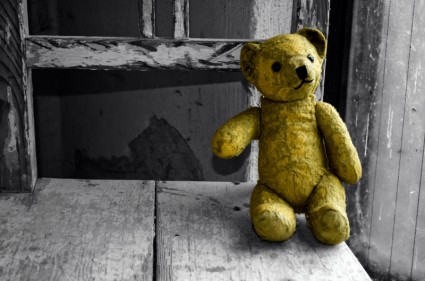
When he was nine or ten months old, our grandson made a new friend.  Although quite small at the time, he was nevertheless much bigger than his friend—a little brown teddy-bear, stuffed with cotton-fill, hand-crocheted by his Nana.

Our little boy was troubled at night during his first several months, restlessly tossing in bed when he was supposed to sleep.  Colic, wetting, and unnamed fears conspired to keep him awake in spite of his obvious fatigue.

Yet, within a couple of weeks of meeting his new friend, he began sleeping much more soundly.  He would hold his teddy-bear tightly in his arms when he was tucked into bed.  Hours later, one might find the two of them, still closely snuggled, apparently a source of comfort and peace to each other.

As infancy gave way to boyhood, the pattern didn’t change.  The two friends, parted during daylight hours, would never fail to meet again at nightfall, falling asleep in each other’s company.

In due time, our grandson was old enough and eager to trundle off to school.  Over the course of his first two years, he formed strong relationships with new-found friends.  He learned to play with them, to share the same experiences, to discover the wonders of the wider world around them.

But always, at day’s end, when all his other friends were home, our grandson came back to his teddy-bear.  And the teddy-bear was his faithful friend.

old_teddy_bear_

One day, a schoolmate came for an overnight visit.  Our grandson—somewhat abashedly, I think, now that he was eight years old—put his teddy-bear aside, out of sight of his visitor.

“Don’t you want your teddy?” his mother whispered quietly before turning off the light.

“Not tonight,” came the muted reply.  So the teddy-bear was placed in the back of the closet.  And forgotten.

Some months later, in the company of other friends who were visiting, our grandson came across the teddy-bear while searching in the closet for another toy.

“Hey!” exclaimed one of the other boys, picking it up curiously.  “Is this your teddy-bear, or what?”

“Nah,” our grandson said.  “It used to be mine when I was just a kid.”  He took it from his friend and tossed it carelessly back in the closet.

A few days later, his mother asked him about the teddy-bear when he came home from school with his friends in tow.

“I’m packing up some stuff for the church bazaar this coming weekend,” she said.  “I thought I’d throw in your teddy-bear, unless you still want it.”

With a quick glance at his friends, our grandson said, “I don’t want it.  You can give it away.”

So, the friendship died.  And our grandson didn’t seem to miss his oldest friend; not, at least, until the day of the bazaar.

bazaar2

Wandering among the rows of tables with his Nana and me, idly fingering his only dollar, he heard a woman nearby, scolding her toddler son.

“No!” she told him firmly.  “I told you we can’t buy it.  Now stop your crying!”

Our grandson moved closer.  And there on the table, all but reaching out to the crying child, was his old teddy-bear.  Alone, without his friends around, our grandson looked almost ashamed that the teddy-bear should even be there.  He stared at his old friend for several moments, until, seized by impulse, he proffered his dollar to the saleswoman behind the table, grabbed up the teddy-bear, and took it to the little boy.

“Here,” he said, gruffly.  “He used to be mine, but now he’s yours.  Hold on to him.”

The youngster did.  And the teddy-bear, resurrected, wrapped his arms around his new little friend.

As we walked away, our grandson looked at me.  “What’s wrong, Gramps?  Have you got tears in your eyes?”

I lied and said no.

Fathers, Sons, and Trains

Again this year, I know I’ll receive warm hugs and kisses from my daughters in recognition of yet another Fathers’ Day, my forty-fifth such occasion.  It never grows old.

We dads grow old, however, despite our best efforts.  And in so doing, we lose our own fathers as they board the last train to glory, to borrow from Arlo Guthrie.  My dad departed the station more than a dozen years ago, but he remains with me almost daily in my thoughts.  And never more so than on Fathers’ Day.

When I was a young boy, he would often take me to local railroad crossings to watch the big steam locomotives and their endless caravans go storming by.  I treasured those occasions because I would have his undivided attention, a not-so-frequent circumstance in a family that eventually numbered five children.  He enjoyed the time with me, too, I’m sure; but he loved those trains even more than I, a boyhood fascination he never lost.  He was truly a railwayman, if only in his dreams.

https://s-media-cache-ak0.pinimg.com/736x/23/67/c0/2367c020ad92968a83fc8070d32a375d.jpg

Not once did it occur to me as a lad to ask him if his own father had taken him to see the trains, so caught up with the spectacle was I.  I’ve often wondered since if he might have been fondly recalling such times with his dad, even as he was standing beside his son.

At the time of his passing, I wrote these lines to commemorate what he meant to me, and they comfort me still—

The Railwayman

You’d take me down beside the rails to watch the trains go storming by,

And tell me all those wond’rous tales of engineers who sat on high,

In cabs of steel, and steam, and smoke; of firemen in their floppy hats,

The coal they’d move, the fires they’d stoke, as o’er the hills and ‘cross the flats

The locomotives huffed and steamed, their whistles blowing long and loud.

And one small boy, he stood and dreamed beside his daddy, tall and proud.

Terrifying monsters were they, bearing down upon us two, who

Felt their force on that steel highway, hearts a-racing—loving, true.

I’d almost flinch as on they came toward us, with their dragon-face

A-belching, spewing, throwing flame and steam and smoke o’er ev’ry place.

But you’d stand fast beside the track, and, oh! the spectacle was grand.

So, unafraid, I’d not step back, ‘cause you were there holding my hand.

Oh, Railwayman, oh, Railwayman, I’m glad you knew when you grew old,

How much I loved you—Dad, my friend, who shared with me your dreams untold.

Oh, Railwayman, oh, Railwayman, if I, beside you once again,

Could only stand safe in your hand, awaiting with you our next train.

Now, all aboard, Dad…all aboard!

Happy Fathers’ Day to all who, like me, are both fathers and sons.  We are blessed.


Playing Catch

It’s been a long time since I’ve thrown a baseball around.  I used to do it all the time as a child, playing catch with anyone who would consent to chase after my wild throws.  Even as a younger man—into my mid-forties, actually—I tossed the ball back and forth with a myriad of teammates, all of us chasing visions of grace and glory.

My father was one of my earliest playmates, out on the back lawn.  Struggling to balance my oversized glove on my hand, I marvelled that he could catch the ball barehanded.  Whenever I tried that, it hurt my hands.  So instead, I’d make a stab at each toss with my glove, only to have the ball more often than not bounce off and hit me in the forehead.  That hurt, too, but I was determined to at least look like a ballplayer.

We spent a lot of hours playing catch, my dad and I, but never too long at any one time.  When he wanted to quit, he’d start throwing harder and harder until I suggested we take a rest.  After all, I only had one forehead.  My early school pictures show me with a round, red mark above my eyebrows.

ï÷

My neighbourhood pals were faithful playmates, too.  Two of us could while away a whole afternoon, just throwing and catching, often fantasizing that we were making remarkable plays on some distant major-league outfield.  If there were three or four of us, we’d play “running bases”, where the runners would attempt to steal from one base to the other without being tagged out.  It was not allowed to have two runners on one base, so when one guy took off, the other had to hotfoot it in the other direction.  Once in a while, there’d be a tremendous collision in the middle of the base-path.

If five or more of us were gathered, a favourite game was “500”, usually in a park or schoolyard.  One player would toss the ball in the air and strike it with his bat, while the rest of us would mill around in the outfield trying to catch it.  Fifty points were awarded for successfully fielding a grounder, seventy-five points for a one-hopper, and one hundred for catching a line-drive or fly ball.  The first guy to reach five hundred points would take over at bat.  The batter who didn’t want to yield his spot too quickly always tried to hit a lot of grounders.

Collisions in the outfield were a hazard, particularly on long flies.  For self-preservation we took to calling for the ball, as in “I’ve got it!  It’s mine!”  Anyone who called off the other players, but then missed the catch, lost the equivalent points.  I think that’s where I first learned the concept of negative numbers.

Younger kids could play this game with us, but only if we were shorthanded.  Generally, they just weren’t good enough.  I remember to this day the first time my younger brother played.  I patiently explained (as patiently as an older brother can) that he’d have to call for the ball so as to avoid potential injury.  When the first fly ball came his way, looming ever larger as it dropped out of the sky toward him, he settled under it, planted his feet…and then, to my horror, turned away from it.

“Yours!” he shouted.  The ball bounced to a stop on the grass.  And my brother decided he didn’t want to play anymore.

playing 500

Another game we played a lot was “Work-ups”.  When we got to school in the morning, we’d race for the ball diamond, grabbing our positions in the sequence we arrived.  The pecking-order ran from batter, four of them, all the way down to last-outfielder.  There could be as many as seven of those.  As each batter made an out, he’d trot to the outfield while everyone else moved up one position.  Third base was the first infield slot, followed by shortstop, second base, first base, pitcher, and catcher.  It often took a long time to become one of the batters.

 When the bell sounded to start classes, someone would instantly yell, “Same positions at recess!”  This was usually one of the guys who had worked his way into the infield, and didn’t want to risk losing his spot if he was late getting back to the diamond.

Although I was far from being a gifted athlete, I was good enough to play with guys a year or two older.  Guys who were bigger and faster.  Guys who got to the diamond to stake their positions before I did.  Consequently, I spent a lot of time patrolling the outfield in these schoolyard games, only rarely making it to the infield, and almost never to the batter’s box.

But I think that paid off for me in the long run.  As many of us began playing for real teams, both hardball and fastball—all the way to middle-age for many of us—I became a pretty good centre-fielder.  I was fast and could track a ball right off the bat.  I was never much of a hitter, though, so it was my defensive prowess that kept me in the line-up.  Secretly, I would have preferred to play second-base, mainly because I didn’t have a strong throwing arm.  If a fly ball got past me, the batter could scamper a good way around the bases before I got the ball back to the infield.

Nobody ever said about me, “Watch this kid’s arm!  He’s got a gun out there!”  Instead, I was known as a ball-hawking centerfielder with a second baseman’s arm.  I got fairly good at three-bouncing the ball to my cut-off man.  On one ignominious occasion, my throw actually rolled to a stop on the grass before it reached my guy.

But as I said earlier, it’s been a long time since I threw a baseball anywhere.  The teammates I once played with are boys no more.  My wife, who used to play shortstop for a women’s team, is into golf now.  The broken nose she suffered on a bad bounce those many years ago helped convince her to take up another sport.  My two daughters are grown and gone.  Four of my grandchildren are old enough to play with me, but their game is soccer.  They can do more with a ball using their feet than I can with my hands.

I miss it, though.  There’s something about the feel of a baseball, the smell of the leather glove, the satisfying thok! as the ball smacks into the webbed pocket.  It evokes wonderful memories of long-ago days.  Perhaps it’s just an older man’s yearning for his youth, but it’s real, nonetheless.  Watching baseball on television is no substitute; it’s the playing of the game that counts.

Recently I decided to get out there, even if by myself, and re-live the experiences I treasure.  Alone on the grass, I tossed the ball high in the air, over and over again.  Joyously at first, I settled under each ball as it came back down, deciding whether to try the basket-catch made famous by Willie Mays, an over-the-shoulder catch such as I used to make routinely, or even a behind-the-back catch.

But I had to quit when my forehead got too sore.

Mothers’ Day Again

Another Mothers’ Day has passed, the sixth since my own mother passed away.  The living mothers in my family number nineteen in all: my wife, two daughters, three sisters, two sisters-in-law, ten nieces, and one grand-niece.  All were recognized and honoured by their children, many on social media, and it was lovely to witness.

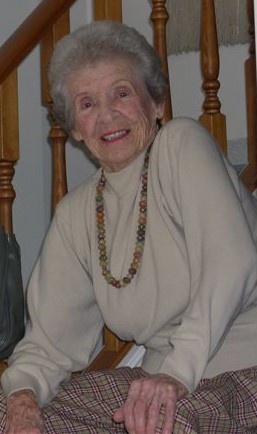
But I still miss being able to pay homage to my own mother each year—to hear her voice, see her smile, smell her perfume; and mostly, to feel her arms around me.  We knew each other for sixty-seven years, with nary a breach in the trust and love we shared, and my world is emptier without her.

On her ninetieth birthday, four years before she died, I wrote this poem to convey what she had meant to me for so long.  I likened her to a tree that sheltered me until I dared to strike out on my own, and even thereafter.

At the time, I thought I had written it for her; but now, I suspect, I wrote it for me.


Mum April 04

My Tree

For ninety years and more, my tree has spread her boughs across my yard,

Festooned with leaves providing shade, standing tall and proud, on guard.

When I was young, and climbed up high into my tree, carefree and fleet,

Her branches hugged me safe and close, held fast my hands, secured my feet.

As I grew braver, I would stray beyond the fence that kept me in.

But at day’s end, I’d rush back home to settle ‘neath my tree again.

Her boughs would gently bend and blow about my head, and whisper soft,

And tell me of the wide world they had seen from high aloft.

Sometimes she’d bend, tossed by storms that raged around us, blowing fierce,

Yet, ne’er a storm could match her strength, nor through her loving shelter pierce.

Then, all too quickly, I was gone to seek a new yard, far away.

Yet always I’d return to hug my tree, and feel her gentle sway.

Too big by then to climb once more her branches, high o’erhead,

I still found comfort there, among the fallen leaves my tree had shed.

 ~  ~  ~  ~  ~

Past ninety years, yet still she stands, her canopy now drooping low,

Creaking, bending, in the winds that shake her branches, to and fro.

As spring and summer fast have fled, and fall has turned her leaves to gold,

My tree displays a majesty that can be neither bought, nor sold.

And I’ll remember all my days her love, like ripples in a pond,

Because I’m sheltered now by younger trees—the seeds she spawned.

For ninety years and more, my tree has spread her loving boughs each day

Above my head, to nurture me, and gently send me on my way.