Gee Whillikers!

On my frequent, solitary perambulations through various social-media sites, I come across all manner of expressions that are literally incomprehensible to me.  It’s as if the people who post them are speaking in a different language than I.

600-01716119

I read things like this:  Hey, bae, that hair is on fleek!  Or this:  So you lost.  Don’t be salty!  Or this:  YOLO…try it!

Other such comments include:  Hey, tweeps, don’t @ me!  Or this:  Okay, I’m here, AMA!  Or this:  AYK?  Facepalm!

The infernal acronyms are the worst for me to translate:  IMHO, MFW, ICYMI, JSYK, FTFY, or MIRL.

acronyms1

Mind you, there are a few I do understand, such as IDGAF or SNAFU!

It seems I only just got to the point where I understood expressions such as Rad!, Phat!, Cray-cray!, Dope!, and Nasty!, before there emerged a whole new world of gobbledy-gook.

Maybe it’s just because I’m old.

I mean, it’s not as if I’m illiterate.  There is a raft-load of words and expressions out there that I understand perfectly well, but which no one seems to use anymore.

Does the following statement make sense to you?

A late breakfast on the weekend is just what the doctor ordered.  Being able to sleep in is the bee’s knees, and I spend the day hanging loose, happy as a clam.  The whole weekend is just tickety-boo.

It seems nobody talks like that now, except maybe me.

ticketyboo

Or how about this one?

It’s like I’m made in the shade whenever I see a favourite old flick.  Like being in fat city.  I bust a gut at the comedies, but I really dig the tearjerkers. 

For me, the meaning of these is clear as a bell, but such talk would draw blank gazes from my grandchildren.

Hey guys, you want to do a solid for Gramps?  Boogie on down to the store and get us some grub for the shindig tonight?  No?  Well, that’s bogue!

I know they love me, but I suspect they think I’m sometimes what I would call square, or a goober—not that they’d know the meaning of those words.  Nor do I think they’d understand if I called myself a clodhopper when I stumble, or Clyde when I spill coffee on my shirt.  And if they laughed at my clumsiness, they certainly wouldn’t understand if I said, Oh, so you think this is a big tickle?  You don’t have to get all jiggy!

Our clearest communication comes, not in words, but in the form of kisses and hugs.

hugs1

Anyway, how many of these expressions still prevalent in my vocabulary do you recognize, or perhaps use in your own conversations?

  • Cruisin’ for a bruisin’,
  • Knuckle sandwich,
  • Far out,
  • Bummer,
  • Burn rubber,
  • Greaser,
  • Flip your wig,
  • Lay it on me,
  • Hanky-panky,
  • Meanwhile, back at the ranch,
  • Catch you on the flip-side,
  • Out to lunch,
  • Party-hearty,
  • Keep on keepin’ on,
  • Bodacious, or
  • Yada yada yada.

These are all expressions I use with the full knowledge of what they mean.  But at this stage of my life, I suppose I’m doomed to lag behind the evolution of our English language, stuck firmly in the increasingly-archaic usage of the last century.  Still, at least I know what I’m talking about, even if the younger set does not.

Honestly, though, when they bombard me with crazy shortcuts like ELI5, NBD, TBH, FWIW, or JTM, I’m hard-pressed not to scream in despair.

I mean, gee whillikers!  It barfs me out!

I mean, like, gag me with a spoon!

gag2

In a Word, Art

This may be hard for you to believe, but I swear it is true.  No less an author than Margaret Atwood—a colossus among not only Canadian writers, but writers the world over, who has published at least sixty books over the past sixty years—has won only four more of Canada’s major literary prizes than I have.  Only four!

That’s remarkable, considering that over the past twelve years, I have published a mere eleven books—six novels, four collections of tales, and one anthology of poetry—although there is a seventh novel and fifth book of tales on the way.

While it’s true that not one of mine has been nominated for a Giller Prize, a Governor-General’s Award, or a Booker Prize, Atwood has garnered only one of the first, two of the second, and one of the third.

Not an insurmountable lead, perhaps, if I keep plugging away.

I am jesting, of course.  Whether the reason for this awards-discrepancy is the considered judgment of the Canadian literati, the fact that Atwood has a much larger canon of work than I, the possibility that she is actually a better writer, or all of the above (the likely cause), there is really no competition.

In fact, art is not about competing.

I have never spoken with Atwood, so I cannot say for sure.  But it may be that, deep down, she writes for the same reasons I do—not to win awards, but to entertain readers; not to become famous, but to satisfy the innate urge to create something that never existed before; not because it’s a job or livelihood, but because it’s fulfilling!

The awards may be just icing on the cake, although they are some icing!

I have spoken with other authors over the years, and with artists of all stripes, none of whom has ever reached the level of fame that Atwood has. These artists are painters, sculptors, potters, singers, songwriters, dancers, actors—all of them doing what they do for the love of their art.

Some have won ribbons and prizes along the way, some have had their works juried into prestigious exhibitions, some have even sold many of their creations.  But almost without fail, they tell me the joy they derive from their work is not from those final outcomes; instead, they say, the true pleasure flows from the process of conceiving and playing with a brand-new idea, developing and nurturing it, striving to transform the fledgling concept into reality.

In a word, art.

I do not belong to a writers’ guild, nor do I attend writers’ workshops to share my work with others.  I prefer to lose myself, by myself, in the various, fictional worlds I devise—godlike as I form, destroy, and re-form what is to happen, engrossed in my endeavours to create the perfect story.  Being alone like that can be lonely sometimes.

Happily, however, I have a kindred soul with whom I am very close—an artist who creates beautiful, one-of-a-kind works in dichroic glass, clay, and wood.

This slideshow requires JavaScript.

We disappear from each other’s environs for hours on end, both of us impelled by the same creative urges that drive artists of every sort.  And when we come back together, we regale each other—usually over a glass of wine—with the trials and triumphs we’ve experienced in our latest efforts.

This slideshow requires JavaScript.

Neither of us can do what the other does, of course.  Our strivings and struggles, like our talents, are quite different.  But there is a shared understanding between us of the challenges we encounter, of the need to persevere, of the importance of releasing whatever is trying to burst forth from our creative cocoons.

This slideshow requires JavaScript.

And while we both celebrate the finish of each work, we find we still must deal with a pang of disappointment that the quest is over.  At least until the next is begun.

What emerges is not always perfect—hardly ever, in fact.  But as Atwood herself has said, “If I waited for perfection, I would never write a word.”

So, it is the process, not the product, that matters most of all.  With my storytelling, I never want to actually finish a novel; there is, no matter how many times I re-read each successive draft, an urge to continue to rework it.  So, to save my sanity, I no longer try to finish.  Instead, I simply stop when it seems best.  And there the books sit for all to read, to judge, to praise or condemn.

1 Precept cover  4 Killed Her cover  6 Lockdown cover  7 Harm cover  9 Missing cover  11 Dying Cover

Would I like to win a literary prize for something I write?  Well, yes, I think that would be quite gratifying.  But is that the motivation to continue writing, the hope that such a prize might be part of my future?  That I might close the gap between me and the redoubtable Margaret Atwood?

No.  I do not write for that purpose, nor do any of the artists I know pursue their passions for such transient glory.  They do have a reason, though, for pursuing the quest.

In a word, art.

Before the Fall

Once upon a time, it seemed summers would never end.  From the day school let out until the first fall-fair fell upon us, our days were blissful, carefree, and limitless.  Eat breakfast and rush outside to play.  Dash home for lunch, then go back outside.  Trudge home for supper, then head outside yet again.

ball3

Such were the halcyon summers of childhood I enjoyed.

But I grew up, in spite of myself, married, found work as a teacher, and became a father.  And those summers suddenly became more finite.

The calendar tells us that summer ends with the autumnal equinox in late September, but the end always came much sooner.  It was marked, not by an arbitrary calendar, but by the requirement to go back to school.  And once I became a school principal, I had to head back to work ahead of the students if I had any hope of being ready for their return after Labour Day.

For many folks, I suppose, the coming of fall is a time of new beginnings, of anticipation.  They think in terms of the flaming fall-colours, the brisk autumn days, evenings spent curled up with a book in front of a cozy hearth.  They look forward to the change of seasons.

autumn

Not I, though!  I’ve always tended to think of it as a gloomy time—the conclusion of summer, and the close of so many pleasurable things that vanish with the coming of September.

Let me cite a few examples.  With the end of the warm, sunny weather, there came the end to my carefree habits of dress.  No more swimsuits or running shorts; no more open sandals or ancient running shoes; no more tank-tops or faded team sweaters.  Instead, it meant a return to the straitjacketing drill of collars and ties, pressed slacks, knee-high socks, and polished dress shoes.

The end of summer put a stop to the treasured luxury of shaving every two or three days, depending upon what activities were planned.  And it called a halt to the wearing of old ball caps as an alternative to brushing my hair.

The onset of fall wrote fini to three or four leisurely cups of coffee with the morning paper, and an end to mid-morning breakfasts on the back porch.  It heralded, in their stead, the beginning of hurried showers and breakfasts-on-the-run.  It marked the re-entry into the exciting world of daily traffic reports, as I attempted to find the shortest, quickest route into and out of the city.

traffic

In short, summer’s end brought to a close the lazy, drifting vagaries of summer living I tried so vainly to hang on to.

Coming back to the real world was a jolt to my entire system.  It was like going from childhood to adulthood all over again!  I mean, once was enough.

I’ve never wanted to be the type of person who wishes his life away, always yearning for something different than what is.  But, in a sense, I guess I used to do just that.  For me, the year was divided into two seasons, summer and not-summer.  When the autumn of the year rolled around, and not-summer was upon us once again, I would start repeating my mantra:  Next is Christmas, then Easter, and then it will be summer again!  Everything in between was just wished away.

I remember so many glorious summers-almost-ended, when I’d have one last camping trip planned for up north.  My cutoffs and hat would be in my bag, my shaving-kit left behind. Together with my wife and daughters, I’d be off for one final fling in the glorious realm of summer.  Hiking, swimming, paddling, exploring, picking berries, roasting marshmallows, singing our hearts out around the campfire, sleeping the sleep of the innocent in timeworn sleeping-bags—I would be like a child again.

roasting-marshmallows-over-campfire-horizontal-banner-susan-schmitz

Even now—retired, when every day is like a Saturday—as September approaches, I’m going to pretend, yet again, that summer will never end, that I’ll never have to grow up and give it up.  There is so much left to do.

Before the fall!

Why Write?

What we’ve got hee-uh…is fail-yuh to commun’cate!

That statement appeared in the screenplay of a 1967 movie, Cool Hand Luke, spoken by the warden of a prison in Florida to a chain-gang worker who insisted on challenging his authority.  In the context of the movie, it was a great line.

martin

That warden, played by Strother Martin, knew communication is a two-way process, involving both an expressive and receptive party.  If either of the two is missing, it can be argued that communication does not occur.  In the movie, it was obvious to the exasperated warden that the convict, played by Paul Newman, was not receiving the intended message.

However, when someone expresses an idea that does strike a response from another, be it in agreement or rebuttal, the two have succeeded in communicating.  And with any luck, both will learn from the exchange.

Friends, acquaintances, and other readers of my work often ask me why I write.  Some seem puzzled by the fact that, day after day, week after week, I continue to pound the keyboard, churning out thoughts about things that matter to me.

On the surface, it’s a simple question, so I generally offer a simple answer.  “Well, I enjoy it,” is all I might say.

But occasionally, when I pause to think about the question myself, I discover it can be quite profound.  And the answer is tied directly to the notion of communicating.

Millions and millions of people worldwide consider themselves readers.  No matter what they read, or how often, or for what purpose, they are consumers of the written word.  But without the writers of those words, there would be nothing to read.

I remember an experience several years ago that helped me come to grips with why I feel compelled to write.  Riding a subway car in the city, I was struck by the fact that so many of my fellow-commuters were reading.  People would enter the train at each station, settle themselves comfortably in an open seat, and begin to read—all with hardly a glance at the folks around them.  Books, magazines, newspapers, cellphones, all capturing the attention of their owners.

reading2

One man in particular caught my eye.  Leafing through a newspaper, appearing not to be reading anything too carefully, he paused on each page only long enough to determine whether to give more than passing attention to any of the articles.  Watching from across the aisle, I smugly assumed he might be one of those who checks only headlines and picture captions—but I was wrong.

After a quick once-over of a page containing a number of articles, he began to read one of them in earnest.  From my vantage, I could see the effect on him of what he was reading.  His very posture changed in his seat.  His facial expressions ranged from quizzical to credulous, from a smile of agreement to a frown of disapproval.  At one point, he stopped, cocked his head back to stare at the ceiling of the subway car, apparently thinking about what he had just read.

And that’s when I knew.  That’s why I write!

I had witnessed the communication of ideas and opinions from the writer of that article to the reader, although neither would ever meet the other.  The writer had reached the reader and elicited a response.  Across the cosmic void, communication had taken place.

In the writing I do—novels, collections of tales, poetry, blog-posts—I have no knowledge of the reactions of my readers to anything I write, save for when people post a comment on my blog, or send me an email, or ‘follow’ me online.  Many of those follows come from faraway nations, from people I will never know.

downloads

But that’s not the point.  It’s my hope, my belief, that whether or not people choose to contact me, they will respond to my writing as I saw the man on the subway respond.  That is what provides the primary motivation to write.

It’s the urge to touch someone, to spark a sense of recognition, to provide a moment of enjoyment.  And most of all, it’s to provoke a response—even if I never know of it firsthand—so that what we’ll have here is a forum to communicate.

It matters to me.

On Being White

Three phrases being bandied about these days, sometimes interchangeably, are causing confusion for a lot of people—and a fair bit of anger.  They are: white privilege, white nationalism, and white supremacy.

The three are discrete in meaning, although they have one common element—they all deal with the assumed advantage or superiority of the white race over all others.

I was born many long years ago, the eldest of five siblings, into a traditional middle-class, Christian, white family.  My parents wanted their children to be the best they could be, as I suppose most parents do for their offspring.  Among the things they taught us in hope that might happen, were these admonitions:

  • keep your elbows off the table,
  • respect your elders,
  • dress neatly and tastefully,
  • choose your friends carefully,
  • speak politely,
  • behave in a way that will make us proud of you.

dinner

They also taught us through their example that the things we do are more important than the things we say—actions speak more loudly than words.  Others will judge us, we were taught, by our behaviours, much more than by our avowals.

Their advice was meant to govern our interactions with people of all backgrounds, socio-economic status, and ages.  Had the issue of gender-identity been current back then, I have no doubt it would have been part of the package.

My parents called my father’s Jewish employer Mr. Halbert, the Italian owner of the neighbourhood fruit market Mrs. Carradona, the Irish milkman Mr. Alcorn, the Greek knife-sharpener with his clanging bell Mr. Kostopoulos—no one was to be treated disdainfully or condescendingly, regardless of their relationship to us.

It certainly never occurred to me back then that all these people were white, that virtually no one with whom we came in contact was a person of colour.

But the world changed as I grew up.  Canada, always a country of immigrants, mostly from white northern-European countries, opened its arms to newcomers from other parts of the world, heretofore largely ignored.  And, as these visible-minority folk and their descendants began to make their way in their adopted homeland, they ran up against the concept of white privilege.  Doors that had always opened for people such as I were barred to them.

Canada Canadian Diverse Unity Togetherness Concept

In 1989, Peggy McIntosh—an American feminist,  anti-racism activist, scholar, speaker, and Senior Research Scientist of the Wellesley Centers for Women—published an article entitled, White Privilege: Unpacking the Invisible Knapsack, which clearly sets out how being white in North America confers an unearned set of entitlements, benefits, and choices upon people solely because they are white.

White privilege explains power structures inherent in our society that benefit white people disproportionately, while putting people of colour at a disadvantage.  For most of my professional career, the biggest impediment to my advancement was not skin-colour, but that was the case for many others.  Equal-opportunity measures did affect me along the way as my employer sought to redress the imbalance in the leadership ranks, but even I, forced to wait, could see the need for those.

On balance, I have benefited from white privilege.  But I hope to live long enough to see privilege and opportunity available equally to any who may earn it, regardless of their skin-colour.  It is when our society actively seeks to maintain that white privilege that it creeps toward white nationalism.

White nationalists believe white identity should be the organizing principle of Western civilization. They advocate for policies to reverse the changing demographics wrought by immigration, which they believe (probably correctly) will eventually result in the loss of an absolute, white majority.  The tide is already turning here.  Ending non-white immigration, both legal and illegal, is seen as essential to preserve white, racial hegemony.

It seems to me they will be as successful as was King Canute in his effort to hold back the tide.  They are on the wrong side of history.

canute

White supremacists take the whole thing several steps further.  Merriam-Webster defines white supremacy as the belief that the white race is inherently superior to other races, and that white people should have control over people of other races.

That control has, indeed, been the case during several periods in the past—not just in North America, but in Africa, Asia, and Australia, where indigenous peoples have been ruthlessly enslaved and slaughtered.  And it’s true, the white race in all its nationalistic fervour was both politically and militarily superior during those periods.  But morally superior?  I think not.

Has white supremacy any chance of succeeding today, anywhere in the world, given the perverted efforts of its adherents?  It seems unlikely to me, although the terrorist acts they commit do wreak fear and havoc.

No dominant group in all of history, regardless of its skin-colour, has ever gone quietly into decline—not the Mongols, not the Nubians, not the Peloponnesians, not the Persians, not the Romans—though all were supreme in their time.  They all fought stoutly against an inevitable reversal of fortune, only to lose—as did the white colonialist powers, as will the white supremacists.  Theirs is a faulty premise.

As we contemplate the state of our planet today—beset by threats of climate change, nuclear war, trade disputes, wealth-disparity, homelessness, famine—it must be obvious to even the dullest or most perverse among us that we have nowhere else to go.  We are all together, adrift in the universe on this fragile vessel we call Earth, no matter the colour of our skin.

planet-earth-facts

It is past time to set aside the notions of white privilege, white nationalism, and white supremacy, to stop enabling them, to abjure them forever.

As Martin Luther King, Jr. wrote, We may have all come on different ships, but we’re in the same boat now.

Things Happen

Things happen.

We don’t always know about them, of course—not right when they occur, and sometimes not ever.

Trees topple loudly in the forest all the time when no one is present, waves smash spectacularly on solitary shorelines, birds plummet exhausted from the sky to die on uninhabited barrens.  And nobody is there to bear witness.

waves-crashing-between-rocks-6

It has ever been that way, from the first appearance of our human species until the present day.  Things happen, even when we do not know.

But that truth has become increasingly hard for many folk to accept.  In this age in which we live—one of marvellous, instantly-accessible, graphic, digital reality—it has become easy instead to believe that, unless we are told something happened, or see it on our screens, or experience it first-hand, it did not occur.

If it’s not up and viral on the web, if we aren’t personally in the loop, it cannot have happened.

How foolish we have become!

devices

And there is another problem.  Much of the information we avidly soak up from our handheld devices is misleading—sometimes inadvertently, sometimes deliberately so.  Too many users, alas, are ill-equipped to assimilate the plethora of information assailing us, to differentiate, to assess, to form coherent conclusions about it all.

Today, many of us assume if it is up and viral on the web, bringing us personally into the loop, it must certainly have happened.

So, what is real and what is fake?  Hemingway wrote, …there is no one thing that’s true.  It’s all true.  And, in many ways, his observation has proven accurate—at least in the sense that it’s all there in front of us, waiting for us to choose from it.

There is a problem with that, though—one associated with our all-too-human tendency to embrace those opinions we are already in agreement with, and to reject those to which we have a preconceived aversion.

Don’t bother me with facts! we seem to say.

Unfortunately, even so-called facts can be fabricated by malevolent purveyors of misinformation, leaving us even more confused and more susceptible to manipulation.  That may not be overly-problematic if we’re being influenced to buy one brand of toilet tissue over another, for example; as an aside, a friend once told me, “On the (w)hole, they’re all pretty good!”

But it might be calamitous if we are being callously misled about the relative merits of one political leader over another.

Political_Banner

Which of these two imaginary politicos would be more palatable to the average voters, do you suppose?  The one who tells them exactly what they want to hear, who panders to their fears and prejudices, even if (s)he has no intention of fulfilling the empty promises?  Or the one who dares speak about the looming climate crisis, for instance, despite knowing the warnings might fall on deaf ears among the electorate?

Which of the two would be more favoured to win, the one who croons the siren-song of making things better—the way they used to be—or the one who tells of the hard slog ahead to deal with climate change, the existential crisis of our time?

The answer, I suspect, is the person who most-closely approximates the baked-in attitudes and ideas of us who are the voters.  Or the majority of us, anyway.  The relative merits of the candidates’ positions come secondary to that.

Facts no longer seem to matter because, while they used to be considered unassailable, almost sacrosanct, they are today viewed as permeable and malleable.  Where they used to be built on a rock foundation, they stand today on shifting sand.

Facts are, in this worldwide web of deceit and falsity, whatever any shill or charlatan wants us to believe they are.

But in a way, none of this matters for the planet.  Not really.  For, in spite of what we are told about this critical issue of our time—whether it’s the truth or a lie, whether we heed or ignore it—there is one fundamental reality that does not change.

Things happen.  Whether we choose to know about them or not.

Glaciers shrink and shed meltwater all the time when no one is present, permafrost thaws in the isolated, wind-swept tundra, animals disappear from our planetary menagerie, never to be seen again.  And too many of us choose to look away, refuse to listen to those who are compelled to bear witness.

The planet will go on, regardless.  But what of us, wrapped in our imperious cloak of superiority?  Will humankind survive?

Things happen.

reaper

In General

You may disagree, but it is my considered opinion that, as Alexander Chase wrote, all generalizations, including this one, are false.

It is said that in all matters, the exception proves the rule—‘proves’ being used here in the old-fashioned sense of ‘tests’ or ‘challenges’.  And for every rule, I submit, there is always an exception.

Take, for example, the oft-quoted aphorism that a man’s best friend is a dog.  Well, my best friend is my wife, to whom I’ve been married for many happy years, and no one has ever referred to her as a…..well, you know.

michigan-med-l-dog-dna-01

So, that generalization is false.

How about a woman’s place is in the home?  Well, as I said, I’ve been married these many years, and never once have I so much as even harboured that thought.  My wife would tell you her place is wherever she chooses to be at any given moment.

That generalization is also false.

Another piece of folkloric wisdom holds that behind every successful man stands a woman.  I’m sure many successful men have been supported and encouraged by women, but I’m equally positive there have been successful men without influential women in their lives.  The closest I can come to truth with this one is to offer that behind many a successful man stands a surprised woman.

We’ve long been told that chickens will come home to roost.  I’m not convinced.  After all, haven’t we also been regaled with tales about chickens who crossed the road?  And why did they do that?  Because, I think, they weren’t roost-ers.  They had no intention of coming home.

chicken

Another false generalization.

You may also have heard that crime does not pay.  If that is unfailingly true, someone needs to tell a certain flaxen-haired, orange-skinned world leader.  So far, at least, he is giving the lie to that one.

It’s been a staple since Kipling coined the phrase in 1889 that east is east and west is west, and never the twain shall meet.  That’s fine for the flat-earth society, I suppose, but I believe the preponderance of opinion is that east and west are relative terms, based upon where one might be standing, and that the two do meet right there.

The generalization is false.

Then there is the old saw that familiarity breeds contempt.  So, I’ll say again, I’ve been married to the same woman for a long, long time, we are quite familiar with each other’s fancies and foibles, and there is not an ounce of contempt between us.

That generalization is also false.

More than four hundred years ago, no less a personage than Shakespeare declared, Frailty, thy name is woman!  In this one phrase, he postulated that all women are weak in character.  May I say yet again, I have a wife who is anything but!

Depending upon the extent of your religious upbringing, you may have been taught that God helps those who help themselves.  I might have believed that until one day, as a youngster, I witnessed two boys being caught for shoplifting.  From then on, I have believed it more accurate to say, “God better help those caught helping themselves!”

god

How about he who hesitates is lost?  Really?  What if he has come to a fork in the road and has paused to determine the best route to follow?  The hesitation might prevent him from becoming lost.  Unless you prefer the advice from the American athlete/philosopher, Yogi Berra, who said, “When you come to a fork in the road, take it!”

And speaking of athletes, it’s long been a core belief in sports that practice makes perfect.  I have never believed that.  One could be practicing fundamentally-flawed techniques that will never allow the attainment of perfection.  My golf game comes to mind.  I might subscribe to a theory that perfect practice makes perfect, but the original generalization is false.

I’m not as sure about the one that holds you can’t make a silk purse out of a sow’s ear.  That may well be true, but you certainly could make a pretty good pigskin handbag.

Anyway, it must be apparent by now that I am no fan of generalizations.  Much better, I think, to speak and write of particulars.  As a final illustration of the dangers of over-generalizing, I offer this one from Rudolph Valentino: To generalize on women is dangerous. To specialize in them is infinitely worse.  As I believe I have mentioned already, I have specialized in one woman for more than fifty years, and it has been infinitely better than I might ever have imagined.

Sheik

Valentino’s generalization is false!

As are all generalizations…..including this one.

A Preponderance of Stupidity

In these perilous times in which we all live—the beginning of the end-of-times, as some might say—I have become increasingly intrigued by the preponderance of undeniable stupidity evidenced by the human species.

Of which I am a part.

Consider the challenges currently facing us worldwide.  According to the oft-maligned Millennial cohort, that generation of innocents born into western culture during the 80’s and 90’s (of which I am not a part), the major issues include the climate crisis; armed conflicts, often religious in nature, with their threat of nuclear annihilation; poverty, linked to increasing inequality among races, genders, and social classes; rampant corruption among government and corporate entities; and the spectre of food and water shortages, even in the developed world.

who-are-millennials

Every day, it seems, I read about extreme climate and weather events that are almost unprecedented, at least in our limited experience.  I hear about regional war-zones expanding in places faraway from me, drawing major nations closer and closer to open conflict.

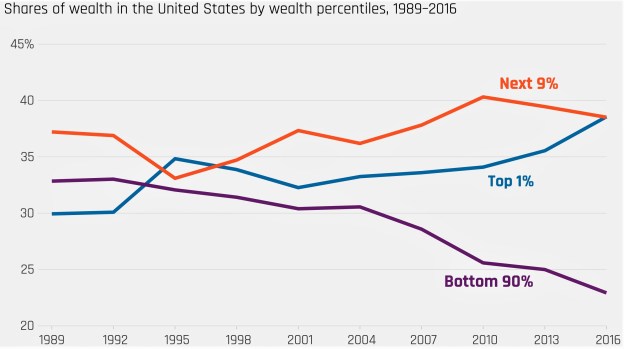
I learn about the increasing wealth gap between the haves and have-nots in our society and its concomitant effects—homelessness, unemployment, skyrocketing credit debt.  I see public figures from both public and private sectors who have been caught with their fingers in the till, so to speak—people we older generations were taught to respect and admire.

And I watch as our precious arable land, oceans, and freshwater resources are choked by urban development, abuse, pollution, and general mismanagement.

save

Stupidity may be defined as—

  • a lack of keenness of mind;
  • inanity or pointlessness;
  • an annoyance, irritation, or troublesome state;
  • a state of stupefaction.

More humorously, here are some definitions essayed by minds more creative and cleverer than mine—

  • Two things are infinite: the universe and human stupidity; and I’m not sure about the universe. (Einstein);
  • There is more stupidity than hydrogen in the universe, and it has a longer shelf life. (Frank Zappa);
  • Never underestimate the power of stupid people in large groups. (George Carlin);
  • Stupidity cannot be cured. (Robert Heinlein);
  • In politics, stupidity is not a handicap. (Napoleon); and
  • Stupidity is the same as evil if you judge by the results. (Margaret Atwood).

But my favourite is this from Ricky Gervais—

  • When you are dead, you do not know you are dead. It is only painful for others. The same applies when you are stupid.

man-sawing-off-branch-

The humour is short-lived, however, when one pauses to consider the potential consequences of our collective stupidity.  On a small scale, it’s as if, having finished the last of the toilet tissue in my bathroom yesterday, I fail to notice and decry its absence until I need it today.  And by then, of course, it’s too late.  I must do without until I can replenish the supply from a store.

But what happens when all the stores’ supplies are exhausted, too?  Is this where our stupidity is leading us?

Buckminster Fuller wrote, “Human beings always do the most intelligent thing…after they’ve tried every stupid alternative and none of them have worked.”  Would that he is right before it is too late!

If you have read this far, you might well ask me what I am doing to combat the dire state of affairs I’m bemoaning.  The answer, unfortunately, is not a whole lot—unless you count the several blog posts I have written on this site, which almost no one will read.

Of course, the same question might be asked of you, assuming you share my concerns.  Perhaps the best answer for both of us is this statement from a young American activist, Aditi Juneja:

“If you’ve wondered what you would’ve done during slavery, the Holocaust, or the civil rights movement…you’re doing it now.”

apathy

As are so many, alas.

Testicle

One of my great preoccupations, as readers of this blog might assume, is playing with words.  Spending a couple of hours with the NY Times Sunday crossword is a regular part of my week.  Figuring out the theme of each one can be frustrating, of course, and I sometimes seek out help with individual squares or words.  But for the most part, I find it immensely entertaining and satisfying.

I have long been an aficionado of the iconic word game Scrabble—and in recent years, with the similar online game Words With Friends.  The first is played with the traditional board and tiles, which lends a pleasing tactile element to the game.  The second is played on the internet, sometimes with actual friends, other times with complete strangers.

My online handle is anagramps, coupled with a photo of a Mesopotamian oracle, to identify me to opponents.  The handle is intended to convey both my status as a grandpa, and my affinity for anagrams, an essential skill if one is to play the games successfully.

anagramps

The photo is meant to be intimidating.

There is a feature in the online game to allow players to converse with each other via messages, but in my experience, that doesn’t happen very often.  I’m sometimes tempted, when I’ve dropped a bombshell-word on an opponent, to type Sorry! with a rueful-looking emoji accompaniment (although I’m never actually sorry on those occasions).

rueful 2

Or, when my opponent has produced something similar against me, I occasionally have the urge to message a mock-angry Grrr!

I rarely do, however.  Mercy is seldom shown on either side.

Over the years, I have become quite good at these games (if I may be permitted so immodest a claim).  My winning percentage online is in the high .600’s, roughly double a high, major-league baseball batting average.  I fully expect to win each game I play—although, in the interests of full-disclosure, I must confess I sometimes sulk when I do not.

06_CP1453_GRUMPY-OLD-MAN

It’s not pretty, that, but there it is.

In my own defense, I never gloat when I win.  If it’s been a particularly close game, I often send a message of congratulations/condolences to my opponent, and a request for a return match.  When I’ve won by a wide margin, I wait diplomatically to see if my opponent wants to challenge me to another match.

There are a very few players out there who bedevil me, winning matches with annoying frequency.  One of those is my wife, another my daughter.  It seems they draw especially good, high-scoring tiles when we oppose one another (or so I tell myself).  Because the online game is based on algorithms, not random chance, I can occasionally convince myself the system is deliberately trying to take me down a peg or two.

My wife and daughter merely laugh.

It was with my wife, however—or rather, against her, and against her mother—that I had my greatest moment.  I, a callow youth of nineteen, assiduously courting the lass who would become my life-partner, was playing a game of Scrabble at their home.  Late in the game, I discovered a word I might play, using all seven letter-tiles, which would come with a fifty-point bonus.  Not only that, but because there was already a letter on the board in the lower, left-side column I planned to use (an S from one of their earlier words), I would be able to start and end my word on a triple-word square.  In my head, I totalled the score I was about to receive—558 points!  Oh!  My!  Stars!

There was a problem, though.  My future mother-in-law was still getting to know me, and I her.  This was a critical sizing-up period for me.  It was important that I not do anything to offend her, thus dooming my chances with her daughter.  I had to think long and hard about whether to use the word, for fear of blowing everything.

mother

The word was TESTICLE.

In the end, I seem to remember convincing myself that there were other girls in the world, but such a high-scoring opportunity might never come my way again!  I’m sure I didn’t really think that, but it’s how I tell it these many years later.

In any case, I played the word, trying mightily to be nonchalant.

“What’s that?” my mother-in-law-to-be said.  “Is that a word?”

Flustered by the questions, and fearing the loss of my points if the word was not deemed acceptable, I sputtered, “Yeah, of course.”

“What does it mean?” she said.

“What does it mean?” I repeated stupidly.

“Yes, what does it mean?”

I was too nonplussed in the moment to realize she was playing me.  “It means…it means…you know…the private parts of a man’s…you know…reproductive system.”  Sweat was beading on my forehead.

reproductive

And then she broke into laughter, joined quickly by my future wife.  “Okay,” she said, “as long as you know what it means.”

My immense relief and towering sense of accomplishment were short-lived, however.  The two of them told me the rules were clear—the fifty-point bonus for using all seven tiles had to be added after, not before, the point-total of the word was tripled and re-tripled.  Thus, my true total was 158, a colossal 400 short of my expectation.

But by then, I didn’t care.  My status with my future in-laws was preserved, I had managed to play my perhaps-once-in-a-lifetime word without forsaking my betrothed, and…oh, yes, I won that game.

Anyway, if you are a devotee of Words With Friends, and if you care for an online game sometime, look for me—anagramps.  I promise no R-rated words!

Nobody Counts On Dying

Just in time for summer reading, my latest novel, Nobody Counts On Dying, is available for a free preview, or purchase.
Dying Cover Blurb
This gripping tale, intended for a mature audience, carries on the traditions of compelling storylines, wonderfully-believable characters (some admirable, some less so, all of whom will attract and captivate you), and the true-to-life dialogue that distinguished the earlier books in my mesmerizing crime/thriller series.
 
You can find the book, together with the earlier novels in the series, at this link—http://www.lulu.com/spotlight/precept
 
There is a special introductory discount of 10% for those who order a copy during the month of July.  I hope you will visit the site to have a look.
 
You will also find all my books listed under the My Books header in the menu at the top of this page.