The Loss of What, Now?

The weekly prompt from my Florida writers’ group was to pick a famous saying or quote, and write a story about it. This is my offering—

“You can take it from me!” the old man says forcefully.  “Gettin’ old ain’t for sissies!”

“Yeah,” his middle-aged son says, scarcely looking up from his phone screen.  “Beats the hell out of the alternative, though.”

‘“Very funny,” the old man says, “an’ easy for you to say.  You’re too young to know the thing ‘bout gettin’ old is dealin’ with loss.  With nary a warnin’, we start losin’ all the things we always took for granted.”

“Like what?” his son says.  He’s sitting in the small suite the old man occupies in the retirement home, his father propped up in bed beside him.

“Everythin’!” the old man declares emphatically.  “Just lookit my skin, f’rinstance.  Used to be smooth an’ tight, now it’s all loose an’ wrinkled.  I look like a cheap suit!”

“That’s to be expected, Pop,” the son says distractedly, eyes still on the phone.  “You’re not a young buck anymore.”

“That’s what I’m sayin’!” the old man replies.  “An’ I’m also losin’ all my muscle underneath the skin.  I’m nothin’ but a bag of bones!”

“You look fine, Pop,” the son says, reaching to pat the old man’s arm reassuringly.  “Just older, that’s all.”

“Exac’ly!  An’ speakin of bones, I’m losin’ all the flex I used to have in ‘em.  All’s I got now is pain an’ stiffness.  Every time I look at myself, all’s I see is me losin’ more an’ more of what I had.”

“So then, don’t look at yourself so often,” the son says.  “Read your magazines, read the books I brought you.”

“Bah!  Easy for you to say!  I don’t see so good anymore, neither.  Vision loss is another thing I’m dealin’ with, an’ it ain’t nothin’ to celebrate, b’lieve you me!”

“Where are your glasses?” the son asks, thumbs busy on the tiny keyboard in front of him.

“Danged if I know!” the old man spits.  “Can’t ‘member where I put things the way I used to, neither!  Doc says it’s just normal mem’ry loss, caused by old age.  I used to prop ‘em up in my hair when I wasn’t wearin’ ‘em, but now that I lost all my hair, they just keep slippin’ off.”

“So, watch TV then.  There’s always something on the movie channels.”

“Yeah, I can still see the TV,” the old man concedes grumpily.  “It’s the up-close stuff I can’t see!  But nobody in them old movies talks loud enough!  I can’t hear a blessed thing ‘less I turn the volume way, way up.  But then the nurse comes in an’ switches it back down.  Gettin’ old means I got hearin’ loss, too!”

“Where are your hearing aids?” the son asks, putting his phone in his pocket.

“Where d’ya think they are?” the old man says.  “In my ears is where they are!  But they’re not workin’ right!  I gotta read lips to know what people are sayin’ half the time!”

“Have you checked the batteries?” the son asks, reaching for his father’s ear.

“Don’t touch me!” the old man says, flinching away.  “All’s I got anymore is pain everywhere.  Nurse says it’s just inflammation, it’ll go away.  But it doesn’t, dagnab it!  Pain is the only thing I don’t seem to be losin’!”

“Okay, Pop, don’t take this the wrong way, but maybe you should change your attitude a wee bit.  Try to focus on the things that make you happy, the things that are going well.”

“Like what?” the old man says, somewhat miffed by the suggestion. 

“I don’t know,” the son replies, checking his phone again.  “There have to be some things that are going right for you.  Mark Twain once said, Getting old is an issue of mind over matter.  If you don’t mind, it doesn’t matter!  Try that on for size.”

When the old man doesn’t  answer right away, his son glances up from the phone, thumbs frozen in mid-stroke.  His father’s eyes are closed, his mouth drooping open, his arms still at his side.

“Pop!  Pop!” he yells, leaping from his chair.  “Pop!  Wake up!”  As he stands over his father, phone forgotten, he realizes how aged and frail the old man looks. 

Before he can do anything, however, the old man opens one eye.  “Got ya this time, didn’t I?” he chuckles, a rheumy sound from deep in his chest. 

“Jee-zus, Pop,” the son exclaims.  “You scared the crap out of me!”

“Yeah, well it’s your own damn fault, sonny-boy!  Tellin’ me to change my attitude?  Focus on good stuff happenin’ to me?  At my age?  I may be losin’ a lotta things, but I ain’t never lost my sense of humour!”

“You got me, Pop, I have to admit,” the chagrined son says.  Switching off his phone, putting it in his pocket, he adds, “So, besides your sense of humour, what else haven’t you lost yet?  I’m all ears!”

The old man smiles.  “Ain’t lost you,” he said, “an’ that’s the biggest thing!”

Teaching and Learning

Almost sixty years ago, a brand-new teacher, hired by a brand-new principal, entered his brand-new school for the first time.  Earning what he considered a princely, annual salary of $4100 per year, he could scarcely believe he was being paid to do this job he loved from the very get-go.

Even today—a grandfather now, and long-retired—I can still feel the sense of wonderment and awe that seized me as I awaited my first group of elementary school students.  The mix of opportunity and responsibility confronting me was both frightening and exhilarating.

Over the next thirty-plus years, in three different school districts, I served as teacher, vice-principal, principal, superintendent, and director of education.  Of those postings, the first and last were my two favourites.

Along the way, I met and married a brilliant teacher, and in time, both our daughters grew up to be wonderful teachers, too.

Two of my four granddaughters are currently working towards university degrees in education, one in music, the other in maths and science.  They haven’t asked for my advice—perhaps blissfully unaware of the import of my experience, its scope and depth; or more likely, because I’m bound to be out-of-date now, hopelessly so, after such a long hiatus.

I’ve slowed down, no doubt, but the pace of change has not!

I’ve never been one to proffer advice unsolicited, anyway—although I have been known to hold forth if encouraged.  But if I were to be asked, there are a few bon mots I would probably pass along.

First, teaching—that is, the handing-down of all wisdom from the teacher—is far less significant to students’ growth than learning—namely, opportunities for them to ask pertinent questions, test a variety of possible answers, and settle upon evidence-based conclusions.  Effective learning is a highly-personal pursuit, and happens in a plethora of ways connected to each student’s personality and neural development.  It is the teacher’s job to provide sufficient and varied, open-ended learning opportunities within the prescribed curricula.  Show them, don’t just tell them; involve them, don’t merely lecture them.

Second, the teaching/learning relationship between teacher and student, if it is to yield good results, must be founded on mutual respect for one another—with the emphasis on mutual.  As a pundit posited some time ago, “I don’t care what you know until I know you care.”  The same applies to relationships among students, each of whom will more likely prosper in a caring and secure classroom environment.

Third, it’s far more important that the teacher constantly catch students doing something good, rather than something bad.  It’s not that the bad should be overlooked, but there are effective procedures to deal with it—not simply to end it, but to work proactively to prevent its repeat.  Catching students doing the good things they do is critical, though—letting them know, not just that their accomplishments are noticed, but explaining why those achievements are positive.  When students understand the underpinnings of effective performance, they’ll be more likely to roll it back and expand their repertoire.  So, tell them when their work is good…then explain why.

Over the years, whether engaged as teacher, principal, or CEO of a school district, I forever encountered encumbrances threatening to get in the way of doing the job effectively—budget-cuts; staffing-cuts; overcrowded classrooms; reductions in essential support-services for special-needs students; aging buildings and facilities; changing parental expectations; increasing political demands; the intrusion of pervasive, social-media technology; rising violence in our society; and on and on.  There seems no end to the reasons to decry the state of education.

But that is the reality of the workplace my granddaughters will face.

The most effective strategy to combat the ennui and despair that might imperil what they will try to do in their own classrooms is the fourth piece of advice I would offer them.  Win your people over!  Be they students, co-workers, employees who report to you, the same is true: more often than not, they will respond positively to the learning and growth opportunities provided for them when they feel you hold them in high regard; when they believe they are important pieces of the whole, not mere cogs in someone else’s wheel; when they know you have asked for and valued their opinion; when they believe the ends you are seeking are righteous, and the means to those ends honourable.  And for that to happen—for them to believe you are honest, trustworthy, consistent, and invitational—you must be those things.

And therein lies the final piece of advice I’d offer my granddaughters.  Be visible to your students, be available, be present.  I think of it as management, or leadership, by walking around—and it works.  The best teacher, or leader, is the one who is not just inspiring, but vulnerable, receptive, nurturing, validating—in short, transparent.

Anyway, those are the things I would tell my granddaughters now, almost sixty years since I first stepped foot in that brand-new classroom, wide-eyed and bushy-tailed!  

You know, I sometimes allow myself to imagine I’m heading back in there right now, and waiting just inside the door for me is a fresh-faced kid—Alan, Sylvia, Tony, Mary—so many others whose faces I still see.

“Hey, Mr. Burt!  I was thinkin’ ‘bout what you told us before recess, an’ I’m not sure you’re right.  You wanta know what I think?”

“Yes!” I say, a smile splitting my face.  “Tell me what you think!”

I wanted to know then, and I’d want to know now.  For that’s the essence of teaching and learning.

Happy Pilgrim

The weekly prompt from my Florida writers’ group was “AI and I”, and my offering is these two poems, five stanzas each. One was written by me, the other by AI (Copilot); can you guess which is which?

Happy Pilgrim

I am a happy pilgrim wand’ring down the road of life,
I’m loved by both my daughters and the gal who is my wife.
I first began my journey back in nineteen-forty-three,
And have spent the intervening years seeking to be me.

My travels haven’t been too hard, nor have they all been smooth,
They’re slower now, though, than they were when I was but a youth.
I make more time to look around than I ever used to do,
Far less concerned with making haste than soaking up the view.

My tomorrows---fewer now than my many yesterdays---
Still unfold themselves quite wondrously to my open gaze,
And I’m astonished there’s so much that’s new along the way,
As I continue down my path, loving each new day.

I know for ev’ry journey there will always be an end,
But it would be a long, long road that never takes a bend,
And so, I wend my pilgrim’s way, that end not yet in sight,
Trusting that my steps are sure, and my destination right.

I am a happy pilgrim wand’ring down the road of life,
And my age is not an issue, nor yet a source of strife.
In fact, it is a gift that I’ve been blessed to call my own,
And I give thanks for loved ones dear, for I am not alone.

Happy Pilgrim

I am a happy pilgrim wand'ring down the road of life,
With dreams as my companions, and hope to ease my strife.
Through sun-kissed meadows and moonlit fields I just love to roam,
Guided by the stars above, finding solace far from home.

In fields of laughter, I gather mem’ries like wildflowers,
Each petal a moment, fragrant with love's gentle powers.
The winding path unfolds, a tapestry of joy and tears,
And I dance to the rhythm of life, banishing all fears.

Beneath the silvery moon, I find solace in the night,
Whisp’ring secrets to the stars and their pure, distant light.
The road ahead may wind and twist, but I'm sure to persist,
For ev’ry step’s a story, every moment a sweet kiss.

Beneath the ancient oaks, I uncover wisdom's sweet sway,
Their roots anchored deep in earth, their leaves a verdant display.
The road may lead to distant lands, where mysteries unfold,
And I'll follow its winding path, with heart that's brave and bold.

The road may turn or waver, but my heart remains steadfast,
For ev’ry twist reveals a truth, each bend a chance to last.
So let me be this pilgrim, with wonderment in my eyes,
Embracing life's adventure, under ever-changing skies.

A Loss For Words

[NOTE: IF THIS COMPLETE BLOG-POST LIES IN THE BODY OF AN EMAIL, CLICK ON THE TITLE TO READ IT IN ITS NATURAL ENVIRONMENT ON MY BLOG-SITE. IF ONLY A LINK IS PROVIDED IN THE EMAIL, CLICK ON THAT.]

Most people who know me would likely tell you I am rarely, if ever, at a loss for words.  But they would also assure you, I trust, that I am far from being a blabbermouth.  My own opinion is that in most social situations, I can hold my own in conversation without becoming annoying or overbearing.

Most of the time, I listen; when appropriate, I ask questions.  If prompted, I will hold forth on a subject (if I know something about it), but not to the point of boring my friends to tears…I hope.

There is one situation, however, where all of the above is not true, perhaps the only circumstance where I find myself virtually unable to get a word in edgewise.  This unfortunate state of affairs occurs every time I find myself on a FaceTime call with my wife and daughters.  I hustle into the den with my iPad, leaving my wife with her screen in the living-room, so we won’t get feedback during the call.

When I say ‘unfortunate’, I mean for me, of course; for all I know, the ladies find it delightful when I sit, practically mute, at my end of the line.

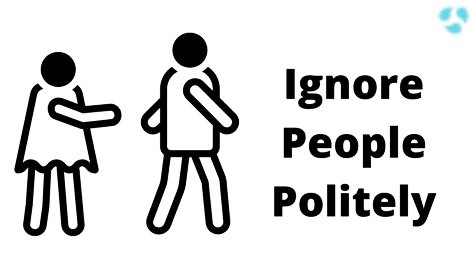
The problem arises, not because my wife and daughters ramble endlessly on and on, not because they’re rude or inconsiderate, not because they delight in ignoring me, even politely.  Nothing could be farther from the truth.  In fact, they are all among the most considerate of creatures on the face of the earth, and they love me dearly.

No, the problem occurs almost every time we’re on a call because they appear to react faster than I do.  And to think faster, too, I suppose.  Regardless of the subject, I’m usually listening attentively as they express their various points of view, waiting for my brain to kick into gear as I consider an appropriate response.  The sad fact is that, by the time I have a response, one of them has already jumped back into the conversation ahead of me.

Another issue causing me a problem is their propensity to change subjects at the drop of a hat.  We might have spent five minutes batting a particular topic back and forth—the three of them talking while I listen—and Boom!  Without warning, one of them will introduce a brand-new thread, or ask about something entirely different from what we’ve been discussing. 

Even as my brain registers the change, a part of it is crying, silently and forlornly, that I haven’t yet kicked in my two cents’ worth on the first topic.

But they aren’t rude, as I have said, so at some point (perhaps noticing my silence), one of the girls might say, “What do you think, Dad?” 

“Ah…let’s see,” I reply, “can we go back to that first thing we were talking about?  I had a thought about that, but I couldn’t get in.”

The three of them laugh and roll their eyes at this, chide me to ‘keep with the tour’, then blithely resume their three-way conversation.  It’s probably just as well, I guess, because by the time I’m asked to chime in, I’ve often forgotten the point I wanted to make, anyway.

I must admit, though, all modesty aside, that I generally look surprisingly good on those FaceTime calls.  I sit up straight, look right into the camera (with an occasional peek at my own image), and keep myself centred in the screen.  They, by contrast, let the screen wobble all over the place as they walk from room to room tending flowers, picking up dirty clothes, starting early prep for supper, training their camera on their dogs.  It drives me crazy, but I can never worm my way into the conversation to ask them to stop.

I’ve explored various strategies to help, but none seems to.  I’ve tried holding up my hand, for example, when I want to cut in, but all I get is a return wave, as if they think I’m leaving the conversation.  “Bye, Dad!”

On more than one occasion, I’ve cut my video feed for a few seconds, hoping they’ll wonder if I’m okay, but all I hear is, “Looks like Dad has left the conversation!  Was it something we said?”

“No!” I want to shout, as I turn the video back on.  “It’s because I haven’t said anything!”  But they’re already talking about something else, so once again I can’t get in.

I recognize that the limitations of the FaceTime technology, marvellous though it is, play a part in exacerbating my dilemma.  The offset between audio and video transmission makes it difficult for me to pick the right moment to jump in—like watching a TV commentator interviewing someone far away, each of them experiencing a delay in hearing the other, resulting in dead air.  If I speak up too soon, while one of the girls is still talking, no one hears me; if I wait ‘til she’s finished, someone else has already started.

Still, I persist in taking part in these FaceTime calls, not only to hear what the girls have to say, but to look at them as they’re saying it.  And I console myself that, if ever I had anything pertinent and crucial to share with them, I probably did it years ago.  Whatever I might add now is probably just more of the same.

The ironic part of the whole thing, though, is after we’ve ended the call, I’ll wander back into the living-room and my wife will say, “Are you okay?  You didn’t have much to say today.”

And that always leaves me at a loss for words.

It Was You/It Was I/It Was We

It was you who dwelt inside me, it was I who knew you best.
It was you who warmed my spirit, it was I with whom you’d rest. 
It was you who shared my burden, it was I whose love was true.
It was you who’d lift me higher, it was I who soared with you.

It was I who lived inside you, it was you who made me whole,
It was I who’d lift your spirits, it was you who held my soul.
It was I who stood beside you, it was you who never failed, 
It was I who gave you purpose, it was you whose love prevailed.
It was we who were together, it was we who were o’erjoyed,
It was we who’d not be broken, it was we whose lives were buoyed.
It was we who faced the music, it was we who shared the blame,
It was we who clasped each other’s hands, it was we who overcame.

It was you who lived inside me. It was I who dwelt in you.
It was I who shared your burden. It was you whose love was true.
It was we who were e’er faithful. It was we who’d never bow.
It was we who stood, as still we do. It is we who’ve kept our vow.

Alone Again!

[NOTE: IF THIS COMPLETE BLOG-POST LIES IN THE BODY OF AN EMAIL, CLICK ON THE TITLE TO READ IT IN ITS NATURAL ENVIRONMENT ON MY BLOG-SITE. IF ONLY A LINK IS PROVIDED IN THE EMAIL, CLICK ON THAT.]

Have you ever found yourself absolutely alone in a crowded room—at a family gathering, perhaps, or a business function, a party with friends, a community meeting?  It would seem hard to accomplish that when one is surrounded by so many people, but I manage it all the time.

At a recent Mothers Day gathering with my two daughters, their husbands, my five grandchildren, two of their boyfriends, and my wife all in attendance, conversations were animated, exuberant, and loud.  I know, because there I was, perched on a stool around the large island in the middle of the kitchen (always our family’s favourite gathering place), surrounded by this multitude, yet strangely not involved in any of the conversations.  Nursing a glass of wine, I found myself eavesdropping on each different group in turn, quite interested in the latest news they all were sharing with one another about their work and school activities, yet not contributing a word myself.

But this is not a new phenomenon.  In fact, having become almost invisible on so many such occasions, I’m rarely even asked to contribute.

Over the years, I’ve often wondered if I’m naturally introverted, or maybe anti-social by nature.  From time to time, I’ve questioned my conversational skills or lack thereof.  I’ve even fallen prey every now and then to doubting my innate charm and charisma, and I’ve worried that perhaps no one holds me in high esteem.

Too many times, it seems, I’m at a restaurant with three or four couples, and I look up from my soup to find myself alone at our table.  I wonder if the others might be at the salad bar or in the washroom, perhaps—but all of them?  At the same time?

Or I might be at a dance, ten of us sharing a table, and I suddenly realize I’m sitting by myself again, while the others are up dancing or table-hopping.

The tedious jokes flow at these moments, naturally.  Seeing me alone, someone will ask in a loud voice if I’m dining tonight with all my friends.  Or someone will wonder if I said something to offend everyone in my party.

The problem is, I’ve never had an answer.

What I do know, however, is that I’m not one to blithely accept blame for my own perceived shortcomings.  I am a loving and capable person, after all—or so I want to believe—and I have choices.  For example, if people are ignoring me—or worse, don’t even realize I’m present—I can choose to consider it a flaw on their part, not mine.  The problem with that approach, however, is that many of them are people I love and admire, so it’s difficult to malign them, even secretly.

A better choice, I’ve discovered, is to adopt the stance that I am freely choosing to be alone in these various situations.  I’m doing it on purpose.  And why?  Well, because I’m a writer of fiction, and it’s a well-established fact that, to be effective, writers like me, who make stuff up, have to be keen observers of human nature.  After all, if we’re going to create believable characters out of whole cloth in our stories, we absolutely must possess a keen sense of what makes people tick in real life.  And the best way to do that, I’ve convinced myself, is by observing those around me, listening to them, getting a feel for them through what they do and what they say.

Interacting with people, I believe, is not good because I will inevitably corrupt the essence of who they are through my own conversational filters.  But by choosing to stand back, remaining aloof, I am better able to ascertain who they really are in their daily interactions.  They remain unblemished by any preconceived notions I might apply to them, and it is those untarnished attributes I will then bring to the creation of my own fictional characters, thereby improving the quality of my writing.

Or so I tell myself.

Nevertheless, I confess to a lingering and puzzling disappointment whenever I find myself alone again in large groups.  Recently, on the advice of someone I trust, I arranged to see a therapist renowned for helping folks like me.  My first appointment was yesterday, but to my surprise, it was a group-session—not something I had counted on.  After fetching the obligatory coffee, I took a seat in the circle and listened as each person in turn explained why he or she was there, what their last week had been like, how the others in their lives continued to let them down…and so forth and so on.  I found it fascinating, and was soon busy tapping notes surreptitiously into my phone.  I wasn’t sure that was allowed, but happily, no one seemed to notice what I was doing.

After an hour or so, I was fully-engrossed in reading over these notes, optimistic that I’d uncovered a gold-mine of observations I could use back at my writing-desk.  I looked up, eager to listen to whoever was next, and…well, you can probably imagine my shock when I discovered I was alone in the room.  The session had ended, the circle was broken, and no one had asked to hear from me.

Not knowing whether to laugh or cry, I chose the former.  These therapy sessions, I told myself, were going to prove a treasure-trove of inspiration for my writing.  And best of all, I was going to be able to gather whatever information I wanted with no one even knowing.  As in so many other instances, I was virtually invisible in the group.

No wonder I’m such a good writer!

Alone again! 

VANISH

The latest weekly prompt from my writers’ group was to write a story based on a picture from the Florida Weekly Writing Contest. This is my entry—

To call it an insignificant garret would be to flatter it, tucked high on the south side of the federal building.  From my desk, I can touch three walls if I stretch my arms, but I love my office.  And I love the building! 

Still visible on the frosted-glass door of my office are the words first inscribed fifty years ago: VULNERABILITY ASSESSMENT NATIONAL/INTERNATIONAL SECURITY HAZARDS.  Since the opening of the office, I’ve been its sole occupant, first appointed in my mid-twenties by a Senator who owed my father a favor.  Although our involvement in Vietnam had recently been suspended, the fear of security breaches in Congress was ever-present, so VANISH was established to monitor potential threats—a noble undertaking, though it never accomplished anything.

A longtime crony of the Senator was appointed as senior administrator, and I as his chief aide…his only aide, in fact.  I never did meet the man, although I frequently saw pictures of him in the press with important-looking people.  A portly, balding, bespectacled fellow, he occupied a prized, brightly-lit corner-office on the southwest corner of the third floor, two floors directly below my dormer-lit attic—a location whose door he never once darkened.  For no other reason than that, I deemed him a wonderful boss. 

In fairness, I never ventured into his office, either, our sole interface being the internal mail-delivery persons who moved around the building’s cavernous spaces like gray-clad ghosts.  One of them told me there were only a few people who even knew my office existed up under the rafters.

Packets of classified files arrived each day to my in-tray, sat there untouched for a week before I slapped a RETURN sticker on them and transferred them to my out-tray, whence they were returned to the boss’s office.  What happened next, or where they went from there, I had no clue; neither did I have any idea as to what I was expected to do with them whilst in my possession.  Like so many crises du jour, they came, lingered awhile, then quickly vanished.

At the time of our appointments, the property-management folks planted a small tree beside the sidewalk directly below our windows—a sapling, really.  Over the years, I’ve watched it burgeon to its current height of forty feet or more, where it now completely blocks the once-scenic view from the small balcony off the boss’s office.  Given the utter lack of work-product or vision emanating from VANISH, I’ve often chuckled wryly about the irony of that.

Of course, the original boss is long-gone…or so I’ve been told.  According to the security guard in the building’s lobby, a notice was distributed at the time of his leaving, but because I never opened files, I failed to see it.  Apparently, his office was subdivided and is now occupied by three senior analysts.  I don’t believe they know about me, though, as the files stopped coming to my garret some time ago.  It’s almost as if I’ve vanished, too. 

A decade back, I thought I might be required to surrender my sinecure, but the government changed the requirements for mandatory retirement, allowing me to linger on indefinitely.  My paychecks—which used to be hand-delivered by the mail-persons before the introduction of online banking—have continued to appear in my bank account, and in amounts much greater than fifty years ago.  I’m told I belong to a union, which perhaps explains that happy circumstance.

Happily also, I recently began to receive a generous pension check, along with a social security payment, deposited online each month.  Due perhaps to a bookkeeping error somewhere in the vast bowels of the building, I reckon I am listed in personnel records as both active and retired.  That, too, is ironic because, while never active in this job I love, I have never retired from it, either.

For years, I whiled away my working-hours playing chess-by-mail with other federal employees, or reading books borrowed from the large library in the basement, or chatting with window-washers and custodial staff who occasionally popped by.  Now, of course, I play chess and read online right from my desktop computer. 

Civil service work is so fulfilling!  I’ve served under nine administrations, beginning with Ford, and I’m still younger than the incumbent!  There’s something in the air, I think, that makes me eager to show up for work each day.

I love this old building!

And I love VANISH!

Keep On Keepin’ On

[NOTE: IF THIS COMPLETE BLOG-POST LIES IN THE BODY OF THIS EMAIL MESSAGE, CLICK ON THE TITLE TO READ THE PIECE IN ITS NATURAL ENVIRONMENT ON MY BLOG- SITE. IF ONLY A LINK TO THE PIECE IS PROVIDED IN THE EMAIL, CLICK ON THAT TO TAKE YOU TO THE SITE.]

It has been postulated by persons wiser than I that time does not exist, neither past, present, nor future.  If our lives were a metaphorical hourglass—the top bulb representing the past, the middle stricture the present, the bottom bulb the future—we would find ourselves at the middle, living in the moment.  That moment, however, would be but the instant it takes for one grain of sand to pass through the stricture, followed by the next, and the next, ad infinitum, each gone too rapidly for us to grasp.  And therefore, the theory goes, the present cannot actually exist.  Similarly, because we have no conception of the bulb above us or the one below, no way to perceive them, the past and future also do not exist.

Perplexing, no?  But not a theory I agree with, and I would urge those who espouse it not to tell me time doesn’t exist. 

Given my longtime fascination with and study of history, I’ve always believed there to be a past.  Mind you, I’m able to consciously recall it only from the late 1940s onward; everything that happened before that, I must accept as it’s been told to me. 

I’ve always believed in the present, too, perceiving it not as a mere instant in time, but as a continuous progression or sequence of events in which I play a part—at least while I’m awake.  While sleeping, of course, I have no awareness of the present.

The existence of a future is something I’ve always taken for granted, as well, though I have more yesterdays behind me now than tomorrows ahead of me.

My parents, whose lives spanned parts of ten decades, nonagenarians when they died, are part of the past I remember.  My wife and two children are part of the present I inhabit.  And my grandchildren represent the future, most of which, alas, I shall never see.  But it’s my comprehension of these three elements—past, present, and future—that allows me to carry on.

I remember visiting my father as he neared the end of his life, and hearing him complain (for the zillionth time) about the number of prescribed medications he was taking.  He had a small, plastic pillbox to keep them organized on a weekly basis, a device I silently laughed at, so cocksure and smug in my late forties.

“I saw the doc last week,” my father said, “and I told him to take me off some of these damn pills.”

“What did he say?” I asked.

“Said he’d do that if I told him which ones to cut out.  Said he wasn’t sure which might be the ones keeping me alive.”

“So, what did you say?”

“I told him, in that case, forget it.  I’ll carry on with all of ‘em.”

“Good move, Dad!” I said.  “Keep on keepin’ on.”

We had that conversation thirty-five years ago, and my father’s been gone for more than twenty of those, a part of my past forever.  To my everlasting astonishment, I’ve now entered my own ninth decade, the octogenarian I never contemplated becoming, and my present looks more and more to me like his did to him back then.

I, too, have a plastic pillbox now to organize the eight medications I take daily, five of which are prescribed to control cholesterol, regulate blood pressure, promote prostate function, and bolster bone density.  The other three are over-the-counter supplements I like to think will help me compensate for my lost and lamented youth.

Oh, how the mighty have fallen!  I imagine my father, wherever he is, must be chuckling knowingly at my plight—my past making fun of my present.

I have a friend whose espoused goal in life is to live more years retired than he spent working.  It’s a noble goal, one I share, and that moment will arrive for me seven years from now.  Another of my goals is to accomplish what my parents did, living into a tenth decade, which will happen when I hit ninety, a mere nine years off in the future.  Both my folks remained mentally acute and physically viable almost to the end, a state I devoutly wish for myself. 

A third goal is to live life fully right up until I die—a sentiment I wrote a poem about, I Haven’t the Time, which you will find and enjoy at this safe link—

https://tallandtruetales.blog/2020/01/08/i-havent-the-time/.

Our two daughters visited us for a week in Florida recently, without their husbands and children.  Although we love being with them all, this annual visit from our girls is part of a future we look forward to every year, our ‘core four’ together again.  But the realities of past and present do have a way of inserting themselves. 

I encountered both of them on their first morning with us as I lurched into the kitchen—unshaven, hair askew, eyes still half-shut.  They offered a cheery good morning and warm kisses as I plugged in the kettle for my green tea—decaffeinated, of course—and watched me spill my pills into my hand from the pillbox.

“How many pills do you take every day, Dad?” the eldest asked.

I told her, explaining what each was for in more detail than she probably wanted to hear.

“Do you really need to take that many?” her sister asked.

“Maybe, maybe not,” I said, an unbidden image of my father flashing before my eyes.  “But I don’t know which might be the one I need to keep me alive, so I just carry on with all of ‘em, y’know?”

“Good decision, Dad!” the eldest said.

“Yeah,” her sister echoed.  “Just keep on keepin’ on!”

And so I shall—proud of the past, relishing the present, anticipating the future. Given what I know to be true, no one can tell me they don’t exist!

You Never Know

[NOTE: SUBSCRIBERS WHO FOLLOW THIS BLOG RECEIVE EACH COMPLETE NEW POST IN THE BODY OF AN EMAIL. BUT IF YOU CLICK ON THE TITLE AT THE TOP OF EACH POST, YOU CAN READ THE PIECE IN ITS NATURAL ENVIRONMENT ON MY BLOG SITE. READERS NOT SUBSCRIBED AS FOLLOWERS RECEIVE A SHORT MESSAGE FROM ME WITH A LINK TO EACH NEW POST, WHICH TAKES YOU AUTOMATICALLY TO THE SITE.]

The latest weekly prompt from my Florida writers’ group was to write a story featuring the phrase, ‘You never know!’ This is my response—

The ball leaps off the bat with a loud thwack! and soars skyward in a graceful parabola above the seven of us milling below, before curving back to earth, slicing right toward my little brother who prances nervously on the grass.  He’s using the almost-new fielder’s glove I let him have for this occasion, while I use my beat-up old one.

I’m twelve years old, which makes Allan nine, and he’s a fair bit smaller.  It’s the first time he’s been allowed to play ball with my friends—a game called 500, where we earn points for fielding balls hit to the outfield by a lone batter—and I’d coached him beforehand, especially emphasizing the need to call everyone off before making a catch so we don’t all collide under the ball.

“Just yell out to warn the guys you’re makin’ the catch,”I told him.  “Everybody else will back off.”

Now, as the ball plunges toward him, I see him raise the glove over his head, his other hand poised beside it, just the way I taught him.  “Call for it!  Call for it!” I yell.

And he does…sort of.  At the very last moment, he shouts, “Yours!” and ducks away.  The rest of us watch disgustedly, disbelievingly, as the ball thuds into the grass, bounces once, and lies still.

“You don’t call Yours!” I yell at my brother, embarrassed in front of my friends.  “You’re s’posed to call Mine! Mine!  And then catch the ball!”  Allan just offers that shamefaced grin he affects when he knows he’s disappointed me. 

One of the other guys, a kid I don’t really like that much, gets right on my brother, shouting, “What a dork!  What a chicken!  What’re you even doin’ here?”  Allan quails in the face of the attack, drops my glove on the ground, and trudges off to the sidelines, head down.

“Shut up, Gary!” I say to the kid, wondering if this is when we’re going to have that fight we both know is coming sooner or later.  “Leave him alone!” 

Gary glares at me, but chooses to let it drop.  He tosses the ball into the batter, and we all trot back to the game—all but Allan, who sits on the grass to one side, holding the old glove I tossed to him when I reclaimed my newer one.

He’s not there when the game ends an hour or so later, so I head home without him.  As I’m getting a glass of cold water at the kitchen sink, my mother says, “Where’s your brother?  Supper’s in about twenty minutes.”

“I thought he came home,” I say.  “I didn’t see him at the park when I left.”

“He’s probably still there,” she says.  “Go find him, tell him it’s suppertime.”

With an exaggerated sigh, I make my way grumpily back to the park, which is only across the street from our house, but the trip seems like an unfair burden on me.  Nobody else is there now, and I can’t see Allan anywhere.  As I’m about to turn homeward, I hear a strangely-familiar noise coming from behind the maintenance shed on the far side of the ballfield.

Bump-badaba-badaba-badaba-thunk!  Bump-badaba-badaba-badaba-thunk! 

I trot across to the shed, and behind it I find Allan tossing a ball over and over onto the slanted roof of the shed.  Each time he tosses it, the ball lands, rolls erratically down the torn and curled shingles, and bounces off the gutter, where my brother waits, trying earnestly to catch it in that beat-up glove.

Bump-badaba-badaba-badaba-thunk! 

And now I remember why I recognized the sound!  I used to practice the same drill by myself a few years ago, when I’d been told I wasn’t good enough to play with the big guys.  Allan doesn’t know I’m there, so I watch for a few minutes, and I hear him quietly calling Mine! before each attempted catch.  He drops more than a few because the gutter deflects the ball’s expected trajectory at the last moment, but he keeps trying.

And then he spots me.  “What?” he says defensively.  “You used to do this.”

“Yeah, I did,” I reply, ashamed now of my reaction in front of my friends earlier.  “You wanta know a trick I learned to make it easier to catch ‘em?”

He nods, so I demonstrate how to hold back a bit as the ball rolls down the roof, then step into it at the last moment, tracking the bounce off the gutter.  “It’s easier to catch the ball when you’re movin’ towards it,” I say.  And we spend the next little while with me throwing the ball onto the roof and him catching it, more frequently now. 

Bump-badaba-badaba-badaba-thunk! 

And every time he moves in for the catch, he yells, “Mine!”

We’re interrupted all of a sudden by my father’s gruff voice right behind us.  I don’t know how long he’s been standing there watching us, but he says,  “Boys!  Your mother’s waitin’ supper.  We gotta go!”

Allan runs to him excitedly.  “Didja see me catchin’ the ball, Dad?  I’m catchin’ most of ‘em now!  Jamie says I’m doin’ good!  Didja see me?”

“Yeah, I saw you, son,” my father says, tousling my brother’s hair with one big hand.  Throwing his other arm around my shoulder, he leads us back across the park.

“I’m gettin’ better, Dad,” Allan says.  “You think the big guys will let me play with ‘em tomorrow?”

“You never know,” my father says, giving my shoulder an affectionate squeeze.  “They might, but you never know.”

“Yeah, they will,” I say, “or they’ll be playin’ without me!”  And my father squeezes my shoulder again.

The Name On the Front

There is a timeworn adage in team-sports that may be familiar to many of you: It’s the name on the front of the jersey that matters, not the name on the back.

In other words, the objectives and achievements of the team must always take precedence over individual team-members’ accomplishments.  That is the only route to collective success.  No doubt, individual accomplishments do help the team to succeed, but individual glory is secondary to team triumph.

If you’re a sports fan, you may remember Sidney Crosby’s ‘golden goal’ in 2010, which won an Olympic gold medal for Team Canada in ice-hockey.  And you can be sure the joy on Crosby’s face as he celebrated with his rapturous teammates was not because he scored the goal; rather, it was because the team won that coveted prize.  Sid the Kid was and is a consummate team-player.

This lesson was drummed into my psyche from the time I first started playing team-games—hockey and baseball—around the age of ten, until I finished my last game nearing the age of sixty.  Given the vicissitudes of age as I complete my eighty-first trip around the sun, I don’t miss playing those games now, but I’m awfully glad I had the opportunity while yet I could.

Over all those years, I came to realize that the lesson implicit in that old adage might well apply to all of life.  In this country, for example, all of us wear a jersey with the same name on the front: CANADA.  Politically speaking, however, there is a plethora of different names on the back of those jerseys, as there is for any team: LIBERAL, CONSERVATIVE, NDP, SPECIAL INTERESTS, LOBBYIST, and many more.  Ideally, given the name on the front, we would all be playing for the greater good of the team, pulling together to advance our collective best interests.

Alas, all too often, our elected representatives in Parliament push their selfish interests to the forefront.  They choose to heckle and yell, rather than listening to one another; to dismiss differing viewpoints out of hand, rather than trying to understand them; to criticize and condemn, rather than seeking compromise and consensus.  Question period—which is a made-to-order opportunity to seek honest answers and debate them sincerely in an effort to advance a common cause—has become a travesty that would shame an unruly class of six-year-olds.

During my working career, I learned and frequently made use of a valuable strategy for helping bring people to consensus.  On the assumption that agreement is impossible without understanding, I would assign a person (or group) to listen carefully as someone presented an idea.  Next, I would require that person (or group) to ‘play it back’ in their own words in such a fashion as to indicate they had grasped the concept.  If the original presenters agreed they had, we could safely go on to debate the merits of the idea, knowing no one harboured—unknowingly or deliberately—misconceptions about it.  The debate was thus based on a common set of understandings.

If the original presenters believed the listeners had missed the point, I would  have them present it again, and the process would repeat.  If nothing else, it forced people to listen to and focus on what they were saying to each other, rather than just waiting for a chance to refute what they thought they were hearing.

It’s no secret that our country—indeed the entire planet—is having to deal with a number of issues and concerns right now: among them are the prospect of another pandemic for which we are sorely unprepared; the re-emergence of fascism as a political force; a lack of affordable housing; economic and social inequities; famine and drought; the twin-scourges of racism and xenophobia; and the incessant wars being waged around the world.  And towering over and above all of these in scope and consequence, there looms the existential threat of climate change.

On planet Earth, the only home we have, there is but one team.  And the name on the front of that team’s jerseys is HUMANKIND.  But, just as with any other team, the names on the backs of those jerseys are different—in this case, the names of the political, cultural, economic entities we know as nation-states: CANADA, CHINA, EU, GERMANY, INDIA, JAPAN, RUSSIA, UK, and USA, to name but a few.  All but the first on this list might rightfully be deemed a superpower, which Britannica defines as “a state that cannot be ignored on the world stage and without whose cooperation no world problem can be solved.”

The biggest problem facing Team HUMANITY, however, is that these individual players are not cooperating to find solutions to the crises facing the planet.  Rather, they are in pursuit of individual accomplishment, usually to the detriment of each other, as if they are playing a zero-sum game in which, for every winner, there must be a loser.  In hockey terms, it’s as if twelve players are on the ice, each with a puck, firing it at random in every direction, with no concept of who the opposition might be, what team-play looks like, and what winning or losing is.

In the battles our planet is experiencing, there will definitely be a loser, but it won’t be the planet.  It will survive in some fashion or other, perhaps greatly changed from the sanctuary we have come to know, but still circling the sun.  It is we who will be the losers, Team HUMANITY, unless, collectively, the individual players stop paying attention to the names on the backs of their jerseys.

Will we prove able to do that?  I don’t know, of course, but I’m not optimistic.  I despair of the future, though I’ll surely not be around for a whole lot more of it.  As a species, we are as dysfunctional a team as ever I have seen, each of our players strutting and brandishing his own name on the back of his own jersey.

But here’s the one, indisputable thing—in life, as in team-sports, it’s the name on the front that matters.