The Lonely, Silvery Rain

Otter & Osprey Press, a mainstream, Canadian publishing house (a division of Northern Forest Publishing), has released a second edition of my novel, The Lonely, Silvery Rain, to bookstores and online retailers. It’s available in both print and e-book formats, including Kindle.
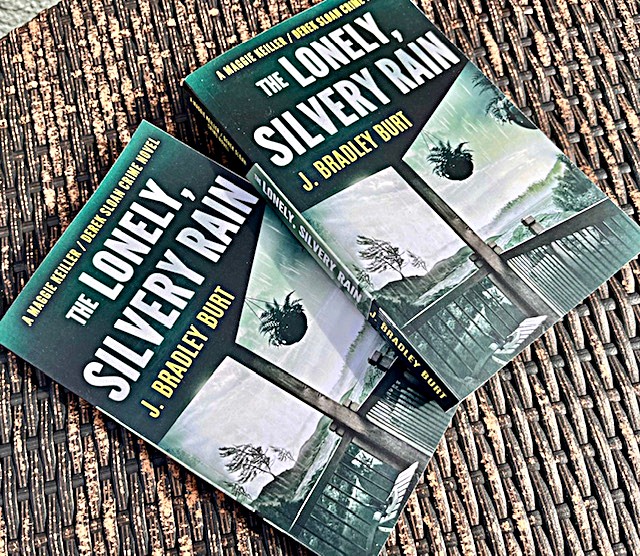
This book is the thirteenth in my Maggie Keiller/Derek Sloan crime series, and the first to be offered by a Canadian publisher. As a crime-fiction novel, some of the portrayed events and language are intended for an adult audience…..but the story, as one editor commented, is kickass!

Set against a background of reconciliation efforts between government and the fictional Odishkwaagamii First Nation, a gripping story of betrayal and murder unfolds in Port Huntington, a small resort town on Georgian Bay. Vandalism, extortion, and violence are unleashed in the community as a number of personal grievances boil to the surface. 

In 2018, the Ontario Superior Court of Justice awarded ten billion dollars to twenty-one First Nations in a vast area along the north shore of Lake Huron, to be paid equally by Canadian and Ontario governments. The settlement is compensation for unpaid annuities to those affected First Nations, annuities that were mandatory under the still-valid 1850 Robinson-Huron Treaty, whose terms committed the government to paying the affected First Nations annual stipends tied to actual resource revenues on their sovereign lands.

Over the years, billions of dollars in profits were extracted from First Nations lands for mining, timber, and fishing enterprises in Ontario, but the obligatory annual payments to First Nations were adjusted only once, thus depriving generations of First Nations people of revenues to which they were entitled.

Under the terms of the settlement, the Robinson Huron Treaty Litigation Committee, composed of Indigenous representatives, was tasked with determining how, and in what amounts, the funds would be distributed to the affected First Nations. While this story is a work of fiction, it is rooted in the very real question of how that money ought to be used. For the Odishkwaagamii, these debates boil over into deception and bloodshed.

Maggie Keiller and Derek Sloan are inextricably caught up in the turmoil, and it is only through their personal integrity and courage that they navigate the chaos.  Determined as always to defend their Port Huntington community, and themselves, they work to ensure justice will prevail.

This safe, universal link will afford you a preview of the story, and direct access to your preferred online retailer—

https://geni.us/thelonelysilveryrain

After publishing my books through Lulu Press since 2007, an American print-on-demand firm, I’m thrilled that a Canadian publisher has picked up my work, and I encourage you to take a look at their website—

https://www.northernforestpublishing.com/homepage

I hope you’ll explore the link to my book, which I believe you will enjoy. Other titles in the Maggie Keiller/Derek Sloan series may be found at this safe link—
https://www.lulu.com/spotlight/precept

The Lonely, Silvery Rain

The thirteenth novel in my Maggie Keiller/Derek Sloan crime series will be published later this year, titled The Lonely, Silvery Rain. Here is an excerpted chapter from that book, slightly modified for this blog-post. If you have read previous books in the series, you will recognize the two characters here.

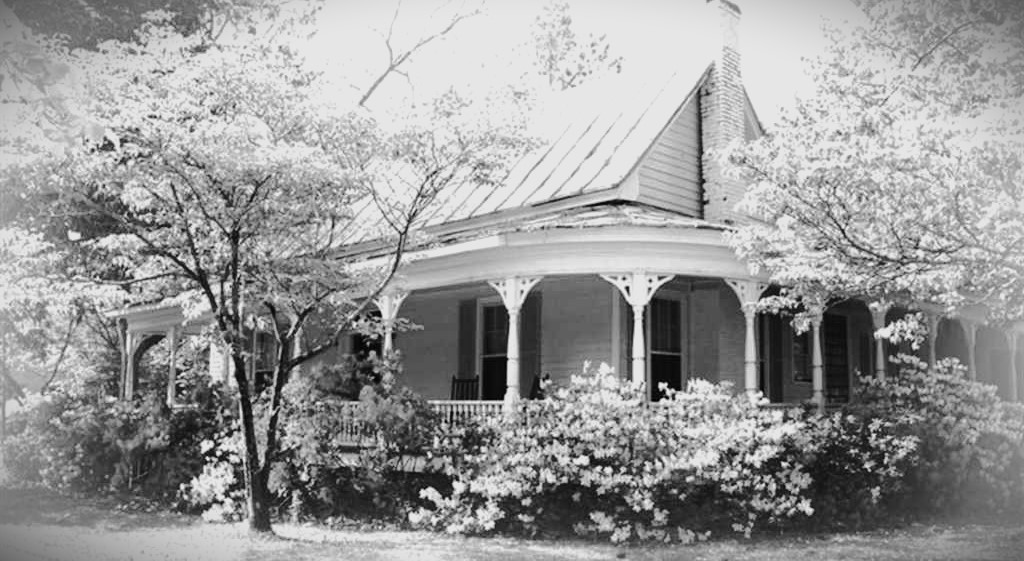
When Old Scratch, as Senator Nicholl disdainfully referred to death, came calling for the final time on a warm, drizzly, late-morning in October, he found Nicholl dozing in his favourite rocking chair on the wide, open-air verandah of his century home.  The rain was thrumming on the shingled roof, dripping off the overhanging eaves, spilling like a shimmering, crystalline waterfall to the gardens below.

Before his spectral visitor crept in, Nicholl had been engrossed in a pleasant dream, delivering a stem-winder of a stump speech on another political campaign trail, surrounded by a throng of friends and constituents in someone’s farmyard.  Balancing on a rickety, upside-down milking-bucket, he stood above everyone, so even those at the far reaches of the crowd could see him.  He felt he’d never been in finer voice until, gearing up for the customary, full-throated culmination to his peroration, he discovered he’d forgotten what he was about to say.  The shock was profound.

Groping vainly in his dream to remember the remarks eluding him, his mouth continued moving, though no sound emerged.  Then, without warning, the bottom abruptly dropped away beneath him, as if someone had kicked the bucket out from under his feet.  The world whirled and spun dizzyingly as he toppled, flinging his arms out in a futile attempt to catch himself.  Despite the confusion and fear engulfing him, however, he still tried to finish, a campaigner to the end.

Wait!  My speech!  I’m purt’ near done…

But the dream turned nightmarish, and a misty, reddish haze descended across his eyes, and then…and then…

Senator Milford Nicholl, the simple, hometown boy-made-good, eased back in his rocking chair, sighed a fare-thee-well, and went to his eternal rest.

The many well-wishers who stopped in later that afternoon found Gloria, his wife of sixty years, shaken but composed, unbelieving but accepting, sad but relieved that her husband’s travails were over.

“He knew he was on borrowed time,” she told them softly, “and I could tell he knew his days were winding down.  A wife always knows these things…”  Her throat filled up, and she stopped to wipe away tears. 

“Just a few days ago,” she whispered after a moment or two, summoning a small smile, “we talked about the possibility of one of us dying.  And you know Milly’s sense of humour.  He said something to the effect that he wasn’t afraid to die, he just didn’t want to be there when it happens.”  

The mourners laughed at that, and a few shared more of the homespun witticisms they remembered flowing from Nicholl’s febrile mind.  Eventually, Gloria told them she really would like time alone.  “I’ll pray a little,” she said, “cry a little, laugh a little.  There’ll be time enough later to reminisce some more.  And I’ll call you if I need to, I promise.”

As everyone took their leave, Gloria waved from the verandah, then sat and rocked slowly in her husband’s favourite chair, his abandoned walker standing forsaken beside it.  The rain was gentler now, but its sibilant pit-a-patting on the roof was still audible, its runoff still dripping off the eaves into the lush gardens below, covered by sodden, autumn-hued leaves.  The unseasonably warm breeze caressed her, enveloping her in a blanket of solace.

She already understood she’d be missing Milly constantly from now on—his irrepressibility, his cornball turns-of-phrase, his devotion to the community—and most of all, his love for her, his very presence.  She counted herself lucky to have been his partner and to have known such happiness.

Her grief over losing him would linger long, of course.  She knew mourning is not something that can be quantified or measured by time.  But at this particular moment, she was at peace with his passing, attuned to the happy memories she would cherish forever, resigned to the loneliness she knew would envelop her from time to time.  They were all part of everyone’s journey through life.

But for right now, she was snuggled in Milly’s chair, at one with the inevitable rhythms of life and death, at one with herself, her soul in harmony with the comforting cadence of the rain.

The lonely, silvery rain.

Love, Through Their Eyes

The weekly prompt from my Florida writers group was to write a piece about seeing things ‘through their eyes’, and this is my offering—

Two short poems, each exquisitely written, capture exactly—exactly—how I feel about this brief moment in time I know as my life, about the relationship I have with the love of my life, and about what will happen when I am gone.

The first, When You Are Old, by William Butler Yeats, the greatest of the Irish poets, portrays a woman through the eyes of her departed husband, as he speaks of his love for her, even beyond death, and where she might find him—

When you are old and gray and full of sleep
And nodding by the fire, take down this book
And slowly read, and dream, of the soft look
Your eyes had once, and of their shadows deep.

How many loved your moments of glad grace,
And loved your beauty with love false or true,
But one man loved the pilgrim soul in you,
And loved the sorrows of your changing face.

And bending down beside the glowing bars,
Murmur, a little sadly, how love fled
And paced atop the mountains overhead,
And hid his face amid a crowd of stars
.

I find that sentiment so uplifting, so reassuring, that love, triumphant over death, is waiting ‘midst a crowd of stars.

I no longer believe, as I did as a child, in life eternal, in the idea of earth and heaven, the now and hereafter.  Rather, I believe the life-force presently empowering me—what I might call a soul—is but a fragment of the energy that fuels our expanding universe, a spark of light presently encased in my mortal being.  And when I, the shell that hosts the spark, will have finished my course, when I have expired, that life-force animating me will simply rejoin the universe.  It will be as if I am carrying on beyond death, but with no memory of my life—just as I have no memory now of what came before my birth.

The mortal I shall die, but my life-force will not, for if it did, the universe would shrink at the loss of that fragment of energy.  Science tells us, however, the universe is expanding, not shrinking, so it must be that no energy is ever lost.

But where will my immortal life-force go, and in what form, I wonder?  And what of my love whom I will have left behind?  Happily, I find an answer to these questions in the second of the poems I number among my favourites.  Written by David Jones, a Liverpool poet, from his collection titled Love and Space Dust, I find it moving and profound—

And in the end
I will seek you
Out amongst the stars.

The space dust
Of me will
Whisper ”I love you”
Into the infinity
Of the universe.

So, no life eternal, but something better—love eternal.  According to these two poets, as seen through their eyes, the pilgrim soul who shares this life with me will find my spark of energy—my soul—waiting somewhere in the stars for her, calling I love you into the void until she hears me.

And I choose to believe she will hear me.

David Jones: https://www.goodreads.com/author/quotes/5241391.David_Jones

W. B. Yeats: https://www.poetryfoundation.org/poets/william-butler-yeats

Young Fella

Around the world, it’s variously known as Armistice Day or Remembrance Day, but stateside we call it Veterans Day.  It honours the memory of those who sacrificed their lives defending freedom, commemorating what was intended to be a lasting peace, signed at the eleventh hour of the eleventh day of the eleventh month in 1918.

I’m here today with almost a thousand of my fellow-vets for a luncheon to remember the fallen.  We’re gathered in a mess-hall similar to those we knew in long-ago days in far-away lands, but under happier circumstances now.  We range in age, I would guess, from mid-forties to late-eighties, drawn from the full military spectrum—dogface, swabbie, flyboy, grunt—jealously proud of our own branch of service, but united by our sworn allegiance to our nation.

Most of us are in uniform, some resplendent in dress whites or blues, others less splendid in khaki or camo fatigues.  But in nearly every case, the clothing strains to contain bodies once in fighting-trim, now overfed and flabby.  Insignias of rank and medals awarded adorn almost every uniform, but no one pays undue attention to either, having long ago taken them for granted.

What is never taken for granted, however, is the privilege of being here today, when so many of our former comrades cannot.  The cash-bar, which had opened an hour before lunch, had been well-used, and many a story of glory and despair had been shared over a pint or two, as has become the custom at our yearly gatherings.

The ample lunch buffet we finished before the speeches began was leagues better than the swill we’d all had to choke down in mess-halls similar to this one back in the day.  And even the speeches…well, let me just say, the speeches were a vast improvement over what we used to be subjected to from the brass in the field.  Today’s remarks from a few of our ranking members were more reflective, halting and poignant almost, as if we all knew this would be the last parade for many of our number.

We’re on our feet now for the national anthem, to be played by a band of eager, young cadets.  None of us sings it aloud, of course, as if to do so might constitute an unacceptable breach of discipline in the ranks.  But we know the words by heart. 

As we raise our arms in salute, a movement catches my eye at a table to my left.  An old soldier, a man I hadn’t noticed earlier, has struggled to his feet, is saluting with difficulty.  He’s dressed in an olive-drab tunic, too big now for his shrunken frame, a beret tucked under one of his epaulets, his blouse drooping from sagging shoulders.  I figure he has to be in his late-nineties at least.  His body sways as the anthem swells, and he trembles as if palsied.  I wonder why the men on either side of him, officers both, do not offer assistance, but they appear not to notice his distress.

I turn my attention back to the band at the front, unwilling to bear witness if the old man should fall.  When the anthem’s final notes die away, a lone bugler steps forward, a young woman immaculate in dress grays, and with divine precision, she raises the instrument to her lips to play The Last Post.

As its first plaintive, mournful notes sound forth, I turn to see if the old soldier is bearing up.  To my surprise, he is gone, and a much younger man stands in his place.  Clad similarly in olive-drabs, he is taller, stronger, more steadfast—a marked contrast to the older man who, I assume, had been assisted from his place at the table.  Unlike the rest of us, our arms still raised in salute, our chins held as high as we can bear, the younger man’s head is bowed, his right hand clasped to his heart.

When the bugler finishes, when the last horn has sounded, the room is suffused in silence for a few moments.  But then the slow hum of conversation begins again as people make ready to leave, and the air is filled with raucous laughter and shouted farewells.  As might be expected, our retreat is anything but militarily precise.  Rather, the withdrawal is hesitant, rambling, reluctant, each of us adopting a slow shuffle to delay our departure. 

On impulse, I detour on my way toward the door to walk behind the table where I’d seen those two soldiers.  All the place-name cards that had been propped on small stands on the table are gone, of course, purloined by their namesakes as souvenirs of another fine get-together—all save one, that is, the one I was hoping to find.  It sits right where the two soldiers had been standing, embossed in flowing script, black letters crisp against the white cardboard background.

Adjusting my glasses on my nose, I lean closer to find out who those men were.

HERE MAY SIT AN UNKNOWN SOLDIER
A FALLEN COMRADE KNOWN BUT TO GOD

I straighten slowly, breath seeping from my lungs as I realize the enormity of the vision I’d been privileged to see.  With all the strength and grace I can muster, I brace to full attention and salute the dead, as respectfully as I can manage in my aged state.

“Thank you, old man!” I whisper, tears stinging the backs of my eyes. 

But then, suddenly aware of my misunderstanding, I correct myself.  Not a single one of our unknown comrades had died as an old man.

“Thank you, young fella!” I say out loud this time.

And not until I am alone in the cavernous mess-hall do I lower my salute.

Keep On Keepin’ On

[NOTE: IF THIS COMPLETE BLOG-POST LIES IN THE BODY OF THIS EMAIL MESSAGE, CLICK ON THE TITLE TO READ THE PIECE IN ITS NATURAL ENVIRONMENT ON MY BLOG- SITE. IF ONLY A LINK TO THE PIECE IS PROVIDED IN THE EMAIL, CLICK ON THAT TO TAKE YOU TO THE SITE.]

It has been postulated by persons wiser than I that time does not exist, neither past, present, nor future.  If our lives were a metaphorical hourglass—the top bulb representing the past, the middle stricture the present, the bottom bulb the future—we would find ourselves at the middle, living in the moment.  That moment, however, would be but the instant it takes for one grain of sand to pass through the stricture, followed by the next, and the next, ad infinitum, each gone too rapidly for us to grasp.  And therefore, the theory goes, the present cannot actually exist.  Similarly, because we have no conception of the bulb above us or the one below, no way to perceive them, the past and future also do not exist.

Perplexing, no?  But not a theory I agree with, and I would urge those who espouse it not to tell me time doesn’t exist. 

Given my longtime fascination with and study of history, I’ve always believed there to be a past.  Mind you, I’m able to consciously recall it only from the late 1940s onward; everything that happened before that, I must accept as it’s been told to me. 

I’ve always believed in the present, too, perceiving it not as a mere instant in time, but as a continuous progression or sequence of events in which I play a part—at least while I’m awake.  While sleeping, of course, I have no awareness of the present.

The existence of a future is something I’ve always taken for granted, as well, though I have more yesterdays behind me now than tomorrows ahead of me.

My parents, whose lives spanned parts of ten decades, nonagenarians when they died, are part of the past I remember.  My wife and two children are part of the present I inhabit.  And my grandchildren represent the future, most of which, alas, I shall never see.  But it’s my comprehension of these three elements—past, present, and future—that allows me to carry on.

I remember visiting my father as he neared the end of his life, and hearing him complain (for the zillionth time) about the number of prescribed medications he was taking.  He had a small, plastic pillbox to keep them organized on a weekly basis, a device I silently laughed at, so cocksure and smug in my late forties.

“I saw the doc last week,” my father said, “and I told him to take me off some of these damn pills.”

“What did he say?” I asked.

“Said he’d do that if I told him which ones to cut out.  Said he wasn’t sure which might be the ones keeping me alive.”

“So, what did you say?”

“I told him, in that case, forget it.  I’ll carry on with all of ‘em.”

“Good move, Dad!” I said.  “Keep on keepin’ on.”

We had that conversation thirty-five years ago, and my father’s been gone for more than twenty of those, a part of my past forever.  To my everlasting astonishment, I’ve now entered my own ninth decade, the octogenarian I never contemplated becoming, and my present looks more and more to me like his did to him back then.

I, too, have a plastic pillbox now to organize the eight medications I take daily, five of which are prescribed to control cholesterol, regulate blood pressure, promote prostate function, and bolster bone density.  The other three are over-the-counter supplements I like to think will help me compensate for my lost and lamented youth.

Oh, how the mighty have fallen!  I imagine my father, wherever he is, must be chuckling knowingly at my plight—my past making fun of my present.

I have a friend whose espoused goal in life is to live more years retired than he spent working.  It’s a noble goal, one I share, and that moment will arrive for me seven years from now.  Another of my goals is to accomplish what my parents did, living into a tenth decade, which will happen when I hit ninety, a mere nine years off in the future.  Both my folks remained mentally acute and physically viable almost to the end, a state I devoutly wish for myself. 

A third goal is to live life fully right up until I die—a sentiment I wrote a poem about, I Haven’t the Time, which you will find and enjoy at this safe link—

https://tallandtruetales.blog/2020/01/08/i-havent-the-time/.

Our two daughters visited us for a week in Florida recently, without their husbands and children.  Although we love being with them all, this annual visit from our girls is part of a future we look forward to every year, our ‘core four’ together again.  But the realities of past and present do have a way of inserting themselves. 

I encountered both of them on their first morning with us as I lurched into the kitchen—unshaven, hair askew, eyes still half-shut.  They offered a cheery good morning and warm kisses as I plugged in the kettle for my green tea—decaffeinated, of course—and watched me spill my pills into my hand from the pillbox.

“How many pills do you take every day, Dad?” the eldest asked.

I told her, explaining what each was for in more detail than she probably wanted to hear.

“Do you really need to take that many?” her sister asked.

“Maybe, maybe not,” I said, an unbidden image of my father flashing before my eyes.  “But I don’t know which might be the one I need to keep me alive, so I just carry on with all of ‘em, y’know?”

“Good decision, Dad!” the eldest said.

“Yeah,” her sister echoed.  “Just keep on keepin’ on!”

And so I shall—proud of the past, relishing the present, anticipating the future. Given what I know to be true, no one can tell me they don’t exist!

Good News…and a Preview

As many of you know, I recently published my ninth collection of stories and poems, something I’m very pleased about.

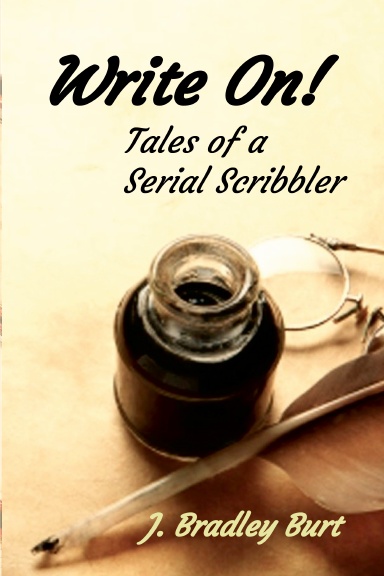
Titled Write On! Tales of a Serial Scribbler, it holds a trove of more than forty pieces I’ve written for the Pelican Pens, a group of enthusiastic writers here in southwest Florida. Each week, we meet to read our work to each other, to offer friendly encouragement, and to devise prompts to guide our creative juices for the following week.

After sending out my announcement the other day, it occurred to me that readers of this blog might like to read one of the short tales included in the book.  Titled And Off We Go, it’s founded on the prompt—embarking on a fateful journey.

I’ve entered this tale in the Gulf Coast Writers Association 2024 writing contest, a competition where I was fortunate enough to take home first-place a year ago with a piece titled But He Didn’t!

I hope you’ll enjoy this preview of what lies in store for you in Write On! Tales of a Serial Scribbler. You can see more of the book, and my other published books, at this safe link—https://lulu.com/spotlight/precept

And Off We Go

“Shall we go?”  The sepulchral voice is solemn, portentous, and it reverberates ominously in my ears.

Not yet…not yet!  I’m not ready…

I hear other voices, too, softer voices…my daughters, named for our favourite flowers so many years ago.  They’re talking quietly over me as I lie in a bed I cannot feel in a hospital room I cannot see, unable to speak or move.

“He can’t open his eyes,” Veronica says, “but I can see them moving behind his eyelids.”

“Yeah, I see that,” Jasmine agrees.  “I think he can hear us.”

“Can you, Dad?” Veronica asks softly.  “Can you hear us?”

Yes, yes, yes!  I’m right here…

“He can’t answer you, Vee,” Jasmine says sorrowfully.

She’s right, I can’t.  Everything was fine until…until…whatever day it was, I can’t remember…and that red wave washed over me, collapsing me on the floor for I don’t know how long.  And now here I am, wherever this is.

“Shall we go?” the voice resounds in my ears again, a honeyed basso-profundo, not at all impatient, yet determined nonetheless.

No, not yet!  It’s too soon…

“Keep stroking his hair, Jazz,” Veronica says.  “He always liked that.”

I did always like it, but I can’t feel a thing now.  I can only imagine how it feels, and the thought warms my heart.  I laugh inwardly, knowing my hair must be all askew.

“I love you, Daddy,” Jasmine whispers.  “I hope you know that.”

“He knows we love him, he knows,” Veronica says, and I imagine she is holding my arthritic hands in hers, gently massaging them, terribly weakened now when once they were so strong.  But I can feel nothing.

I lifted you high in these hands, Vee, high up over my head.  And Jazz, too!  And now…and now…

“Shall we go?”  The voice asks again, persistent though not offensive.

Not yet!  No!

“You don’t have to worry about us, Dad,” Veronica whispers.  “We’ll be fine.”

“She’s right, Daddy,” Jasmine adds.  “You and Mummy were the best, and we’ll be just fine.”

I know, I know…but I don’t want to go…

They’re right, of course, they will be fine, both with their own wee families now.  The little ones were here earlier with their daddies…at least I think they were…maybe not…but I’m sure I heard those four tiny voices telling me they love me.  I wanted to say it back to them, to wrap my arms around them, but…

“And don’t forget, Dad,” Veronica continues, “Mum said she’d be waiting for you to find her, remember?  She’ll be watching for you.”

Ah, their mother, my wife, my lifelong love…how I’ve missed her.  Despite a valiant struggle against the disease that wasted her, she left us a few years ago.  And yet, she never truly left us, you know?  I wonder if Vee is right, if she really will be waiting there, wherever there is…my darling Clementine…

“Shall we go?”  The voice is insistent, though not unkind.

No, please!  Not yet…

“I’m sure Mummy’s been missing you, Daddy,” Jasmine murmurs, and I can hear the sob catching in her throat.  “You were meant to be together for all time.”

“Exactly!” Veronica says, trying to lighten the mood.  “Like apple pie and cheese!  Like mustard and relish!”  She laughs softly as she gropes for more examples.

Jasmine joins in her sister’s laughter, and my heart dances to the sounds of their lilting voices.  “Yeah, or like Abbott and Costello!” she says.  “Like Jack and Jill!”

“Lady and the Tramp!” Veronica offers, and the laughter grows louder.  “Romeo and Juliet!”

“Omigod!” Jasmine gasps, their laughter rolling freely now.  “Tweedledum and Tweedledee!  Lancelot and Guinevere!  Sweet and sour!”

“Yin and yang,” Veronica says, and they stop on that one, as if it’s the perfect one to describe me and Clemmie.

“Shall we go?” a voice asks again…but it’s a different voice this time.  Frozen inside my immobile body, I cannot move, but I feel as if I’m turning around and there is Clemmie…as young and as fair as the first rose of summer.  She’s standing in the midway at the State Fair, pointing at the Tunnel of Love attraction, the one where we had our first, tentative kiss, where the sense we’d found something special first dawned on us.

“Shall we go?” she asks again, and her eyes are sparkling, her smile warm and welcoming.

“It’s okay, Dad,” Veronica whispers, “it’s okay to go.”

“Goodbye, Daddy,” Jasmine breathes.  “We love you.”

Goodbye, goodbye…I love you both…

And I reach for Clemmie’s hand, and off we go.

Ciao For Now

A recent prompt from my Florida writers’ group asked us to make up a story about a person whose time is running out. This is my make-believe offering—

In all the years I knew him, I never heard my father use the word goodbye.  Not to anyone, not ever.  At every point of farewell, he’d offer up a substitute or synonym for the word—Pip-pip!  So long!  Good night! Cheerio!  ‘Til next time!  Toodle-oo!  See you later!  Take care!

Occasionally, he’d venture a foreign language—Adieu!  Auf Wiedersehen!  Adios!  Sayonara!  Towards the end of his life, he came to favour Ciao for now!  But he’d never use the word goodbye, and I used to wonder why.

He tried to explain it once to a mildly-curious, teenaged son.  “The word is too permanent, that’s all.  It implies the end, the finish, that there’ll be nothing to follow.  I prefer to think I’ll be meeting the other person again.”  But I confess, I didn’t really see the difference, callow as I was.

Although born and raised in Canada, my father was an Oxonian—a graduate of Oxford University, Balliol College, class of 1932, a member of the rowing club—and among his lecturers were C.S. Lewis and the great J.R.R. Tolkien.  Gainfully employed back in Canada with a PhD in Literature, he was one of the earliest to enlist after Canada went to war in 1939.  He served as a medical orderly until demobbed in 1943, when he returned home in time for my birth.

“Despite our best efforts to save them, we lost a lot of good fellows,” he would reflect from time to time in his later years.  “We knew their time was running out, but I never said goodbye to any of them.  I wanted them to believe there was still more to come.”

Somewhere over there, with his comrades at Oxford or in the obscene battlefields, he learned a nonsensical, British ditty about farewells, not goodbyes, and he used to sing it to me and my siblings from time to time, usually when we balked at having to go to bed.  He was an enthusiastic, if somewhat undisciplined, singer, but we came to love that song.

Eventually, of course, the fateful day arrived, as it does for all of us, that my father’s own time was running out.  Home from hospital for the last time in the deep mid-winter, he was with my mother and their five children and our spouses—the ‘dirty dozen’, as we had long styled ourselves.  We all knew the end was nigh, though none acknowledged it, and small talk prevailed until my father raised a frail hand.  We waited, breath bated, and in a faltering voice between short gasps for breath, he sang that song one final time—his way of letting us know this was not goodbye.

Most of us, I suspect, did not believe that, but no one let on.

A few months later, when the frost had left the ground, we gathered again at the family’s burial plot for my father’s interment, joined this time by his grandchildren, his sister, his nieces and nephews, and a few cousins.  In keeping with his wishes, it was a simple ceremony, and two of us spoke on behalf of the group before his ashes were lowered into the grave by his eldest grandchildren.  And then we all stood around, staring awkwardly at the ground, as if reluctant to leave.

At that point, with an exquisite sense of timing, my younger brother stepped forward and began to sing our father’s farewell nonsense-song, his voice soft but firm.  Before he could finish the first line, all of us who knew it had joined in—a sad farewell, yet a joyous acknowledgment that this was not goodbye.

Pip! Pip! Toot-toot, Godspeed,
Toodle-oo, toodle-oo, toodle-oo,
Ta-ta, old bean, Ting-ting, old thing,
Chuckeroo, Chuckeroo, Chuckeroo!
This parting brings us sorrow,
We hate to say adieu,
So, we’ll say Ting-a-ling, old tin of fruit,
Cheerio, cheerio to you!

Now, within hailing-distance myself of the age at which he died, I think of my father often, and I hear that little ditty echoing in my mind, just as he sang it so many years ago.

Cheerio, Dad,” I murmur each time.  “Ciao for now!”

And Off We Go

The weekly prompt from my Florida writers’ group was to write a piece containing the phrase, “shall we go…”.  This fictitious tale is my response.

“Shall we go?”  The sepulchral voice is solemn, portentous, and it reverberates ominously in my ears.

Not yet…not yet!  I’m not ready.

I hear other voices, too, softer voices…my daughters, named for our favourite flowers so many years ago.  They’re talking quietly over me as I lie in a bed I cannot feel in a hospital room I cannot see, unable to speak or move.

“He can’t open his eyes,” Veronica says, “but I can see them moving behind his eyelids.”

“Yeah, I see that,” Jasmine agrees.  “I think he can hear us.”

“Can you, Dad?” Veronica asks softly.  “Can you hear us?”

Yes, yes, yes!  I’m right here!

“He can’t answer you, Vee,” Jasmine says sorrowfully.

She’s right, I can’t.  Everything was fine until…until…whatever day it was, I can’t remember…and that red wave washed over me, collapsing me on the floor for I don’t know how long.  And now here I am, wherever this is.

“Shall we go?” the voice resounds in my ears again, a honeyed basso-profundo, not at all impatient, yet determined nonetheless.

No, not yet!  It’s too soon.

“Keep stroking his hair, Jazz,” Veronica says.  “He always liked that.”

I did always like it, but I can’t feel a thing now.  I can only imagine how it feels, and the thought warms my heart.  I laugh inwardly, knowing my hair must be all askew.

“I love you, Daddy,” Jasmine whispers.  “I hope you know that.”

“He knows we love him, he knows,” Veronica says, and I imagine she is holding my arthritic hands in hers, gently massaging them, terribly weakened now when once they were so strong.  But I can feel nothing.

I lifted you high in these hands, Vee, high up over my head.  And Jazz, too!  And now…and now…

“Shall we go?”  The voice asks again, persistent though not offensive.

Not yet!  No!

“You don’t have to worry about us, Dad,” Veronica whispers.  “We’ll be fine.”

“She’s right, Daddy,” Jasmine adds.  “You and Mummy were the best, and we’ll be just fine.”

I know, I know…but I don’t want to go.

They’re right, of course, they will be fine, both with their own wee families now.  The little ones were here earlier with their daddies…at least I think they were…maybe not…but I’m sure I heard those four tiny voices telling me they love me.  I wanted to say it back to them, to wrap my arms around them, but…

“And don’t forget, Dad,” Veronica continues, “Mum said she’d be waiting for you to find her, remember?  She’ll be watching for you.”

Ah, their mother, my wife, my lifelong love…how I’ve missed her.  Despite a valiant struggle against the disease that wasted her, she left us a few years ago.  And yet, she never truly left us, you know?  I wonder if Vee is right, if she really will be there, wherever there is…my darling Clementine…

“Shall we go?”  The voice is relentless, insistent, though not unkind.

No, please!  Not yet.

“I’m sure Mummy’s been missing you, Daddy,” Jasmine murmurs, and I can hear the sob catching in her throat.  “You were meant to be together for all time.”

“Exactly!” Veronica says, trying to lighten the mood.  “Like apple pie and cheese!  Like mustard and relish!”  She laughs softly as she gropes for more examples.

Jasmine joins in her sister’s laughter, and my heart dances to the sounds of their lilting voices.  “Yeah, or like Abbott and Costello!” she says.  “Like Jack and Jill!”

“Lady and the Tramp!” Veronica offers, and the laughter grows louder.  “Romeo and Juliet!”

“Omigod!” Jasmine gasps, their laughter rolling freely now.  “Tweedledum and Tweedledee!  Lancelot and Guinevere!  Sweet and sour!”

“Yin and yang,” Veronica says, and they stop on that one, as if it’s the perfect one to describe me and Clemmie.

“Shall we go?” the voice asks again…but it’s a different voice this time.  Frozen inside my immobile body, I cannot move, but I feel as if I’m turning around and there is Clemmie…as young and as fair as the first rose of summer.  She’s standing in the midway at the State Fair, pointing at the Tunnel of Love attraction, the one where we had our first, tentative kiss, where the sense we’d found something special first dawned on us.

“Shall we go?” she asks again, and her eyes are sparkling, her smile warm and welcoming.

“It’s okay, Dad,” Veronica whispers, “it’s okay to go.”

“Goodbye, Daddy,” Jasmine breathes.  “We love you.”

Goodbye, goodbye…I love you both…

And I reach for Clemmie’s hand, and off we go.

Who Counts?

[ ED. NOTE: If you are an official FOLLOWER of this blog, you are receiving my posts fully displayed in the body of the email notifying you of each new post. To read the post in my actual blog-site format, click on the title at the top of the story in your email, and you will find it a much more enjoyable experience.]

Like many of you, I suspect, I was raised by a mother generous in the love she gave, and wise in her ways.  My four siblings and I benefited greatly from her counsel, and agree to this day that she was right about almost everything.

Whenever I was angry with my brother or one of my sisters, for example, she would caution me, If you have nothing good to say, don’t say anything at all.

Many of our relatives in my mother’s large, extended family were gregarious, well-informed on most subjects, opinionated, and frequently argumentative, so holiday gatherings occasionally became loud and disputatious.  At such moments, my mother would advise me, Sometimes it’s better to say nothing, even if they might think you don’t understand, than to open your mouth and prove it.

Occasionally, I would arrive home from school with some juicy bit of gossip, and she would say, If your friends are talking about other people behind their backs, you can be sure they talk about you when you aren’t there.  And when I would nod as if I understood, she would add, It’s always best to stick up for people who aren’t there.

Decades later, I encountered that last advice again in a landmark book by Stephen Covey, who exhorted his readers: Defend those who are absent—one of my mantras to this day.

A good number of my mother’s admonitions were homespun, she having been raised by descendants of  Scots/Irish farming-stock who had emigrated to eastern Ontario in the mid-nineteenth century.  It’s a long road that has no turning, she would tell me when I’d recount a tale of woe, feeling sorry for myself.  If I’d had a quarrel with a schoolmate, she would say, The road to a friend’s house is never long.  Or if I was sad and blue when things weren’t going well, she’d tell me, When things are dark, try to be the light that someone else can turn on.

I think of my mother often these days, and I miss her wisdom.  I wonder what she’d have to say about this world we live in now, with all its strife and turmoil. 

No one in our family was ever subjugated by an invading people, exploited and dispossessed of our native land.  None of us has ever been despised and disenfranchised because of our nationality, our ethnicity, our skin-colour, our religious beliefs, our gender orientation, our political preferences, our wealth or lack of it, our age, or any perceived disability.  Throughout our lives, in fact, we have been among the privileged of the earth.

Such is not the case for the human species as a whole, however.  Worldwide, a huge number of people are victimized by war, famine, drought, disease, and genocide, some to the point of death.  And for many of those who survive, barely, there is scant relief offered by others of our species.

The product of a random, evolutionary progression over millennia, we human beings at our most primal level are forever a tribally-oriented species.  We seek to be with our own, and are suspicious of any who are different.  We are intelligent, yes, but also egocentric, selfish, aggressive, predatory, manipulative, superstitious, and too often unforgiving.  And because these character traits often override the intelligence factor, is it any wonder we currently find ourselves in such a mess?

Many of the several wars consuming the planet right now, for instance, are the result of clashes among opposing superstitious beliefs—what we sanctimoniously call religion—where each protagonist claims there is no god but our own.  And as if that doesn’t constitute folly enough, consider that many historic wars were waged by our predecessors who claimed allegiance to the same god, even as they prayed to that deity by different names. 

Such foolishness, when earthly power was truly the false god they all desired!

We humans have allowed ourselves—perhaps through a callous disregard for our collective well-being, or maybe due gross ignorance of the consequences we soon shall face—to approach a point of no return.  We seem not to realize that the civilization we profess to admire is but the thinnest of veneers, perched precariously atop the baser instincts of our species.

My mother used to say, The circle is not complete until everybody is inside.  We should always try to make the circle wider, so that everyone can come in.

Decades later, I chanced upon remarkably similar advice, this time in one of Michael Connelly’s crime-novels, spoken by one of his fictional characters, Harry Bosch:  Everybody counts, or nobody counts.

Would our current state of world-affairs be better, I wonder, if we humans could ever adopt that premise?  If we could set aside our preoccupation with the many issues differentiating and separating us, and instead take up the humanistic character-traits we share that might bring us together?

I mean, who counts?

A Crowd of Stars

The youngest of my brothers-in-law died recently, following a long period of worsening, physical incapacity and illness.  He was the second of my generation to go, my younger brother having passed three years ago, and I suspect his death brought the spectre of the end-times somewhat closer to us all.

In addition to my sister, he left behind four children, three of whom are married, giving him three grandsons and two wee granddaughters.  At his private interment, his daughter and three sons spoke of him as a loving and beloved father, and there is no greater tribute I can imagine.  Eighteen of us exchanged reflections and prayers that day, spoken to each other and to him, designed to bring a sense of closure and peace to us all.  We were saddened, of course, by his passing, but relieved that his suffering was ended.

He was married to my sister for forty-five years, a loving union that brought credit upon them both.  I still remember dancing at their wedding, when none of us—so young and brash and full of piss-and-vinegar—could have imagined this day coming.  But it has now for him, as it must someday for all of us.

Deliberate and intentional in word and deed, especially as he grew older, my brother-in-law was rarely intemperate or harsh in his dealings with others.  A man of deep faith, he was loving and giving, and forgiving of others’ shortcomings.  Throughout his tribulations, he was confident that, as he approached the final crossing, he would meet his saviour on the other side.  I hope he has.

In her remarks, my sister said something I thought perfectly summed up his life and faith—from Matthew 25:23, “Well done, good and faithful servant; thou hast been faithful over a few things…enter thou into the joy of thy Lord.”

My wife shared many of those same understandings about what is to come with him, and I remember them engaged in deep conversation over the years, communicating their ideas and beliefs, their hopes for the hereafter.  By contrast, given my differing views, the exchanges I had with him tended to be temporal more than spiritual, though always sincere and affectionate.  He had a way of thinking before he spoke, and I constantly found myself leaning in to be sure not to miss what he might have to say.

The day after he passed, I wrote the following note to my sister—

When we get old, as some of us have, we think differently about death than when we were younger.  I won’t say we ever look forward to it, but we perhaps stop fearing it.

We think of death as a companion on our journey through life—way back in the throng at the beginning, but gaining on us as we begin slowing down.

We think of death, not as a spectre that will end things, but as an usher who will open the next door and allow us in.

Just as life ushered us in at the beginning of our journey through the here and now, death ushers us into the beginning of our next journey.  None of us knows what that journey will look like, but faith sustains us.

When I think of him now, and where he is, I think of these lines, adapted from the poem High Flight, by John Gillespie Magee, Jr.—

Oh!  he has slipped the surly bonds of earth
And dances the skies on laughter-silvered wings…
He has topped the wind-swept heights with easy grace…
Put out his hand and touched the face of God.

With that note, I also included one of my favourite poems, When You Are Old, by William Butler Yeats, the greatest of the Irish poets.  I imagine it as the song my brother-in-law might be singing now to my sister from wherever in this vast universe he finds himself, and I hope it comforts them both—

When you are old and grey and full of sleep,
And nodding by the fire, take down this book,
And slowly read, and dream of the soft look
Your eyes had once, and of their shadows deep;
How many loved your moments of glad grace,
And loved your beauty with love false or true,
But one man loved the pilgrim soul in you,
And loved the sorrows of your changing face;
And bending down beside the glowing bars,
Murmur, a little sadly, how Love fled
And paced upon the mountains overhead
And hid his face amid a crowd of stars.