A Crowd of Stars

The youngest of my brothers-in-law died recently, following a long period of worsening, physical incapacity and illness.  He was the second of my generation to go, my younger brother having passed three years ago, and I suspect his death brought the spectre of the end-times somewhat closer to us all.

In addition to my sister, he left behind four children, three of whom are married, giving him three grandsons and two wee granddaughters.  At his private interment, his daughter and three sons spoke of him as a loving and beloved father, and there is no greater tribute I can imagine.  Eighteen of us exchanged reflections and prayers that day, spoken to each other and to him, designed to bring a sense of closure and peace to us all.  We were saddened, of course, by his passing, but relieved that his suffering was ended.
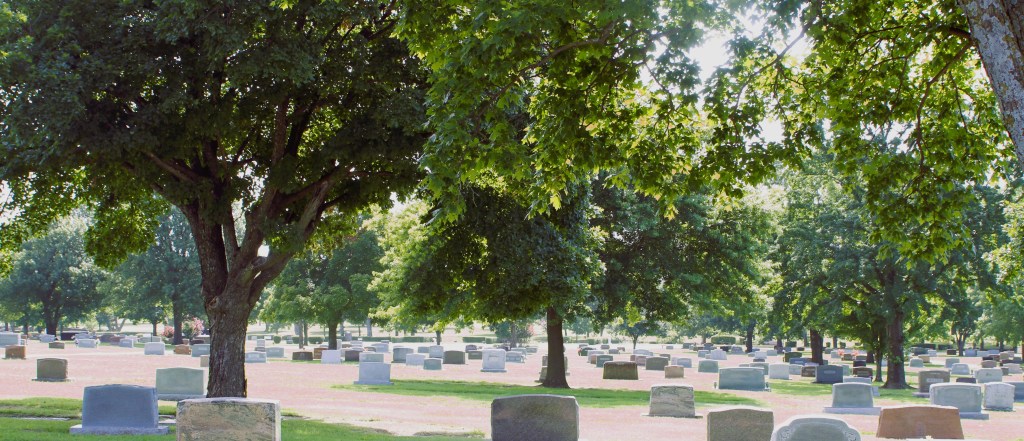
He was married to my sister for forty-five years, a loving union that brought credit upon them both.  I still remember dancing at their wedding, when none of us—so young and brash and full of piss-and-vinegar—could have imagined this day coming.  But it has now for him, as it must someday for all of us.

Deliberate and intentional in word and deed, especially as he grew older, my brother-in-law was rarely intemperate or harsh in his dealings with others.  A man of deep faith, he was loving and giving, and forgiving of others’ shortcomings.  Throughout his tribulations, he was confident that, as he approached the final crossing, he would meet his saviour on the other side.  I hope he has.

In her remarks, my sister said something I thought perfectly summed up his life and faith—from Matthew 25:23, “Well done, good and faithful servant; thou hast been faithful over a few things…enter thou into the joy of thy Lord.”

My wife shared many of those same understandings about what is to come with him, and I remember them engaged in deep conversation over the years, communicating their ideas and beliefs, their hopes for the hereafter.  By contrast, given my differing views, the exchanges I had with him tended to be temporal more than spiritual, though always sincere and affectionate.  He had a way of thinking before he spoke, and I constantly found myself leaning in to be sure not to miss what he might have to say.

The day after he passed, I wrote the following note to my sister—

When we get old, as some of us have, we think differently about death than when we were younger.  I won’t say we ever look forward to it, but we perhaps stop fearing it.

We think of death as a companion on our journey through life—way back in the throng at the beginning, but gaining on us as we begin slowing down.

We think of death, not as a spectre that will end things, but as an usher who will open the next door and allow us in.

Just as life ushered us in at the beginning of our journey through the here and now, death ushers us into the beginning of our next journey.  None of us knows what that journey will look like, but faith sustains us.

When I think of him now, and where he is, I think of these lines, adapted from the poem High Flight, by John Gillespie Magee, Jr.—

Oh!  he has slipped the surly bonds of earth
And dances the skies on laughter-silvered wings…
He has topped the wind-swept heights with easy grace…
Put out his hand and touched the face of God.

With that note, I also included one of my favourite poems, When You Are Old, by William Butler Yeats, the greatest of the Irish poets.  I imagine it as the song my brother-in-law might be singing now to my sister from wherever in this vast universe he finds himself, and I hope it comforts them both—

When you are old and grey and full of sleep,
And nodding by the fire, take down this book,
And slowly read, and dream of the soft look
Your eyes had once, and of their shadows deep;
How many loved your moments of glad grace,
And loved your beauty with love false or true,
But one man loved the pilgrim soul in you,
And loved the sorrows of your changing face;
And bending down beside the glowing bars,
Murmur, a little sadly, how Love fled
And paced upon the mountains overhead
And hid his face amid a crowd of stars.


I Dreamed…

A recent prompt from my Florida writers’ group was to use the phrase, “I dreamed last night…”. This was my submission—

A reminder to those who receive my complete posts in your email, rather than just a link—if you click on the title, you’ll be able to read the post in its proper format on my actual website, rather than in the body of your email.

I dreamed last night of a universe vast,
Extending the future from some unknown past,
Throbbing, emitting, exploding in heat,
Its energy vibrant, its fate incomplete
As onward it rushed, this dream in my head
Rendering me rapturous, there in my bed.

I dreamed last night.  And I wondered if I
Might perhaps be a part of that darkened sky,
From genesis unto eternity,
Unceasing, undying, the infinite me---
My spirit indwelled with life, and a mind
Pushing e’er forward from a past left behind,
Seeking out answers as questions unfold,
Traversing the nothingness, fearless and bold.
I dreamed last night I was mounted astride
A life-force impelling its own suicide.
For how could I, a mere mortal, defend
A beginning without eventual end?
How could we persons, predestined to die
Believe in a universe beyond the sky?

I dreamed last night.  When I wakened again
To face the day’s dawning, the truth appeared plain.
There’s no need for proof of life after death,
For we do not die after our final breath.
We’re integral to that miasmic cloud,
That cosmos of energy, bursting and loud.
We’ll live evermore, just not in this state--- 
We need but to trust, let our faith not abate.

Yes, I dreamed last night of a universe vast,
Informing our future through present and past,
Accepting us gladly, just as we are,
Propelling us forward from near and afar.
Mortality ends, but life still goes on,
And we shall be part of it, unto anon.

An Easter Haiku

The weekly prompt from my Florida writers’ group was to write a story or poem on the theme, “I’m not here!”. This is my response to that prompt—a haiku of three-line stanzas, the lines comprised of 5 – 7 – 5 syllables.

It is adapted from an earlier poem I wrote, titled ‘Love in the Morning’, which won a prize in the SouthWest Florida Writers’ Group contest a year ago, and which is #10 in the list of previous posts in this blog.

“I’m not here,” I say
to those who stand above me,
on top of the grass.

“I’m not here, below
where you gather to mourn me,”
I cry joyously.

“I am in breezes
that blow gently in the night,
rustling your curtains.”

“I am the soft rain
that wakes you in the morning,
whispering your name.”

“I’m not here,” I say
to those who weep at my grave,
lamenting my soul.

“I’m not here, below
this hallowed ground you stand on,”
I shout happily.

“I am dawn’s first beams---
diamonds dancing on water,
bright angels of light.”

“I am shade on trees,
shape-shifting ‘cross leaves turned up
to welcome the sun.”

“I’m not here,” I say
to dear ones who believe I’m
in the cold, cold ground.

“I’m not here as if
I’ve died and left forever,”
I call blissfully.

“I am the music
we listened to together
that stirs in your souls.”

“I am the laughter
you hear from children playing,
just as we once played.”

“I’m not here,” I say
to you---especially you, 
who miss me so.

“I’m not here, apart 
from you, loving hearts sundered,”
I declare raptly.

“I am every thought,
every prayer, every promise
you have ever made.”

“I am part of each 
breath you draw, each step you take.
I’m with you always.”

“I’m not here,” I say
to all at my sepulchre. 
hoping they will heed.

“I’m not here!” I cry---
a joyous, rapturous shout;
“I dwell in you now.”

From This Moment On

Some folks worry about getting old.  And they bemoan the passage of time.

But once upon a very long time ago, nobody kept track of the years.  People in their nomadic, tribal clusters got up when the day dawned and went to sleep when it got dark.  They did it every day, over and over again, until, inevitably, they didn’t awaken from their final sleep.  Nobody ever worried about getting old; they just lived until they died, and the tribe moved on without them.

Even today in this wide world of ours, there are still countless numbers of people who don’t worry about aging.  They live in unforgiving climes where their every effort is bent toward eking out a subsistence-level existence.  Or they’re driven from their homes by ravaging armies—persecuted for their beliefs, their skin colour, their ethnic origins, and often enslaved by their captors.  They, too, live only until death frees them, far too burdened to worry about the realities associated with getting old.

Yet here are we, inured from such extreme conditions—secure, some of us, in our developed, civilized world, inundated by the availability of all the essentials and luxuries we might desire—and what do we do?  We worry about getting old.

Not all of us, of course.  Many young people appear to have the same nonchalant, carefree attitude I probably had at their age—back when immortality was a given.  The halcyon days of youth seemed destined to last forever.  Only old people were old. 

Others of us, the more elderly, have learned a sterner truth.  Youth lasts only until it’s over, only until our bodies begin to betray us.  The rosy morning of youth gives way, grudgingly, to a more austere noontime of life, and then, inexorably, to a deepening dusk we all are destined to enter. 

Some folks accept that truth more gracefully than others, some more stoically, some more fatalistically.

But some, of course, do not accept it at all.  In the words of the poet, they rage, rage against the dying of the light.  Nips and tucks; silicone, botox, collagen, and dye; enhancements and reductions; diets and purging; even exercise—all undertaken by men and women in a fruitless pursuit of everlasting youth.

Why is this so, I wonder, here in our world of plenitude?  Well, perhaps it’s because we have become obsessed with measuring time.  After all, time’s passing itself is neither our friend nor our enemy.  It’s just there, it’s always been there, and it will forever be there.  So, I’ve come to believe it’s the keeping track of time that plagues us, wreaking havoc on our youth, eventually forcing us to an acceptance of the stark reality that we are going to get old.  And we are going to die.

But remember, we are the first cohort of people since the dawn of time who has ever had the luxury of worrying about that.

From this moment on, perhaps we shouldn’t.

Imagine It…..If You Can

Indian Residential Schools: Acts of genocide, deceit, and control

Children’s graves a crime against humanity

Many Canadians don’t seem to care about lasting effects of Residential Schools

– 0  –  0  –  0  – 0  –

Imagine, if you can, the idea of having someone show up at your front door one fine day, armed with a court order from the government that authorizes them to take away your children, ages six and seven, and send them 500 miles away to be raised and educated in a state- or church-run residential school.

Inconceivable!  Couldn’t happen!  I mean, we all have our rights as citizens of this fair land, and so do our children, right?

Nevertheless, try to imagine your horror if it did happen.  Imagine seeing your children whisked away in a government vehicle, in the company of two stern, efficient-looking caseworkers, and you rendered powerless to stop it by the police in attendance.

Imagine your grief when you enter your children’s empty bedroom that first evening, only to see their favourite cuddly-toys lying on their beds, overlooked by the uncaring abductors in their rush to pack and go.

Unthinkable!  This is Canada, after all.

Still, imagine the anger engulfing you as you try over and over again—always in vain—to find out why this happened. 

Imagine your frustration as every phone call, every letter, every face-to-face meeting, every court appearance results in the same outcome.  You are told time after time, endlessly, that your children have been removed to a ‘wonderful facility’ to ensure they receive the best education, the best care, the best upbringing—all designed to guarantee they will eventually fit into the culture and norms of the broader society in which we all live, unencumbered by the standards and values that you, as their parents, might otherwise have instilled in them.

Impossible!  No one has the authority to take children away from their parents unless those parents are deemed unfit.

So then, imagine your shock when you learn that the authorities do consider you unfit to raise your own children.  And why would that be?  Well, maybe because you look different than they do, or you speak a different language, or you worship differently, or you are uneducated, perhaps impoverished, or you don’t live in a respectable neighbourhood—or any of a number of other specious reasons they offer up in support of their decision.

Imagine going to jail if, overcome by exasperation, you take matters into your own hands to recover your children—illegally, according to those same authorities.

Imagine the weariness that finally overtakes you as you try—always in vain—to fight the inevitable.

This is a silly exercise!  I can’t imagine such a thing happening!  This is Canada!

It’s true, this is Canada.  But indulge me by persevering with the exercise a while longer.  Try to imagine the soul-withering despair you would feel as day after day goes by, week after week, month after month, year after year, and you do not see your children.  Perhaps, if you are lucky, you receive letters from them now and then—more frequently at first, printed in pencil in block capital letters—less often as time passes, in cursive writing, using pen and ink.  And always in English.

Imagine writing letters in return.  What would you say?  How sorry you are that you let this happen to them?  How hard you’ve been trying to get them back home?  How much you miss them?  How much you love them?

And then imagine what you would think when their letters stop.  For how much longer would you continue to write to people you hardly know, perhaps grown into their late-teens by now?  Would you write forever?  With no response?

Couldn’t happen!  The authorities would be obliged to keep me informed.

Really?  So in that case, imagine the overwhelming grief and sense of loss that would sweep over you when you are informed—in an official, impersonal letter, typed in crisp black letters, on school letterhead paper—that your children have died.  They have died!

Shallow graves…..deep scars

Even worse, imagine that they die and you are never informed!  They die, and you never know about it.  Your children!  All you know is they were taken and you’ve never seen them since.  Never is a long, long time.

And finally, perhaps worst of all, imagine that you do learn of their deaths—likely not until long afterwards—but you are never told where their remains have been deposited. Try to imagine the unspeakable horror of knowing that, not only have your children been taken from you, not only have they died, but their very existence has been expunged, as if they never even mattered.

– 0  –  0  –  0  – 0  –

I spent a happy day this past weekend in the company of my daughters and their families, including my five grandchildren.  And, although I am not usually prone to dark thoughts on such occasions, I tried to imagine what it would have been like if my sweet girls had been taken from me in infancy, what life might have been like if I had never seen them again.

I confess—it was nigh to impossible to imagine my family enduring such a horrendous, calamitous event.  I mean, we have our rights as citizens, and so do our children, right?  No one has the authority to take children away from their parents, right?  I can’t imagine such a thing happening!  This is Canada!

Except…except, such things did happen.  As recently as thirty years ago, and going back almost 200 years.  Right here in Canada. 

It seems to me that what happens next—what our nation does about this—will go a long way to informing us all of what it means to be Canada.

Imagine it…..if you can.

I Haven’t the Time

I haven’t the time for anger or rancor,

Or grumbling, self-pity, or frown.

Though life may be slipping like candlewax dripping

‘Neath flame that is melting it down.

I can’t deign to hate it, to fight or debate it,

Death is what it is and that’s sure.

I know I must see it, for I cannot flee it,

It’s out there, so I must endure.

death

I haven’t the time to wish it were diff’rent,

For wishing just won’t make it so.

Yes, life can be strange, but nothing will change

Its seasons, its to and its fro.

We rise on the tide, and hope to abide

Its ebb, its washing-away.

For we get what we get, and death will not let

Us decide how long we will stay.


I haven’t the time to dwell on life’s finish,

‘Though I know it lurks, that is certain.

When all has been said, I still look ahead

To life’s next opening curtain.

Adventures await through each unlatched gate

I encounter along the way.

The past is the past—so quickly it passed—

But it’s not where I choose to stay.

gate2

I haven’t the time for life’s yesterdays;

Too many tomorrows still call.

At each dawning morn, I feel I’m reborn,

Unburdened by death’s mournful thrall.

To life’s joyous strain, I sing the refrain

Of one who is freed from all fear.

Death’s voice is keening, but absent all meaning,

For I am immersed in life here.


I haven’t the time to worry and fret,

To waste whate’er days I have left.

I’m opening doors, I’m dancing ‘cross floors;

I don’t sit alone and bereft

Like people who cry and moan, asking why

Their lives are so misery-filled.

I’m out and about with a joyous shout

That death’s spectre hasn’t yet stilled.


I haven’t the time to wait at death’s door,

Afraid of its opening creak. 

Life’s not about shrouds and gathering clouds,

And the grim reaper’s dreadful shriek.

The very best way to keep death at bay

Is to live our lives to the hilt.

So, I choose to spend my life ‘til the end

Pushing on—that’s how I am built.

hiker

I haven’t the time for anger or rancor,

Or grumbling, self-pity, or frown.

Life’s about living, getting and giving

Full measure before it winds down.

When that day is nigh, as ‘twill be by and by,

I hope it will be widely said,

That as man and boy, I strove for the joy

Of living until I was dead.

Dying? When? Or Maybe Not?

For most of our recorded history, we humans have been concerned with the prospect of dying.  Some of us have welcomed it, many of us have feared it, but all of us have recognized its inevitability.

death2

Today, however, there are at least three schools of thought on the matter.  The first, the majority, accepts that, not until they are called, will they go—no matter how long it takes, no matter how incapacitated they become.  The second, a growing number, wants to determine their own manner of death, at a time and by a method of their own choosing.

A third group has emerged recently, devoted to living beyond the demise of their mortal bodies by digitizing their brains in the cloud—enabling them to live on forever, as it were, as a stream of conscious thoughts interacting with those still alive.

Preposterous?  Maybe not.

The first notion of death is pretty much established.  As of this writing, no one in all our history has failed to die.

The second, though, is becoming more prevalent.  Called by a variety of names (including assisted death, assisted suicide, merciful release, quietus), the concept is that any person, at a time of her/his choosing, may be allowed to die, assisted if necessary by others.

Several countries around the world have enacted laws to enable this in one form or another.  But almost without fail, the legislation requires informed consent from the person at the time (s)he decides to go, and only if (s)he is judged mentally competent in the moment to make such a decision.  Further, the person must be facing a grievous and irremediable medical condition.

medical-assistance-in-dying-MAID

In Canada, where it is called Medical Assistance in Dying (MAID), the procedure requires that the person:

  • have a serious illness, disease or disability,
  • be in an advanced state of decline that cannot be reversed,
  • be experiencing unbearable physical or mental suffering from illness, disease, disability, or state of decline, none of which can be relieved under conditions considered acceptable, and
  • be at a point where natural death has become reasonably foreseeable (but not requiring a specific prognosis as to how long there is left to live), and where all medical circumstances have been taken into account.

One does not need to have a fatal or terminal condition to be eligible for medical assistance in dying.  However, one must be able to give informed consent both at the time of the initial request, and—most importantly—immediately before the medical assistance in dying is provided.

In that last condition lies the rub.  Presumably, one might have put all the steps in place in advance; and then, on the very day when it is to take place, perhaps only moments before the actual act, one could lapse into unconsciousness and be unable to give that final consent.

In such a circumstance, and despite one’s own previously-granted, informed consent, one might linger for days or weeks, or even longer, unable to exert any control over the end of life.

I hope that condition will be changed.

The third concept, disrupting death, is only in its infancy.  Artificial intelligence experts are increasingly working on brain-scanning techniques that will allow them to digitize the brain, and then upload it to the cloud.  Already, specialists have developed digital replicas of brains, virtual avatars, that they hope will be able to communicate with those left behind after the death of their owners.

brain1

With software to mine the gigabytes of thoughts and emotions created every day by those brains, virtual models can be created in the ether.  These will, the developers hope, be able to communicate with loved ones after their owners have passed away.

Just imagine being able to exchange ideas with the dearly-departed who, with the assistance of data inputted regularly into chatbots, will be able to stay abreast of current affairs and form opinions on events that happen after their death.

To be sure, there are many experts who scoff at the notion.  Although it may well be possible to enable such robotic connections, they say, it will prove impossible to replicate human consciousness beyond death.

One such expert, Hiroshi Ishiguro, a Japanese roboticist—who has built an android version of himself and programmed it with all manner of knowledge—says, “If we have an android, we can live forever in society.  But personal immortality is impossible because consciousness is not continuous.”

I confess, I have no idea of the viability of any of this.  My brain, even while still alive, has not the capacity to imagine it.

It probably won’t matter, though.  At my age, I’m more interested in the notion of assisted dying than the possibility of life eternal.  I’d much rather wander the star-filled vastness of the universe than plod endlessly through what is becoming an earthbound wasteland.

Silhouette of man and stars sky. Elements of this image furnished by NASA

Still, I’m suggesting to those near and dear to me that once I am gone, should they happen to hear my voice whispering in their ears, pay it heed.

Stranger things have happened.

Remembering a Friend

A good friend of mine died earlier this year, and I was asked to speak at a gathering of family and friends to celebrate his life.

This is what I had to say.

Every memory I have of my friend brings a smile to my face.  Every one.  It was fifty years ago that we first met, as young teachers.  We clicked right away, and spent many hours playing tennis, going on ski-holidays with our wives, and spending many New Year’s Eves together.  During all those occasions, we enjoyed a lot of delicious food washed down with cheap wine.

And although it might be hard to believe these many years later, legend has it that he and I were a lethal pass-and-catch combination on the flag-football field.  Or so we told our wives.

team formulating a plan

Early on in our teaching careers, my friend and I contemplated applying for promotion to vice-principal.  As the deadline grew near, however, he seemed somewhat hesitant about taking the step—having second thoughts because he really enjoyed working in the classroom.  Many of his colleagues—and I for sure—encouraged him to go for it.  We all thought he was more than ready, and I was sure we’d both be successful.

After much consideration, despite his reservations, he did apply.  And guess what?  My friend, the reluctant one, got that coveted promotion!

While I, the gung-ho guy, did not!  Go figure!

But two good things immediately came out of that experience.  The first was when my friend took me aside—I assumed to console me over my disappointment.  Not so.  He had an urgent, almost breathless tone to his voice when he was excited, and here’s what he said.

“Brad!  Brad!  Listen!  Just because I’m a VP now, you don’t have to call me Sir!”

Of course, he said it with that mischievous, little smile I was so familiar with when he was having me on.  I miss his sly, Irish sense of humour.

The second good thing from his promotion was that his first VP assignment was with the same principal who had hired me out of teachers’ college a few years earlier.  That man showed my friend and me more about child-centred education than anyone else we ever worked for.  He believed children came to school, not to be taught, but to learn; it was our job, therefore, not to teach them, but to guide them in their learning.

classroom1

My friend took that philosophy to heart, as did I.

Our mutual mentor could be somewhat unpredictable, though.  On the very first day of school that September, just before my friend’s very first staff meeting at the very first school where he was VP, where he knew almost no one on the staff, his new principal told him he would have to chair the meeting because something unexpected had come up that couldn’t wait.

Now, my friend was never, by nature, a cannonball-into-the-deep-end-of-the-pool sort of guy.  He much preferred to examine every situation six ways from Sunday before committing himself to any course of action.  He might eventually jump into that very pool, but not until he’d scoped it out thoroughly.

In this situation, however, the principal dropped the news on him at the very last moment, so you can imagine his reaction.  He must have told me the story at least a dozen times over the years.

“Brad!  Can you imagine?  Just before the meeting was supposed to start!  I was petrified!  I had no idea what I was doing!”

But, as with everything he did, my friend carried it off with aplomb.

Over the years, he and I enjoyed professional-development opportunities together as our careers advanced, almost in parallel.  Many of these were at annual conferences we attended, where we always roomed together.  There were three reasons for that:  one, we trusted each other not to drink too much and stumble back to our room in the wee, small hours; two, back in those days, neither one of us snored; and three, most important, we really liked each other’s company.

The two of us spent a lot of time at those retreats, walking the trails, talking about the challenges we faced as principals, about strategies for coping with those challenges, and about how we could make our schools into true centres for learning—for students and staff.  We both benefited greatly from our professional affiliation, as well as from our friendship.

Our most influential professional development excursion was a real eye-opener for both of us.  We had applied to visit four inner-city schools in a large American city, knowing we would probably be assigned at some point to similar special-needs schools in our own jurisdiction.  I still remember stopping at a gas-station to ask directions to the first school—in those days, there was no GPS, but there were still service-station attendants.

The attendant said, “You two are going to that school?”

When we nodded eagerly, he pointed the way and said, “Keep your doors locked and your windows rolled-up!”

My friend and I looked at each other, wide-eyed, wondering what we might be getting into.

inner city2

Within minutes, we found ourselves—two naïve waifs, far from home—driving through a neighbourhood in our bright-yellow rental car, hard to miss, where the only faces we saw around us belonged to people of colour.  Nobody looked like us!  Nobody!  But a lot of them seemed to be looking at us.

We were never in any danger, but it was the first time in our lives, I think, that we both understood, at a gut-level, how it felt to be outside the mainstream—to be a person of colour in our predominantly white society—to be different, to be the other.  It was a visceral awakening.  Neither of us had ever experienced what it was like to be a visible-minority person until that day, when we realized we were.

The people in the schools were very gracious to these two trusting wayfarers who tried to absorb everything we were hearing and seeing.  It was an experience that forever-after shaped our approach to children in our own schools who came from different backgrounds, different cultures, who had different skin-colour and strange names—all of whom wanted nothing more than to live and learn together in their adopted homeland.

I’m so glad I shared that experience and learned those lessons with my friend.

Part of his DNA, I think, was a natural empathy for the underdog in any situation; he always rooted for the little guy.  Our experience in those inner-city schools certainly underscored and reinforced that quality.

Because of this empathy, it was no surprise that, later in his career, he became supervising principal for special education in our school board.  In that role, he saw it as his mission to find the best learning environment for every child with special needs, sometimes with individualized instruction, where she or he could most closely realize their potential.

i on 1 2

Finding placements for them was never just a numbers game.  Like every principal worth their salt, my friend took these decisions personally.  He took them to heart.

He was a good teacher, a good principal, and a good man.

It has been said that no one has ever truly died until the last person who remembers them has passed on.  If that is so, then my friend will live a long time in the minds and hearts of his family and friends.

In fact, there are countless other people out there, people I shall never meet, people who remember my friend as their principal, or as their teacher.  And I think many of them, when they sent their own children off to their first day of school, might have had this thought in mind.

“I hope they get a teacher like I had.  I hope they get a teacher like him.”

And that is perhaps the greatest tribute.

I mentioned at the beginning that memories of my friend make me smile.  And I’m smiling still because I knew him for fifty years, and was honoured that he counted me his friend.

walking9

Godspeed!

He Was My Brother

My brother died today, the first of our generation to go.

We weren’t close, he and I—brothers by birth, but distant in life.  He was a complex man, troubled by emotional problems and addiction issues, and hard to help.

Since learning of his passing, I’ve been reflecting on his life and how it intertwined with mine.  As is often the way with me, it helps to write it down and share it.

The best parts of our relationship were during our childhood, so long ago now that I have to think hard to remember them.  We didn’t see each other much over the past five decades, nor did we speak very often by phone—telephone phobia being one of the fears he struggled with.  The last time I met with him, he looked older than I who am his elder by three years—hair gone white, walking only with assistance, racked by a persistent, phlegmy cough.

When we did meet over the years, it was almost always when he needed help.  I checked him into rehab clinics on three different occasions, lent him money, gave him a temporary bed, and after our parents’ deaths, managed his financial affairs—always feeling, I’m sorry to say, somewhat put-upon.  I could never understand why he seemed unable to respond to the many, well-intentioned interventions mounted by his sisters and me.

I have pictures of him as a young boy, nestled in the cocoon of parents and siblings, but almost no pictures of his adult years.  He always had a dreamy expression on his face in those pictures, as if he couldn’t quite grasp the notion that the onrushing realities of life would have to be faced.

He was highly intelligent, but seriously unable to apply his intellect to everyday problems and situations.  He wanted to be liked, but his social skills were lacking, to the point that he would frequently offend people without intending to.  And when he became frightened or frustrated, as he often did, he had a temper.

But he could display a quirky, astute sense of humour, too, and would smile quietly as the rest of us laughed at some of the things he said.  When at his best, he was unfailingly polite, almost Victorian in manner, and spoke deliberately in the most precise English.  Even when I, impatient with the pace of the conversation, would finish his sentences for him, he would continue on to finish in his own way, as if I hadn’t interrupted.  He could be a charmer.

He was a keen devotee of chess, a game at which he beat me regularly in our childhood, much to my chagrin.  He loved classical music, a trait we both learned from our father.  I remember listening to each other’s LP records and arguing about which was best—Tchaikovsky’s 1812 Overture or Rimsky-Korsakov’s Capriccio Espagnol; Bach’s Brandenburg Concertos or Mussorgsky’s Pictures at an Exhibition; Mozart’s Eine Kleine Nacht-Musik or Beethoven’s Piano Concerto No. 5, ‘Emperor’.  I find now that I love them all, and am glad we listened together.

clef

Reading was another of his passions, as it was for me, although our tastes were not the same.  Nevertheless, it was my brother who introduced me to Edgar Allen Poe and William Butler Yeats, two favourites to this day, and it was he who gave me my first copy of J.R.R. Tolkien’s trilogy, Lord of the Rings, perhaps my all-time favourite story.

It would have been nice if all that had continued into adulthood.  But it didn’t, and no amount of wishing will make it so.

Given his afflictions and general health near the end, I feel little sorrow at his passing—rather, I am grateful that his problems are over and he is at peace.  I picture him now, embarking upon the next phase of his eternal journey through the universe, unencumbered by his mortal restraints, free and open wide to whatever may come.

If I choose to remember him only through the good things from our time together on this earth, so be it.  If I choose to believe we loved each other despite the many obstacles, then it is so.  He was more than his illnesses and sufferings, after all.

He was my brother.

Nothing Else Matters

I read an interesting post recently by an author, John Gorman*, who professed that life is essentially meaningless, that there’s no preordained destination for our journey.  Rather than searching fruitlessly for meaning in life, he wrote, we should be looking for the intrinsic value in the things we do along the way.

On the same day, I read another post by a different writer, Rachel McAlpine**, who mused poetically on the eventuality of her own death—

…I’ll be dead and I won’t know I’m dead because
the brain that could create, contain and comprehend that fact
has fled.

The two posts got me thinking about, guess what?  Death, and the value of life.  And here, in haiku form, are some conclusions I came to—

my thoughts, unbridled,

take me to worlds I ne’er will see,

nor have ever seen

The-Spirituality-and-Immortality-of-the-Soul

don’t fret the future,

focus fiercely on the now

where we live our lives

the now

the journey from womb

to tomb—no matter how long—

is but a fragment

immortal 2

I would have to live

forever to realize

I already died

live-a-life-of-purpose

nothing else matters

in the great, grand tapestry

if you are with me

together

See?  No worries.

*[John Gorman –  IG: @heygorman]  **[Rachel McAlpine – writeintolife.com/blog]