Well into middle-age, I would often ask my parents questions about our family’s history. Most of the time, those questions were based on simple curiosity, but occasionally they’d be prompted by something more important, like the medical history of family members that might impact me or my children. Aging aunts and uncles were also a source of information, and always seemed happy to reminisce about such things.
Old photo albums were a rich source of material, too, as were scrapbooks and journals, and I remember poring over them as a child, eager to soak up the ethos and culture of my family. Alas, when I look at some of those monochrome snapshots now, I find I recognize hardly anyone.
But now, of course, there’s no one to ask. Both my parents and all my aunts and uncles are long departed, and I am the eldest of my family. My three younger sisters will sometimes remember events from our shared past quite differently than I, but now we have no arbiter to call upon.
My two daughters, in their fifties now (Egad!), have taken to asking me and my wife the same sort of questions about our respective families that I used to ask my elders. We answer them to the best of our memories, but our memories aren’t the best anymore. I come away from some of those conversations with the uneasy feeling that I might have made stuff up to fill the gaps.
One of our daughters suggested recently that we sit down for a few interview sessions with her, where she could record our recollections. We’ll be happy to do that, but the suggestion prompted another idea, one I immediately acted on.
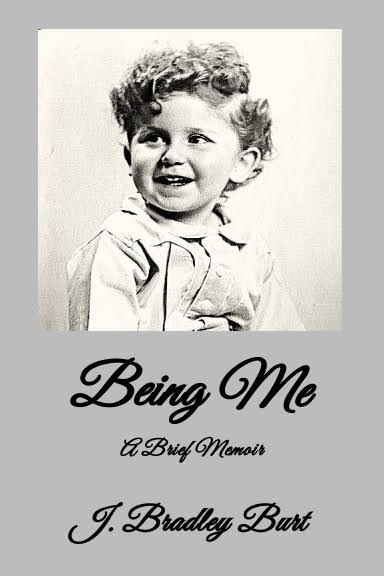
I’ve written a memoir, a brief history of my life intended for family only—my wife, my daughters and their husbands, my five grandchildren, and my three sisters—plus one friend of almost seventy years. The book, a mere 135 pages in length, is titled Being Me, and is not meant to be an exhaustive examination of my life to date. Rather, it’s a glimpse at who I was as a boy, who I became as a husband, father, and educator, who I am well into a blissful retirement, and who I strove to be throughout my life. It deals with those events I deem significant, things that might be of interest now or in future to my limited audience. The challenge I faced was not trying to decide what should be included, but what should be left out.
I’d love to think there’ll be enough yet to come to justify a sequel, but that seems rather unlikely. Dying holds no fear for me, but I will harbour a sizable amount of regret if that grim reaper lurches in too soon, for I’m having too much fun to want to leave.
It’s been said no one is ever truly dead to the world until the last person who remembers her or him is gone, and I think there’s something to that. My paternal grandfather died just before Christmas 1948, when I was five years old. But because I still remember him, vaguely—the only one in my family who does—he’s still alive in a way. When I finally pass, so, too, will he.
But I’m hopeful I’ll live on, as he has for me, in the memories of those precious ones I leave behind. And I pray those memories will be fond ones, at least for the most part, and that they’ll evince more laughter than tears.
I have more yesterdays now than tomorrows, but the inevitability of aging is but one aspect of life. If we so choose, we can relegate aging to a mere physical phenomenon, not one that has to affect our emotional outlook. The person looking out on the world from behind my eyes today is not the man whose image I see in the bathroom mirror every morning; rather, he is still the boy I always was—
from my aging eyes,
the boy I once was looks out---
hardly changed at all.
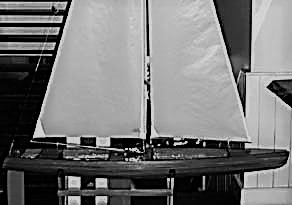
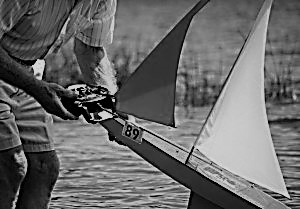
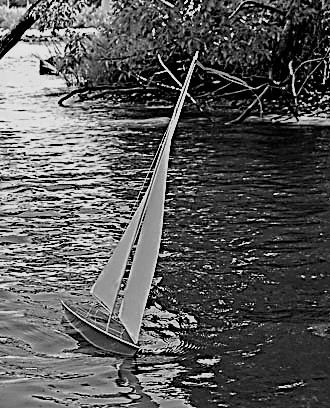
the sails of my youth,
once hoist, are often furled now,
‘though the winds still blow.
The winds do still blow, and I welcome them and am inspired by them, even if I can no longer respond as once I did. My children and grandchildren, thankfully, are caring enough to include me in their lives; my next adventure with Donna is always just over the horizon; my next book is already forming in my febrile imagination. These are the winds I speak of, and the physical frailties that age sends to plague me are unable to fully constrain me.
Prompted by our daughter’s interview idea, my wife also decided to write her memoir, titled My Story, and has asked me to help. As I read her recollections, I find many of the events she deems significant are those I also considered important. That shouldn’t be surprising, I suppose, considering we’ve been a couple since our first date in 1963, and married for fifty-seven years.
Neither memoir, of course, will answer all the questions our daughters or their families may ask about their heritage. But with any luck, they’ll go some way to filling in a few of the blanks. And who knows? Maybe on some far-off day in the future, long after I’ve gone on to my next adventure, one of my grandchildren—or perhaps one of their children—will want to know something about the old-timer who preceded them by a generation or two. No one will likely remember, but they’ll have my memoir to refer to for the answer.
I like to think it will be as if I’m still there to hear the question. And to answer by responding, “I can help with that!”






 tallandtruetales