In 1967, Canada’s 100th birthday, it seemed everyone had a centennial project. I was no exception, but mine was intensely personal. I married the young gal who had captured my heart four years earlier.
We’ve been married now in parts of seven decades, and recently celebrated our 59th anniversary—happily embarked upon our 60th year together, looking ahead to our diamond jubilee.
The celebration was dinner at a fine restaurant in the company of our two daughters and their husbands, and we were marking their anniversaries, as well—twenty-eight and twenty-six years, respectively.
The in-laws of one of our daughters celebrated their own 60th a week or so ago, having wed a year-less-a-day before we did. During the festivities, someone asked them if they could identify one essential factor that had enabled the longevity of their union.
And that question got me to thinking.
I first met the girl I would marry a few months before she turned seventeen, shortly after I had turned twenty. She served me an extra dollop of chocolate on my ice cream cone at the DQ window where she worked, and our attraction to each other was born in that moment.
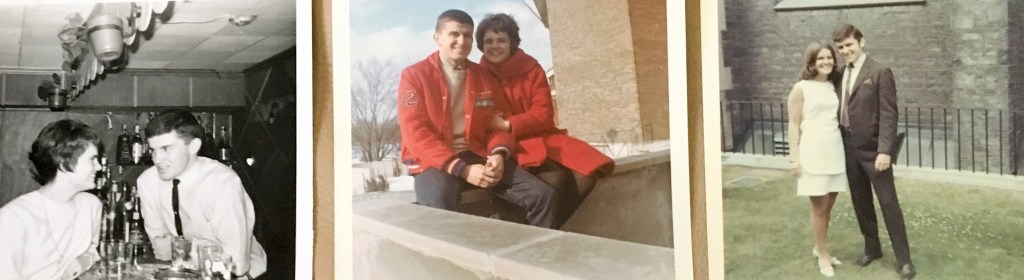
This is how I described it in Being Me, a memoir I wrote for family members:
It wasn’t long before I brought Donna home to meet my family, and every one of them fell in love with her. Graced with a beautiful smile and sparkling eyes to match, she captured their hearts as easily as she had mine. My mother was particularly enamoured of her, and not-so-subtly let me know this lissome lass was a keeper.
I recognized her beauty right away, of course, and soon learned she was also intelligent, vivacious, and athletic. But it was her composure that first captured me—her poise, her self-assurance, her confidence. I discovered she had a high moral standard for herself and for those around her, a standard I made sure to embrace. We dated steadily for four years (except during an interminably-long year when she was living hundreds of kilometres away with her family in northern Ontario).
In my memoir, I described that period:
During the long, forced separation, we talked to the extent we could afford the long-distance phone charges, and exchanged frequent letters. I went north to visit on Thanksgiving and Christmas…It was an excruciatingly lonely period for both of us, although we continued to enjoy a robust (if celibate) social life.
Throughout, we remained true to each other, and we married in our fifth summer after that fateful meeting.
So, what has held us in wedlock over the years since? What is that one essential factor, the glue, the tie that binds?
An easy answer would be enduring love for one another. But what exactly is love? And why might it endure?
A brief survey of the literature on the subject yields a list, far from complete, but including: vulnerability, the willingness to open oneself up to the other; compassion, the ability to de-centre and examine issues from the other’s viewpoint; curiosity, an enthusiasm for moving forward to discover and share life’s journey with the other; service, the willingness to sublimate one’s own desires to serve the other’s; intimacy, the encompassing of both friendship and sexual communion; connection, the ability to compromise when necessary and give more when needed; and commitment, the will to hold fast to the other, trusting in the other to return that devotion in the face of life’s unfolding.

Of these—all important, to be sure—the most significant to me is the last, commitment. And that would be my answer to the question asked of my daughter’s in-laws. Devotion and faithfulness are needed as we wend our way along the paths and roads we choose, and those chosen for us.
Life does not stand still, after all. The poet Kahlil Gibran phrased it beautifully this way:
…life goes not backward nor tarries with yesterday.
Our paths and roads have changed, circumstances have changed, people around us have changed. And of course we, too, have changed, the more so as we age. That lass I met sixty-four summers ago is an old woman now, and finds herself married to an old man. But our love, though different from the ardour of youth, remains steadfast. I cherish the way the poet W.B. Yeats wrote of his love for Maud Gonne:
…But one man loved the pilgrim Soul in you, And loved the sorrows of your changing face…
We are both more vulnerable now; more in need of compassion; still curious, but less able to pursue our quests; wanting to serve, but more needing of service; intimate still, but without the urgency of bygone youth; desiring still to connect, but aware of our shrinking circle.
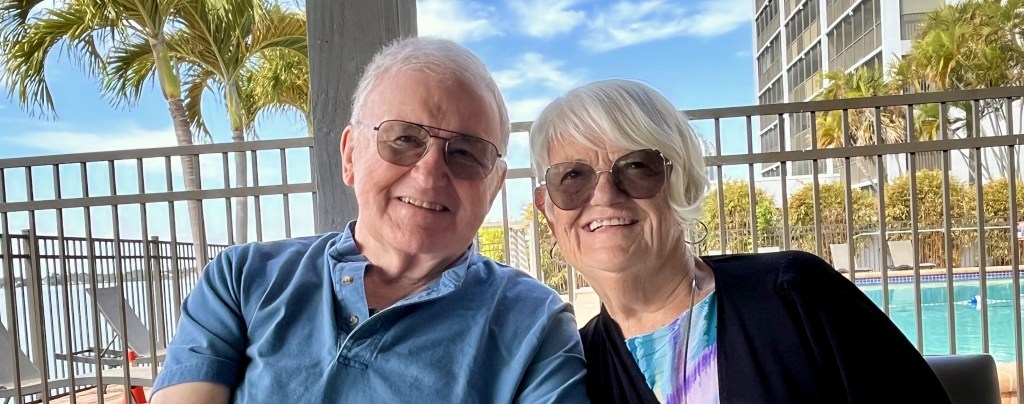
Our commitment to each other, however, is as deep-seated as ever it was.
In this beginning of our diamond jubilee year, we consider our meeting at that long-ago ice cream stand as the seminal moment in our lives. There was the time before; and ever since, there has been the time after.
Did I know how it would be when I accepted that double-dipped cone so many years ago? Did she? Who can say?
But here we are.