More and More Every Day

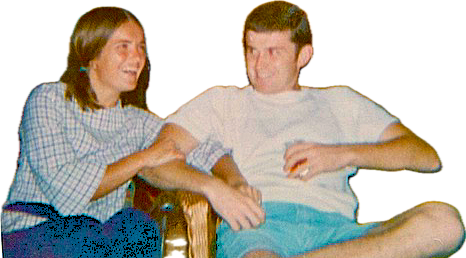
Earlier this week, I celebrated my wedding anniversary—fifty-eight years, all married to the same woman, the lissome lass I first dated when she was but sixteen.  We married four years later, embarked upon fulfilling careers, raised two lovely daughters, and retired to the life we now enjoy together…sixty-three years gone in the blink of an eye, it now seems. Egad!
Friends probably view the longevity and success of our union from my wife’s point of view as a triumph of iron will over probability. From my viewpoint, however, it’s unquestionably a victory of blessed good fortune over whatever random fate I would otherwise have encountered.

Recently, at the behest of our daughters, we each decided to write a short memoir of our lives, intended only for family and close friends.  Mine, titled Being Me, is finished and in the hands of those I care most about; hers, titled My Story, is nearing completion. The trick, as we discovered in the writing, lay in knowing, not what to include, but what to leave out.

As we wrote, we shared memories sparked by old photos, slides, and home-movies produced through the years.  We were amazed by how much we had forgotten over time, and by how different our fuzzy memories sometimes were as we discussed the same events.

“That’s not how it happened!” I found myself declaring more than once, only to have my wife show me a faded snapshot that proved otherwise.  Admittedly, I’ve always had trouble remembering dates, so casting back to those bygone years wasn’t child’s play for me.

By the way, that trouble with dates persists even now, alas.  I recently showed up for a colonoscopy procedure after enduring the requisite purging prior to the visit, only to find I had the right day, the right time, but the wrong year! I was a whole year early! I’m still living that one down.

Through most of our marriage, my wife and I were enthusiastic participants in sports—baseball, curling, golf, hockey, tennis, skiing, swimming, to name but a few—both competitively and recreationally.  As we eased our way through middle age, entering inevitably into our senior years, many of those began to fall away. We found we could no longer glide across the arena or playing field with the same visions of grace and glory we’d previously enjoyed.  Father Time vanquishes everyone, we discovered, no matter how skilled or practised we might be.

An example for me was falling down in my follow-through a few times on the tee-boxes while smoking drives I’d always hit routinely…well, maybe not always, but occasionally.  My playing partners advised me to start wearing a bicycle helmet if I wanted to continue playing.

My exercise today consists of activities where I can’t fall down or off something. I favour the rowing machine, the treadmill (if I hang on), the stationary bike, or exercises conducted while lying on the floor.  Although not a Latin scholar, I find myself chanting under my breath as I work out: sic transit gloria mundi!

As with many things in a long marriage, my wife and I found we had to adjust and change to meet these new demands.  She spends the bulk of her time now, when she’s not reading or doing jigsaw puzzles, making gifts for family and friends out of clay, dichroic glass, and wood, an accomplished artisan.  I call her my boon companion in the arts.

Much of my time, of course, is spent writing—novels, anthologies of tales and poems, and posts on my blog—and listening to classical music.  I’m a prolific reader, as well, and give thanks constantly for online libraries.

Perhaps the biggest change for us is that we no longer find our children and grandchildren to be part of our lives, sharing our experiences; rather, we have become part of their lives, eagerly sharing their accomplishments and happenings. It is we who are the supporting actors now, and they the stars in the unfolding movies of their lives.  We’ve also discovered that this change is very comforting, to be loved and cared for by these essential people in our lives, even as ours wind down.

We still look ahead, however, to each new adventure that might come our way. One of my haiku poems illustrates that philosophy quite clearly—

more yesterdays now
than tomorrows, but it’s the
tomorrows that count


the sails of our youth,
once hoist, are mostly furled now---
though the winds still blow

Back in 1964, when we were still dating prior to marrying, a popular singer, Al Martino, released one of his biggest hits, I Love You More and More Every Day. We adopted that as ‘our song’, and we used to sing snatches of it to each other.  Over the years, it faded for some reason from our minds, although we never abandoned its premise.  But I thought of that song on my recent anniversary day, and began to sing it to myself.  I had to look up the lyrics, of course, after all this time, but the melody was etched in my memory.

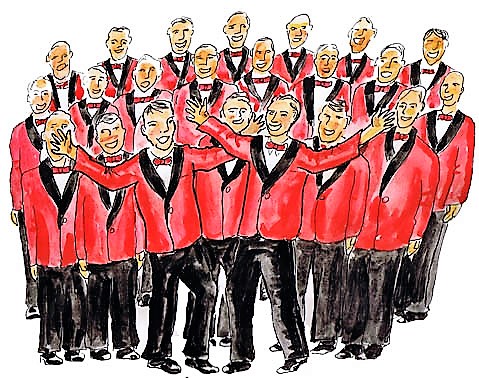
On a whim, I decided to record myself singing it on a karaoke track to present to my wife. Although I used to sing bass in a men’s a cappella barbershop chorus, my octogenarian voice is a tad quavery and shrill now, and my range is somewhat limited.  Nevertheless, the sincerity of my singing has not abated, and she at least recognized the song. Sort of.

As I think back to when she and I first met, as I try to remember all that has happened since, as I marvel at the lasting of our union, I find myself overwhelmingly grateful that we celebrated this latest anniversary together, and I offer this haiku to her to reflect those sentiments—

impossible dream!
many might have thought so, but
you made it come true

trusting all that’s passed,
moving forward in good faith,
hands clasped as always


Singin’ the Songs

Regular readers here will know of my love for music in my life, whether performed by professional musicians in a concert hall or robust amateurs at a party.  I have genres I prefer, of course, as do most people, and I generally fancy instrumental versions of favourite songs to vocal renditions.  I find them more soothing, more conducive to creative thought and activity.

Most of my listening time occurs when I’m writing, as is the case right now, penning this essay, my head clad in earphones.  My first and abiding love is classical music—likely due the influence of my father, who often fell asleep with me on my bed at night as we listened to radio broadcasts of the great symphonies.  He frequently had stories to accompany the music, too, which made it all the more special.

When I started school, one of my favourite activities was song-time, when the teacher would teach me and my classmates a new song.  Not all of us were thrilled, of course, but I was ever enthralled.  To this day, I love to join in the enthusiastic chorusing of the old songs with a group of friends.

And I can still remember (and occasionally sing to myself) some of those silly, little ditties we were taught in kindergarten and grade 1—

Your pail and shovel and wheelbarrow bring,
Let’s plant us a garden this morning in spring.
Dig little trenches, pull out all the weeds,
Pour in some water, and drop in the seeds.

Or this one—

Little yellow bird, little yellow bird,
Come flying with me.
We will build us a cozy corner
In the old apple tree.

There was one I particularly liked, although the lyrics saddened me—

“Come away,” sang the river to the leaves on the trees.
“Let me take you on a journey, and the world you will see.”
So, the leaves gently falling from the trees on the shore
Float away on the river, to come home nevermore.

It might have been the final phrase that bothered me, that they would never find their way home.  But the melody was lovely.

Making friends was very important to one just starting school, so this song had special meaning—

Make new friends, but keep the old.
One is silver, and the other gold.

At my advanced age now, the inherent truth of that sentiment has been borne out countless times.

Our earliest foray into the magic of the French language began with this song about a skylark, Alouette—

Alouette, gentille alouette,
Alouette, je te plumerai.
Je te plumerai la tête,
Et la tête, et la tête,
Alouette, Alouette
Oh-h-h-h-h...
Alouette, gentille alouette,
Alouette, je te plumerai.

There were several verses to this one, substituting le bec, le cou, les ailes, le dos, les pattes, and la queue for la tête, and the chorus had to include every one of them as they were introduced.  But we loved the challenge!

As little ones, we were always encouraged to be active and happy, and to let people know how we felt.  This song allowed us a way to do just that—

If you’re happy and you know it, clap your hands!
If you’re happy and you know it, and you really want to show it,
If you’re happy and you know it, clap your hands!

There were many variations on clapping your hands as we sang that one, and all of them caused much joy and laughter.

One of the songs I especially liked was this one, seeking love and happiness—

You are my sunshine, my only sunshine,
You make me happy when skies are gray.
You’ll never know, dear, how much I love you.
Please don’t take my sunshine away.

Over these past few years, I’ve been fortunate enough to spend many happy hours singing with a men’s chorus, and a fuller version of this is still one of our staples.  I’ve included a video clip that you will surely enjoy—

It’s seventy years and more since I learned many of these songs, and I’m amazed by the joy they still bring me.  After all this time, there are fewer things more fun than singin’ the songs.

Songs I Remember

For as long as I can remember, songs have been a major part of my life.  Even before memory, my mother was singing to me in the cradle.  And during my boyhood years, my dad constantly shared his love of music.

To this day, I remember many of the songs my mother sang: I Wonder Who’s Kissing Her Now, Sweet Little Alice Blue Gown, Always, What’ll I Do, and too many more to mention.

And I remember the classical music my dad and I would listen to on the radio as he tucked me in at bedtime: Prelude to Act III of Lohengrin, William Tell Overture, Light Cavalry Overture, Rhapsody In Blue, and so many others.  To this day, it’s my favourite genre, playing in my earbuds whenever I write.

When I started school, I discovered to my delight that learning new songs was a part of my curriculum, and I still remember the words and tunes to many of them—

Oats and beans and barley grow, oats and beans and barley grow,

You and I and everyone know how oats and beans and barley grow.

I didn’t actually know how those crops grew, of course, not then, but I learned the song and sang it endlessly.

Your rake and shovel and wheelbarrow bring,

Let’s plant us a garden this morning in spring,

Dig little trenches, pull out all the weeds,

Pour in some water and drop in the seeds.

I’ve never really liked gardening, but I did like singing that song.

While strolling through the park one day

In the merry, merry month of May,

I was taken by surprise by a pair of roguish eyes

While strolling through the park one day.

As a youngster, I had no idea what ‘roguish eyes’ were, but the lilting tune and the idea of being in the park instead of the classroom were appealing.  I even performed a tap-dance recital to that song.

“Come away,” sang the river to the leaves on a tree,

“Let me take you on a journey, and the world you will see.”

So, the leaves gently falling from the tree on the shore

Float away on the river to come home nevermore.

This one made me sad, and does even now, at the thought that those leaves would never come home again.  I couldn’t wrap my head around that.  Home, it seemed to me back then, was forever.

And so was singing, and music in general.  And thus it was that, sixty-plus years after starting school, I joined the bass section of a men’s barbershop chorus, eighty voices strong, where I found I could chime in on so many other songs I remembered from my youth: All Of Me, You Belong To Me, Let Me Call You Sweetheart, Loch Lomond, Peg O’ My Heart, Sentimental Journey, You Are My Sunshine, Me And My Shadow, and more just like those.

Singing with the chorus had become a bucket-list item for me by then, something I wish I’d done years before.  The harmonies and chords rippling down over the risers brought goosepimples every time, and once in a while I would even stop singing, the better to listen…surreptitiously, of course.

I’ve had to step down now, but here’s an audio clip of a recent performance, which I trust you’ll enjoy (best with earphones)—

I hope the last sound I ever hear, whenever that time may come, will be songs in my ear—sung by my mother, perhaps, or shared by my dad.  I’d be happy to hear any of these: Fare Thee Well, I’ll Be Seeing You, or even Beethoven’s Emperor Concerto.

As Edward Bulwer-Lytton wrote, Music, once admitted to the soul, becomes a sort of spirit, and never dies.

My Whiffenpoof

The weekly prompt from my Florida writers’ group was to write a piece incorporating a song lyric, even a misunderstood one. I chose to use a complete song, but with its meaning and setting skewed from its real attribution for purposes of fiction.

The young lad’s voice was pleasant enough, if a tad off-key here and there, and he held his beer-drinking audience rapt as he began singing the song.

To the tables down at Mory’s, to the place where Louie dwells,
To the dear old Temple Bar we love so well,
Sing the Whiffenpoofs assembled with our glasses raised on high,
And the magic of our singing casts a spell…

“What’s a Whiffenpoof?” old Hardy McKinnon yelled out rudely, slamming his empty glass down on the table in front of him, half-cut already, though the evening was young.  “Sounds like a fart!  One o’ them SBD ones!”

The lad stopped singing, joined in the laughter that followed, then said, “SBD?  What’s SBD?”

“Silent but deadly!” McKinnon’s wife cried, pointing at her husband, beckoning to me for another round as the laughter erupted again.

“Quiet, ye lot!” I shouted from behind the bar where I’d been drawing another tray of drafts.  “Let the boy sing his song!”

Indeed, he did look more a boy than a man, sitting there in his khaki uniform, the cuff of one sleeve pinned to his left shoulder where his arm should have been—the only one to return of five village lads who had marched proudly to the train station two long years ago, off to fight the foe for King and country. 

The polished medal at the end of the ribbon round his neck testified to his gallantry and sacrifice—the Victoria Cross, awarded for valour in the face of the enemy, the highest military award the nation could offer.  It had been presented by none other than King George himself, and I’d been there to witness it.

“Let him sing!” I cried once more into the clamour, and it subsided quickly as Jimmy took up his song again.

Yes, the magic of our singing of the songs we love so well---
‘Shall I Wasting’ and ‘Mavourneen’ and the rest---
We will serenade our Louie while life and voice do last,
Then we’ll pass and be forgotten with the rest…

The eyes of almost everyone were fixed steadily on the lad as he sang, the words and melody casting a solemn pall over the room.  Those who weren’t looking at him were staring emptily into space with that thousand-yard stare I used to see in my Robert’s eyes after he came home from fighting the Boers.  He never spoke of the horrors, nor of the comrades he’d lost, but I knew they’d been with him ‘til the day he died.

I’d held on to the business after he passed, McSorley’s Old Ale House being the only home I had, and the only pub for miles around—a gathering-place as sacred to its patrons in its own way as the Church of England ever could be.

“Aye, Jimmy, sing some more!” Angus MacPherson said softly into the silence.  “Sing the chorus for us, lad!” 

Jimmy drank deeply from the new pint I’d set in front of him, wiped the foam from his mouth with his one hand, and when he started in again, many of the assembled joined in, the words as familiar to them as the faces in their mirrors—

We’re poor little lambs who have lost our way,
Baa, baa, baa!
We’re little black sheep who have gone astray,
Baa, baa, baa!
Gentlemen songsters out on a spree, doomed from here to eternity,
Lord, have mercy on such as we,
Baa, baa, baa!

My tears glistened on the polished, wooden surface of the bar, and I scrubbed them away furiously with my rag.  Most of the old warriors who’d been singing along were weeping, too—silent tears tracking down their grizzled, ruddy cheeks, only to be swallowed up and lost in their scraggly beards, just as their innocent youth had been torn from them by the long-ago battles they had fought for the fading Empire.

In the silence that blanketed the normally-boisterous room, Jimmy stood up, finished his pint, then walked wearily over to the bar, waving shyly to the crowd.  “I’ll be headin’ up now,” he whispered with a sad smile.  “Shout me up when yer closin’, an’ I’ll be back down to help.”

“Shure, an’ I’ll be doin’ that very thing,” I said, knowing full well I would not.  The boy was bone-tired, I could tell, and needing his sleep—if sleep would come.  I watched as he mounted the narrow staircase, his steps heavy, his one hand on the banister, his chin sunk low on his chest.  I couldn’t see his medal, but I know it weighed heavy on him.  He’d have given it back in an instant if it meant the return of his fallen friends.

“He’s a good lad, young Jimmy!” Liam Dewar shouted, his half-empty pint raised high.  “A noble warrior, an’ a damn fine singer!”

“Three cheers for Jimmy!” Molly Malone cried, a bit unsteady on her feet, trying not to show it.   She was sweet on Jimmy, I knew, but trying not to show that, either.  The crowd joined in, as did I—Huzzah!  Huzzah!  Huzzah!

And then another song broke out, this time led by the lovely tenor voice of the vicar, the Reverend Alastair Holmes, and everyone took up the tune—

It’s a long way to Tipperary, it’s a long way to go,
It’s a long way to Tipperary, to the sweetest girl I know…

And I thought about the long way home young Jimmy had taken—the journey from carefree boyhood to the blood-soaked trenches of Europe, and back again—mutilated and scarred, perhaps forever.  And for what?  For three cheers and a piece of tin around his neck?

My tears began anew, but tears of gratitude this time—gratitude that, unlike so many other mothers’ sons, he was home again.

My Whiffenpoof.

My boy.

So Far, So Good!

I have a friend who claims his goal in life is to live forever.

“How’s it going so far?” I ask him.

“So far, so good!” he replies with a grin.

As I approach my eightieth year—having been alive for all or parts of nine different decades, the first being the 1940s—I don’t share that lofty goal, to be an eternal Methuselah.  I confess, though, my friend does have me wondering about my chances.  So far, I have lived out more years than three grandparents, three uncles, two of five aunts, and all four of my younger siblings (one of whom has already passed).

I’m currently the eldest of my surviving birth-clan, which includes three sisters, two daughters, and five grandchildren.  My wife, almost four years my junior (strictly speaking, not a birth-relative), is also with us.

If I am destined to live longer than anyone in my family so far, I’ll have to make it through another fifteen years, which will leave me just five shy of my centenary.  One grandmother made it to ninety, three aunts lived into their early-nineties, mostly intact, as did both my parents, so my genetic coding bodes well.

One goal I do have, perhaps more realistic than my friend’s, is to spend more years in retirement than I spent during my professional career.  I worked for thirty-two years and retired at fifty-five, leaving me eight years to go before attaining that goal when I reach eighty-eight.  So far, so good!

Back when I was a young thirty-ish man involved in several athletic pursuits, I used to joke that, if I had to die anytime soon, the best exit would come while sliding into third base, the game-winning run scoring ahead of me, with the last words I hear being the umpire bawling, “He’s safe!”

Older now, and less-inclined to make light of matters mortal, I’m pleased to say that goal was never realized.  I’m still alive, no longer playing ball, and so far, so good!

As an aside, one of my more ribald teammates claimed his goal—never one of mine—was to die in bed, shot to death by an irate husband.  To my knowledge, absent a willing bed-mate, he also never attained his dream.  But I digress.

Baseball is not the only pursuit I have forsaken as the years have mounted up.  Badminton, curling, cycling, golf, ice-hockey, in-line skating, and tennis are also sports I have abandoned in recent years.  The main reason, given that I wish I could still partake in all of them, is that I came to fear major physical damage if I should come a-cropper.  The risks began to outweigh the rewards, and I became determined not to end my life as an invalid. 

These sacrifices notwithstanding, I certainly had no wish to finish my time on earth as a couch-potato, either.  So, I still visit the gym to engage in low-impact activities such as rowing, weightlifting (low weights/high reps), and stretching exercises.  I walk the corridors and stairs of my high-rise condo, and I still swim, although not as many laps as once I could manage.  My goal is to stay active and limber, and so far, so good!

Paying attention to my personal health is a much greater priority now, too.  I still remember an occasion (again, in my feckless thirties), when I called my doctor’s office to make an appointment for a physical exam.  The receptionist couldn’t find my records for the longest time, and when she came back on the line, she said, “Okay, we’re good.  I found them in the dead file.”

“The dead file!” I exclaimed.  “What made you think I’d died?”

With a chuckle, she explained the dead file was the repository for records of patients who had not made an appointment during the previous five years.  Five years!  I was shocked to be informed it had been that long.

These days, of course, having lived into my ninth decade, I see my doctor much more regularly.  My goal is to stay ahead of ailments that might slow me down, or put a crimp in the comfortable lifestyle I now enjoy. 

That current, comfortable existence includes singing in a men’s a cappella chorus, a most enjoyable experience, still part of a team.  It includes spending hours each day writing essays and poems for a regular blog, tales for a number of published anthologies, and stories for a series of published crime-fiction novels.  I’m having the time of my life right now, as a matter of fact, and hope I can go on doing these things for a long time to come.  So far, so good!

My wife and I are fortunate to be able to split our time between a home in Ontario and another in Florida.  Each autumn, and again each spring, as our time in one draws closer to its end, we begin to look forward to our return to the other.  Aside from the normal concerns associated with home-ownership, we find it’s an idyllic way to live, and we eagerly anticipate each change of the season. 

In the unlikely event it turns out my friend is able to realize his own goal to live forever, I know he’ll bid me a fond farewell when my time comes, as it surely will.

But you know what?  So far, so good! 

Karao-kay!

So, here’s the thing—you don’t have to be a good singer!  You don’t even have to be a mediocre singer!  All you need is that you like to sing.

For some time now, as some of you know, I’ve blended my bass voice with mates on the risers of a large men’s chorus, the mighty Harbourtown Sound.  And it’s been a comfort to me to know that no one listening would actually be able to pick my voice out of the throng.  I mean, I do contribute to the wondrous wall of sound we produce collectively, but my solo voice is anonymous, much to my liking.

However, on my last birthday, which took me past my mid-mid-seventies, my wife and two daughters gifted me with a karaoke machine.  Never in my wildest imaginings would I have thought to ask for such a thing—although, in my younger years, I did take part in more than one karaoke session, usually after a few beers in the company of good friends whose critical faculties were undoubtedly somewhat impaired.  In fact, I think I remember stepping up in one or two open-mic sessions, as well.

As I recall, I was never asked back to the same venue twice.

Still, I’ve discovered I love my new machine.  The internet is chock-full of karaoke versions of popular songs, arranged exactly as the original artists sang them, with the correct lyrics scrolling on the screen.  Copyright restrictions apply only if one intends to use them for commercial purposes, which I most assuredly do not.  After all, if it were my intent to sell any of the songs I record, I’d need a buyer, right? 

‘Nuff said.

Ballads are my preferred genre, some of them even older than I.  A partial list of artists whose songs I have attempted includes Pat Boone, Johnny Cash, Patsy Cline, Kris Kristofferson, Johnny Mathis, Willie Nelson, Jim Reeves, and Frank Sinatra.

Still to come, I hope:  Perry Como, Tennessee Ernie Ford, John Gary, perhaps even Pavarotti!  After all, I’m singing for an audience of one!

I’ve also essayed solo versions of songs by several different groups, including Abba, Simon & Garfunkel, The Beach Boys, The Irish Rovers, and The Platters.  Still on the horizon: The Everly Brothers, The Lettermen, The Seekers, and probably others I haven’t yet contemplated.

If you have assumed by now that my wife and daughters have inadvertently created a monster, I could hardly gainsay you.  But I’m benign, I assure you.

My process is to sit with the machine, which is connected by Bluetooth to a song dialled up on my laptop.  I sing it through a couple of times, adjusting the volume of the instrumentals as needed, boosting the mic volume up or down accordingly.  There is a reverb feature, too, which enhances my voice on most of the songs.

If I manage at some point to sound okay to my own ears, I record the song and add it to my little library.  Some of the songs, as you might imagine, are never recorded!

I quickly discover which of the songs will take me beyond my somewhat limited vocal range, and discard them.  Even with my bass singing voice, I can manage a falsetto if not too high, so that helps a little.  Breath control is the biggest single problem I encounter—running out of air before a phrase ends is never good, resulting in a cracked whimper that brings no joy to anyone ever.

Pitch problems are a concern, too, and I sometimes hear myself landing just short of the intended note—what a layperson might call singing flat.  That’s also associated with running short of breath, and can be corrected with proper breathing intervals.  I have yet to record even one song, however, without at least one pitchy problem.

But who cares!

I mentioned earlier that I sing for an audience of one.  That’s not entirely true, though, because I do send along those songs I’ve recorded to my wife and daughters—it’s they, after all, who unleashed the monster.  I also forward the recordings to my three long-suffering sisters, together with a plea that they resist the urge to tell me to stop.  I suggest to them they have three choices—

  1. enjoy the song,
  2. endure the song, or
  3. DELETE.

I implore them not to laugh as they listen (though I’ll never know if they do), nor compare me to the original artist.  Rather, I ask that they think of this as one, perhaps forlorn, attempt to make music with only a modicum of talent, for no other reason than the sheer joy of making music. 

And you, dear reader, might even try it yourself—in the shower, in your car—or, if you’re lucky, on your very own karaoke machine.

Karao-kay!

Metaphysically

During this pandemic lockdown in which we all are bound, it is all too easy to surrender to despair.  But, always, there are pathways to freedom we can find if we look hard enough.  Here are a few of mine, in haiku form—

physically bound,

but metaphysically

I wander freely

metaphysical 1

on wings of sweet song,

I rise above the earthbound

shackles of my life

singing 2b

my literary

scribblings whisk me to a world

that I alone know

writing 2

phantasmical dreams—

delights from which I awake

most reluctantly

dreams 2

omnipresent, too,

the love, which for sixty years

has sustained my soul

love 1

physically bound,

yes; metaphysically,

I am ever free

waiting-and-watching-a-sunset


Top 24!

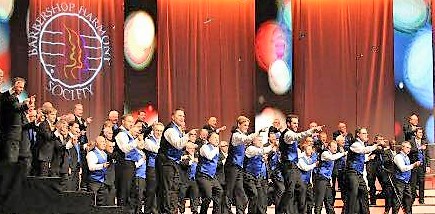
The men’s barbershop chorus I sing with, Harbourtown Sound, competed recently in Orlando FL, at the 2018 International Convention of the Barbershop Harmony Society.  The BHS boasts more than a thousand active men’s choruses, most of them in North America.

on stage

Member choruses also hail from such faraway places as Australia, Finland, Germany, Ireland, Netherlands, New Zealand, the UK, South Africa, Spain, and Sweden.  Barbershop quartets are included in the society, as well, bringing the total number of active singers to more than 80,000 worldwide.

The BHS was formally established in 1938 as the Society for the Preservation and Encouragement of Barber Shop Quartet Singing in America (SPEBSQSA).  The current name was adopted in 2004.

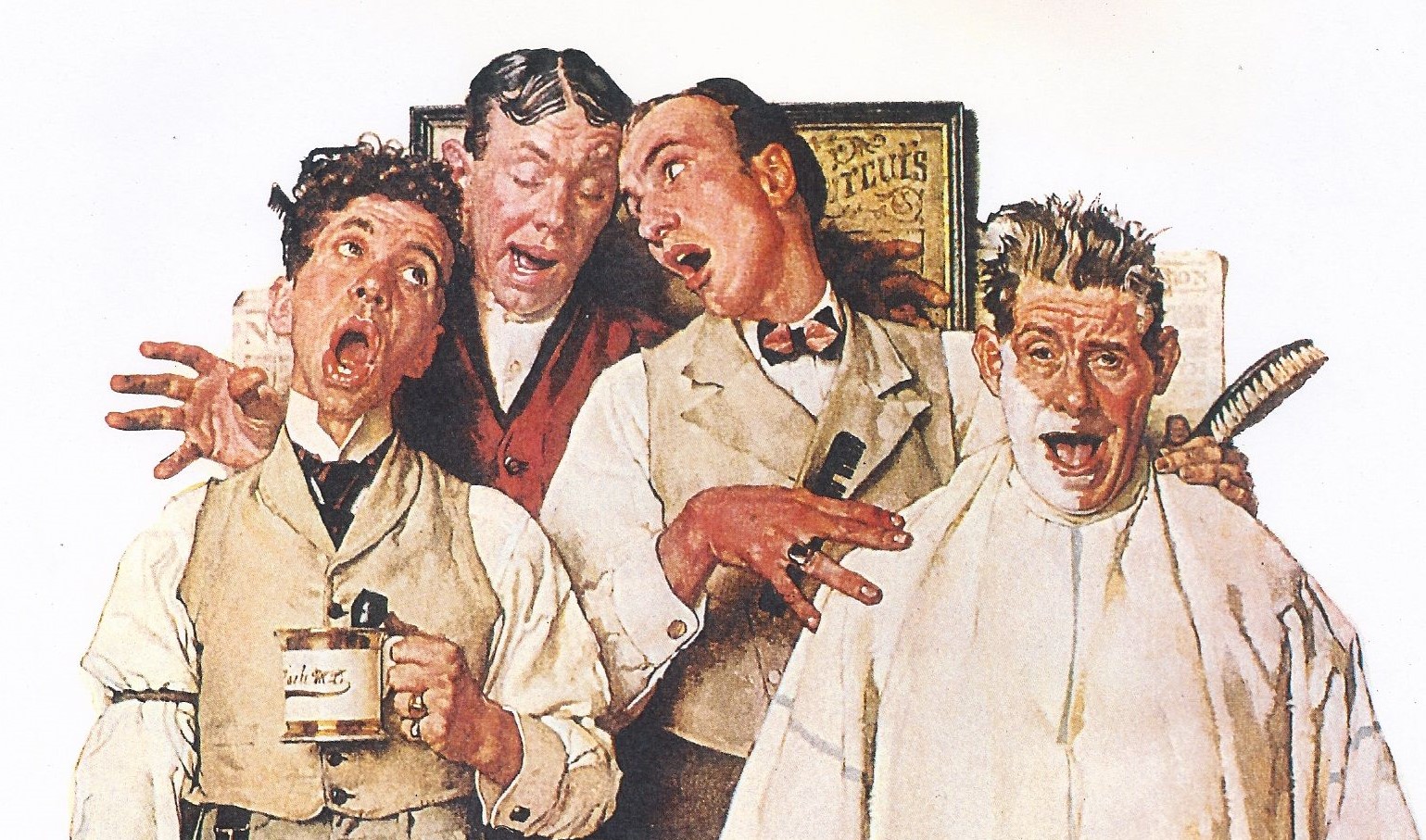
quartet

Membership in the society is open to everyone—people of every age, background, gender-identity, race, sexual orientation, political opinion, or spiritual belief. Every person who loves to harmonize has a place in the society.  The BHS vision is to bring people together in fellowship to enrich lives through singing.

It has certainly enriched mine.  Raised in a family that loved to gather ‘round the old upright piano for sing-songs at every gathering, I learned the words to so many songs from the 40’s, the ‘30’s, and even earlier before I was ten years old.  For a long time, my favourite singer was Al Jolson, for goodness sake!

For reasons that escape me, however, I never pursued a music education.  Not until I was cajoled a couple of years ago to audition for Harbourtown Sound, did I even sing in a choir.  But I was always a singer, mostly in the shower, sometimes in karaoke, and frequently while alone in my car.  And I always the loved the good old harmonies.

Now I get to sing many of them, and more, with a group of brothers on a weekly basis—and in performance in front of live audiences on frequent occasions throughout the year.  What’s not to like!

final rehearsal

Our chorus—almost a hundred men strong, most of us at or beyond the venerable threescore-and-ten—is not of the calibre of the top choruses in the world.  But of all such groups worldwide, we do rank in the top 24, based on the results of our recent competition.  We’re proud of that.

The 2018 champion is a chorus of more than 150 men from Dallas TX, Vocal Majority, a group that has won the title thirteen times dating back to 1975.  Listening to them is an emotional happening.

But so, too, is listening to us.  And you don’t have to just take my word for it.  Many of our songs—including Bridge Over Troubled Water, Five Foot Two, Hallelujah, That’s Life, Your Cheatin’ Heart, You Belong With Me, and You’ll Never Walk Alone—are available on YouTube.  A performance of one of them may be found right here—

I’m sure you’ll agree with my assessment after giving us a listen.  After all, in the whole wide world of barbershop singing, Harbourtown Sound is near the top.

Top 24, in fact!


Music in Muskoka

It never crossed my mind on that rainy, August Saturday in 1967—our wedding day, as we stood on the threshold of our future together—that our golden anniversary would eventually arrive.  And now, fifty years on, it has.

Symbolic occasions have never resonated loudly with me, for whatever reason.  My wife and I have always celebrated family birthdays, of course, especially those of our children and grandchildren.  Wedding anniversaries, however, have come and gone with very little fanfare—although not without a sense of gratitude for our good fortune.

But it occurred to us a while back that, when two strong, independent people are able to spend fifty years with each other, weathering the storms and cherishing the good times, it is no small feat.  It is, in our case, a triumph of symbiosis over autonomy.  And so, we resolved to celebrate this one.

Our wedding coincided with Canada’s 100th year as a nation; indeed, we joked that getting married was our centennial project.  Now, as the country celebrates its sesquicentennial, we marvel that we have been married for fully a third of its existence.

For some time, we cast about for ideas as to how we might mark the momentous occasion.  We consulted with friends who have already achieved the milestone, we spoke with our children, and we talked with each other, long into the night many times, searching for the perfect way to celebrate.

You’ll never guess what has come to be.

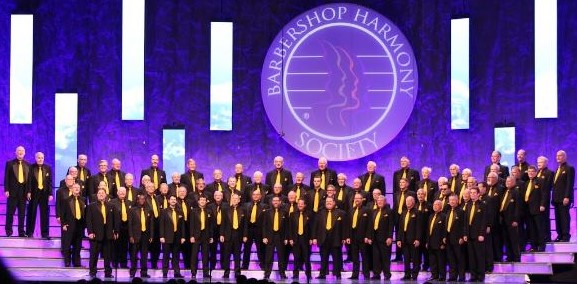
On the very anniversary date of our nuptials, my wife will be a member of the audience in a darkened theatre, while I, a lifelong singer of songs (but never publicly), will be sharing the stage with my comrades in a barbershop harmony chorus, sixty-five-men strong, for a night of music in Muskoka.

Had you asked me those fifty long years ago if I thought such a situation could ever come to be, I’d have regarded you as mad.  Yet, there I shall be, one voice among many in the mighty Harbourtown Sound, singing my heart out.

International_2015_wide_shot

This being Canada’s 150th birthday year, the programme will contain several songs of Canadiana, two of which you may hear now, should you choose.  The first is Fare Thee Well, written by John Rankin of Nova Scotia—


The second, Hallelujah, is from Leonard Cohen, and one of our favourites to perform.  It may be found at the end of this post.

Both songs will be sung in harmony with our hosts for the concert, the Muskoka Music Men, a local barbershop chorus.  Our chorus will be singing several other songs, as well, including selections from Broadway, Motown, and the more traditional barbershop canon.

My wife and I did take an extended trip earlier in the spring, as part of our golden year, and we shall be together with our children and grandchildren for a special celebration later in the summer.  So the concert is not a one-off commemoration of our special year, just one part of it.

Given my love for the music, I can’t think of a more enjoyable way to end the journey to fifty years, and begin the voyage to sixty years, our diamond anniversary.  And for that prospect, I offer up, Hallelujah

Music Has Charms

front

As a famous Paul Anka lyric has it, …Regrets, I’ve had a few/But then again, too few to mention…

I do frequently mention one regret, however, an abiding sorrow that I didn’t study music when I was in high school.  Having been raised in a family where music was an ever-present part of our daily lives—to the point where I and my siblings to this day get a sing-song going whenever we’re together—it’s almost incomprehensible to me that I eschewed the opportunity to acquire formal training.

All the more so when I remember that the lead music teacher at our high school would go on to become one of the country’s leading choral directors—Elmer Iseler, conductor of the Toronto Mendelssohn Choir, founder of the Festival Singers of Canada and the Elmer Iseler Singers.  What a doofus I was!

iseler

With a stunningly callow arrogance, I suppose I dismissed the music students, some of whom were good friends, as too effete for the teenage machismo I was probably trying to cultivate.

I regret that.

As a youngster, I often found myself surreptitiously curled up, late at night, on the landing of the stairs in our home, listening to the singing of my parents and their friends from the parlor where the piano sat.  One of our neighbours was a gifted pianist, and he knew all the oldies—Frivola Sal, After You’ve Gone, What’ll I Do, Rose of Tralee, Sweet Georgia Brown, Rockabye Your Baby, Danny Boy, Sonny Boy, For Me and My Gal—and so many more.  Even fifty-plus years on, I know all the lyrics to dozens of their repertoire (sometimes now with a little prompting), and my favourite singer is still Al Jolson.

My mother loved the torch songs, and she’d vamp a little when she sang, a woman born to be a headliner.  My father favoured the oldies, and was very good with the harmonies (although he occasionally had to be reminded of the decibel level).  He absolutely loved barbershop quartets.

So many times there were that he would find me fast asleep on the landing after the last chorus had been sung.  For a long time, I never knew how I drifted off on the stairs and awakened in my bed.  I only knew that I loved the singing of the songs, and the singers who sang them.

The only singing I have done since those childhood days (other than alone in the shower) is at family gatherings, or occasionally at karaoke parties (with beer).  But the music gene was definitely passed along to my two daughters, both of whom have been singing, together and on their own, since their pre-school days.  They’ve even written songs together, ballads mostly, which I hum along to.

Recently, my wife and I attended a concert mounted by a local men’s chorus, a 108-man, traditional barbershop harmony group, but one that branches out into a cappella jazz, swing, soft rock, pop, traditional, and inspirational music.  The concert was superb, and we were fortunate to be invited to an after-party by one of the members (not-so-coincidentally, a golfing friend).

choir

And guess what!  Some of the choristers at that party gathered ‘round each other to sing some of the oldies, an impromptu concert.  And guess what else!  I sidled over, inched close to their circle, and joined my voice to theirs.  Tentatively at first, not wanting to spoil the beauty of their chorus, but then more confidently when two of them parted to make room for me.  I knew all the words, of course, and we belted out a few classics—When You Wore a Tulip, Daddy’s Little Girl (a personal favourite), Oh! You Beautiful Doll, and That Old Gang of Mine.  I could almost hear my father joining in beside me.

My wife told me later that I fit right in.  In fact, she said, some of the others at the party told her they assumed I was part of the chorus.  I stared at her, sure she was having me on, but she was apparently telling the truth.  And that was music to my ears (if you’ll pardon the pun).

Even better, however, was an invitation from several of the chorus members to try out for the group.  Attendance at three rehearsals, where I would be assessed to find my voice part placement, would be followed by an audition performance with three of the established singers as part of a quartet.  And then I’d either be in, or out.

I’ve never been part of a quartet in the shower, where my best solos have been rendered, so this public audition would be somewhat intimidating.  Plus, I have never been much of a joiner in groups of any sort, so making a commitment to this would be quite a change.

Still, I do regret passing up my first chance those many years ago.  All those yesterdays when I could have been singing joyously with like-minded choristers are gone forever.  But I do have a few tomorrows ahead of me.  And I do like to belt them out.  So, we shall see.

More than three hundred years ago, in his comedy of manners, The Mourning Bride, William Congreve wrote this—Musick has charms to soothe the savage breast…

Well, I am no savage, but it may well be that music could soothe the sadness I have carried with me since high school.

I’ll have to warn them, though, that I cannot hit the high C!