The Physics of Music

If this entire post appears in the body of your email, click the title to read it in its tallandtruetales blog setting.

More years ago than I care to count, I took my one and only high school physics class. I was overwhelmed.

In fairness, so was the poor teacher. He spoke with an accent, and his most oft-uttered plea was, “Please-a! You have-a to pay attention-a!”

Needless to say, most of us did not. Unlike many of my peers, I was never a prime disruptor of high school classes, most of which I enjoyed, but I was definitely one of those not paying much attention in physics class.

As I recall, we all passed the course. But I’m sure some of us, myself included, were awarded a passing grade by that teacher only to ensure he would not have to face us again in the following semester.

In the threescore-and-five years since then, I have learned—first to my chagrin, eventually to my delight—that it is the laws of physics that govern the universe we inhabit, and everything in it. Alas, I really should have paid more attention.

The physics of music is one example. One of my favourite pastimes while writing, reading, driving—pretty much anything—is listening to music. I enjoy big band arrangements, ‘40s swing, ‘50s rock ‘n’ roll, ragtime and stride piano, to name a few genres. But my preferred music from quite a young age has been the classical repertoire—opera overtures, ballet scores, symphonies, sonatas, piano concertos, and the like. When engaged in passive pursuits today, I am rarely without airpods stuck in my ears.

This fondness for the classical catalogue was ingrained early by my father, who would join me and my younger brother to listen to radio broadcasts in our bedroom as we were falling asleep. On occasion, Dad was asleep before we were, but that didn’t spoil our enjoyment. His favourite piece was the Prelude to Act III of Lohengrin, by Richard Wagner, which opened the weekly broadcast of the Toronto Symphony Orchestra.

My brother’s favourite was Pictures at an Exhibition by Modest Mussorgsky, while I delighted to the stirring, operatic overtures by Giacomo Rossini. To this day, I relish listening to their rollicking sounds.

So, imagine my surprise when I recently discovered in an online podcast that sounds, of whatever type, regardless of origin, make no noise. Sound, I learned, is silent. In space, in our earthly atmosphere, everywhere.

Everywhere, that is, except in our brains. And that is where physics enters the picture, confounding me yet again.

Without our brains, I’m now led to believe, we would hear not even the loudest sound. Mind you, without brains we would be conscious of nothing, so that does make sense. But until recently, I never realized that the very best music ever composed by Mozart, Joplin, Count Basie, Dylan, Kristofferson, Cohen, and all the others makes no noise whatsoever until perceived by our brains. The fact is, nothing in the universe makes a noise until it is registered by our brains.

Forgive me if you have long known this, but sound, rather than being noisy, is a series of silent waves, produced when the source of that sound—a violin perhaps, or a jackhammer—vibrates, pushing against the surrounding air and creating areas of high and low pressure.

The length of these sound waves varies, of course, producing different frequencies, pitches, volumes, and amplitudes. Physics naif that I am, I had to look up the meaning of those terms. The length of a wavelength determines the distance between successive waves, some of which are compressed, others expanded, resulting in higher and lower pitches.

But according to the podcast, none of these make any noise at all until they reach our ears. And even then, they are silent until they’ve passed through the ear’s component parts—the tympanic membrane, the ossicles, and the cochlea. It is only when the vibrations picked up by the ears are transmitted to the brain via the cochlear nerve that we actually hear them.

Mind you, soundwaves travel quickly—343 metres/second through the air—but soundlessly until picked up by the brain. To my young self, though, lying cozy in my bed with Dad beside me, that concept was never imagined. The sound of the music seemed instantaneously audible from our tinny radio speaker.

How, you might ask, could I have believed that? Well, if that long-ago, frustrated physics teacher ever presented this information in my high school class, it totally eluded me. I always thought the lovely, musical sounds I appreciate originated with the instrument or voice producing them, or with the device that recorded and transmitted them.

I can scarcely imagine that the magnificent, baritone voice of the late Dmitri Hvorostovsky, for instance, standing on stage as he sings the comedic largo al factotum from Rossini’s The Barber of Seville, is utterly devoid of sound for whatever interval of time it takes to reach my ears in the back row of the uppermost balcony.

I wonder if Simon and Garfunkel ever contemplated that notion when singing The Sounds of Silence. Probably not.

On the other hand, the elderly Beethoven, almost totally deaf, would have heard his magnificent ninth Symphony only in his brain.

Anyway, music is but one example of how the laws of physics govern everything in the known universe. And the amazing thing is that those laws change over time, as new discoveries are made. No single law is immutable, but collectively they are supreme.

Now, someone with a fuller grasp of physics than I might well cry Poppycock! at my naïve understanding, might well scoff at my puerile grasp. And, truth be told, if presented with proof my newly-formed perception is incorrect, I would happily recant. The very idea that sound makes no noise anywhere in the universe except in the brain still confounds me.

Despite the podcast, the infantile part of my brain clings to the idea that the sounds of music spring gloriously forth everywhere at the very moment they are formed at source.

To have this belief restored, I confess, would be music to my ears!
The Dandelions

If this entire post appears in the body of your email, click the title to read it in its natural blog setting.

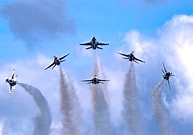
During the grand opening ceremonies of a worldwide sporting event the other day, six military jets in tight formation roared over the stadium, low in the sky, trailing coloured vapour plumes to match the host country’s flag. Their presence lasted but an instant; they weren’t there, then they were, then they weren’t.

It occurred to me that, prior to their arrival, no one in the crowd was likely thinking about them. In the brief moment they were overhead, everyone was. But mere seconds after they were gone, most had likely forgotten all about them again, attention shifted to what was happening next.

I considered the scene analogous to the ever-shrinking attention span of our human species. We tend to focus on what is right in front of us, but only while it’s in front of us. Once it isn’t, we switch attention to whatever is next in front of us. Like scrolling.

Thinking, rather than being a critical, contemplative brain activity, is being reduced to bits and bites lasting only seconds. Reacting, in fact, not true thinking at all. Stimulus/response in place of thoughtful consideration and planning.

We would be doomed, I think, if we were required to focus our whole being on something for an extended period of time, as our distant ancestors had to while stalking game for food on distant savannahs. Had they allowed themselves to be distracted as easily as we do, they’d have starved to death, and none of us would be here today.

Life is much like the appearance of those jets in a way. As individuals, first we weren’t here, now we are, and eventually we won’t be. Collectively, going back perhaps 300,000 years, modern humans, homo sapiens, weren’t here; now we are; eventually, if the fate of other species is any indicator, we may not be.

Science tells us that more than ninety-nine percent of all species of life that have ever inhabited Earth are now extinct. When one considers the enormous number of life-forms still extant and sharing the planet with us today, the overall number of living creatures that once were here and now are not is staggering.

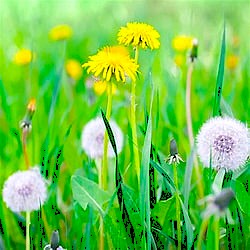
Individually, we are similar to dandelions, if you think of it. We might look out the window one day and spy a dandelion despoiling the pristine, green expanse of our lawn. If we leave it to its own devices, the dastardly weed will grow apace (doubtless in company with scores of comrades); then it will spread its seeds, miniature, white parachutists blown on the wind; and then finally, it will wither and die.

Or, we could choose to interrupt its life-cycle by stomping it under our heel, exposing it to toxic chemicals, uprooting it, or even turning it into wine. Either way—whether we leave it or interfere with it—it wasn’t there, then it was, then it wasn’t.

We are the same. Many of us live out our proverbial threescore-and-ten—some less, some more—spreading our seed as we go, and then die a natural death. Others of us, beaten down ‘neath the harsh heel of neglect and apathy, die prematurely. Still others, afflicted with a wasting disease, perhaps exposed to toxic chemicals intended to stem its progress, slowly wither and die. And still more are violently uprooted from their homes by violence or starvation or natural disaster, and are left to die alone.

Mortality is a subject I think about more often now than when I was younger. I contemplate my own, of course, though I do not fear it. Fearing death is like fearing the sunrise; it’s going to happen whether it’s feared or not, so why waste time dwelling on it? As I wrote in one of my poetic offerings—

I haven’t the time to dwell on life’s finish,
‘Though I know it lurks, that’s certain.
When all has been said, I still look ahead
To life’s next opening curtain.

I confess, however, that the demise of our human species is something I do think about. Not because it will affect me directly; I’ll be long-embarked on whatever journey is next for me by then.

But increasingly, it seems to me, humankind is separating itself into two broad factions: the many drones who think rarely for themselves and react self-servingly to whatever stimuli they encounter, content with the base pleasures they eke out; and the despoilers, fewer in number, who think deeply and conspire self-servingly to enrich themselves at the expense of the rest.

I’m pretty sure there is a third group, much smaller, who think first of others, not themselves, and who fight the good fight against the drones and despoilers. But alas, they are running out of time to win that fight. All harbingers are pointing to cataclysmic changes in the earth’s traditional, heretofore dependable cycles, patterns we have known and depended on for our entire lives.

But the effects of those changes aren’t here yet, not in sufficient abundance to alarm the majority of us. It seems that, as a species, we won’t admit they exist—just as that crowd in the stadium didn’t know about the jets in advance.

We’ll know when the effects begin to announce themselves fully, though—earthquakes, floods, wildfires, drought, increasing temperatures, rising sea-levels, climate-forced migration, and, of course, mass death. We’ll pay attention then.

My fear is that, unlike the other examples I’ve mentioned, where things aren’t here, then are, and then aren’t again, the massive changes rushing pell-mell at us will not disappear. They will linger to become the new normal for millennia to come.

And thus, it is we of whom some far-in-the-future, interstellar observer might say, “Human beings? Yeah, they weren’t there, then for hundreds of thousands of years they were, and then they weren’t.”

I console myself that perhaps the dandelions will survive.

Waitin’ On Janice

If this whole story appears in the body of your email, click the title to read it in its natural blog setting.

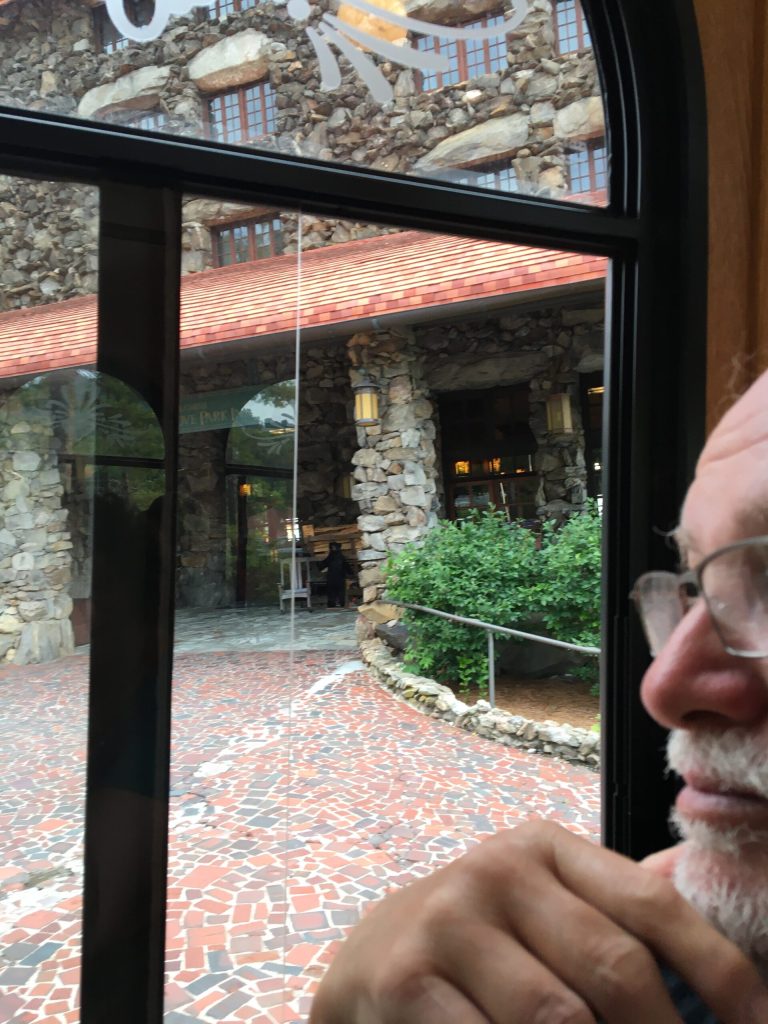
This is a piece I recently submitted to a writing contest, responding to the picture of the old man.

“Mornin’, Paulie!” Doris says, mug and coffee pot in hand. “The usual?”

“Yeah, like I got a friggin’ choice!” I grunt.

She pours the mug too full, and moments later, plunks a bowl of grayish oatmeal on the table.

If I had my friggin’ teeth, I wouldn’t be eatin’ slop like this!

“Where’s the raisins?” I complain.

“Underneath. Gotta dig for ‘em.”

I’m by the window of the cafe, my reg’lar booth lookin’ over the courtyard, waitin’ on my daughter. Ain’t seen her in years and I ain’t sure she’s comin’.

Never does. I only left that voicemail today on account of it’s my friggin’ birthday. But that won’t make no difference. Janice hates me. Got good reason, I guess.

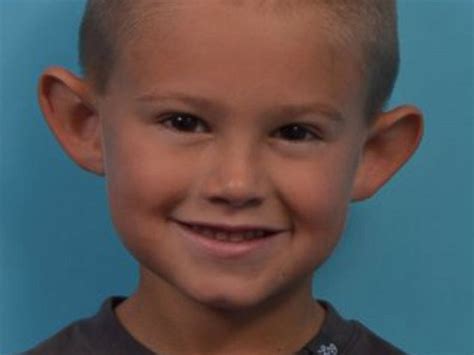
The friggin’ bells over the door jangle and I turn to look, but it’s just a jug-eared kid with a stupid cowlick, looks to be maybe ten, and he plants his bony ass in the booth across from me. The bells jangle again, but this time it’s a fat guy, and when he waddles by, he bumps the cane I got leanin’ against my table, knockin’ it to the floor.

“Hey!” I bark, but it’s more a yip. No bite. Not no more. And the friggin’ slob just keeps goin’.

“I got it!” the kid says, slidin’ in opposite me, layin’ the cane on the table.

“Thanks, boyo, but I ain’t lookin’ for comp’ny. No offence.”

He ignores me. “Who you waitin’ for?”

“Why you think I’m waitin’ on anybody?”

“Every time them bells clatter, you turn to look. Who’s comin’?”

“Nobody!”

This little peckerhead’s sharp. Sorta reminds me of somebody.

“Happy birthday!” he says, tuckin’ into a bowl of cereal. His chin’s almost touchin’ the table when he spoons the crap into his mouth, and I feel like tellin’ him to get his elbows off the friggin’ table.

“How’d you know it’s my birthday?” I ask, scratchin’ my beard, wonderin’ where the cereal came from.

He shrugs. “You’re eighty-eight, right?”

“None of your friggin’ business!” But curiosity wins. “How d’you know how old I am?”

Before he can answer, the bells jangle again. When I twist around, it’s still not Janice. Just some greasy-lookin’ guy with a beat-up briefcase.

She ain’t comin’! Prob’ly didn’t even get my message.

“Want another bowl?” Doris asks at my elbow. She pays no never-mind to the kid still stuffin’ his face, almost like he ain’t there.

“No, I’m done. But gimme another cuppa.”

With a full mug in front of me, I turn back to the kid. “How come you ain’t in school?”

He looks at me like I’m dee-mented or somethin’. Which I surely ain’t!

“It’s Saturday.”

“So what’re you doin’ here? Why ain’t you out playin’ somewheres?”

“You oughta clean them glasses,” he says, ignorin’ me again. “They’re all smeared. Use a napkin.”

I grab one from the dispenser on the table, yank off my specs, blow stale coffee breath on the lenses. But wipin’ at ‘em only makes ‘em worse.

This kid is drivin’ me nuts! Who’s he remind me of?

And then I know. He looks like me when I was that age, a sorry lifetime ago. A lot like me! The memories flood in, and my friggin’ heart starts in to skippin’ crazy-like.

“What’s your name, boyo?”

“Paulie. Same as yours.”

There’s real pain in my chest now. “Okay, boyo, I gotta go,” I gasp.

This ain’t good!

“Yeah, it’s your time,” he says. “I came for you.”

It feels like I’m floatin’ to the front door. And just as we get close, the bells jangle, and Janice is there, lookin’ past me, searchin’ the café. She’s older’n I remember, way older, but beautiful like her mama was.

I open my arms, hardly believin’ she came, but it’s like she passes right through me. I reach after her, but she stops dead in her tracks, starin’ at the booth me and the kid just left.

My friggin’ cane is still there. And slumped over the table, one arm hangin’ limp, I see the old man I used to be only a minute ago.

With a strangled sob, Janice rushes toward him. I try to follow, but there’s an insistent tug on my sleeve.

“Time’s up, Paulie,” the kid says. “We gotta go!”

“No!” I cry too late. Way too late. “I’m waitin’ on Janice!”

But I already know the truth. The waitin’ is done.