A Musical Gift of Love

And here she is, the singing rage, Miss Patti Page, with her latest hit, Tennessee Waltz…

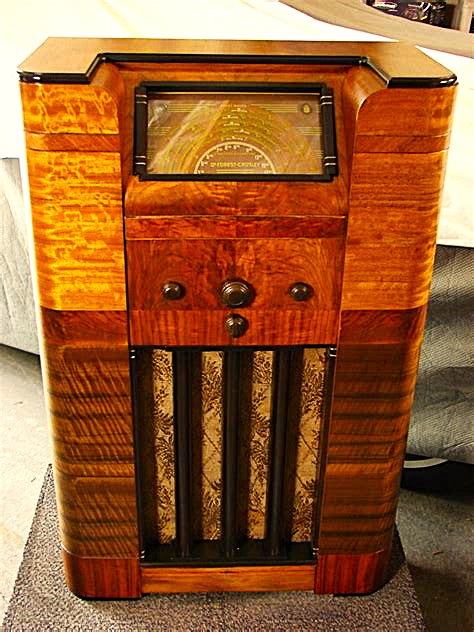
The year was 1951, and my brother and I were home in bed with chickenpox, the longest week we’d ever spent in our young lives.  To help our mother avoid losing her mind as she coped with our whimpering and complaining, Dad had moved the large, Motorola console radio from the living room to our bedroom.  It was heavy, and I still remember his red face, and the huffing and puffing, that accompanied the move down the long hallway to our room.  It took a while to adjust the antenna, too, to ensure we got proper reception.

With the entertainment that radio provided during those seemingly-endless days in bed—together with toys, comics, children’s books, and board games—my brother and I managed to allow Mom some brief periods of respite.

All that week, we fell asleep at night to broadcasts of The Lone Ranger, Mark Trail, Amos ‘n’ Andy, and The Shadow.  Having that radio in our bedroom was almost enough to make us wish the chickenpox would hang around a while longer.  Almost!

The bedroom was small, with one dormer window, and our twin beds were separated by a table whose top was taken up by a small lamp and two coasters, upon which sat our water glasses.  On the two shelves underneath, one for each of us, our respective playthings were stored…my brother’s haphazardly, mine orderly.

The first time we heard Tennessee Waltz on the radio, my brother immediately piped up, “That’s my favourite song!”, thus preventing me from claiming it.  Not to be undone, however, I quickly claimed Patti Page’s other big hit, Mockin’ Bird Hill, as my property.  Every time either song came on the air, our bedroom would become eerily quiet as we listened avidly, singing along silently in our tousled heads.

When we eventually dared to accompany the singer aloud, neither of us was allowed to sing the other’s song.  Singing along in our heads was permitted, but by mutual consent, our live performances were strictly proscribed.

As if to ensure our claim to our song would not be usurped by a treacherous brother, each of us would reiterate our ownership every time our favourite came on.  “Tennessee Waltz is my song!” my brother would insist, and for good measure one day, he added, “An’ Patti Page is my favourite singer!”

He was in love with this woman we had never seen, and truth be told, so was I.

By some unspoken rule, however, we both understood that the singer herself could not be claimed as one’s own, and so the next time Mockin’ Bird Hill came on, I chirped, “That’s my favourite song, an’ Patti Page is my favourite singer!”  And, while our mother was in the room one day, I added, “She’s prob’ly as pretty as Mom!”

Mom smiled at that.

But my brother immediately protested, “No, she’s not!  Mom is prettier!”

Our mother smiled at that, too.

The chickenpox finally ran their course, of course, and life went back to normal.  But to this day, I can still sing the entire Tennessee Waltz, and all three verses and the chorus of Mockin’ Bird Hill.  I’m probably off-key in a few spots here and there, but it’s seventy-five years ago that I learned them, so that’s not too shabby.

My brother is gone now, as is Patti Page, but whenever I sing those two songs, usually just to myself, out of filial loyalty and respect for those childhood rituals, I always kick off Tennessee Waltz with the preface, “my brother’s favourite song”.  And if he were still here to hear me, he’d probably say, “Damn right!”

And I know he’d settle back and listen politely as I announce, “An’ here’s my favourite song, Mockin’ Bird Hill!” before launching into it. I won’t do that here, of course, but here’s the lady herself to sing it.

We were lucky, my brother and I, to have shared that musical gift of love.

The Lonely, Silvery Rain

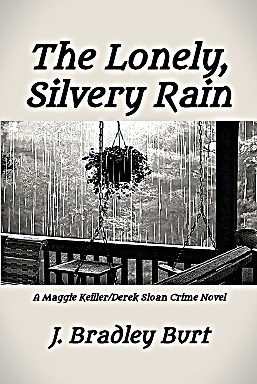
The thirteenth novel in my Maggie Keiller/Derek Sloan crime series will be published later this year, titled The Lonely, Silvery Rain. Here is an excerpted chapter from that book, slightly modified for this blog-post. If you have read previous books in the series, you will recognize the two characters here.

When Old Scratch, as Senator Nicholl disdainfully referred to death, came calling for the final time on a warm, drizzly, late-morning in October, he found Nicholl dozing in his favourite rocking chair on the wide, open-air verandah of his century home.  The rain was thrumming on the shingled roof, dripping off the overhanging eaves, spilling like a shimmering, crystalline waterfall to the gardens below.

Before his spectral visitor crept in, Nicholl had been engrossed in a pleasant dream, delivering a stem-winder of a stump speech on another political campaign trail, surrounded by a throng of friends and constituents in someone’s farmyard.  Balancing on a rickety, upside-down milking-bucket, he stood above everyone, so even those at the far reaches of the crowd could see him.  He felt he’d never been in finer voice until, gearing up for the customary, full-throated culmination to his peroration, he discovered he’d forgotten what he was about to say.  The shock was profound.

Groping vainly in his dream to remember the remarks eluding him, his mouth continued moving, though no sound emerged.  Then, without warning, the bottom abruptly dropped away beneath him, as if someone had kicked the bucket out from under his feet.  The world whirled and spun dizzyingly as he toppled, flinging his arms out in a futile attempt to catch himself.  Despite the confusion and fear engulfing him, however, he still tried to finish, a campaigner to the end.

Wait!  My speech!  I’m purt’ near done…

But the dream turned nightmarish, and a misty, reddish haze descended across his eyes, and then…and then…

Senator Milford Nicholl, the simple, hometown boy-made-good, eased back in his rocking chair, sighed a fare-thee-well, and went to his eternal rest.

The many well-wishers who stopped in later that afternoon found Gloria, his wife of sixty years, shaken but composed, unbelieving but accepting, sad but relieved that her husband’s travails were over.

“He knew he was on borrowed time,” she told them softly, “and I could tell he knew his days were winding down.  A wife always knows these things…”  Her throat filled up, and she stopped to wipe away tears. 

“Just a few days ago,” she whispered after a moment or two, summoning a small smile, “we talked about the possibility of one of us dying.  And you know Milly’s sense of humour.  He said something to the effect that he wasn’t afraid to die, he just didn’t want to be there when it happens.”  

The mourners laughed at that, and a few shared more of the homespun witticisms they remembered flowing from Nicholl’s febrile mind.  Eventually, Gloria told them she really would like time alone.  “I’ll pray a little,” she said, “cry a little, laugh a little.  There’ll be time enough later to reminisce some more.  And I’ll call you if I need to, I promise.”

As everyone took their leave, Gloria waved from the verandah, then sat and rocked slowly in her husband’s favourite chair, his abandoned walker standing forsaken beside it.  The rain was gentler now, but its sibilant pit-a-patting on the roof was still audible, its runoff still dripping off the eaves into the lush gardens below, covered by sodden, autumn-hued leaves.  The unseasonably warm breeze caressed her, enveloping her in a blanket of solace.

She already understood she’d be missing Milly constantly from now on—his irrepressibility, his cornball turns-of-phrase, his devotion to the community—and most of all, his love for her, his very presence.  She counted herself lucky to have been his partner and to have known such happiness.

Her grief over losing him would linger long, of course.  She knew mourning is not something that can be quantified or measured by time.  But at this particular moment, she was at peace with his passing, attuned to the happy memories she would cherish forever, resigned to the loneliness she knew would envelop her from time to time.  They were all part of everyone’s journey through life.

But for right now, she was snuggled in Milly’s chair, at one with the inevitable rhythms of life and death, at one with herself, her soul in harmony with the comforting cadence of the rain.

The lonely, silvery rain.

Love, Through Their Eyes

The weekly prompt from my Florida writers group was to write a piece about seeing things ‘through their eyes’, and this is my offering—

Two short poems, each exquisitely written, capture exactly—exactly—how I feel about this brief moment in time I know as my life, about the relationship I have with the love of my life, and about what will happen when I am gone.

The first, When You Are Old, by William Butler Yeats, the greatest of the Irish poets, portrays a woman through the eyes of her departed husband, as he speaks of his love for her, even beyond death, and where she might find him—

When you are old and gray and full of sleep
And nodding by the fire, take down this book
And slowly read, and dream, of the soft look
Your eyes had once, and of their shadows deep.

How many loved your moments of glad grace,
And loved your beauty with love false or true,
But one man loved the pilgrim soul in you,
And loved the sorrows of your changing face.

And bending down beside the glowing bars,
Murmur, a little sadly, how love fled
And paced atop the mountains overhead,
And hid his face amid a crowd of stars
.

I find that sentiment so uplifting, so reassuring, that love, triumphant over death, is waiting ‘midst a crowd of stars.

I no longer believe, as I did as a child, in life eternal, in the idea of earth and heaven, the now and hereafter.  Rather, I believe the life-force presently empowering me—what I might call a soul—is but a fragment of the energy that fuels our expanding universe, a spark of light presently encased in my mortal being.  And when I, the shell that hosts the spark, will have finished my course, when I have expired, that life-force animating me will simply rejoin the universe.  It will be as if I am carrying on beyond death, but with no memory of my life—just as I have no memory now of what came before my birth.

The mortal I shall die, but my life-force will not, for if it did, the universe would shrink at the loss of that fragment of energy.  Science tells us, however, the universe is expanding, not shrinking, so it must be that no energy is ever lost.

But where will my immortal life-force go, and in what form, I wonder?  And what of my love whom I will have left behind?  Happily, I find an answer to these questions in the second of the poems I number among my favourites.  Written by David Jones, a Liverpool poet, from his collection titled Love and Space Dust, I find it moving and profound—

And in the end
I will seek you
Out amongst the stars.

The space dust
Of me will
Whisper ”I love you”
Into the infinity
Of the universe.

So, no life eternal, but something better—love eternal.  According to these two poets, as seen through their eyes, the pilgrim soul who shares this life with me will find my spark of energy—my soul—waiting somewhere in the stars for her, calling I love you into the void until she hears me.

And I choose to believe she will hear me.

David Jones: https://www.goodreads.com/author/quotes/5241391.David_Jones

W. B. Yeats: https://www.poetryfoundation.org/poets/william-butler-yeats

A Cottage Christmas

Since retiring, my wife and I spend every Christmas at our Florida home.  Usually, one or both of our daughters will come down, with husbands and children in tow, to spend the holiday with us.

Friends often ask us if we miss Christmas in the snowy north.  I offer a vigorous, “No!”, and when they ask why, I tell them the story of our ill-fated Christmas at the cottage.

Our daughters were eleven and ten that year, when friends, who had decided to spend their traditional twelve days on a sunny, southern beach, invited us to use their cottage for our celebration—preparing for Santa’s arrival, skiing and skating in a winter wonderland, and just relaxing.  We jumped at the chance, little realizing what lay in store for us.

I should have known all would not be idyllic when our friends gave us five pages of notes, detailing what we’d have to do when we arrived at the retreat in the woods.  There were instructions for opening and closing the place, turning on the water system when we arrived, draining it when we left, using the fireplace, enjoying the snowmobile, shoveling snow off the roof, removing the occupied mousetraps—in short, a whole lot of things that could go wrong.

They left us their car to use, much larger than our own, a fully-equipped but much-travelled station wagon that had been around the track more than a few times.  On the day of our departure, I discovered that the rear tailgate, the sort that was supposed to open two ways, down like a truck tailgate or out like a car door, wouldn’t open at all.  Consequently, I had to load all our gear, including skis and poles, through the rear window, which could still be powered down.  As each armload went in, I had to clamber over the rear seat to pull the stuff forward.  I was delighted, as you might imagine, with the challenge.

We took to the road, full of anticipation for our family Christmas at the cottage, on the very day that the first freezing rainstorm of the season hit the area.  That cheered me immensely.

With the six of us aboard—I, my wife and two daughters, plus two dogs in the rear, trampling and drooling on all the packed items—the car windows steamed up almost immediately.  They remained that way for the duration of the four hours it took us to complete the two-hour drive.  Nobody spoke out loud during the final hour!

We arrived, finally, to be greeted by a winter wonderland.  The deep snow, now covered in a slippery mantle by the freezing rain, sparkled and glinted in the twilight.  As promised in our five pages of instructions, the driveway had been plowed just far enough off the township road to allow us to park the car.  The walk from there to the cottage was just what we had expected—arduous, but exhilarating.

The snowmobile was right where the notes said it would be.  But to my chagrin, it wouldn’t start!  In spite of my repeated (and somewhat profane) encouragement, it would not come to life.  Thus, we had to lug in all our gear by hand, twelve trips back and forth between the cottage and the car, dragging the heavy items behind us in a large snow-scoop, toboggan style.

Oh, what fun we had!

Once inside, with everyone unpacking and sorting our supplies, I turned my attention to turning on the water.  The notes our friends had left me were very detailed on this particular chore.  The pumphouse in the basement was a tangle of pipes and faucets—my friend does his own plumbing—all tagged and colour-coded to ensure compliance with the proper way of operating the system.  Without my notes, I’d have been totally lost; with them, I was merely overwhelmed.  Nevertheless, I followed the steps as written, praying fervently all would go as planned.  And it did….at least at first.

Some twenty minutes after our initial rejoicing over running water, the dishwasher sprang a raging leak from somewhere underneath.  I was able to turn off its feeder-faucet before too much damage was done, and I even managed to find the source of the problem—a burst pipe.  Because I was unable to fix the leak, the dishwasher remained inoperable for the duration of our stay.

Eventually, everything was done.  The food was safely stored away, our bags were in the proper bedrooms, the deck and walkway were shovelled clear of snow, and the Christmas tree that had journeyed north on the roof of the car was standing, fully decorated, in the living room.  At last, we began to enjoy our Christmas holiday. 

Of course, we couldn’t ski because the rain that accompanied us north continued to fall, washing most of the snow away in one day.  Nor could we go skating on the lake, because the milder temperatures that came with the rain turned the ice to slush.

If it hadn’t been for the decorations strung around the interior of the cottage, and the sound of the old, familiar carols, we wouldn’t have known we were enjoying a Christmas interlude.  With all the mud, it was like a spring holiday—until the last day, that is.  Then, about five hours before we’d planned to pack the car for home, the snows returned with a vengeance.

So again, thanks to the immobile snowmobile, we had to trudge through knee-deep, new-fallen snow, from cottage to car, packing up everything we had to take home.  I cursed every step!

I could hardly wait until the next time our friends offered us the use of their cottage when they weren’t going to be there.  I planned to torch the place.

Of, By, and For

From my Canadian vantage point, the longstanding myth of American exceptionalism appears to have been exposed.  The Benighted States of America has signalled it is no exception after all, as it falls into line behind nations like Brazil, Hungary, and Russia on the slippery path to corporate, fascist oligarchy.

Those citizens who lament this turn might blame the result of the recent election on an ill-informed electorate, but the truth is the voters were not uninformed, misinformed, or disinformed.  Well in advance of voting day, the winning party composed and published its agenda, Project 2025, hanging it out there for all to see.  So, any lamentations might more aptly be directed toward apathy or hubris on the part of too many Americans.

And of course, there’s the fact that more voters are celebrating the result than bemoaning it, at least according to the popular vote count.  In that sense, the will of the people prevailed, just as it’s supposed to.

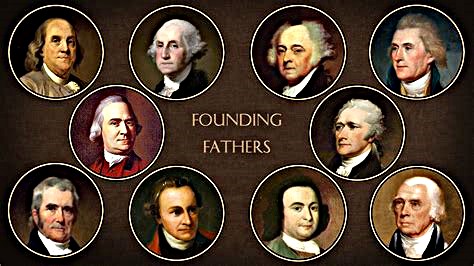
It appears so far that the election process unfolded as designed, with no accusations or evidence of widespread glitches or fraud, despite the plethora of different voting procedures across the fifty states.  That process—which, by deliberate decision on the part of the landed gentry known as the Founding Fathers—leaves the final choosing of the chief executive in the hands, not of the people, but a select group of electors from each state.  America is still exceptional in this, I suppose, given it’s the only nation in the world to rely on an Electoral College.

Simplistically stated, democracy implies that majority rules, no matter how slim that majority.  In a tri-cameral system—executive, legislative, and judicial—it is rare that one party will capture the Presidency and both branches of the legislature.  But at the time of writing, the Presidency, the House of Representatives, and the Senate have apparently fallen to one party in this recent election.  The popular vote count, although not overwhelmingly one-sided, was decisive.

It’s worth remembering that democracy is not ordained, merely proposed and tried.  Churchill called it “the worst form of government, except for all the others.”  Still, it endures for now, and should certainly not be dismissed because it yields an electoral result not satisfactory to a segment of the population.

Whether this recent result is good or bad is based upon one’s point of view.  My own opinion is that it bodes ill for the future of the nation, and perhaps the world, but my opinion matters little.  American politicians are fond of proclaiming, “This is who we are as Americans!”, or conversely, “This is not who the American people are!”  Although neither statement is accurate, both can be apt in any given instance, depending on how Americans’ behaviour matches or clashes with those politicians’ ideological leanings.  For example, public demonstrations or protests are often acclaimed and disparaged simultaneously by opposing political factions.  At the very least, any occasion represents only who some Americans are and who other Americans are not.

One thing for sure is true, however: the entire population of 346-million+ cannot rightly be dubbed ‘the American people’.  Across all spectra—political, social, economic, religious, ethnic, gender, rural/urban—Americans, like other nations’ citizens, comprise a distinct array of diversity, not a homogeneous collective.  Americans, unsurprisingly, do not all think alike or cherish the same values. 

Nevertheless, it is clear the recent election was decided by the American people who were eligible to vote—those who exercised their right and those who did not, those who swung one way and those who went the other.  Democracy in action.

Like it or not, people’s understanding as to whether something is right or wrong, good or bad, is inevitably shaped by the outcome of any election.  Perhaps there is a true right and a true wrong in the moral universe, but it’s how those concepts are filtered through an ideological lens that matters most.  Did America decide wisely on its future this time, or foolishly?  Is liberal democracy the judicious choice, or corporate fascism?  Is an imperial Presidency the better model, or a checks-and-balances structure?  And does the worm always turn?

To paraphrase a timeworn sports adage, any nation is what its voters say it is, and it remains so until its voters say it’s something else.  That, I submit, is governance by and of the people.  Whether or not America’s recent election results prove to be for the people will likely become apparent over the next couple of years.

Ultimately, we all get the government we deserve.  America is no exception.

Young Fella

Around the world, it’s variously known as Armistice Day or Remembrance Day, but stateside we call it Veterans Day.  It honours the memory of those who sacrificed their lives defending freedom, commemorating what was intended to be a lasting peace, signed at the eleventh hour of the eleventh day of the eleventh month in 1918.

I’m here today with almost a thousand of my fellow-vets for a luncheon to remember the fallen.  We’re gathered in a mess-hall similar to those we knew in long-ago days in far-away lands, but under happier circumstances now.  We range in age, I would guess, from mid-forties to late-eighties, drawn from the full military spectrum—dogface, swabbie, flyboy, grunt—jealously proud of our own branch of service, but united by our sworn allegiance to our nation.

Most of us are in uniform, some resplendent in dress whites or blues, others less splendid in khaki or camo fatigues.  But in nearly every case, the clothing strains to contain bodies once in fighting-trim, now overfed and flabby.  Insignias of rank and medals awarded adorn almost every uniform, but no one pays undue attention to either, having long ago taken them for granted.

What is never taken for granted, however, is the privilege of being here today, when so many of our former comrades cannot.  The cash-bar, which had opened an hour before lunch, had been well-used, and many a story of glory and despair had been shared over a pint or two, as has become the custom at our yearly gatherings.

The ample lunch buffet we finished before the speeches began was leagues better than the swill we’d all had to choke down in mess-halls similar to this one back in the day.  And even the speeches…well, let me just say, the speeches were a vast improvement over what we used to be subjected to from the brass in the field.  Today’s remarks from a few of our ranking members were more reflective, halting and poignant almost, as if we all knew this would be the last parade for many of our number.

We’re on our feet now for the national anthem, to be played by a band of eager, young cadets.  None of us sings it aloud, of course, as if to do so might constitute an unacceptable breach of discipline in the ranks.  But we know the words by heart. 

As we raise our arms in salute, a movement catches my eye at a table to my left.  An old soldier, a man I hadn’t noticed earlier, has struggled to his feet, is saluting with difficulty.  He’s dressed in an olive-drab tunic, too big now for his shrunken frame, a beret tucked under one of his epaulets, his blouse drooping from sagging shoulders.  I figure he has to be in his late-nineties at least.  His body sways as the anthem swells, and he trembles as if palsied.  I wonder why the men on either side of him, officers both, do not offer assistance, but they appear not to notice his distress.

I turn my attention back to the band at the front, unwilling to bear witness if the old man should fall.  When the anthem’s final notes die away, a lone bugler steps forward, a young woman immaculate in dress grays, and with divine precision, she raises the instrument to her lips to play The Last Post.

As its first plaintive, mournful notes sound forth, I turn to see if the old soldier is bearing up.  To my surprise, he is gone, and a much younger man stands in his place.  Clad similarly in olive-drabs, he is taller, stronger, more steadfast—a marked contrast to the older man who, I assume, had been assisted from his place at the table.  Unlike the rest of us, our arms still raised in salute, our chins held as high as we can bear, the younger man’s head is bowed, his right hand clasped to his heart.

When the bugler finishes, when the last horn has sounded, the room is suffused in silence for a few moments.  But then the slow hum of conversation begins again as people make ready to leave, and the air is filled with raucous laughter and shouted farewells.  As might be expected, our retreat is anything but militarily precise.  Rather, the withdrawal is hesitant, rambling, reluctant, each of us adopting a slow shuffle to delay our departure. 

On impulse, I detour on my way toward the door to walk behind the table where I’d seen those two soldiers.  All the place-name cards that had been propped on small stands on the table are gone, of course, purloined by their namesakes as souvenirs of another fine get-together—all save one, that is, the one I was hoping to find.  It sits right where the two soldiers had been standing, embossed in flowing script, black letters crisp against the white cardboard background.

Adjusting my glasses on my nose, I lean closer to find out who those men were.

HERE MAY SIT AN UNKNOWN SOLDIER
A FALLEN COMRADE KNOWN BUT TO GOD

I straighten slowly, breath seeping from my lungs as I realize the enormity of the vision I’d been privileged to see.  With all the strength and grace I can muster, I brace to full attention and salute the dead, as respectfully as I can manage in my aged state.

“Thank you, old man!” I whisper, tears stinging the backs of my eyes. 

But then, suddenly aware of my misunderstanding, I correct myself.  Not a single one of our unknown comrades had died as an old man.

“Thank you, young fella!” I say out loud this time.

And not until I am alone in the cavernous mess-hall do I lower my salute.

Too Late? Or Too Early?

TOO LATE FOR YOUR SUMMERTIME READING?

TOO EARLY FOR YOUR CHRISTMAS GIFTING?

PERHAPS…BUT IT’S ALWAYS THE RIGHT TIME FOR A COMPELLING STORY!

TRAFFICKING IN MURDER 

The dramatic story unfolding in this twelfth novel in the Maggie Keiller/Derek Sloan crime series is set against an all-too-true backdrop of human-trafficking—the smuggling of vulnerable asylum-seekers into Canada.  Maggie and Derek are hard-pressed as violence escalates in their community with assaults on innocent bystanders, a kidnapping scheme, and finally murder.  If you’re a reader of my blog, or if you have enjoyed any of the previous books in this series, you’re sure to love this latest one, chock full of thrills and surprises.

The book has just dropped, and is available for purchase at this safe site—

https://www.lulu.com/spotlight/precept

Believe It Or Not!

The weekly prompt from my Florida writers’ group was ‘believe it or not’, and this humourous tale is what I came up with—

“I swear to yez all, I seen the whole shivaree with me own eyes.  Never woulda believed it otherwise!”

The statement was met with silence at first, and the big man’s two companions took a long swallow from the pints one of them, Rufus Mulaney, had added to his tab.

“Sure, an’ it don’t seem possible,” Mickey Finnerty said, wiping froth from his lip, the first to reply.  “It only ever happened once before, so they say.  An’ even that can’t be proved.”

“Don’t gotta prove it, me lad,” Sean O’Brien countered, savouring the bitter ale.  “I seen it with me own eyes!  Tha’s alla the proof I’ll be needin’.”

“Ye must think we’re all daft!” Mulaney declared.  “Yer sittin’ there tellin’ us ye seen Seamus O’Malley die an’ then come back to life?  Ye musta been well into yer cups!  Such a thing just ain’t possible.”

“All good for you to say,” O’Brien sneered.  “Ye were already passed out by then, breathin’ sawdust offa the floor when it happened.  Any boyo who can’t hold his drink oughta not be correctin’ one who can!”

“Yer tellin’ me Rufe was there when it happened?” Finnerty said, looking back and forth between the two men.

“Aye, that he was,” O’Brien laughed, “right there ‘longside me an’ Seamus O’Malley…that is ‘til he slipped offa his stool an’ landed on his noggin.  Lights out he was, ol’ Rufe.”

“That true, Rufe?” Finnerty said.  “Ye took a drunken header in front of the whole establishment?”

“That’s what Sean tells me,” Mulaney admitted sheepishly.  “I do remember spittin’ wood-chips outta me mouth when I managed to collect meself.  All’s I know fer sure is I never saw ol’ Seamus croak an’ then come back.”

“Ah, ye gombeen!” O’Brien cried.  “How could ye see anythin’ when ye was in a blackout?  I’m tellin’ yez both, sure as I’m sittin’ here, Seamus O’Malley died an’ resurrected hisself, right in front of me eyes!  Yez can believe it or not, I don’t give a shite.”

“Sure, an’ it’s wantin’ to believe ye I am,” Finnerty said, raising a hand to order another round for the group.  “Gimme the wee details so’s I can better picture the grand second comin’.”

O’Brien waited ‘til the three of them had drunk deeply from the refreshed pints in front of them before answering.  “Alright then, ye disbelievin’ dolts, here’s how it all went down.  Me, Rufe, an’ Seamus were sittin’ here in this very spot, knockin’ back a few drafts after church last Sunday.  Father Flanagan had been at his full-throttled best, talkin’ ‘bout how the good Lord raised his son from the dead on Easter Sunday, an’ just like always, the tale raised a considerable thirst in me an’ the lads.”

“Since when are you a church-goin’ man?” Finnerty asked.

“Since me good wife threatened to cut off me allowance,” O’Brien said.  “But that ain’t no never-mind.  The point is, we were just gettin’ the edge offa our thirst when who should come along but the Widow McGroarty, askin’ Seamus if he’d buy her a drink.”

“The Widow McGroarty?” Finnerty repeated.  “She’s a mighty fine-lookin’ lass!”

“Aye, that she is!” O’Brien agreed with a leering smile.  “O’Malley surely thinks so, too, an’ the word is him an’ her been…y’know, dancin’ the Irish jig, so to speak.”

“O’Malley?” Finnerty said, mouth agape.  “What’s a fair colleen like herself see in a gombeen like him?”

“Who’s to say?” O’Brien said.  “Anyways, right at that critical moment, good ol’ Rufe made a space for her at the bar by topplin’ offa his stool.  She stepped right over the lad an’ hopped up beside us.”

“So, that’s why I musta missed what happened next,” Mulaney said, followed by another sip from his pint.

“Aye, ye missed the best part!” O’Brien chuckled into his beard.  “Seamus ordered the Widow a shot an’ a beer-chaser, an’ after knockin’ ‘em both back, she leaned over an’ planted a smooch smack on his goober.”

“An’ that’s when he died?” Finnerty asked, caught up now in the story.

“Nah, that’s when he smooched her right back.  He didn’t die ‘til a few minutes later when his ol’ lady walked into the pub lookin’ for him.  We heard her voice callin’ his name afore she come through the door, an’ by then, Seamus was laid out flat beside Rufe, lookin’ for all the world like he was stone-cold dead!”

“Then what happened?” Finnerty asked.

“Me an’ the Widow McGroarty skedaddled outta the way,” O’Brien said.  “We both thought Seamus had bought the farm right then an’ there, scared to his very death that the good Mrs. O’Malley mighta seen him smoochin’ the Widow.”

“An’ did she?” Mulaney asked, sincerely regretting that he’d passed out and missed the whole shebang.

“Nah,” O’Brien said, finishing off his pint.  “All’s she saw was her husband lyin’ there on the floor.  She figured he was passed-out drunk, so she grabbed him by his collar an’ gave his head a shakin’, the likes of which I hope I may never see again.”

“An’ then what?” Finnerty asked, so enthralled now that he did the unthinkable and signalled for yet another round on his tab.

“An’ right then,” O’Brien said, relishing the moment, “is when the resurrection occurred.  Seamus scrambled to his feet, beggin’ forgiveness from the good woman, an’ allowed hisself to be dragged out the door by his ear.  Dead one minute, brought back to life the next, just like I been tellin’ yez.  Yez can believe it or not.”

“What about the fair Widow?” Mulaney asked.  “I musta missed what happened to her, too.”

“Spare no worries for the lovely Widow McGroarty, lads,” O’Brien said.  “Ever the gentleman, I made sure the lady got safely home to bed.”

“To bed?” Finnerty exclaimed.  “Did yez…did yez…?”

“Sure, an’ that’s another story for another time, me boyos!” O’Brien said.  “It’s thankful I am for the pints yez bought, but now I must be on me way.”

“He done it to us again, Rufe,” Finnerty said, watching as the big man left the pub.  “Why do we fall for his blarney every time?”

There was no answer from Mulaney, however, who had seized that very moment to pass out yet again on the sawdust-covered floor.

Songs I Remember

For as long as I can remember, songs have been a major part of my life.  Even before memory, my mother was singing to me in the cradle.  And during my boyhood years, my dad constantly shared his love of music.

To this day, I remember many of the songs my mother sang: I Wonder Who’s Kissing Her Now, Sweet Little Alice Blue Gown, Always, What’ll I Do, and too many more to mention.

And I remember the classical music my dad and I would listen to on the radio as he tucked me in at bedtime: Prelude to Act III of Lohengrin, William Tell Overture, Light Cavalry Overture, Rhapsody In Blue, and so many others.  To this day, it’s my favourite genre, playing in my earbuds whenever I write.

When I started school, I discovered to my delight that learning new songs was a part of my curriculum, and I still remember the words and tunes to many of them—

Oats and beans and barley grow, oats and beans and barley grow,

You and I and everyone know how oats and beans and barley grow.

I didn’t actually know how those crops grew, of course, not then, but I learned the song and sang it endlessly.

Your rake and shovel and wheelbarrow bring,

Let’s plant us a garden this morning in spring,

Dig little trenches, pull out all the weeds,

Pour in some water and drop in the seeds.

I’ve never really liked gardening, but I did like singing that song.

While strolling through the park one day

In the merry, merry month of May,

I was taken by surprise by a pair of roguish eyes

While strolling through the park one day.

As a youngster, I had no idea what ‘roguish eyes’ were, but the lilting tune and the idea of being in the park instead of the classroom were appealing.  I even performed a tap-dance recital to that song.

“Come away,” sang the river to the leaves on a tree,

“Let me take you on a journey, and the world you will see.”

So, the leaves gently falling from the tree on the shore

Float away on the river to come home nevermore.

This one made me sad, and does even now, at the thought that those leaves would never come home again.  I couldn’t wrap my head around that.  Home, it seemed to me back then, was forever.

And so was singing, and music in general.  And thus it was that, sixty-plus years after starting school, I joined the bass section of a men’s barbershop chorus, eighty voices strong, where I found I could chime in on so many other songs I remembered from my youth: All Of Me, You Belong To Me, Let Me Call You Sweetheart, Loch Lomond, Peg O’ My Heart, Sentimental Journey, You Are My Sunshine, Me And My Shadow, and more just like those.

Singing with the chorus had become a bucket-list item for me by then, something I wish I’d done years before.  The harmonies and chords rippling down over the risers brought goosepimples every time, and once in a while I would even stop singing, the better to listen…surreptitiously, of course.

I’ve had to step down now, but here’s an audio clip of a recent performance, which I trust you’ll enjoy (best with earphones)—

I hope the last sound I ever hear, whenever that time may come, will be songs in my ear—sung by my mother, perhaps, or shared by my dad.  I’d be happy to hear any of these: Fare Thee Well, I’ll Be Seeing You, or even Beethoven’s Emperor Concerto.

As Edward Bulwer-Lytton wrote, Music, once admitted to the soul, becomes a sort of spirit, and never dies.

On the Horizon

Two new books are on the horizon that you, as a regular (or even occasional) reader of this blog, are sure to enjoy.  The first is the twelfth novel in my crime-fiction series featuring two engaging, dynamic characters—Maggie Keiller and Derek Sloan.

Trafficking In Murder is set for release this coming fall, and it will take you on a similar tension-filled, as-it-happens journey that readers of the previous books in this mystery-thriller series have experienced.

The story is set against an all-too-true backdrop of human-trafficking—the smuggling and exploitation of vulnerable asylum-seekers hoping for a new life in Canada.

It all begins when an immigration Judge is attacked by an illegal refugee in her courtroom, and the violence spreads quickly into the community with assaults on innocent bystanders, a kidnapping scheme, and finally murder.

Because of their support for two innocent asylum-seekers embroiled in the turmoil that follows, Maggie and Derek become involved.   As events threaten to spiral out of control, they are drawn further into the local police investigation, which is tied into a broader investigation at the national level by the RCMP and Canadian Security Intelligence Services (CSIS).

Over a tumultuous two-week period, both Maggie and Derek are physically attacked, which only increases their determination to protect the people depending on them.  Working closely with retired and active police investigators, they work diligently to bring the evildoers to justice.

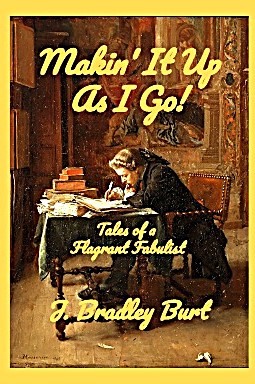
The second book on the horizon, Makin’ It Up As I Go: Tales of An Incorrigible Fabulist, is my tenth collection of short stories and poetry, all of them whimsical, humourous, or pointed in their outlook.  The book is scheduled to drop later this year or early in 2025.

The forty-plus tales are based on weekly prompts from my Florida writers’ group, the Pelican Pens, an eclectic gang of people who enjoy the creative outlet we share.  Four of our number have won awards from the Gulf Coast Writers Association for our work, and three of my winning pieces are included in this anthology.

If you enjoy reading the selections published here in TallandTrueTales, I know you will like both these books.  Once available, they may be found and purchased with all my other published works at this safe site—

https://www.lulu.com/spotlight/precept

Happy reading!