Lest We All Die

Like most of us, I suppose, I have a set of values and principles to which I try to adhere.  Perhaps the most important of these is the belief that we should all treat each other with the same respect and dignity with which we hope to be treated.

But there are others I profess, too; among them—

  • love is better than hate;
  • honesty is better than mendacity;
  • tolerance is better than small-mindedness;
  • civility is better than rudeness;
  • rational thought is better than baseless opinion;
  • equity in race, gender, and economic security is better than inequity;
  • freedom is better than enslavement;
  • peaceful coexistence is better than open warfare;
  • rule of law in our collective society is better than anarchy; and
  • majority rule in our collective society, however flawed, is better than the tyranny of a minority.

Like many of us, I imagine, I try to inject the values I espouse into my daily doings.  At my age, alas, the range of those doings is growing increasingly smaller, my influence is shrinking among my social circle, and the spectre of irrelevance is looming ever larger.  Where once my thinking was valued and reflected upon by those around me, it is less entreated as the years slide by.

My greatest impact is felt now through the writing I do—or so I choose to convince myself.  In the almost three-hundred essays I have posted to this blog since its inception in January 2016, I have touched on a multitude of subjects influenced by my value-set, some of them repeatedly.  A partial list includes—

  • parenthood; children and grandchildren; family and friends; education of the young;
  • racial and gender inequality; socio-economic issues and child poverty; wealth inequity; discrimination and prejudice; women’s reproductive rights; aging; civility and respect; pandemic unpreparedness; the future of work; artificial intelligence; right-wing Christian nationalism; peaceful coexistence;
  • famine and food scarcity; freshwater scarcity; forced migration; climate change; biodiversity loss; water and air pollution; global warming; ecological collapse; overpopulation; species extinction;
  • government overreach; politics and authoritarianism; corruption; warfare and nuclear threats;
  • freedom of speech; media and a free press; big tech; alternative facts and disinformation; and  
  • humour and whimsy; reminiscences; childhood; life eternal.

I also believe that certainty is the enemy of an open mind, and that we should not believe everything we think.  Therefore, I remain quite prepared to hear about and learn from contrary viewpoints.

Unlike a few people who persist in doing so, I have never tried to impose my values on anyone through my writing.  I believe in persuasion, not mandate or fiat.  Everyone is free to read my blog-posts if they so choose; they are also, and importantly, free to agree or disagree with what I’ve written; and they are free to offer comment.  There is no pressure on anyone, explicit or implied, to come over to my way of thinking.

I accept other people’s right to believe as they do, to say what they wish, and to act as they will, but with one critical proviso—they are not free to harm anyone else in so doing, or to foist their beliefs on unwilling others.  

I know this view is not popular with the social, political, and religious zealots, partisans, and proselytizers who brook no dissent.  Nevertheless, I believe it is in keeping with my aforementioned values and principles, and I continue to espouse them.

To ensure our continued coexistence, my only plea is that we live and let live.

Lest we all die.

Delayed Penalty

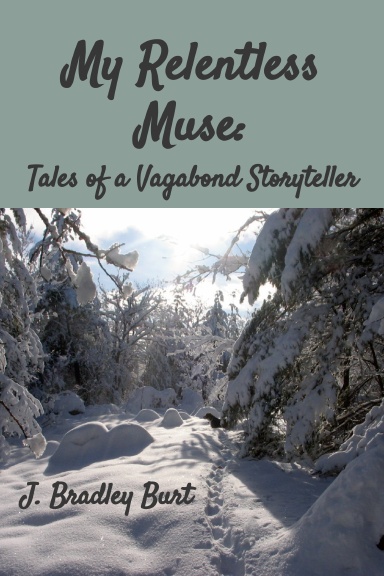
I’m excited to let you know that my brand-new novel has just been released—Delayed Penalty. It joins nine previous novels, along with eight collections of tales, in my published portfolio.

The gripping story unfolding in Delayed Penalty, the tenth book in my acclaimed Maggie Keiller/Derek Sloan crime series, is set against the backdrop of allegations of sexual assault against players from junior hockey teams who have represented Canada in international competitions.

Since 1989, an unspecified number of players have been the subject of sexual assault investigations, and more than twenty such incidents have been brought to the attention of Hockey Canada.  In many cases, the organization settled matters by paying millions of dollars to the victims, in exchange for signed, non-disclosure agreements, the effect of which kept the public at large from hearing about the scandalous behaviours.  In 2022, the federal government announced an inquiry into the affairs of Hockey Canada, and froze its funding, pending the outcome of the investigation.

The fictional story in this book, intended for mature audiences, begins with the sexual assault of a female student by three members of the provincial champion Port Huntington High School TimberKings.  Today—four years after that assault—the victim, now a young woman intent on seeking justice, launches a civil suit against the perpetrators—and against a number of prominent people who aided and abetted them—which unleashes a firestorm of retribution and turmoil in the community.

Maggie and Derek become inextricably involved in the events that follow—she by supporting the young victim in a dangerous quest for justice, he by taking a hand in the provincial government’s inquiry into the secretive operations of OPHSHA, the Ontario Public High School Hockey Association.

As you might expect, further turmoil and violence explode to the surface, while Maggie and Derek, drawn into a perilous sequence of events, remain determined to ensure the wrongdoers are finally held accountable—in hockey parlance, a delayed penalty.

The book is available for preview and purchase at this safe link— https://www.lulu.com/spotlight/precept

If you have enjoyed previous books in the series, or if you are a regular reader of my blog, you will surely relish this latest story.  As one beta-reader reported, “I couldn’t put it down, couldn’t wait to finish it…and then was sorry when it was over.  More like this, please!”

FUBAR

A recent prompt from my Florida writers’ group was to write a story about a screw-up—either a situation gone haywire, or a person who just didn’t seem able to manage. This was my submission—

“Son, you’re ‘bout two steps short of the finish-line, an’ three bricks shy of a load.”

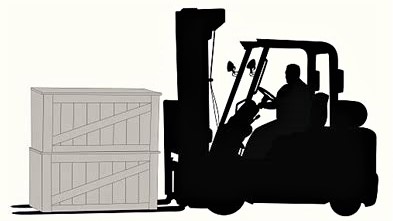
So said the foreman, minutes before handing me my walking papers.  I tried arguing with him, saying it wasn’t my fault the wooden cartons of glassware fell off the fork-lift, smashing all the contents.  The stupid machine lurched forward as I started the motor. 

“C’mon, gimme a break,” I whined.  “Whoever drove it last left it in gear.”

You drove it last, dummy!”

On the bright side, that wasn’t the first job I ever got fired from, and I managed to survive.  On the dark side, it wasn’t the last, either.

For example, take that job driving a taxi.  I got canned after my first shift, when I inadvertently drove my cab out of the service station with the gas nozzle still in the fuel door.  Pulled the pump right off its moorings, flooded the whole area with gas, shut down the whole block for hours.

“You musta already donated your brain to medical science!” the dispatcher growled.  “You’re livin’ proof of the theory of de-volution!”

He wasn’t happy that I asked for a free cab-ride home.  Turns out, I had to walk.

Keeping jobs isn’t the only thing I’ve messed up, though.  I’ve also had issues with landlords from time to time, all of whom seemed quite unreasonable.  On one occasion, I answered my phone in the kitchen, forgetting I’d left the taps running to fill the bathtub.  I realized the problem immediately when I saw water pooling around my feet, and quickly rushed to shut off the taps.  The landlord began pounding on my door as I was cleaning up the mess, summoned by the tenants on the floor below whose ceiling had caved in on them.

“Your elevator don’t go all the way to the top floor, y’know that!” he yelled.  “Your antenna’s not pickin’ up all the channels!”

In retrospect, that probably wasn’t the best time to remind him the building was a five-floor walk-up—no elevators, no TV service.  I got an eviction notice the next day.

Thank goodness it didn’t take long to find temporary digs, but I was only there a couple of days when my new landlord—my surly sister-in-law, never my biggest fan—told me to get out.  Screamed it, actually. She’d reluctantly agreed to let my brother set me up in their spare room in the basement, but apparently she wasn’t a fan of Black Sabbath or Iron Maiden cranked to a hundred decibels ‘til well past midnight.

“But Tish, they only sound good if you listen with the volume way up,” I griped.

She looked at me pityingly.  “Well then, you’re deaf as a stump.  An’ about that smart!”

“What?” I said, trying to be funny.  She didn’t laugh. Didn’t change her mind, either.

In addition to mistakes with jobs and landlords, I’ve also had issues now and again with the demon-rum.  I vaguely recall the time, after knocking back a few pints, I knelt down in front of the first woman I wanted to marry—Mary-Ann something, or maybe Mary-Lou.  Astonished, she asked me what I was doing on my knees in the middle of the pub, and sadly, right at that moment, I couldn’t remember.  And then, according to what I heard later from the police, I toppled over on the floor.  The love of my life was long-gone when I awoke in the drunk-tank.

In court the next morning, I told the judge I’d be representing myself.  “Not a good idea, son,” he intoned.  “In your condition, you’d lose a debate with a doorknob!  I’m surprised you managed to hit the floor when you fell on it!”

Even the therapist the judge sent me to was unimpressed a month or so into our sessions.  “When you were assigned to me,” he said, “I didn’t realize you had a drinking problem.  Not ’til you showed up sober once.”

“Not to worry, Doc,” I told him amiably.  “I’ve always been a coupla beers short of a six-pack!”  Not surprisingly, I don’t see that therapist anymore.  Never saw Mary-Sue (Mary-Jean?) again, either.  Never had our second date.

I suppose I’ve always walked a bit of a crooked line, even when not under the influence.  My mother, God bless her, once said, “It’s like you’re half a bubble off plumb!  Like you’re one saucer short of a tea-set.”

That might have been what got me started on the hard-stuff, come to think of it, because I never did drink tea again after she said that.

Probably the biggest mistake I ever made in my life—although I still have years left to change that—was when I decided to join the Marines.  I was unemployed, nowhere to live, without a girlfriend, banned from my favourite pubs, and hungry.  In desperation, I signed up for a pre-boot-camp, where a former Drill-Sergeant set out to weed out the wannabes from the wunderkinds.  You can probably guess which I was.

“You hafta be the poster-child for birth-control, gomer!” he screamed at me on the first day.  “You give inbreeding a bad rap!” 

“I was adopted!” I said, as if that would make any difference.

“Yeah?  Well either way, you musta fell outta the family tree an’ hit every branch on the way down.  Too much chorine in your gene pool!”

He never let up on me, and by the fifth day, I’m sure I’d heard every description of screw-up ever invented.  They just kept coming.

Day 1: “You’re not pullin’ a full wagon, boy!  You’re a few mules short of a team!”

Day 2: “You’re ‘bout as sharp as a marble, son!  You don’t know whether to scratch your watch or wind your butt!”

Day 3: “The gates are down, the lights are flashin’, but the train ain’t comin’, bucko!  You’re deprivin’ some village somewhere of its idjit!”

Day 4: “Your driveway don’t reach all the way to the road, boyo!  The wheel is spinnin’, but the hamster is dead!”

I flunked out on the fifth day, and for the first time the sarge seemed to take pity on me.  “Sorry, son, but bein’ a Marine means you gotta be burnin’ on all thrusters, roger that?”

I didn’t know what thrusters were, nor did I know anyone named Roger, so I just nodded meekly, no smart wisecrack this time.

“You got a good heart, kid, but it’s like your boat don’t have all the oars in the water.  Like you don’t got all your soldiers marchin’ in line.  So, here’s what you oughta do.  Go join the navy.  Or join the army.  They need guys like you!”  He ended that last sentence with a mocking laugh.

So, shortly thereafter, I found myself on my way to the nearest army recruiter, filled with hope after such a rousing send-off.  I chose the army over the navy because someone once told me they’d invented the acronym FUBAR!

Which, as I’d come to understand by then, is what I was!

The Smartest Guy

During my working career, sometimes I was the smartest guy in the room.  But only sometimes.  Fortunately for me, in many of the situations where I wasn’t, I was the highest-ranking guy in the room, so the smartest folks, if they wanted corporate decisions and actions to go their way, had to convince me of the merits of their positions.

On occasion, that was relatively easy for them, because the evidence in favour of their arguments was plentiful and conclusive, and I’d have had to be the dumbest guy in the room not to understand that.  But I was never the dumbest guy, so in matters where there seemed only one reasonable course of action, not much convincing was needed. 

Other times, though, those smarter folks in the room would present conflicting data to me, sufficient to rule out an obvious choice, and that’s where the need to be convincing became paramount.  Whenever I was presented with two or more sets of factual data, each suggesting plausible courses of action, the art of persuasion became more significant.  And in such cases, I could always be persuaded by logic and passion.

Early on in my career, before I‘d reached the point where I was the arbiter in such scenarios, I watched as other smart folks made their pitches—sometimes in concert with me, sometimes in opposition—to those who would ultimately decide the matters in question.  And I learned that, absent overwhelming evidence in favour of one option or another, the most effective presentation of the differing bodies of evidence usually won the day.

Most of the folks to whom I reported along the way—men and women both—considered themselves the smartest guys in the room.  But just in case they might be wrong, all of them surrounded themselves with subordinates who might be—and who often were, in fact.  More importantly, the most effective of my bosses listened closely to their people, allowing themselves to be swayed by facts, logic, and passion—usually in that order.

I soon learned that passion alone would rarely, if ever, win the day with the smartest guys in the room.  For them, facts and logic were essential; they were, after all, rational beings.  But whenever reams of facts and heaps of logic offered divergent paths that might plausibly be followed, emotion entered the arena—enthusiasm, zeal, fervour, each of which is an essential part of the art of persuasion. 

Over time, I noticed the people who had the most success at winning over the decision-makers embodied similar characteristics, employed similar methods.  They were open and transparent about themselves, for example, and allowed others a chance to know them on a personal level, to learn what they stood for, what they valued.  When talking with someone, they focused exclusively on that person in the moment—leaning in, making eye contact, smiling and nodding when appropriate—all of which had the effect of making the person feel singularly important—even the boss.

The effective influencers were highly-visible in the workplace, too, and always asked pertinent questions of others in conversations and meetings to solicit their viewpoints.  They listened actively to the responses they received, sometimes saying them back, perhaps in their own words—not just to indicate understanding, but often to reframe the discussion in their direction.  They tried to establish links between colleagues’ ideas and their own, seeking to achieve synthesis—and eventually, consensus.

All of them were consensus-builders, but the consensus they strove for invariably skewed toward their own desired outcomes.  They would acknowledge and commend the results suggested by others’ proposals, then meld them with their own to offer higher-order outcomes, often coupled with a variety of strategies and tactics to achieve them.

One of the most effective of these tactics was their engaging habit of beginning their responses to others’ ideas with a phrase like, “Yeah, I agree…” or, “Yeah, I like that…”.  And then they’d segue to their own proposal by adding something like, “And if we were to combine that concept with this one…”, the point of which was to move the needle on the consensus-meter in their direction.

Without exception, all these folks who were successful at winning others over had a keen sense of anticipation, a nose to the wind for what might be coming, perhaps unexpectedly, and they made sure they were prepared with contingency plans.  I took notice of how they always had responses at the ready for questions that might never get asked, for objections that may never be raised.  They radiated readiness and competence, and as a result encouraged confidence in their abilities on the part of those around them.

With few exceptions, these smart folks with whom I worked were well-intentioned, not self-serving or conniving.  Almost all of us had the best interests of the organization at heart, and each of us believed the option we were advancing in a particular circumstance, even where it differed from colleagues’ proposals, was the best alternative for the organization.  We competed, yes, but for the overall good.

After I eventually ascended to the arbiter’s chair, the critical factor for me in favouring one proposed course of action over another was integrity—each person’s integrity, definitely, but also the underlying validity and foundation of her or his proposal.  The credibility of both the person and the proposal were paramount.  When those were in place, when the data and logic were clear, I was ready to be convinced, to be persuaded.

Even today, long-since retired, I consider the importance of having to be the smartest guy in the room over-rated.  One could be merely a shade above average in a roomful of average—hence, the smartest in the room—yet not particularly well-equipped to make critical decisions.

Far more important for decision-makers, I have always thought, is to encircle themselves with folks with the potential to be the smartest guy, and then encourage them, listen to them, take direction from them, and earn their commitment to a final consensus—a consensus that may ultimately combine elements of several proposals.

Now, if you’ve read this far, it’s possible that you disagree with me about some or all of my thinking, so feel free to persuade me otherwise.

I can be reached.

Tell ‘Em I’ll Be There

In my dream on this midsummer evening, I hear the harmonies wafting through the screen door and open windows, a ricky-tick piano accompanied by exuberant voices, men and women, some a tad off-key, but all in on the song—

In the cool, cool, cool of the evening,

When you’re lovin’ the summer air,

In the cool, cool, cool of the evening,

Save your boy a chair,

When the party’s gettin’ a glow on, and singin’ fills the air,

In the shank of the night, when the doin’s are right,

Well, you can tell ‘em I’ll be there.

I enter the familiar house—not as the twelve-year-old I was then, but the eighty-year-old I am now—and I move freely and unseen among the gathered throng.  All of them are there, as they always were, and I start in the kitchen where I see my mother, Dorothy, and her mother, Pearl, refilling bowls of snacks, washing and drying glasses, emptying and cleaning ashtrays.  The kitchen table is littered with mickey-bottles, partially-empty bottles of soda and ginger ale, and empty beer bottles.  But I remember from experience, it will be properly set for breakfast by morning.

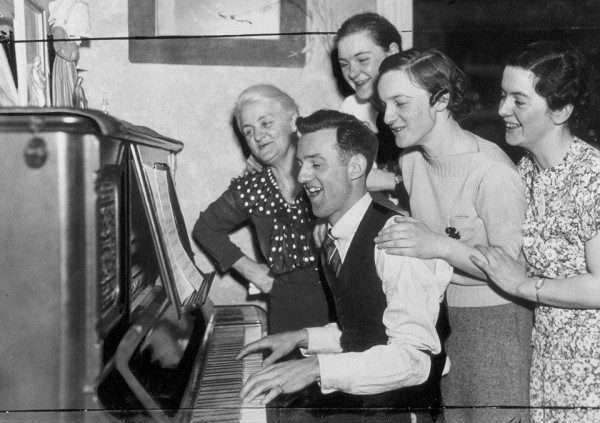
I wander into the dining-room where the assembled singers are sitting or standing near Mike, the next-door neighbour, who is perched on the stool in front of the upright piano, tickling the ivories, as Dad calls it.  Dad says he plays by ear, which always struck me funny because it’s his fingers that dance across the keyboard, responding to every shouted request for a song.  To keep him going, Dad makes sure he always has a bottle of Black Horse Ale by his right hand.

Mike’s wife, Claire, a tiny French-Canadian gamine, sits beside the piano, smiling shyly and swaying to the rhythms her husband is pumping out.  She speaks halting English, always has a drink in her hand which she rarely sips, and reminds me now of Leslie Caron.

Beside her is my mother’s father, Gordon, and his voice is among the loudest and truest in the raucous chorus.  The son of a banty Irishman, one of five boys, he is proud of still being welcome at any party with his own five children and their spouses.

Almost everyone is smoking, and the muggy air is redolent of cigarette and cigar, which I don’t mind, although I’ve never been a smoker.  A hazy, bluish pall hangs up near the white, popcorn ceiling, and will eventually yellow it, but no one is thinking about that right now.

It occurs to me that, except for my mother and father, every one of these people will die before they reach the age I am now, most in their seventies, some sooner.  But no one save I ponders that right now, either, and the songs keep a-coming.

I’m gonna buy a paper doll that I can call my own,

A doll that other fellows cannot steal.

And then the flirty, flirty guys with their flirty, flirty eyes

Will have to flirt with dollies that are real…

My mother has three sisters, Marie, Eunice, and Irene, and a brother, Jim, all of whom, like my mother, regale in the spotlight.  All of them are attractive, they all fancy themselves singers, and they are competitive with each other—although loving, of course.  But none wants to take a backseat, so they forever try to outdo each other.

Eunice is the best of them, I think, referred to more than once in a local newspaper as ‘the songbird of the north’, and her preferred style is like Peggy Lee or Connie Boswell—whispery, cool, seductive, sophisticated.  I think she’s enamored of a friend of my parents, Jack, and I watch as she purrs one of her songs to him—

You made me cry and walk the floor,

If you think I’ll crawl back for more,

Big Daddy. you’ve got a lot to learn…

Jim thinks of himself as Sinatra, not only in his style of singing, but in his expressions, how he dresses, how he carries himself, how he relates to others.  And I must admit, he does do more than passing justice to some of the classics, one of which I’m listening to now in the dining-room—

It’s quarter-to-three,

There’s no one in the place ‘cept you and me,

So set ’em up, Joe, I got a sad story you oughta know…

So make it one for my baby, and one more for the road.

It goes without saying, however, there are no solos in this crowd, not for long.  One person may have the floor for a few seconds, but only until the others recognize the song, and then the chorus begins anew.  Irene, she of the dancer’s legs, sings quietly, mostly to her husband, Bev, and he bestows his crooked grin on her as he listens—

Gonna take a sentimental journey,

Gonna set my heart at ease,

Gonna make a sentimental journey

To renew old memories…

I realize that’s what I’m doing, too, as I wander through the house, taking it all in.  The hallway between the kitchen and the dining-room has a closed door leading to the second-floor bedrooms, and I know if I open it, I’ll see my younger self seated on the stairs beside my brother, Allan, and my younger sister, Colleen—chins in hands, elbows propped on knees, listening to the music.  My other two sisters, Dale and Martii, both much younger, will doubtless be abed and asleep despite the din.  But I choose not to open the door.

Marie has the floor now, if only briefly, and in the imperious manner of the eldest child, the athletic one, she tells Mike the next tune he must play.  And as always, she sings it to Bob, her husband, and just like every other time she’s tried, she isn’t able to finish before choking up in tears—

You’ll never know just how much I love you,

You’ll never know just how much I care,

And if I tried, I still couldn’t hide my love for you,

Surely you know, for haven’t I told you so a million or more times…

When she stops, I find myself finishing it for her in my head, for it’s one of my favourite songs, and they are my favourite aunt and uncle.

…If there is some other way to prove that I love you,

I swear I don’t know how.

You’ll never know if you don’t know now.

Mike heads for a bathroom break, so Dad takes his place at the piano.  If he could be anything in life other than what he is, I imagine it would be a concert pianist.  But he isn’t, and so he limps through a very limited repertoire, concluding with his truncated version of the finale of Gershwin’s Rhapsody in Blue—which is decidedly not rhapsodic as he pounds it out.  And because it has no lyrics, it requires him to improvise in his boisterous baritone—

Da da da dah!

Da-da da-da da da da dah,

Da dah!

Da da da,

Da-DAH!

Mercifully, Mike comes back, beer in hand, with another for my father.  I watch in remembered awe as air bubbles dance inside the green, long-necked bottle they tip back for long swallows.  When Mike is seated again, the first song called for is Jack’s, and his gravelly bass rings out the familiar lyrics—

Chi-ca-go, Chi-ca-go, that toddlin’ town,

Chi-ca-go, Chi-ca-go, I’ll show you around.

Bet your bottom dollar you’ll lose the blues in Chi-ca-go,

The town that Billy Sunday could not shut down…

But I discover suddenly that the party I am so enjoying is beginning to shut down, at least for me.  I’m still there—this eighty-year-old apparition, unseen by anyone—but the scene around me is growing dimmer, the music fainter. And then I spy my mother, back from the kitchen, whispering to Mike at the piano, and everyone stops to listen as she sings a piece she has sung to me for as long as I can remember—

I wonder who’s kissing her now,

I wonder who’s showing her how…

I wonder if she ever tells him of me,

I wonder who’s kissing her now?

And when she is finished—as all around her slide away into the deepening fog of long-ago, all these people I loved and whose lives I enjoyed being part of—I sidle over to her and plant a lingering kiss on her cheek.

I used to ask her when she sang the song to the infant me what that now was, the now that was being kissed; in my childish innocence, I didn’t understand the word as a temporal reference, thought of it as a thing, like a nose or a forehead.  She would simply smile and kiss both of mine.

So now, on the cusp of waking—just before I find myself alone again in my dream, outside that house of yesteryear in the warm, summer night—I wonder if I might be allowed to join that party myself in some not-too-distant-future.  And in hopeful anticipation, I offer my own version of one of the songs to my mother and father—

In the cool, cool, cool of the evening,

Save your boy a chair…

In the cool, cool, cool of the evening,

I’ll find you anywhere,

When the family all ask about me, askin’ if I care,

If they’re wonderin’ if I will join ‘em on high—

Well, you can tell ‘em I’ll be there.
An Easter Haiku

The weekly prompt from my Florida writers’ group was to write a story or poem on the theme, “I’m not here!”. This is my response to that prompt—a haiku of three-line stanzas, the lines comprised of 5 – 7 – 5 syllables.

It is adapted from an earlier poem I wrote, titled ‘Love in the Morning’, which won a prize in the SouthWest Florida Writers’ Group contest a year ago, and which is #10 in the list of previous posts in this blog.

“I’m not here,” I say
to those who stand above me,
on top of the grass.

“I’m not here, below
where you gather to mourn me,”
I cry joyously.

“I am in breezes
that blow gently in the night,
rustling your curtains.”

“I am the soft rain
that wakes you in the morning,
whispering your name.”

“I’m not here,” I say
to those who weep at my grave,
lamenting my soul.

“I’m not here, below
this hallowed ground you stand on,”
I shout happily.

“I am dawn’s first beams---
diamonds dancing on water,
bright angels of light.”

“I am shade on trees,
shape-shifting ‘cross leaves turned up
to welcome the sun.”

“I’m not here,” I say
to dear ones who believe I’m
in the cold, cold ground.

“I’m not here as if
I’ve died and left forever,”
I call blissfully.

“I am the music
we listened to together
that stirs in your souls.”

“I am the laughter
you hear from children playing,
just as we once played.”

“I’m not here,” I say
to you---especially you, 
who miss me so.

“I’m not here, apart 
from you, loving hearts sundered,”
I declare raptly.

“I am every thought,
every prayer, every promise
you have ever made.”

“I am part of each 
breath you draw, each step you take.
I’m with you always.”

“I’m not here,” I say
to all at my sepulchre. 
hoping they will heed.

“I’m not here!” I cry---
a joyous, rapturous shout;
“I dwell in you now.”

I Have Never

I am a straight, white, elderly, married man.  In all my years, I have never had a friend who is anti-Semitic.  I have never had a friend who is racist or homophobic.  Nor have I ever had a friend who is misogynistic or xenophobic.

In all my life, I have never had a friend who is regressive or punitive.  I have never had a friend who is a bully or cruel.  Nor have I ever had a friend who is narcissistic or egomaniacal.

From time to time, I’ve encountered people who exhibit some of these attributes, of course, but I’ve always and quickly exiled myself from their presence.  Except when I’ve had no recourse, I have steadfastly abjured their company.

Throughout my life, I have had friends who are religious—and from several faiths—or atheist, even agnostic.  I have had friends who espouse differing political sentiments than I, but never aggressively so.  I have had friends with points of view different from mine on such issues as pro-life/pro-choice, gender equity, capitalism/socialism, green energy, global warming, pandemic mitigations, famine, warfare/diplomacy, the likelihood of life eternal after death, and more besides.

I have even had friends who disagree with me about my lifelong support of the Toronto Maple Leafs hockey team, for goodness sake!

But never have such disagreements interfered with our friendship because those I consider friends have at no time lowered themselves to crude, ignorant, or abusive rhetoric and behaviour in our discussions and encounters.  Nor have they ever resorted to violence to advance their views.

Rather, they have relied on logic, facts, and persuasion to win the day—as I have always tried (sometimes unsuccessfully) to do.

That’s less easy today, though, because of a problem we face with our global society—the unprecedented proliferation of supposed facts presented across the wide range of media outlets available to us.  Some of these deliberately masquerade as the truth, which promotes confusion and conflict—forcing us to question what is information, what is misinformation, what is disinformation—and as a result, to begin to query our own values and principles.  Critical thinking skills have never been more crucial, it seems to me—and in many quarters, alas, more lacking.

Healthy skepticism has always been a positive thing, I think, a part of those very critical thinking skills.  But noxious skepticism, knowingly force-fed to a naïve public by pernicious purveyors of media in pursuit of their own, oft-malign agendas, has the effect of reducing the level of societal discourse to the lowest common denominator.  Loud, vituperative, violent acts against each other and our governing bodies are increasingly the result.

In any free society founded on the people’s faith that their government will act in the public interest, such discord cannot be good.  Because when the public loses faith in our civil institutions, those institutions will crumble from within.  And they will take down with them the very foundations upon which they have been built and thrived—citizens’ rights and responsibilities, the rule of law, equality of opportunity for all.

There is little doubt that, as a collective, we could do a better job of acknowledging our responsibilities (rather than just demanding our rights), and of ensuring equality of opportunity for the dispossessed and marginalized among us.  But lacklustre performance aside, the bedrock values are legitimate.

In recent times, unfortunately, I have seen people elected to public office— ostensibly to serve the citizenry—speak and behave in ways that are definitely anti-Semitic, racist, homophobic, misogynistic, xenophobic, regressive, punitive, cruel, and narcissistic.  I have witnessed their acolytes and followers, to no one’s surprise, then ape them.  And they are all doing so—increasingly, it seems—in more extreme language and deed. 

Disturbingly, I no longer believe I can respectfully disagree with those folks about their points of view, as should be the norm in any democracy; instead, I fear I would be shouted down, verbally abused, perhaps physically attacked.

Such people are not my friends.  Nor, in my opinion, should they be yours.  We should be electing and supporting the very best from among us, not the opportunists, grifters, and self-seekers.  But to do that, we must bestir ourselves and, at the very least, engage in the process and cast our votes on election days.

Plato wrote, The heaviest penalty for refusing to engage…is to be ruled by someone inferior to yourself.

I have never wanted that.

Will Wishing Make It So?

We humans have a boundless, perhaps fatal, propensity to gravitate towards, not reality, but what we wish reality to be.  Collectively, we opt to ignore what our senses and intuition are telling us in order to satisfy our desire for gratification and fulfilment.

A few years ago, I was on a golf vacation in Guatemala with family and friends.  We played the magnificent Fuego Maya Golf Course at La Reunion, situated on the side of a mountain near the colonial city of Antigua.  The course, located in Guatemala’s Ring of Fire, was surrounded by four volcanoes, the only active one at the time being El Fuego.

Each time we played the course, El Fuego was erupting—benignly, we wanted to think—and it provided a magnificent backdrop to our games as its smoky plume rose high in the blue sky, its gray streams of lava spilled slowly down its side.  At night, it was spectacular, and frighteningly so—tremendous, booming explosions of fiery sparks shooting skyward, the ground trembling under our feet, red ribbons of molten rock spewing sinuously from its yawning maw. 

Within weeks of our return home, El Fuego blew its stack in a major eruption, propelling ash nearly four miles into the sky across a sixty-mile span, completely destroying the magnificent Fuego Maya golf resort, burying it in a pyroclastic flow as once Pompeii and Herculaneum had been entombed.  The golf resort is gone forever.  Nearby villages were wiped from the face of the earth, countless people died or fled from the volcano’s fury.  And yet, when we were there, we had chosen to ignore the signs, believing they were simply part of nature’s show, mounted for our pleasure.

In a similar vein, people across the globe delude themselves into thinking their actions are benign—allowing the deliberate dumping of raw sewage into our oceans and waterways, for example, or toxic, chemical slurry from mining operations and munitions manufacturing.  Such actions are bringing our planet to the brink—and probably beyond—of a severe threat to our survival.  We ignore this at our peril.

Consider this list of issues currently facing humankind, and the potential calamities they may visit upon us: global warming, ozone layer depletion, loss of biodiversity, ocean acidification, water and air pollution, soil degradation, deforestation, natural resource depletion, overpopulation, urban sprawl, inadequate public health response to once-and-future pandemics, generation and disposal of unsustainable waste, so-called artificial intelligence, and the rise of ultra-right-wing autocracy.   

Do you deny the existence of these?  Do you choose to turn a blind eye to them, not wishing to focus on anything but your own indulgence?  Perhaps you do not, but too many of us do.

Whether we ignore it or not, our mother-Earth is at an existential tipping-point, vulnerable to disasters and tragedies both now and in the future, a state of planetary emergency.  The planet itself, this lump of rock suspended in our galaxy, will survive in some form, of course.  The issue is whether we, as a species, will do so. Are we too ignorant? Or too arrogant?

Our first-world economy is nowhere near as healthy as reported by the media.  The poverty gap is not shrinking dramatically, regardless of what the numbers say.  In an increasingly-technological society, low-skill jobs are gone forever, so state-of-the-art education and innovative entrepreneurship are of utmost importance if the situation is ever to improve.  Are we investing in these?

Racism and bigotry are pervasive and, it sometimes seems, part of the human DNA; there is no quick fix for that, only generational change brought about by relentless pressure and, unfortunately, oft-violent protests.  Terrorism is part of our world, and (whether foreign or home-grown) unlikely to be eradicated any time soon; there are too many disenfranchised people in the world, with too many grievances, too much hatred, and too many weapons. 

The leaders of nations—elected or appointed, allies and foes alike—are not so much interested in international cooperation as in their own national aspirations, or their own political survival.  Large, multinational corporations are less concerned with the common good than with their own, often obscene, profits and dividends.  And it is they—not we, the people—who will continue to exert an overweening influence on the state of international relations.

We, the people, are all too often willing to be shunted to one side, caught up in our own pursuits, perhaps so overwhelmed by the sheer magnitude of the crises in front of us that we deliberately shut our eyes to their significance.  Once upon a time, many of us would pull the covers over our heads when the night-monsters invaded our bedrooms, wanting desperately to believe we would thus be kept safe from harm.  And back then, for the most part, we were.  But we were children then, and the time has come to set aside childish beliefs.

There are those who toil diligently on our behalf to face up to the crises facing us, of course, but they are too often scorned or left bereft of support.  And the deliberate and pernicious presentation of disinformation by malignant forces against people too naïve or unwilling to think critically works against the best efforts of the best among us to counter the threats.

So, we have a choice.  We can ignore our problems—just as I and my companions, in our arrogance, chose to ignore the threat from El Fuego. But unless we consciously choose to acknowledge and address these various issues seriously, to take action to support those who do so choose, we shall never solve them, never make them go away.  

Will wishing make it so?

I think not.

From This Moment On

Some folks worry about getting old.  And they bemoan the passage of time.

But once upon a very long time ago, nobody kept track of the years.  People in their nomadic, tribal clusters got up when the day dawned and went to sleep when it got dark.  They did it every day, over and over again, until, inevitably, they didn’t awaken from their final sleep.  Nobody ever worried about getting old; they just lived until they died, and the tribe moved on without them.

Even today in this wide world of ours, there are still countless numbers of people who don’t worry about aging.  They live in unforgiving climes where their every effort is bent toward eking out a subsistence-level existence.  Or they’re driven from their homes by ravaging armies—persecuted for their beliefs, their skin colour, their ethnic origins, and often enslaved by their captors.  They, too, live only until death frees them, far too burdened to worry about the realities associated with getting old.

Yet here are we, inured from such extreme conditions—secure, some of us, in our developed, civilized world, inundated by the availability of all the essentials and luxuries we might desire—and what do we do?  We worry about getting old.

Not all of us, of course.  Many young people appear to have the same nonchalant, carefree attitude I probably had at their age—back when immortality was a given.  The halcyon days of youth seemed destined to last forever.  Only old people were old. 

Others of us, the more elderly, have learned a sterner truth.  Youth lasts only until it’s over, only until our bodies begin to betray us.  The rosy morning of youth gives way, grudgingly, to a more austere noontime of life, and then, inexorably, to a deepening dusk we all are destined to enter. 

Some folks accept that truth more gracefully than others, some more stoically, some more fatalistically.

But some, of course, do not accept it at all.  In the words of the poet, they rage, rage against the dying of the light.  Nips and tucks; silicone, botox, collagen, and dye; enhancements and reductions; diets and purging; even exercise—all undertaken by men and women in a fruitless pursuit of everlasting youth.

Why is this so, I wonder, here in our world of plenitude?  Well, perhaps it’s because we have become obsessed with measuring time.  After all, time’s passing itself is neither our friend nor our enemy.  It’s just there, it’s always been there, and it will forever be there.  So, I’ve come to believe it’s the keeping track of time that plagues us, wreaking havoc on our youth, eventually forcing us to an acceptance of the stark reality that we are going to get old.  And we are going to die.

But remember, we are the first cohort of people since the dawn of time who has ever had the luxury of worrying about that.

From this moment on, perhaps we shouldn’t.

A Party? No Thanks!

Another birthday, the eightieth since my actual day of birth, is looming.

If I have my way, there will be no party celebrations to mark the occasion—no gathering of friends, no gifts, and most mercifully, no public rendition of that ubiquitous birthday song by a bored, yet dutiful, cadre of restaurant servers.  Rather, the occasion will be marked by a fond embrace from the one who has been alongside for all but the first twenty of those eighty anniversaries.

For me, the party tradition has gone on too long.  It’s not only over now, it’s overrated.

The last big celebration I remember was on my twenty-first birthday, when my parents planned a party to honour the passage of their firstborn from boyhood to manhood—as if it had happened all at once on that given day. 

In 1802, Wordsworth memorably observed, The child is father of the man…, and so it has always seemed to me.  But truth be told, in all the years spent being a man since then, I don’t believe I ever left the boy behind.  He lurks behind the adult mask, only rarely emerging, as though fearing he’s no longer welcome.  But I still search him out sometimes, if only to reassure him.

I don’t really remember that twenty-first birthday party, of course, it having occurred almost sixty years ago.  But I do have photographs to remind me of the momentous occasion—washed-out Kodachromes of people who meant the most to me back then—some gone now to their spiritual reward, others, like me, to lingering adulthood.

My mother and dad grace several of the photos, beaming with parental pride (I’ve always chosen to assume), both of them decades younger than I am now.  How can that be, I wonder, and where did those years go? 

My siblings—a brother and three sisters—all stand with me in other pictures, our arms around each other, full of that relentless, youthful optimism that has not yet encountered the eroding onslaught of time.  It did assail us eventually, of course, but so far, all but my brother have survived.

A couple of close friends were present at that party, too, both mere weeks older than I, and eminently wiser (or so I imagined, given their earlier entry into manhood).  Both remain  fast and true friends to this day—and they, too, like me now, have reached the end of their eighth decade.  Imagine!

Most dear of all in those faded photos is my high school sweetheart, smiling happily, if a tad uncertainly, still getting to know the large, somewhat strange family whose son she was keeping company with. 

On that day, we were still two years removed from the moment when she would accept my offer of marriage, and she, I’m sure, had no idea right then that such a fate awaited her. Even I, it must be said, had only begun to suspect she might be the one. That longed-for wisdom prevailed, I suppose.

Anyway, that’s the last big celebration I recall.  There have been many so-called milestone birthdays along the way—the thirtieth (Never trust anyone over thirty!), the fortieth (Forty is the new thirty!), the fiftieth and sixtieth (the golden years, so dubbed by those who couldn’t avoid them), and even the seventieth (entry point to the last of the three stages of life: youth, adulthood, and You’re Lookin’ Good!). 

But the milestone birthdays never impacted momentously on me.  Each was just one more marker in a so-far-endless progression of years, gratefully attained, yet no more important than any of the others.

Among the most special greetings I receive on every birthday are those from my two daughters, both of whom endearingly insist that I’m not old, I look terrific, and I’m every bit as good as I once was.

“Hmm,” I tell them, “maybe I’m as good once as I ever was!”

For the past twenty-one years, I’ve been further blessed to hear from a younger set, my grandchildren, five in number now, who cannot for the life of them understand why there won’t be a big party on my special day, with balloons, and cake, and lots of presents.  Not to mention the goodie-bags they used to get at their friends’ birthday parties when they were younger.

“Don’t you like parties, Gramps?” one of my granddaughters once asked.

“Don’t you have any friends, Grandpa?” my grandson chimed in.

But I always told them I’ve had more birthdays than I have friends and family combined, and that on my birthday, I’m more than content just to have my grandchildren loving me.

“Oh, we love you, Gramps,” they affirm.  “But grown-up goodie-bags might still be a good idea, y’know.”

I do know.  My goodie-bag has been overflowing for eighty years.