Wrong Number!

As a young man, I never used to like the telephone!  Oh, I knew it was a wonderful invention, a labour-saving tool, and a life-saver in time of emergency.  And I was aware that it brings old friends together and ties families more closely to one another.  I understood that it is, indeed, a modern marvel.

rotary_phone1

But I never liked it.  In the first place, I never felt at ease when I was talking to someone on the phone.  When I couldn’t see the person to whom I was speaking, it didn’t feel right to me.

In the second place, my phone always seemed to ring at the most inopportune moments; for example, when I had just sat down to dinner, when I was busily engrossed in some leisure-time activity, or (most annoying of all) when I was the only one home to answer it.  Although it was located in a central part of the house, I never seemed to be close by when it rang.

But, without a doubt, the worst thing about the telephone was the wrong number.  And it didn’t seem to matter whether I was doing the calling or receiving the call.  Wrong numbers were a pain in the neck!

Whenever I dialed a wrong number, I was immediately apologetic to the person who answered.  I knew that my own carelessness had put the other party out, and I tried to make amends.  However, my efforts were invariably met with some sort of angry or impolite response.  It usually began right after I realized I’d dialed incorrectly.
wrong-number-phone

“Oh…oh, I’m sorry,” I would stammer.  “I guess I have the wrong number.”

“Obviously!” would come the reply, followed closely by an abrupt banging of the receiver in my ear.

What bothered me even more, though, was when I answered a call from someone who had the wrong number, because I still ended up being the bad guy.

“Hello?” I would answer.

“Jenny there?”

“No, I’m sorry,” I would start to say, “but you have…”

“Where is she?”

“Uh…I don’t know.  You’ve dialed…”

“Who’s this?” the caller would demand, cutting me off again.

“It’s me,” I would reply lamely, “and there’s no one here by the name of…”

“What number is this?”

And when I would give it, I’d get a snarling rejoinder, like, “That’s not the number I want!”

I was never quick enough to miss that banging receiver.  Worse, I was left with the feeling that it was all my fault for even thinking of answering when the call was for Jenny (or whomever the person had asked for).

On more than a few occasions, I actually resorted to dirty tricks, more to avoid the unpleasantness than out of any malicious intent.

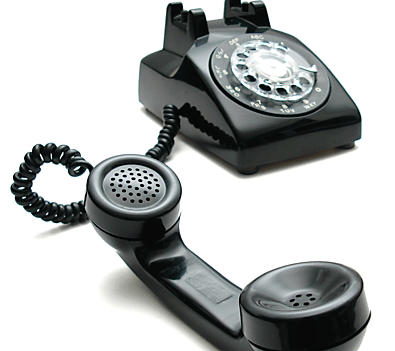
“Just a minute,” I sometimes replied when the caller asked for someone I’d never heard of.  I then laid the receiver by my phone, placed a cushion over it, and forgot about it.  After a few minutes, the caller would get tired of waiting and hang up.  When next I passed by the phone, I gently replaced the receiver.
off hook

Occasionally I would respond by saying, “Jenny?  She left quite a while ago.  She should be at your place any minute!  Tell her to call when she gets there.”

And I’d hang up first.

Or, more than once, I asked the name of the caller, told them to wait, then made a show of yelling for the non-existent person to come to the phone.

“Jenny!  Phone for you.  It’s Alice!”

After a few seconds, knowing the caller could hear me, I’d yell again, “No way, Jenny!  If you don’t wanta talk to her, you tell her!  Not me!”

Sometimes I could hear the caller bang the receiver down from ten feet away.

I never believed that any great harm would arise from these tactics, and it sure made me feel better.  I might even have taught those careless callers to be a little more conscientious when dialing.

Somewhere along the way, I discovered the best and most effective way to deal with those nuisance calls, and it was relatively simple.  It did take some measure of will-power, and it required a little practice at first to get the hang of it.  And I no longer had to spend time dreaming up new tricks.

When the phone rang, if I thought it might be a wrong number, I didn’t answer!

Brilliant!

Of course, with the advent of smartphones, all my reasons for disliking the phone have evaporated.  Now, I can see the person to whom I’m talking, so that excuse is gone.  I’m never too far from the phone to answer a call, because it’s always with me.  There are no wrong numbers, because the name of the caller flashes on my screen.

call

But the biggest reason I have for changing my mind is that, as I’ve grown older and somewhat less active, seeing old friends less and less often, I crave the connection with people.  Instead of willing that old black phone not to ring, I now yearn to hear the ringtones in my pocket.

And so, I confess a dark secret to you.  Now—even when I know it’s a wrong number, even when I don’t recognize the name of the caller, even if I’ve been happily reading in my armchair, or dozing quietly—I answer the call.  If it’s for Jenny, I don’t care anymore.  I have even chatted happily with many fast-talking telemarketers, who quickly become anxious to get off the line with what they must assume is a befuddled, old geezer.

I love the telephone!
The Sneezer

My father was a prodigious sneezer.  As children, my siblings and I would delight in watching his frantic scramble for the handkerchief he invariably carried in his back pocket, seeing his face scrunch up in anticipation of the looming explosion, hearing the violent expulsion of air from his lungs.

Getting at the handkerchief was often problematic, especially when he was seated.  Without warning, he’d burst from his chair, sometimes spilling to the floor any of us children unlucky enough to have been sitting on his lap.  Pawing frantically at his pocket, turning away from anyone present, he’d pull the white cloth out, shake it quickly, and plant it firmly across his mouth.  Once in a while he was late getting it in place, which would elicit frustrated mutterings between sneezes.

We thought this routine was especially funny when carried out at church, in the middle of another long sermon.  Or while he was on the phone.

sneezer1

During his fumblings for the handkerchief, he’d squeeze his eyes tightly shut, wrinkle his slightly bent nose, and tilt his head backwards, looking for all the world as if he was beseeching the heavens to spare him.  His Adam’s apple, never particularly noticeable at other times, would bob up and down with his every stifled gasp.

And the noise!  Depending on the severity of the sneezes, or how quickly they came upon him, the noise could be loud trumpeting, loud wheezing, even loud hissing.  Always loud.  We were never disappointed in the range of noises he could muster.

A-roo-pha-a-!  A-roo-pha-a!  we might hear.  Or A-ree-cha-a-a!  A-ree-cha-a-a!  Sometimes A-chintz-ish!  A-chintz-ish!  There seemed no end to the variety of forms his sneezes could take.  But always, they were six times repeated before he seemed able to stop.  I think we first learned to count by marking my father’s sneezes.

My mother, always proper, would roll her eyes, frown, and sometimes admonish him for his attention-seeking ways.  That’s how she regarded them.  Genteel people, she maintained, would sneeze into their handkerchiefs so quietly as not to disturb those around them.  And they would never draw attention to themselves in so garish or boorish a manner.

sneezer3

At her words, my father would nod agreement and point a finger randomly at her as he completed each cycle of sneezes.  But he never changed.  Not once as I grew up did I hear a gentle sneeze from him.  No discreet Ker-choo!  No soft A-choo!

He’s gone now, of course, and I’m older by far than he was when I first began to marvel at his sneezes.  Over the years, I’ve become quite aware of the power of genetic coding as I’ve lived with my own daughters—and my wife—bemusedly berating me for my own sneezing habits.  I believe, at least in this one small way, I am my father reincarnate.

Allergy season is a disaster for me, and every season seems to boast one or more allergens that trigger my sneeze reflex.  Remembering my father’s sneezing, I’ve striven mightily to conform to my mother’s admonitions to him.

But honestly, have you ever tried to suppress a sneeze?  Successfully?  If you can, you’re among the blessed of the world.  I marvel when I see someone turn their face into their sleeve and emit a barely audible Mmm-ffft!  They behave as if that simple act is nothing.

When I try, my eyes begin to water, my breath comes in short gasps, and I can’t continue talking, so preoccupied am I with the tickle in my nostrils that just won’t go away.  And it’s always to no avail, anyway.  I’ve even tried clamping my hand over my mouth, only to have the eruption through my nose.  That’s not pleasant, handkerchief or not!

To my chagrin, I’ve discovered that my grandchildren may have inherited the sneezing curse.  I watched one of the girls recently, doing as she’s been taught, sneezing into the crook of her elbow rather than into her hand.  I thought this a much healthier way of proceeding until I saw her wipe the residue off her sleeve with…you guessed it, her hand!

sneezer2

And my grandson—what a sneezer he was as an infant.  I even wrote a poem for him, so taken was I with his prowess.  It was entitled Ebenezer Sneezer, and he laughs at it still.

But alas, it’s still I who commands the attention of all around me when I have to sneeze.  Although I remember my father fondly for so many reasons—his sense of humour, his kindness, his pride in his ever-growing family— his sneezing proclivities bedevil me to this day.

You may laugh at my concern, thinking it trivial, but it’s the only thing in my life where I can truly say, “It’s nothing to sneeze at!”

sneezer4


Alphabet Soup

Some of my friends are devotees of alphabet soup.  Not the kind they eat, mind you, but the sort that litters the space following their names.

They pattern themselves, perhaps, after Sir Winston Churchill, wartime leader of Great Britain, whose alphabet soup looked something like this:  KG, OM, CH, TD, PC, FRS, Hon. RA.  These stand for, respectively: Knight of the Garter, Order of Merit, Companion of Honour, Territorial Decoration, Her Majesty’s Most Honourable Privy Council, Fellow of the Royal Society, and Royal Academician.

churchill

Grand titles all, redolent of Empire, conquest, and victory.  And I have no doubt there were others he could have added.

My friends’ titles, of course, are somewhat more modest.  Not for them the Order of the British Empire (OBE), Order of Canada (OC), Royal Victorian Order (GCVO), or other such high-falutin’ honours.  Theirs are somewhat more pedestrian, though all respectable and praiseworthy.

Unfortunately, I can’t lay claim to any of them.

My brother, for instance, followed his name with UELD, denoting United Empire Loyalist Descendant.  Loyalists were people living in the original Thirteen Colonies when the American Revolution separated them from England.  Many fled to what is now Canada, loyal to the Crown, and my brother believed himself descended from them.

If he’s right, I, too, must be one.  However, a loyalist to the British was a scurrilous traitor to the Americans, so, with a nod to my many years of residence in the U.S. during Canadian winters, I have eschewed using the designation.

A close friend includes CSPWC behind his name—member of the Canadian Society of Painters in Water Colour.  Unlike some, this is an appellation that must be earned, not merely tacked on.  Membership is bestowed only upon artists whose submitted works are judged worthy by a distinguished jury of their peers, and many who aspire to it fall short.

That’s because the primary criterion is talent, of which I am in scant supply.  My watercolour experiences began and ended with mixing Kool-Aid.

Several of my friends hold academic honours, the most distinguished of which is a Ph. D, Doctor of Philosophy.  Another holds an Ed. D, Doctor of Education, and I even know one person who can boast an LL. D, Doctor of Laws, although she is not a practicing lawyer.  A number of others merit M.A. after their names, Master of Arts, or M.Sc., Master of Science.  And a whole passel has earned the right to display B.A., Bachelor of Arts, and B.Sc., Bachelor of Science, on their letterheads.

Graduation-Gown-19.01.17

More than a few of these learned folks graduated either cum laude, magna cum laude, or summa cum laude, Latin for “with honour”, “with great honour”, and “with highest honour”.  The latter is generally reserved for students who graduate with a perfect academic record.  I can’t imagine such a thing!  On a provincial math exam many years ago, I scored a derisory 11%—probably for spelling my name correctly.

My paltry post-nominals, were I to use them, would be B.Ed. (Bachelor of Education) and B.A. (Hons).  The abbreviation in parentheses would be justified only because I submitted a full thesis prior to graduation.  As for honours, I should probably include summa cum fortuna, “with the greatest of luck”.  When you compare my credentials to those of my friends, you can see why I generally choose not to sprinkle addenda after my signature.

Mind you, once upon a time there were two such acronyms I could rightfully claim.  I held an OTC, Ontario Teacher’s Certificate, during my working career, and was entitled to use OCT, Member of the Ontario College of Teachers, until my retirement.  I never printed these on my letterhead, however, since my ‘clients’ were children in an elementary school classroom.  They already knew I was the teacher!

teacher-clipart-ncE74e57i

I flatter myself in one regard, though, by positioning myself alongside the aforementioned Winston Churchill.  We are, both of us, writers—men of letters, articulate and erudite, authors of several published works.  Our titles reside (perhaps not side-by-side, but equivalently) in the files of the Library of Congress.  I like to think the biggest difference between us is that, while he wrote non-fiction, I stick to making up stories.

That doesn’t make him a truth-teller and me a fantasist, of course; after all, much of his work was the writing of history, a genre known for notorious exercises in revisionism.  Unlike many historians, I don’t alter the facts; I merely invent them.

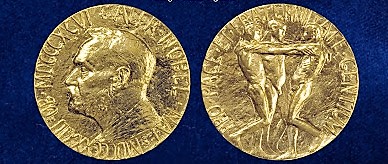
As for honours, forget for a moment that Churchill won a Nobel Prize in Literature in 1953, whereas I did not.  That was not a fair competition for I was but ten years old at the time, still struggling to master cursive writing.

nobelprize-medal-peace

I am much older now, but it would appear my own Nobel Prize is still likely some way off in the future.  Way, way off, some would say.

In any event, there is one post-nominal you’ll see me proudly using if you ever receive one of my calling cards.  After my name, boldly printed on the front, is the singular word author.

That will have to do.  I hate alphabet soup!


Also Known As

For most of my growing-up years, I wanted a nickname so badly it hurt.  But it never came to pass.  Not once did I ever have a proper sobriquet bestowed on me.

As one who spent a whole lot of time playing team sports, I knew countless other boys by their nicknames—Dingo, Big-Guy, Scoop, Madge (short for Magic-Man), and, rather unkindly, Lard.  When I think of them now, I can’t even remember their real names.  Nor do I picture them as the old men they surely must be; rather, I see them as they were back then—immortals, in a way.

chevy youth baseball

But I was not fated to be one of those ‘also known as’ guys.  My coaches forever called me by my surname or my jersey number.

Twelve!  You’re on deck!  Get out there!

If you are of my era, a Canadian childhood spanning the 40’s, 50’s and into the 60’s, and if you were a sports fan, you will know that our greatest heroes all had nicknames.

In basketball—the Stilt, the Big O, the Cooz, The Mailman, Pistol Pete.  In baseball—Teddy Ballgame, Joltin’ Joe, the Barber, Stan the Man, the Mick.

In football—Crazy Legs, Broadway Joe, the Deacon, Sweetness, Mean Joe.  In golf—the Squire, Slammin’ Sam, the Hawk, the King, the Golden Bear.

In hockey, my favourite of games—Mr. Zero, the Rocket, Boom-Boom, the Big M, the Roadrunner, Cujo, the Dominator, Number 4.

Female athletes, too, had nicknames, ranging across a number of sports—the Babe, Little Mo, Mighty Mouse, Tiger, Moses, the Swiss Miss, Flo Jo, the Black Widow.

nancy_green_lange_chamonix_history

[*The real names of these athletes are shown at the end of this post.]

But I never had a nickname.

At one point—desperate for a nom de guerre I could call my own, and because I was a year younger than my compadres in school and sport—I began to call myself The Kid.  I think I became a legend in my own mind.  In conversation with friends, I would say, The Kid did this…or The Kid did that…

To my chagrin, the nickname never caught on.  Nor did the practice of referring to myself in the third person, although it did garner me a lot of strange looks.

There were times during these years that I suffered the experience of being called a variety of names by others not favourably disposed towards me—loser, dork, pencil-neck, to name a few, plus some even less polite.  But those were not nicknames; proper nicknames had to be given in recognition of one’s accomplishments, talents, or character.

Sticks and stones…I would mutter quietly.  The Kid is above all that!

The closest I ever came to acquiring a nickname was at the end of my playing days, striving mightily to keep up with skaters twenty years younger than I in old-timers’ hockey.  But it wasn’t my teammates who conferred it; it was my opponents, muscling me unceremoniously along the boards.

hockey2

Outta the way, Grampaw!

Not exactly what I’d always aspired to be known as.

So, as you might expect, it has come as something of a relief to me that now, at this ripe old age, I have finally acquired a nickname I can be proud of.  Mind you, I bestowed it myself, to designate me as a ‘teller of tales tall and true’.

I am Talebender.

*Famous Athletes’ Real Names—

  • Wilt Chamberlain, Oscar Robertson, Bob Cousy, Karl Malone, Pete Maravich.
  • Ted Williams, Joe Dimaggio, Sal Maglie, Stan Musial, Mickey Mantle.
  • Elroy Hirsch, Joe Namath, David Jones, Walter Payton, Joe Greene.
  • Gene Sarazen, Sam Snead, Ben Hogan, Arnold Palmer, Jack Nicklaus.
  • Frankie Brimsek, Maurice Richard, Bernie Geoffrion, Frank Mahovlich, Yvan Cournoyer, Curtis Joseph, Dominik Hasek, Bobby Orr.
  • Mildred Didrikson Zaharias, Maureen Connelly, Elaine Tanner, Nancy Greene, Althea Gibson, Martina Hingis, Florence Joyner, Jeanette Lee.


She Married Her Father-in-Law!

Around the community where we live, I am known to most of our neighbours as Donna’s husband.  This, I think, is due more to my wife’s friendly, caring nature with everyone she meets, than it is to my somewhat more reserved approach.

I don’t mind, of course, because it garners me automatic entry into the circle of regard in which she is held.  I benefit from instant credibility, instant relevance, instant acceptance.

“Oh, you’re Donna’s husband!” is an exclamation I often hear, followed quickly by a wide smile from the speaker, sometimes even a hug.

hugging

Among my own family, however, my identity has morphed into something I never quite anticipated.  Increasingly now, whenever I encounter sisters, nieces and nephews, or other extended family members, I am told I look like my father.

“You’re just like him,” they declare.  “You even sound like him.”

They’ve heard me sneeze, you see, which reincarnates my father every time.

Although I loved him very much while he was with us, I confess I never aspired to be exactly like him.  I wanted to be my own man—not so unusual a desire, I suppose, for sons of successful, admired fathers.

As a young man encountering people who knew him, I would often hear, “Ahh, you’re Bill Burt’s boy.”

And I would struggle to suppress the haughty reply, “Actually, he’s my father.”

But now, happily entrenched in my mid-seventies, I am no longer possessed by that same hubris.  Just as I am inordinately proud to be both a father and grandfather in my own right, I am more than happy to be recognized as my father’s son.

IMG_3824

My beautiful picture


Still, it comes as something of a shock to be reminded by those who knew him that, more and more, I behave just like he used to.  In photographs, I gaze at the camera with the same bemused expression he always had.  I remember thinking he was trying for a mix of casual and noble at the same time; I don’t know what I’m attempting to do, but I somehow attain the same inane facial expression.

My mouth, at rest, turns downward at the corners, making me appear grouchy, when I am anything but.  I try to smile broadly for the camera, as he did, if for no other reason than to dispel that impression.

In many pictures, I’m sitting the way he did, or standing with the same posture.  As my jowls begin to droop, as my hair turns white, my profile shots are becoming eerily similar to his.

In videos, I walk the way he used to, shoulders hitched slightly high, strong chin tucked in, eyes peering out from under raised eyebrows.

And (somewhat depressingly, I must admit), I feel awkward now as I clamber from my easy chair to my feet, as I try to step into my trousers without falling over, as I walk slowly upstairs one-step-at-a-time—just as I remember my father doing at my age!

upstairs

I must confess, however, that I do like it when the comparison is reversed; for example, when my grandchildren see a picture of my father (whom none of them remember), and say, “Wow, Grandpa, he sure looks like you!”  That turns the corners of my mouth up every time.

And I appreciate the truth now in the lines from William Wordsworth—

…So was it when my life began,

So is it now I am a man;

So be it when I shall grow old…

The Child is father of the Man.

No one in our community ever knew my father; but if they were ever to see a picture of him, I’m sure I’d no longer be known as Donna’s husband.

Instead, the whispers would be, “Can you believe it?  She married her father-in-law!”

When Did It Start?

When did it start to be okay to ignore the fundamental tenets of good manners?  Of respect for other people?  Of common sense?

As a gentleman of a certain generation, I am beginning to notice innumerable illustrations of how the teachings of my parents, for instance, are flouted, seemingly with impunity, by so many people today.

When did it start to be okay, by way of example, for men to leave their hats on while dining in a restaurant?  Or while riding in an elevator?  Or when meeting someone for the first time?

hat

Was it not always de rigueur to doff one’s hat in such situations?

When did it start to be okay for a gentleman to remain seated when a lady enters the room?  Or when greeting someone at a social function?  Or when there is no seat left for an elderly person on a crowded subway car?

Was it not an expectation that one would respect one’s elders?

Perhaps it is cantankerous of me to bewail the apparent passing of such social niceties.  Maybe I am being overly pernickety in complaining about such faux pas.

And yet, when did it start to be okay to start eating before everyone was seated at the table, their food in front of them?  Or to prop oneself on one’s elbows, head lowered almost to the plate, to shovel food in?  Or to talk with one’s mouth full?

eating

Was dining not intended as a social occasion where one might enjoy, not only one’s meal, but the pleasant company of one’s family and friends?

And when did it start to be okay to show up for social occasions without a proper RSVP in advance, if requested?  Or to arrive fashionably late, or embarrassingly early?  Or not to appear at all when expected?

Were politeness and punctuality ever considered superfluous, unwarranted, not of value?

I can scarcely believe I am alone in bemoaning the dumbing-down of our social discourse to the lowest common denominator.  Alas, I fear it may be so, based upon the evidence I see on an almost-daily basis.

For instance, when did it start to be okay to interrupt while someone else is speaking?  Or to speak over them?  Or to ignore them altogether, perhaps by staring pointedly at one’s cellphone?

phone3

Was polite conversation not always considered to be an amiable exchange of ideas and opinions, offered with due regard for others’ points of view?

When did it start to be okay to speak loudly in public, to the annoyance of others around?  Or to sprinkle one’s speech with profanities?  Or to play one’s music so loudly that it impinges upon others’ right to peace?

Was consideration for others not always a hallmark of a polite society?

I suppose, in fairness, I must concede that not everyone is guilty of such breaches of social refinements.  In fact, among my circle of friends and acquaintances, there is more adherence than avoidance in evidence.  But my circle is not particularly broad.

When did it start to be okay in the wider world to make demands, rather than requests?  Or to forget please and thank you?  Or to refrain from offering the plate to others before helping oneself?

sharing

Are good manners now out of style?  Is it considered better in this day and age to receive, rather than to give?

And when did it start to be okay for one to let a door close after walking through, without checking to see if someone might be following close behind?  Or to forego standing aside in the first place, holding the door open for the other person?  With a smile.

Was such consideration for others not always a hallmark of civilized behaviour?

These contraventions of the social contract that has always held us together are, in my opinion, nothing short of egregious.  They tear at the fabric of our human condition, at the ties that bind us, one to the other.  We are the lesser for their prevalence.

I have written in the past that my wife (and others, I suspect) consider me a curmudgeon.  Perchance, I am.  Yet, despite such censure, I cannot stop asking the basic question—when did it start to be okay to ignore the standards of cultured, urbane comportment?

Curmudgeon_Logo

My wife hints at the answer, however.

“When did it start to be okay?” I ask.

“When you got old!” she answers.

Lying? No, Storytelling!

“What’s the most interesting thing that happened to you today?” he’d ask.  My grandpa, puffing on his pipe.

Pleased to have his attention, and anxious to keep it, I’d rack my brain for a response.  Growing up in the suburbs in the 1950’s was pretty mundane.  Nothing of great interest ever seemed to happen to me.

So, I’d make things up.  Not lying, exactly.  Storytelling.

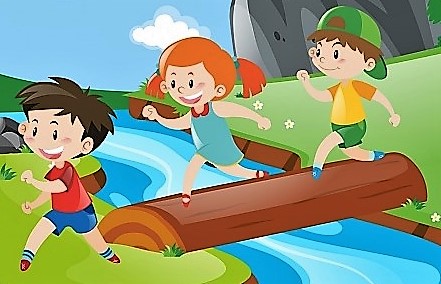
“I fell in the creek today,” I might tell him.  “Tried to walk across the log, but my foot slipped off .”

kids-crossing-a-river_1308-616

“How’d you get out?” he’d ask, wisps of smoke curling around his head.

“Wasn’t deep,” I’d say.  “But don’t tell my Mum.”

“Nope,” he’d say.  “Be best not to go near the creek anymore, though.”  And he’d give me a broad wink.

On another occasion, I might tell him that my bike got stolen, but I managed to get it back.  Heroically.

“Wasn’t it locked” he’d ask.

“Yeah, the lock was across the forks of the back wheel.  But the guys who took it just picked it up and carried it.  That’s how I caught up to ‘em.”

“What did you say to them?”

“Nothin’ Grandpa.  When they heard me comin’, they dropped the bike and ran away.  I guess I scared ‘em off.”

“Sounds like,” he’d say.  “Maybe you should fasten your wheel to the bike rack from now on.  Be hard to take that.”  His blue eyes would sparkle, and I’d love that I made that happen.

He never tired of asking the same question, and I never got tired of answering.  I might have told him how I won the game for our team when I made the game-ending catch of a long fly-ball in centrefield.

“Jus’ like Willie Mays!” I’d say, omitting the fact that I had actually stumbled and fallen, slid to an ignominious stop, only to have the ball land on my stomach, where I frantically clutched it.

ballplayer

“Mays is one of the greats,” he’d say.  “You caught it over your shoulder, like he did?  Wish I could have seen it.  Next time, though, try to keep the ball in front of you.  Those over-the-shoulder catches are pretty rare.”  And he’d flash me a knowing smile.

As a grandfather myself now, I know he knew I was padding the truth.  But I didn’t know back then.  I thought it was okay, because it brought us closer together.

He lived to a ripe old age, and in the last few years before he died, he was slowed considerably.  When I’d visit with him, it seemed our roles were reversed.  Now it was I asking the questions, and he searching for answers that would keep me there longer.  I always asked the old chestnut.

“So, what’s the most interesting thing that happened to you today, Grandpa?”

He no longer smoked his pipe, but he’d stroke his mouth as if still holding it, and I could almost hear the gears meshing inside his head.

“Nothing much today,” he’d say.  “But did I ever tell you about the time I saved your father from drowning?  Fell off the dock while we were fishing at the lodge up near Bala, no life-preserver.  I reached down, grabbed his collar, and hauled him straight out of the water.  Poor little guy cried like a baby.  That was pretty interesting, I’ll tell you.”

dock3

I’d heard the story many times, of course, and my father had debunked it every time.  “The water was shallow,” he told me.  “I jumped in, and waded ashore.  And I did have a life-preserver on.  Dad loves to tell the story, though.”

Of course, I never let on that I didn’t believe what my grandpa was telling me.  I remember hearing how he met the King, back in 1939, when he and the Queen, on their tour of Canada, visited the hospital where my grandpa was recuperating from surgery.

“I had a picture of the two of us,” he’d say.  “Don’t know what ever happened to it.  Your grandma must’ve thrown it out.  But that was really interesting!”

Grandma would only smile when I asked about that picture.  “Grandpa was in the hospital in 1937,” was all she’d say.

I heard about the lawn-bowling championship he won, the skip of a Dominion championship team in 1909.  According to him, the mantel clock that still sits in my home was the prize awarded for the victory.

clock2

“There’s no plaque on it, Grandpa,” I once told him.  “How come they didn’t put your name on it?”  The wistful look he gave me made me wish I hadn’t asked.

“Ah, they gave us all a letter,” he said.  “Signed by the prime minister, Mr. Borden.  That’s why your father’s middle name is Borden.  No idea where that letter is now.  But that’s pretty interesting, don’t you think?”

I nodded in agreement, and was circumspect enough not to mention that the prime minister in 1909 was Wilfrid Laurier.  My father was born in 1911, right after Robert Borden’s election.

By then, my grandpa’s eyes no longer sparkled as in days of yore.  But he’d still wink at me while telling his stories, and smile whimsically.  Kind of like my smile now, when I listen to my own grandchildren telling me about the momentous events in their lives.

And when they ask me about the interesting things in my day, I try not to lie to them.  Elaborating is not the same as lying.

“Nothing much today,” I tell them.  “But did I ever tell you about the time I saved my brother from the big kid across the road who was beating him up?  I ended up with a bloody nose and a black eye, but that kid never picked on my brother again.  That was pretty interesting.”

400-08651135

“Really, Gramps?” they marvel.  Or pretend to.

Of course, I don’t tell them the real reason my brother was safe afterwards; the kid’s family moved away.

To this day, I have a warm feeling inside when I remember my grandpa, and those conversations we used to have.  And I love the exchanges now with my grandchildren, swapping tales about our lives.

Not lying, exactly.  Storytelling.

Which is what I do.

It’s a Boy!

Another of those small milestones of life passed us by the other day.  Our youngest daughter reached the ripe old age of forty-five.  It didn’t appear to faze her, the realization that she is now firmly ensconced in middle-age.  But it brought a flood of memories for me.

Way back then, my wife became pregnant at the same time as one of my sisters—apparently within days of one another.  We didn’t know that at the time, of course, but as delivery day approached for each of them, it became a matter of conjecture as to which would blossom first.

woman-child-doctor-hospital

My brother-in-law and I oversaw a number of betting pools within our two families—all in good fun, naturally.  Who would deliver sooner?  Would the babies be girls or boys?  If one of each, which family would have the boy?  What would be the combined weight of the two babies?

The combined weight of the two mothers was never up for discussion!

As it happened, my sister went into labour first.  In short order, a wee daughter made her grand entrance, and all of us rejoiced.  My brother-in-law and I gathered the vital statistics for the betting-pools.

A day later, my wife told me it was time.  I drove her to the hospital, after dropping our older daughter off with my parents.  It was hard to tell who was more excited, our little girl or my mother and father.  None of them could talk coherently when we departed—my daughter because she was only a year-and-a-half old, my parents because they were so thrilled about my sister’s newborn, and our impending one.

We had elected not to know the gender before our baby’s arrival, as had my sister and her husband.  I think they’d been hoping, if they had a girl, they could borrow our daughter’s swaddling clothes if our new baby was a boy.

As far as we were concerned, the gender issue was a non-issue.  Unlike previous generations in my family (my grandfather and father both celebrated wildly whenever boys were born), I was more than happy to welcome either a sister or brother for our daughter.  However, given our precarious financial situation back then, which would be exacerbated by the arrival of another child, I was secretly hoping for another girl.  I mean, a boy would have looked strange in the pastel pink and yellow clothing that would have to be passed down from his older sister.

nice-baby-clothes-hanging-on-a-rope_23-2147522875

Our hospital was a welcome change from the location where our first daughter had been born.  This time, I was allowed—encouraged even—to be in the delivery room.  I had wanted to do that the first time, but was prohibited.

“We can’t be worried about a father who might faint during the birthing,” I was told.  They had obviously been tipped off that I had once passed out while having stitches removed from my hand.

I practiced for this delivery, though.  I attended the pre-birthing classes with my wife, learning all there was to know about the process.  I stood by her head in the mock-up sessions, holding her hand gently, counting the seconds of each mock-push and each mock-rest between.  I accepted that it was she who was allowed to scream, if necessary during the ordeal, not I.  And I was assured there would be a stool for me to sit on if my legs gave out.

The baby seemed like it would never come.  While my wife snatched some needed sleep, I spent time with my sister and newest niece, in their room down the hall.  In fact, I was there when my sister and her baby were wheeled into the room after a visit to the nursery.  I stood up when they entered.

“That’s not my wife, y’know,” I told the startled nurse.  “That’s my sister!”

The look the nurse gave me could have curdled my sister’s milk, had she been looking.  What sort of degenerates were we?

My sister quickly explained that my wife was awaiting delivery of our own baby, an explanation I wasn’t sure mollified the nurse.

Finally, some eleven hours after we had rushed to the hospital, the moment of arrival approached.  I was ushered into the delivery room, clad in gown, mask, and bootied feet, and planted at my wife’s head.  The doctor stood at the other end, with a mirror above and behind him.  For the next several hours (minutes, actually, but to me they seemed to drag interminably), my wife pushed and cried her way to the point where the baby began to emerge.

birthing

“Let’s rest for a moment,” the doctor said, clearing the baby’s tiny mouth with his finger.

Perched halfway out, with the barely-showing umbilical cord still folded back into the womb, the baby seemed a miracle.

“It’s a boy!” my wife declared between pants of exertion.  Her certainty, it turned out, was the result of mistaking the umbilical cord for another appendage that only a boy would have.

“If this is my son,” I thought to myself, incredulously, “he’s bigger than I am!”

The procedure was completed shortly thereafter, and we welcomed a second daughter into the world.  After she was placed in my arms, I was the first to begin cleaning her squinting face of the birthing detritus.  Words cannot describe my elation at that moment.  Forty-five years later, I remember it still.

To top off the day, my wife was taken to the same semi-private room occupied by my sister.  My mother and father were already visiting her, with our older daughter, when we were escorted in.  What a joyful experience—introducing our newborn to her sister, her slightly-older cousin, and other family members!

After ensuring everyone was settled in properly, the nurse sidled over to me.  With a gentle elbow in my ribs, she whispered, “So, you got them straightened out now, honey?”

Oh, yeah!


Curmudgeon!

Curmudgeon! 

Such a wonderful word to roll around on your tongue.  It has a solid, satisfying sound when spoken aloud, dropping weightily into a conversation like a bag of sand thumping a wooden floor.  It is defined as somebody who is bad-tempered, disagreeable, or stubborn.

Not at all the person I believe myself to be!

Yet, according to several of those closest and dearest to me, I am becoming something of a curmudgeon.  They tell me it has to do with my rather determined efforts to hold fast to the social dicta instilled in me by my mother.

etiquette

Although it’s been seventy years since first that grand lady began educating me on the social niceties—and despite my knowing that the customs and mores of our changing society have altered since then—I cannot stop bemoaning the loss of what I consider to be simple etiquette.

Let me provide a few examples, taken from experiences we had with folks in the community where we used to spend our winters.  And, I don’t mean to give you the wrong impression of them; they were all lovely people, good-hearted, gracious, and kind.  It’s just that they didn’t necessarily subscribe to the things I learned at my mother’s knee.

When my wife and I would invite a few couples for a dinner party, for instance, and specify an arrival time of five-thirty, I didn’t appreciate when everyone would arrive, fashionably late, some twenty minutes past the expected time.  We’d be sitting anxiously alone, wondering if everyone forgot—worrying that the hot hors d’oeuvres would be cooled and soggy by the time we got to eat them.

hors d'oeuvres

“Oh, we just wanted to be sure you were ready,” our guests would say when I’d make a supposedly-offhanded comment about their lateness.

But you see, we were always ready when we said we’d be.  Always.  If we’d thought we needed more preparation time, we’d have set a later arrival target for everyone.  My mother believed it was proper to arrive when your hosts asked you to.

“There’s nothing fashionable about being late,” she would say.  “It’s just rude.”

Hospitality gifts were another example.  Although they weren’t de rigueur, it became the thing to do as we visited back and forth at each other’s homes.  A favourite gift was a bottle of wine, nicely encased in a gift bag designed for the purpose—but never of the same vintage as might have been previously received from the same couple.

“Thank you,” I would say fulsomely as I pulled the bottle from the bag and set it to one side.  “We haven’t tried this one.  I’m sure we’ll enjoy it.”

“Aren’t you going to open it?” they’d ask.

“Uhh…no,” I’d reply, “not just now.  We have wine already selected for tonight.”

Their disappointment would be palpable as I proceeded to pour them a glass from the decanted wine I’d already planned for the evening.  And I was somehow made to feel as if I were offering a second-rate product, when sometimes, it was better than what they’d brought.

“How rude is that!” I’d rail at my wife after everyone had departed.  “And you know what’s even worse?  They took home the gift bag they brought their wine in!  Can you believe it?”

wine gift bag

My wife would tell me not to get so worked up, but it just didn’t seem right.

Here’s another case in point.  The day after our dinner party, some people would phone to thank us for the evening, graciously commenting on the food, the company, or the conversation among friends.  That’s exactly what my mother told me to do.

“Always call the following day to thank your hosts once again.”

But, increasing numbers of people don’t think to do that anymore.  Or perhaps they do think of it, but can’t be bothered.  Either way, it’s a classic breach of etiquette.

“Don’t worry about it,” my wife would say when I’d rail on about it.  “They thanked us several times at the door before they left.”

“It’s not the same,” I would respond, still miffed.

Now, lest you think I’m overly critical when I have no right to be, let me assure you that I tried to practice all these niceties when we were on the other side.  I’d ensure that we arrived on time, as specified by our hosts, never more than a minute out either way.

“Oh!  You’re here!” they’d say, lifting an eyebrow in surprise as they opened the door.

“Five-thirty,” I’d reply, with an exaggerated glance at my watch.  “That’s what you said, right?”

On one occasion, our hostess was still in the shower when we got there, at the appointed hour, and her husband wasn’t sure whether or not to let us in.

Of course, we always brought along a gift, usually the ubiquitous bottle of wine.  I’d proffer it unassumingly to our host, and often, to my great surprise, he’d open it immediately to pour us each a glass.  I found that mind-boggling.  It made me wonder if he didn’t have enough of his own, and was dependent on his guests for the evening’s libations.

“What if we’d brought flowers?” I’d rage later to my wife.

flowers2

And, so many times, when my wife or I would phone the following day to thank our hosts again for their hospitality, they would always sound bemused.  As if we shouldn’t have bothered.  As if they didn’t care, one way or the other.

“Don’t these people know any better?” I’d rant, scarcely coherent.  “Doesn’t anybody have any manners?  Why can’t they just do things right?”

“You mean your way?” my wife would reply sweetly.

“Yeah,” I’d say forcefully.  “The way my mother used to.”

But it would fall to my wife to have the last word in these discussions, and it’s a word that would always shut me up—at least temporarily.

“Curmudgeon!” she’d say.

curmudgeon


Expletive Deleted!

Neither a borrower nor a lender be!”  Sage advice from the English Bard, advice which I unsuccessfully tried to impart to my daughters as they were growing up.

shakespeare

Borrowing is an art, I used to tell them.  It’s very unlike lending, which is a straightforward act requiring nothing more than an assenting response to another’s request.

Anyone can lend something to someone.  No particular talent is needed, no marked intelligence, no difficult decisions.  A simple yes is all that’s necessary, and it’s done—just like that!

But borrowing is another thing entirely.  As a borrower, one has to know what’s needed and where it might be found.  One has to make certain decisions and offer certain guarantees to the lender.  It’s essential that one be able to make the request in such a manner as to elicit agreement from the other party.  And, of course, one must return the borrowed article in reasonable condition within an acceptable length of time.

Alas, it was that last condition that gave me a lot of trouble.  I’m a borrower, and always have been, which is why my daughters didn’t take my advice too seriously.  Yet, I never fully mastered the art of it.

I always knew what I needed and where to find it; there was no problem there.  And, I generally found other people quite agreeable in allowing me the use of whatever it was I asked for.  But returning what I borrowed in the same condition in which I received it always seemed next to impossible.

Mind you, I never took something back in a worse state than I found it.  That wouldn’t be ethical—and besides, I knew I’d soon run out of people who would agree to my borrowing their things!

No, my problem was that I ended up spending money to repair or replace the borrowed item, because, while in my tender care, the infernal thing would fall apart, get misplaced, or simply cease to operate.

The people from whom I borrowed stuff could hardly wait to see what wonderful surprises I’d be bringing back to them.  They actually came to my house, carrying things they wanted me to borrow!

toolsharing-01

One neighbour, for example, received a brand-new outdoor extension cord from me.  I ran over his with the electric mower I borrowed from him when my own gave up the ghost.  It was on that same occasion that his mower had a new on/off power switch installed—at my expense, naturally, since it cracked and broke while I was using the mower.

The same neighbour, on other occasions, had free repairs made to his electric barbecue starter, his circular saw, and the front fender of his car, all paid for by me before returning the borrowed items to him.

When his firm transferred him out west, the poor fellow literally cried at having to leave me!  As a going-away gift, I presented him with a new camera—to replace his old one, which I had dropped overboard on a canoeing expedition.

Given my track record, it was no wonder most of my friends knew that I never mastered the fine art of borrowing.  When people dropped by to see if there was anything I’d like to borrow from them, they also brought along a list of replacement items they’d be glad to receive when the usual misfortune befell me.

Eventually, however, I started cutting way back.  I discovered that I just couldn’t afford to keep borrowing other people’s things, upgrading or replacing them, then returning them.  With my daughters’ encouragement, I resorted to borrowing something only when I really, absolutely needed it.

There was the time, for instance, when I had to borrow my sister’s electric typewriter—this, in the days before computers.  I had a writing deadline, and my own, heretofore-dependable Underwood had expired.  Hers worked perfectly for the first few hours, and then, to my horror, I discovered the last line I had typed read:  Thx summary conclusions prxsxntxd bxlow arx furthxr xxplainxd in thx sxvxn appxdicxs attachxd to thx rxport.

typewriter-210640_960_720

My sister was not amused when I tried to return the defective machine with only a new ink ribbon to offset the problem.  Were I to tell you what she said, using her typewriter, it would have read:  xxplxtivx dxlxtxd!

So, before you ask—No!  I don’t need to borrow a thing, thank you.