
If this entire post appears in the body of your email, click the title to read it in its tallandtruetales blog setting.
It’s been sixty-eight years since I started driving legally, and in that time I’ve owned or co-owned twenty-five cars, the first of which was a used Corvair, a disaster on wheels.

For most of those years, we were a two-car family, although no longer. Our latest new car, a Mazda CX30 (which, given my age, may well be our last new car), is a virtual computer on wheels.
I was always a good driver, but never one who understood how to service or maintain my cars. I was able to change a flat tire (once I mastered how to work the jack!); I could refill the windshield washer reservoir; I knew how to check the dipstick and add oil when needed (though I never understood those 5W30 and 10W30 numbers); I even mastered the art of jumpstarting another car with the red and black cables connected correctly!
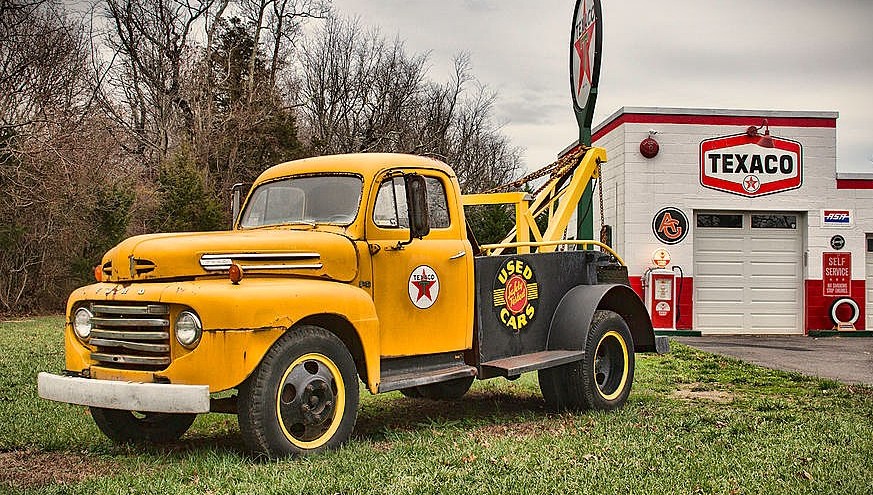
But I never understood terms like crankshaft, manifold, differential, torque, or gear-ratio. And to this day, I cannot explain the difference between carburetor and fuel-injector. Whenever I encountered a problem at that level, I called a tow-truck!
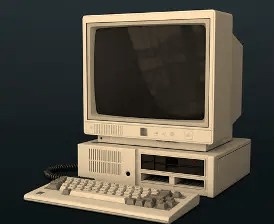
I am much the same with computers. My first was an IBM PCjr, purchased (perhaps portentously) in 1984. I mastered the art of writing my stories on it after I learned the critical significance of the SAVE key, but I am hard-pressed to explain the difference between hardware and software. My explanation runs along the lines of: the hardware is the thing itself, and the software is what’s inside it.
I write these days on a laptop that is linked in some mysterious fashion to my smartphone and tablet, allowing me to write drafts on the first and edit them on the latter two. I even know how to transfer those edited versions back to the laptop (although finding them is sometimes a problem!). This piece you are reading has successfully transited the gulf.
At some point after 1984, I graduated to Microsoft Windows (which, I was told, was similar to the Apple iOS operating system, neither of which I fully grasped). I’m now at the point where I understand that android systems are anything that isn’t Apple. As far as computers go, I suspect I may be an idiot-savant, minus the second part.
Aside from using computers for my writing, the best part of using them has been the social media aspect. It’s not as if I’m a slavish devotee of online communities, scrolling my way through my senior years, for I am not. After all, my password is nofriends, for I have none other than immediate family online. And I long ago abandoned the toxicity of the tweeting fraternity and other dark areas of the web.
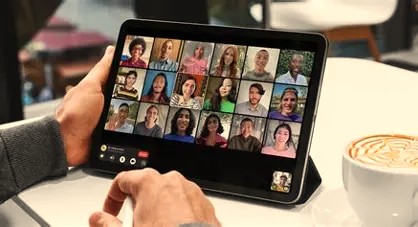
But it is a joy to be able to see our children and grandchildren online when we are physically far apart. I am in daily contact with my three sisters through text messaging, and I feel I know their far-flung families in a way I would otherwise not. We have friends of bygone years we are no longer able to visit with in person, either because of distance or frailty, but with whom we are in regular contact through emails and face-to-face online conversations.
I remember my parents telling me how, as they aged, their world grew smaller. For me, the opposite is true. Thanks to my computer, my world has expanded, even if vicariously to some extent.
My parents, who lived into the first decade of this century, were not tech-savvy, and never owned a computer or smartphone. My mother, distrustful of technology, used the microwave in her Florida home as a breadbox. My father thought it a miracle when they purchased a Panasonic cordless phone that allowed him to pace the room as he talked without tripping on a tangled cord! And neither of them ever rode in a car that talked to them.
Our new car talks to us, though. She talks non-stop, as a matter of fact, through her pleasantly-modulated, AI female voice, and communicates via any number of buzzers, beeps, chimes, and dings. She also connects effectively with us on a large, dashboard-mounted computer screen (a touch-screen, no less!), and via a covert CarPlay link that allows me to use my smartphone for a number of tasks. I can actually start the engine before I am anywhere near the car, although I’ve yet to figure out why I’d want to.

Miracle of miracles, I never get lost anymore while driving. And I’m never late arriving anywhere. If I follow the instructions of Siri, our silken-voiced guide (whom we have yet to rename), I am sure to arrive to my destination. My father, who used to curse the endless unfolding and refolding of those old paper maps, would be gobsmacked!
I am, too! For, just as I have never understood how my cars actually work or how my computers actually function, I am mystified how they have come together so seamlessly. It astounds me that, rather than buying this latest car, we could have acquired a self-driving one that would ferry us to and fro (rendering me obsolete, as it were!). I confess I would balk at that, distrusting the technology just as my mother did with her microwave.
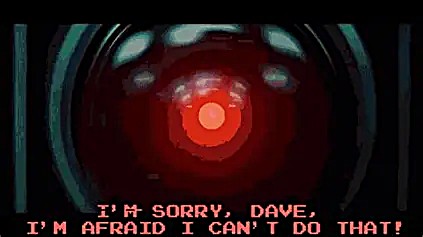
I receive continuous updates and alerts on my smartphone now pertaining to this new car. And if anything is amiss when the car is parked somewhere (an unlocked door, for example, an interior light left on, or a tire losing pressure), I am notified immediately. It really is quite reassuring in a way—although I do have recurring misgivings from that great movie, 2001, where HAL is talking to Dave in such comforting, dulcet tones even as he plots his destruction.
Surely, Siri seeks simply to solve our issues. Or so I suppose.
In any case, we are comfortably acclimatized already to this computerized car’s cocoon of comfort and safety in which we’re ensconced on our road-trips. We are virtually assured that nothing will go wrong. Still, true to my ever cautious nature, I do have a back-up plan, just in case.
I do remember how to call a tow-truck!


