From My Aging Eyes

from my aging eyes,

the boy I once was looks out—

hardly changed at all

portrait-of-boy1

I was born before D-Day, before V-E Day, before V-J Day.  If you don’t recognize those occasions, you’re most likely younger than I.  World War II was the single biggest event in the lives of the generation before mine, and the year I entered the world, it was still raging on.

When I was born, I joined almost 2.5 billion other souls on the planet.  In North America, the average cost of a house like the one we eventually lived in was $3600, and the average annual wage was only $2000.  My future father-in-law, then a callow twenty-one-year-old, earned $800 that year, the first time he filed an income tax return.  A new car, for those who could afford one, cost about $900, and the gasoline to fuel it cost fifteen cents per gallon.  A bottle of Coca-Cola cost five cents.

1943_ford_coupe

Among the people born in the same year as I (and you’ll recognize their names more readily than mine) were Arthur Ashe, Robert de Niro, John Denver, Bobby Fischer, George Harrison, Mick Jagger, Janis Joplin, John Kerry, Billie Jean King, Peter Marsh, Jim Morrison, and Lech Walesa.  Seven of them are no longer with us.

Major world leaders included William Lyon Mackenzie King here in Canada, Winston Churchill, Adolf Hitler, Benito Mussolini, Franklin Roosevelt, Jan Christiaan Smuts, and Joseph Stalin—many of whom didn’t like each other at all.

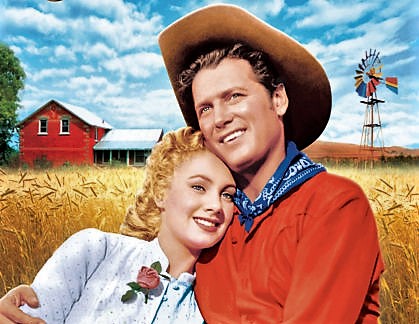
Among the popular films my parents went to see in the year I was born were For Whom the Bell Tolls, Heaven Can Wait, Lassie Come Home, The Titanic, and the winner of the Academy Award, Mrs. Miniver.  Frank Sinatra and Glenn Miller were music icons of the day, and Oklahoma opened on Broadway.
oklahoma2

Some of the most popular books published that year included A Tree Grows in Brooklyn by Betty Smith, Being and Nothingness by Jean-Paul Sartre, The Little Prince by Antoine de Saint-Exupéry, The Fountainhead by Ayn Rand, The Ministry of Fear by Graham Greene, and Thirty Seconds Over Tokyo by Ted. A. Lawson.  My favourite (which, of course, I was not able to read until six or seven years later) was Thunderhead by Mary O’Hara.

The New York Yankees won the World Series that year, the Detroit Red Wings won the Stanley Cup, and Count Fleet won the Kentucky Derby, but both the U.S. Open in golf and Wimbledon in tennis were cancelled because of the war.

Invention, spurred on by the wartime effort, saw the development of the aqualung, the Colossus computer used to decode the German Enigma encryption, the ever-popular Slinky toy, and silly putty.  The Manhattan Project to develop the atomic bomb, which cost almost two billion dollars, was well underway.

atom bomb3

Nachos were invented the year I was born, and remain popular to this day.  The ABC radio network began broadcasting that year, launched by the founder of the Life-Savers candy company.  The Philip Morris tobacco company unveiled an ad that, for the first time, acknowledged smokers’ cough, although they blamed it on other cigarette brands.  The chairman of IBM conceded that “…there is a world market for maybe five computers.”  And a Swiss chemist discovered the hallucinogenic properties of LSD—presumably on a trip.

I was born well before the following technological marvels we take for granted today became commonplace:  duct tape, television, Tupperware, credit cards, waterproof diapers, transistors, defibrillators, supersonic aircraft, cat litter, the Zamboni, crash-test dummies, aerosol paint, teleprompters, airbags, barcodes, heart-lung machines, WD-40, zipper storage bags, automatic sliding doors, radar guns, computers, hard disk drives, silicon chips, videotape, lasers, spandex, artificial turf, the Pill, LED’s, Buffalo wings, 8-track tapes,  CD’s, space travel, personal computers, the internet, and smartphones.

I was not, however, born before the Wright brothers first took flight (as my sons-in-law are wont to claim).

brothers-wright3

But hey, lest this looking-back convey the impression that I long for the good old days, whatever they were, let me assure you that such is far from the truth.  In fact, as I approach my seventy-fifth birthday, I look forward to the changes yet to come—just as I marvelled at those occurring during my life so far—and with the same boyish enthusiasm as ever.

As Dylan so memorably wrote and sang, the times they are a-changin’.  But somewhere inside this gnarly old man, there still resides the precocious boy who spawned him, surprised he has not changed.

closing in on my

diamond jubilee, the

man is still the boy

man and boy1

          Have a happy birthday, old man!
 

Secret Valentine

(first posted 12 February 2016)

In a recent telephone conversation, one of my granddaughters reminded me that Valentine’s Day is coming round again.

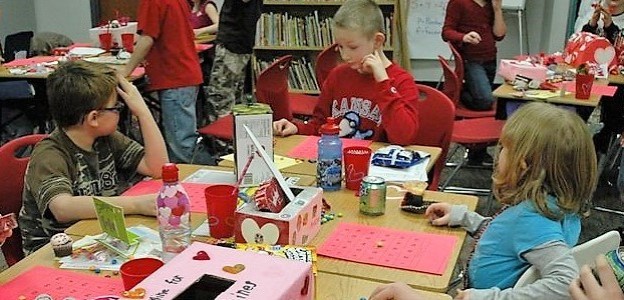
She didn’t ask if I would be her valentine again this year, as I have been for most of her six years, which would have been nice.  No, instead she mentioned that she’d be giving a valentine to every one of her classmates at school.

“Every one of them?” I exclaimed, mildly astonished.  “Don’t you have, like, one special valentine?”

“No, Gramps,” she replied.  “That’s not how it works.  In grade one, you give everybody a valentine.  All the kids do.”

galore_valentines_kids

I wondered how many youngsters there were in her class for whom she was planning to buy a valentine card.  After all, how many valentines can a six-year-old handle?

“How can one person have so many valentines? I protested.  “Being somebody’s valentine is supposed to be a special thing.  Won’t people wonder why you’re giving everyone a card?”

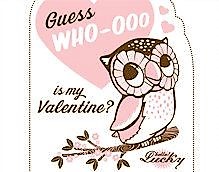
“Gramps! You don’t understand!  They won’t know who gave the valentines to them.  Mummy’s going to help me print ‘Guess Who?’ on all of them.  My name won’t be there.”

“Okay, wait a minute, l’il guy,” I said.  “Let me get this straight.  You’re going to give valentines to every kid in your class…”

“And my teacher,” she cut in.

“And your teacher,” I continued.  “But, you’re not going to put your name on them, so nobody will know that you gave them a valentine.  I don’t get it.”

“Oh, they’ll know, Gramps.  Everybody knows.  They just won’t know which valentine I gave them.  That’s the fun of it.”

That’s the fun of it?  Back when I was a kid, the fun of it was in deciding whom I would ask to be my special valentine.  To which little girl would I dare to offer a valentine card?  And who would accept it without laughing?  Or worse, not accept it at all?

shy boy

There was a certain delicious risk involved back then, a risk that made the whole exercise worthwhile.  After all, asking someone to be your special valentine meant you were sort of sweet on her (or him, if you were a girl).

But, times change, and so do valentine cards.  Now, they don’t ask someone to be your valentine; instead, they proclaim ‘Happy Valentine’s Day’!  They’ve become indistinguishable from birthday cards, for goodness’ sake.

Anyway, I wished my granddaughter well with her plans.  I harboured the faint hope that perhaps I’d still receive one from her—with her name on it!

Afterwards, I kept thinking about our conversation.  Anonymous valentine cards made no sense to me.  But, my granddaughter had stated, “They’ll know…”

Well, who’s to say?  Maybe they will.  It occurred to me that I’ve always sent anonymous, loving wishes to my own two daughters—back when they were growing up, and even now, as they raise their own children.  I never thought of that as silly.

good night

At night, after they were asleep, I had the habit of whispering in their ears, to tell them how much I loved them.  They hardly stirred as I did it, and they never mentioned it the following day.  And, every day now, when thoughts of them cross my mind, I still send little messages of love their way.  I always believed that, somehow, they would know I was telling them.  Anonymously, as it were.

So, maybe my wee granddaughter is right.  Perhaps it isn’t such a ridiculous notion.  In fact, I’m even hoping to receive a valentine this year from ‘Guess Who?’

I’ll know.

guess who

Write Lots

write, write, and rewrite—

write until it doesn’t sound

like writing at all

writing

Haiku is a very short form of Japanese poetry, altered over time to fit the demands of the English language.  The essence of haiku is represented by the juxtaposition of two images or ideas and a break between them, a kind of verbal punctuation mark that signals the separation, and colours the manner in which the juxtaposed elements are related.

Traditional haiku consist of seventeen syllables, rendered in English in three phrases of five, seven, and five syllables, respectively.  The lines usually do not rhyme, although many haiku composers try to rhyme the first and last phrases as an additional challenge.

A three-word haiku poem is extremely difficult, but a lot of fun to attempt.

Here are some more samples by me, a keen neophyte, accompanied by pictures for my own pleasure—

nightmares waken me,

phantom fears that something lurks—

banished by the dawn

IMG_1015

comes dawn, the new day,

rising full of hope unspoiled,

banishing the night

IMG_1411

shoulder to shoulder,

a capella voices raised—

united in song

IMG_1449

shore birds by the pond

visible in dawn’s first light—

stalking careless fish

IMG-7850

unrelentingly

under-appreciated—

mediocrity

mediocrity

And a final one—

write lots and often,

share most of it with readers—

prose and poetry

Creative-Writing-Tips-9918

Addressing Sexual Misconduct

Over the past several months, it appears the floodgates have opened on revelations of sexual misconduct, some reaching into the highest corridors of power.

But these are revelations only.  The actual offenses have been going on, largely unreported, for longer than any of us would care to admit.  And that makes it all the more important to take action whenever such allegations surface.

metoo

Some twenty years ago, during the last decade of my working career, I held three senior positions:  superintendent of personnel in a large school board, and then chief executive in two different school jurisdictions.  During that time, I had to deal with a dozen cases of reported sexual misconduct by employees.

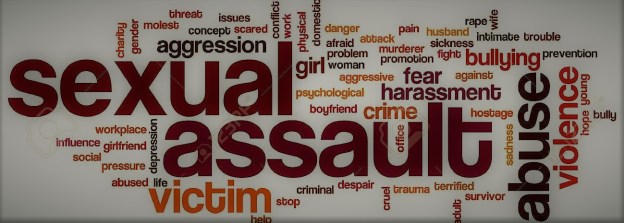
The range of offenses included sexual harassment, sexual interference, sexual assault, solicitation of sexual favours, and the exploitation of students in the making and distribution of child pornography.

All the perpetrators were men, either teachers or business/operations employees.  Their victims included adults and children of both genders.  In all but two cases, those children were under the age of seventeen.

Of course, that number of offenders constituted but a tiny fraction of the total of dedicated and professional staff we employed.  But any number is too many.

64156147-sexual-assault-word-cloud-concept

Four of the situations resulted in criminal charges being laid against the wrongdoers by police, and all went to trial.  The remaining situations were dealt with internally, involving an array of sanctions ranging from formal reprimand to outright dismissal.  In two cases, after investigation by police and child welfare authorities, the accusers subsequently retracted their allegations and the accused parties were absolved—although with some collateral damage to their public reputation.

In all three jurisdictions we had clear policies in place to affirm the right of every student and every employee to a safe learning and work environment.  Those policies included a reporting mechanism available to any persons who felt they were victimized, or on whose behalf a report was made by a concerned third party.  They also spelt out procedures by which designated managers would shepherd each case to its conclusion.  In every case but two, proper procedures were followed.

Both those situations involved mistakes by two school principals (both of whom were acting in what they believed to be the best interests of their students, who were minors), who decided to investigate the reports of sexual misconduct themselves.  The policy clearly stated—in accordance with provincial law—that, in such situations, it is the duty of the responsible official to contact the police or child welfare authorities, who will handle the investigation.  The principals, whose performance records to that point were unsullied, erred badly.  They were subsequently charged, found guilty, and fined.  Duly reprimanded, they were eventually reinstated to their positions, presumably much the wiser.

One of the perpetrators in those two cases, a teacher, was subsequently cleared of wrongdoing.  The other, a custodian, was eventually charged by police and found guilty at trial.

The sexual harassment situations were investigated internally by my staff, and all parties were given the right to state their cases—although not face-to-face, unless the victims so chose.  In every case, the accused parties admitted to their actions, professed not to realize they had caused offense, expressed remorse, apologized, and vowed not to re-offend.  I issued formal, written reprimands to them and, following a suspension, they were also reinstated.  To my knowledge, there was no repeat of their behaviours.

mediation

In three of the criminal cases, one perpetrator pled guilty, two (a teacher and the aforementioned custodian) were found guilty at trial, and jail sentences were imposed on all of them.  In each case, the school board terminated their employment and I reported the two teachers’ names to the ministry of education, which revoked their teaching certificates.

The fourth criminal case was dismissed by the judge at trial, where he deemed the Crown had failed to prove its case under the law.  That teacher, however, was dismissed by the school board even before the trial, because we had sufficient evidence to determine that he had behaved unprofessionally, without regard for the welfare of the seventeen-year-old student with whom he had engaged in sexual relations.  Whether or not the criminal justice system regarded him as a predator who should not be near vulnerable young people, the school board certainly did.

I subsequently reported that case to the provincial college of teachers (which, by then, had taken over the professional disciplinary role from the ministry).  The college did not revoke the teacher’s certificate—perhaps because he had been found not guilty of a criminal offense.  Those are two decisions I disagree with to this day.

In the two cases where accusers recanted—after sensitive counseling sessions with child welfare authorities—the accused teachers were returned to duty after having been assigned to a central-office work-site during the investigations.  The publicity surrounding their cases, however, had the unfortunate result of leaving them unfairly tarred by the brush of public opinion.

In the wake of the recent spurt of allegations of sexual misconduct against prominent men—and based upon these experiences of mine—it strikes me that we must, indeed, pay attention to every accuser’s claims.  Yes, some may be spurious, some even outright false, but there is no question that such abuses do exist in our schools and workplaces.

victim

It seems to me, as well, that there is a difference between the exposure of such misbehaviours, with a concomitant imposition of suitable, punitive measures (call that the ethical bar, to protect the most vulnerable among us), and the higher standard required for criminal prosecution (call that the legal bar of guilt beyond a reasonable doubt).  Everyone is entitled to his or her day in court if charges are laid.  But sadly, some predators are never charged.

Even more importantly, everyone is entitled to personal safety in their schools and workplaces.  People in authority must listen and give a voice to those who feel abused and disempowered.  Under my watch, some perpetrators, even if not guilty of offenses under ‘black letter’ law, were indeed guilty of sexual misconduct.  And so, the employer had to act, even if the courts did not.

I’m not sure we did everything right in the situations I encountered those many years back.  Despite our best intentions, people got hurt.  But the one thing we did not do is ignore the pleas for help.

rape-victims

Nor should any of us now at this watershed moment in time.

Lust and Power

In a 1976 interview for Playboy magazine, the 39th president of the United States, Jimmy Carter, said, “I’ve committed adultery in my heart many times.”  This was in response to a question about his views on the Bible’s admonitions about adultery, and was a paraphrase of Christ’s teachings in Matthew 5: 28—“I tell you that anyone who looks on a woman with lust in his heart has already committed adultery.”

carter

Many were aghast that so prominent a man would admit that, thereby damaging his political standing.  Others saw it as an honest answer from a pious man, acknowledging his imperfections.  Still others saw it as a cynical ploy—embracing both arrogance and humility—wanting to appear virtuous in the face of temptation, thus enhancing his political position.

Whatever it was, it is extremely unlikely Carter was the only man to have sinned in that fashion, although most of us would not choose to admit it.

There is obviously a difference between the so-called evil of lust and the widely-accepted blessing of love—but perhaps not so great a gap as might be imagined.  Lust is relatively easy to define: a strong, sexual desire; a sensuous appetite (regarded by many today as sinful).  Its blunt hunger can be satiated, at least temporarily, through participation in a sex act with someone else, or even alone.

Love is a softer sentiment, usually involving sexual attraction, but also embracing such emotions as friendship, protectiveness, tolerance, forgiveness, happiness, fulfilment, and mutual respect.  It is something that, although freely given, must also be earned.  In a truly loving relationship, the quest for love is never satiated, but yearned for, and given, all the more.

It cannot be disputed that the propagation of our species has relied upon the sexual attraction between men and women, their lust for each other.  If two people also found love in their coupling, that was a bonus.  Love for one another was not required in order to produce offspring.

Image result for free pictures of caveman and cavewoman

Biologically speaking, lust can drive a person to have sexual relations with more than one partner of either gender, and more than once with each.  And so it is with love.  There is no biological impediment to falling in love with, and entering into a loving relationship with, multiple partners—although obviously, no children will result from a union of partners of the same gender.

Over time, and for a multitude of reasons, monogamous marriages became the norm in our culture.  Although men and women could fall in love with more than one person, the law allowed us to marry but one at a time.  However, the standing of each person in the conjugal union was unequal.  For a long time, women were considered to be, if not the property of their husbands, at least subordinate to them.  Power resided with the men. That status has changed ever so slowly, only beginning a hundred years or so ago.

At the time the Dominion of Canada was formed, a decade before the birth of the great Republic to the south, our fathers of confederation and their founding fathers espoused equality for all.  But that noble ideal was to be applied only to the propertied classes—almost all of whom were male, white, rich, and protestant.  Others of different gender, race, wealth, and religion were scarcely considered, except as property, workers, or servants.

Money and power were all that really mattered, and both resided with men.

Thus, it continued to be possible for men who lusted after women (or other men, or children) to prey upon them with relative impunity.  Might makes right, as the adage has it, and fear can make cowards of us all.  For the victims, suffering the abuse in silence was often more palatable than facing the public shaming and loss of employment that would crush them if they complained—assuming they would have been believed in the first place.

Depressed Tenage Girl

Jimmy Carter was honest in his admission.  But I wonder, is it possible all men harbour such thoughts from time to time, even if only a relatively small number act on them?  I cast no stones at him.

I also wonder, does power corrupt only men?  Would women who come to power be immune to its seductive persuasions?  And would any act on them?

Sexual misbehaviour of any sort is unacceptable, a monstrous issue only now being brought to the broader public arena.  But I believe it is power, not lust, that is the driving force behind such behaviour.  Any of us might experience lustful feelings, just as any of us might fall in love.  But only the most powerful, the most arrogant, the most sociopathic among us would mobilize those feelings into unwanted actions, forced upon unwilling victims, solely for our own gratification.

It is as if the predators, when seized by a biological imperative, say to themselves, Because I can, I will.  And who is to deny me?

And so, it is time, as many are saying—time to expose and shame those who are found guilty of transgressions, time to re-assess the accepted perquisites of power, time to educate our young people as to what is deemed acceptable in social intercourse, time to redefine the relationship between men and women.

2018_FP_TIMES_UP_BANNER

It is more than time.

The Sneezer

My father was a prodigious sneezer.  As children, my siblings and I would delight in watching his frantic scramble for the handkerchief he invariably carried in his back pocket, seeing his face scrunch up in anticipation of the looming explosion, hearing the violent expulsion of air from his lungs.

Getting at the handkerchief was often problematic, especially when he was seated.  Without warning, he’d burst from his chair, sometimes spilling to the floor any of us children unlucky enough to have been sitting on his lap.  Pawing frantically at his pocket, turning away from anyone present, he’d pull the white cloth out, shake it quickly, and plant it firmly across his mouth.  Once in a while he was late getting it in place, which would elicit frustrated mutterings between sneezes.

We thought this routine was especially funny when carried out at church, in the middle of another long sermon.  Or while he was on the phone.

sneezer1

During his fumblings for the handkerchief, he’d squeeze his eyes tightly shut, wrinkle his slightly bent nose, and tilt his head backwards, looking for all the world as if he was beseeching the heavens to spare him.  His Adam’s apple, never particularly noticeable at other times, would bob up and down with his every stifled gasp.

And the noise!  Depending on the severity of the sneezes, or how quickly they came upon him, the noise could be loud trumpeting, loud wheezing, even loud hissing.  Always loud.  We were never disappointed in the range of noises he could muster.

A-roo-pha-a-!  A-roo-pha-a!  we might hear.  Or A-ree-cha-a-a!  A-ree-cha-a-a!  Sometimes A-chintz-ish!  A-chintz-ish!  There seemed no end to the variety of forms his sneezes could take.  But always, they were six times repeated before he seemed able to stop.  I think we first learned to count by marking my father’s sneezes.

My mother, always proper, would roll her eyes, frown, and sometimes admonish him for his attention-seeking ways.  That’s how she regarded them.  Genteel people, she maintained, would sneeze into their handkerchiefs so quietly as not to disturb those around them.  And they would never draw attention to themselves in so garish or boorish a manner.

sneezer3

At her words, my father would nod agreement and point a finger randomly at her as he completed each cycle of sneezes.  But he never changed.  Not once as I grew up did I hear a gentle sneeze from him.  No discreet Ker-choo!  No soft A-choo!

He’s gone now, of course, and I’m older by far than he was when I first began to marvel at his sneezes.  Over the years, I’ve become quite aware of the power of genetic coding as I’ve lived with my own daughters—and my wife—bemusedly berating me for my own sneezing habits.  I believe, at least in this one small way, I am my father reincarnate.

Allergy season is a disaster for me, and every season seems to boast one or more allergens that trigger my sneeze reflex.  Remembering my father’s sneezing, I’ve striven mightily to conform to my mother’s admonitions to him.

But honestly, have you ever tried to suppress a sneeze?  Successfully?  If you can, you’re among the blessed of the world.  I marvel when I see someone turn their face into their sleeve and emit a barely audible Mmm-ffft!  They behave as if that simple act is nothing.

When I try, my eyes begin to water, my breath comes in short gasps, and I can’t continue talking, so preoccupied am I with the tickle in my nostrils that just won’t go away.  And it’s always to no avail, anyway.  I’ve even tried clamping my hand over my mouth, only to have the eruption through my nose.  That’s not pleasant, handkerchief or not!

To my chagrin, I’ve discovered that my grandchildren may have inherited the sneezing curse.  I watched one of the girls recently, doing as she’s been taught, sneezing into the crook of her elbow rather than into her hand.  I thought this a much healthier way of proceeding until I saw her wipe the residue off her sleeve with…you guessed it, her hand!

sneezer2

And my grandson—what a sneezer he was as an infant.  I even wrote a poem for him, so taken was I with his prowess.  It was entitled Ebenezer Sneezer, and he laughs at it still.

But alas, it’s still I who commands the attention of all around me when I have to sneeze.  Although I remember my father fondly for so many reasons—his sense of humour, his kindness, his pride in his ever-growing family— his sneezing proclivities bedevil me to this day.

You may laugh at my concern, thinking it trivial, but it’s the only thing in my life where I can truly say, “It’s nothing to sneeze at!”

sneezer4


From Sapiens to Omnipotentus

Science is pretty clear that Homo sapiens has been populating the planet for more than 200,000 years—a considerably longer time than the Christian story would have us believe.  The Garden of Eden was purportedly created some six thousand years ago, and most archaeologists believe it was located near the convergence of the Tigris and Euphrates rivers, at a spot now submerged in the Persian Gulf.

The_Temptation_in_the_Garden_of_Eden_by_Jan_Brueghel_the_elder

But in fact, forms of earlier human life have been documented as far back as two-and-a-half-million years.  Our human predecessors—part of the animalia family, the vertebrata subphylum, the mammalia class, the primates order, the homininae subfamily, and the Homo genus—include, among others, such species as Homo habilis, Homo erectus, Homo heidelbergensis, and Homo neanderthalensis.  All are now extinct.

As a child raised in a Christian home, I was taught, and came to believe, that man was created in God’s own image.  (As an aside, I was also taught that woman was created from a rib of that man—which, if not an original sin, was at the very least an original prioritizing of importance.  As a further aside, I later came to understand that the Christian stories depicting this creation were written by men, which explained that version of events.)

Somewhere along the way, I was also exposed to the tantalizing question: did God create us, or did we create God?

Humans alive today—let me group women and men together as humankind for purposes of this essay—are members of the Homo sapiens sapiens subspecies, which we are told has been in existence for perhaps 70,000 years.  Were we, through some magical time-warp, able to confront some of our earliest sapiens predecessors, we would scarcely recognize them as human.  I cannot imagine what they would think of us.

Self-Domesticated-Apes

Nevertheless, biologically, genetically, we are virtually identical.

Pictures of earlier Homo peoples, reconstructed from archaeological findings, show they looked quite different than we do.  They behaved differently, too, living in an environment quite distinct from ours.  It seems obvious that, over the millennia, humankind has evolved to accommodate the changing conditions.  But beneath the skin, beyond the discrepancies in physical appearance, we are related as a part of the same family in the same fashion that any of us are related to our grandparents.  The earliest humans so far identified through fossil evidence—perhaps Homo ardipithecus or Homo australopithecus—were part of humankind.

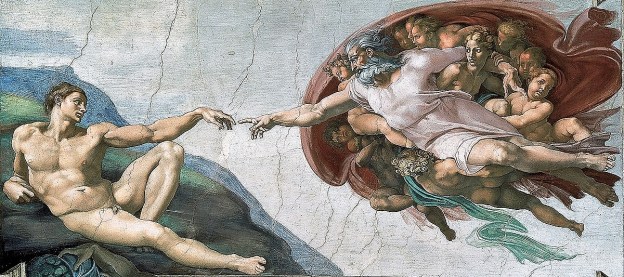
When I was first taught that humankind was created in God’s image, I made the completely valid assumption that God, therefore, looked like us.  His many depictions in the magnificent paintings of the masters only proved it—a stern, majestic, bearded being, (male, of course), clothed in white raiment, surrounded by angelic hosts, allowing the tip of one finger to be touched by a mere mortal reaching in supplication.

1200px-Creación_de_Adán_(Miguel_Ángel)

But I have long since wondered, can that be so?  If humankind was, indeed, created in his image, perhaps he actually looks like our earliest ancestors, hairy and ape-like—unless, he, too, has evolved across the centuries (which I concede is a real possibility).  This would not contradict the creation story, merely situate it in a much earlier timeframe.

Such speculation, however, leads me to an even more intriguing question.  It seems indisputable that Homo sapiens sapiens is continuing to evolve.  Our marvellous brains have led us to the cusp of some wonderful, perhaps terrifying, advances in medical science—advances which have allowed us to live our full span of years, and more, relatively free of the scourges of premature death, when compared to those who came before us.

Cloning sheep, so astonishing a feat a mere handful of years ago, was just the beginning.  Purposeful studies today in such fields as stem-cell research, human genome-mapping, in vitro fertilization, nanotechnology, and artificial intelligence, to name a few, are moving us beyond the boundaries of what we have always understood to be true of our mortal selves.

Will humankind, in the not-so-distant future, be able to create human life?  And maybe code it to follow a certain, predetermined path of development?  Will our brains, perhaps conjoined with, or replaced by, digital, adaptive intelligence be able to take us to another evolutionary stage?  From Homo sapiens sapiens to, let us say, Homo sapiens omnipotentus?

binary-1536617_960_720

Will humankind in that case become, not cast in God’s image, but God?  Is that the evolutionary future of the being that created us in the first place?  To become us?

It has been written that we are one with God.  Perhaps, some day in the future, we shall be so.

It’s the Rich Wot Gets the Pleasure

My parents considered themselves members of the ‘upper-middle class’, and took pains to ensure that we children understood that.  I’m not sure I ever did, though, although we were neither rich nor poor.

Most of my growing-up years were spent in a modest, suburban home, on a standard-sized lot, in a neighbourhood of similar families, none of whom had everything they might have wished for.  I was ten years old before we acquired our first black-and- white television set, for example; I was sixteen before we got our first car, a ten-year-old British import handed down from my grandfather.  As a matter of fact, hand-me-downs were integral to our lives.

suburb

We knew there were lots of families who had more material wealth than we did, but they didn’t live in our community.  Their homes were larger and boasted swimming pools, two-car garages, and paved driveways, with proper kerbs, not ditches, lining their streets.  We knew there were people with far less than we had, too, but we would encounter them only infrequently, and were taught it was best to avoid them.

So we did realize, I suppose, that we were in the middle between the rich and the poor, between the so-called upper and lower classes.  But the finer distinctions within this middle class were lost on us.  It mattered not that one kid’s father drove a bus, while another’s worked in an office.  No one cared if somebody’s mother had a job, while another’s was a stay-at-home Mum.  Blue-collar and white-collar meant nothing to us.  Knowing we were loved and safe was all that mattered.

As an old rock song attested, …Here [we were], stuck in the middle with you.

stuck

One of my grandmothers used to sing an old British pub-song, in a fake Cockney accent, to the great amusement of her grandchildren, and it seemed to reinforce the fact that we were solidly and safely middle-class—

It’s the rich wot gets the pleasure,

It’s the poor wot gets the blame,

‘Tis the same the ‘ole world over,

I’n’t it a bloomin’ shame!

Mind you, as we grew older, we were encouraged—strenuously—to strive for as much as we could get, to never be satisfied with less.  It was important, we were taught, to pursue an education; to find, not a job, but a career; to plan for the future; in short, to rise above our station in life.

Inevitably, some of us took that advice, and some of us did not.

Today, I’m led to believe by pundits and prophets that the middle class is disappearing as the wealth-gap widens between the rich and the poor—or, perhaps more accurately, between the few rich and the multitudinous poor.  I admit it’s hard for me to comprehend that, because I’ve never been either fabulously rich or ruinously poor.  Being in the middle has always seemed a good place to be.

I recently finished an interesting book—Sapiens, by Yuval Noah Harari—that delves into why, despite a professed passion for equity and fairness in our modern, liberal society, our species continues to divide ourselves into castes—cultural, religious, and economic.  I’m about to begin a sequel, Homo Deus, which looks at where we are likely headed.  Harari does not paint a rosy picture.

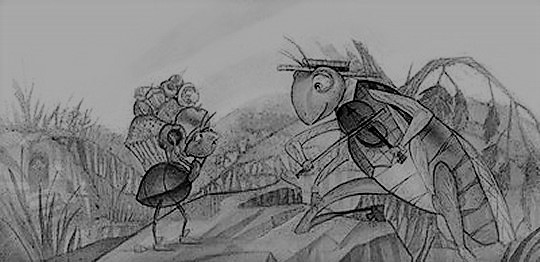
An overly-simplified conclusion I am drawing from this reading (as one ensconced in our privileged, first-world setting) is that some people appear comfortable with their lot, no matter how mundane it may be, apparently satisfied so long as their basic needs are met.  Others, fewer in number, do not accept that status quo, and try to break new trails.  Some plod along their life-journey, eyes cast on the path beneath their feet (or, more likely, on the smartphone in their hands), while others, more curious, more ambitious, look for alternate routes to follow, even if that means foregoing some of the more immediate gratification they might otherwise enjoy.  Sort of like the proverb of the grasshopper and the ant.

grasshopper

But why do we make the choices we do?  Why are some of us seemingly content to muddle along in what I might call a state of arrested development—consumed by our electronic gadgets and devices, immersed in our own narrow worlds, uninterested in the broader issues of our time, and desperate to believe we are going to be looked after?

Looked after by whom?  The rich?

A new ruling class of people—those who rouse themselves to effort and endeavour, who pay attention to what is happening around them and in the wider world, and who consciously think about the consequences of their actions—is rapidly moving ahead of its less-diligent cohort.  And the space between them—call it intellectual-gap or achievement-gap—will only exacerbate the wealth-gap we publicly decry.

Recent studies are demonstrating that an over-dependence on electronic gadgetry, an inability to pry oneself away from those seductive pixels of delight, is changing the human brain’s learning patterns.  And not for the better.  In its extreme, this change will render addicted users incapable of thinking for themselves, dooming them to a dreary lifetime of mindless, eight-second sound-bites and 280-character communications.  In virtual servitude to those who rise above.

It hearkens back to the maxim of Roman times, the trick to keeping the rabble in their place—Give them their bread and circuses.  Already there are disturbing signs that much of the populace cares for not much more.  And technology has provided it to them in the palms of their hands.

170729164127-cell-phone-walking-file-full-169

The day may or may not come when all of us will live out our daily existence like so many drones and worker bees, ruled by entities possessed of artificial intelligence.  That remains to be seen.  But until that day, it is almost a certainty that the strivers among us will assert dominion over the slackers—a triumph of directed, purposeful intellect over superficial intelligence.

Given all this, I would change the words to my grandmother’s ditty—

It’s the thinkers and strivers wot will get the pleasure,

It’s the complacent plodders wot will get the blame…

Just wait.

While We May

It’s inevitable, I think, that many of us will ponder our lives and our place in the world as the current year draws to a close.  And we may well wonder what the impending new year will hold for us.  In the words of an old song—

…what lies ahead?/Will we have rainbows day after day?

I believe it’s a quirk of our human nature that we often fail to appreciate what we have until we no longer have it.  Many are the things that become dear to us when their very existence is threatened—things that might have received but passing notice before the threat arose.

This tendency, doubtless familiar to most of us, seems to begin early in our lives.  I’ve observed young children on numerous occasions while they were playing with their toys.  Inevitably, when someone picks up a different toy, the children immediately focus on that one as the only thing that will satisfy their needs.  The moment they can’t have it, so it appears, is the same moment they realize what a treasure it is.

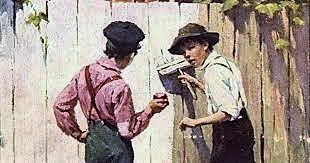
This habit stays with us as we grow older.  In his classic story, Tom Sawyer, Mark Twain provides a wonderful example of what can happen when people seem to be losing something, even if they never actually possessed it.

tom sawyer

Remember the tale?  Young Tom tricks his friends into whitewashing Aunt Polly’s fence, in order to avoid the chore himself.  By presenting it to them as an opportunity available to only a select few, and one that would not last long, he duped them into a hankering for something they would normally have avoided—afraid of losing the chance to take advantage.

The quirk remains into our adult years, as well.  You’ll recognize it when, after walking around all day in a pair of new shoes, you remember how comfortable the old ones were, the ones you didn’t want anymore.  And you wish you hadn’t thrown them away.

Or you’ll know it when your grandkids come for a long-overdue visit, one you’ve been looking forward to.  And then, only a few hours after your wish is realized, you begin to pine for the peace and quiet of your everyday life.  You can’t wait ‘til it’s time for them to leave.  You’re exhausted!

You’ll experience the same feeling of loss if a power blackout strikes, and you find yourself walking from room to room, absent-mindedly flicking light switches in vain.  All that electricity you took for granted, gone!

no lights 2

There are so many things we have, not just material possessions, that we passively accept as the norm.  Not through arrogance or selfishness, necessarily, but because they seem always to be with us.  Being with us, they become accepted; having accepted, we become indifferent.

Perhaps the greatest of these unheralded treasures, as we grow older, is good health.  Most of us grew up without serious medical problems, the normal childhood ailments notwithstanding.  We accept good health as our due—to the extent that, when we do come down with something, we feel resentful and put-upon.

“I never get sick,” we complain to anyone who will listen.  “How can this be happening to me?

Some time ago, I visited our family physician because of a persistent virus that had hold of me.  While I was sitting in the waiting room, her receptionist mentioned that she’d had a devil of a time locating my file.

“I finally found it in the dead file,” she said.

“The dead file!” I exclaimed.  “Hey, I’m not that old!”

freemedicalcheckupsmall

She laughingly explained that the dead file was for patients who hadn’t had a routine physical exam during the past five years.

Five years!  I was stunned to realize I hadn’t had a checkup in all that time.  I suppose, because I was feeling just fine, I’d assumed it would always be so.  After all, good health is only what I deserve, right?  That’s how it is.

Until it isn’t.

Nowadays, as I approach the three-quarter-century mark more quickly than I would like, the advent of a brand-new year doesn’t hold the same promise for me that once it did.  I no longer wish for, or expect, endless rainbows.

I would be happy, I have discovered, to hang on to what I have.

My focus has turned to acknowledging my blessings, appreciating them more fully, and not taking them for granted.  And chief among those, I am finding, is continued good health.

good health

It behooves me, I believe, to accept the responsibility to make that happen.  While looking to whatever future awaits me, for however long, I must strive not to abuse the good health I currently enjoy.  There are elements of our North American lifestyle that are proven killers—killers even of people, such as I, who have always taken their well-being for granted.

Of course, it’s difficult to imagine that I might fall victim, for, as Edward Young wrote almost three hundred years ago—

All men think all men mortal but themselves.

But nearly four hundred years ago, Robert Herrick, wrote—

Gather ye rosebuds while ye may,/Old time is still a-flying,/

And this same flower that smiles today/Tomorrow will be dying.

rosebuds

That tomorrow is but a day away.  So, today is all the time we have to protect what is, indeed, a most prized possession.  We owe it to ourselves to guard and nurture our good health.

While we may.


A Writer’s View

I’m occasionally asked about the art of writing by those who read my blog-posts and books, but I’m usually caught off-guard, quite unprepared to give a cogent answer.  I was better primed for an industry online interview, however—an edited transcript of which is shared in this post.

Q. What is it you enjoy most about writing?

I enjoy the freedom to do whatever I want in the first-draft stages—creating credible characters, inventing dialogue, describing events, contriving plausible story-lines.

But even more, I enjoy the rewriting, where I can change things, reconstruct situations, alter outcomes.  I love having the opportunity to shape and re-shape the fictional world I’ve created in each story—almost like a wizard, going back in time with the power to change what originally happened.

wizard

Q. What is your writing process?

I write everything down as soon as possible after it occurs to me —essays, short stories, blog-posts, episodes for my novels—sometimes in the wee, small hours of the morning when the thoughts tumbling in my brain won’t let me sleep.  Later, when the frenzy of first-draft has abated, I rewrite them to see where, or if, they fit in the overall picture.

I often spend hours on end in the process, even to the point of missing lunch or dinner.  I’m amazed when I discover that four or five hours might have passed before I paused for breath, so to speak. For me, writing is an alternate universe, one in which I easily lose myself.

Q. Do you remember the first story you ever wrote?

I remember the first story I wrote as an adult.  It was titled The Leaving, and was included in two of my published collections of tales.  It told of the conflicting joy and sadness associated with the realization that my two daughters were growing up, leaving their childhood behind.  It was predicated on a credo my wife and I adopted in their upbringing—hug them close, then let them go.  The hugging was easy, of course; the letting-go not so much.

hugging

Q. What prompted you to try writing a novel?

In the beginning, it was an attempt to answer the question as to whether or not I could do it.  And it took a long time to figure out—five years from inception to publication.  I was hoping to accomplish a number of things, the first being just to finish it; while I had been writing stories and poetry for a long time, I had never attempted a novel.

Additionally, I wanted to tell a story that would prove difficult for readers to resist.  I wanted to relate that story mainly through dialogue among the characters—in their respective voices.  I discovered, however, that the telling of some events had to be in my own narrator’s voice.  I also wanted to create convincing characters in whom readers might invest—little knowing at the time that I would become so attached to two of them that a series would follow.  They feel like friends now—to the point where, rather than creating their story in each successive book, I’ve come to feel like I’m simply recording it as it unfolds.

Q. How many books have you published?

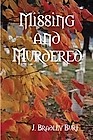
To my astonishment, there are five novels now: By Precept and Example, 2007; Until He Killed Her, 2010; Lockdown, 2012; First Do No Harm, 2015; and the most recent, Missing and Murdered, 2017.  Each of the stories is told against a backdrop of contemporary events taking place at the time of publication.

9 Missing cover

There are also three books of collected stories: On Top of the Grass: Tales of a Snowbird in Florida, 2008; It Matters to Me: Tales of a Young Father, 2010, and The Passing Parade: Tales of a Bemused Bystander, 2017.

All the books can be found, in print or e-book formats, at a number of locations, including http://www.amazon.ca and http://www.barnesandnoble.ca.  They are also available online at http://www.lulu.com/spotlight/precept.

Q. What are you working on now?

I’m currently working on a sixth novel in the Maggie Keiller/Derek Sloan crime series, and I hope to have a fourth collection of tales, Tall and True: Tales of a Peripatetic Blogger, published in 2018.

Q. When you’re not writing, how do you spend your time?

I spend a lot of time reading—more, perhaps, than writing.  And I sing bass with an a capella men’s chorus, Harbourtown Sound, which is both enjoyable and time-consuming.  The chorus website is http://www.harbourtownsound.ca/.

hts

I also try to stay active in golf, tennis, cycling, swimming, and other physical pursuits.

Q. Who are your favorite authors?

There are several, including John D. MacDonald, James Lee Burke, Lee Child, Michael Connelly, Elmore Leonard, John Sandford, and Randy Wayne White—all of whom write in my preferred genre. I also enjoy authors from different genres—Bill Bryson, Don DeLillo, Cormac McCarthy, J. R. R. Tolkien, and Winston Churchill, to name a few.