My Whiffenpoof

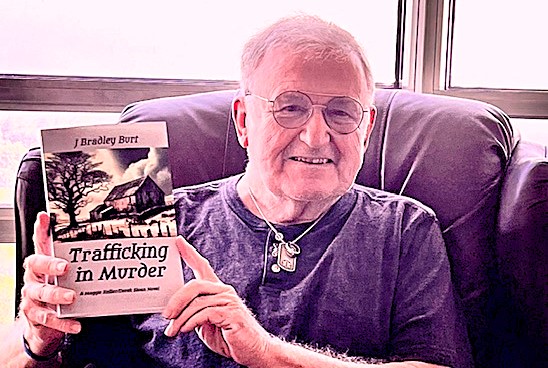
The Gulf Coast Writers Association in Florida has announced the winners of its 2024 writing contest. After winning a first prize last year in fiction, I’m pleased to say I’ve taken a second prize this year in the same category. My latest entry was published on this blog website last winter, but I’m posting it again for any who are interested—

The young lad’s voice was pleasant enough, if a tad off-key here and there, and he held his beer-drinking audience rapt as he began singing the song.

To the tables down at Mory’s, to the place where Louie dwells,
To the dear old Temple Bar we love so well,
Sing the Whiffenpoofs assembled with our glasses raised on high,
And the magic of our singing casts a spell…

“What’s a Whiffenpoof?” old Hardy McKinnon yelled out rudely, slamming his empty glass down on the table in front of him, half-cut already, though the evening was young.  “Sounds like a fart!  One o’ them SBD ones!”

The lad stopped singing, joined in the laughter that followed, then said, “SBD?  What’s SBD?”

“Silent but deadly!” McKinnon’s wife cried, pointing at her husband, beckoning to me for another round as the laughter erupted again.

“Quiet, ye lot!” I shouted from behind the bar where I’d been drawing another tray of drafts.  “Let the boy sing his song!”

Indeed, he did look more a boy than a man, sitting there in his khaki uniform, the cuff of one sleeve pinned to his left shoulder where his arm should have been—the only one to return of five village lads who had marched proudly to the train station two long years ago, off to fight the foe for King and country. 

The polished medal at the end of the ribbon round his neck testified to his gallantry and sacrifice—the Victoria Cross, awarded for valour in the face of the enemy, the highest military award the nation could offer.  It had been presented by none other than King George himself, and I’d been there to witness it.

“Let him sing!” I cried once more into the clamour, and it subsided quickly as Jimmy took up his song again.

Yes, the magic of our singing of the songs we love so well---
‘Shall I Wasting’ and ‘Mavourneen’ and the rest---
We will serenade our Louie while life and voice do last,
Then we’ll pass and be forgotten with the rest…

The eyes of almost everyone were fixed steadily on the lad as he sang, the words and melody casting a solemn pall over the room.  Those who weren’t looking at him were staring emptily into space with that thousand-yard stare I used to see in my Robert’s eyes after he came home from fighting the Boers.  He never spoke of the horrors, nor of the comrades he’d lost, but I knew they’d been with him ‘til the day he died.

I’d held on to the business after he passed, McSorley’s Old Ale House being the only home I had, and the only pub for miles around—a gathering-place as sacred to its patrons in its own way as the Church of England ever could be.

“Aye, Jimmy, sing some more!” Angus MacPherson said softly into the silence.  “Sing the chorus for us, lad!” 

Jimmy drank deeply from the new pint I’d set in front of him, wiped the foam from his mouth with his one hand, and when he started in again, many of the assembled joined in, the words as familiar to them as the faces in their mirrors—

We’re poor little lambs who have lost our way,
Baa, baa, baa!
We’re little black sheep who have gone astray,
Baa, baa, baa!
Gentlemen songsters out on a spree, doomed from here to eternity,
Lord, have mercy on such as we,
Baa, baa, baa!

My tears glistened on the polished, wooden surface of the bar, and I scrubbed them away furiously with my rag.  Most of the old warriors who’d been singing along were weeping, too—silent tears tracking down their grizzled, ruddy cheeks, only to be swallowed up and lost in their scraggly beards, just as their innocent youth had been torn from them by the long-ago battles they had fought for the fading Empire.

In the silence that blanketed the normally-boisterous room, Jimmy stood up, finished his pint, then walked wearily over to the bar, waving shyly to the crowd.  “I’ll be headin’ up now,” he whispered with a sad smile.  “Shout me up when yer closin’, an’ I’ll be back down to help.”

“Shure, an’ I’ll be doin’ that very thing,” I said, knowing full well I would not.  The boy was bone-tired, I could tell, and needing his sleep—if sleep would come.  I watched as he mounted the narrow staircase, his steps heavy, his one hand on the banister, his chin sunk low on his chest.  I couldn’t see his medal, but I know it weighed heavy on him.  He’d have given it back in an instant if it meant the return of his fallen friends.

“He’s a good lad, young Jimmy!” Liam Dewar shouted, his half-empty pint raised high.  “A noble warrior, an’ a damn fine singer!”

“Three cheers for Jimmy!” Molly Malone cried, a bit unsteady on her feet, trying not to show it.   She was sweet on Jimmy, I knew, but trying not to show that, either.  The crowd joined in, as did I—Huzzah!  Huzzah!  Huzzah!

And then another song broke out, this time led by the lovely tenor voice of the vicar, the Reverend Alastair Holmes, and everyone took up the tune—

It’s a long way to Tipperary, it’s a long way to go,
It’s a long way to Tipperary, to the sweetest girl I know…

And I thought about the long way home young Jimmy had taken—the journey from carefree boyhood to the blood-soaked trenches of Europe, and back again—mutilated and scarred, perhaps forever.  And for what?  For three cheers and a piece of tin around his neck?

My tears began anew, but tears of gratitude this time—gratitude that, unlike so many other mothers’ sons, he was home again.

My Whiffenpoof.

My boy.

It Was You/It Was I/It Was We

It was you who dwelt inside me, it was I who knew you best.
It was you who warmed my spirit, it was I with whom you’d rest. 
It was you who shared my burden, it was I whose love was true.
It was you who’d lift me higher, it was I who soared with you.

It was I who lived inside you, it was you who made me whole,
It was I who’d lift your spirits, it was you who held my soul.
It was I who stood beside you, it was you who never failed, 
It was I who gave you purpose, it was you whose love prevailed.
It was we who were together, it was we who were o’erjoyed,
It was we who’d not be broken, it was we whose lives were buoyed.
It was we who faced the music, it was we who shared the blame,
It was we who clasped each other’s hands, it was we who overcame.

It was you who lived inside me. It was I who dwelt in you.
It was I who shared your burden. It was you whose love was true.
It was we who were e’er faithful. It was we who’d never bow.
It was we who stood, as still we do. It is we who’ve kept our vow.

Alone Again!

[NOTE: IF THIS COMPLETE BLOG-POST LIES IN THE BODY OF AN EMAIL, CLICK ON THE TITLE TO READ IT IN ITS NATURAL ENVIRONMENT ON MY BLOG-SITE. IF ONLY A LINK IS PROVIDED IN THE EMAIL, CLICK ON THAT.]

Have you ever found yourself absolutely alone in a crowded room—at a family gathering, perhaps, or a business function, a party with friends, a community meeting?  It would seem hard to accomplish that when one is surrounded by so many people, but I manage it all the time.

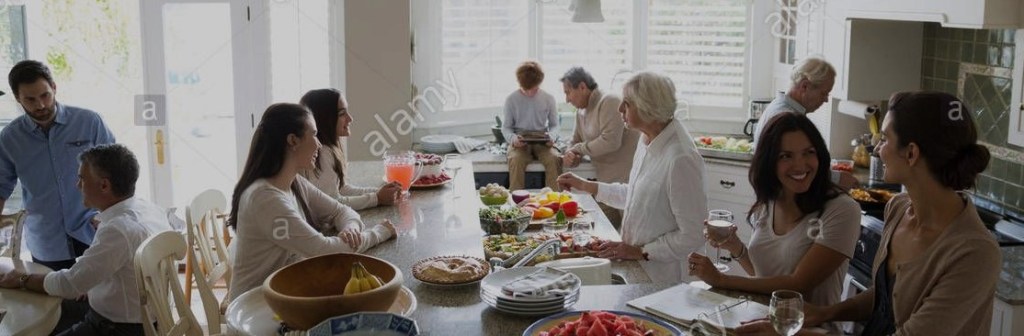
At a recent Mothers Day gathering with my two daughters, their husbands, my five grandchildren, two of their boyfriends, and my wife all in attendance, conversations were animated, exuberant, and loud.  I know, because there I was, perched on a stool around the large island in the middle of the kitchen (always our family’s favourite gathering place), surrounded by this multitude, yet strangely not involved in any of the conversations.  Nursing a glass of wine, I found myself eavesdropping on each different group in turn, quite interested in the latest news they all were sharing with one another about their work and school activities, yet not contributing a word myself.

But this is not a new phenomenon.  In fact, having become almost invisible on so many such occasions, I’m rarely even asked to contribute.

Over the years, I’ve often wondered if I’m naturally introverted, or maybe anti-social by nature.  From time to time, I’ve questioned my conversational skills or lack thereof.  I’ve even fallen prey every now and then to doubting my innate charm and charisma, and I’ve worried that perhaps no one holds me in high esteem.

Too many times, it seems, I’m at a restaurant with three or four couples, and I look up from my soup to find myself alone at our table.  I wonder if the others might be at the salad bar or in the washroom, perhaps—but all of them?  At the same time?

Or I might be at a dance, ten of us sharing a table, and I suddenly realize I’m sitting by myself again, while the others are up dancing or table-hopping.

The tedious jokes flow at these moments, naturally.  Seeing me alone, someone will ask in a loud voice if I’m dining tonight with all my friends.  Or someone will wonder if I said something to offend everyone in my party.

The problem is, I’ve never had an answer.

What I do know, however, is that I’m not one to blithely accept blame for my own perceived shortcomings.  I am a loving and capable person, after all—or so I want to believe—and I have choices.  For example, if people are ignoring me—or worse, don’t even realize I’m present—I can choose to consider it a flaw on their part, not mine.  The problem with that approach, however, is that many of them are people I love and admire, so it’s difficult to malign them, even secretly.

A better choice, I’ve discovered, is to adopt the stance that I am freely choosing to be alone in these various situations.  I’m doing it on purpose.  And why?  Well, because I’m a writer of fiction, and it’s a well-established fact that, to be effective, writers like me, who make stuff up, have to be keen observers of human nature.  After all, if we’re going to create believable characters out of whole cloth in our stories, we absolutely must possess a keen sense of what makes people tick in real life.  And the best way to do that, I’ve convinced myself, is by observing those around me, listening to them, getting a feel for them through what they do and what they say.

Interacting with people, I believe, is not good because I will inevitably corrupt the essence of who they are through my own conversational filters.  But by choosing to stand back, remaining aloof, I am better able to ascertain who they really are in their daily interactions.  They remain unblemished by any preconceived notions I might apply to them, and it is those untarnished attributes I will then bring to the creation of my own fictional characters, thereby improving the quality of my writing.

Or so I tell myself.

Nevertheless, I confess to a lingering and puzzling disappointment whenever I find myself alone again in large groups.  Recently, on the advice of someone I trust, I arranged to see a therapist renowned for helping folks like me.  My first appointment was yesterday, but to my surprise, it was a group-session—not something I had counted on.  After fetching the obligatory coffee, I took a seat in the circle and listened as each person in turn explained why he or she was there, what their last week had been like, how the others in their lives continued to let them down…and so forth and so on.  I found it fascinating, and was soon busy tapping notes surreptitiously into my phone.  I wasn’t sure that was allowed, but happily, no one seemed to notice what I was doing.

After an hour or so, I was fully-engrossed in reading over these notes, optimistic that I’d uncovered a gold-mine of observations I could use back at my writing-desk.  I looked up, eager to listen to whoever was next, and…well, you can probably imagine my shock when I discovered I was alone in the room.  The session had ended, the circle was broken, and no one had asked to hear from me.

Not knowing whether to laugh or cry, I chose the former.  These therapy sessions, I told myself, were going to prove a treasure-trove of inspiration for my writing.  And best of all, I was going to be able to gather whatever information I wanted with no one even knowing.  As in so many other instances, I was virtually invisible in the group.

No wonder I’m such a good writer!

Alone again! 

Keep On Keepin’ On

[NOTE: IF THIS COMPLETE BLOG-POST LIES IN THE BODY OF THIS EMAIL MESSAGE, CLICK ON THE TITLE TO READ THE PIECE IN ITS NATURAL ENVIRONMENT ON MY BLOG- SITE. IF ONLY A LINK TO THE PIECE IS PROVIDED IN THE EMAIL, CLICK ON THAT TO TAKE YOU TO THE SITE.]

It has been postulated by persons wiser than I that time does not exist, neither past, present, nor future.  If our lives were a metaphorical hourglass—the top bulb representing the past, the middle stricture the present, the bottom bulb the future—we would find ourselves at the middle, living in the moment.  That moment, however, would be but the instant it takes for one grain of sand to pass through the stricture, followed by the next, and the next, ad infinitum, each gone too rapidly for us to grasp.  And therefore, the theory goes, the present cannot actually exist.  Similarly, because we have no conception of the bulb above us or the one below, no way to perceive them, the past and future also do not exist.

Perplexing, no?  But not a theory I agree with, and I would urge those who espouse it not to tell me time doesn’t exist. 

Given my longtime fascination with and study of history, I’ve always believed there to be a past.  Mind you, I’m able to consciously recall it only from the late 1940s onward; everything that happened before that, I must accept as it’s been told to me. 

I’ve always believed in the present, too, perceiving it not as a mere instant in time, but as a continuous progression or sequence of events in which I play a part—at least while I’m awake.  While sleeping, of course, I have no awareness of the present.

The existence of a future is something I’ve always taken for granted, as well, though I have more yesterdays behind me now than tomorrows ahead of me.

My parents, whose lives spanned parts of ten decades, nonagenarians when they died, are part of the past I remember.  My wife and two children are part of the present I inhabit.  And my grandchildren represent the future, most of which, alas, I shall never see.  But it’s my comprehension of these three elements—past, present, and future—that allows me to carry on.

I remember visiting my father as he neared the end of his life, and hearing him complain (for the zillionth time) about the number of prescribed medications he was taking.  He had a small, plastic pillbox to keep them organized on a weekly basis, a device I silently laughed at, so cocksure and smug in my late forties.

“I saw the doc last week,” my father said, “and I told him to take me off some of these damn pills.”

“What did he say?” I asked.

“Said he’d do that if I told him which ones to cut out.  Said he wasn’t sure which might be the ones keeping me alive.”

“So, what did you say?”

“I told him, in that case, forget it.  I’ll carry on with all of ‘em.”

“Good move, Dad!” I said.  “Keep on keepin’ on.”

We had that conversation thirty-five years ago, and my father’s been gone for more than twenty of those, a part of my past forever.  To my everlasting astonishment, I’ve now entered my own ninth decade, the octogenarian I never contemplated becoming, and my present looks more and more to me like his did to him back then.

I, too, have a plastic pillbox now to organize the eight medications I take daily, five of which are prescribed to control cholesterol, regulate blood pressure, promote prostate function, and bolster bone density.  The other three are over-the-counter supplements I like to think will help me compensate for my lost and lamented youth.

Oh, how the mighty have fallen!  I imagine my father, wherever he is, must be chuckling knowingly at my plight—my past making fun of my present.

I have a friend whose espoused goal in life is to live more years retired than he spent working.  It’s a noble goal, one I share, and that moment will arrive for me seven years from now.  Another of my goals is to accomplish what my parents did, living into a tenth decade, which will happen when I hit ninety, a mere nine years off in the future.  Both my folks remained mentally acute and physically viable almost to the end, a state I devoutly wish for myself. 

A third goal is to live life fully right up until I die—a sentiment I wrote a poem about, I Haven’t the Time, which you will find and enjoy at this safe link—

https://tallandtruetales.blog/2020/01/08/i-havent-the-time/.

Our two daughters visited us for a week in Florida recently, without their husbands and children.  Although we love being with them all, this annual visit from our girls is part of a future we look forward to every year, our ‘core four’ together again.  But the realities of past and present do have a way of inserting themselves. 

I encountered both of them on their first morning with us as I lurched into the kitchen—unshaven, hair askew, eyes still half-shut.  They offered a cheery good morning and warm kisses as I plugged in the kettle for my green tea—decaffeinated, of course—and watched me spill my pills into my hand from the pillbox.

“How many pills do you take every day, Dad?” the eldest asked.

I told her, explaining what each was for in more detail than she probably wanted to hear.

“Do you really need to take that many?” her sister asked.

“Maybe, maybe not,” I said, an unbidden image of my father flashing before my eyes.  “But I don’t know which might be the one I need to keep me alive, so I just carry on with all of ‘em, y’know?”

“Good decision, Dad!” the eldest said.

“Yeah,” her sister echoed.  “Just keep on keepin’ on!”

And so I shall—proud of the past, relishing the present, anticipating the future. Given what I know to be true, no one can tell me they don’t exist!

Showing Up

Spring training is underway, the start of another magical baseball season.  The boys of summer are assembling once again to ply their athletic gifts, and to amaze us with their exploits on the diamond.

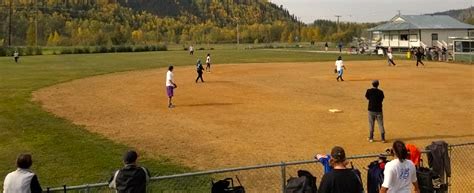
And every spring, their gathering reminds me of those happy days—more than just a couple of years ago—when the annual softball season opened in our Florida retirement community.  A mob of aging, erstwhile ballplayers would converge on the local park for the opening games of the season.

Most of us had spent a good part of our lives playing ball.  Others, newly retired, had taken it up only recently.  But we all shared the same enthusiasm for the game.

We enjoyed swinging the bat with wistfully-remembered power in the on-deck circle; we relished the anticipation of our turn at bat while waiting in the batter’s box; and we cherished the elusive base hits we sometimes might stroke.  There was always an exhilarating feeling of freedom in running ‘round the bases at top speed, or in chasing full-tilt after a long fly ball in the outfield—the wind rushing in our ears, visions of grace and glory flickering in our mind’s eye.  At such moments, nothing else mattered in the world but the game.

The game was the thing, and we wished it could last forever.

But it couldn’t, of course.  Even back then, we could see the end approaching—still hazy on the far horizon, perhaps, but in sight, nonetheless.

The signs were small at first, but the start of each successive season brought more of them.  The bats seemed heavier, the balls smaller, the bases farther apart.  There appeared to be more holes in the infield for opponents’ ground balls to skip through.  The throws in from the outfield lacked some of the crispness that was seen in other years.

In fact, I discovered to my chagrin that I’d become a centre-fielder with a second-baseman’s arm!

The most significant sign of all was the constant aching in our legs, our arms, our backs—lasting just a little longer than it ever used to.  We feared for the day when it would linger all the way into next week’s game.

I suppose that’s why we eventually switched to a tamer version of the game, limited to those sixty years of age or older.  Gone were the young, aggressive Turks who had overtaken us on the base paths.  Gone, too, were the strong-armed pitchers who could overpower us in the batter’s box.

And gone with them, unlamented, was the notion that winning was the only satisfactory outcome.

Our game morphed into slo-pitch.  The ball would float in from the mound to the waiting batter, crouching, bat-cocked, in gleeful eagerness.  When he hit it, more often than not it was to one of the waiting fielders—of whom there were ten (in deference to our declining ability to cover the whole field).

Many of the old softball rules were changed, or at least modified for our game. For example, a team’s turn at bat still ended when three players were tagged Out!, but no team could go through its batting lineup more than once, even if everyone batted safely.

The best part, though, was that no one seemed to worry too much about winning. At the end of every game, the players would file past each other across the middle of the infield, laughing, slapping high-fives, and complimenting each other on a game well-played.  When asked later (perhaps after a brew or two) about the outcome of the game, we often had trouble remembering the final score.

Most of us always loved playing ball, and were awfully glad there was still a game for us to play. Because playing, far more than winning or losing, was the elusive reward for our efforts.

My playing days, alas, are far behind me now, but I remember them fondly.  And I’m glad that, by the time I was through, it wasn’t who won the game that counted—it was who showed up to play!

I wish I still could.

Thinking About Leap Year

The prompt from my Florida writers’ group was to write a short piece about Leap Year. This is what I came up with—

“Sometimes,” Gus says, “I think to myself this whole Leap Year thing is nothin’ but a boondoggle.”

“That’s redundant,” I say absently.

“What?” Gus says.

“I said what you said is redundant.  Repetitive, superfluous.  How else could you think, except to yourself?”

“What?

“Gus, think about it!  When you’re thinking, it’s just you communicating inside your brain.  Nobody else is privy to it.  If other people knew what you were thinking, it wouldn’t be thinking.  It would be talking.”

“You think so?” Gus says, brow furrowed.  “Yeah, I think you’re right.”

“Of course I’m right!” I say.  “So, it’s unnecessary to say you were thinking to yourself.  Needless, pointless.  All you have to say is, I think Leap Year is a boondoggle.”

“Yeah, that is what I think!” Gus says.  “You an’ me agree.”

“No, no,” I say, a tad exasperated.  “It’s you who thinks that, not I.”

“What?”

“It’s you who thinks Leap Year is a boondoggle!”

“Yeah, that’s what I said, an’ you wanta know why?  It’s them damn calendar-makers!”

“What?” I say.

“Think about it!” Gus says.  “Every seven years, the days of the month fall on the same date, like clockwork.  So, if it warn’t for them calendar-makers, after seven years, nobody would hafta buy calendars no more.  We could just recycle ‘em.  Them greedy SOBs up an’ stuck an extra day in Febeeary every four years to make sure we’d hafta keep buyin’ their products.” 

“Gus, Leap Year has nothing to do with calendar-makers!” I say.  “It has to do with Earth’s orbit around the sun, which takes three-hundred-and-sixty-five days, plus six hours, for a complete cycle.  After four years, that’s a whole extra day.  Your theory is poppycock!”

“What?” Gus says, forehead crinkling.

“Your theory is flawed, mistaken, incorrect.”

“Naw, I don’t think so,” Gus says.  “Leap year is just a marketin’ ploy.”

“No, it’s not!” I say.  “It’s a scientifically-proven manifestation.” 

“A what?”

“A manifestation, an occurrence, a fact!”

Gus stares at me for a long moment, then points a bony finger in my face.  “That’s redundant,” he says.  “An’ mark my words, Leap Year is nothin’ but a boondoggle!”  Then, with a sly grin, he adds, “A sham, a scam!  Leastways, that’s what I think!”

I smile weakly as he finishes, “To myself!”

A Better Story

Can bad decisions lead to better stories?

Let us suppose for the purpose of crafting an entertaining story that your lead character’s dotty, old Aunt Hilda—whom he hasn’t seen in forty years, and who recently died at the impossibly-old age of 103—left him, her only heir, the sum of twenty-five million dollars, all in bearer-bonds, and twenty-five cats who shared her last abode.

Your protagonist is elated, of course, and only mildly sorry he hadn’t taken time to visit the old gal from time to time.  After placing the cats out for adoption and depositing one million of those dollars in his personal chequing account to cover immediate lifestyle changes, he now needs to decide how to properly invest and grow the remaining twenty-four million.

To whom does he turn for advice?

He could enlist the help of reliable, established bankers, investment counsellors, financial gurus, and market analysts, all of whom would be eager to serve.  He knows he could safely rely upon these learned and experienced people, whose profession it is to help other people make money—being handsomely reimbursed for their efforts, naturally.  Let us call this the elite option.

But if he has never considered himself an elite, he might decide to call on twenty-five of his closest friends who—in return for the chance to celebrate (and perhaps share in) his great, good fortune—tell him they will devise a sure-fire strategy to determine how he will invest the bulk of his new-found wealth.  That strategy, in order to be enacted, need only be approved by a simple, majority vote of 13–12, swayed perhaps by the most voluble, the most persuasive of the group, rather than by the most knowledgeable.  

Let us call this the populist option, and if your protagonist deems himself a man of the people, he might well choose this second course.

Or, let us suppose for the purpose of creating another entertaining story that your lead character has been recently diagnosed with a life-threatening illness, out of the blue, and that she has very little time to decide on the best medical option that might save her life—although there are no guarantees, of course, from any of them.

To whom does she turn for advice?

She could, in addition to talking with her loved ones, consult with her physician and the specialists to whom the physician refers her, all experts in their field.  Before choosing her treatment plan, she might seek second, third, even fourth opinions from people who have studied their entire lives to deal with critical situations such as hers.  Let us call this, again, the elite option.

But let us suppose again, if she does not reckon herself among the elite, she might gather together concerned family members and friends, all of whom love her and wish her only the best, to ask, by majority vote, which treatment plan they believe she should follow—the established medical option, a naturopathic or homeopathic approach, or maybe an experimental route (which might require travel to a foreign country for procedures not approved in her home and native land). 

Let us call this, again, the populist option, and if she fancies herself of the people, she might choose this second course.

In these examples (deliberately simplistic, I know), there are dilemmas confronting these two characters and the decisions they would have to make.  To whom would they turn in such critical situations, the elites or the populists?

The authors of such stories, too, face these same dilemmas, these same decisions.  Which path should they choose for their protagonists to follow in order to compel their readers to stay locked in to the story?  And will those decisions prove good or bad?

In one telling of the first example, the lucky heir to the twenty-five million dollars might turn to the wise counsel of the investment community, prosper as his fortune grows, and live in a cloistered castle to a ripe, old age.  End of story.

But in another telling, he might seek the advice of his friends, invest and lose his entire inheritance based on their advice, realize belatedly the error of his ways, embark on a driven quest to recoup his lost fortune, clash and joust with pillars of the financial community, rise and fall again and again, only to triumph at the end—a true Horatio Alger story.  Or perhaps, in a cruel twist of fate, he might lose it all yet again and die miserably in an abject state of poverty.

Only the author can decide.

In one telling of the second example, the stricken person might rely upon the medical establishment and, after a period of treatment and rehabilitation, survive to live a long and happy life.  End of story.

But in another telling, the person might turn to family and friends for a decision, choose unwisely, see her condition worsen unto the point of death, only to be miraculously saved by the last-minute intervention of a handsome, dedicated doctor who refuses to be rebuffed by quackery.  The patient’s health improves dramatically, she marries her saviour, and goes on to live well into her nineties.  Or perhaps, in a cruel twist of fate, she is assailed by a recurrence of her disease, against which she vies valiantly, time and again, only to succumb in the end—a true Shakespearian tragedy.

Only the author can decide.

In either example, which do you suppose might offer the more entertaining story, the first version or the second?  The authors make their decisions in the initial writing, of course, but in the end, it is the readers who decide if those decisions are good or bad.

So, can bad decisions lead to better stories?

You tell me.

My Whiffenpoof

The weekly prompt from my Florida writers’ group was to write a piece incorporating a song lyric, even a misunderstood one. I chose to use a complete song, but with its meaning and setting skewed from its real attribution for purposes of fiction.

The young lad’s voice was pleasant enough, if a tad off-key here and there, and he held his beer-drinking audience rapt as he began singing the song.

To the tables down at Mory’s, to the place where Louie dwells,
To the dear old Temple Bar we love so well,
Sing the Whiffenpoofs assembled with our glasses raised on high,
And the magic of our singing casts a spell…

“What’s a Whiffenpoof?” old Hardy McKinnon yelled out rudely, slamming his empty glass down on the table in front of him, half-cut already, though the evening was young.  “Sounds like a fart!  One o’ them SBD ones!”

The lad stopped singing, joined in the laughter that followed, then said, “SBD?  What’s SBD?”

“Silent but deadly!” McKinnon’s wife cried, pointing at her husband, beckoning to me for another round as the laughter erupted again.

“Quiet, ye lot!” I shouted from behind the bar where I’d been drawing another tray of drafts.  “Let the boy sing his song!”

Indeed, he did look more a boy than a man, sitting there in his khaki uniform, the cuff of one sleeve pinned to his left shoulder where his arm should have been—the only one to return of five village lads who had marched proudly to the train station two long years ago, off to fight the foe for King and country. 

The polished medal at the end of the ribbon round his neck testified to his gallantry and sacrifice—the Victoria Cross, awarded for valour in the face of the enemy, the highest military award the nation could offer.  It had been presented by none other than King George himself, and I’d been there to witness it.

“Let him sing!” I cried once more into the clamour, and it subsided quickly as Jimmy took up his song again.

Yes, the magic of our singing of the songs we love so well---
‘Shall I Wasting’ and ‘Mavourneen’ and the rest---
We will serenade our Louie while life and voice do last,
Then we’ll pass and be forgotten with the rest…

The eyes of almost everyone were fixed steadily on the lad as he sang, the words and melody casting a solemn pall over the room.  Those who weren’t looking at him were staring emptily into space with that thousand-yard stare I used to see in my Robert’s eyes after he came home from fighting the Boers.  He never spoke of the horrors, nor of the comrades he’d lost, but I knew they’d been with him ‘til the day he died.

I’d held on to the business after he passed, McSorley’s Old Ale House being the only home I had, and the only pub for miles around—a gathering-place as sacred to its patrons in its own way as the Church of England ever could be.

“Aye, Jimmy, sing some more!” Angus MacPherson said softly into the silence.  “Sing the chorus for us, lad!” 

Jimmy drank deeply from the new pint I’d set in front of him, wiped the foam from his mouth with his one hand, and when he started in again, many of the assembled joined in, the words as familiar to them as the faces in their mirrors—

We’re poor little lambs who have lost our way,
Baa, baa, baa!
We’re little black sheep who have gone astray,
Baa, baa, baa!
Gentlemen songsters out on a spree, doomed from here to eternity,
Lord, have mercy on such as we,
Baa, baa, baa!

My tears glistened on the polished, wooden surface of the bar, and I scrubbed them away furiously with my rag.  Most of the old warriors who’d been singing along were weeping, too—silent tears tracking down their grizzled, ruddy cheeks, only to be swallowed up and lost in their scraggly beards, just as their innocent youth had been torn from them by the long-ago battles they had fought for the fading Empire.

In the silence that blanketed the normally-boisterous room, Jimmy stood up, finished his pint, then walked wearily over to the bar, waving shyly to the crowd.  “I’ll be headin’ up now,” he whispered with a sad smile.  “Shout me up when yer closin’, an’ I’ll be back down to help.”

“Shure, an’ I’ll be doin’ that very thing,” I said, knowing full well I would not.  The boy was bone-tired, I could tell, and needing his sleep—if sleep would come.  I watched as he mounted the narrow staircase, his steps heavy, his one hand on the banister, his chin sunk low on his chest.  I couldn’t see his medal, but I know it weighed heavy on him.  He’d have given it back in an instant if it meant the return of his fallen friends.

“He’s a good lad, young Jimmy!” Liam Dewar shouted, his half-empty pint raised high.  “A noble warrior, an’ a damn fine singer!”

“Three cheers for Jimmy!” Molly Malone cried, a bit unsteady on her feet, trying not to show it.   She was sweet on Jimmy, I knew, but trying not to show that, either.  The crowd joined in, as did I—Huzzah!  Huzzah!  Huzzah!

And then another song broke out, this time led by the lovely tenor voice of the vicar, the Reverend Alastair Holmes, and everyone took up the tune—

It’s a long way to Tipperary, it’s a long way to go,
It’s a long way to Tipperary, to the sweetest girl I know…

And I thought about the long way home young Jimmy had taken—the journey from carefree boyhood to the blood-soaked trenches of Europe, and back again—mutilated and scarred, perhaps forever.  And for what?  For three cheers and a piece of tin around his neck?

My tears began anew, but tears of gratitude this time—gratitude that, unlike so many other mothers’ sons, he was home again.

My Whiffenpoof.

My boy.
And Off We Go

The weekly prompt from my Florida writers’ group was to write a piece containing the phrase, “shall we go…”.  This fictitious tale is my response.

“Shall we go?”  The sepulchral voice is solemn, portentous, and it reverberates ominously in my ears.

Not yet…not yet!  I’m not ready.

I hear other voices, too, softer voices…my daughters, named for our favourite flowers so many years ago.  They’re talking quietly over me as I lie in a bed I cannot feel in a hospital room I cannot see, unable to speak or move.

“He can’t open his eyes,” Veronica says, “but I can see them moving behind his eyelids.”

“Yeah, I see that,” Jasmine agrees.  “I think he can hear us.”

“Can you, Dad?” Veronica asks softly.  “Can you hear us?”

Yes, yes, yes!  I’m right here!

“He can’t answer you, Vee,” Jasmine says sorrowfully.

She’s right, I can’t.  Everything was fine until…until…whatever day it was, I can’t remember…and that red wave washed over me, collapsing me on the floor for I don’t know how long.  And now here I am, wherever this is.

“Shall we go?” the voice resounds in my ears again, a honeyed basso-profundo, not at all impatient, yet determined nonetheless.

No, not yet!  It’s too soon.

“Keep stroking his hair, Jazz,” Veronica says.  “He always liked that.”

I did always like it, but I can’t feel a thing now.  I can only imagine how it feels, and the thought warms my heart.  I laugh inwardly, knowing my hair must be all askew.

“I love you, Daddy,” Jasmine whispers.  “I hope you know that.”

“He knows we love him, he knows,” Veronica says, and I imagine she is holding my arthritic hands in hers, gently massaging them, terribly weakened now when once they were so strong.  But I can feel nothing.

I lifted you high in these hands, Vee, high up over my head.  And Jazz, too!  And now…and now…

“Shall we go?”  The voice asks again, persistent though not offensive.

Not yet!  No!

“You don’t have to worry about us, Dad,” Veronica whispers.  “We’ll be fine.”

“She’s right, Daddy,” Jasmine adds.  “You and Mummy were the best, and we’ll be just fine.”

I know, I know…but I don’t want to go.

They’re right, of course, they will be fine, both with their own wee families now.  The little ones were here earlier with their daddies…at least I think they were…maybe not…but I’m sure I heard those four tiny voices telling me they love me.  I wanted to say it back to them, to wrap my arms around them, but…

“And don’t forget, Dad,” Veronica continues, “Mum said she’d be waiting for you to find her, remember?  She’ll be watching for you.”

Ah, their mother, my wife, my lifelong love…how I’ve missed her.  Despite a valiant struggle against the disease that wasted her, she left us a few years ago.  And yet, she never truly left us, you know?  I wonder if Vee is right, if she really will be there, wherever there is…my darling Clementine…

“Shall we go?”  The voice is relentless, insistent, though not unkind.

No, please!  Not yet.

“I’m sure Mummy’s been missing you, Daddy,” Jasmine murmurs, and I can hear the sob catching in her throat.  “You were meant to be together for all time.”

“Exactly!” Veronica says, trying to lighten the mood.  “Like apple pie and cheese!  Like mustard and relish!”  She laughs softly as she gropes for more examples.

Jasmine joins in her sister’s laughter, and my heart dances to the sounds of their lilting voices.  “Yeah, or like Abbott and Costello!” she says.  “Like Jack and Jill!”

“Lady and the Tramp!” Veronica offers, and the laughter grows louder.  “Romeo and Juliet!”

“Omigod!” Jasmine gasps, their laughter rolling freely now.  “Tweedledum and Tweedledee!  Lancelot and Guinevere!  Sweet and sour!”

“Yin and yang,” Veronica says, and they stop on that one, as if it’s the perfect one to describe me and Clemmie.

“Shall we go?” the voice asks again…but it’s a different voice this time.  Frozen inside my immobile body, I cannot move, but I feel as if I’m turning around and there is Clemmie…as young and as fair as the first rose of summer.  She’s standing in the midway at the State Fair, pointing at the Tunnel of Love attraction, the one where we had our first, tentative kiss, where the sense we’d found something special first dawned on us.

“Shall we go?” she asks again, and her eyes are sparkling, her smile warm and welcoming.

“It’s okay, Dad,” Veronica whispers, “it’s okay to go.”

“Goodbye, Daddy,” Jasmine breathes.  “We love you.”

Goodbye, goodbye…I love you both…

And I reach for Clemmie’s hand, and off we go.

On Thinking

The French philosopher, Rene Descartes, is remembered among other things for his thesis: I think, therefore I am.  The notion is most commonly expressed, not in French or English, but in Latin: Cogito, ergo sum.

His premise was not, as is widely believed, that he exists because he can think; rather, it is that he is aware he exists because he is able to think.  That assumption presupposes that so-called lower forms of animal life, being non-sentient as far as we know, exist without knowing they exist.

Descartes appears not to have considered the possibility that some humans may also exist without full awareness, largely because of their demonstrated inability or willingness to think rationally.  But I digress.

In conversation with other folks, I occasionally hear them offer their opinion by beginning with the phrase, So, I think to myself…  I find that phrase redundant, because I can contemplate no other way of thinking; by definition, all thinking is to oneself, is it not?  Unless, as some would have it, a person is thinking out loud, which strikes me as verbalizing, not thinking.  Better, I suggest, to think first, speak second.

But as a counterpoint to that, people might deem praiseworthy the ability some folks have to think on their feet—to offer an opinion, receive feedback, and modify that opinion, all in the course of one conversation.  That facility is admirable, I suppose, but it can happen, of course, only if they’re standing; if they were seated, they would surely be thinking…well, on their tush, right?  And somehow, blowing it out their…you know…doesn’t seem as impressive.

I’ve long thought of thinking as a fluid process, a constant progression, a multi-directional flow, rather than as a static, linear plod from point A to point B.  And if that is so, then a graphic tracing of my thinking pattern would appear, not as a straight line, but as a higgledy-piggledy, zig-zagging line—frequently interrupted and intercepted, but always arcing upward toward higher illumination, I would hope.

As a writer, it’s my thinking that takes me far from my physical surroundings, even to the point of forgetting all about time and place.  As I wrote in haiku verse some time ago—

my thoughts, unbridled,
take me to worlds I ne’er will see,
nor have ever seen

my boundless thoughts are
like hot air balloons, slipping
bonds that tie me down

I wander freely
throughout the universe, yet
never leave my chair

There are two adages on thinking that I try to hold to, at least presently, and they both grace the résumés and bios that appear on my online, social-media sites.  The first is, Certainty is the enemy of an open mind…I think.  And the second is, Don’t believe everything you think.  Regular readers of this blog will know whether or not I’m successful in living up to those.

Certainty plagues many people after they’ve thought a subject through—or even when they have not—and then adopt a position they think is accurate or true, and stubbornly cling to that opinion, come hell or high water.  But I think every opinion we hold should be subject to periodic, critical study, the more frequently the better, in order to test its validity in the face of facts and evidence that can change from time to time.  Being overly-certain about one’s opinion can stifle that sort of examination.

The irony with this adage, however, is that I can’t be certain it’s correct, for to be so would violate its basic premise.  Like every other opinion I hold, it requires my constant scrutiny…at least, I think it does.

The notion of believing everything we think, just because we think it, likewise can lead to cognitive stagnation.  In everyday interactions, our behaviours are governed by what we think we should say or do at any given time, and there’s nothing wrong with that.  Guidelines are preferable to social anarchy.  But if, for example, I believe it’s safe to jaywalk across a busy thoroughfare just because I think it’s safe, and if I persist in that belief, the consequences to me could be catastrophic.  Better, I think, to examine my thinking in the light of facts before committing it to belief-status.

The irony with this second adage is it presents a danger that one will never commit to believing in anything.  I think that, too, could present a problem.

For those who’ve read this far, let me finish with an anecdote about two people engaged in a mild argument over some inconsequential subject.  “So, is that what you really think?” the woman asks, a touch of incredulity tinging her tone.

“I don’t think!  I know!” the man replies smugly. 

With barely a pause, the woman smiles condescendingly and says, “You know what?  I don’t think you know, either.”

And that could well be the case for all of us.  Even when we think we know, even when we are absolutely certain of it, we still might be mistaken.  The wise carpenter’s advice—measure twice, cut once—could easily be adapted and applied to our thinking process: think, rethink, then act.

I’ve done just that in this post…I think.

What say you?