A Striking Beauty

“Beautiful!” I said.  “Incredible!”

Reclining in a commercial-grade lazy-boy, staring through a huge, panoramic window onto the icy waters of the Alaskan fiord slipping past the ship, I was halfway through a herbal-oil scalp massage my wife had talked me into—an experience I had stoutly resisted, but to no avail.

The sun was gleaming off the water, off the glacier, off the long, blonde hair of my Swedish masseuse hovering over me.  Her name was Inga—short for Ingeborg she told me when we’d been introduced.  My wife was in a similar chair in the cubicle next to mine, the two of us separated by a thin privacy wall.

A striking beauty, Inga was exactly the type I’d have assumed would be working in a shipboard spa.  Taller than I, shapely in her white salon dress, she gazed directly at me through green eyes lit from within.  Her smile would have dazzled the most jaded of men.

As I’d settled into my chair, my mind had raced off in all directions.  This lovely vision was undoubtedly in her late-twenties, embarked on the adventure of a lifetime, probably searching, even if leisurely, for a husband of means, a rich widower who might endow her with everything she could ask for.

The warm oil she’d poured on my scalp, and the sensuous fingers working it in, further inflamed my imagination.  I knew it could never be I she would settle on; after all, I was four inches shorter and several million dollars shy of the mark.  Plus, I was already married—happily, I firmly reminded myself.

Despite the magnificent view through the window, I felt my eyes closing as Inga worked her magic on my scalp, my neck, my shoulders.  I’d undoubtedly have drifted off into who-knows-what erotic imaginings if she hadn’t begun talking, her voice a dusky alto, her accent delightful.

“I love this job,” she said, “especially on this ship, and on this voyage.  The scenery is magnificent.”

“How long have you been doing it?” I asked, eager to keep hearing her voice.

“Not long,” she said.  “I found I couldn’t stay home alone after my husband died, and this was something I always fancied doing.”

“I’m sorry for your loss,” I said automatically.  And I was—and surprised, too, to hear she was a widow at such a young age.  “How long were you married?”

“Thirty years,” she said.

Thirty years?  I gave my head a mental shake.

“He was a partner in a large firm,” she went on.  “His partners bought his shares from me, so I am financially independent.  My youngest son is in medical school in London, my oldest is a commercial pilot, and neither one needs their mother anymore.  So here I am, on my own, free as a bird.”

My mind was frantically doing the math.  A son in med school would have to be at least twenty-four, so even if she’d had two kids by the time she was twenty, she’d still be in her mid-forties—maybe even early-fifties!  And being wealthy in her own right, she was likely in no hurry to tie herself down to one man.  This woman, if so inclined, would have no shortage of companionship. 

I felt her warm breath in my ear, interrupting my thoughts.  “Oh, look!” she said.  “You are so lucky!  Many people never get to see this!” 

She moved closer to the window, and I saw a pod of orcas, seeming to race the ship up the fiord, leaping and twisting and falling back, their sparkling splashes transforming glassy sunlight into shattered shards. 

“Brad!” my wife called from the other cubicle.  “Are you watching this?”

Indeed I was.  The whales, a jumble of white-and-black juggernauts, were actually moving faster than we were.  Inga, her hands splayed on the glass, smiled over her shoulder at me, lighting my soul.

“Beautiful!”  I said.  “Incredible!” 

And they were—the whales certainly, and Inga most definitely—a tableau etched unforgettably on my memory.

I looked into Inga’s green eyes for the last time as we shook hands while my wife settled the cost at the desk.  “I hope you will enjoy the rest of your voyage,” she said.  “Thank you for sailing with us.”  And with that, she was gone.

Over drinks on the lido deck later, my wife asked if I’d enjoyed myself. 

“I did,” I said.  “You were right about the massage.  Did you like it?”

“For sure!” my wife said.  “Karin, my masseuse, was delightful.  And what a treat it was to see the orcas!”

“Yeah,” I said, reliving the window-scene in my mind.  “By the way, how old would you think my masseuse is?”

“She’s twenty-eight,” my wife said.

“That’s what I thought!” I exclaimed.  “But she’s in her late-forties, at least, maybe early-fifties.  She has a son in med school in London, and another son who’s a pilot.  I can’t believe she’s that old!”

“Yeah, we heard her telling you about herself,” my wife said.  “But Karin told me it’s just a story Inga tells to ward off all the older men.  She’s actually twenty-eight and single!”

“A story?” I whispered.  “Older men?”

Who Else Is There?

In the fertile imagination of a bookish, young boy, their names echoed down the years, a pantheon of heroes—some real, some fictional—whose gallantry and derring-do inspired dreams of glory.

There were Galahad, Arthur’s most loyal knight; Brian Boru, high king of Ireland; Ivanhoe, Scott’s noble warrior; Robin Hood of Sherwood Forest; and Robert the Bruce at Bannockburn—all of whom led me to think that perseverance and a righteous cause can triumph over all odds.

I read of boys I fancied to be just like me, and wished I could be just like them:  Peter Pan, Jim Hawkins, David Copperfield, Huckleberry Finn, and my favourite, Tom Sawyer.  It was delicious to imagine myself walking in their shoes, yet sobering to realize I could never fill them, except in my playtime fantasies.

As I grew older and my interests broadened, the list expanded to include heroes from the world of sport, some of whom had feet of clay I either was ignorant of, or chose to ignore.  Ty Cobb, the Georgia Peach; Busher Jackson of the famed ‘Kid Line’ with Primeau and Conacher; Arnie Palmer, the King; and the incomparable Ali, the greatest.  They inspired me to believe I could accomplish anything, even though reality kept bringing me back to earth.

By the time I came to realize that all my boyhood heroes were male, almost all of them white like me, the list of people I admired had already swelled to include both women and people of colour whose stories I avidly read.  The women included Joan of Arc, faithful martyr to a cause; Marie Curie, two-time Nobel prizewinner; Florence Nightingale and Laura Secord, who sought the battlefields heretofore trod only by men; Amelia Earhart, intrepid aviator; Anne Frank, diarist of atrocities; and Rosa Parks, igniter of a movement.

The men included Mahatma Gandhi, champion of non-violence; Jackie Robinson, who broke the colour-barrier in major-league sport, beginning in Canada; Willie Mays, the ‘Say Hey Kid’; MLK, another martyr to a cause; Bob Marley, the reggae Rastafarian; and Harry Jerome, world record-holding sprinter.  Sports heroes were prominent, of course, befitting my own predilections.

A common theme running through these lists, although I may not have been aware of it at the time, is the willingness on the part of these iconic figures to persevere through all manner of tribulation before finally achieving success.  However, I also admired others whom some considered failures, despite their ablest efforts against all odds to attain their objectives: Horatius at the bridge; William Wallace of Braveheart fame; the doomed troopers of the Light Brigade; Jimmy Carter, a one-term US president; Terry Fox, forced to surrender short of his goal to a relentless cancer; and Roméo Dallaire, who strove unsuccessfully to prevent the Rwanda genocide.  The passage of time, however, has heightened the regard in which most of us now hold their accomplishments.

A number of the people I looked up to, although famous in their own right, have been linked inextricably in the historical record, rightly or not, to someone else.  Lee and Grant at Appomattox; Stanley and Livingstone in the Congo; Holmes and Watson in Conan Doyle’s famous works; Churchill and Roosevelt in WWII; MacArthur and Truman in Korea; Mantle and Maris of the Yankees in 1961; and Mandela and Tutu combating apartheid in South Africa.

All of these figures are from the past, however, so what of the present?  Are there people I regard as heroes out there right now?  Are there people to whom today’s youngsters might justifiably look for inspiration?

A partial contemporary list for me would include:  David Attenborough and David Suzuki, devoted to the preservation of our planet; Germaine Greer and Gloria Steinem, pioneers in the feminist movement; Stephen Hawking, physicist and exemplar of courage; Malala Yousafzai, girls’ and women’s rights advocate; Alexandra Octavio-Cortes, US activist and congresswoman; Greta Thunberg, climate change protester; and Alexei Navalny, Russian political dissident.

Almost everyone on that list is younger than I, unlike those who populated my boyhood lists.  They are all, if not politicians, quite skilled in the political arts.  And every one of them, devoted to the betterment of society, has put their commitment to their causes into constructive action.

None of the groups described in this piece is complete, of course.  Any of you reading them could come up with names of others who might accompany, or replace, my choices on lists of your own.  The most important of those, however, is the final one, the people you would consider heroes for today, people who will inspire and lead us to a transformed, more equitable society.

So, I leave you with this question as you consider the people I’ve mentioned—

Who else is there?

Who Abides?

The Dude abides

That’s a line from the 1998 film, The Big Lebowski, which has achieved almost cult status.  The dude in question is the main character in the film, Jeff Lebowski—played by Jeff Bridges, and based on Jeff Dowd, a real-life friend of the moviemakers, Joel and Ethan Coen.

The significance of the line has evolved over time, from a simple declaration that the character exists, to a more profound interpretation that he endures the many perturbations in his life and survives them.  In other words, he not only is who he is, he is cool with it.

I, however, have always taken a slightly different meaning from the line, one more in harmony with the archaic meaning of the word abides—to remain, to continue, to stay—as in the old hymn, Abide With Me.  Under my interpretation, the Dude is defined by those traits and attributes that constitute his individuality, the personas he inhabits, and which remain a part of him to the end.

In the film, we see the Dude as he was at the age of forty or thereabouts, over a period of a week or so in 1990, a small sliver of time in what we might assume was a lengthy life.  We do not see him as he was in his formative years, nor do we see what he might have become in his dotage.  Thus, the character abides in our memories only as a sliver of his entire self.

By contrast, if I look at myself, I see a more complete range of the personas I have occupied from childhood to present-day, many of which have overlapped.  These include son, brother, student, friend, employee, husband, homeowner, father, investor, player-of-games, writer-of-books-and-blogs, singer-of-songs, traveller, retiree, and grandfather, to name a few.  Over time in these various guises, I have journeyed from self-centredness to a broader awareness of the world around me; from a laissez-faire perspective to a questioning of the status quo; from near-certainty in my thinking to more patience for countervailing arguments; from confidence in my physical prowess to a reluctant acknowledgment of my increasing frailty; from a blithe belief that life would last forever to a comfortable concurrence that it won’t.

As Gibran wrote, Life goes not backward, nor tarries with yesterday.

Several months back, I wrote some haiku verse about the link between boyhood and manhood, influenced by Wordsworth’s statement, the Child is father of the Man

from my aging eyes,

the boy I once was looks out—

hardly changed at all

now well beyond my

diamond jubilee, the

man is still the boy

While the sentiment is true in many ways, it is ultimately false, for I have had to abandon more of the incarnations I have lived than I’ve been able to maintain.  And many of those that abide are more passive now.  I am a father still, but not one who is actively needed on a daily basis by his children; I draw from my investments now, rather than adding to them; I am a player of far fewer games than during my halcyon days, and those that remain are much gentler; my travels are more curtailed, even in non-pandemic times; I roll creakily out of bed every morning—gratefully to be sure—but no longer bounding into each new day.

If, as the haiku verses claim, the man is still the boy, and if that boy is looking out unchanged, he must surely be exclaiming, What the hell happened?

Despite that, however, this tract should not be construed as a complaint, as a railing against the coming of the end-times.  It is intended, rather, as a wry observation of the inevitable decline that accompanies the march of time, to the accompaniment of  gentle, knowing laughter at the conceit that it could ever be otherwise.

The question does arise, though, as to who exactly I will be when I eventually cross the bar.  Which of these many personas will still be present to accompany me out, and how many more will have already taken their leave?  The answer, which matters to no one but me, lies partially in the list above; and I know it will not be I who will decide.

Still, I wonder.  I have been so many people over my almost four-score years—some of whom I liked, some I regret being, some lost to the fog of time, and some still a part of me.  In spite of my years, I remain convinced that I will continue to grow, to adopt new personas even as I shed longstanding ones.

Is that what we might have seen happen with the Dude if that long-ago movie had allowed a broader viewing of his life?  I like to think so.  And had that been the case, the opportunity might have helped me to find an answer to my own ultimate question.

Who abides?

Beginnings and Endings

A haiku reflection—stanzas of three lines of 5, 7, and 5 syllables—as the year we have labelled 2020 draws to a close—

why we measure time

is a mystery to me—

for time knows no bounds

beginning a year

or ending one at some point—

what changes for us?

the calendar is

nothing but a vain attempt

to measure our lives

but life is more than

mere beginnings and endings

to which we pay heed

life is a journey

from there to here, whence to hence,

uninterrupted

imposed beginnings

and endings do not change our

eventual route

they turn us perhaps

hither and yon on our way

to our destiny

for we are born, then

we die; from start to finish,

naught begins or ends

rather, life just flows

from this to that, to the next,

bearing us forward

when new year begins,

and old year ends, we don’t stop—

we simply move on

and so, it must be

that beginnings and endings

mean nothing at all

Two Christmas Stories

Episode 6 in my series, Reading Out Loud, is ready for viewing, this time featuring two Christmas stories—one a short essay, the other a meaningful poem.

The essay was written some years back, the poem just a month or so ago, but the similarity in theme is quite stark. The episode is slightly more than 10 minutes in length, and I hope you will enjoy it.

Please feel free to share this post with anyone you think might be interested. And if you feel so inclined, leave a comment in the space below.

What’s Heaven Like?

Avoiding contemplation of my own mortality was easy, as I recall, when I was a young man.  It has become increasingly difficult to do that as I grow older—especially when in discussion with an inquisitive granddaughter.

“Do you say prayers, Gramps?”

“Prayers?  Ah, yes, sure, I say my prayers.”

“Every night?”

“Actually, I do it in the morning, before I get out of bed.”

We were alone in the house, I reading a book, she playing with her Lego set.  Music was playing softly in the background.  I wasn’t sure if she was just making conversation, or whether this was a significant moment.

“Do you pray to God or to Jesus?”

“Well,” I began, “aren’t they really the same?  I guess I pray to both.”

“Do you believe in Jesus, Gramps?”

I put my book down on the table beside my chair.  She kept building her blocks, but I could tell she was listening for my answer.

“I believe in the things Jesus taught us,” I said. “That we should love each other and try to be good.” I was hedging a bit, because I have long had difficulty with a literal reading of the Bible.

“If we’re good, we go to heaven when we die, right?”

“That’s right!” I said, on firmer ground now.  “That’s one of the things Jesus taught us.”

After a few moments, she said, “Old people die before kids die, right?”

“That’s right,” I repeated.  “Most of the time, old people die first.”

“What do you think heaven is like, Gramps?”

I wanted to tell her that heaven, for me, was having this opportunity to talk with her, listen to her, and feel the love swelling in my chest.  But that wasn’t what she was after, so I tried a reply I’d heard years before when my father-in-law, shortly before his death, was asked the same question by my wife.

“I don’t know,” he’d said, a sly twinkle in his eye.  “Nobody’s ever come back to tell me.”  His sense of humour had never left him.

My granddaughter gave that some thought as she continued connecting block to block, building I knew not what.  It was colourful, though.

“I know nobody comes back, Gramps.  But what do you think heaven is like?”

“Hmm,” I said, trying to figure out how I might answer that.  I have never thought of heaven as a streets-paved-with-gold sort of place where I’ll meet up again with every person I ever knew—assuming they would also make it there.  My own perception has been evolving over many years, more urgently as those years have mounted, and now my granddaughter was asking me to explain it.

Deep down, I think I believe that heaven is bound up in the vast universe we all inhabit—an ever-expanding universe if science is to be credited.  And I think I believe that every living thing is, in and of itself, already a part of the creator that, in several different languages, we have called God.  So in that sense, we are inhabiting heaven now, wending our way on an eternal voyage through the stars.

I think I believe that every living thing, including each of us, is animated by an inextinguishable spark of energy—I might call it the soul—that enlivens us during our mortal journey.  And when my own journey ends, blotting out my conscious existence as one little girl’s grandpa, I think I believe that my soul will carry on, perhaps to animate some other form of life somewhere in the universe.

I’m as certain as I can be (which, I suppose, is not so certain at all) that my soul, that unquenchable amalgam of light and heat, will live eternally, for if it were not so, if that energy were to dissipate and die, the universe, rather than expanding, would surely be shrinking, bit by bit by bit.

But every time I ponder these things, I remember the admonition I constantly remind myself of—not to believe everything I think.

“Gramps?” my granddaughter said, looking up from her blocks, waiting for my answer.

“Hmm,” I said again, realizing I was out of time.

“It’s okay if you don’t know,” she said, standing up from her Lego endeavours.  As she climbed onto my lap, she added, “I just don’t want you to die.”

It was several moments before I could speak again, so I held her close, offering a silent prayer.

And in that moment, I knew what heaven was like.

You’ll Never Know

“You’ll Never Know” is the Academy Award-winning song from way back in 1943. Now, seventy-seven years later, it’s also the title of a story from my latest book—-“I Haven’t the Time: Tales of a Woke Wayfarer”.

If you have ten minutes or so, you can hear me read the story in the attached video—-and sing the song—-on the latest edition of “Reading Out Loud”,

You’ll find it at this YouTube link—-

If you enjoy the video, please feel free to pass it along to others who may appreciate it.

Earlier Reading Out Loud videos may be found under the List of Posts button at the top of this page.

I Haven’t the Time

If you have ten minutes or so, I think you’ll enjoy watching the latest episode of my video-series, Reading Out Loud.

In this episode, I am reading three short poems from my latest collection of tales, I Haven’t the Time: Tales of a Woke Wayfarer, which will be published later in November.

https://youtu.be/XrPol4C76KE

If you like the poems, please feel free to pass along the video link to others who may appreciate them.

Earlier Reading Out Loud videos may be found under the List of Posts button at the top of this page.


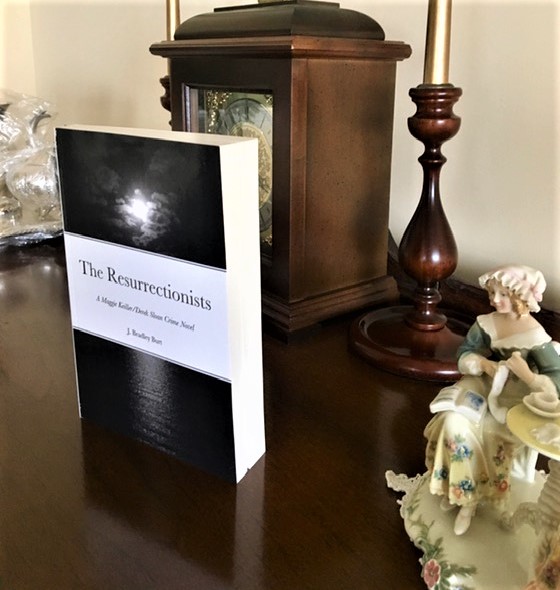
The Resurrectionists

The sudden death and subsequent resurrection of Riley Moynes—-more a serendipitous circumstance than a major miracle—-unfolded an hour before dusk under a cloudless sky on an empty stretch of northern Ontario highway.

So begins the seventh novel in my Maggie Keiller/Derek Sloan crime-thriller series, a story that will capture and hold your attention from beginning to end.  The book is intended for a mature audience, and is available online now from my author spotlight page—http://www.lulu.com/spotlight/precept

If you haven’t had a chance to read the free previews I sent out of the first two chapters—or watched my video-reading of them—they may be found at these safe links—

https://tallandtruetales.blog/2020/09/29/the-resurrectionists-ch-1/

https://tallandtruetales.blog/2020/10/04/the-resurrectionists-ch-2/

I hope you will check out the previews, and I hope you will visit my author spotlight page as you consider purchasing the book.  In addition, please share this note with anyone you think might be interested.  I know I’m biased, but The Resurrectionists is a heck of a good story!

The Resurrectionists – Ch 2

Here is a preview of the second chapter of my new book, The Resurrectionists, which is slated to appear by the end of this month. The book is intended for a mature audience.

If you would prefer to hear me reading the chapter aloud, a video preview may be found by scrolling to the bottom.

2

final week of april, saturday afternoon

Sincerity oozed from every pore, as obvious as the sheen of sweat on her forehead, although not nearly as genuine.

“I keep tellin’ you,” she said.  “I don’t know ‘bout the money, I don’t   know ‘bout the drugs.  The guns, yeah, I knew Beau had guns.  Far’s I know, he bought ‘em legally.”

Dani Austin was practiced at shaping the truth to fit any situation, but the detectives facing her in the squalid interview room were accomplished at recognizing lies.  The big guy was Barnett, early-fifties, tie loosened, ogling her obviously and unapologetically.  The woman was Lavery, a wiry brunette, mid-thirties, eyes narrowed as she appraised Austin.  Neither seemed impressed with her story.

“You know a wife can’t be forced to testify against her husband, right?” Lavery said.  “Whatever you tell us here can’t be used in court, and Beaumanoir never has to know.”  She was leaning back, one arm tossed carelessly over the back of her chair, acting cool.  Austin could see a holstered gun nestled against the side of the woman’s breast.

“Me an’ Beau aren’t married,” Austin said.

He says you are,” Barnett said.  “Says you been together two years now.”

“Together, yeah,” Austin said, “but not married.  I been stayin’ with him, havin’ a good time, waitin’ ‘til somethin’ better comes along.”

“An’ now it has, right?” Lavery said.  “You and this guy, Dylan O’Toole?”

“Tool-man?” Austin said.  “What about him?”

“Beaumanoir says you and O’Toole been doing the dirty behind his back,” Barnett said.  “Says he found out a few days ago.  Says the money and drugs we found in the house must belong to O’Toole.  Or you.”

Austin forced a laugh.  “Are you kiddin’?  If Beau thought Tool-man was screwin’ me, the guy would be dead.  Same as you would, Detective, if Beau saw how you been lookin’ me up an’ down for the past hour.”

Might as well let him know I know.

“Don’t flatter yourself, Ms. Austin,” the detective said, shifting in his chair, miffed at being confronted.  “I wouldn’t fuck you with someone else’s dick.”

“Yeah, you would,” Austin shot back.  “You an’ your dyke partner, both.  But I don’t swing her way.”

The detectives couldn’t resist a sidelong glance at each other, each knowing the truth of the jibe, but neither willing to acknowledge it in front of Austin. 

Leaning forward, not so cool now, Lavery said, “O’Toole lives with you and Beaumanoir, right?”

“Wrong, Detective,” Austin said, sure she’d hit the mark about the woman’s sexual preference.  “Me an’ Beau live together, just a regular twosome.  Tool-man lives downstairs, rents the basement apartment.”

“That’d be the same basement where we found the drugs and money?” Lavery said.  “And the guns?”

With a shrug, Austin said, “The guns, yeah.  In a cupboard in the furnace-room.  Drugs an’ money?  Beats me.  Beau musta had somethin’ goin’ on the side.”

“He says it was O’Toole’s stash,” Barnett said.  “Swears you and O’Toole were screwing each other, and both of you were screwing him by dealing drugs without him knowing.”

“Yeah, well he would say that, wouldn’t he?” Austin said.  Placing

both hands flat on the table, she said, “Think about it!  It’s Beau’s house, not mine.  It’s him who belongs to a biker-gang, not me.  You really think me an’ some numb-nuts renter are dealers?  Puh-leeze!”

“Okay, you’re trying to convince us you weren’t boinking O’Toole, right?” Lavery said, leaning back, trying for cool again.  “And even though both of you lived in the house, neither of you knew anything about what was going down.  That the story you’re trying to sell us?”

“I’m not sellin’ you anything, Detective,” Austin said, imparting a double-meaning to her words.  “I’m givin’ it to you for free.”

When Lavery’s eyebrows lifted querulously, Austin added, “The truth, that is.  Nothin’ else!”

Barnett cut through the sexual undertone.  “So why should we believe you over Beaumanoir?”

“Up to you, I guess,” Austin said, eyes still on Lavery.  “I’m a law-abidin’ girl.”  Her gaze switched back to Barnett.  “Ask Tool-man if Beau’s tellin’ the truth.”

“We would if we could find him,” Barnett said.  “Nobody’s seen the guy in almost a week.  We figure he took a powder after Beaumanoir discovered you and him fucking each other.  But I’m thinking you already know that.”  He leaned in, daring her to contradict him.

Austin did know that.  Beaumanoir had surprised them in O’Toole’s bed by coming home early last Tuesday, and a brief fight had ensued.  O’Toole got the better of it, and when Beaumanoir had retreated, shouting threats, vowing retribution, Austin had convinced her lover to take off.  He’d been reluctant to leave her alone, but had finally agreed when she swore she’d join him as soon as it was safe.  He’d promised to call her when he got settled somewhere. 

She’d fled to a friend’s place to escape Beaumanoir’s wrath, staying a couple of nights with Debbie and her dogs.  When she went back, it was only to pack a few essentials, but Beaumanoir had been waiting, disconsolate, and pleaded with her not to leave.  Despite her unfaithfulness, he really was smitten. 

She’d agreed, reluctantly, to stay, not knowing yet where O’Toole might have landed, and the next three days had passed mostly uneventfully—although Beaumanoir, prone to mood-swings, had hit her a couple of times when anger and frustration got the best of him.  To protect herself, she’d protested that O’Toole had forced himself on her, but Beaumanoir wasn’t buying it.

The prospect of further physical violence bothered her, knowing his volatile nature firsthand.  But it had bothered her more that O’Toole was gone, and she waited anxiously to hear from him.

At dawn this morning, she and Beaumanoir had been awakened by the unexpected police raid and taken in separate vehicles to the downtown detachment.  Shortly before noon, Austin had been offered doughnuts and lukewarm coffee before being brought to the interview room.  She hadn’t seen Beaumanoir since the raid.

“Look, I got no idea where Tool-man is,” Austin said, responding to Barnett’s assertion.  “Me an’ him were not gettin’ it on, period, end of story.  Beau’s makin’ all this shit up ‘cause he knows you got him cold.  I never saw the money, I never saw any drugs.  He knows I’ll tell you the truth, so he’s spinnin’ you like a kid’s toy to save his own skin.  You think he cares about me?  Look what he did to me.”

Both detectives had noticed the bruising and cuts.  They marred a pretty face, framed by curly black hair, cut short in a page-boy.  Her eyes were mesmerizing—almond-shaped, with clear, brown irises—although one was blackened.  Even clad in a track-suit, her figure was unmistakable.  She reminded Lavery of Betty Boop.

“I got bruises all over me,” Austin continued.  “You’re gonna hafta take my word for that, though.”  She glanced again at Lavery.

“Yeah, my heart bleeds for you,” Lavery said, wishing a strip-search could be authorized.

What-ever,” Austin said.  “So listen, I got places to be an’ people to see.  You gonna charge me or let me go?  If you’re chargin’ me, I want a lawyer.”

The detectives checked wordlessly with each other, and Barnett said, “We’re releasing you for now, but don’t leave Thunder Bay.  We’ll probably need to talk again, once we have a few more chats with Beaumanoir.  Could be you’ll be charged with living off the avails of crime.”

“I don’t live off Beau,” Austin said.  “Got my own job.  I’m a PSW over at the seniors’ centre.  My money’s my own!”

“Yeah, and you’re still a virgin,” Barnett scoffed.  “I get it.”

Switching gears, Austin asked, “Beau gonna make bail?” 

Both detectives shrugged.

“He gets out, he’s gonna come lookin’ for me,” Austin said. 

 “Like I said before,” Lavery smirked, “my heart bleeds for you.”

*  *  *  *  *  *  *

Austin never went back to Beaumanoir’s house.  After her release, she took a cab to a nondescript strip-mall in the east end.  In a garbage-littered laneway behind the stores was a row of garages, one of which was locked.  With a glance up and down the lane, Austin unlocked it, flicked the light-switch, and rolled the door down behind her.  

Two motorcycles sat in the middle of the floor, covered by tarps, assorted socket wrenches lying beside them.  An array of junk littered the rest of the space, but Austin paid it no attention.  Kneeling in front of a large, cluttered workbench at the rear, she pulled a couple of cardboard boxes from underneath.  A third box, smaller than the others, was at the rear.  From this box, she removed a manila envelope, heavy in her hands, and dumped its contents on the floor—a dozen bundles of currency, each held together by large elastic bands.

Oh yeah!  I knew this would come in handy.

Counting it quickly, ensuring the total was the same as she remembered, eighteen thousand dollars, she stuffed eleven of the bundles back in the envelope, then shoved it into her small backpack.  The remaining bundle went into her pocket.

She then took a smaller envelope from the box.  Inside was her passport, a copy of her birth certificate, and a provincial certificate entitling her to work as a PSW, a personal support worker.  The most important thing  right now, though, was an expired Secure Certificate of Indian Status in her mother’s name, identifying her as a member of the Odishkwaagamii band, a First Nations community near Port Huntington.  That certificate was her ticket to disappearing so Beaumanoir could never find her. 

Christened Daniis Tabobundin, she’d been born on the reserve twenty-eight years ago to Marjorie Tabobundin and the charming Irishman who’d fathered her, Sean Austin.  They’d married a few months later, changed their surname to his, and left the reserve for Thunder Bay.  But the new husband and father was gone before two years were out.  Too ashamed to go back to Odishkwaagamii, her mother had stayed on in the Lakehead, working multiple jobs to make ends meet. 

After completing high school, Austin had worked a minimum-wage job in order to help.  When her mother died, she’d enrolled in a part-time course at Confederation College to obtain her diploma as a PSW.  With her certificate, a job soon followed at a seniors’ centre that had seen better days, providing a boost to her income.  But nowhere near the level she wanted.  Hence, her relationship with Beaumanoir.

Today was a day she had planned for, knowing Beaumanoir’s luck would eventually run out.  The leader of the Midwich Bloods, he’d been peddling fentanyl and cocaine since before she met him, and had been happy to lavish money and good times on her. 

‘Til I met Tool-man.  That was the end of me an’ Beau.

Over several months, she had squirrelled away money she skimmed from the large sums of used bills he’d bring home in his saddlebags, proceeds from his illegal dealings.  After they’d been lovers for awhile, he’d trusted her to do the counts for him, never imagining she’d try shorting him.  She made regular deposits to his account, even purchased GIC’s in his name, and never took too much at any one time.  Beaumanoir had no idea.

Not too swift..  Mean, though.  He’ll come lookin’ for me.

Her time with Beaumanoir, enjoying no shortage of money, was the first time she’d been able to live anywhere close to the manner she had long desired.  But she considered him a bottom-feeder, and herself better than that.

Before leaving the garage, she took a long look around—wondering if there was something else she could use, ensuring there’d be no trace of her left behind.  On impulse, she opened one of the drawers in the tall, portable tool-stand belonging to Beaumanoir.  As she’d expected, three handguns were inside, each wrapped in a hand-towel. 

One of them, a small S&W Bodyguard .38 Special, was perfect for what she wanted, and she’d actually fired it before, at the gun-range with Beaumanoir.  It, too, went into the backpack, still in the towel, along with a box of shells.

After relocking the door, the key found its way into a sewer grate.  And after a few seconds’ deliberation, so, too, did her phone.

Can’t risk Beau trackin’ me, usin’ the phone.  If the cops find this place, tough luck for him.  If they don’t, their bad.  Either way, I got no link to it now.

A second cab took her to the city’s main bus terminal, where she bought an overnight ticket to Toronto.  With a few hours before departure, she visited a couple of clothing stores, paid in cash, packed her purchases and envelope of money into a larger backpack she bought, and had a light supper in the terminal diner.

By midnight, she was sleeping soundly on the half-empty bus, but with no intention of riding all the way to Toronto.  With Thunder Bay in the rearview mirror, Beaumanoir was already a fading memory, and Dani Austin was about to die, to vanish completely.  With the resurrection of Daniis Tabobundin, she would return as a prodigal daughter to her birthplace at Odishkwaagamii.

It didn’t occur to her until later that, having ditched her phone, there was no way now for O’Toole to contact her.