Brown Paper Bag

This poem was written in response to a prompt from my Florida writers’ group. It can be best enjoyed by reading it to the tune of the old, Irish ballad, ‘Black Velvet Band’.

His hair hung down to his shoulders,
His shirt was a tattered old rag.
Faded chevrons adorned both his worn, torn sleeves,
And his hands clutched a brown paper bag.

Gunny was the name we all called him,
A veteran, ‘though he never did brag.
He'd wander the streets of the neighborhood,
Snatching sips from his brown paper bag.

His only true friend was old Jarhead,
A mongrel with no leash or tag.
When he died, he left Gunny alone again,
Alone with his brown paper bag.

We never saw Gunny get angry,
He was never a scold or a nag.
When we passed him by, he would nod a sad smile,
And drink from his brown paper bag.

In the summers we often would see him,
With the kit-bag that held all his swag,
On a park bench alone in the warm sunshine,
Holding tight to his brown paper bag.

Then last winter with snowstorms a-swirling,
And temperatures starting to sag,
Gunny died forlorn in the homeless camp,
He’d drunk his last brown paper bag.

When they opened his kit, they discovered
A folded American flag,
And a Congressional Medal of Honor,
Sealed tight in a brown paper bag.

When they tried to find Gunny’s family,
Their best efforts all hit a snag.
But they buried him with full honors,
With his Medal from that brown paper bag.

Gunny rests now with his fallen comrades
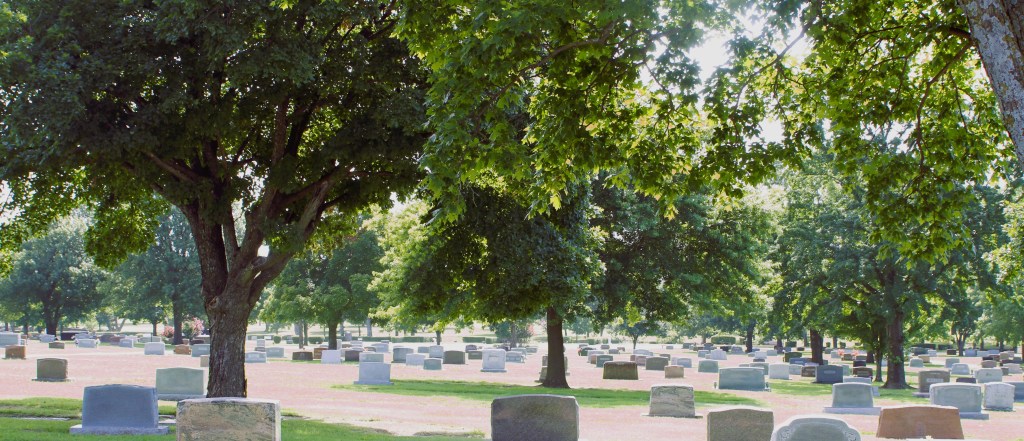
‘Neath a cross in a field filled with flags.
UNKNOWN BUT TO GOD and those warriors---
Free at last from those brown paper bags.

Semper Fi, Gunny!

My Whiffenpoof

The weekly prompt from my Florida writers’ group was to write a piece incorporating a song lyric, even a misunderstood one. I chose to use a complete song, but with its meaning and setting skewed from its real attribution for purposes of fiction.

The young lad’s voice was pleasant enough, if a tad off-key here and there, and he held his beer-drinking audience rapt as he began singing the song.

To the tables down at Mory’s, to the place where Louie dwells,
To the dear old Temple Bar we love so well,
Sing the Whiffenpoofs assembled with our glasses raised on high,
And the magic of our singing casts a spell…

“What’s a Whiffenpoof?” old Hardy McKinnon yelled out rudely, slamming his empty glass down on the table in front of him, half-cut already, though the evening was young.  “Sounds like a fart!  One o’ them SBD ones!”

The lad stopped singing, joined in the laughter that followed, then said, “SBD?  What’s SBD?”

“Silent but deadly!” McKinnon’s wife cried, pointing at her husband, beckoning to me for another round as the laughter erupted again.

“Quiet, ye lot!” I shouted from behind the bar where I’d been drawing another tray of drafts.  “Let the boy sing his song!”

Indeed, he did look more a boy than a man, sitting there in his khaki uniform, the cuff of one sleeve pinned to his left shoulder where his arm should have been—the only one to return of five village lads who had marched proudly to the train station two long years ago, off to fight the foe for King and country. 

The polished medal at the end of the ribbon round his neck testified to his gallantry and sacrifice—the Victoria Cross, awarded for valour in the face of the enemy, the highest military award the nation could offer.  It had been presented by none other than King George himself, and I’d been there to witness it.

“Let him sing!” I cried once more into the clamour, and it subsided quickly as Jimmy took up his song again.

Yes, the magic of our singing of the songs we love so well---
‘Shall I Wasting’ and ‘Mavourneen’ and the rest---
We will serenade our Louie while life and voice do last,
Then we’ll pass and be forgotten with the rest…

The eyes of almost everyone were fixed steadily on the lad as he sang, the words and melody casting a solemn pall over the room.  Those who weren’t looking at him were staring emptily into space with that thousand-yard stare I used to see in my Robert’s eyes after he came home from fighting the Boers.  He never spoke of the horrors, nor of the comrades he’d lost, but I knew they’d been with him ‘til the day he died.

I’d held on to the business after he passed, McSorley’s Old Ale House being the only home I had, and the only pub for miles around—a gathering-place as sacred to its patrons in its own way as the Church of England ever could be.

“Aye, Jimmy, sing some more!” Angus MacPherson said softly into the silence.  “Sing the chorus for us, lad!” 

Jimmy drank deeply from the new pint I’d set in front of him, wiped the foam from his mouth with his one hand, and when he started in again, many of the assembled joined in, the words as familiar to them as the faces in their mirrors—

We’re poor little lambs who have lost our way,
Baa, baa, baa!
We’re little black sheep who have gone astray,
Baa, baa, baa!
Gentlemen songsters out on a spree, doomed from here to eternity,
Lord, have mercy on such as we,
Baa, baa, baa!

My tears glistened on the polished, wooden surface of the bar, and I scrubbed them away furiously with my rag.  Most of the old warriors who’d been singing along were weeping, too—silent tears tracking down their grizzled, ruddy cheeks, only to be swallowed up and lost in their scraggly beards, just as their innocent youth had been torn from them by the long-ago battles they had fought for the fading Empire.

In the silence that blanketed the normally-boisterous room, Jimmy stood up, finished his pint, then walked wearily over to the bar, waving shyly to the crowd.  “I’ll be headin’ up now,” he whispered with a sad smile.  “Shout me up when yer closin’, an’ I’ll be back down to help.”

“Shure, an’ I’ll be doin’ that very thing,” I said, knowing full well I would not.  The boy was bone-tired, I could tell, and needing his sleep—if sleep would come.  I watched as he mounted the narrow staircase, his steps heavy, his one hand on the banister, his chin sunk low on his chest.  I couldn’t see his medal, but I know it weighed heavy on him.  He’d have given it back in an instant if it meant the return of his fallen friends.

“He’s a good lad, young Jimmy!” Liam Dewar shouted, his half-empty pint raised high.  “A noble warrior, an’ a damn fine singer!”

“Three cheers for Jimmy!” Molly Malone cried, a bit unsteady on her feet, trying not to show it.   She was sweet on Jimmy, I knew, but trying not to show that, either.  The crowd joined in, as did I—Huzzah!  Huzzah!  Huzzah!

And then another song broke out, this time led by the lovely tenor voice of the vicar, the Reverend Alastair Holmes, and everyone took up the tune—

It’s a long way to Tipperary, it’s a long way to go,
It’s a long way to Tipperary, to the sweetest girl I know…

And I thought about the long way home young Jimmy had taken—the journey from carefree boyhood to the blood-soaked trenches of Europe, and back again—mutilated and scarred, perhaps forever.  And for what?  For three cheers and a piece of tin around his neck?

My tears began anew, but tears of gratitude this time—gratitude that, unlike so many other mothers’ sons, he was home again.

My Whiffenpoof.

My boy.

And Off We Go

The weekly prompt from my Florida writers’ group was to write a piece containing the phrase, “shall we go…”.  This fictitious tale is my response.

“Shall we go?”  The sepulchral voice is solemn, portentous, and it reverberates ominously in my ears.

Not yet…not yet!  I’m not ready.

I hear other voices, too, softer voices…my daughters, named for our favourite flowers so many years ago.  They’re talking quietly over me as I lie in a bed I cannot feel in a hospital room I cannot see, unable to speak or move.

“He can’t open his eyes,” Veronica says, “but I can see them moving behind his eyelids.”

“Yeah, I see that,” Jasmine agrees.  “I think he can hear us.”

“Can you, Dad?” Veronica asks softly.  “Can you hear us?”

Yes, yes, yes!  I’m right here!

“He can’t answer you, Vee,” Jasmine says sorrowfully.

She’s right, I can’t.  Everything was fine until…until…whatever day it was, I can’t remember…and that red wave washed over me, collapsing me on the floor for I don’t know how long.  And now here I am, wherever this is.

“Shall we go?” the voice resounds in my ears again, a honeyed basso-profundo, not at all impatient, yet determined nonetheless.

No, not yet!  It’s too soon.

“Keep stroking his hair, Jazz,” Veronica says.  “He always liked that.”

I did always like it, but I can’t feel a thing now.  I can only imagine how it feels, and the thought warms my heart.  I laugh inwardly, knowing my hair must be all askew.

“I love you, Daddy,” Jasmine whispers.  “I hope you know that.”

“He knows we love him, he knows,” Veronica says, and I imagine she is holding my arthritic hands in hers, gently massaging them, terribly weakened now when once they were so strong.  But I can feel nothing.

I lifted you high in these hands, Vee, high up over my head.  And Jazz, too!  And now…and now…

“Shall we go?”  The voice asks again, persistent though not offensive.

Not yet!  No!

“You don’t have to worry about us, Dad,” Veronica whispers.  “We’ll be fine.”

“She’s right, Daddy,” Jasmine adds.  “You and Mummy were the best, and we’ll be just fine.”

I know, I know…but I don’t want to go.

They’re right, of course, they will be fine, both with their own wee families now.  The little ones were here earlier with their daddies…at least I think they were…maybe not…but I’m sure I heard those four tiny voices telling me they love me.  I wanted to say it back to them, to wrap my arms around them, but…

“And don’t forget, Dad,” Veronica continues, “Mum said she’d be waiting for you to find her, remember?  She’ll be watching for you.”

Ah, their mother, my wife, my lifelong love…how I’ve missed her.  Despite a valiant struggle against the disease that wasted her, she left us a few years ago.  And yet, she never truly left us, you know?  I wonder if Vee is right, if she really will be there, wherever there is…my darling Clementine…

“Shall we go?”  The voice is relentless, insistent, though not unkind.

No, please!  Not yet.

“I’m sure Mummy’s been missing you, Daddy,” Jasmine murmurs, and I can hear the sob catching in her throat.  “You were meant to be together for all time.”

“Exactly!” Veronica says, trying to lighten the mood.  “Like apple pie and cheese!  Like mustard and relish!”  She laughs softly as she gropes for more examples.

Jasmine joins in her sister’s laughter, and my heart dances to the sounds of their lilting voices.  “Yeah, or like Abbott and Costello!” she says.  “Like Jack and Jill!”

“Lady and the Tramp!” Veronica offers, and the laughter grows louder.  “Romeo and Juliet!”

“Omigod!” Jasmine gasps, their laughter rolling freely now.  “Tweedledum and Tweedledee!  Lancelot and Guinevere!  Sweet and sour!”

“Yin and yang,” Veronica says, and they stop on that one, as if it’s the perfect one to describe me and Clemmie.

“Shall we go?” the voice asks again…but it’s a different voice this time.  Frozen inside my immobile body, I cannot move, but I feel as if I’m turning around and there is Clemmie…as young and as fair as the first rose of summer.  She’s standing in the midway at the State Fair, pointing at the Tunnel of Love attraction, the one where we had our first, tentative kiss, where the sense we’d found something special first dawned on us.

“Shall we go?” she asks again, and her eyes are sparkling, her smile warm and welcoming.

“It’s okay, Dad,” Veronica whispers, “it’s okay to go.”

“Goodbye, Daddy,” Jasmine breathes.  “We love you.”

Goodbye, goodbye…I love you both…

And I reach for Clemmie’s hand, and off we go.

I Believed ‘Em All!

Step on a crack, break your mother’s back!  Tell a big lie, your father will die!

I remember chanting this doggerel over and over as I pranced along the sidewalk as a young boy.  I have no idea where I first heard it, but I wasn’t the only one whose sing-song voice could be heard uttering the same incantation.

To this day, I try to avoid those sidewalk cracks, and most of the fibs I’ve told over the years have been small.  I swear!

That little ditty was just one of many such learnings we picked up as children from playmates, kindly old aunts and uncles, even parents.  And for periods of time, I believed all of them!

Eat your carrots, sonny!  They’ll put hair on your chest.  I’ve always loved carrots, especially raw, and I do have hair on my chest—gray now, of course, but still curly—so that advice bore out, I guess.

Drink your milk!  It will make your bones strong.  I readily believed that, but when I was that age, we were drinking powdered milk my mother mixed up from a box.  Even when ice-cold, it tasted vile, and I always wished we had a cat I could feed it to—but not a black one.

Superstitions played a big part in much of the advice I was given, even though my parents told me superstitions were premature explanations that had overstayed their time.  Unfortunately, I didn’t know what that meant.

It’s bad luck if you ever let a black cat cross in front of you!  To this day, if a black cat crosses my path, I detour.  It makes no sense, yet I do it, anyway.

Don’t walk under a ladder!  It will bring bad luck, too.  That seemed logical to me, but I would sometimes tempt fate by doing that very thing.  Today, though, a grown man, I always walk around ladders.  I mean, a piano could fall on me, right?

Bad luck will follow if you open an umbrella in the house!  I can attest to the truth of this one because I did open an umbrella indoors one day, just to test the proposition.  As it popped open, it struck a vase on the ledge beside the front door, sending it crashing to the ground.  That led to one of those rare occasions where I told one of those small fibs I mentioned earlier.

Look for four-leaf clovers if you want good luck!  My friends and I spent many an hour doing just that, and found lots of them, as I recall.  And because no great tragedy ever befell us, I suppose the statement was accurate.  One friend insisted on calling them shamrocks, and said we might find a leprechaun.  I never did.

Don’t pull on the wishbone ‘til after you’ve made your wish!  I tried earnestly to comply with that advice, but my brother—more interested in winning the contest than having his wish fulfilled—always pulled first and usually won.  And as a result, my wish that he would magically disappear never came true.

Keep your eyes closed and the boogey-man won’t get you!  I had a lot of faith in this one, especially in the dark of the bedroom I shared with my brother.  I would sometimes hear terrifying moans coming from the vicinity of his bed, so I’d cower under my blankets, eyes screwed shut, praying the advice was well-founded.  I never wished for my brother to be taken, but I did prefer it be he rather than I.   

Don’t cross your eyes for fear they’ll stay that way!  I remember my friends and I daring each other to try it, all of us fearful it might be true, none of us willing to be the one who found out.  I know now there’s nothing to it, and I attribute the fact that I have to wear corrective eyeglasses to some other factor.  But I did look cross-eyed at one of my teachers once, and was surprised when she did the same back at me.  She was one of my favourites ever after!

As I entered adolescence, the nature of advice I was given by well-intentioned relatives changed, although most of it was equally preposterous.

Don’t pick your zits!  You’ll end up with boils all over your body.  The spectre of boils was terrifying, but so, too, was the mortification of acne.  For a while, I tried to convince myself I was developing freckles, but I knew better.  A variety of creams and lotions entered the fray, but I did resort to picking at my zits out of desperation.  Sixty years on, I’m still waiting for the boils.

Beware the devil’s hands, boy.  If you succumb to his entreaties, you’ll go blind!  Well, all I can say to that is, although I do wear glasses now, I never once lost my sight.

Yes, you can borrow the car again.  But see that you bring it back!  This command from my father on every occasion I asked for his keys, was aggravating at the time, but has since become a standard family joke among my siblings.  And it’s a source of wonder to me now that one of my granddaughters owns and drives a car I used to own.  She brings it back every time she visits.

There are other gems of wisdom from my childhood, most of which I no longer follow, some of which I do.  They pop into my mind at the oddest moments, sometimes evoking a laugh, occasionally a tear.  They are milestones along the road I journeyed as I grew up, and they helped bring me safely to the cusp of my ninth decade.

And once upon a time, I believed ‘em all.

Ready For The Fall

The prompt from my Florida writers’ group this week was to write a piece about fall. Here is what I came up with, and I hope it will conjure memories for you, too—

A middle-aged woman I didn’t know smiled as she entered the elevator with me one day last week.  “Are you ready for the fall?”

I cringed, steeling myself for an unwanted mini-sermon from a dogged do-gooder, a holy-roller.  “I…I guess so,” I stammered.  “I mean, I pray, I try to do good…”

A look of bewilderment creased the woman’s face, followed quickly by one of amused pity.  “No, no,” she corrected me patronizingly, “you misunderstand me.  I meant the autumn, not the apocalypse!”

“Ah…of course,” I sighed, embarrassed by my mistake.  “Sorry…”

As the elevator doors opened on the eighteenth floor, the woman stepped out, still amused by my obtuseness.  “No need to apologize,” she said.  “At your age, I imagine it’s best to be ready for both!” The doors slid closed behind her before I could think of a suitably nasty retort.

Back in my apartment on the twentieth floor, I reflected on our conversation as I unpacked the groceries I’d been carrying.  It seemed to me an honest mistake to make, an understandable one, and the woman’s parting shot was likely good advice.  But why did she have to be so rude?

Later, relaxing with my wife over a cup of tea, I talked about what had happened, and about getting ready for the fall.  “Remember when we were kids, it seemed summers would never end?” I said.  “From the day school let out until the first fall-fair arrived, our days were blissful, carefree, limitless.  Eat breakfast and head outside to play; dash inside for lunch, then back outside; trudge home for supper, then out again ‘til the streetlights came on.”

“I remember,” my wife said.  “But things sure changed when we grew up, in spite of our best intentions.  We got married, started working, became parents.  Those summers suddenly became  a lot more finite.”

I nodded agreement.  The calendar tells us summer ends with the autumnal equinox in late September, but the end always came much sooner for us.  It was marked, not by an arbitrary calendar, but by the requirement to go back to school.  Both of us were teachers in those long-ago days, and felt we had to get back ahead of our students if we had any hope of being ready for their return after Labour Day.

For many folks, I guess—like the woman on the elevator—the coming of fall is a time of new beginnings, of anticipation.  They think in terms of flaming fall-colours, brisk autumn days, evenings spent curled up with a book in front of a cozy hearth.  They look forward to the change of seasons.

Not I, though!  I’ve always thought of it as a gloomy time—the conclusion of summer, and the close of so many pleasurable things that vanish with the coming of September.

For example, with the end of warm, sunny weather, there came an end to my carefree habits of dress.  No more swimsuits or running shorts; no more open sandals or ancient running shoes; no more tank-tops or faded team sweaters.  Instead, it meant a return to the straitjacketing drill of collars and ties, pressed slacks, knee-high socks, and polished dress shoes.

The end of summer put a stop to the treasured luxury of shaving every two or three days, depending upon what activities were planned.  And it called a halt to the wearing of old ball caps as an alternative to brushing my hair.

The inevitable onset of fall wrote fini to three or four leisurely cups of coffee with the morning paper, and an end to mid-morning breakfasts on the back porch.  It heralded, in their stead, the beginning of hurried showers and breakfasts-on-the-run.  It marked the re-entry into the exciting world of daily traffic reports, as I attempted to find the shortest, quickest route into and out of the city.

In short, summer’s end brought to a close the lazy, drifting vagaries of summer living I tried so vainly to hang on to.  Coming back to the real world always provided a jolt to my entire system.  It was like going from childhood to adulthood all over again!  Once was enough!

“You know, I never wanted to be the type of person who wishes his life away,” I commented to my wife, “always wishing for something to be different than it is.  But, in a sense, I guess I used to do just that.”

“Me, too,” my wife said wistfully.  “For me, the year was divided into two seasons, summer and not-summer. And not-summer was not good!”

“Remember we’d take the girls on one last camping trip up north?” I said.  “My cutoffs and hat would be in my bag, my shaving-kit left behind.  It was always one final fling in the glorious realm of summer.”

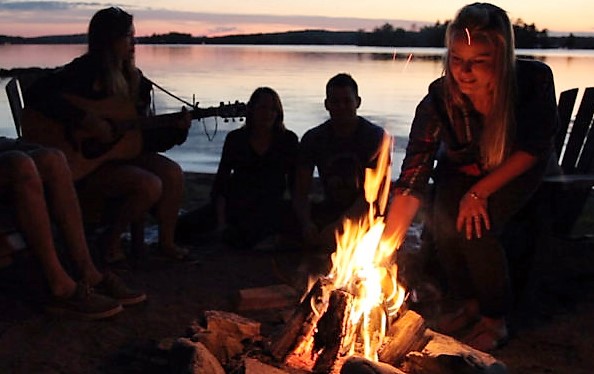
“I loved it,” my wife said, staring into the past.  “Hiking, swimming, paddling, exploring, picking berries, roasting marshmallows, singing our hearts out by the campfire, sleeping the sleep of the innocent in those old sleeping-bags—it was like being children all over again.”

“Even now,” I said, “when every day is like a Saturday, I still pretend summer will never end, that I’ll never have to grow up and give it up.  It still seems there’s always so much left to do.”

“At least we have Florida now,” my wife smiled.  “Year-round summer! Before the fall ever arrives, I’m already planning what I’ll pack.”

During the course of our happy reminiscing, I managed to forget my annoyance with the supercilious woman in the elevator.  But by chance, we happened to ride the elevator again yesterday, going down this time.  As she stepped aboard, I could tell she recognized me as the confused old fart from a week ago—but this time, it was I who spoke first.

“Before you ask, I’m ready for Ar’geddon!” I smiled.

“Our what?” she said, head cocked.

“Ar’geddon!” I repeated.  “I’m ready to go!”

The same pitying look as last time spread across her face, the same condescending smile.  “Sir, you mean Arma-geddon.  You’re mispronouncing the word.” She shook her head disdainfully, appalled by my lack of acuity. 

Waiting a beat to spring the trap I’d plotted, I said very quietly, “Whatever!  It’s not the end of the world!”

We rode the rest of the way in icy stillness, a long, silent fall from the eighteenth floor to the parking garage.

A Crowd of Stars

The youngest of my brothers-in-law died recently, following a long period of worsening, physical incapacity and illness.  He was the second of my generation to go, my younger brother having passed three years ago, and I suspect his death brought the spectre of the end-times somewhat closer to us all.

In addition to my sister, he left behind four children, three of whom are married, giving him three grandsons and two wee granddaughters.  At his private interment, his daughter and three sons spoke of him as a loving and beloved father, and there is no greater tribute I can imagine.  Eighteen of us exchanged reflections and prayers that day, spoken to each other and to him, designed to bring a sense of closure and peace to us all.  We were saddened, of course, by his passing, but relieved that his suffering was ended.

He was married to my sister for forty-five years, a loving union that brought credit upon them both.  I still remember dancing at their wedding, when none of us—so young and brash and full of piss-and-vinegar—could have imagined this day coming.  But it has now for him, as it must someday for all of us.

Deliberate and intentional in word and deed, especially as he grew older, my brother-in-law was rarely intemperate or harsh in his dealings with others.  A man of deep faith, he was loving and giving, and forgiving of others’ shortcomings.  Throughout his tribulations, he was confident that, as he approached the final crossing, he would meet his saviour on the other side.  I hope he has.

In her remarks, my sister said something I thought perfectly summed up his life and faith—from Matthew 25:23, “Well done, good and faithful servant; thou hast been faithful over a few things…enter thou into the joy of thy Lord.”

My wife shared many of those same understandings about what is to come with him, and I remember them engaged in deep conversation over the years, communicating their ideas and beliefs, their hopes for the hereafter.  By contrast, given my differing views, the exchanges I had with him tended to be temporal more than spiritual, though always sincere and affectionate.  He had a way of thinking before he spoke, and I constantly found myself leaning in to be sure not to miss what he might have to say.

The day after he passed, I wrote the following note to my sister—

When we get old, as some of us have, we think differently about death than when we were younger.  I won’t say we ever look forward to it, but we perhaps stop fearing it.

We think of death as a companion on our journey through life—way back in the throng at the beginning, but gaining on us as we begin slowing down.

We think of death, not as a spectre that will end things, but as an usher who will open the next door and allow us in.

Just as life ushered us in at the beginning of our journey through the here and now, death ushers us into the beginning of our next journey.  None of us knows what that journey will look like, but faith sustains us.

When I think of him now, and where he is, I think of these lines, adapted from the poem High Flight, by John Gillespie Magee, Jr.—

Oh!  he has slipped the surly bonds of earth
And dances the skies on laughter-silvered wings…
He has topped the wind-swept heights with easy grace…
Put out his hand and touched the face of God.

With that note, I also included one of my favourite poems, When You Are Old, by William Butler Yeats, the greatest of the Irish poets.  I imagine it as the song my brother-in-law might be singing now to my sister from wherever in this vast universe he finds himself, and I hope it comforts them both—

When you are old and grey and full of sleep,
And nodding by the fire, take down this book,
And slowly read, and dream of the soft look
Your eyes had once, and of their shadows deep;
How many loved your moments of glad grace,
And loved your beauty with love false or true,
But one man loved the pilgrim soul in you,
And loved the sorrows of your changing face;
And bending down beside the glowing bars,
Murmur, a little sadly, how Love fled
And paced upon the mountains overhead
And hid his face amid a crowd of stars.

I Dreamed…

A recent prompt from my Florida writers’ group was to use the phrase, “I dreamed last night…”. This was my submission—

A reminder to those who receive my complete posts in your email, rather than just a link—if you click on the title, you’ll be able to read the post in its proper format on my actual website, rather than in the body of your email.

I dreamed last night of a universe vast,
Extending the future from some unknown past,
Throbbing, emitting, exploding in heat,
Its energy vibrant, its fate incomplete
As onward it rushed, this dream in my head
Rendering me rapturous, there in my bed.

I dreamed last night.  And I wondered if I
Might perhaps be a part of that darkened sky,
From genesis unto eternity,
Unceasing, undying, the infinite me---
My spirit indwelled with life, and a mind
Pushing e’er forward from a past left behind,
Seeking out answers as questions unfold,
Traversing the nothingness, fearless and bold.
I dreamed last night I was mounted astride
A life-force impelling its own suicide.
For how could I, a mere mortal, defend
A beginning without eventual end?
How could we persons, predestined to die
Believe in a universe beyond the sky?

I dreamed last night.  When I wakened again
To face the day’s dawning, the truth appeared plain.
There’s no need for proof of life after death,
For we do not die after our final breath.
We’re integral to that miasmic cloud,
That cosmos of energy, bursting and loud.
We’ll live evermore, just not in this state--- 
We need but to trust, let our faith not abate.

Yes, I dreamed last night of a universe vast,
Informing our future through present and past,
Accepting us gladly, just as we are,
Propelling us forward from near and afar.
Mortality ends, but life still goes on,
And we shall be part of it, unto anon.

Lest We All Die

Like most of us, I suppose, I have a set of values and principles to which I try to adhere.  Perhaps the most important of these is the belief that we should all treat each other with the same respect and dignity with which we hope to be treated.

But there are others I profess, too; among them—

  • love is better than hate;
  • honesty is better than mendacity;
  • tolerance is better than small-mindedness;
  • civility is better than rudeness;
  • rational thought is better than baseless opinion;
  • equity in race, gender, and economic security is better than inequity;
  • freedom is better than enslavement;
  • peaceful coexistence is better than open warfare;
  • rule of law in our collective society is better than anarchy; and
  • majority rule in our collective society, however flawed, is better than the tyranny of a minority.

Like many of us, I imagine, I try to inject the values I espouse into my daily doings.  At my age, alas, the range of those doings is growing increasingly smaller, my influence is shrinking among my social circle, and the spectre of irrelevance is looming ever larger.  Where once my thinking was valued and reflected upon by those around me, it is less entreated as the years slide by.

My greatest impact is felt now through the writing I do—or so I choose to convince myself.  In the almost three-hundred essays I have posted to this blog since its inception in January 2016, I have touched on a multitude of subjects influenced by my value-set, some of them repeatedly.  A partial list includes—

  • parenthood; children and grandchildren; family and friends; education of the young;
  • racial and gender inequality; socio-economic issues and child poverty; wealth inequity; discrimination and prejudice; women’s reproductive rights; aging; civility and respect; pandemic unpreparedness; the future of work; artificial intelligence; right-wing Christian nationalism; peaceful coexistence;
  • famine and food scarcity; freshwater scarcity; forced migration; climate change; biodiversity loss; water and air pollution; global warming; ecological collapse; overpopulation; species extinction;
  • government overreach; politics and authoritarianism; corruption; warfare and nuclear threats;
  • freedom of speech; media and a free press; big tech; alternative facts and disinformation; and  
  • humour and whimsy; reminiscences; childhood; life eternal.

I also believe that certainty is the enemy of an open mind, and that we should not believe everything we think.  Therefore, I remain quite prepared to hear about and learn from contrary viewpoints.

Unlike a few people who persist in doing so, I have never tried to impose my values on anyone through my writing.  I believe in persuasion, not mandate or fiat.  Everyone is free to read my blog-posts if they so choose; they are also, and importantly, free to agree or disagree with what I’ve written; and they are free to offer comment.  There is no pressure on anyone, explicit or implied, to come over to my way of thinking.

I accept other people’s right to believe as they do, to say what they wish, and to act as they will, but with one critical proviso—they are not free to harm anyone else in so doing, or to foist their beliefs on unwilling others.  

I know this view is not popular with the social, political, and religious zealots, partisans, and proselytizers who brook no dissent.  Nevertheless, I believe it is in keeping with my aforementioned values and principles, and I continue to espouse them.

To ensure our continued coexistence, my only plea is that we live and let live.

Lest we all die.

The Smartest Guy

During my working career, sometimes I was the smartest guy in the room.  But only sometimes.  Fortunately for me, in many of the situations where I wasn’t, I was the highest-ranking guy in the room, so the smartest folks, if they wanted corporate decisions and actions to go their way, had to convince me of the merits of their positions.

On occasion, that was relatively easy for them, because the evidence in favour of their arguments was plentiful and conclusive, and I’d have had to be the dumbest guy in the room not to understand that.  But I was never the dumbest guy, so in matters where there seemed only one reasonable course of action, not much convincing was needed. 

Other times, though, those smarter folks in the room would present conflicting data to me, sufficient to rule out an obvious choice, and that’s where the need to be convincing became paramount.  Whenever I was presented with two or more sets of factual data, each suggesting plausible courses of action, the art of persuasion became more significant.  And in such cases, I could always be persuaded by logic and passion.

Early on in my career, before I‘d reached the point where I was the arbiter in such scenarios, I watched as other smart folks made their pitches—sometimes in concert with me, sometimes in opposition—to those who would ultimately decide the matters in question.  And I learned that, absent overwhelming evidence in favour of one option or another, the most effective presentation of the differing bodies of evidence usually won the day.

Most of the folks to whom I reported along the way—men and women both—considered themselves the smartest guys in the room.  But just in case they might be wrong, all of them surrounded themselves with subordinates who might be—and who often were, in fact.  More importantly, the most effective of my bosses listened closely to their people, allowing themselves to be swayed by facts, logic, and passion—usually in that order.

I soon learned that passion alone would rarely, if ever, win the day with the smartest guys in the room.  For them, facts and logic were essential; they were, after all, rational beings.  But whenever reams of facts and heaps of logic offered divergent paths that might plausibly be followed, emotion entered the arena—enthusiasm, zeal, fervour, each of which is an essential part of the art of persuasion. 

Over time, I noticed the people who had the most success at winning over the decision-makers embodied similar characteristics, employed similar methods.  They were open and transparent about themselves, for example, and allowed others a chance to know them on a personal level, to learn what they stood for, what they valued.  When talking with someone, they focused exclusively on that person in the moment—leaning in, making eye contact, smiling and nodding when appropriate—all of which had the effect of making the person feel singularly important—even the boss.

The effective influencers were highly-visible in the workplace, too, and always asked pertinent questions of others in conversations and meetings to solicit their viewpoints.  They listened actively to the responses they received, sometimes saying them back, perhaps in their own words—not just to indicate understanding, but often to reframe the discussion in their direction.  They tried to establish links between colleagues’ ideas and their own, seeking to achieve synthesis—and eventually, consensus.

All of them were consensus-builders, but the consensus they strove for invariably skewed toward their own desired outcomes.  They would acknowledge and commend the results suggested by others’ proposals, then meld them with their own to offer higher-order outcomes, often coupled with a variety of strategies and tactics to achieve them.

One of the most effective of these tactics was their engaging habit of beginning their responses to others’ ideas with a phrase like, “Yeah, I agree…” or, “Yeah, I like that…”.  And then they’d segue to their own proposal by adding something like, “And if we were to combine that concept with this one…”, the point of which was to move the needle on the consensus-meter in their direction.

Without exception, all these folks who were successful at winning others over had a keen sense of anticipation, a nose to the wind for what might be coming, perhaps unexpectedly, and they made sure they were prepared with contingency plans.  I took notice of how they always had responses at the ready for questions that might never get asked, for objections that may never be raised.  They radiated readiness and competence, and as a result encouraged confidence in their abilities on the part of those around them.

With few exceptions, these smart folks with whom I worked were well-intentioned, not self-serving or conniving.  Almost all of us had the best interests of the organization at heart, and each of us believed the option we were advancing in a particular circumstance, even where it differed from colleagues’ proposals, was the best alternative for the organization.  We competed, yes, but for the overall good.

After I eventually ascended to the arbiter’s chair, the critical factor for me in favouring one proposed course of action over another was integrity—each person’s integrity, definitely, but also the underlying validity and foundation of her or his proposal.  The credibility of both the person and the proposal were paramount.  When those were in place, when the data and logic were clear, I was ready to be convinced, to be persuaded.

Even today, long-since retired, I consider the importance of having to be the smartest guy in the room over-rated.  One could be merely a shade above average in a roomful of average—hence, the smartest in the room—yet not particularly well-equipped to make critical decisions.

Far more important for decision-makers, I have always thought, is to encircle themselves with folks with the potential to be the smartest guy, and then encourage them, listen to them, take direction from them, and earn their commitment to a final consensus—a consensus that may ultimately combine elements of several proposals.

Now, if you’ve read this far, it’s possible that you disagree with me about some or all of my thinking, so feel free to persuade me otherwise.

I can be reached.

Tell ‘Em I’ll Be There

In my dream on this midsummer evening, I hear the harmonies wafting through the screen door and open windows, a ricky-tick piano accompanied by exuberant voices, men and women, some a tad off-key, but all in on the song—

In the cool, cool, cool of the evening,

When you’re lovin’ the summer air,

In the cool, cool, cool of the evening,

Save your boy a chair,

When the party’s gettin’ a glow on, and singin’ fills the air,

In the shank of the night, when the doin’s are right,

Well, you can tell ‘em I’ll be there.

I enter the familiar house—not as the twelve-year-old I was then, but the eighty-year-old I am now—and I move freely and unseen among the gathered throng.  All of them are there, as they always were, and I start in the kitchen where I see my mother, Dorothy, and her mother, Pearl, refilling bowls of snacks, washing and drying glasses, emptying and cleaning ashtrays.  The kitchen table is littered with mickey-bottles, partially-empty bottles of soda and ginger ale, and empty beer bottles.  But I remember from experience, it will be properly set for breakfast by morning.

I wander into the dining-room where the assembled singers are sitting or standing near Mike, the next-door neighbour, who is perched on the stool in front of the upright piano, tickling the ivories, as Dad calls it.  Dad says he plays by ear, which always struck me funny because it’s his fingers that dance across the keyboard, responding to every shouted request for a song.  To keep him going, Dad makes sure he always has a bottle of Black Horse Ale by his right hand.

Mike’s wife, Claire, a tiny French-Canadian gamine, sits beside the piano, smiling shyly and swaying to the rhythms her husband is pumping out.  She speaks halting English, always has a drink in her hand which she rarely sips, and reminds me now of Leslie Caron.

Beside her is my mother’s father, Gordon, and his voice is among the loudest and truest in the raucous chorus.  The son of a banty Irishman, one of five boys, he is proud of still being welcome at any party with his own five children and their spouses.

Almost everyone is smoking, and the muggy air is redolent of cigarette and cigar, which I don’t mind, although I’ve never been a smoker.  A hazy, bluish pall hangs up near the white, popcorn ceiling, and will eventually yellow it, but no one is thinking about that right now.

It occurs to me that, except for my mother and father, every one of these people will die before they reach the age I am now, most in their seventies, some sooner.  But no one save I ponders that right now, either, and the songs keep a-coming.

I’m gonna buy a paper doll that I can call my own,

A doll that other fellows cannot steal.

And then the flirty, flirty guys with their flirty, flirty eyes

Will have to flirt with dollies that are real…

My mother has three sisters, Marie, Eunice, and Irene, and a brother, Jim, all of whom, like my mother, regale in the spotlight.  All of them are attractive, they all fancy themselves singers, and they are competitive with each other—although loving, of course.  But none wants to take a backseat, so they forever try to outdo each other.

Eunice is the best of them, I think, referred to more than once in a local newspaper as ‘the songbird of the north’, and her preferred style is like Peggy Lee or Connie Boswell—whispery, cool, seductive, sophisticated.  I think she’s enamored of a friend of my parents, Jack, and I watch as she purrs one of her songs to him—

You made me cry and walk the floor,

If you think I’ll crawl back for more,

Big Daddy. you’ve got a lot to learn…

Jim thinks of himself as Sinatra, not only in his style of singing, but in his expressions, how he dresses, how he carries himself, how he relates to others.  And I must admit, he does do more than passing justice to some of the classics, one of which I’m listening to now in the dining-room—

It’s quarter-to-three,

There’s no one in the place ‘cept you and me,

So set ’em up, Joe, I got a sad story you oughta know…

So make it one for my baby, and one more for the road.

It goes without saying, however, there are no solos in this crowd, not for long.  One person may have the floor for a few seconds, but only until the others recognize the song, and then the chorus begins anew.  Irene, she of the dancer’s legs, sings quietly, mostly to her husband, Bev, and he bestows his crooked grin on her as he listens—

Gonna take a sentimental journey,

Gonna set my heart at ease,

Gonna make a sentimental journey

To renew old memories…

I realize that’s what I’m doing, too, as I wander through the house, taking it all in.  The hallway between the kitchen and the dining-room has a closed door leading to the second-floor bedrooms, and I know if I open it, I’ll see my younger self seated on the stairs beside my brother, Allan, and my younger sister, Colleen—chins in hands, elbows propped on knees, listening to the music.  My other two sisters, Dale and Martii, both much younger, will doubtless be abed and asleep despite the din.  But I choose not to open the door.

Marie has the floor now, if only briefly, and in the imperious manner of the eldest child, the athletic one, she tells Mike the next tune he must play.  And as always, she sings it to Bob, her husband, and just like every other time she’s tried, she isn’t able to finish before choking up in tears—

You’ll never know just how much I love you,

You’ll never know just how much I care,

And if I tried, I still couldn’t hide my love for you,

Surely you know, for haven’t I told you so a million or more times…

When she stops, I find myself finishing it for her in my head, for it’s one of my favourite songs, and they are my favourite aunt and uncle.

…If there is some other way to prove that I love you,

I swear I don’t know how.

You’ll never know if you don’t know now.

Mike heads for a bathroom break, so Dad takes his place at the piano.  If he could be anything in life other than what he is, I imagine it would be a concert pianist.  But he isn’t, and so he limps through a very limited repertoire, concluding with his truncated version of the finale of Gershwin’s Rhapsody in Blue—which is decidedly not rhapsodic as he pounds it out.  And because it has no lyrics, it requires him to improvise in his boisterous baritone—

Da da da dah!

Da-da da-da da da da dah,

Da dah!

Da da da,

Da-DAH!

Mercifully, Mike comes back, beer in hand, with another for my father.  I watch in remembered awe as air bubbles dance inside the green, long-necked bottle they tip back for long swallows.  When Mike is seated again, the first song called for is Jack’s, and his gravelly bass rings out the familiar lyrics—

Chi-ca-go, Chi-ca-go, that toddlin’ town,

Chi-ca-go, Chi-ca-go, I’ll show you around.

Bet your bottom dollar you’ll lose the blues in Chi-ca-go,

The town that Billy Sunday could not shut down…

But I discover suddenly that the party I am so enjoying is beginning to shut down, at least for me.  I’m still there—this eighty-year-old apparition, unseen by anyone—but the scene around me is growing dimmer, the music fainter. And then I spy my mother, back from the kitchen, whispering to Mike at the piano, and everyone stops to listen as she sings a piece she has sung to me for as long as I can remember—

I wonder who’s kissing her now,

I wonder who’s showing her how…

I wonder if she ever tells him of me,

I wonder who’s kissing her now?

And when she is finished—as all around her slide away into the deepening fog of long-ago, all these people I loved and whose lives I enjoyed being part of—I sidle over to her and plant a lingering kiss on her cheek.

I used to ask her when she sang the song to the infant me what that now was, the now that was being kissed; in my childish innocence, I didn’t understand the word as a temporal reference, thought of it as a thing, like a nose or a forehead.  She would simply smile and kiss both of mine.

So now, on the cusp of waking—just before I find myself alone again in my dream, outside that house of yesteryear in the warm, summer night—I wonder if I might be allowed to join that party myself in some not-too-distant-future.  And in hopeful anticipation, I offer my own version of one of the songs to my mother and father—

In the cool, cool, cool of the evening,

Save your boy a chair…

In the cool, cool, cool of the evening,

I’ll find you anywhere,

When the family all ask about me, askin’ if I care,

If they’re wonderin’ if I will join ‘em on high—

Well, you can tell ‘em I’ll be there.