Past, Present, Future

In 1905, George Santayana famously wrote, Those who cannot remember the past are condemned to repeat it. The statement is from his five-volume book, The Life of Reason: The Phases of Human Progress.

In 1943, Eugene O’Neill wrote, There is no present or future—only the past happening over and over again—now. That declaration is from his stage play, A Moon For the Misbegotten.

In his 1950 novel, Requiem For A Nun, William Faulkner echoed the notion when he wrote, The past is never dead. It’s not even past.

Although I could never be confused with those three literary giants, I too wrote on the same theme, more poetically: What’s past is the past—so quickly it passed—But it’s not where I want to stay. Those are the last two lines in the third stanza of my seven-stanza poem entitled, I Haven’t the Time

https://ppens1blog.wordpress.com/2025/07/01/i-havent-the-time/

But I also wrote of the future in that same poem: When all has been said, I still look ahead /To life’s next opening curtain. The premises of the poem are that life marches resolutely forward, that I haven’t the time to concern myself with its past, that I eagerly embrace its future.

Nevertheless, I’ve often wondered if there even exists a past or a future. Perhaps, as James Joyce stated in a 1935 interview with Jacques Mercanton, There is not past, no future; everything flows in an eternal present.

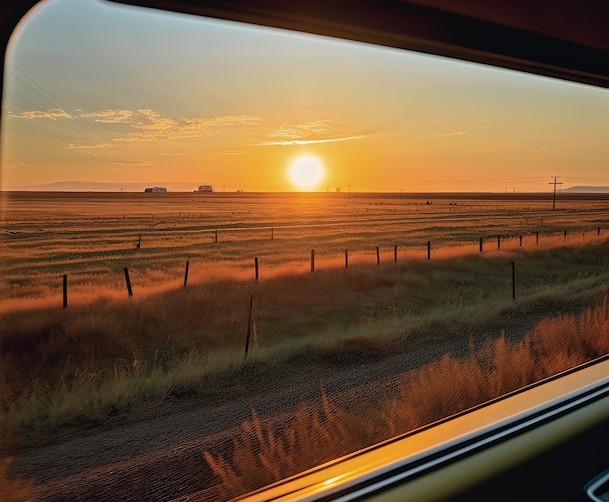
It may be, perhaps, that my poetic curtain is opening, not on some ephemeral future, but only on more of the ever-morphing present. I’ve long appreciated the analogy that life’s progress is akin to riding a train from one’s point of embarkation to one’s final destination, with innumerable stops along the way. People get on, share the ride with me, and every now and then, some get off—perhaps because their journey has ended, perhaps to continue their journey on another train. Indeed, I change trains from time to time myself, although my journey still continues.

My train moves from whence to hence, but I, gazing through its windows at the passing parade, remain aboard in my encapsulated present. The views change constantly, but my surroundings on the train remain, for the most part, constant and familiar. Locales no sooner flash by the window into the past in one direction, than future ones appear from the other. Riding the train is like being everywhere at once while never leaving the same place—Joyce’s eternal present.

Despite these musings, however, I find myself reflecting on the past more often these days—because of my age, maybe, now that my tomorrows are vastly outnumbered by my yesterdays. Although memory is an increasingly unreliable tool, it’s still easier to remember what’s transpired than it is to predict what’s yet to come.

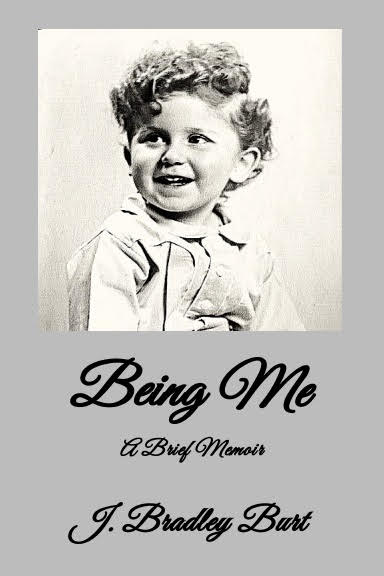
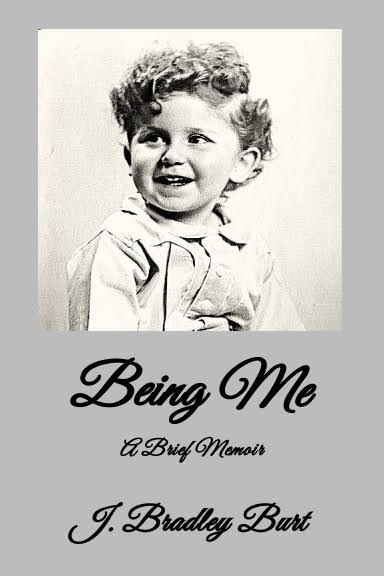
I recently published a short memoir for family and close friends, Being Me, and the exercise both surprised and cheered me. For instance, I re-affirmed that I have lived a blessed and privileged life to this point, surrounded by people who love me. And happily, I discovered I have almost no regrets about events from the past. The few I do have are less the consequence of my own actions and more the result of external forces acting on me, forces I could not control. With the exception of those, I realized there’s virtually nothing I would seek to change, had I the power to do so.

Writing the memoir took me back to places I’d been along the way, and I grasped anew how much I had enjoyed being there—my parents’ hearth, my own homes with my wife and daughters, our trips to foreign lands, my various career stops. I have no wish to return to any of them, to be sure, for I enjoy where I am right now too much. But I greatly appreciate that I had those experiences and opportunities—even if I see them now as only images flying past the windows of my train.

The future holds no fear for me. Curiosity? Anticipation? Of course! Those next opening curtains still claim my attention. I have no idea when my train will drop me at my final destination, but the present journey continues to be enjoyable and fulfilling. I have no clear understanding of what awaits when I shall disembark for the last time, although I do suspect the past, present, and future all will end at once. After all, Einstein held that the distinction between the past, present and future is only a stubbornly persistent illusion.

I imagine there to be an entirely different matrix awaiting after my consciousness has ceased, where time has no meaning, where eternity reigns…well, eternally. In the meantime, I hearken to this advice from St. Luke: …live for today, because yesterday is gone and tomorrow may never come.

My journey’s end will come, however, and I look to it in this fashion—

When that day is nigh, as ‘twill be by and by,
I hope it will be widely said,
That as man and boy, I strove for the joy
Of living until I was dead.

Brown Paper Bags

My wife and I will soon be off for our annual, six-month sojourn in Florida, where we will join with our American friends on Veterans Day, 11 November, to honor the women and men who have sacrificed themselves in defence of freedom. This poem, published here once before, is intended as an homage to those brave souls. It can be read silently, read aloud, or sung to the chorus of the old, Irish ballad, ‘Black Velvet Band’.

His hair hung down to his shoulders,
His shirt was a tattered old rag.
Faded chevrons adorned both his worn, torn sleeves,
And his hands clutched a brown paper bag.

Gunny was the name we all called him,
A veteran, ‘though he never did brag.
He’d wander the streets of the neighborhood,
Snatching sips from his brown paper bag.

His only true friend was old Jarhead,
A mongrel with no leash or tag.
When he died, he left Gunny alone again,
Alone with his brown paper bag.

We never saw Gunny get angry,
He was never a scold or a nag.
When we passed him by, he would nod a sad smile,
And drink from his brown paper bag.


In the summers we often would see him,
With the kit-bag that held all his swag,
On a park bench alone in the warm sunshine,
Holding tight to his brown paper bag.

Then last winter with snowstorms a-swirling,
And temperatures starting to sag,
Gunny died forlorn in the homeless camp,
He’d drunk his last brown paper bag.

When they opened his kit, they discovered
A folded American flag,
And a Congressional Medal of Honor,
Sealed tight in a brown paper bag.

They tried hard to find Gunny’s family,
But their efforts all hit a snag.
So, they buried him with full honors,
With his Medal and brown paper bag.

Gunny rests now with his fallen comrades
‘Neath a cross in a field filled with flags.
UNKNOWN BUT TO GOD and those warriors—
Free at last from those brown paper bags.

Semper Fi, Gunny!

More and More Every Day

Earlier this week, I celebrated my wedding anniversary—fifty-eight years, all married to the same woman, the lissome lass I first dated when she was but sixteen.  We married four years later, embarked upon fulfilling careers, raised two lovely daughters, and retired to the life we now enjoy together…sixty-three years gone in the blink of an eye, it now seems. Egad!

Friends probably view the longevity and success of our union from my wife’s point of view as a triumph of iron will over probability. From my viewpoint, however, it’s unquestionably a victory of blessed good fortune over whatever random fate I would otherwise have encountered.

Recently, at the behest of our daughters, we each decided to write a short memoir of our lives, intended only for family and close friends.  Mine, titled Being Me, is finished and in the hands of those I care most about; hers, titled My Story, is nearing completion. The trick, as we discovered in the writing, lay in knowing, not what to include, but what to leave out.

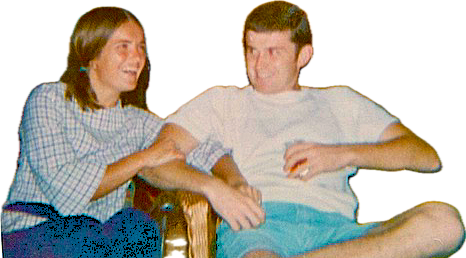
As we wrote, we shared memories sparked by old photos, slides, and home-movies produced through the years.  We were amazed by how much we had forgotten over time, and by how different our fuzzy memories sometimes were as we discussed the same events.

“That’s not how it happened!” I found myself declaring more than once, only to have my wife show me a faded snapshot that proved otherwise.  Admittedly, I’ve always had trouble remembering dates, so casting back to those bygone years wasn’t child’s play for me.

By the way, that trouble with dates persists even now, alas.  I recently showed up for a colonoscopy procedure after enduring the requisite purging prior to the visit, only to find I had the right day, the right time, but the wrong year! I was a whole year early! I’m still living that one down.

Through most of our marriage, my wife and I were enthusiastic participants in sports—baseball, curling, golf, hockey, tennis, skiing, swimming, to name but a few—both competitively and recreationally.  As we eased our way through middle age, entering inevitably into our senior years, many of those began to fall away. We found we could no longer glide across the arena or playing field with the same visions of grace and glory we’d previously enjoyed.  Father Time vanquishes everyone, we discovered, no matter how skilled or practised we might be.

An example for me was falling down in my follow-through a few times on the tee-boxes while smoking drives I’d always hit routinely…well, maybe not always, but occasionally.  My playing partners advised me to start wearing a bicycle helmet if I wanted to continue playing.

My exercise today consists of activities where I can’t fall down or off something. I favour the rowing machine, the treadmill (if I hang on), the stationary bike, or exercises conducted while lying on the floor.  Although not a Latin scholar, I find myself chanting under my breath as I work out: sic transit gloria mundi!

As with many things in a long marriage, my wife and I found we had to adjust and change to meet these new demands.  She spends the bulk of her time now, when she’s not reading or doing jigsaw puzzles, making gifts for family and friends out of clay, dichroic glass, and wood, an accomplished artisan.  I call her my boon companion in the arts.

Much of my time, of course, is spent writing—novels, anthologies of tales and poems, and posts on my blog—and listening to classical music.  I’m a prolific reader, as well, and give thanks constantly for online libraries.

Perhaps the biggest change for us is that we no longer find our children and grandchildren to be part of our lives, sharing our experiences; rather, we have become part of their lives, eagerly sharing their accomplishments and happenings. It is we who are the supporting actors now, and they the stars in the unfolding movies of their lives.  We’ve also discovered that this change is very comforting, to be loved and cared for by these essential people in our lives, even as ours wind down.

We still look ahead, however, to each new adventure that might come our way. One of my haiku poems illustrates that philosophy quite clearly—

more yesterdays now
than tomorrows, but it’s the
tomorrows that count


the sails of our youth,
once hoist, are mostly furled now---
though the winds still blow

Back in 1964, when we were still dating prior to marrying, a popular singer, Al Martino, released one of his biggest hits, I Love You More and More Every Day. We adopted that as ‘our song’, and we used to sing snatches of it to each other.  Over the years, it faded for some reason from our minds, although we never abandoned its premise.  But I thought of that song on my recent anniversary day, and began to sing it to myself.  I had to look up the lyrics, of course, after all this time, but the melody was etched in my memory.

On a whim, I decided to record myself singing it on a karaoke track to present to my wife. Although I used to sing bass in a men’s a cappella barbershop chorus, my octogenarian voice is a tad quavery and shrill now, and my range is somewhat limited.  Nevertheless, the sincerity of my singing has not abated, and she at least recognized the song. Sort of.

As I think back to when she and I first met, as I try to remember all that has happened since, as I marvel at the lasting of our union, I find myself overwhelmingly grateful that we celebrated this latest anniversary together, and I offer this haiku to her to reflect those sentiments—

impossible dream!
many might have thought so, but
you made it come true

trusting all that’s passed,
moving forward in good faith,
hands clasped as always

I Can Help With That!

Well into middle-age, I would often ask my parents questions about our family’s history.  Most of the time, those questions were based on simple curiosity, but occasionally they’d be prompted by something more important, like the medical history of family members that might impact me or my children.  Aging aunts and uncles were also a source of information, and always seemed happy to reminisce about such things.

Old photo albums were a rich source of material, too, as were scrapbooks and journals, and I remember poring over them as a child, eager to soak up the ethos and culture of my family.  Alas, when I look at some of those monochrome snapshots now, I find I recognize hardly anyone.

But now, of course, there’s no one to ask.  Both my parents and all my aunts and uncles are long departed, and I am the eldest of my family.  My three younger sisters will sometimes remember events from our shared past quite differently than I, but now we have no arbiter to call upon.

My two daughters, in their fifties now (Egad!), have taken to asking me and my wife the same sort of questions about our respective families that I used to ask my elders.  We answer them to the best of our memories, but our memories aren’t the best anymore.  I come away from some of those conversations with the uneasy feeling that I might have made stuff up to fill the gaps.

One of our daughters suggested recently that we sit down for a few interview sessions with her, where she could record our recollections.  We’ll be happy to do that, but the suggestion prompted another idea, one I immediately acted on.

I’ve written a memoir, a brief history of my life intended for family only—my wife, my daughters and their husbands, my five grandchildren, and my three sisters—plus one friend of almost seventy years.  The book, a mere 135 pages in length, is titled Being Me, and is not meant to be an exhaustive examination of my life to date.  Rather, it’s a glimpse at who I was as a boy, who I became as a husband, father, and educator, who I am well into a blissful retirement, and who I strove to be throughout my life. It deals with those events I deem significant, things that might be of interest now or in future to my limited audience.  The challenge I faced was not trying to decide what should be included, but what should be left out.

I’d love to think there’ll be enough yet to come to justify a sequel, but that seems rather unlikely.  Dying holds no fear for me, but I will harbour a sizable amount of regret if that grim reaper lurches in too soon, for I’m having too much fun to want to leave.

It’s been said no one is ever truly dead to the world until the last person who remembers her or him is gone, and I think there’s something to that.  My paternal grandfather died just before Christmas 1948, when I was five years old.  But because I still remember him, vaguely—the only one in my family who does—he’s still alive in a way.  When I finally pass, so, too, will he.

But I’m hopeful I’ll live on, as he has for me, in the memories of those precious ones I leave behind.  And I pray those memories will be fond ones, at least for the most part, and that they’ll evince more laughter than tears.

I have more yesterdays now than tomorrows, but the inevitability of aging is but one aspect of life.  If we so choose, we can relegate aging to a mere physical phenomenon, not one that has to affect our emotional outlook.  The person looking out on the world from behind my eyes today is not the man whose image I see in the bathroom mirror every morning; rather, he is still the boy I always was—

from my aging eyes,
the boy I once was looks out---
hardly changed at all.
the sails of my youth,
once hoist, are often furled now,
‘though the winds still blow.

The winds do still blow, and I welcome them and am inspired by them, even if I can no longer respond as once I did.  My children and grandchildren, thankfully, are caring enough to include me in their lives; my next adventure with Donna is always just over the horizon; my next book is already forming in my febrile  imagination.  These are the winds I speak of, and the physical frailties that age sends to plague me are unable to fully constrain me.

Prompted by our daughter’s interview idea, my wife also decided to write her memoir, titled My Story, and has asked me to help.  As I read her recollections, I find many of the events she deems significant are those I also considered important.  That shouldn’t be surprising, I suppose, considering we’ve been a couple since our first date in 1963, and married for fifty-seven years.

Neither memoir, of course, will answer all the questions our daughters or their families may ask about their heritage.  But with any luck, they’ll go some way to filling in a few of the blanks.  And who knows? Maybe on some far-off day in the future, long after I’ve gone on to my next adventure, one of my grandchildren—or perhaps one of their children—will want to know something about the old-timer who preceded them by a generation or two.  No one will likely remember, but they’ll have my memoir to refer to for the answer.

I like to think it will be as if I’m still there to hear the question.  And to answer by responding, “I can help with that!”

The Susiephone

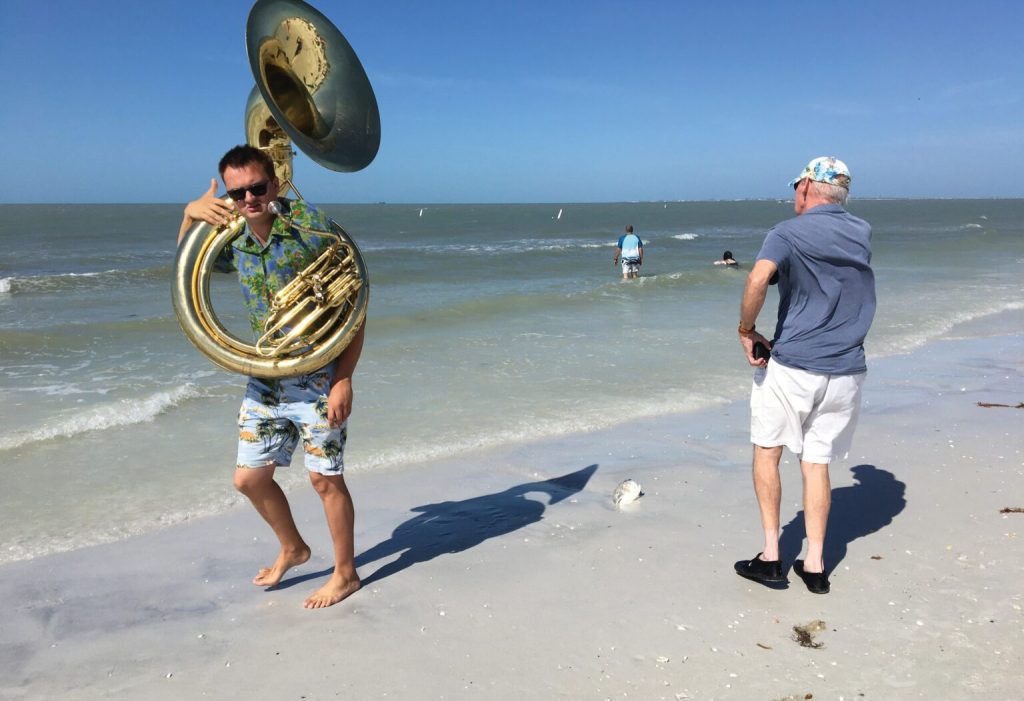
This is a story I’ve entered in the Florida Weekly 2025 Writing Contest, based on the first picture below, supplied by the newspaper.

“Where’s the parade, young feller?” the old man asked.

“No parade,” the young man replied, stopping for a moment.  “I’m on my way to my music lesson.”

“On the beach?” the old man chuckled, eyeing the younger man quizzically from under the bill of his cap.

“Just takin’ a shortcut to my teacher’s place.  He lives in a beach house down a-ways.”

“You in one o’ them there marchin’ bands?”

“Not yet,” the young man said, “but I hope to be.  Auditions start Monday.”

“Ain’t you a mite old to be in school?” the old man asked.  “No offence, but…”

The young man laughed.  “It’s a military band, not a school band.  I’m a Marine, and I’m tryin’ out for The President’s Own.”

“The president’s own what?” the old man asked.

“United States Marine Band,” the young man explained.  “America’s oldest, professional musical organization.”

“Old as me?” the old man chortled.  “I’m old as dirt!”

“Well, the band formed in 1798, when John Adams was President.  I’m pretty sure you’re not that old!”

The old man paused, as if adding up the numbers.  Then, scuffing the sand with his black loafers, he said, “Since when do Marines dress in swim-trunks an’ walk ‘round barefoot?”

“Never when I’m on duty,” the Marine replied.  “But when I’m walkin’ down the beach, I like to blend in with everybody.”

“Blend in?” the old man snorted.  “No way you blend in, young feller.  Not with that there thing you’re wearin’ ‘round your neck!”

The young man patted the instrument he was carrying.  “You noticed her, eh?  She’s a Sousaphone.  Weighs a ton, but she makes a lotta noise when I get ‘er goin’.”

“Who’s Susie?” the old man asked, eyebrows knitted, not sure he’d heard right.

“Who’s who?” the Marine asked.

“Susie!  The one you said owns that there phone thingy.”

After puzzling a moment, the Marine said, “There’s no Susie, sir.  This here’s a Sousaphone, named after John Philip Sousa, one of the Leaders of the Band.”

The old man gave that some thought.  “I thought the leader of the band was McNamara.”

“Sir?” the Marine said, confused again.

“Like in that old-timey song,” the old man said.  “You musta heard of it.”  And without further ado, he began to sing in a cracked falsetto, “Oh, me name is McNamara, I’m the leader of the band…”

The Marine waited politely ‘til the song was finished, then applauded the effort.  “You know, The President’s Own doesn’t feature vocalists, which is too bad, ‘cause I woulda recommended you.”

“Yeah, I used to be a pretty fair tenor,” the old man nodded.  “Still ‘member a lotta the old songs.”  After a moment, he added, “Used to be in the service, too.”

“Marine?”

“Army, 7th Cavalry, served in Korea.  Took a bullet in ‘53, hurt like a bugger, so they hadda ship me home.”  As he spoke, he lifted his shirt to show a scar on his left side, pink and ragged against his pale skin.  “Got me one o’ them there Purple Hearts, but I lost a few good pals over there, guys who never made it back.  If I coulda chose, I prob’ly woulda sooner played that there Susiephone in a band.”

The Marine studied the old man with renewed interest.  “So, how old are you now, sir?”

“Lemme see,” the old man said, gazing skyward.  “This here’s two-thousan’-an’-twenty-five, so that makes me ninety-one, I s’pose.”  He danced a little jig in the sand as if to contradict the truth.

“So, you were wounded in combat when you were only nineteen?” the Marine said, shifting the weight of the Sousaphone on his shoulder.

“Yessir,” the old man replied.  “Hurt like a bugger, like I said, an’ when I got home, I still hadda wait two more years to vote!  Wasn’t old enough to drink, neither, but I never let that stop me!”  He mimed chugging a beer as he said it.

The Marine gazed at the old man for a moment.  “Sir, do you know Rusty’s Crab Shack, just down the beach a-ways?”

“Sure, I know it!”

“Sir, if you meet me there after my lesson’s done, it would be my honour to stand you to a drink.  Can we do that?”

The old man’s face lit up.  “Young feller, there’s no way an old grunt like me is gonna turn down a free drink from a Marine.  I’ll see ya there!”

And as it turned out, it was more than one drink.

Making the Bed

~ CLICK ON THE TITLE IN THE BODY OF THIS EMAIL NOTICE TO READ MY BLOG POST IN ITS NATURAL SETTING ~

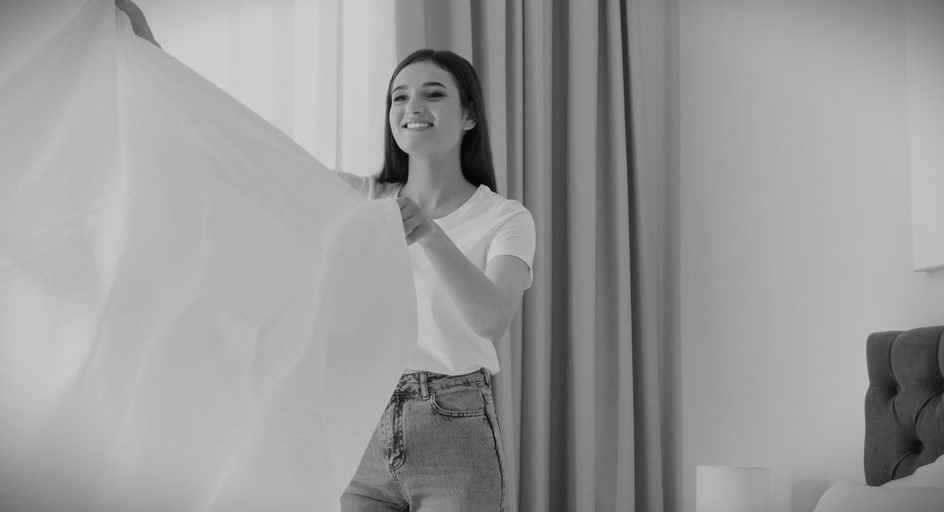
Do you make your bed right after you get up in the morning?  Or after you’ve washed and dressed?  Or at all?

I do, and have for almost eighty years.  It’s the first thing I do after stumbling out of bed—or maybe the second if the bathroom beckons urgently.  The only exception to the rule is if my wife is still abed when I awake, but that is not a frequent occurrence.

It was my mother who got me started, around the time I was five years old if memory serves.  She was a stickler for cleanliness and neatness, and I, being the eldest of five siblings, was her first opportunity to test her mothering skills.

Her instructions were quite specific, and I still follow them to this day.  Begin by brushing wrinkles out of the bottom sheet with my hand, then tuck in its corners—no contoured sheets in those bygone days.  Next, pull the top sheet up to neck-level, then do the same with the blankets on top of it (usually two in number), smoothing them as I go.  Plump up my pillow and straighten the pillowcase, then centre it below the headboard.  And finally, drape the bedspread atop everything, ensuring it hangs evenly off the floor on both sides of the bed, and at the bottom, then tuck the top neatly under the front edge of the pillow.

Complicating matters was the fact that my bedcover had three wide, brown stripes running top to bottom on its beige base colour, and woe betide me if those stripes didn’t run parallel to the edges of the bed when I was finished.  I can remember mornings when I was sent back upstairs from the kitchen two or three times to remake the bed before I was allowed to start eating.  I hated cold oatmeal, so it didn’t take me long to learn the valuable lesson that a job worth doing is worth doing right…the first time!

My brother, three years younger than I, eventually faced the same challenges.  I can still see that little boy studying me intently, trying to mimic my every move on the twin bed that sat opposite mine.  He didn’t like cold oatmeal either!

My mother’s bed, shared with my father, was always made up immaculately, of course, except on washing day, when she’d strip the bed down to the mattress, turn it or flip it if she thought it necessary, then remake the bed with a clean set of sheets.

The day came when my brother and I had to do the same with our beds, another learning exercise we didn’t enjoy.  Eventually, so too did my sisters, but I always thought they were given more leeway than my brother and I received.

I’m sure I asked my mother more than once why we had to go through this exercise every day.  “We’re gonna hafta un-make it tonight!” I probably whined.

As best I recall, her reasoning ran like this: making my bed when I got up meant that, no matter what else I might do that day, I’d have accomplished something!

In the beginning, I probably had to ask what that big word meant, but I must have got the gist pretty quickly.  My mother was all about accomplishment, achievement, the attaining of goals, and she imbued her five children with that attitude.

Nevertheless, now that I’ve attained a ripe, old age, the question could be asked why I persist to this day in making my bed.  The answer might be habit, I suppose, and an aversion to change, for I do value predictability and stability.  Or perhaps I’m secretly trying to please her still, long after she has left the stage.  Maybe I possess the same inner drive for order and perfection that defined her, that impelled her.  Whatever the reason, it seems a little late in the game for me to learn to love a messy, unmade bed.

The bed I make up now is quite different from the one I started with, of course.  A king-size model, it requires me to climb atop it to straighten the sheets and blankets in the middle, where I can’t reach them while standing on the floor.  Manhandling the bedcover into place—now called a sham, a coverlet, a counterpane—is a man-sized chore, even as my man size is diminishing steadily.

Rather than one pillow, or even two, to plump and place, there are ten in all—two my wife and I rest our heads on overnight, two larger ones in fancy slipcases to be placed in front of those, and six smaller ones to place on the bed, not haphazardly, but precisely, symmetrically, and balanced.

There are days when I feel I need a nap after pulling it all together, but alas, I lack the will to pull the covers down when I’ve just made them up.

So, I soldier on, making my bed every morning, always glad when I enter the bedroom later in the day to see the display of my fidelity to the lessons I was taught.  And best of all, it allows me to think of my mother every day, to thank her for the lessons she insisted I learn.

I must confess, though—I have never learned to fancy cold oatmeal!  

Singin’ the Songs

Regular readers here will know of my love for music in my life, whether performed by professional musicians in a concert hall or robust amateurs at a party.  I have genres I prefer, of course, as do most people, and I generally fancy instrumental versions of favourite songs to vocal renditions.  I find them more soothing, more conducive to creative thought and activity.

Most of my listening time occurs when I’m writing, as is the case right now, penning this essay, my head clad in earphones.  My first and abiding love is classical music—likely due the influence of my father, who often fell asleep with me on my bed at night as we listened to radio broadcasts of the great symphonies.  He frequently had stories to accompany the music, too, which made it all the more special.

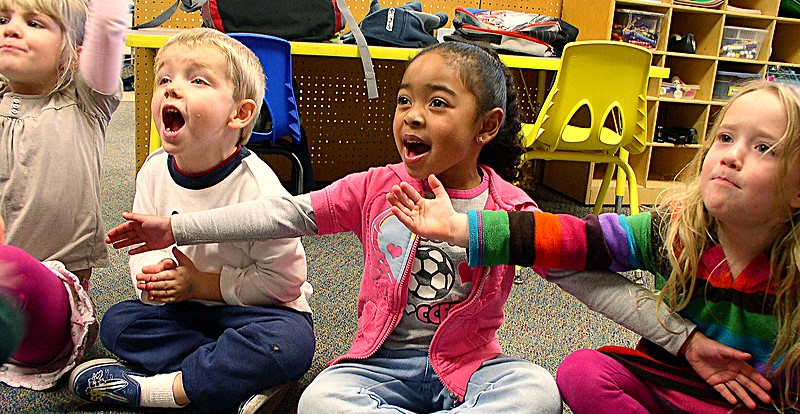
When I started school, one of my favourite activities was song-time, when the teacher would teach me and my classmates a new song.  Not all of us were thrilled, of course, but I was ever enthralled.  To this day, I love to join in the enthusiastic chorusing of the old songs with a group of friends.

And I can still remember (and occasionally sing to myself) some of those silly, little ditties we were taught in kindergarten and grade 1—

Your pail and shovel and wheelbarrow bring,
Let’s plant us a garden this morning in spring.
Dig little trenches, pull out all the weeds,
Pour in some water, and drop in the seeds.

Or this one—

Little yellow bird, little yellow bird,
Come flying with me.
We will build us a cozy corner
In the old apple tree.

There was one I particularly liked, although the lyrics saddened me—

“Come away,” sang the river to the leaves on the trees.
“Let me take you on a journey, and the world you will see.”
So, the leaves gently falling from the trees on the shore
Float away on the river, to come home nevermore.

It might have been the final phrase that bothered me, that they would never find their way home.  But the melody was lovely.

Making friends was very important to one just starting school, so this song had special meaning—

Make new friends, but keep the old.
One is silver, and the other gold.

At my advanced age now, the inherent truth of that sentiment has been borne out countless times.

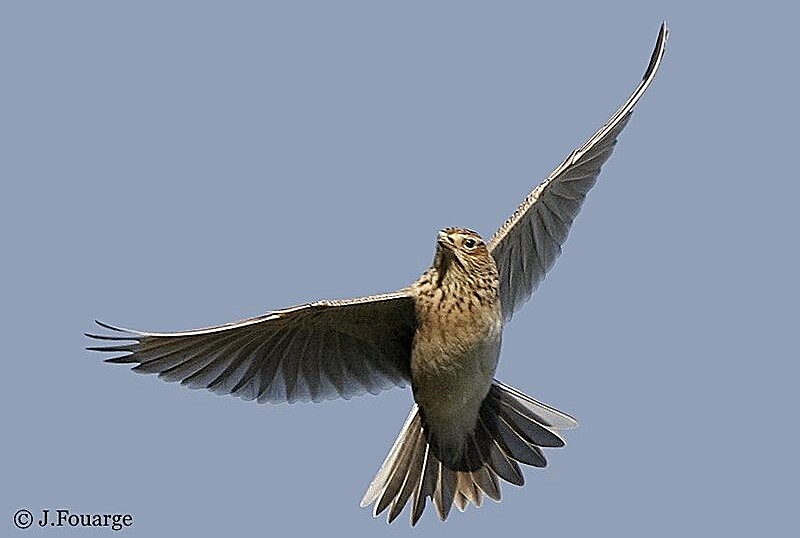
Our earliest foray into the magic of the French language began with this song about a skylark, Alouette—

Alouette, gentille alouette,
Alouette, je te plumerai.
Je te plumerai la tête,
Et la tête, et la tête,
Alouette, Alouette
Oh-h-h-h-h...
Alouette, gentille alouette,
Alouette, je te plumerai.

There were several verses to this one, substituting le bec, le cou, les ailes, le dos, les pattes, and la queue for la tête, and the chorus had to include every one of them as they were introduced.  But we loved the challenge!

As little ones, we were always encouraged to be active and happy, and to let people know how we felt.  This song allowed us a way to do just that—

If you’re happy and you know it, clap your hands!
If you’re happy and you know it, and you really want to show it,
If you’re happy and you know it, clap your hands!

There were many variations on clapping your hands as we sang that one, and all of them caused much joy and laughter.

One of the songs I especially liked was this one, seeking love and happiness—

You are my sunshine, my only sunshine,
You make me happy when skies are gray.
You’ll never know, dear, how much I love you.
Please don’t take my sunshine away.

Over these past few years, I’ve been fortunate enough to spend many happy hours singing with a men’s chorus, and a fuller version of this is still one of our staples.  I’ve included a video clip that you will surely enjoy—

It’s seventy years and more since I learned many of these songs, and I’m amazed by the joy they still bring me.  After all this time, there are fewer things more fun than singin’ the songs.

A Musical Gift of Love

And here she is, the singing rage, Miss Patti Page, with her latest hit, Tennessee Waltz…

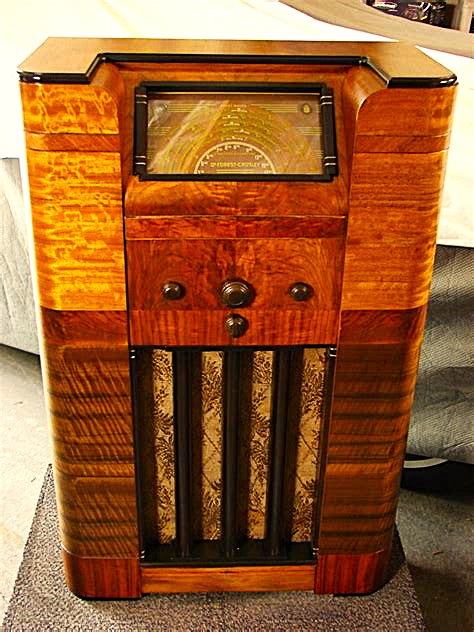
The year was 1951, and my brother and I were home in bed with chickenpox, the longest week we’d ever spent in our young lives.  To help our mother avoid losing her mind as she coped with our whimpering and complaining, Dad had moved the large, Motorola console radio from the living room to our bedroom.  It was heavy, and I still remember his red face, and the huffing and puffing, that accompanied the move down the long hallway to our room.  It took a while to adjust the antenna, too, to ensure we got proper reception.

With the entertainment that radio provided during those seemingly-endless days in bed—together with toys, comics, children’s books, and board games—my brother and I managed to allow Mom some brief periods of respite.

All that week, we fell asleep at night to broadcasts of The Lone Ranger, Mark Trail, Amos ‘n’ Andy, and The Shadow.  Having that radio in our bedroom was almost enough to make us wish the chickenpox would hang around a while longer.  Almost!

The bedroom was small, with one dormer window, and our twin beds were separated by a table whose top was taken up by a small lamp and two coasters, upon which sat our water glasses.  On the two shelves underneath, one for each of us, our respective playthings were stored…my brother’s haphazardly, mine orderly.

The first time we heard Tennessee Waltz on the radio, my brother immediately piped up, “That’s my favourite song!”, thus preventing me from claiming it.  Not to be undone, however, I quickly claimed Patti Page’s other big hit, Mockin’ Bird Hill, as my property.  Every time either song came on the air, our bedroom would become eerily quiet as we listened avidly, singing along silently in our tousled heads.

When we eventually dared to accompany the singer aloud, neither of us was allowed to sing the other’s song.  Singing along in our heads was permitted, but by mutual consent, our live performances were strictly proscribed.

As if to ensure our claim to our song would not be usurped by a treacherous brother, each of us would reiterate our ownership every time our favourite came on.  “Tennessee Waltz is my song!” my brother would insist, and for good measure one day, he added, “An’ Patti Page is my favourite singer!”

He was in love with this woman we had never seen, and truth be told, so was I.

By some unspoken rule, however, we both understood that the singer herself could not be claimed as one’s own, and so the next time Mockin’ Bird Hill came on, I chirped, “That’s my favourite song, an’ Patti Page is my favourite singer!”  And, while our mother was in the room one day, I added, “She’s prob’ly as pretty as Mom!”

Mom smiled at that.

But my brother immediately protested, “No, she’s not!  Mom is prettier!”

Our mother smiled at that, too.

The chickenpox finally ran their course, of course, and life went back to normal.  But to this day, I can still sing the entire Tennessee Waltz, and all three verses and the chorus of Mockin’ Bird Hill.  I’m probably off-key in a few spots here and there, but it’s seventy-five years ago that I learned them, so that’s not too shabby.

My brother is gone now, as is Patti Page, but whenever I sing those two songs, usually just to myself, out of filial loyalty and respect for those childhood rituals, I always kick off Tennessee Waltz with the preface, “my brother’s favourite song”.  And if he were still here to hear me, he’d probably say, “Damn right!”

And I know he’d settle back and listen politely as I announce, “An’ here’s my favourite song, Mockin’ Bird Hill!” before launching into it. I won’t do that here, of course, but here’s the lady herself to sing it.

We were lucky, my brother and I, to have shared that musical gift of love.

A Cottage Christmas

Since retiring, my wife and I spend every Christmas at our Florida home.  Usually, one or both of our daughters will come down, with husbands and children in tow, to spend the holiday with us.

Friends often ask us if we miss Christmas in the snowy north.  I offer a vigorous, “No!”, and when they ask why, I tell them the story of our ill-fated Christmas at the cottage.

Our daughters were eleven and ten that year, when friends, who had decided to spend their traditional twelve days on a sunny, southern beach, invited us to use their cottage for our celebration—preparing for Santa’s arrival, skiing and skating in a winter wonderland, and just relaxing.  We jumped at the chance, little realizing what lay in store for us.

I should have known all would not be idyllic when our friends gave us five pages of notes, detailing what we’d have to do when we arrived at the retreat in the woods.  There were instructions for opening and closing the place, turning on the water system when we arrived, draining it when we left, using the fireplace, enjoying the snowmobile, shoveling snow off the roof, removing the occupied mousetraps—in short, a whole lot of things that could go wrong.

They left us their car to use, much larger than our own, a fully-equipped but much-travelled station wagon that had been around the track more than a few times.  On the day of our departure, I discovered that the rear tailgate, the sort that was supposed to open two ways, down like a truck tailgate or out like a car door, wouldn’t open at all.  Consequently, I had to load all our gear, including skis and poles, through the rear window, which could still be powered down.  As each armload went in, I had to clamber over the rear seat to pull the stuff forward.  I was delighted, as you might imagine, with the challenge.

We took to the road, full of anticipation for our family Christmas at the cottage, on the very day that the first freezing rainstorm of the season hit the area.  That cheered me immensely.

With the six of us aboard—I, my wife and two daughters, plus two dogs in the rear, trampling and drooling on all the packed items—the car windows steamed up almost immediately.  They remained that way for the duration of the four hours it took us to complete the two-hour drive.  Nobody spoke out loud during the final hour!

We arrived, finally, to be greeted by a winter wonderland.  The deep snow, now covered in a slippery mantle by the freezing rain, sparkled and glinted in the twilight.  As promised in our five pages of instructions, the driveway had been plowed just far enough off the township road to allow us to park the car.  The walk from there to the cottage was just what we had expected—arduous, but exhilarating.

The snowmobile was right where the notes said it would be.  But to my chagrin, it wouldn’t start!  In spite of my repeated (and somewhat profane) encouragement, it would not come to life.  Thus, we had to lug in all our gear by hand, twelve trips back and forth between the cottage and the car, dragging the heavy items behind us in a large snow-scoop, toboggan style.

Oh, what fun we had!

Once inside, with everyone unpacking and sorting our supplies, I turned my attention to turning on the water.  The notes our friends had left me were very detailed on this particular chore.  The pumphouse in the basement was a tangle of pipes and faucets—my friend does his own plumbing—all tagged and colour-coded to ensure compliance with the proper way of operating the system.  Without my notes, I’d have been totally lost; with them, I was merely overwhelmed.  Nevertheless, I followed the steps as written, praying fervently all would go as planned.  And it did….at least at first.

Some twenty minutes after our initial rejoicing over running water, the dishwasher sprang a raging leak from somewhere underneath.  I was able to turn off its feeder-faucet before too much damage was done, and I even managed to find the source of the problem—a burst pipe.  Because I was unable to fix the leak, the dishwasher remained inoperable for the duration of our stay.

Eventually, everything was done.  The food was safely stored away, our bags were in the proper bedrooms, the deck and walkway were shovelled clear of snow, and the Christmas tree that had journeyed north on the roof of the car was standing, fully decorated, in the living room.  At last, we began to enjoy our Christmas holiday. 

Of course, we couldn’t ski because the rain that accompanied us north continued to fall, washing most of the snow away in one day.  Nor could we go skating on the lake, because the milder temperatures that came with the rain turned the ice to slush.

If it hadn’t been for the decorations strung around the interior of the cottage, and the sound of the old, familiar carols, we wouldn’t have known we were enjoying a Christmas interlude.  With all the mud, it was like a spring holiday—until the last day, that is.  Then, about five hours before we’d planned to pack the car for home, the snows returned with a vengeance.

So again, thanks to the immobile snowmobile, we had to trudge through knee-deep, new-fallen snow, from cottage to car, packing up everything we had to take home.  I cursed every step!

I could hardly wait until the next time our friends offered us the use of their cottage when they weren’t going to be there.  I planned to torch the place.

Young Fella

Around the world, it’s variously known as Armistice Day or Remembrance Day, but stateside we call it Veterans Day.  It honours the memory of those who sacrificed their lives defending freedom, commemorating what was intended to be a lasting peace, signed at the eleventh hour of the eleventh day of the eleventh month in 1918.

I’m here today with almost a thousand of my fellow-vets for a luncheon to remember the fallen.  We’re gathered in a mess-hall similar to those we knew in long-ago days in far-away lands, but under happier circumstances now.  We range in age, I would guess, from mid-forties to late-eighties, drawn from the full military spectrum—dogface, swabbie, flyboy, grunt—jealously proud of our own branch of service, but united by our sworn allegiance to our nation.

Most of us are in uniform, some resplendent in dress whites or blues, others less splendid in khaki or camo fatigues.  But in nearly every case, the clothing strains to contain bodies once in fighting-trim, now overfed and flabby.  Insignias of rank and medals awarded adorn almost every uniform, but no one pays undue attention to either, having long ago taken them for granted.

What is never taken for granted, however, is the privilege of being here today, when so many of our former comrades cannot.  The cash-bar, which had opened an hour before lunch, had been well-used, and many a story of glory and despair had been shared over a pint or two, as has become the custom at our yearly gatherings.

The ample lunch buffet we finished before the speeches began was leagues better than the swill we’d all had to choke down in mess-halls similar to this one back in the day.  And even the speeches…well, let me just say, the speeches were a vast improvement over what we used to be subjected to from the brass in the field.  Today’s remarks from a few of our ranking members were more reflective, halting and poignant almost, as if we all knew this would be the last parade for many of our number.

We’re on our feet now for the national anthem, to be played by a band of eager, young cadets.  None of us sings it aloud, of course, as if to do so might constitute an unacceptable breach of discipline in the ranks.  But we know the words by heart. 

As we raise our arms in salute, a movement catches my eye at a table to my left.  An old soldier, a man I hadn’t noticed earlier, has struggled to his feet, is saluting with difficulty.  He’s dressed in an olive-drab tunic, too big now for his shrunken frame, a beret tucked under one of his epaulets, his blouse drooping from sagging shoulders.  I figure he has to be in his late-nineties at least.  His body sways as the anthem swells, and he trembles as if palsied.  I wonder why the men on either side of him, officers both, do not offer assistance, but they appear not to notice his distress.

I turn my attention back to the band at the front, unwilling to bear witness if the old man should fall.  When the anthem’s final notes die away, a lone bugler steps forward, a young woman immaculate in dress grays, and with divine precision, she raises the instrument to her lips to play The Last Post.

As its first plaintive, mournful notes sound forth, I turn to see if the old soldier is bearing up.  To my surprise, he is gone, and a much younger man stands in his place.  Clad similarly in olive-drabs, he is taller, stronger, more steadfast—a marked contrast to the older man who, I assume, had been assisted from his place at the table.  Unlike the rest of us, our arms still raised in salute, our chins held as high as we can bear, the younger man’s head is bowed, his right hand clasped to his heart.

When the bugler finishes, when the last horn has sounded, the room is suffused in silence for a few moments.  But then the slow hum of conversation begins again as people make ready to leave, and the air is filled with raucous laughter and shouted farewells.  As might be expected, our retreat is anything but militarily precise.  Rather, the withdrawal is hesitant, rambling, reluctant, each of us adopting a slow shuffle to delay our departure. 

On impulse, I detour on my way toward the door to walk behind the table where I’d seen those two soldiers.  All the place-name cards that had been propped on small stands on the table are gone, of course, purloined by their namesakes as souvenirs of another fine get-together—all save one, that is, the one I was hoping to find.  It sits right where the two soldiers had been standing, embossed in flowing script, black letters crisp against the white cardboard background.

Adjusting my glasses on my nose, I lean closer to find out who those men were.

HERE MAY SIT AN UNKNOWN SOLDIER
A FALLEN COMRADE KNOWN BUT TO GOD

I straighten slowly, breath seeping from my lungs as I realize the enormity of the vision I’d been privileged to see.  With all the strength and grace I can muster, I brace to full attention and salute the dead, as respectfully as I can manage in my aged state.

“Thank you, old man!” I whisper, tears stinging the backs of my eyes. 

But then, suddenly aware of my misunderstanding, I correct myself.  Not a single one of our unknown comrades had died as an old man.

“Thank you, young fella!” I say out loud this time.

And not until I am alone in the cavernous mess-hall do I lower my salute.