The Magic Soap

The weekly prompt from my Florida writers’ group was to imagine we have some sort of magic soap, and write a story about what it might wash away. This is my response to that prompt—

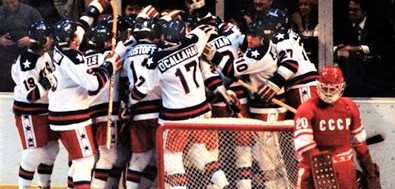
“Mike Eruzione?  No way!  Grandpa wasn’t that good a hockey-player.  No way he played with Eruzione!”

“He says he assisted on Eruzione’s game-winning goal against the Russians.”

“That game was played in 1980!  Grandpa was born in 1935, so he’d have been…let’s see…he’d have been forty-five by then.  If he had played in that game, that would have been the miracle on ice!”

“Well, he says that’s what happened.”

[The five grandchildren, three young women and their brothers, are sitting by the fireplace in the parlor of their grandfather’s home while the old man is napping upstairs.]

“Grandpa says a lot of things these days, most of which never happened.  He told me a week or so ago that he helped Paul McCartney write Hey Jude while he was on vacation in England in 1968.”

“Grandpa’s never even been to England!  Do any of you believe that story?”

[A chorus of disbelief flows from the other four.]

“Nah.”

“Nah.”

“Nah.”

“Nah.  No way!  I know it’s his favourite song, but no way he helped write it!”

“It’s getting to be a problem, this story-telling.  I think he really believes what he’s saying.  You think it’s…y’know, dementia?  Or Alzheimer’s?”

“Maybe it’s just bragging.  Trying to make himself sound more important to us than he really was.”

“Yeah, maybe.  Like Baron Munchausen.”

[The other four glance quizzically at each other.]

“Who?”

“Baron Munchausen.  A German storyteller from the 18th century.”

“Nah, Grandpa’s never been to Germany, either.”

“That’s not the point.  He could be telling tall tales like…ah, never mind.”

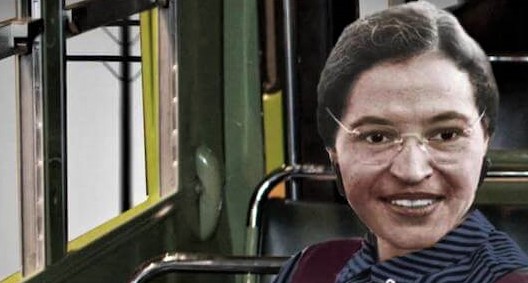
“He told me a while back that he was on the bus in Birmingham when Rosa Parks refused to get off.  Said he got up and gave her his seat.”

“See, that’s another crazy story!  That happened sometime in the mid-fifties.  Grandpa would’ve still been in his teens.  And she wasn’t told to get off the bus, she was told to sit in the back.  And it was Montgomery, not Birmingham.  Grandpa’s never been to either of those places.”

“He gets things all mixed up now, which is how you know he’s…well, either lying or just mis-remembering.”

“Yeah, he sounds like Forrest Gump, right?  Thinks he met with famous people all through his life.”

“Yeah, but at least Forrest Gump was real!”

[Four of the grandchildren stare in bewilderment at their brother before one of them carries on.]

“He tells me these sorts of stories, too, but I never know what to say.  I don’t wanta hurt his feelings, but I don’t wanta act as if I believe him, y’know?  What do you guys do?”

“I laugh if he’s laughing, I’m serious if he’s serious.  I just go with the flow.  What harm does it do?”

[The five of them sit silently for several moments.]

“It’s too bad there isn’t some sort of cleanser for the brain, something that would wash away all his faulty memories and leave the good ones.”

“Not just good ones, but correct ones.  All memories don’t have to be good ones.”

“Right, yeah, that’s what I meant.  We need some sort of soap for his brain so we could just wash away all the mixed-up memories.

“You wanta brainwash Grandpa?”

[Everyone looks at the speaker, aghast.]

“No, not brainwash him!  That’s not what I mean.  I just meant some sort of magic soap—maybe he eats it, or we mix it with his cocoa at bedtime, and all the cobwebby stuff in there gets cleared up.”

“Just don’t suggest Ivermectin!”

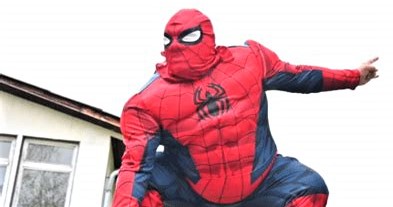
“Speaking of cobwebs, he asked me this morning where his Spiderman suit is.  Said his spidey-sense is tingling.”

“Omigod, now he thinks he’s a super-hero?”

“So, what sort of magic soap do super-heroes use?”

“There isn’t one, not for Grandpa’s problem!  His problem can’t be fixed.”

[The five grandchildren stare into the fire, at a loss.]

“He is sort of funny with all his stories, though.  Right?”

“Yeah, he does make me laugh.”

“Me, too, so why are we talking about cleaning out his brain with some sort of magic soap?”

“Right, I agree.  As long as he’s no danger to himself or anyone else, who cares?”

[A loud, clattering sound is heard outside, and one of the grandchildren goes to the window to investigate.]

“Omigod!  It’s Grandpa!”

“What?”

“It’s Grandpa, dressed in his Spiderman suit!  He’s on the porch-roof, trying to climb down the trellis outside!”

[The five grandchildren scramble for the door.]

Hot Off the Press

The latest full-length novel in my Maggie Keiller/Derek Sloan crime-fiction series is hot off the press and available for Christmas-giving!

Three decades ago, a predatory high school Principal in the Northern Highlands District School Board sexually assaulted a number of his female students, one of whom subsequently took her own life.  Despite the courage of one fifteen-year-old girl who reported the assaults to the Director of Education at the time, nothing was done to stop the Principal’s depredations.

Now, thirty years after the assaults were first reported, that former Principal is murdered in his home by an unknown assailant.  Within a week of his killing, two more men are murdered—the Director of Education who had done nothing about the original report, and the board’s lawyer at the time, who was complicit in the cover-up.  Police begin investigating the killings, and as usual, Maggie Keiller and Derek Sloan are drawn into the unfolding events.

This riveting story is set against the backdrop of a truckers’ blockade organized and funded by a coalition of western-separatist, white-supremacist groups, who seek to disrupt the flow of trade and commerce in Ontario and force the government to resign. 

In a heart-stopping finish to the story, Maggie and Derek are confronted by the vengeful killers at their home on Georgian Bay, and are themselves threatened with death as they try to protect the woman at the centre of everything.

*  *  *  *  *  *  *

This paperback book is intended for mature audiences, and is available for preview and purchase at this safe site— https://www.lulu.com/spotlight/precept 

Or, you can visit the publisher’s bookstore at https://www.lulu.com/search?page=1&q=J+Bradley+Burt&pageSize=10&adult_audience_rating=&sortBy=PUBLICATION_DATE_DESC  

All my published novels and anthologies of tales are displayed on these safe sites. Once you’ve added any of the books to your cart, tap the cart icon in the upper right of your screen and you will be taken to a safe payment page.

If you have read any of the previous books in this exciting series, or if you are a regular reader of my blog, I know you will enjoy this book.

Lilt and Flow

There are few things I find more pleasurable than hearing the lilt and flow of poetry read aloud, especially if read by a skilled orator or by a loving family member.

My father was both, and it was he who read one of my abiding favourites, The Night Before Christmas, a classic tale by Clement Moore, on every one of the sixty Christmas times we shared before his death. Here are the beginning stanzas—

My siblings and I would lie in our beds, literally quivering with anticipation as we listened to that familiar tale, and I miss hearing my Dad read it to this day.

Another favourite poetic tale is The Highwayman by Alfred Noyes, which I first heard read aloud by a high school English teacher who loved her calling.  Here is the first stanza—

The final stanza before the coda sent shivers up and down my spine as I sat listening in the classroom, and so it still does—

That same teacher also introduced me to one of my favourite poets, Robert Service, whose rhythmic cadences entrance me even now, especially The Cremation of Sam McGee.  Here are the first two stanzas

So enamored am I of that rhythm and rhyme scheme that I have even written similar poems of my own, pale comparisons, but still a joy to read aloud.  Here is a stanza from one example, I Haven’t the Time

As a young father, I would often read this excerpt from Kahlil Gibran’s poem, On Children, to my own daughters as I tucked them into bed.  Although too young to grasp its full meaning, they seemed to enjoy the sound of my voice as I pondered the deeper implications of the verse—

I think my all-time favourite poem is When You Are Old, penned by my all-time favourite poet, William Butler Yeats. It speaks of the eternal nature of love and loss, and evokes in me both sadness and an abiding happiness each time I hear it—

I think I shall die before I am finished discovering more and more poetry whose lilt and flow lifts my soul, and I wonder if doing so will still be possible in the afterlife.  What joy I would find meandering the roads of eternity while listening to symphonic music from the maestri, and hearing great poetry from the masters read aloud.

And who knows, perhaps that is the way it will be, as this stanza from J.R.R. Tolkien’s poem, Roads Go Ever On, might imply—

Whether it will be so or not, I have always loved the lilt and flow of the spoken word. I hope you do, too.

The Issue

A sage once opined that when we persist in arguing over and over again with a stupid person, we reveal ourselves as the stupid one.  Nevertheless, I have long engaged in fruitless discussions with an old-time friend, to the point where I’m beginning to suspect the adage is true.  I’m the stupid guy.

The problem I have is that this friend always strays from the issue at hand, deflecting my well-reasoned arguments by taking us off topic.  For instance, if I were to suggest to him that it’s raining outside, a fact easily verified by looking out the window, he might well claim he sees no one with an umbrella.

“That’s not the issue!” I would protest.  “You’re changing the subject.  Whether or not you spy an umbrella has nothing to do with whether it’s raining or not.”

He would probably just smile and ignore my argument.

Or if I were to offer an opinion that wages for the working-class haven’t kept pace with rising costs, his comment might be to tell me he has more money at hand now than he’s ever had.

“That’s not the issue!” I would probably object.  “You might well be better off than ever, but that doesn’t change the fact that costs are rising.”

He’d likely smile again, placidly this time, and not concede my point.

Perhaps I wouldn’t find this habit of his so maddening if it didn’t seem to me that he blithely assumes he’s had the better of me when these discussions happen.  Without ever directly rebutting something I’ve said, he inevitably counters with a peripherally-related argument, thereby appearing to satisfy himself that the matter is settled.

And yet, stupid me, I keep arguing with him.

A while back, we were talking about whether or not the scarcity of cold and ‘flu medicines on drugstore shelves is a problem.  “I’m told it’s a supply-chain issue,” I stated.  “And that’s exacerbated by a heavier-than-usual demand for the stuff because of the prevalence of illness now that school is back.  So, it’s a real problem right now.”

“I don’t use over-the-counter remedies,” my friend said.

“Yeah, but that’s not the issue,” I replied.  “The issue is that there’s a shortage of those products at a time when people need them.  That’s a problem!”

Another casual shrug was all I got.  And that smug smile.

We’re both aged athletes with an abiding interest in sports, and while watching a televised ballgame together a few nights ago, I said, “Boy, the Blue Jays look really good tonight.  It’s only the fourth inning, and they’ve already got seven hits and four runs in.  They’re hot!”

My friend replied, “Yeah, but they’re not playing the Yankees!”

“That’s not the issue,” I exclaimed, maybe a bit heatedly.  “So what if they’re not playing the Yankees?  They could be playing Casey at the bat in Mudville, for all I care.  They’re playing really well tonight.”

My friend shrugged as if it didn’t matter.

More recently, we were talking about the government’s removal of masking requirements for air-travel.  “I think they must consider the pandemic over,” I complained.  “They figure no mitigations are needed now, but I think that puts all of us at risk.”

“I don’t fly,” my friend said.

“That’s not the issue,” I fired back.  “Lots of people don’t fly.  But for those who do, the issue is they’re being placed in harm’s way.”

My friend shrugged off my assertions.  “But not if they don’t fly,” he said.

“That’s not the issue…” I began, before giving up.  How stupid can I be?

Yesterday, over a couple of beers and Reuben sandwiches, I decided to tell my friend why, during many of our conversations, his continual diversions from the subject at hand are bothering me.  “It’s almost as if you’re ignoring my point,” I said, “as if what I’m saying doesn’t matter to you.”

“Why would you think that?” he asked, squarely on point.  It caught me by surprise because I’d expected him to offer one of his usual non sequiturs.

“Well…you never seem to respond directly,” I stammered.  “You usually mention something only superficially related to whatever I’ve said, and then assume you’ve won the argument.”

“Argument?” he repeated.

“Well, not argument,” I demurred.  “More like discussion.  And you ignore the points I’m making.”

“And you think I’m doing that in order to win…what, exactly?”

“The…the argument.”  I smiled weakly over my beer at the absurdity of it all.

My friend smiled back.   “Did it ever occur to you that I might be conceding your point in these discussions, agreeing with you, and simply offering up another thought to keep the conversation going?”

Drawing a deep breath, I said, “Oh!  I guess not, no.  I sort of assumed you were just trying to one-up me and win…you know, the argument.”

“Well maybe, that’s the issue then,” he said.

And at that point, we ordered another beer and moved on to a much less-stupid, more pleasant conversation, all issues set aside.

So Far, So Good!

I have a friend who claims his goal in life is to live forever.

“How’s it going so far?” I ask him.

“So far, so good!” he replies with a grin.

As I approach my eightieth year—having been alive for all or parts of nine different decades, the first being the 1940s—I don’t share that lofty goal, to be an eternal Methuselah.  I confess, though, my friend does have me wondering about my chances.  So far, I have lived out more years than three grandparents, three uncles, two of five aunts, and all four of my younger siblings (one of whom has already passed).

I’m currently the eldest of my surviving birth-clan, which includes three sisters, two daughters, and five grandchildren.  My wife, almost four years my junior (strictly speaking, not a birth-relative), is also with us.

If I am destined to live longer than anyone in my family so far, I’ll have to make it through another fifteen years, which will leave me just five shy of my centenary.  One grandmother made it to ninety, three aunts lived into their early-nineties, mostly intact, as did both my parents, so my genetic coding bodes well.

One goal I do have, perhaps more realistic than my friend’s, is to spend more years in retirement than I spent during my professional career.  I worked for thirty-two years and retired at fifty-five, leaving me eight years to go before attaining that goal when I reach eighty-eight.  So far, so good!

Back when I was a young thirty-ish man involved in several athletic pursuits, I used to joke that, if I had to die anytime soon, the best exit would come while sliding into third base, the game-winning run scoring ahead of me, with the last words I hear being the umpire bawling, “He’s safe!”

Older now, and less-inclined to make light of matters mortal, I’m pleased to say that goal was never realized.  I’m still alive, no longer playing ball, and so far, so good!

As an aside, one of my more ribald teammates claimed his goal—never one of mine—was to die in bed, shot to death by an irate husband.  To my knowledge, absent a willing bed-mate, he also never attained his dream.  But I digress.

Baseball is not the only pursuit I have forsaken as the years have mounted up.  Badminton, curling, cycling, golf, ice-hockey, in-line skating, and tennis are also sports I have abandoned in recent years.  The main reason, given that I wish I could still partake in all of them, is that I came to fear major physical damage if I should come a-cropper.  The risks began to outweigh the rewards, and I became determined not to end my life as an invalid. 

These sacrifices notwithstanding, I certainly had no wish to finish my time on earth as a couch-potato, either.  So, I still visit the gym to engage in low-impact activities such as rowing, weightlifting (low weights/high reps), and stretching exercises.  I walk the corridors and stairs of my high-rise condo, and I still swim, although not as many laps as once I could manage.  My goal is to stay active and limber, and so far, so good!

Paying attention to my personal health is a much greater priority now, too.  I still remember an occasion (again, in my feckless thirties), when I called my doctor’s office to make an appointment for a physical exam.  The receptionist couldn’t find my records for the longest time, and when she came back on the line, she said, “Okay, we’re good.  I found them in the dead file.”

“The dead file!” I exclaimed.  “What made you think I’d died?”

With a chuckle, she explained the dead file was the repository for records of patients who had not made an appointment during the previous five years.  Five years!  I was shocked to be informed it had been that long.

These days, of course, having lived into my ninth decade, I see my doctor much more regularly.  My goal is to stay ahead of ailments that might slow me down, or put a crimp in the comfortable lifestyle I now enjoy. 

That current, comfortable existence includes singing in a men’s a cappella chorus, a most enjoyable experience, still part of a team.  It includes spending hours each day writing essays and poems for a regular blog, tales for a number of published anthologies, and stories for a series of published crime-fiction novels.  I’m having the time of my life right now, as a matter of fact, and hope I can go on doing these things for a long time to come.  So far, so good!

My wife and I are fortunate to be able to split our time between a home in Ontario and another in Florida.  Each autumn, and again each spring, as our time in one draws closer to its end, we begin to look forward to our return to the other.  Aside from the normal concerns associated with home-ownership, we find it’s an idyllic way to live, and we eagerly anticipate each change of the season. 

In the unlikely event it turns out my friend is able to realize his own goal to live forever, I know he’ll bid me a fond farewell when my time comes, as it surely will.

But you know what?  So far, so good! 

Get the Message?

“So, lemme get this straight,” my companion says.  “If your phone rings, doesn’t matter where you are, you don’t answer it?  Not even if you know who it is?”

“Right,” I reply, “most of the time, anyway.  Unless it’s my wife or kids, or grandkids.  For them, I always answer.”

We’re walking along the lakefront on a sunny late-afternoon, enjoying the scenery, the other strollers, the kids flashing by on bikes and scooters, the sailboats out on the water.  A light breeze keeps us comfortable enough in the heat.

“So, what if it’s an emergency?” my friend asks.

“I figure whoever it is will call right back,” I say, “or leave a voicemail message.  Robocalls don’t do that, but people calling in an emergency will.  If nobody answers a bot’s call, it just moves on to the next random number.”

“You always check your voicemail?”

“I do,” I say.  “Maybe not immediately after the call, but frequently enough.”

“What if it’s a relative or close friend?”

“Same drill,” I tell him.  “I mean, I may choose to answer, but it depends on what I’m doing at the time.  I figure the phone is my servant, not the other way around.  It’s a tool that does its thing when I say so, but I don’t jump to its bidding.”

“Yeah, but it’s not the phone demanding your attention,” my companion protests.  “It could be a friend!”

“That’s right,” I nod.  “But if another friend called me right now, I wouldn’t ignore you to answer the call.  Why should you play second-fiddle when you’re right here with me?”

“Yeah, I can see that,” he concedes, before adding, “So, I imagine you never answer unknown callers, either.”

“Right.  Same logic.  But if they leave a message, I’ll soon know if I need to return the call or just forget about it.”

“Seems like an imperious attitude to me,” my companion says.  “What if everybody did that to you when you’re calling them?  How’d you like it?”

“Actually,” I say, “I wouldn’t mind.  Far as I’m concerned, it works the same both ways.  If my reason for calling is urgent, I’ll leave a voicemail message.  If it’s an emergency, I’ll still do that, but I’ll also keep calling—twice, three times, four, one right after the other.  I figure in that case, the person I’m calling will realize she or he should answer, that the calls aren’t random.”

“And if they don’t?”

I shrug.  “Well, some things are beyond my control,” I say.  “The important thing in cases like that is I try to get through and leave a message.”

“Seems like it’d be easier if everybody just answered every call,” my companion says.  “That way there’d be no wasted time.”

I shrug again.  “Depends, I guess.  Some people—like me, for instance—would think answering every call is a waste of time.  Every call?  C’mon!”

We walk in silence for awhile, pausing to let a flock of geese cross our path on their way from the water to the park lawn.

“So, if I call you, I won’t get an answer, right?” my companion says, still thinking about our conversation.  “And then, I hafta leave a message and wait for you to get back to me.  But what if I’m the one who’s busy when you do that?  Then what?”

“Then I can leave a message for you,” I argue, “which I’d do if my call was important.  But if I were just calling to touch base, I might not leave a voicemail at all.  No problem.  Either way, the ball’s in your court at that point.”

“And this works for you?”

“So far,” I grin, gently edging my friend to one side to let a couple of bicycles flash past, bells ringing loudly.

“Maybe I should give it a try,” he says uncertainly.  “I get a lotta calls, and sometimes I really wanta let ‘em go, y’know?  You think it could work for me?”

“You won’t know if you don’t try,” I reply.  “I had to work at it when I first…”

I’m interrupted by the insistent jangling of my companion’s phone.  With a stricken look on his face, he pulls it from his pocket, checks the screen, then puts it to his ear, turning his back as he does so.

I walk on, unperturbed, leaving him in privacy to deal with the call.  A hundred metres or so further along, I hear him call my name.  Turning, I see him, phone still fixed to his ear, motioning for me to wait.

In response, I put my hand to my own ear, pinkie and thumb cocked in the universal signal for Call me!, then carry on my merry way. 

I know I’ll get his message.

Uneasy Lies the Head…

Uneasy lies the head that wears a crown.  So mused Henry IV in William Shakespeare’s eponymous play, after he had seized the throne from Richard II.  Being ruler of an Empire had proven more wearisome than he had reckoned.

I thought of his quandary upon hearing the news that Prince Charles has succeeded his deceased mother, Queen Elizabeth II, to the British throne, and will henceforth be known as His Majesty Charles the Third, by the Grace of God, of the United Kingdom of Great Britain and Northern Ireland and of His other Realms and Territories King, Head of the Commonwealth, Defender of the Faith.

That is a mouthful, and may prove to be more than he can chew.

For the first nine years of my life, I pledged allegiance to a King every morning in school—and to the flag, the Empire, and my country—but I had scant appreciation of what those actually were.  To me, the King was a framed portrait of a uniformed man hanging on the wall of my classroom; the flag was an attractive array of red, white, and blue crosses, draped below the portrait; the Empire was made up of the pink areas on a Mercator projection wall-map prominently displayed nearby; and my country, Canada, was for a long time defined by the few square city-blocks I could traverse on my tricycle before being corralled by a frantic mother.  But it was pink!

Indeed, as we were taught, the sun never set on the British Empire.  We sang the national anthem every day with great gusto: God save our gracious King, Long live our noble King, God save the King… 

It took a while for us to master the switch to God save our gracious Queen… upon the death of George VI in 1952 And eventually, we stopped singing the song at all, in favour of our own national anthem, O Canada, officially adopted in 1980—long after I had left my schoolboy days behind.

It never occurred to me back then that those glorious pink areas on the map were the result of rampant, colonial conquest of the original inhabitants of those lands.  And in fairness, how could I have known?  I was raised to believe in right vs. wrong, truth vs. falsity, morality vs. depravity, religiosity vs. atheism, generosity vs. selfishness, civility vs. rudeness, the rule of law applied to all equally vs. anarchy—all admirable virtues in and of themselves, but all defined, of course, by the privileged White authority represented by the Crown.  The triumphant.

…Send him victorious, Happy and glorious…

I was brought up in the bosom of the Anglican Church, a colonial version of the Church of England, and taught to believe that sin was inevitable, repentance essential, and forgiveness attainable.  And those, too, I came to understand, were defined from on high.  Sin was anything the clergy might from time to time, in their great, Christian wisdom, determine it to be; repentance was adjudged sincere or not by their strict standards; and forgiveness was beneficently granted by the Lord through them—or not, as they deemed appropriate—often requiring mandatory acts of atonement.

To be sure, I enjoyed a privileged childhood, for which I am grateful.  But my upbringing rendered me an absolutist well into my adult years, fully invested in the values and tenets I had been taught.  That I am today something of a relativist may, I suppose, be attributed to my advancing years and a questing mind, more than to any great, moral awakening.

It seems to me now that, although might should never make right, the definition of right vs. wrong is still determined by those who can enforce their interpretation.  Truth vs. falsity is defined and re-defined by those who are winning the culture-wars at any particular moment.  Ernest Hemingway wrote a memoir, published posthumously, the title of which—A Moveable Feast—describes perfectly the relativism of the definitions of virtues we still profess to believe.

What constitutes selfishness today, as opposed to self-interest?  And who gets to decide?  What is regarded as moral vs. depraved behaviour?  And by whom?  Where is the boundary between civility toward one another vs. rudeness and hate?  And who sets that boundary?

Is adherence to a set of liturgy-bound, religious beliefs more legitimate than a self-imposed regimen of acceptable, generous-of-spirit behaviour?  And who is to decide if the adherents of either viewpoint are upholding and demonstrating their professed beliefs, as opposed to merely paying lip-service.  Hypocrisy is never pretty.  

In the diverse, multicultural world in which we live, there are many who would answer those questions. And there are many more, alas, who will not listen to any but their own.

A major advantage of being an absolutist is that one need never question one’s own motives or actions.  For the acquiescent, it is enough to act within the boundaries of the commonly-accepted virtues proscribed from on high, or profess to be doing so.  For the scofflaws, it suffices to act in opposition to that, based upon their own set of contradictory values.  Each side sees itself as right, the other wrong.  And they are absolutely certain of their positions.

Relativists, on the other hand, are forever doomed to uncertainty, questioning the validity, the relevance, the wisdom of their beliefs and actions, no matter what they do.  Theirs is the age-old question—why?

King Charles III strikes me from afar as one who, though bound by centuries of absolutist tradition and ritual, will prove to be something of a relativist, a King who will question many of those very institutions and sacraments surrounding him, with a view to modifying them.  I want to believe he realizes that, even as the monarchy is steeped in pomp and circumstance, it cannot stand still.  There is no such thing as stasis.  Just as our world is ever evolving, so, too, must its institutions.

Charles now wears the crown I pledged allegiance to on the head of his grandfather during my long-ago school-days, and I pray it will not lie uneasy upon him.  I hope it will inspire him to critically examine his reign relative to the world around him, to lead his monarchy to a strengthening of ties with his subjects, and toward reconciliation with those whom the Empire has harmed.

…Long to reign over us, God save the King.

A Boomer No More!

Shortly after the end of my seventh decade, I made a dramatic discovery.  One of my basic beliefs, one of my most treasured tenets, turned out to be untrue.  Indisputably incorrect.  Not founded upon fact.

Contrary to my lifelong assumption, I learned I was not a baby-boomer!

Perhaps this seems less than a momentous finding, given the plethora of problems and disappointments we face every day in our troubled world.  Nevertheless, it left me somewhat in limbo, wondering where I fit in, if not where I had always assumed.

Conventional wisdom in the western world, I learned, defines boomers as those born between 1946 and 1964.  Sadly, I came along, the firstborn of my generation, in early 1943, a full three years before my next oldest sibling.  Upon my birth, I became the seventh living person in my three-generation family, and the youngest. 

Today, I am the eldest of my own three-generation family, one of eleven people.  This diminutive dynasty of mine has increased in number by a meagre four souls across a span of more than seventy years.  We are not exactly a fecund family! 

My brother and three sisters, born between 1946 and 1954, are legitimate baby-boomers.  We’ve never talked about that, though, most likely because they take it for granted.  Just as I always did prior to learning the truth.  As I aged—reluctantly, grudgingly, but inevitably—it was comforting to know that I would never become irrelevant, inconsequential, or ineffectual.  By virtue of my inclusion in such a huge, influential, demographic cohort, I was hopeful of being ever important, pertinent, and significant.

“I am a boomer!” I would proudly declare to one and all.  Alas, that hope has been forever dashed. 

It was only in the last century, apparently, that people began to think in terms of generations, and to label them.  Prior to 1900, presumably no one had the time or inclination to pursue such frivolous thoughts.  After World War I, however, when almost sixteen million soldiers and civilians were killed, and after the Spanish flu outbreak in 1918, when perhaps fifty million people perished, the term lost generation sprang into use, denoting those born before the turn of the century.  It is generally credited to the writer and critic, Gertrude Stein, and it came to define the cohort of that era.

The people born between 1900 and 1924—who came of age during the great depression of the 1930’s, many of whom served or fought in World War II—are often referred to as the greatest generation, a phrase first coined by another writer, Tom Brokaw.  After the baby-boomers’ years, along came generations X, Y, and Z, roughly spanning the years between 1965 and the present.  My two daughters are gen X-ers.

Generation Y, or millennials—born roughly between 1980 and the late 1990s, the children of boomers—are sometimes referred to as echo-boomers.  One of my grandchildren falls into this cohort.  The other four are of the gen Z group, which means my family spans five generational cohorts.

Anyway, my place in this grand scheme appears, sadly and irrefutably, to be wedged ignominiously between the greatest generation and the boomers, born between 1925 and 1945, a span that encompassed a period of rapidly-declining birth-rates in the western world.  In the United States, for example, population fell by almost 1.8 million in the five years before 1945, whereas it grew by 19.4 million in the five years following.  My generational cohort, the waning product of that decline, was dubbed the silent generation in a 1951 Time magazine article.

Can you imagine how I feel?  I’m part of the silent generation?  I went from being a boomer, a member of that iconic group responsible for much of the economic, cultural, and technological growth in the western world, to being a nobody—the product of a flagging era, dwindling and diminishing in comparison to the years surrounding it.  It was disheartening, it was frustrating, and it was humbling to learn I was a member of a marginal, mute minority.

But, you may ask, why do I care?  Why is this of such import?

Well, in times past—from feudal fiefdoms to Victorian villas—younger sons were often banished from their noble fathers’ mansions, sent off to the army or the church where they would succeed or fail on their own.  The eldest son, however, was to the manor born, and was never treated in the manner of his younger siblings.  Not for him the shame of exile or exclusion from the elegant elites.  Male primogeniture reigned.

Therefore, when I eventually became old enough to understand my status as the eldest grandson in my somewhat-Victorian grandfather’s family, I more or less assumed I would benefit in a fashion similar to those earlier first-born scions of society’s finest families.  Not only that, but in addition to my favourable birth-rank, I stood poised (I thought) at the leading edge of the greatest population boom in modern times, the boomers.  The world would be there for our taking; none could stand against us.

[An aside: it occurs to me as I write this that perhaps, as a child, I was too steeped in Victorian delusions of grandeur.  Ah, well…]

In any case, here I sit today, silenced, stifled, and insignificant, gloomily appraising my paltry position on the generational flowchart—not riding the crest of a great wave as I had assumed, a triumphant shout upon my lips—but rather receding slowly and soundlessly into a forgotten fragment of twentieth-century demographic distribution, the silent generation.

There is a painting, The Scream, completed in 1893 by Edvard Munch, himself the eldest son in his family.  Famously considered to represent the universal angst of modern man, it portrays the artist at a particularly anxious time in his life.  Since my banishment from the boomer ranks, I have looked at it closely and repeatedly, wondering what it sounded like, that scream.  In similar torment, I have tried to copy it, tried to unveil my own scream of protest at the unfairness of it all.

“Let me in!” I open my mouth to cry, but no sound emerges.  Oblivious to my silent suffering, the boomers tramp on, adhering to their own imperatives, a wholly-engrossed horde of humanity resolutely heading who knows where.  Without me.

And so, ‘tis true.  I am a boomer no more.

There Oughta Be A Law

The prowling panthers pose an existential threat to the almost two hundred ostriches inhabiting the colony.  The panthers, in their single-minded quest for food, are indifferent to the fate of the ostriches they are stalking.  The hapless birds represent only one thing to the powerful predators—survival.

The bigger, more powerful ostriches will flee in face of the threat, and most will make good their escape.  And once removed from danger, the threat will be dismissed from mind.  Others will attempt to fight back, but only a very few will emerge without lingering wounds, damage that may eventually prove fatal.

Still others among the colony, refusing to acknowledge the threat at all, are reputed to bury their heads in the proverbial sand.  By making the problem invisible, by denying its existence, they must think (if they think at all), they will render it harmless.  The panthers feast on those misguided birds, of course, and the ostrich colony is diminished in the ensuing slaughter.

Among the inhabitants of the ostrich world, there are none so blind as those who will not see.

If you were there to witness the panthers’ predatory onslaught, you might well turn away in horror, exclaiming, “This is terrible!  There oughta be a law!”

To which I would reply, “There is a law.  It’s the natural law of survival of the fittest, immutable and eternal.”

On a global, human scale, political corruption, pestilential pandemics, and pernicious climate change are but three of the menaces currently posing an existential threat to the almost two hundred nation-states inhabiting our planet.  These plagues, in their single-minded quest for domination, are indifferent to the fate of the human species they are stalking.  We hapless human beings represent only one thing to these malignant marauders—survival.

The richer, more influential among us will avoid such threats, at least for a while, by cloaking themselves with their wealth and power.  Others, less fortunate, will fight back, but despite their defiance, many of the resisters will nevertheless fall prey to the pervasive perils.  Those who overcome, if any, will inevitably be victimized by such lingering maladies as political oppression, ongoing illness, or severe-weather calamities. 

Still others among us, refusing in the face of all evidence to acknowledge these threats at all, will bury their heads in the proverbial sand.  It seems they believe that, by ignoring the clear and present danger such threats present, by denying their existence, they will render them harmless.  The mindless scourges feast on those misguided souls, of course, and the human species is diminished.

There are those among us who, witnessing the onslaught of rampant corruption, emerging pandemics, increasing climate danger—not to mention scores of other existential threats—react with horror, exclaiming, “This is terrible!  There oughta be a law!”

To which I reply, “There is a law.  It’s the natural law of survival of the fittest, and it’s immutable and eternal—unless, that is, we as a species take immediate, concerted action to change it.” 

“We’ve been trying that,” some protest.  “Doesn’t work.”

“Nevertheless,” I counter, “we are one colony on this planet, despite the fact we live in almost two hundred distinct nation-states, and our very survival depends upon our willingness and ability to work together.”

“We’ve tried that,” some say again.  “Didn’t work.”

It seems such a shame that, despite the magnificent evolutionary journey our homo sapiens species has carved out during our two million years on the planet,  we appear doomed to bring it to a premature end ourselves, through our wilful ignoring of the empirical dangers we face right now—burying our heads in the sand.

It seems such a shame that there are none so blind as those who will not see.

The Simpler Option

Growing up, my brother and I slept in twin beds in a shared bedroom, an arrangement that worked well for the most part.  But both of us suffered from seasonal allergies, he more than I, and as little boys, those caused a few summertime disagreements between us.

As we were trying to fall asleep, I’d often hear my brother sniffing repeatedly in a vain effort to stop his nose from running.  I’d try to block out the sound, even burying my head under my pillow, but to no avail.

“Blow your nose!” I’d hiss.  Another annoying sniff would be my answer.

“Stop sniffing or I’ll smack you!” I’d threaten after a few more minutes.  “Just blow your nose!”  Another sniff would invariably follow, and then a few more for good measure.  My brother was stubborn, if nothing else.

So in a rage, I’d bound out of bed and follow through on my promise.  He’d yell angrily and punch back, and we’d end up rolling and thrashing on his bed until my father arrived to administer a small rat-a-tat-tat on our backsides with the short, leather strap kept for such occasions.

These episodes always ended with my brother and me, both crying, back under the covers, and my  father warning us there better be no more fighting.  “And blow your nose!” he’d order my brother, handing him a tissue from the box on the table between our beds.  Chastened, my brother would do as he was told.

Falling asleep a while later, I’d wonder resentfully why he’d never comply when I told him the same thing.  So much anguish and pain would have been spared us both if he had chosen the simpler option.

“He’s so stupid!” I’d tell myself.  Things seemed simple when we were little boys.

But almost seventy years later, I find myself wondering the same thing about our population at large with respect to the SARS-CoV-2 virus that’s been afflicting us over and over and over again since late 2019. Viruses like these evolve their genetic codes over time through mutations or recombination during replication of their structure, and COVID-19 is no exception.

SARS-CoV-2 variations have been grouped by medical trackers into four broad categories: variants being monitored, variants of interest, variants of concern, and variants of high consequence.  The latest VOC lineages are Omicron BA.4 and BA.5, with a newer one on the horizon, BA.2.75.  Epidemiologists, immunologists, and virologists tell us these variants demonstrate transmissibility increases; more severe disease manifestation, as evidenced by increased hospitalizations or deaths; a marked reduction in protection from antibodies generated during previous infection or vaccination; and a reduced effectiveness of treatments or vaccines.

Sounds clear-cut to me—we’re becoming increasingly less-able to withstand the onslaught even as the viruses are mutating to avoid our defences.

Based on everything I’ve read from reputable sources—i.e. those whose mission is to present public health information based on evidence, as opposed to those who take a more relaxed approach based on political considerations—there are several practical measures we could be taking to mitigate the effects of the metamorphosing virus across the population.  Such measures require a degree of self-discipline and consideration for others, however—attributes that, so far, have been missing en masse.  Perhaps that’s why we have been singularly unsuccessful in reducing the disease to more a manageable endemic status.

Such simple mitigations have been grouped by the Centers for Disease Control and Prevention (CDC) into three types: personal controls, administrative controls, and engineered controls.  The first type requires each of us to assume responsibility for our own health by obtaining vaccinations and keeping them up-to-date, masking when in large groups indoors, testing when symptoms appear, informing those with whom we may have been in contact when we test positive, and isolating for ten days once afflicted.

The second type includes such measures as government mandating of up-to-date vaccinations for people wishing to attend certain venues and activities where others gather, and mandating mask-wearing for those same venues and activities.  These measures do not force people to get vaccinated or wear a mask, but they do establish those actions as prerequisites for participation.  And that only serves to protect the general welfare, surely a primary objective for any elected government. 

Enacting minimum requirements for paid sick-leave among the work-force would be another example of how administrative measures could work to reduce the spread of the disease.  Also, a greater commitment to communicating information about such measures to the public, coupled with more effective methods of doing so, are surely measures any responsible government would want to implement.  No?

The third type, engineered controls, would include, among other things, improving ventilation in buildings where the public gathers; providing ample supplies of testing kits and masks to public agencies; maintaining and improving the supply chains that keep our economy running smoothly; and planning intelligently to forestall the inevitable rise of future pandemic diseases.

Which situation is worse, I wonder?  Is it one where an economy slows precipitously because small businesses have to shut down for want of customers objecting to vaccine and mask mandates?  Or is it one where an economy slows ruinously because too many customers, not to mention employees, of businesses, hospitals, and other essential services are absent due to sickness?

Both are bad, but the first less so, if the simple mitigations described earlier could be put in place to ensure a shorter period of deprivation for all of us.  We could take advantage of that option if enough of us would decide to adopt the preventive measures that will forestall an endless repetition of SARS-CoV-2 surges, one after the other ad infinitum.

It’s unfortunate that too many of us, like my stubborn brother so many years ago, will not follow the simpler option.  The long-term consequences of their intransigence will be far worse for our collective well-being than the short-term pain inflicted by that leather strap on our tender buttocks was for my brother and me.