Our Own Worst Enemies

In the early seventeenth century, the poet John Donne wrote: No man is an island entire of itself; every man is a piece of the continent, a part of the main…

Almost two hundred years after he wrote that, I have just finished reading a book loaned to me by a friend, which warns of and laments the decline of democratic society in the USA, which has long proclaimed itself as the world’s greatest democracy.  Written by Tom Nichols, the book is titled, Our Own Worst Enemy: The Assault From Within On Modern Democracy.

On the one hand, the book agrees with Donne’s assertion—in effect ascribing the success of US democratic institutions thus far to the truism that each of us must be part of the greater whole.  Sadly, however, the book asserts that the nation is currently experiencing a rise of individualism that is tearing at the fabric of democracy.

Nichols is a professor at the US Naval War College, a columnist for USA Today, and a contributing writer at The Atlantic.  He is also the author of several other books, a former aide in the US Senate, and has been a Fellow of the International Security Program at the John F. Kennedy School of Government at Harvard.  In short, he knows whereof he speaks.

As I read the book, I fond myself wondering how closely my own country, Canada—and, indeed, other democracies around the world—might be following in the direction of our neighbour to the south.

Three of the chapter headings give a hint as to what lies inside the book’s covers: a) When Good Neighbors Are Bad Citizens; b) Democracy in an Age of Rage and Resentment; and c) How Hyper-Connection Is Destroying Democracy.

That last one is a central thesis in the book.  It seems, even as we become more and more connected virtually through our electronic devices, we are becoming less and less bonded in person.  Our communications, therefore, are untempered by any intimate knowledge we have of each other’s personalities and proclivities, or by any affection or consideration of each other’s feelings and opinions.  We have almost unfettered freedom to say anything online, to make whatever outlandish claims we want, with very little fear of repercussion or consequence.

The noted American writer, Isaac Asimov, wrote, There is a cult of ignorance in the United States, and there has always been. The strain of anti-intellectualism has been a constant thread winding its way through our political and cultural life, nurtured by the false notion that democracy means that my ignorance is just as good as your knowledge.

Of course, he wrote that long before the proliferation of the internet and the hyper-connectivity it has brought us, which has only exacerbated the trend—and not only in that country.  Everywhere, it seems, ignorant people are now free to spew their venom and disinformation on a worldwide platform unavailable to previous generations.

An unfortunate by-product of this trend is the propensity for each of us to believe everything we think—surely a dangerous practice—and to assume that what we think is always right.  It thus follows that, if I disagree with you on any issue of significance, you believe I must be wrong.

On a grand scale, where no one believes anything espoused by others holding different opinions or political affiliations, the very notion of democracy is threatened.  Democracy flourishes, after all, on a free exchange of contradictory and opposing ideas, and an earnest consideration of the merits of all, eventually leading to a consensus as to how best to proceed.

The Economist Intelligence Unit publishes an annual democracy index, ranking the nations of the world on their adherence to democratic principles.  The scores are based on five categories: electoral process and pluralism, civil liberties, the functioning of government, political participation, and political culture. Based on their scores on sixty indicators within these categories, each country is then itself classified as one of four types of regime: full democracy, flawed democracy, hybrid regime or authoritarian regime.

The USA of which Nichols writes in his book was ranked as a ‘flawed democracy’ in 2020, riven by acrimonious, partisan proselytizing, with no attempt to listen to or understand others’ points of view.  As Nichol’s title attests, Americans have become their own worst enemies.

By contrast, Canada—with all its own warts and blemishes—was ranked at # 5 in the ‘full democracy’ category, behind Norway, Iceland, Sweden, and New Zealand.

Those five nations are small by superpower standards, however, and thus able to exert only minimal influence on world affairs.  The USA, perhaps the most powerful nation the world has known, continues to influence global affairs on a massive scale.  If it were to drift from democracy to autocracy or dictatorship, it would surely draw along many others, some of whom—Brazil, China, Iran, North Korea, Russia, Saudi Arabia, Turkey—are already embarked on that path.

Plato wrote, Dictatorship naturally arises out of democracy, and the most aggravated form of tyranny and slavery out of the most extreme liberty.

After my reading of Nichol’s book, I wonder if I am seeing the beginning of that before my very eyes, where the islands of democracy are slowly shredding.  And if so, I hope we may yet resist, that we, with all our individual freedoms, will choose to remain a piece of the continent, a part of the main…

When the worst of us triumph, they get the government they want; when the best of us sit back, we get the government we deserve.

My Helping Tree

Here in Florida, the holiday season is full upon us with the advent of American Thanksgiving.  In keeping with the spirit of the occasion, I have set up my Wonderful Life Tree of Help once again, something I have been doing during every Christmas season since childhood. 

My helping tree is festooned with ornaments celebrating the many ways I have helped people throughout my life.  With all the modesty you have come to expect from me, I must tell you it is a magnificent display, and I am still adding to it.

Each ornament speaks to a person or group of folks whom I have helped along their way.  Some asked for my assistance, others were the unknowing beneficiaries of my kindness, and although things did not always pan out as intended, I’m pretty sure every one of them would have been appreciative of my good intentions.

Mind you, the ornaments are the reason I think that, as no one has ever actually bothered to thank me directly.

That aside, I have a beautiful ornament commemorating the first time I realized I had this compelling need to be of assistance to others.  In grade seven or eight, I saw two kids beating up another kid in the schoolyard, so I immediately stepped in to help.  The kid never had a chance against the three of us.

Another ornament celebrates the time I helped one of my friends who was really upset because, rather than kissing him during spin-the-bottle games, the girls always preferred to give him the nickel penalty and go on to the next boy.  I showed him how to open a bank account.

I have ornaments from my teenage years, too.  Once, when I was re-stocking shelves in a supermarket, a woman asked me which brand of toilet-tissue was best.  I was very helpful and told her on the whole, they’re all pretty good.

On another occasion, I was dragooned into helping my boss at a formal reception for his important suppliers.  My job was to stand at the entrance to the ballroom, like a doorman, and call the guests’ names as they arrived in all their finery.  They were quite astonished at the names I called them, and I awarded myself a beautiful ornament celebrating that occasion.  Lost my job, though.

Later, as a young married man, I was hiking a wilderness trail with my first wife when we saw a huge grizzly ahead of us in the path.  Although I knew I couldn’t outrun an angry bear, I was sure I could outrun my wife, so I told her I was going for help.  She’s not with me anymore, but there’s a lovely ornament on my helping tree to remember her by.

Around that same period, I offered two pieces of advice to a friend having marital troubles of his own.  With typical male smugness, I advised that the secret to a happy marriage was, first, to always let his wife think she was having her own way.  The second bit, I told him, was even more important—always let her have her own way.

Eventually, I became a father, and that’s when my propensity to help others really bloomed.  There’s a particularly lovely ornament on my tree marking the time I counselled a friend debating if he wanted to have children.  I reminded him of how he used to wonder why his parents were always in a bad mood.

I also have an ornament on my tree in honour of the time I told a particularly harried father that it’s not enough to put a loving note in his kids’ lunchboxes—he has to put food in there, too.

Lest you think I neglected my own parental responsibilities, let me assure you that I helped myself become a better parent by always finding out in advance what my daughters wanted to do, then advising them to do that exact same thing.  I earned so many ornaments for my tree by doing that simple thing.

– by Vickie Wade

All in all, my helping tree is a splendid sight, festooned with so many brilliant ornaments.  My favourite might be the one celebrating all the lost strangers who have asked me for directions over the years, directions I made up on the spot.  I wonder where they ever ended up?

Or perhaps it’s the ornament marking the time I helped my second wife with typing capital letters when she had her broken arm in a sling—I called it shift work.

Even now, at my advanced age, I find I’m still trying to help people, and I’m forever creating new ornaments to adorn my helping tree.  For example, I’ve lately been counselling aspiring writers who get frustrated when they run into blocks by telling them they’re not good enough to get mad.

More recently, I explained to a younger friend despairing about his lack of success in life that the two things holding him back are an abundance of witlessness and a justified dearth of confidence.  I’m not sure that cheered him, but I gave myself props for trying—and another ornament.

And just this morning, I earned my latest ornament by listening to a friend ramble on about his crackpot political leanings, then telling him I’d agree with him except that would make both of us wrong.

I confess it has become more difficult as I’ve gotten older to be of assistance to others.  I’m finding that most folks tend to look away when I approach, or even scurry away in unseemly haste.  To paraphrase Oscar Wilde, it seems I now bring happiness and support to people, not wherever I go, but whenever I go.

Nevertheless, I persist in my relentless efforts to help whomever I can.  And to that end, may I suggest to you, dear reader, that if you find my advice tiresome and irrelevant, just stop reading!

No, no, wait…I mean…

New Book Release

fly away on the wings of a thrilling new adventure with

Maggie Keiller and Derek Sloan

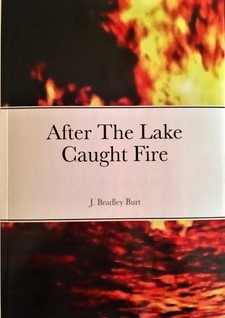
~ AFTER THE LAKE CAUGHT FIRE ~

The pristine shoreline of Georgian Bay north of the resort town of Port Huntington is threatened by voracious developers planning to build a vacation condominium development.  Several local municipalities and community organizations are opposed to the plans, and the struggle soon becomes acrimonious.

At the same time, environmental testing reveals that the land proposed for development is a toxic wasteland, a result of chemical dumping by a long-ago munitions manufacturing company.  Although the Russian-backed developer is undeterred, the public outcry increases dramatically after several unmarked graves are uncovered at the site of a former Indigenous residential school located on the property. 

When a prominent, outspoken community leader is murdered by persons unknown, Maggie Keiller and Derek Sloan are drawn into the ensuing police investigation.  That shocking murder is shortly followed by two more killings and the abduction of a young girl, alarming the entire district.

As the scandalous involvement of the provincial government in ensuring approval for the development comes under close scrutiny, several players step forward with plans of their own to enrich themselves.  Skulduggery and mayhem abound, and Maggie and Derek, immersed in the midst of these fast-unfolding crises, suddenly find they are under attack from the same malign forces.  In order to save themselves and protect the interests of the Port Huntington community, they must use every means at their disposal. 

AFTER THE LAKE CAUGHT FIRE

is the eighth novel in my acclaimed crime-fiction series, and I’m sure you will enjoy it.

From now until Christmas, the book is available for $16.95 CAN, a pre-holiday 15% discount off the regular price.

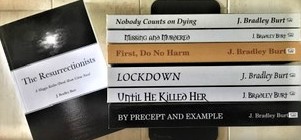
You’ll find it, and all my other books, at this safe site—

https://www.lulu.com/spotlight/precept

Coming Soon!

After The Lake Caught Fire, the eighth novel in my Maggie Keiller/Derek Sloan crime-fiction series, will be published and available for purchase by mid-November.

The pristine shoreline of Georgian Bay north of the Ontario resort town of Port Huntington is threatened by voracious developers planning to build a vacation condominium development.  Several local municipalities and community organizations are opposed to the plans, and the struggle soon becomes acrimonious.

At the same time, environmental testing reveals that the land proposed for development is a toxic wasteland, a result of chemical dumping by a long-ago munitions manufacturing company.  Although the Russian-backed developer is undeterred, the public outcry increases dramatically after several unmarked graves are uncovered at the site of a former Indigenous residential school located on the property. 

When a prominent, outspoken community leader is murdered by persons unknown, Maggie Keiller and Derek Sloan are drawn into the ensuing police investigation.  That alarming murder is shortly followed by two more killings and the abduction of a young girl, frightening the entire district.

As the scandalous involvement of the provincial government in ensuring approval for the development comes under close scrutiny, several players step forward with plans of their own to enrich themselves.  Matters worsen quickly, and Maggie and Derek, immersed in the midst of these fast-unfolding crises, suddenly find they are under attack from the same malign forces.  In order to save themselves and protect the interests of the Port Huntington community, they must use every means at their disposal. 

Like the seven books before it in the series, mayhem and skullduggery abound in After The Lake Caught Fire, a gripping, contemporary story that will hold your interest from start to exciting finish.

In plenty of time for Christmas giving, the book will be available to order by mid-November at this safe link, where the seven previous novels in the series will also be found—

https://www.lulu.com/spotlight/precept

King of the Hill

I saw some stately old trees being cut down recently to make room for yet another house-building project in our already overly-dense community.  Their uprooting seemed such a shame, and it took me back to a much happier time.

My wife and I used to live in a house on top of a hill overlooking a valley with a river running through it.  It was a steep hill—so steep that, even when I was still able to run down it, I had long since stopped trying to run up.

The view was magnificent, stretching for miles across forest and field.  From my perch on the back-deck of the house, I commanded a vista of at least one-hundred-and-fifty degrees across the river-valley.  It was one of life’s rare pleasures to sit there of a summer evening, surveying the tranquil, pastoral scene.  It wasn’t a great stretch of imagination to pretend I was a sort of feudal lord, gazing out and down upon my kingdom.

Yet, in truth, I was never king of the hill.  That honour fell to another resident of the yard.  Down the sloping lawn from the house, almost at the edge of the property line by the river, stood a glorious weeping-willow tree.  Two smaller trees flanked him, seeming to pay homage as they curved up and away from the panoply at the centre.

The willow came to our yard almost by accident.  A neighbour casually mentioned to a group of us, assembled after a mid-summer night’s game of softball, that he was planning to cut out a tree in his yard to make room for a swimming pool.  A subsequent examination ‘neath the light of the moon revealed a tree not yet grown to the extent that it couldn’t be dug out and transplanted in a new location.

And so it was.  A day or two later, after much digging and tugging—punctuated by the occasional epithet—the tree was resurrected in my yard.  It did not flourish in the beginning, for it had to be pruned dramatically.  In fact, it gave scant notice of the glory that was to come.

The following spring, two saplings were planted on either side of the solitary sentinel, both smaller and slenderer.  In the several years following, they grew alongside the willow by the riverbank, two beautiful courtiers flanking a majestic, burgeoning king.

A visitor once remarked that the trees at the bottom of our yard should be cut down because they were blocking what would otherwise be a splendid view.  I merely nodded, as though in agreement; but secretly, I couldn’t help thinking she had missed the essence of what she was looking at.

That willow tree wasn’t blocking any view.  To the contrary, it was a significant part of the panorama.  It was magnificent.  Bursting skyward from its riverside foundation, fanning out in a wind-tossed cacophony of greens and yellows, the supple branches thrust themselves out and away from the main trunk, then bent earthward to caress the grassy slopes beneath.

I can remember when I’d go down on a warm summer’s afternoon to sit under the o’ervaulting limbs, virtually invisible inside the green vault.  The grass was sweet and soft, the sanctuary shaded and cool.  The only sounds were the leaves murmuring in the summer’s breeze, and the gentle gurgle of the river’s flow.  If I was alone, I’d often take a book with me, although I did not always read; it was merely a sham, a means of explaining my presence there to anyone who might have discovered me.

Best of all were the times my young daughters came to sit there with me.  In such a tranquil setting, encased in an emerald palace, we told each other our stories.  And they felt free to open up about their lives, to express their hopes and fears, to tell me of their triumphs and, sometimes, their failures.  Although I well remembered my own pre-teen years, I did not try to instruct them from that experience; rather, I listened and I learned.  Safe in our sylvan retreat, we fostered and strengthened the bonds that tie us together to this day.

The noble and aloof willow suffered us in majestic forbearance, of course, seemingly indifferent to our presence—at once apart and yet a part of us.  Although I shoved aside the thought, I understood even then that a time would come when my girls would no longer be eager to join me.  And I recognized, too, that the day would eventually arrive when even I would not be there. 

But I comforted myself in the knowledge that the resplendent willow would reign over the valley for years on end, unmindful of my absence—glorious and supreme, the once and future king of the hill.

And I gratefully rested at the foot of his throne while still I could.

The Thin, Dark Veil

My Florida writers’ group prompt for this week is to write about a thin veil or veneer, and this is what I have come up with…not wishful thinking, but a fanciful, funereal tale—

* * * * * * *

For now we see through a glass, darkly; but then face to face…

I hear the mighty pipe organ, that King of instruments, pealing the melody I know so well—my favourite hymn, its words engraved on my heart—rolling majestically through the cavernous cathedral where so many times I have gathered with my family in this congregation.

Oh Lord, my God, when I in awesome wonder,
Consider all the worlds Thy hands have made…

I see the people who have come to mourn or celebrate, to lament or rejoice, depending on their view of me, I suppose.  I know all of them, the well-meaning grievers and the disbelieving voyeurs—though they seem distant despite their disconcerting closeness as they lean over my casket.  I cannot see them clearly, for it is as if a thin, dark veil lies across my eyes. 

I hardly recognize long-ago colleagues, much-aged now, and almost-forgotten neighbours from homes I have lived in over the years.  There are acquaintances and friends from bygone times, most of whom I have not seen in many a day.  Some whisper a few words as they pause over me, but I cannot hear them on account of the glorious music enveloping me—

I see the stars, I hear the rolling thunder
Thy power throughout the universe displayed…

Some of these folks, I believe, have come in sadness, while others, less charitably, are here to assure themselves that I have, indeed, crossed the bar.  Some will miss me, of that I am sure; others, not so much.  But really, how could it be otherwise?  Are there any among us who will be universally mourned at their time of passing?

There are those who are genuinely saddened by my leaving, however, and I see them, too—dimly, darkly—as they linger over me.  I recognize the two old men whom I have loved since we were ragamuffin boys, and their wives, tears gracing their faces, hands lovingly touching my cheek, though I cannot feel them.  One of them crosses herself as she hovers there, an angelic apparition, an ephemeral chimera, and although I have never been one to embrace obvious signs of piety, I am comforted by her simple gesture as the mighty organ swells—

Then sings my soul, my Savior God to Thee,
How great Thou art, how great Thou art…

And then at last there appear the people whom I love the most.  My vision is blurred and hazy through the veil, but I recognize my grandchildren—the adults they are now (strangely shape-shifting with the babies they were).  And I see my middle-aged daughters (inexplicably intermingling with the lovely little girls who graced my life once upon a time, and for all time).  Their eyes are smiling down at me, their grandpa, their daddy, even as their tears flow forth.

Coming at the very last, of course, is the stooped and wrinkled wife who has been there since the very beginning—mother and grandmother, boon companion—and she, too, is metamorphosing back and forth from the lissome lass she was to the weathered woman she has become.  And I understand, perhaps for the first time, the devotion expressed in Yeats’s poetic words: …one man…loved the sorrows of your changing face.

She stands above me for the longest time, my very life, yet not long enough before she is gone, leaving behind one final, sad smile.  And still I hear the magnificent music, its o’erarching crescendo anointing me, before fading to an other-worldly silence—

Then sings my soul, my Savior God to Thee,
How great Thou ar-r-r-t, how grea-ea-t Thou art…

And when the music stops, the thin, dark veil is lifted.  And as the hoped-for, everlasting light bursts forth, I do as the old man in Yeats’s poem did before me—I hide my face amid a cloud of stars.

Time-Travel Time

As a response to the weekly prompt from my Florida writers’ group, to write about incongruity, I have penned this haiku verse to describe the joys and wonders of the writing process.

Haiku is poetry of Japanese origin, written in English as seventeen syllables in three lines of five, seven, and five. It is unusual to string a number of them together to form one poem as I have done here.

through time I travel 
unrestrained, unimpeded,
here at my keyboard

imagination
carries me from here to there
through tapping fingers

fixed by mortal coil
though I am, my mind runs free
through the universe

in tales tall and true,
from realm to realm I wander,
unfettered, unbound

never knowing where
my next destination is,
or where I shall land

my relentless muse
pushes and pulls me along
the paths she chooses

compelling me to
explore her capricious whims,
to write what she sees

telling her stories
discovered along the way---
prose and poesy

unable to quell
her relentless siren-call,
nor desiring to

I follow my muse---
yet, incongruously, I
never leave my chair

Ugh! Back to School!

It’s the end of the first week back at school for thousands of students, from kindergarten to university. In recognition of their return, here’s an almost-but-not-quite-true tale from a long time ago, about me going back to school…and dreading the idea!

Today is the big day, the day when I have to go back to school.  The end of summer has come and gone…the time of year when news media publish articles aimed at all those mothers whose children are getting ready to go back. 

ALMOST THERE, MOM! or RELIEF IN SIGHT! are the headlines accompanying the stories, the point being that the world’s parents, fed up to the teeth with their children, must joyfully be anticipating the beginning of the new school year.

That’s certainly the case with my mother, who, it seems, can hardly wait to get me out of the house!

Back when I was in the primary grades, going back to school was an exciting time.  I remember going out with my mother to do some shopping during the week before school started.  Clothes were always on the list, but my mother generally looked after that aspect.  The purchases that interested me were things like coloured pencils and a new lunchbox, things that reassured me I was starting fresh, embarking upon what was sure to be my most successful year yet.  Hope sprang eternal.

At home with my new stuff, I’d spend considerable time organizing and planning.  I’d get rid of all the leftover junk from the previous year, print my name carefully on the new stuff, and decide what clothes I wanted to wear on the first day back.  By the Friday before the Labour Day weekend, I was ready!

In some ways, things haven’t changed much now that I’m older.  Last week, I helped my mother as she chose new clothes for me to wear, I got my hair cut, and I stocked up on school supplies.  But there is one big change now, compared to before, a huge change!  I’m no longer excited about going back anymore, not at all. 

My mother woke me this morning, yelling up the stairs.  “Time to get up!  First day of school!  Let’s go!”

I stayed in bed, trying to convince myself I was sick, but she finally came into my bedroom to get me going.

“Hurry up!” she scolded.  “Breakfast is almost ready.”

“I don’t wanta go back to school, Ma,” I whined.

“Don’t be silly,” she said, pulling back the covers.  “Everybody’s going back.”  She lay out the clothes I’d be wearing on the bed for me.

“Nobody likes me,” I whimpered.  “All the kids hate me!”

“Nobody hates you,” she said, pushing me down the hall to the bathroom.

“They do so!” I said.  “And none of their parents like me either!”

“How do you know that?  Most of their parents don’t even know you.”

“Yeah, but the ones who do think I’m a jerk!”

“I’m sure they don’t,” my mother insisted.

“Not only that,” I protested, “the teachers don’t like me either!”

“Don’t be silly!” she said, pulling the bathroom door closed after ushering me inside.  “Now get washed, get dressed, and get downstairs for breakfast!”

It continued when I got to the table.  Dawdling over my cereal, I said, “I hate school, Ma!  The work is too hard.  I don’t even know what I’m doing half the time.”

“That’s just silly,” my mother said.  “You’re very clever.  You just have to stick to it and everything will be fine.”

Pushing my unfinished cereal bowl away, I said, “I think I’m gonna be sick.  I don’t feel very good!”  I held my stomach to punctuate my claim.

“You’re not sick!” she said.  “You’re just a little nervous about the first day back, that’s all.  Once you get there, everything will be fine.  You’ll see.”

“It won’t be fine!” I whined.  “Nothing’s gonna go right, I just know it!  Please, Ma!  I don’t wanta go back to school!”

“You have to go!” my mother declared, a touch of steel creeping into her voice now.  “Everybody else is going, and you have to go, too!”

Why?” I cried.  “Why do I hafta go?”

“You know why,” she said.  “You’re the principal!”

And so here I am.  It’s gonna be awful!

Birth of the Beast

As a response to this week’s prompt from my Florida writers’ group, to write a story using the five senses, I’m posting a piece I hope will allow you to see, hear, smell—perhaps even taste and feel—the events portrayed.

The piece is the draft prologue to my next crime novel, my eighth—working title, After the Lake Caught Fire—which I expect to see published later this year (or early in 2022).

No one was there to witness the birthing of the beast.  Speculating afterwards, people said it was most likely caused by a strike from the surly skies overhead—a bolt of heat-lightning that ignited the oily, gummy crust floating on the lake’s surface.  But nobody knew for sure. 

The flames spread slowly across the water, hungrily devouring the layers of filthy grunge, sending a greasy black smoke into the sky to blend with the heavy overcast.  Later on, people figured the fire burned for most of the first day, all that night, and well into the following day before exhausting its run.

Had anyone been there that Saturday, the smell was the first thing they’d have noticed—an acrid, unpleasant odour, distinctly repellent, entirely hostile.  On that sticky, humid day, it saturated the moist air, cloying and pervasive, unmistakably out of place in the forest setting.

Had someone been there that night, they’d have seen greedy tongues of flame, nearly invisible in the daytime—a greenish-blue inferno flecked with orange, like a propane camp-stove turned low.  The fire lent a Dante-esque glow to the darkness, roiling and surging atop the lake like the awakening beast it was.  

The small kettle-lake, unnamed, had been devoid of life for years.  No fish swam in the depths of its half-a-square-kilometre bowl, their remains having long since mouldered on the bottom or rotted on shore.  No ducks, or geese, or iconic loons splashed down on its surface during their migratory travels.  No small animals came to drink from its water, or to hunt the frogs and crawfish that had once inhabited the shoreline.  The lake was dead beyond reclamation, a silent, toxic cesspool, the perfect breeding ground for the catastrophe it was spawning, a poisoned promise to the future.

By the following morning, Sunday, the beast had reached the sloping terrain of the eastern shore, an expanse of granite covered in stiff lichen, furry moss, and low, prickly scrub.  Dead leaves, twigs, and branches littered the rising slope, sere and brown in the summer heat.  Pockets of smoke appeared near the bottom of the grade, and gradually moved upward, tracing the path of the smouldering monster in the cracks and fissures of the rock.  By mid-afternoon, the first small flames sprang to life—not explosively, not aggressively, but languidly, as if the oppressive heat of the day was more than they could tolerate.  The abundance of dead, dry vegetation on the ground allowed the flames to spread, moving in every direction from the centre, climbing the slope, consuming everything in their path.

On the flatter shoreline areas—gravel-covered beaches, bare of vegetation, where no fire should have found purchase—the flames nevertheless spread haphazardly, as if drawing on some unseen source of fuel.  Black tendrils of smoke traced their route from the lake’s edge toward the forest, their odour the same as that arising from the water-borne gunk.

Late on Sunday afternoon, before the fire could spread uncontrollably, the rains came, one of those sudden, summer downpours, appearing almost out of nowhere, lasting perhaps an hour, leaving behind an azure, cloudless sky and setting sun.  For a while, the rainwater on the surface of the lake evaporated as soon as it landed, replacing the smoke with mists of steam, scarcely different in appearance.  But eventually, the rain’s sheer volume quenched the flames, already diminishing as a result of their relentless consumption of the oleaginous scum they’d been feeding on.

From the forest floor, rainwater rushed pell-mell down the slopes of granite to the lake, drowning the smouldering monster before it could reach the treeline, leaving large swathes of black soot across the pink-hued rock.  And the flames creeping across the gravel-laden flats were similarly quelled, with wispy threads of acrid smoke rising lazily from the chemical-soaked ground, pale tendrils striving futilely against the rain. 

On Monday morning, when the men came back in their growling trucks laden with more barrels from the factory—tailings sloshing in a chemical stew—they were startled by the scene that greeted them.  But the fire was already out, the greedy slurry-pits were waiting, and the bosses at the plant would have no tolerance for excuses.  After a few minutes of muted chatter, the men dumped their loads as usual, and headed back for more. 

Most of them, lifelong residents of the Northern Highlands district, understood what was happening.  But no one could afford to lose their job by being the one to sound the alarm and abort the nascent disaster.

And the bosses, who also knew and understood, did nothing.

The beast was born.

Logical Consequences

Throughout my professional life, beginning as a classroom teacher, finishing as a school district CEO, I always believed in the wisdom of allowing people the freedom to make their own decisions, their own choices.  It was difficult at times to put that belief into practise, and it did not always lead to happy outcomes, but I never lost faith.

The corollary to this belief was that those making the choices had to accept the consequences of their actions.  Students who chose not to study generally received lower grades than those who did; employees who chose not to pursue professional development opportunities generally languished in comparison to their peers.

With both students and employees, I had to make hard decisions as to how I would grade their effort or evaluate their performance, and I, too, had to accept the consequences of my choices.  Reluctant students received a failing mark—although always with the opportunity to try again, to learn from their poor choices.  Teachers disinclined to improve of their own volition were instructed, provided assistance, and given time to do so; in cases where they proved unable or unwilling, their employment was terminated.

As a parent, I endeavoured to allow my own children to make choices along the way, but always stressing their responsibility to accept the consequences, and holding them to whatever those might be.

I was influenced in my thinking by the writings of Alfred Adler and John Stuart Mills, and Rudolf Dreikurs.  This brief essay cannot give even a rudimentary outline of these men’s theories, but the effect of their thinking on my own actions was significant.  Let me give an example from Dreikurs—

Dreikurs espoused that children behave inappropriately and make poor choices for four main reasons: a desire for attention; a need to obtain and hold power; a desire for revenge; to compensate for perceived inadequacy, the feeling that they are unworthy of anyone’s affection.  All four are legitimate human emotions, but the behaviours by which they are manifested through the choices children make are often problematic.

Misbehaving children are discouraged children.

It was my job as a teacher to provide opportunities for every child to pursue socially-appropriate activities that would gain them positive attention and praise, that would allow them to feel some semblance of control of their environment, that would re-direct them from activities designed to ‘get even’ for real or imagined wrongs, and to ensure they would come to believe they were loving and capable individuals in their own right.  And those opportunities had to encompass the academic, physical, social, and emotional needs of the children.

Today, many years into retirement, I have witnessed adults behaving in ways I consider socially-inappropriate during these long months of pandemic restrictions.  It seems to me that many of them are seeking attention for themselves and their views—perhaps in the only way they know how—by pushing themselves loudly and forcefully to the front at every opportunity.  We know our rights!

Others, I think, are looking to seize power from those they believe are currently wielding it, a power they view as compelling them to certain actions they believe it is their right to refuse.  Power to the people!

Others, probably fewer in number, might be seeking payback from authorities they feel have done them wrong—big government, unfair employers, the radical lefties, the lunatic right-wing, the fake media, or any other perceived enemy.  We’re not gonna take it anymore! 

And some, I’m sure, are there simply because they have nowhere else to go but to a crowd that, if not understanding of them, is at least tolerant of their presence.  Look!  I’m one of you!

Mill wrote: The only purpose for which power can be rightfully exercised over any member of a civilized community, against his will, is to prevent harm to others.  There are three key points here, I think.  First, he was referring to a ‘civilized community’, which might be defined as one which has a well-developed system of government, culture, and way of life, and which treats all people living in it fairly, with due regard for the laws and customs of the community.

Second, Mill’s stance is that power resides by default with the individual in a community, but may be overridden when that individual behaves in a manner deemed harmful to others.

And third, there is an implicit understanding that the decision to act against an individual’s will is to be made by the community itself—i.e. the majority.

As I witness the current unrest in our land regarding various pandemic restrictions, it seems to me there is a need to exert the primacy of the common good over the various claims of disaffected members of the community, not as a primitive display of the power of the state, but to ensure the continued well-being of the community itself.

For example, perhaps the government should not mandate vaccines for all, even in the current climate.  Not doing so would allow people to exercise their right, as they see it, to avail themselves of a vaccine or not.  Free choice for every individual.

But the government should ensure there are consequences for the choices people make—logical consequences.  I don’t believe a person who has the right to refuse to be vaccinated (a right which I support) should also have the right to attend in-person, congregant venues and events, or to partake of non-essential services, where their choice might place others in danger.  That impinges on everyone else’s right to a safe, healthy living environment. 

It is entirely logical, I submit, that such venues and services should require proof of vaccination from those wishing to take part.  For everyone, then—those folks who choose not to be vaccinated, and those who do—the consequences will be clear in advance.  Choice A leads to Consequence B; Choice C leads to Consequence D.  Informed decisions are almost always better decisions.

[I note, as an aside, that in jurisdictions where such proof of vaccination rules have already been put in place, the number of people who choose to be vaccinated has risen—surely a benefit to the entire global community.]

In any case, absent a mandate for everyone to be vaccinated, people desiring attention will still get it by proclaiming their decision to their family and friends, and on social media.  Those in search of power will still find it by exercising their inalienable right to make their own decision about vaccinations with no coercion either way.  Those who would seek revenge of some sort if forced to be vaccinated can still remain unvaccinated.  And those who feel inadequate, incapable of making such a momentous decision, can prevail upon family and friends to help them decide.

The concept of free choice has never meant freedom to do as one wants without consequences.  As surely as night follows day, every decision a person makes has an impact on someone—somehow, somewhere.  And that consequence, if it’s logical, can be a force for good.

The nascent teacher in me still believes it is possible to help people learn this quaint notion.