Mothers’ Day Again

Another Mothers’ Day has passed, the sixth since my own mother passed away.  The living mothers in my family number nineteen in all: my wife, two daughters, three sisters, two sisters-in-law, ten nieces, and one grand-niece.  All were recognized and honoured by their children, many on social media, and it was lovely to witness.

But I still miss being able to pay homage to my own mother each year—to hear her voice, see her smile, smell her perfume; and mostly, to feel her arms around me.  We knew each other for sixty-seven years, with nary a breach in the trust and love we shared, and my world is emptier without her.

On her ninetieth birthday, four years before she died, I wrote this poem to convey what she had meant to me for so long.  I likened her to a tree that sheltered me until I dared to strike out on my own, and even thereafter.

At the time, I thought I had written it for her; but now, I suspect, I wrote it for me.
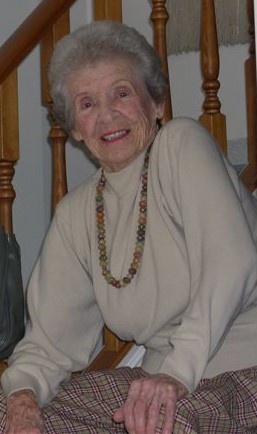
 

Mum April 04

My Tree

For ninety years and more, my tree has spread her boughs across my yard,

Festooned with leaves providing shade, standing tall and proud, on guard.

When I was young, and climbed up high into my tree, carefree and fleet,

Her branches hugged me safe and close, held fast my hands, secured my feet.

As I grew braver, I would stray beyond the fence that kept me in.

But at day’s end, I’d rush back home to settle ‘neath my tree again.

Her boughs would gently bend and blow about my head, and whisper soft,

And tell me of the wide world they had seen from high aloft.

Sometimes she’d bend, tossed by storms that raged around us, blowing fierce,

Yet, ne’er a storm could match her strength, nor through her loving shelter pierce.

Then, all too quickly, I was gone to seek a new yard, far away.

Yet always I’d return to hug my tree, and feel her gentle sway.

Too big by then to climb once more her branches, high o’erhead,

I still found comfort there, among the fallen leaves my tree had shed.

 ~  ~  ~  ~  ~

Past ninety years, yet still she stands, her canopy now drooping low,

Creaking, bending, in the winds that shake her branches, to and fro.

As spring and summer fast have fled, and fall has turned her leaves to gold,

My tree displays a majesty that can be neither bought, nor sold.

And I’ll remember all my days her love, like ripples in a pond,

Because I’m sheltered now by younger trees—the seeds she spawned.

For ninety years and more, my tree has spread her loving boughs each day

Above my head, to nurture me, and gently send me on my way.

Manic Manifestations

This era of gender fluidity in which we live presents some complicated situations for elderly gentlemen—among whom I am more and more often numbered.

By gender fluidity I mean two things.  First, the long-time conversation around the issue of feminism, and what it means to be a woman in today’s world.  The topic is not new, having been a part of our public discourse through most of my adult life.

Gloria Steinem, a journalist and activist, defined feminism as a recognition of “the equality and full humanity of women and men.”  Bell Hooks, an author and activist, explained it as “a movement to end sexism, sexist exploitation and oppression.”

The second aspect arises from the increasing awareness and sometimes reluctant acceptance of people’s choices respecting their sexual orientation.  The initials LGBTQ (Lesbian/Gay/Bisexual/Transgender/Queer/Questioning) were unheard of, at least in my circles, not so long ago.

Mind you, the issues confronting people who question their gender identities are not new.  But the open, public conversation about them is a fairly recent development.

My viewpoint has always been live and let live, and I have never questioned the sincerity of those whose inclination leads them to follow a different path than I.  Believing us all equal under the sun, I support those who agitate for equality among the genders; for recognition of gender identity; for a rethinking of what it is that makes us human; and especially for acknowledging what differentiates us as men and women.

But such issues do lead to complicated adjustments for me, an older man who cleaves to the old ways, who has never doubted or lamented the fact that I am male.  Not privileged, not ascendant; just male.

old-man-4849420

I refer here to alterations to our language that seem to assail me for doing what I have always done.  The changes involve substituting the word man for parts of otherwise perfectly understandable words, creating a verbal-portmanteau previously unknown to our language.

For example, when I sit down now, on a shared sofa or bus seat, I may be accused of manspreading, the act of sitting with my knees apart.  This, I assure you, is less a hostile statement on my part, and more a search for comfort.  I intend no offense by it, but now increasingly find myself trying to shrink into as small a space as I can possibly occupy.

If I am asked to account for this conditioned behaviour, I might be accused of mansplaining, which is apparently a less than satisfactory justification.  Implied is the notion that I am merely defensively defending an unsustainable position.

Occasionally I find myself in a cluster of other men at a social gathering, enjoying our respective insights into politics, sports, or someone’s latest fishing trip.  It’s never too long before one of our fair companions happens by to ask how long we plan to carry on our manversation.  It feels like a putdown…or mandown!

But when we dare to get involved in a mixed-company discussion, and if one of us turns the talk in a different direction, we could be accused of manjacking the conversation.

I feel sometimes as if I’m being managed unfairly, or manipulated, even manhandled by those who resent what they assume is my inherent sense of masculine superiority.  They come across as manic in their correctness.

If I, perchance, did consider myself superior, it wouldn’t be because I’m a man; rather, it would be due intellectual brilliance, sparkling wit, or matinee-idol appearance.  Alas, given that none of these is true, I have long accepted the reality of my pedestrian, mundane maleness.

Perhaps it’s time I just man up and live with the new realities.  But that feels so…so…mandescending!

Is It Still?

Even at this late stage in my life, there are still so many questions and so few answers.

For example, is golf still golf if one doesn’t walk the course?  Since retiring, I have devoted countless hours to flailing away at a little white ball, following it down fairways that are too narrow, poking and prodding it close enough to the hole that I can pick it up—a gimme in golf parlance.

Xmas31.JPG

But I almost never walk the course.  Instead, I ride a golf cart along paved pathways, across swaths of mowed grass, stopping too often by bunkers full of granulated sand.  The only exception is when I fail to hit a rider—more golf parlance for a shot that doesn’t travel far enough to warrant climbing back aboard the cart to ride to the next shot.

Golf is a game invented to test one’s physical, mental, and psycho-emotional endurance, and it has forever involved walking.  If one drives the course, is it still golf?

Another question concerns an issue that plagues me in moments of idleness, of which there are many.  Is it still okay for a gentleman to hold a door open for a lady?  And if one does, should one expect a ‘thank-you’ as the lady sweeps through?

More often than not, I rush ahead when in the company of ladies to man the door.  Being not the most graceful of people at my advancing age, I frequently bang into someone in my haste.  Or regrettably, I approach the door from the wrong side, making it necessary to push in front of my companions to open it.  Once in a while, I’ve even been known to let go of the door too soon (usually because the strength in my arm gives out), which provides a none-too-gentle bump on the derriere of the unfortunate lady caught on the threshold.  I rarely hear a smiling Thank you!

A third example has recently become a concern.  Is it still acceptable for one such as I to look at pretty young women?  During a lifetime of doing so, I’ve gone from being considered precocious in my pre-teens, to flirtatious in high school; from admiring in my early working years, to bold in middle-age; from cute in my early senior years, to…what?  Lecherous?

Now, when so many pretty girls are the age of my granddaughters, is it still okay to appreciate their youth and beauty?

Despite the fact I’m a grandfather, I continue to be plagued by these questions.  For instance, there’s the matter of leaving one’s bed unmade after getting up in the morning.  You know, as long as no one is expected to drop by.  Or is one supposed to honour the teachings of one’s mother even now, so many years later?

Though she’s been gone many a year, I still imagine her tread on the stairs, coming to inspect my bedroom before breakfast.  The stripes on the bedspread had to be straight, from the pillow to the footboard; the hem had to be off the floor, and uniformly so, along the length of the bed; and, although I never had to bounce a dime off it in military fashion, the top had better be smooth, with no wrinkles showing through.

Is it still necessary to make one’s bed every morning?

There are so many questions!  If it doesn’t have a hole in the middle, is it still a doughnut?  Is it still correct to say one dials a number, now that there’s no longer a dial on the phone?  Is it still de rigueur to doff one’s hat in an elevator, when so many around us eat in restaurants with their hats on?  Is it still the Olympics with no truly amateur athletes extant?

I know there are folks who could not care less about such questions.  Political correctness has mandated the answers in many cases, anyway, and general indifference often covers the rest.  But how else might I occupy my time, except by considering such weighty matters?

Is it still Sunday if not everyone goes to church?  Is it still winter if there’s no snow?  Is it still cream if it’s made from petroleum products?  Is it still my car if I’m only leasing it?  Is it still democracy if hardly anybody votes?

I don’t remember having the inclination in years gone by to ponder these questions.  Or perhaps I thought I had all the answers back then.  Regardless, I now regale friends—those who hang around long enough—with rhetorical queries and enquiries, in hopes they’ll engage with me in the pursuit of answers.  I’ve chosen to interpret their glazed eyes and pained expressions as a devoted effort to help.

The greatest barrier to learning, I read a long time ago, is the failure to ask.  And so I do.  Endlessly. Repetitively.  Annoyingly, even.

Is it still okay?

Cruisin’ Down the River

Cruisin’ down the river/On a Sunday afternoon…

That old song has been running through my mind this past week as my wife and I, in the company of good friends, have been cruising the rivers of Belgium and The Netherlands. Aboard a luxurious riverboat, we’ve visited several ports—Amsterdam, Hoorn, Arnhem, Antwerp, Rotterdam—all of which have offered up their unique charms.

History is everywhere around us, in town squares dating back to the 15th century, in cathedrals still calling the faithful to worship, in castles forlornly standing watch over long-lost fiefdoms. Even the cemeteries have their tales to tell to any who care to stroll their grounds, reading epitaphs on crumbling headstones.

More recent history is in evidence at Arnhem, site of a failed offensive against Nazi forces by the Allies in 1944 (and subsequently portrayed in the 1977 film, A Bridge Too Far). The famous John Frost bridge, destroyed by the Germans to disrupt the Allies’ supply lines, once more spans the Nederrijn River, testament to the resilience of the Dutch people who welcomed the liberating forces in 1945.

It is Kinderdijk, however, that has proven the most fascinating. Nineteen windmills, most constructed during the 1700’s, one in the 1400’s, still perform their essential function of pumping water from canals draining the countryside into sluices that take it over the dikes and into the Lek River. The land here is four metres below sea level.

image

Each windmill is inhabited and operated by a family selected from a waiting list of more than two hundred. Someone must be on site to monitor the operation whenever the vanes are turning, but many of the residents have day-jobs in addition to their windmill duties. Accessibility to each structure is by boat, or via narrow footpaths, so cars are left in a communal parking lot when people come home.

Quarters are cramped inside, with very steep, narrow stairs leading up from level to level. Were I to live there, I’d need a hard hat to protect my head from the many protrusions and low sills. Windows are small, so much of the interior is dark, although electric lighting has improved the situation. In the olden days, before the installation of running water and sewage capabilities, residents shared their accommodation with rats, and shaved their children’s hair to counter lice.

Each of the four vanes, or wings, is a latticework structure, with fabric sails attached. When the wind is slight, the operator must climb the wings to unfurl the sails, in order to increase the velocity of the spinning wings; when the wind increases, the sails must be furled again. Each wing is stopped when it’s pointing to the ground, in order that it may be climbed. It is not a quick process.

The wings must also be rotated around the windmill to take advantage of the direction of the wind. A complicated construct of chains and pulleys allows the operator to do that, turning the thatched-roof cap of the windmill through 360 degrees until the optimal position is found. The procedure is virtually the same as that performed in the 18th century.

Up close, the structures look ungainly, ridiculous even. If function matched form, they’d have been abandoned long ago. But they’re still here, and still doing the job of keeping the sea at bay, as they’ve done for almost 300 years.

Even so renowned a warrior as Don Quixote could not shut them down.

Coexistence

There’s a bumper sticker out there that neatly sums up the means to solving the world’s problems, including war, famine, pollution, drought, overpopulation, greed—

Coexistence sounds so simple, yet over the millennia it has proven impossible to attain.

An old joke goes like this:  “You don’t know when you’re dead; only other people notice.  It’s the same when you’re stupid.”

Never having been dead, I can’t vouch for the first premise; for all I know, no one will notice when I’m gone.  But the second part might well be true.  Why else do so many of us ignore the certainty that humankind’s current practices are dooming our planet?

Nation against nation, race against race, religion against religion; endless resource extraction; massive defoliation and overfishing; reckless despoliation of our environment, including the very air we breathe—all in the name of what?  Geo-political supremacy?  Last one standing wins?  It’s sheer, rampant stupidity.

In his poem, Ozymandias, Shelley wrote these lines—

…on the [shatter’d] pedestal these words appear:
“My name is Ozymandias, king of kings:
Look on my works, ye Mighty, and despair!”
Nothing beside remains: round the decay
Of that colossal wreck, boundless and bare,
The lone and level sands stretch far away.

Where the glory, where the triumph?  Nothing left in a vast wasteland but a smashed relic of one man’s vainglorious attempt to take control of his world.

Think of two anthills in a garden, one bustling with industrious black ants, the other alive with equally busy red ants.  Everything is peaceful in the garden until, one sad day, the two colonies discover each other.  And then madness, folly, turmoil, mayhem, as each tries to subjugate the other.  Warfare unto the death, until the gardener brings his stomping boots and smashing shovel down on them.  And they are all annihilated, indistinguishable in their lifeless remains.

Is there a celestial gardener, I wonder, who looks upon our planet, this earthly garden, and despairs?  Do we appear as nothing more than those foolish ants, scurrying hysterically to and fro, intent upon the destruction of any who are not like us?  And will we avoid the gardener’s heavy boot?  Or is it already too late?

Coexistence has many synonyms: reconciliation, harmony, accord, synchronicity, collaboration.  All are needed if we are, indeed, to live together on our fragile planet.

Coexistence also has one supremely important result: survival!

Love in the Morning

Sunlight,

Slowly streaming, peering, through tree branches

Seeming reaching up and out to touch it

And be touched.

Dark shadespots, never-lasting, shift on forest-run

And up the stretching trunks,

To dance ‘cross leaves turned up to see the sun.

Water,

Reflecting morning back to bluing sky

Above, from fiery diamond-dance of light

Atop the waves.

The lake awakes as light turns trees of green to gold

And traps their images

In mirrored mere, quicksilver, green and cold.

Mist,

Wet, wraithlike trails of dew that do not seek

The morn, but rather gather, clutched, and drift,

And look to hide

Until, discovered by the sun’s relentless rays,

Surrender to the light

That thrusts elusive phantoms from its gaze.

Breezes,

Approaching shyly, coming on to shore,

From jigging o’er the watertops and waves

That lap the land.

With sighs they softly rise to stir the trees awake,

Then us, through mesh that screens

The out from in, and stubborn sleep from wake.

I stir,

And lying on the bed in my repose,

With eyes still closed, I draw a morning breath

Into my soul.

And then, eyes opening to the world dawning anew,

I also turn to see the morning sun…

And it is you.

Life and Death

Just what is it that makes life worth living, anyway?  Is there a universal, one-size-fits-all answer, or is the answer situational, dependent upon the circumstances in which we each find ourselves?

And what might that answer be?  Is it happiness?  Good health?  Sex?  Wealth?  Perhaps the ultimate aphrodisiac, power?  Or some combination of these?

The existentialists among us might claim the answer is personal fulfilment, harmony with the world around us, inner peace.  Alone though we are, they might say, we are nevertheless connected to others, but on our own terms.

The religious among us might declare life’s significance arises from a meaningful relationship with one’s creator, in whatever form that creator might be rendered.  At this point in time, however, they seem unable to reconcile their competing visions with everyone else’s.

The afflicted and dispossessed peoples of the world might proclaim that life, being an endless procession of hunger, thirst, and terror, is not worth living at all.  And who is any of us, never having experienced their realities, to disagree?

But let us suppose, cheerfully, that everyone we know has found ample reason to live, to carry on, to survive.  In the face, sometimes, of personal tragedy, severe illness, serious setbacks of whatever ilk, they have persevered, even prospered, and gladly proclaim life to be the greatest gift of all.  They are, from all appearances, joyful, optimistic, and strong.

I recognize myself among this happy crew.  Wanting for none of the necessities of life, surrounded by family who love me, blessed with friends who are supportive and caring, I rise each day with a positive outlook, sure this blissful state will continue for years to come.  To state the obvious, life is to be lived.

So what do I make of the current debate swirling around us about a person’s right to an assisted death when the time comes?  How do I square my belief in the meaning of life with a possible wish to end that life at some point?  Are these two concepts even compatible?

For me, it comes down to a fundamental, primal instinct that life exists beyond this earthly planet we inhabit.  The vast universe in which we float is, itself, alive—a pulsating burst of energy, ever-expanding, interminably large.  And an infinitely small fragment of that energy, in whatever form it manifests itself, is what powers life in me.  It is my life-source.  Some, more religious than I, might call it a soul.

So when my time is up, as surely it will be someday, I take it as an article of faith that my spark of life will rejoin the universe from which it sprang—still alive, still burning, but in a vastly different form.

universe1

Comforted by this belief, I do not fear death’s inevitability.  I do, however, harbour apprehensions about the manner in which that death might transpire.  Having been blessed, so far, to live a life worth living, I have no wish to spend whatever number of months or years in a diminished state, waiting helplessly for my life-source to reattach itself to that whence it came.

Perhaps I shall die suddenly one fine day.  Here one moment, gone in the next instant, no assistance required.  Still alive in the universe, to be sure, but departed from this realm.  I’d be happy about that—but not too soon, of course.

Lingering on, however, past the stage where my mortal coil can function properly, holds no attraction.  So I have come to the conclusion that I should be allowed and empowered to facilitate the escape of my spark of life from my failing body, and set it once again on its eternal journey in the universe.

The true meaning of life for me, it turns out, is the power, not to end it, but to release it from a failing, earthly body—freeing it to roam, as the poet, W. B. Yeats, once wrote, “…among a cloud of stars.”


Interstate Introspection

During the past three weeks, I’ve had occasion to drive on US interstate highways for more than forty-five hours.  Hours of enjoyment, heightened alert, and sheer terror.  That I survived is a tribute to my (ahem) considerable driving skills.

Safely home now, I’ve been reflecting on the experience.  Specifically, I’ve been trying to reconcile two things: the probable personality types of those who shared (and sometimes hogged) the roads with me, and their driving patterns.

First, a word about mine.  I tend to set the cruise-control at a speed appropriate to the driving conditions, perhaps a few miles over the limit, and cleave to the right-hand lane.  As I overtake slower traffic, I signal a lane change, pull out well in advance, and pass the car ahead.  All in keeping with my usual predisposition—conservative, logical, and risk-averse.

These are not traits I witnessed in some of the drivers around me.  If I might be classified as introvert/guardian/rational, many of those others would more likely be labelled as extravert/random/hysteric.

Some would overtake me, coming out of nowhere to sit right on my rear bumper within a matter of seconds, and then remain there.  Only when I began to overtake a large truck would they attempt to pass.  But at the same blinding speed with which they had overtaken me?  Oh, no.  Rather, at a glacial pace that would inevitably leave me boxed in, their car on the left, the truck in front, my knuckles gleaming white on the steering wheel.  Oblivious drivers.

Other drivers, going faster than I, would pass me, immediately pull in front of my car, and slow down.  When I soon pulled out to re-pass them, their speed would quickly increase—only to slow again when I pulled back in behind them.  At times, I felt that I was playing hop-scotch in my car—out, in, up, back, left, right.  Erratic drivers.

On occasion, I would find myself in a string of three or four cars, all gradually passing a slower-moving transport truck.  Inevitably, a speeding car would shoot up the right-hand lane and, without so much as a turn signal, dart in front of the car about to pass the truck.  Near-collisions were barely avoided as a string of brake lights flashed on.  Impetuous drivers.

There were numerous instances when I’d see cars in front of me, weaving from lane to lane, or even within a lane, for no apparent reason.  When I’d pass them, quickly so as to avoid a side-swipe, the cause would be immediately evident.  They were talking on their cellphones.  Distracted drivers.

All these inconsiderate, insensible, and narcissistic types do fit into one large category, however:  sociopaths.  No one matters to them but themselves.  Scofflaws, many of them, who drive the interstates as they please, heeding not even the most basic safety and common-sense rules of behaviour, caring not the slightest about those with whom they share the roads.

A plague on all their autos!


What, Me Fidget?

He’s a little boy, barely four years old, staring out of a portrait in pastels. Sitting erect on a stool, visible from the waist up, he wears a brown ball cap, perched slightly askew on his head. Coppery hair curls from under the cap, atop his ears and above his forehead. A brown woolen vest, sleeveless, covers what appears to be a white tee-shirt. His bare arms, somewhat chubby, end where his hands are clasped together in his lap.

His eyes—large, brown, quizzical—seem to follow the viewer from side to side, never wavering. His full lips are pursed, and his cheeks are round and pink.

He is as frightened as he can ever remember being.

portrait of boy

Invisible to the viewer of the portrait, but arrayed in front of the little boy on his perch, is a vast crowd of Christmas shoppers, some smiling, others pointing, all watching. In front of them, mere feet from the boy, sits the artist, a woman who posed him while his mother and grandmother watched. It is she who turns his cap sideways, removes his tie, tucks the collars of his dress shirt under his vest—much to the chagrin of his mother.

“Let’s try for a ruffian look,” she says, thinking of the little rascals in the movies.  “He’s too cute to be dressed up.”

His mother acquiesces, though none too thrilled, and cautions him about his role. He is to sit still, mind what the artist says, and not fidget. The artist repeats much of that, but adds that he should tell her if he gets tired. “Short rests are okay,” she says.

It’s alright for a time, the little boy unmoving, the artist sketching with her charcoal pencils and coloured pastels. His stool is on a platform, slightly raised above the main floor where the artist sits and the shoppers congregate. He can see his mother and grandmother, and their smiles reassure him. He is too timid to ask for a rest, but the artist takes one, perhaps twenty minutes into the sitting, and allows him to get off the stool.

During the break, his mother says, “Grandma and I are going to do a little shopping for a few minutes, but we’ll be back before the picture is finished.”

As the little boy’s brow furrows in concern, she adds, “Don’t worry. Everything will be fine. Just do what the lady tells you.  And don’t fidget.”

The second sitting is much harder for him, with no familiar face to focus on in the throng before him. What if they don’t come back in time? How will they find me?

His eyes constantly scan the crowd, searching, until the artist asks him to look directly at her. He does, but she is too focused on her work to give him the reassurance he craves. Glancing repeatedly at him, then at her work, she dabs colours on a canvas he cannot see.

But he doesn’t look away from her, and he doesn’t fidget.

That portrait of the little boy has hung in my home for more than forty years, passed on by my parents. And almost seventy years have flown since the little boy sat on his stool in front of those Christmas shoppers. When my own children were young, I used to look for similarities between them and the little boy—eyes, hair, expressions. And now I do the same with my grandchildren. Sometimes I see likenesses, other times I cannot.

On many an occasion, I have stood and looked into the little boy’s eyes, trying to recapture what it was like to be him. Not just on that day when the portrait was done, but during the days and years to follow, as he grew and passed into manhood.

I feel his eyes trailing me whenever I walk by, and I wonder what he would think if he could see himself now. Could he have had any idea that day what his future would hold?

Of course not.

Would he have had even an inkling of the man he would become, and of all that would befall him?

How could he?

Would he like me?

I hope so. I liked being him.

It strikes me now that he has never moved, not once in all those years. He sits as patiently and as immobile as on portrait-day, gazing steadily back at the viewer. Is he still waiting for his mother and grandmother to come back for him, I wonder? They’re gone now, long ago, and I wonder what he would think if he knew that.

The little boy is gone, too, I suppose, except from the portrait that hangs in my hall—and from my innermost soul, where he will always reside. Until I, too, am gone.

Fidget? Not likely.

Hugging

Hugging one another is one of the more pleasant things in life. There is precious little that can compare to being embraced by friends who hug you as if they mean it. I am very fortunate to know people like that.

Being a writer who creates fictional characters for my stories, I am, by necessity, a close observer of people I encounter. Their quirks, habits, tics, and proclivities invariably find their way into the personalities of my characters. That is what makes them come alive for the reader.

Over the course of countless such observations, I’ve devised a classification list for hugs. Each type depends on two things: the persons doing the hugging, and the context in which the hugging is occurring.

The least sincere hug, the social hug, might occur between two ladies dressed for a formal occasion, or between a lady and a man similarly attired. Each bends stiffly forward from the waist to allow a cheek to touch, ever so slightly, upon the other’s cheek. It’s as if they’re saying, “How lovely to see you, but don’t mess my hair!” I have witnessed many of these during intermissions at the opera, for example.

The next category is the sociable hug, exchanged between two people wishing to acknowledge each other more personally than with a handshake. Arms are placed on each other’s shoulders, or perhaps around waists, and right cheeks touch briefly, generally without a kiss. Nothing touches below the waist, especially if it’s two men.

The third type, the friendship hug, is very similar, except it’s the left cheeks that touch, thereby positioning each person in a ‘heart-over-heart’ posture, denoting a deeper, more personal relationship. These hugs last longer, and kisses on the cheek (or, more rarely, on the lips) often accompany them.

The fourth classification, the dance-hug, has three subsets, all set to music. The first might occur when someone is dancing with the boss’s spouse at an office party; lots of polite distance between them, even though they’re hugging in accepted ballroom style. The second is common among long-time friends, perhaps at a country-club affair, dancing with each other’s spouses; familiar contact, but nothing untoward.

A third subset may be seen when a caring couple is dancing; intimate contact, including below the waist, loving caresses, perhaps kissing or whispering in each other’s ears—all of it as if the dancers are oblivious to their surroundings, lost in the moment.

I have learned a lot about people’s relationships with each other by watching them on the dance floor.

A fifth type, the loving hug, might be witnessed at an airport, when family members or close friends are parting, or perhaps reuniting. Bodies seem to meld, kisses are fervent, hands run up and down each other’s frames, and the hugs are only reluctantly ended. Tears are frequent, either from sorrow at the parting or from joy at the return.

The final two categories, both called passion hugs, are similar to the fifth one, except for two significant differences. The sixth is almost identical, but conducted in a horizontal position, and seldom publicly. The seventh is the same as the sixth, except without clothing. I haven’t personally beheld other people in these hugging activities, but I do write about them in my books, anyway.

I never try to identify which type of hug I might be part of when it’s actually happening, of course; I simply enjoy the moment. A hug shared with the right person, at the right moment, can be an amazing source of renewal, support, affirmation, or joy. When fortunate enough to be in that situation, I always feel any sadness or doubts I may have been harbouring drain away, as happiness and assurance flow in.

I love people who hug me as if they mean it!