More and More Every Day

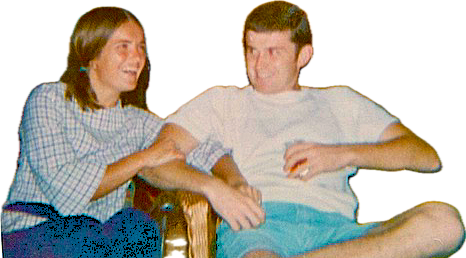
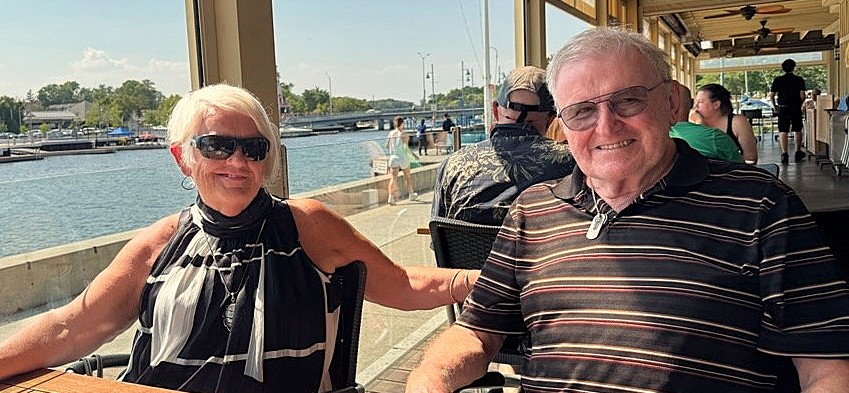
Earlier this week, I celebrated my wedding anniversary—fifty-eight years, all married to the same woman, the lissome lass I first dated when she was but sixteen.  We married four years later, embarked upon fulfilling careers, raised two lovely daughters, and retired to the life we now enjoy together…sixty-three years gone in the blink of an eye, it now seems. Egad!

Friends probably view the longevity and success of our union from my wife’s point of view as a triumph of iron will over probability. From my viewpoint, however, it’s unquestionably a victory of blessed good fortune over whatever random fate I would otherwise have encountered.

Recently, at the behest of our daughters, we each decided to write a short memoir of our lives, intended only for family and close friends.  Mine, titled Being Me, is finished and in the hands of those I care most about; hers, titled My Story, is nearing completion. The trick, as we discovered in the writing, lay in knowing, not what to include, but what to leave out.

As we wrote, we shared memories sparked by old photos, slides, and home-movies produced through the years.  We were amazed by how much we had forgotten over time, and by how different our fuzzy memories sometimes were as we discussed the same events.

“That’s not how it happened!” I found myself declaring more than once, only to have my wife show me a faded snapshot that proved otherwise.  Admittedly, I’ve always had trouble remembering dates, so casting back to those bygone years wasn’t child’s play for me.

By the way, that trouble with dates persists even now, alas.  I recently showed up for a colonoscopy procedure after enduring the requisite purging prior to the visit, only to find I had the right day, the right time, but the wrong year! I was a whole year early! I’m still living that one down.

Through most of our marriage, my wife and I were enthusiastic participants in sports—baseball, curling, golf, hockey, tennis, skiing, swimming, to name but a few—both competitively and recreationally.  As we eased our way through middle age, entering inevitably into our senior years, many of those began to fall away. We found we could no longer glide across the arena or playing field with the same visions of grace and glory we’d previously enjoyed.  Father Time vanquishes everyone, we discovered, no matter how skilled or practised we might be.

An example for me was falling down in my follow-through a few times on the tee-boxes while smoking drives I’d always hit routinely…well, maybe not always, but occasionally.  My playing partners advised me to start wearing a bicycle helmet if I wanted to continue playing.

My exercise today consists of activities where I can’t fall down or off something. I favour the rowing machine, the treadmill (if I hang on), the stationary bike, or exercises conducted while lying on the floor.  Although not a Latin scholar, I find myself chanting under my breath as I work out: sic transit gloria mundi!

As with many things in a long marriage, my wife and I found we had to adjust and change to meet these new demands.  She spends the bulk of her time now, when she’s not reading or doing jigsaw puzzles, making gifts for family and friends out of clay, dichroic glass, and wood, an accomplished artisan.  I call her my boon companion in the arts.

Much of my time, of course, is spent writing—novels, anthologies of tales and poems, and posts on my blog—and listening to classical music.  I’m a prolific reader, as well, and give thanks constantly for online libraries.

Perhaps the biggest change for us is that we no longer find our children and grandchildren to be part of our lives, sharing our experiences; rather, we have become part of their lives, eagerly sharing their accomplishments and happenings. It is we who are the supporting actors now, and they the stars in the unfolding movies of their lives.  We’ve also discovered that this change is very comforting, to be loved and cared for by these essential people in our lives, even as ours wind down.

We still look ahead, however, to each new adventure that might come our way. One of my haiku poems illustrates that philosophy quite clearly—

more yesterdays now
than tomorrows, but it’s the
tomorrows that count


the sails of our youth,
once hoist, are mostly furled now---
though the winds still blow

Back in 1964, when we were still dating prior to marrying, a popular singer, Al Martino, released one of his biggest hits, I Love You More and More Every Day. We adopted that as ‘our song’, and we used to sing snatches of it to each other.  Over the years, it faded for some reason from our minds, although we never abandoned its premise.  But I thought of that song on my recent anniversary day, and began to sing it to myself.  I had to look up the lyrics, of course, after all this time, but the melody was etched in my memory.

On a whim, I decided to record myself singing it on a karaoke track to present to my wife. Although I used to sing bass in a men’s a cappella barbershop chorus, my octogenarian voice is a tad quavery and shrill now, and my range is somewhat limited.  Nevertheless, the sincerity of my singing has not abated, and she at least recognized the song. Sort of.

As I think back to when she and I first met, as I try to remember all that has happened since, as I marvel at the lasting of our union, I find myself overwhelmingly grateful that we celebrated this latest anniversary together, and I offer this haiku to her to reflect those sentiments—

impossible dream!
many might have thought so, but
you made it come true

trusting all that’s passed,
moving forward in good faith,
hands clasped as always

Round Tables

It is no mean feat for writers to create an imaginary world that readers will come to see as true and historically accurate.  Fashioning something from one’s imagination that resonates with readers, a tale that merges with their perception of reality, is not easily done.

Two relatively recent examples of such efforts are Tolkien’s Lord of the Rings and Martin’s Game of Thrones, both of which have convinced many an avid reader of their legitimacy.

As a young boy at the dawn of the 1950s, it was the magical tales of King Arthur and the Knights of the Round Table that captured my fancy.  I first read them in The Boy’s King Arthur, a version of Malory’s Le Morte d’Arthur, which abridged and bowdlerized items from the original text, sexual and otherwise, that were deemed unsuitable for children.

I was completely captivated by the legends of the Lady of the Lake, Arthur’s conception at Tintagel, his seizing of the sword Excalibur, his alliance with the magician Merlin, his ultimate battle with Mordred, and his laying to rest in Avalon.  Most intriguing of all was the notion that he had not died, that he was merely sleeping, that he would rise again, the ‘once and future king’.

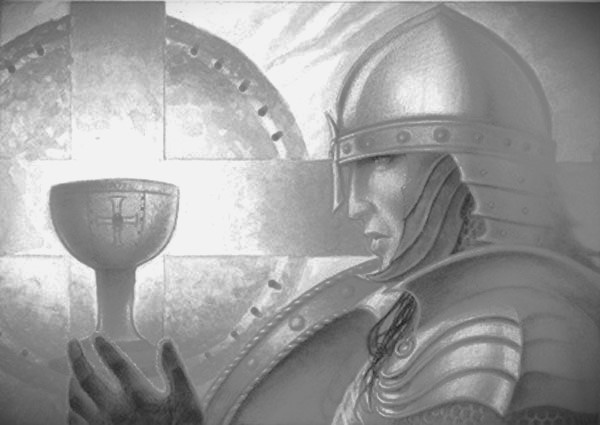
I eventually graduated to the reading of unexpurgated versions, but in the beginning I fancied myself as many of those brave warriors:  Lancelot, until I learned of his treachery with Arthur’s queen, Guinevere; Gawain, who bravely faced the Green Knight in a chivalric romance told in Middle-English alliterative verse; Perceval and Tristram, whose feats of derring-do enthralled me; and of course, Galahad, whose sacred quest for the Holy Grail seemed the most inspired.

I subsequently read about that storied quest in other works, and learned from more than one that two phrases in French—san graal and sang royale, pronounced almost identically—translate to two different things: Holy Grail and royal blood.  This assertion expostulated the theory that following Christ’s death, his wife and children fled to France, where his bloodline continued anonymously, eventually merging with the Merovingian dynasty, then the Carolingian dynasty, all the way to William the Conqueror—who, in a tidy completing of the loop, came to rule over Arthur’s ancient kingdom.

True or not, the story affirmed for me that the greatest Arthurian quest came to fruition in the merging of these two fanciful tales, one religious, the other mythical.  And for a long time in my youth, I believed.

The lasting impression I took from this childhood reading, however, was the concept of the Round Table.  In its simplest form, I thought it presented an ideal way of governing or managing a kingdom, an empire…or any enterprise.  Everyone sat around the circular table, each facing everyone else, and all had an equal say in the decisions that were made—all but one, of course.  The King, by virtue of his position, reserved the right of veto.

In such a setting, the objective of any group’s deliberations is always to achieve consensus on matters discussed, the theory being that everyone will have a greater commitment to decisions made when they feel they’ve contributed to them.  The process involves give and take, it usually means no one gets all of what they want, but it allows everyone to get some of what they hoped for.  Some might call that win/win.

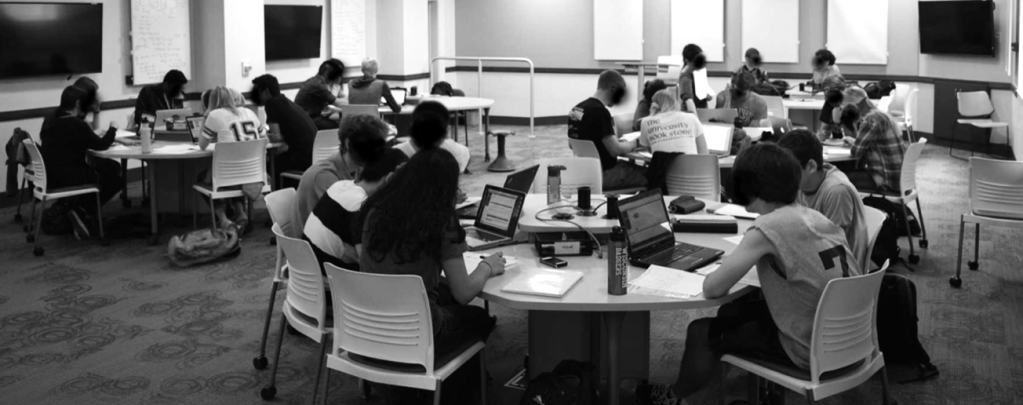
As a young teacher in the mid-1960s, chock-full of enthusiasm for and faith in the teaching/learning paradigm, I furnished my classroom with circular tables, not individual desks.  My thirty-plus students sat in groups of five or six around these tables, groups whose membership rotated periodically, based on their accomplishments and interests. 

Our interactions, the teachings and learnings we shared, usually (but not always) were conducted with me sitting around a table with them.  To this day, I find it remarkable how much self-discipline, cooperation, and independent learning took place among the young people at those tables.  Only rarely did I ever have to exercise my right of veto.

Twenty years after leaving the classroom, installed as the CEO of a school board district, I still favoured round tables.  In my office, senior staff met weekly around a large, circular oak table, where everyone had a valued voice.  We didn’t always agree on how best to proceed with certain matters, but when we concluded our discussions, each of us felt we’d had the opportunity to make known our views.  And all of us acted on the consensus decisions with total commitment.  And again, I almost never had to decide arbitrarily on a course of action.

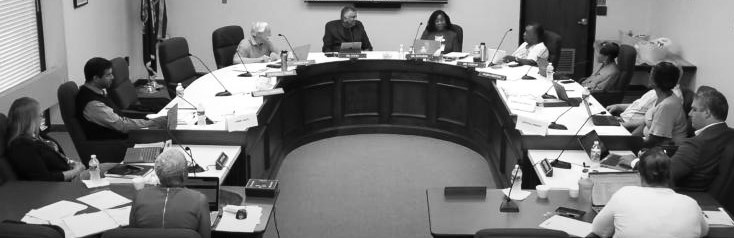
In the boardroom, where elected trustees met weekly to discuss and make policy, they sat at desks arranged in a circular shape, each of the fourteen with a direct view of the others.  The chairperson of the board managed the meetings according to established rules of order, and only occasionally overruled a colleague.  Decisions were made by voting, as required by the Education Act, but only rarely were those votes disputatious…and never acrimonious.  I believe there was something about sitting in the circle formation that elevated the level and tone of discussion, that enabled consensus decision-making.

As a young father, I sat with my wife and two daughters around a circular kitchen table, virtually every night, for dinner together.  Any of us might miss now and then, given our respective work and school commitments, but sitting down around that table was the established custom, one we all honoured until the girls headed off to university.  Our discussions centred on what all of us were doing at any given moment, and everyone contributed freely.  No topic was off-limits (although when the girls were very young, some issues were covered only cursorily, appropriate to their age).  Looking back now, I consider the learnings we all experienced with each other as indispensable to our family’s enduring ties.

And to think, it all began for me with my fascination for the Arthurian legends I first read as a boy, stories of the Knights of the Round Table that imbued me with a sense of romanticism and chivalry that I still value today.

I remain eternally grateful to all writers who have managed to create a world that I and other readers consider enjoyable and aspirational…even if imaginary.

 And I still wonder, even at this great age, if Arthur is merely sleeping at Glastonbury Tor, as the legends maintain, and if we shall ever see his like again, holding forth at his great Round Table.

No!

The weekly prompt from my Florida writers’ group was to write a piece where one of the characters in the story is ‘forced to say No’. This is my offering, and I hope it will bring back fond memories for those of you were parents—

“No!” he declares vehemently.  “I will not say No to them!”

“No, you won’t say No?” she replies incredulously.  “That doesn’t make sense!  It’s a double-negative.  Surely you mean Yes, you won’t say No.”

“No, I don’t mean Yes!” he says, exasperated.  “And yes, I mean No!  Are you trying to tell me what I think?  And did you just call me Shirley?”

“No, I didn’t call you Shirley,” she says wearily.  “The word was surely!  And no, I’m not telling you what to think!  But are you honestly telling me you won’t say No to them?  Are you afraid of them?  Are you worried they’ll laugh at you?”

“Yes, no, and no,” he says.

“Well, if you’re not worried about what they’ll think or do when you tell them, just say No and get it over with.  They’re our children, not your boss!”

“Yes they are, and no I won’t!” he snaps.  “Are you trying to force me to say No?”

She raises her arms skyward, rolls her eyes dramatically.  “No, I’m not trying to force you to say No!  But yes, I’m trying to convince you to say No!  Is that so hard to understand?”

“No,” he says.  “But, since I’m determined to say Yes, stop trying to talk me into saying No!”

They’ve been sitting at the kitchen table for an hour, the supper dishes still in front of them, the remains of dinner crusted and cold.  The children are watching TV.

“So you think you know what’s best?” she says, jabbing a finger in his direction.  “You think I’m stupid?  You think you’re smarter than me?”

“Yes, no, and no once again,” he says.  “And by the way, that should be ‘smarter than I’, not ‘smarter than me’!”

His correction is met with a venomous glare.  “No, I don’t believe this!” she says icily.  “Here I am, trying to help you make a difficult decision, and you think you can do that…better than I?”

“Okay,” he says, trying a different tack, “You think I should tell them No instead of Yes, right?  Can you not see that Yes is a better answer than No?”

“Yes, I do think you should tell them No,” she says, still miffed.  “And no, I guess I can’t understand why Yes is a better answer than No.  Can you explain it to me like I’m a three-year-old?”

“Yes, I can,” he says, resisting the urge to toss out the obvious wisecrack.  “But you should have said ‘as if I’m…’, not like I’m…’!”

“Are you correcting me again?” she sputters indignantly, sitting back in her chair.  “You think I don’t know how to speak the Queen’s English?”

“Yes and yes,” he replies smugly.  “And it’s the King’s English now, remember?  The Queen is dead.”

It is all she can do not to hurl one of the supper plates at him.  “Yes, I remember she died,” she says acidly.  “And yes, I know it was over a year ago.  But no, I still do not understand why you can’t simply tell the children No.  You still haven’t explained it to me…you know, as if I’m a three-year-old.”

He remains silent, seemingly at a loss for words.

“You do know I’m a functioning adult, right?” she says.  “A mother of two children?  Or do you think I actually am a three-year-old?”

“Yes, yes, and no,” he says.

“So, explain it to me then!” she demands, pounding one fist on the table, rattling the cutlery.  “Why won’t you say No to them?”

“Okay,” he says, “I want to say Yes, not No, because I don’t want to hurt their feelings.  I don’t want them to think Daddy is the bad guy.”

“That’s cray-cray!” she says, spreading both arms wide.  “Sometimes Daddy has to be the bad guy, as you put it.  It’s important that they learn that we’re in control, not them!  You get that, don’t you?”

“Yes, but I still want to say Yes, not No!  And I won’t be forced into saying No!”

As she throws up her hands in frustration yet again, the children come tumbling into the kitchen, the burning question bursting from their lips.  “Daddy!  Daddy, can we stay up late to watch the vampire movie?  You said you’d tell us after supper.”

He looks at his wife, who smiles sweetly, eyes narrowed.  “What’s it going to be?” she whispers so only he can hear.  “Is it Yes or No?”

He stands up, knowing the moment is at hand.  Without warning, he spins and heads for the kitchen door.  Just as he disappears from sight, he calls back, “Ask your mother.”

A Crowd of Stars

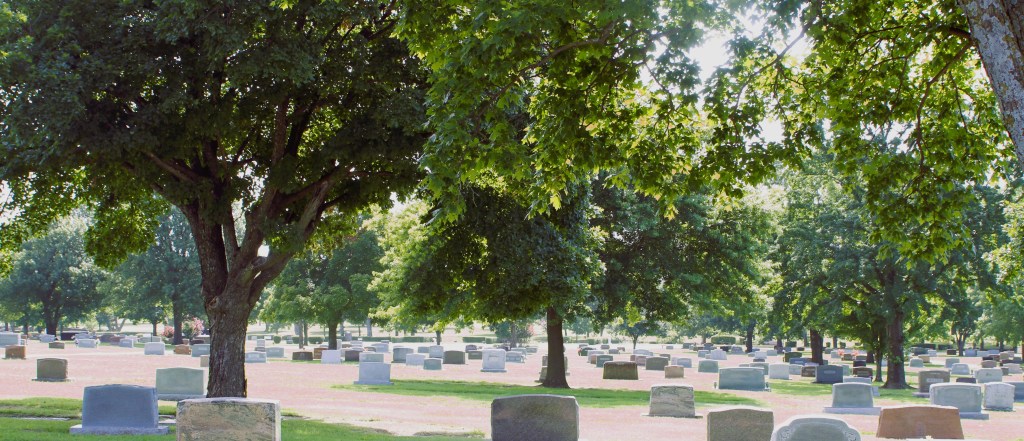
The youngest of my brothers-in-law died recently, following a long period of worsening, physical incapacity and illness.  He was the second of my generation to go, my younger brother having passed three years ago, and I suspect his death brought the spectre of the end-times somewhat closer to us all.

In addition to my sister, he left behind four children, three of whom are married, giving him three grandsons and two wee granddaughters.  At his private interment, his daughter and three sons spoke of him as a loving and beloved father, and there is no greater tribute I can imagine.  Eighteen of us exchanged reflections and prayers that day, spoken to each other and to him, designed to bring a sense of closure and peace to us all.  We were saddened, of course, by his passing, but relieved that his suffering was ended.

He was married to my sister for forty-five years, a loving union that brought credit upon them both.  I still remember dancing at their wedding, when none of us—so young and brash and full of piss-and-vinegar—could have imagined this day coming.  But it has now for him, as it must someday for all of us.

Deliberate and intentional in word and deed, especially as he grew older, my brother-in-law was rarely intemperate or harsh in his dealings with others.  A man of deep faith, he was loving and giving, and forgiving of others’ shortcomings.  Throughout his tribulations, he was confident that, as he approached the final crossing, he would meet his saviour on the other side.  I hope he has.

In her remarks, my sister said something I thought perfectly summed up his life and faith—from Matthew 25:23, “Well done, good and faithful servant; thou hast been faithful over a few things…enter thou into the joy of thy Lord.”

My wife shared many of those same understandings about what is to come with him, and I remember them engaged in deep conversation over the years, communicating their ideas and beliefs, their hopes for the hereafter.  By contrast, given my differing views, the exchanges I had with him tended to be temporal more than spiritual, though always sincere and affectionate.  He had a way of thinking before he spoke, and I constantly found myself leaning in to be sure not to miss what he might have to say.

The day after he passed, I wrote the following note to my sister—

When we get old, as some of us have, we think differently about death than when we were younger.  I won’t say we ever look forward to it, but we perhaps stop fearing it.

We think of death as a companion on our journey through life—way back in the throng at the beginning, but gaining on us as we begin slowing down.

We think of death, not as a spectre that will end things, but as an usher who will open the next door and allow us in.

Just as life ushered us in at the beginning of our journey through the here and now, death ushers us into the beginning of our next journey.  None of us knows what that journey will look like, but faith sustains us.

When I think of him now, and where he is, I think of these lines, adapted from the poem High Flight, by John Gillespie Magee, Jr.—

Oh!  he has slipped the surly bonds of earth
And dances the skies on laughter-silvered wings…
He has topped the wind-swept heights with easy grace…
Put out his hand and touched the face of God.

With that note, I also included one of my favourite poems, When You Are Old, by William Butler Yeats, the greatest of the Irish poets.  I imagine it as the song my brother-in-law might be singing now to my sister from wherever in this vast universe he finds himself, and I hope it comforts them both—

When you are old and grey and full of sleep,
And nodding by the fire, take down this book,
And slowly read, and dream of the soft look
Your eyes had once, and of their shadows deep;
How many loved your moments of glad grace,
And loved your beauty with love false or true,
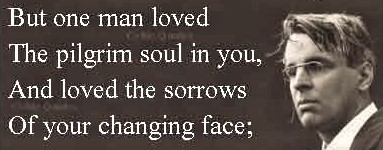
But one man loved the pilgrim soul in you,
And loved the sorrows of your changing face;
And bending down beside the glowing bars,
Murmur, a little sadly, how Love fled
And paced upon the mountains overhead
And hid his face amid a crowd of stars.

Lilt and Flow

There are few things I find more pleasurable than hearing the lilt and flow of poetry read aloud, especially if read by a skilled orator or by a loving family member.

My father was both, and it was he who read one of my abiding favourites, The Night Before Christmas, a classic tale by Clement Moore, on every one of the sixty Christmas times we shared before his death. Here are the beginning stanzas—

My siblings and I would lie in our beds, literally quivering with anticipation as we listened to that familiar tale, and I miss hearing my Dad read it to this day.

Another favourite poetic tale is The Highwayman by Alfred Noyes, which I first heard read aloud by a high school English teacher who loved her calling.  Here is the first stanza—

The final stanza before the coda sent shivers up and down my spine as I sat listening in the classroom, and so it still does—

That same teacher also introduced me to one of my favourite poets, Robert Service, whose rhythmic cadences entrance me even now, especially The Cremation of Sam McGee.  Here are the first two stanzas

So enamored am I of that rhythm and rhyme scheme that I have even written similar poems of my own, pale comparisons, but still a joy to read aloud.  Here is a stanza from one example, I Haven’t the Time

As a young father, I would often read this excerpt from Kahlil Gibran’s poem, On Children, to my own daughters as I tucked them into bed.  Although too young to grasp its full meaning, they seemed to enjoy the sound of my voice as I pondered the deeper implications of the verse—

I think my all-time favourite poem is When You Are Old, penned by my all-time favourite poet, William Butler Yeats. It speaks of the eternal nature of love and loss, and evokes in me both sadness and an abiding happiness each time I hear it—

I think I shall die before I am finished discovering more and more poetry whose lilt and flow lifts my soul, and I wonder if doing so will still be possible in the afterlife.  What joy I would find meandering the roads of eternity while listening to symphonic music from the maestri, and hearing great poetry from the masters read aloud.

And who knows, perhaps that is the way it will be, as this stanza from J.R.R. Tolkien’s poem, Roads Go Ever On, might imply—

Whether it will be so or not, I have always loved the lilt and flow of the spoken word. I hope you do, too.

The Sorrows

The weekly prompt from my Florida writers’ group was to take a snatch of lyric from a song, or a phrase from a poem, and write a story around it. This piece of fiction is inspired by When You Are Old, by W. B. Yeats—and is in memory of my mother, whose birthday this is, and who first introduced me to the poet’s work.

The old man died sometime during the night, alone, peacefully.  His careworn face, wrinkled and wizened under the weight of so many years, seemed suddenly younger somehow, and his lips were curled in what might have been taken as a smile.

On the table by the near-side of the bed—the side long occupied by his recently-departed wife—lay a note lovingly penned by his frail hand, an aged quill beside it, the ink caked dry on its tip.  It was unmistakably a love-letter to her, intended not for anyone else, fated now to be his last word to all who had loved the two of them.

This is what he wrote—

And now you are gone, off to another adventure, but this time without me.  How I wish I had been ready in time to accompany you, as on every occasion in the past.

There have been so many wonderful journeys upon which we did embark, each more glorious than those before it.  How I remember the sparkle in your eyes, the flush of your cheeks, the lilt of your joyous laughter, as off we went each time, hand in hand, bound for who knows where, never knowing that which we would encounter, but secure in our belief that, together, we would meet and conquer all.

And so we did.  Eloping when there seemed no other way in the face of families opposed, living abroad, scratching an existence from the fruits of our creative gifts, buoyed by our love and our belief in one another.  We could not have known, both so young, that your brush and my pen would eventually find favour with the audiences who discovered us.  And yet, undaunted, off we had whisked on that first great adventure into the wide world, happy, confident, ready for whatever fate had in store for us, surpassingly serene in each other’s bosom.

Every new work on your easel, every new draft in my notebook, carried us on to more adventures as we painted and published our way to heights heretofore unimagined.  What happiness we found in talking over our creative endeavours as they unfolded, in offering critiques and suggestions—shyly at first, and then more confidently as we grew in each other’s esteem.  Heralded as artists by the world beyond, we found our muses within ourselves and shared them.  Together.

Later came the children—Patrick, who died too soon; Liam, an accomplished actor now with dreams of his own; and Maeve, a musician who reminds me so strongly of her mother with such grace and sweetness masking that steely courage I ever found in you. What an adventure they provided us as our troupe grew to five, and then, sadly, diminished again to four.  What heights of joy we experienced, what depths of despair!  And yet, throughout, we sallied forth, ever determined to pass through each gateway, to follow each new path, to crest each succeeding hill.  Always together.

Inevitably, we became two again as the children, not unexpectedly, began to pursue their own adventures.  The years continued ever on and on, of course, but we, never ones to be mindful of constraints that seemed to bind so many others, paid them scant heed.  Yet even we—we, with all our bravissimo and essenza—even we could not slow the relentless ravages of time, the toll it took upon our bodies.  Even as our spirits remained as strong and audacious as ever, our bodies, increasingly and annoyingly, slowed us.  But at least we were together.

Before I knew, I had become an old man, bent and slowed.  And I watched as the weight of years pressed down upon you, too—never enough to douse the fire that burned within your soul, but tamping its fierce flames to glowing embers.  Never enough to quell the desire within us to begin our next great adventure, but sufficient to forestall our getting underway. 

Nevertheless, even in our dotage, we found ourselves, blessedly, still together.  And I was ever the man who loved the pilgrim soul in you, and loved the sorrows of your changing face.

But now, beloved Pilgrim, for the first time, you have started a new adventure without me, alas.  And I am bereft, forsaken and left here in this too-much-travelled, mortal confine.  Would you have waited for me if you could, I wonder?  I think so.  Perchance, are you waiting still, there on that other side somewhere, knowing assuredly I shall be along when I can?

I write this now in hope it is so, that we shall reunite in glory to resume our way across the universe, amid a crowd of stars.….

Fathers, Fathers Everywhere

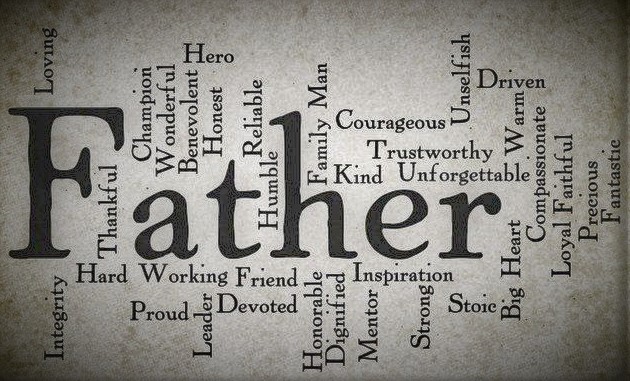
There’s going to be a gathering of three clans at the home of my eldest daughter and son-in-law this coming Father’s Day—Burt, Cherry, and Whittington.  With a combined age of 233 years, the three patriarchs (of whom I am one) boast of seven children (four of whom are themselves fathers) and nine grandchildren in total (some of whom are shared).

Those grandchildren, in addition to their patriarchal lineages, share ancestry from six families on the distaff side—Arnold, Eaton, Romig, Rowsell, Sakeris, and Wrigglesworth.  We are a discrete gathering, to be sure, but one big family, and it will be a happy coming-together.

Father’s Day has changed for me since I was a child, the eldest of five siblings.  In the beginning, I suspect I didn’t truly know what we were celebrating, given that all of us loved our father every day.  It was simply a party-day for some reason, and we all joyfully joined in to present Dad with our homemade gifts and cards.  He appreciated those more, I think, than the presents we purchased for him as we grew older—although he always had a softness for candy.

It wasn’t until I became a father myself that I began to appreciate what it meant to be somebody’s Daddy.  The enormous responsibility that entails was never lost on me, but it paled in comparison to the happiness and sense of fulfilment it brought.  And so, as my own daughters grew into young women, so too grew my appreciation of my own father and his role in shaping my life.

He lived into his 92nd year, mentally sharp to the end, and never lost his sense of humour.  Near the end, my mother asked him in a gentle whisper if he’d like her to sing to him.  “Not particularly!” he whispered back, the ghost of a smile gracing his face.

She sang him out, anyway, as he must have known she would.

Until I became one, fathers were always older men than I.  With remarkably few exceptions, I remember the fathers of my childhood friends being much like my own father—distant at times, there when it mattered, working-men dedicated to providing for their families.  They embarrassed us on some occasions, swelled our hearts with pride on others, and we never doubted their love for us—except maybe occasionally when they wouldn’t let us borrow the car.

I felt the same about the man who became my father-in-law—whom we lost way too soon—and I consciously tried to model my own behaviour as a father on those two men who were most prominent in my life.

It seems to me, even now, that it took a whole lot longer for me to grow up and move out from under my father’s purview than it did for my daughters to do the same.  My childhood lasted forever, or so I remember it.  But my girls were there—those precious, sweet babies—for such a short time, and then, in the blink of an eye, they were gone to men of their own.  To this day, I have a picture of the two of them, aged four and two, on my dresser.

“You’re not children anymore,” I tell them now.  “But I’ll never stop being your father.”  And I cling to that certainty.

I suspect the same sentiment is true for the other two patriarchs who’ll be joining me this coming Sunday.  One of them has three sons, the other a son and daughter.  All of those sons are themselves fathers now, which has led us to the startling realization (at least to me) that fathers are no longer the older men in our lives.  With the passing of our own fathers, it is younger men who now fill the role.

And in that reality, we old men are blessed.  The four sons, as fathers, are all loving husbands, dedicated to their families.  Hard as it is to believe, two of them are already retired from their life’s work, and branching out into other pursuits.  And without exception, they have loved and honoured their fathers and fathers-in-law from the beginning.

Over the next few years—years I trust I will be around to enjoy—I suspect there will be even younger fathers joining our combined families.  Grandsons and the young men who will marry our granddaughters may, with their partners, bring more children into our midst, great-grandchildren who will grace our lives.  At this point, I find it a happy circumstance that the number of fathers in our families is likely to increase.

By a matter of mere weeks in one case, and by a few years in the other, I am the eldest of the three patriarchs—the seniorem patrem familia, I suppose—but there is no doubt that such a distinction matters little.  All three of us are held in equal esteem by our respective children and grandchildren.

This coming Sunday, if everyone were able to attend, including sons- and daughters-in-law (and perhaps boyfriends), we would number twenty-five in all—seven of whom would be fathers, three of those, grandfathers.  Alas, some are too far distant, some grandchildren will be working, some in-laws may be with their own fathers at similar gatherings.  But whether with us or not, all will be there in spirit, and we shall raise a glass to the fathers among us.

There may come a few moments on Sunday when we three old men will find ourselves sitting off to the side, watching and listening to the antics of the younger ones, no longer as integral a part of the hubbub as once we were—a few moments when we may look at one another, smile knowingly, and silently acknowledge our shared status, a status none of us, perhaps, ever imagined we would occupy.

In so many ways now, I believe I have become my father.  And that accomplishment makes me happy.  I think Dad would be happy, too.

Happy Father’s Day to all of us who are blessed to be fathers and sons.

The Thin, Dark Veil

My Florida writers’ group prompt for this week is to write about a thin veil or veneer, and this is what I have come up with…not wishful thinking, but a fanciful, funereal tale—

* * * * * * *

For now we see through a glass, darkly; but then face to face…

I hear the mighty pipe organ, that King of instruments, pealing the melody I know so well—my favourite hymn, its words engraved on my heart—rolling majestically through the cavernous cathedral where so many times I have gathered with my family in this congregation.

Oh Lord, my God, when I in awesome wonder,
Consider all the worlds Thy hands have made…

I see the people who have come to mourn or celebrate, to lament or rejoice, depending on their view of me, I suppose.  I know all of them, the well-meaning grievers and the disbelieving voyeurs—though they seem distant despite their disconcerting closeness as they lean over my casket.  I cannot see them clearly, for it is as if a thin, dark veil lies across my eyes. 

I hardly recognize long-ago colleagues, much-aged now, and almost-forgotten neighbours from homes I have lived in over the years.  There are acquaintances and friends from bygone times, most of whom I have not seen in many a day.  Some whisper a few words as they pause over me, but I cannot hear them on account of the glorious music enveloping me—

I see the stars, I hear the rolling thunder
Thy power throughout the universe displayed…

Some of these folks, I believe, have come in sadness, while others, less charitably, are here to assure themselves that I have, indeed, crossed the bar.  Some will miss me, of that I am sure; others, not so much.  But really, how could it be otherwise?  Are there any among us who will be universally mourned at their time of passing?

There are those who are genuinely saddened by my leaving, however, and I see them, too—dimly, darkly—as they linger over me.  I recognize the two old men whom I have loved since we were ragamuffin boys, and their wives, tears gracing their faces, hands lovingly touching my cheek, though I cannot feel them.  One of them crosses herself as she hovers there, an angelic apparition, an ephemeral chimera, and although I have never been one to embrace obvious signs of piety, I am comforted by her simple gesture as the mighty organ swells—

Then sings my soul, my Savior God to Thee,
How great Thou art, how great Thou art…

And then at last there appear the people whom I love the most.  My vision is blurred and hazy through the veil, but I recognize my grandchildren—the adults they are now (strangely shape-shifting with the babies they were).  And I see my middle-aged daughters (inexplicably intermingling with the lovely little girls who graced my life once upon a time, and for all time).  Their eyes are smiling down at me, their grandpa, their daddy, even as their tears flow forth.

Coming at the very last, of course, is the stooped and wrinkled wife who has been there since the very beginning—mother and grandmother, boon companion—and she, too, is metamorphosing back and forth from the lissome lass she was to the weathered woman she has become.  And I understand, perhaps for the first time, the devotion expressed in Yeats’s poetic words: …one man…loved the sorrows of your changing face.

She stands above me for the longest time, my very life, yet not long enough before she is gone, leaving behind one final, sad smile.  And still I hear the magnificent music, its o’erarching crescendo anointing me, before fading to an other-worldly silence—

Then sings my soul, my Savior God to Thee,
How great Thou ar-r-r-t, how grea-ea-t Thou art…

And when the music stops, the thin, dark veil is lifted.  And as the hoped-for, everlasting light bursts forth, I do as the old man in Yeats’s poem did before me—I hide my face amid a cloud of stars.

The Best In These Worst of Times

Almost no one during the past several months of pandemic restrictions would consider these the best of times.  Indeed, for many people these are the worst times they have ever experienced.  Lockdown, loss of employment, illness, even death are the unfortunate lot of hundreds of thousands of our fellow citizens.

Nevertheless, a gentleman of my acquaintance is managing to cope with the current hardships fairly well.  He has been retired for almost one-third of his life and—thanks to prudent financial decisions made during his earning years—lives, not extravagantly, but comfortably on his investment income.  His children are grown and gone, raising families of their own, and he visits with them a couple of times a week on social media.  Never an overly-gregarious sort, though not a hermit by any means, he has always enjoyed time alone, so the isolation wrought by stay-at-home orders has not unduly affected him.

He has a relationship with a younger woman, some fifteen years his junior.  She, too, has grown children, all of whom live in far-distant cities, and it’s been more than two years since she’s seen them, or her grandchildren, in person.  Unlike the gentleman, however, she is not retired; she continues to ply her trade as a housecleaner, the very occupation that brought the two of them together.  She spends three hours in his home every Thursday afternoon, vacuuming floors, dusting furniture, polishing silver, cleaning bathtubs, and doing whatever other chores are required.

The gentleman cares about her, treats her respectfully, but never allows his fondness to cross bounds of propriety.  She, although mindful of the employer/employee relationship they have, is fond of him, too.  They generally spend five or ten minutes chatting when she first arrives, not just about the chores he has lined up, but a general catching-up on each other’s news.  While she’s working, he stays out of her way, then moves to one of the rooms she’s finished cleaning when asked.  Occasionally they call back-and-forth, each comfortable in the presence of the other.  Before she leaves, they chat again for a few minutes and wish each other good health until next time.

All in all, the gentleman and the woman enjoy a pleasant relationship.  But deep down, they both know it is an unequal relationship.  He engages her services for reasons both pragmatic and personal, not because he has to, but because he wants to.  On the practical side, he can afford to pay the cost, and he does not want to do the work himself.  As a personal matter, he understands the woman must earn a living, and is more than happy to contribute to that in return for her labour.

To that end, he is generous, paying the woman more than double the minimum wage, but not as an act of charity he fears she might construe as condescending.  He truly values the work she does and the care with which she does it.  More importantly, he is not prepared to lose her services to a higher bidder; consequently, he is happy to reward her work commensurately.

The woman, for her part, is happy to accept the wage he pays.  She is proud of her work, looking after his home as if it were her own—as she does for all clients—and believes she gives full value for the money she earns.  She gazes pridefully around each room as she finishes—looking for anything she might have missed, yes—but also basking for a moment in the glow of a job well-done. 

Still and all, she doesn’t do this work because she wants to; she does it because she has to.  Retirement for her will not be early or voluntary, as it was for the gentleman; rather, it will be begrudging and financially unwelcome, even if ultimately necessary when age and health will have rendered her no longer able.  She appreciates the gentleman’s obvious satisfaction with the work she does, of course, and loves that he tells her so every week.  He enables her to look upon herself as not just a paid employee, but a valued one.

Nevertheless, the facts remain: the gentleman is the employer, the woman is the employee, and the relationship, no matter how personally pleasant, is unequal.  For him, the service she provides is beneficial; for her, the job is crucial.  The exchange of capital for labour is, for him, convenient; for her, it is critical.  Where he regards her as a respected employee, she sees herself as an essential worker.

The gentleman tells me he has no plans to alter the situation.  The woman, I suspect, also has no desire for a change.  Having found an optimal arrangement that addresses their respective needs, they have settled in for the long haul.  In this pandemic-assailed world, despite the baked-in inequalities of their situations, their relationship is estimable.

It marks the best in these worst of times.

My Old Friend

I have an old sweatshirt—very old—frayed at the collar, stretched at the waist, threadbare at the elbows.  Its original khaki colour, now faded, is spotted and spattered with stains, reminders of bygone games of a younger day—softball in the summer, flag football in the autumn.  Hardly discernible, though once printed boldly across the front, are the words Property of the Hockey Machine, a team I played for in my long-ago youth.

Despite the hundreds of launderings it’s endured over the years, brownish blotches—long-dried blood from one cut or another—speckle the sleeves.  Grass stains, acquired after multiple falls and spills, add their random pattern to the cloth.  A few holes, too small to stick my pinkie through, but growing, pock the fabric near the neck and waistband.

Fade-Vintage-Rip-Frayed-Cut-Sweatshurt-Khaki-

These days, for eight months of the year, the sweatshirt lies forgotten in the bottom of a drawer in my closet.  But when fall begins to give way to another winter, when it’s too cold to be out and about in a summer-light shirt, I rummage around for it, knowing it will be there, just as it has always been.

There’s no ceremony when I find it, no ritual, no welcome for a long-absent boon companion.  I simply pull it out, slip it on, and go.  Although clean when stowed away each spring, it still surrounds me comfortingly with the faded, familiar smells of male sweat, grass, and liniment.  It’s comfortable, it’s warm, and it fits.  When I put it on for the first time each autumn, it’s as though I had never packed it away.

Some of my acquaintances stare a tad too long when they see me approach, proudly clad in my sweatshirt.  “You still wearin’ that rag?” one might say.

Another might add, “Why don’t you try wearin’ it inside out?”

“I think he already is!” the first might reply, cackling gleefully.

teasing

They probably wish the sweatshirt was theirs, so their raillery bothers me not one bit.

My wife, however, cringes visibly whenever she sees me wearing it outside the house.  Inside, I never leave it where she might get her hands on it.  I mean, why risk what she might do?

This old sweatshirt, this relic of my youth, has become a fond reminder of a time when I was younger, stronger, quicker—when everything seemed possible and within my reach.

I simply cannot let it go.

Similarly, I have an old friend of more than sixty years’ standing.  When we were young and single, still living at home with our parents, we spent uncounted hours in each others’ company.  We played, we went to school, we took summer jobs together.  We talked on the phone—offering advice to one another, confiding our innermost secrets, fears, and dreams to the one pal we knew would never let us down.  We passed from adolescence into young manhood together.

With adulthood, though, things began to change.  We chose different schools to attend after high school, and divergent careers to follow upon graduation.  In due course, we married our high school sweethearts and began to move in different circles.  Children took up a great deal of our time and energy, curtailing the social opportunities we once enjoyed.  We lived in homes far removed from each other.

Parting-Ways

And as a result, we stopped spending a lot of time together.

But faithfully, year after year after year, right after Christmas, we would join each other for a few days with our young families at my old friend’s cottage.  Tucked cosily in the snow-blanketed woods, nestled on the shore of an ice-covered lake, the cottage was warmed by a blazing fire, the laughter of children, and the comfort of a shared friendship with all its memories and love.

It was never the same as once it had been, not with our wives and children sharing the space and the good times with us.  It was only late at night, by the embers of the dying fire, that we seemed to have time to talk as we used to.  With the others abed, we’d hunker down as in days of yore and talk our hearts out.

Interestingly, there was never any emotion-charged greeting between us when we arrived—no boisterous welcome, no demonstrative renewing of the old relationship.  We seemed, simply, to resume an ongoing conversation that had been briefly—but only temporarily—interrupted.  The flow of friendship followed a familiar pattern every time we were reunited, a veritable rhythm of life.

rhythm

My old friend is warm, he’s time-honoured, he’s absolutely trustworthy.  He’s always been there, and he abides to this day.  I slip into his comfortable embrace as easily as into my old sweatshirt—and with the same joyfulness.

Eventually, I know, both will be lost to me, or me to them.  But until that time, I will rejoice each time we renew the bonds.

I love that old sweatshirt.

I treasure my old friend!