Happy to Be Home

Having just returned from a wonderful trip to South Africa, I am struck, as ever, by how good it feels to be home again.

Our journey through that wonderful country constituted the trip of a lifetime, a celebration of our golden anniversary.  Readers of this blog have already shared in some of our adventures, although my scribblings are no substitute for being there.

Over the years, my family has always loved to go on trips.  Be it winter for skiing, or summer for camping, we really enjoyed going away.

camping

My wife and I worked in the school system, so our holidays tended to come in regularly-spaced chunks, which was especially nice when our daughters still attended elementary school.  We were able to get away several times during the year, usually for short spans of four or five days.  That made us more fortunate than many folks, and we appreciated that—one reason, perhaps, why we enjoyed the opportunities so much.

Due a combination of lack of interest and financial realities, I suppose, we didn’t make elaborate journeys to glamorous vacation spots.  Our most expensive holidays were of the weekend-at-a-ski-lodge variety.  Mostly, we just visited with family members who lived out of town, stayed with friends at their summer cottages, or set up our own digs at one of the myriad provincial campgrounds.

Vagabond vacationers—that’s what we were.

In spite of our love for going away, however, and regardless of the type of trip we’d been on, there was one element common to all our family meanderings.  We loved to come home.  No matter how long we’d been gone, it was a real joy to come in the door, drop our gear, and explore through the house.

This lovely memory of bygone days washed over my wife and me once more, upon our most recent return.

Each of us seemed to have one special thing we liked to do when we arrived back, a self-appointed task that served to herald our homecoming.  Among the several necessary jobs—turning up the temperature in the water heater, plugging in the water-softener, or opening windows to dispel the stuffiness—our special tasks stood out in their importance to each of us, respectively, as our way of saying, I’m home!

My wife would spend fifteen or twenty minutes visiting her plants, watering them, talking to them, grooming them lovingly.  My youngest daughter would head to her bedroom to check on whether everything was just as she left it (though, sometimes, given the disarray, I wasn’t sure how she could tell).  My older daughter would take Cinnamon, our dog, on an inspection tour of the house, the sunroom, and the back yard, generally in that order.

For all of them, it was a renewing of acquaintance with home.

My task was to wind the five clocks.  The time on each face had to be adjusted, the chimes and gongs checked to be sure they were synchronized, and the pendulums re-started.  It wasn’t a difficult job, or a lengthy one, but it could be stretched into a half-hour of time alone, savouring the feeling of being back home again.  And, when the next full hour rolled around, and the clocks began to sound, everything seemed normal once more.

clock2

Perhaps you share my sentiment that, when I’m not in the place I love, I love the place I’m in.  My family certainly looked forward to every succeeding trip or vacation spot we planned to visit, and always seemed to enjoy ourselves wherever we happened to be.  But, when it came time to head for home, we were never unhappy with that prospect, either.

Our daughters have been gone for several years, of course, off raising families of their own.  But they’ve continued the tradition of holidays together as often as possible.

For my wife and me, however, holidays are different now—more sedate, more pampered, and to more exotic destinations than in our earlier years—places like South Africa.  Although we miss the girls, we still love to get away.

Way back when, we had a nice little routine we’d go through as each journey neared its end.  One of us would start by remarking on the terrific time we’d all had, how much fun it was to be on holiday.  Someone else would comment on the wonderful weather, or the exciting activities we had shared.  Another might mention some of the memorable highlights of the trip now ending.

“Yeah, it was a great holiday,” somebody would eventually conclude, “but it sure is nice to be coming home.”

Later, perhaps at the supper table, or maybe when the girls were getting off to bed, one of us would look up and re-affirm it.

“Y’know, it’s good to be home!”

home

So, most recently, when all the plants were tended to, and all the clocks were wound, my wife and I settled in with a glass of wine.  No words were spoken, yet we understood how each other was feeling.  And by the time the clocks chimed ten, we were both fast asleep, exhilarated and exhausted by our wonderful adventures.

And most of all, happy to be home.

A Panhandler’s Christmas

After we retired to Florida some years ago, we discovered that Christmas there is as jolly a season as any we enjoyed up north, enveloped by snow.  It was especially joyous when our grandchildren come to visit.

One evening during our last Christmas season in the sunny south, we all went out to dinner—my wife, our daughter and her husband, and three of our grandchildren.  We’d spent the afternoon shopping at a large, regional mall, and were looking forward to enjoying the cheer of the season and the pleasure of each other’s company.

During dinner, we talked of our plans for their holiday with us.  Unlike the north, where tobogganing, skating, snowball fights, and warm fires were the order of the day, in Florida the beach, the pool, and the golf course were all on the agenda.  We were looking forward to an old-fashioned holiday with lots of singing, plenty of fresh air and exercise, good food, and family to enjoy being around the tree with.

By the time we finished dinner, sharing our happy plans, we were all feeling very fine—warm, full, comfortable.  We left the restaurant, chatting amiably, and began the walk back to the parking lot where we had left the car.

As we waited to cross the intersection, guided by flashing green and red traffic lights that added to the festive Christmas air, we were accosted by a stranger.  He meant us no harm, but his sudden approach startled us out of our contented state.

He was tall and quite thin, and his face jutted out from under a worn cap.  His beard was unkempt, his eyes red and rheumy.  He wore faded jeans, tattered and patched, and an old, plaid shirt with the collar turned up.  The children huddled behind their parents, afraid of being so close to such an apparition.

smiling-homeless_21165970

When he spoke to me, I could hardly hear him in the hum of the passing traffic.  He mumbled through that scraggly beard, through missing teeth, his words coming in disjointed phrases.

“Hey, can you….you got anything….any change?  A bus ticket, maybe….got any…?”

He was clutching a misspelled sign on a scrap of corrugated cardboard that read:

Vetran  homeless everthing helps

“No, sorry,” I muttered, watching for the green light that would allow us to escape.  And we walked away, slightly embarrassed, but relieved to leave him behind.

“Who was that guy, Daddy?” one of the kids asked.

“Did he wanna hurt us?” another chimed in.

Their parents reassured them that he had meant no harm.  He was just a man asking for money.

“Is he sick, Mummy?  Will he be alright?”

None of us could really answer.

When we reached the car, we clambered in silently, each of us lost in our own thoughts.  The kids soon put the episode behind them, immersing themselves in their gaming devices.  As I drove back through the intersection, heading home, the stranger was still on the corner, huddling around himself, approaching passers-by.  He looked pathetic, and utterly alone.  I hoped he didn’t see me staring at him.

Later that night, after everyone was in bed, I thought of him again.  At first, I chastised myself for not giving him something to help him out.  From somewhere, the scrap of a Bible verse teased a corner of my mind—Whatsoever ye do unto the least of these, ye do also to me—something close to that, I think.

But then I rationalized that a token from me would not likely have helped him anyway.  He was obviously past the point where a solitary handout was going to make much of a difference in his life.  He’d probably have wasted whatever we might have given him on booze or drugs, I told myself self-righteously.  At one point, I got angry that he had put me in such an uncomfortable position.

Still, underneath it all, I felt a nagging guilt.  ‘Tis the season to care for one’s fellow-creatures; yet we, so full of the Christmas spirit, had kept on walking.  Because we were fearful, because we hadn’t known how to respond…or because we didn’t care.

Was it best to have ignored him and walked on, I wondered?  Or would it have been better to have given him something, in the spirit of Christmas and with the hope that it would have helped him?  I didn’t know.

As I think about it even now, almost a year later—sitting warm and safe at home at the onset of another Christmas season, surrounded by people who love me—I wonder where that stranger is and whether he’s okay.

And I wish I knew what I should have done.

https://i0.wp.com/www.christmasgifts.com/clipart/merrychristmas1.jpg


The F-Word

Years ago, when our two daughters were still in elementary school, my wife and I encountered a moment of truth with them—one of those things that never seems to arise in the privacy and sanctity of one’s own home.  Children are too diabolical to let that happen.

We were out for dinner, treating them to a white-tablecloth dinner in a fine restaurant in our neighbourhood.  Part of our strategy to introduce them to the niceties of life, we hoped it also would serve as an opportunity to educate them in the proper manners and etiquette such occasions demanded.  No other children were present, and I smugly complimented myself on the loving family picture we must have presented.

family-eating

Our table sat amidst several others, nicely spaced, but close enough to require moderated tones while speaking.  We all had ordered, the girls speaking directly with the server, being sure to say please and thank you as required, and the evening was going splendidly.

Then my eldest daughter dropped the bomb.

“Daddy,” she said (more loudly than necessary, it seemed to me), “what does the f-word mean?”

Even as the blood rushed to my ears, it couldn’t drown out the sound of dropped cutlery clattering on plates from the tables around us.  I resisted the urge to check how many pairs of eyes must be staring at us.

“What?” I said, stupidly, since the last thing I wanted was for her to repeat her question.

“I said, what does…”

“I heard you, I heard you,” I interrupted.  “Please lower your voice.”

No one spoke for a moment or two.  Our fellow-diners appeared to resume their own conversations, though hoping, I was sure, to hear how I might respond.

My wife was the first to break the silence.  “What f-word?” she asked.  “There are a lot of words starting with ‘f’.”

I stared at her, aghast.  What could she be thinking?  Surely she didn’t want our daughter to say the word out loud in a crowded restaurant.

The two girls glanced sidelong at each other, almost furtively, nervous smiles on their faces.  The youngest shrugged her shoulders slightly.

“Umm, I guess I forget the word,” the eldest replied.

“That’s okay,” my wife said nonchalantly.  “But if you think of it another time, you can ask us again.”

I breathed a sigh of relief, grateful for my savvy wife’s realization that such a sweet child would be unwilling to actually utter the word.

Emboldened by her success, I added bravely, “Yeah, and when you tell us the word, we’ll tell you what it means.”  I immediately winced from my wife’s kick under the table.

The rest of the meal passed in peace as we engaged in casual conversation, laughed at the girls’ stories of their activities at school, and discussed our choices for dessert.  But just as our selections were served, my daughter spoke up again.  Too loudly again.

“Daddy, I remember the f-word!”

I dropped my spoon, splattering chocolate pudding on my tie.

“The…the what?” I uttered lamely, dabbing at the stains with my napkin, spreading them wider.

“The f-word,” she repeated.  “You said if I could remember it, you’d tell us what it means.”

My wife smiled sweetly, abandoning me to the course I had set myself.

Stalling for time, I surveyed the room around us, noting how people quickly averted their gazes.  One or two appeared to be laughing into their napkins.

“Yeah, okay,” I finally said.  “I guess I did.  But when you tell me, talk quietly.  We don’t want to bother other people, right?”

She nodded solemnly.

“So, what’s the word?” I heard myself ask, confident now that I could handle this.  I was beginning to feel like SuperDad.

superdad

With another glance at her sister, my daughter blurted out, “Fart!”

“Fart?” I echoed, hearing the now-audible laughter from other diners.  My relief about the choice of word was immense, given the alternative, but not for long.  “Where did you hear that word?”

“At school,” she replied.  “Lots of kids say it.”

I realized that now my wife, too, had her face buried in her napkin.

“Oh,” I said, trying to maintain some semblance of control of the situation.  “Well, fart is not a word that nice people like us use.”

“Yeah, but what does it mean?” my daughter persisted.

“Well…it refers to…to the gas…you know…the smell that sometimes comes from your bottom.  When you’re sitting on the toilet, for instance.”

With a shriek of laughter, my youngest daughter cried, “Oh, I get it!  When you do it, it makes a loud noise, and you call it a tinkie, Daddy.  Right?”

Blushing furiously now, I said, “Right, right.  But that’s just what we call it in our family.  Not everybody calls it a tinkie.  Probably every different family has their own word for it.”

There followed another few moments of silence at our table, save for my wife’s choked chuckles into her napkin.

“But Daddy,” my eldest daughter said, “if we say tinkie to anybody else, they won’t know what we mean.  Does that mean we should say fart?”

“No,” I replied firmly, “you should not say fart.  You should probably not talk about it at all.  But if you have to say something, just say passing gas.  That’s all it really is, anyway.  Nice people don’t say fart.”

And that was the end of it.  Both girls seemed satisfied, and it didn’t come up again.

On the way out—with me clutching my jacket closed to hide the chocolate smear on my tie—we passed a table where a neighbour from our street was sitting with his wife.  I nodded politely, hoping to avoid any embarrassing conversation.  But I had to stop momentarily when he held up his hand, then beckoned me closer.

“Tinkie?” he said.

I fled.

The Unwelcome Guest

For many years, my wife and I lived in a beautiful home on a lake.  We enjoyed having friends visit us, and always bent every effort to make them feel welcome and appreciated.  It seemed only right, given our previous experiences.

welcome

You see, during the years before we owned our place, we had become perpetual guests, enjoying the vacation cottages owned by many of those very same friends.  We reveled in extended visits during the summer—always by invitation, of course.  But strangely, we were never invited to holiday at the same place twice.

And that was ever a mystery to me.  All our friends absolutely adore my wife, and appreciated that she brought food, drinks, bed-linen and towels, and an appropriate hospitality gift to thank our hosts for their graciousness.  As a person of some sensitivity and breeding, equally eager to be welcomed, I always tried to conduct myself as a valued guest, too.

That wasn’t as easy as it sounds, though, because it’s difficult to define what makes one welcome.  I tended to rely upon the timeworn standards; namely, go only when invited, make suitable noises of appreciation while there, and leave before being asked to.

On one visit, my host confided in me that, “Remember, guests are like fish.  After three days, they stink!”  On another occasion, a friend (out of earshot of his wife and mine) handed me a roll of toilet tissue, saying, “This is yours.  When it’s gone, so are you!”  I laughed heartily, sure he was being funny.  He wasn’t.

So over time, I came to realize that the things one host might require of me were not the same as that expected by another.  Consequently, my relief was immense when I came across a list of ‘do’s and don’ts’ for people planning to visit friends at their cottage.  Some twenty-odd items long, the list was chock-full of wonderful suggestions.  I spent a good deal of time studying these, and made plans for putting them into practice.  My wife merely shook her head; she is prescient, that woman.

Tragically, I came to learn I had wasted my endeavours.  On most of our visits, nothing worked as it was supposed to.  And because I put forth my utmost efforts, I can only conclude that the list of suggestions was faulty.

Take, for instance, the one that said, “Don’t ask if you can bring some friends.”  That made sense to me, so I didn’t ask.  I just invited a few people on my own, figuring they’d all get along once they got to know each other.  Not so much, as it turned out.

Another suggestion advised, “If there is one bathroom, limit your time in it.”  I did.  I made a point of rising each morning before anyone else, so I’d be in and out of the bathroom in under half an hour.

One recommendation puzzled me at first, until I realized the limitations of septic tanks.  It said, “Do not flush the toilet after every use.”  Since everyone seemed comfortable with that, despite the obvious (and odious) disadvantages, I went along with it.  I found it necessary, ‘though, to flush each time before I used it.

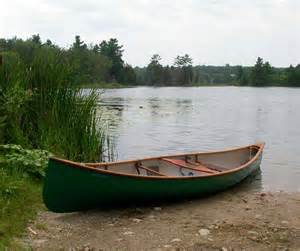
I was very good, too, about offering to “help with a few of the never-ending chores around the cottage.”  I was quick to clean up the wood-stain I spilled; I helped to re-install the screen door I accidentally walked through (the new netting had to be back-ordered); I accompanied my host in his boat to fetch a canoe that drifted away after I forgot to tie it to the dock.  The rocky shore it had washed up on scratched its painted finish, but it still floated (thankfully, since I was tasked with paddling it back).

canoe

My most heroic effort was when I dove down a number of times, unsuccessfully, trying to retrieve the small outboard motor I inadvertently dropped into the lake.  (Damn thing was heavy!)  I only stopped because I didn’t like swimming in the gasoline slick that appeared on the surface of the water—although I thought the colours were amazing!  The last I heard, the motor was finally located, recovered, and junked.

Ever determined to pointedly follow the advice from my list of ‘do’s and don’ts’, I was hurt when my hosts would decline my offer to “help with barbecuing and barbecuing duties.”  I was stunned when they would tell me not to bother to “fill the gas tanks after boating.”  And I was positively shocked when they would literally scream at me to “exercise caution when using power tools.”   They actually relieved me of the chainsaw I had fired up to cut kindling for the campfire I was planning.

The most hurtful moment came after lunch, on what turned out to be the final day of one such visit.  My hosts showed me a piece of cottage etiquette not covered by my list.  It said, “If we get to drinking on Sunday afternoon, and start insisting that you stay over until Tuesday, please remember that we don’t mean it!”

unwelcome2

Being a person of some sensitivity, as I have said, I eventually came to realize that my efforts to please my hosts were neither understood nor appreciated.  Which explains why my wife is still invited to these cottage-getaways—but for what are called girls’ weekends now—while I languish at home.

I really believe someone should revise that misbegotten list!


Diddle

“I used to diddle myself,” he said, slurping a spoonful of soup.

“Uncle Fred!” I hissed, trying to shush him, afraid diners at other tables would overhear.  “You can’t say stuff like that out loud.”

“Why not?” he said.  “I did it all the time, sometimes in front of people.  They all knew right away it was me.”

“You didn’t!” I said, horrifying visions of men’s-room madness running rampant through my brain.

“Used a scribbler,” he said.  “And a pencil.  No mo-beel phones back then, no selfers.  People used to say I should’ve been a cartoonist.”

“A scribbler?” I said.  “And a pencil?  You mean you used to doodle yourself?”

That’s what I said,” he said, sipping more soup.  “Characterchers.”

“Uncle Fred, you mean caricatures,” I said, relief washing over me.

notebook-with-pencil-clipart-5

He spoke like that all the time, so I should have been prepared.  Ask him what he had for breakfast, for instance, and he might reply, “Broached eggs, toast, and piecemeal bacon.”

When my siblings and I visited him on a Saturday, he would cook drilled cheese sandwiches for us at lunchtime.  For dinner we might have macaretti and meatballs.

He was a master, unknowingly, of the malapropism, the substitution of an incorrect word for one sounding similar—its origin from the French mal a propos, meaning not appropriate.  The English playwright, Richard Sheridan, named one of his characters Mrs. Malaprop, and imbued her speech with countless examples.

I’m not sure my uncle ever read Sheridan, but he would probably not have recognized the errors—illegible for eligible, reprehend for comprehend, malevolence for benevolence, and so many others.

Not that he was unintelligent.  It was always a pleasure to hear him hold forth on topics of interest, never ranting or railing, simply expressing well-reasoned opinions.  He loved classical music, as do I, especially the nine tympanies of Beethoven.  He was a great baseball lover, a fan initially of the New York Yankers, and then latterly of the Toronto Blue Jades.  And he was a political junkie, always eager to discuss the follies of our elected reprehensibles.

A lifelong Tory, my uncle fondly referred to two of his favourite prime ministers as Chiefenbaker and Moroney, and praised their performance in the federal parlourment.  He called the bicameral bodies the Synod and House of Commoners (although that last one might have been intentional).

Talking with and listening to him was ever an enjoyable experience, and unintentionally hilarious.  “Those are two beautiful, wee girls,” he told me one time, referring to my daughters.  “I hope they’ll grow up depreciating the simple things in life.  Like their mother.”  Even my wife laughed at that attempt at a compliment.

“Invest your money wisely,” he would admonish me on occasion.  “Plan for your future, which is all ahead of you.  Frugality and persimmony are virtues.”

He had a host of other gems, too, all of which made sense once the chuckling stopped.

“Fresh fruit and veggies will keep you regular.  You’ll never be dissipated.”

“Be respectful and polite with people you meet.  Most of ‘em are well-indentured.

“Don’t be boastful.  Self-defecation is a good thing.”

“Get some exercise every day.  Don’t let yourself become sedimentary.”

Aunt Helen was used to it, of course, rarely raising an eyebrow.  I suspect she was never quite sure if he was naturally inclined to err, or slyly having everyone on.  But either way, she wasn’t above giving it right back to him every now and then.

“What’s for dinner?” he asked one night.

“Steak and kiddley pie,” she said, deadpan.

a_meal_of_a_homemade_steak_and_kidney_pie_cg3p2658869c_th

“You mean kidney pie, Helen,” he corrected.

And without so much as a pause, she replied, “I said kiddley, diddle I?”

I miss them both.


And the Beat Goes On

Away back when, wiggling in my mother’s womb, I listened to her loving heartbeat.  In that steady, reassuring cadence, I heard the most intimate murmurings of her soul—the fears and doubts she harboured, the hopes and aspirations she nurtured.

Many of those, of course, were focused on me, her firstborn child.

Will I deliver a healthy baby?  Will I be a good mother?  Will I give him a happy, successful start to his life?  Will I make him proud of me?

She couldn’t know the answers to those questions, of course.  Not then, not yet.  But she was an extraordinary woman, my mother, and she turned her formidable mind and powerful will to the shaping of our lives together.  To make it so.

mother-and-childIn time, four more children followed, my siblings, and I hope they, too, were attuned to the musings and melodies she would have had for them.  I heard her refrains for me, echoing and resonating in that remembered, rhythmic beating of her heart, until the day she died.  Even now, whenever I’m confronted with challenges and doubts, a quiet, firm voice speaks to me from deep inside, offering care, counsel, and courage.  Her voice.

So the beat goes on.

When my two daughters were born, I strove from the beginning to insinuate myself into their wee hearts, yearning to know the singing of their souls.  I imagined I could hear it, modulated by their intrepid heartbeats, and my own soul sang back to them, every chance I got, conveying my doubts and fears, my hopes and aspirations.

Will I be here for you when you need me?  Will I make you proud of me?  Will you love me unconditionally, as I already love you?

I proudly watched as they grew from infancy to adulthood, strong, independent, and loving.  And I was humbled time and time again, realizing I was the nexus between these remarkable women, my mother and my daughters.  A biological bond, and more, I hoped—a protector, a guide, and ultimately an unabashed admirer.

My wife—a fiercely-loving mother in her own right—had as great an influence as I, perhaps greater, on our girls.  But it is I who connects them with my mother.

And now our daughters are themselves mothers—five wonderful grandchildren for Nana and me.  Their hearts beat now in harmony with the hearts of their children, their souls connect with the same passion we once shared.  I cannot know for certain, but I imagine these young mothers sing the same heart-songs, straight from the soul, that I first heard from my mother.

Will I always be your friend?  Will I live up to what you expect of me?  Will I be the mother you would have me be?

Knowing my daughters as I do, I believe they will answer those eternal questions affirmatively and beyond doubt, just as I witnessed with my mother.  For they possess the very same hearts—beating the very same rhythms for those same good reasons—forever crooning the songs of the soul I first heard in the womb.

And the beat goes on.

Trusty Sidekick

As a young boy, I loved the Saturday afternoon matinees at our neighbourhood movie theatre.  Whenever I could earn or scrounge the twenty-five cents needed for admission, popcorn, and a soft drink, I’d be there, wide-eyed in the dark, lost for a couple of hours in the fantasies played out before me.

The matinees usually consisted of a serialized short, with a cliff-hanger at the end of every episode, a cartoon, and a main feature.  At some point along the way, all but the serials began to appear in colour.  Imagine!

My favourites were westerns—cowboys and Indians, as we thought of them in those innocent, bygone days—and I quickly developed a fondness for the rugged heroes who rode the purple sage.

In the early fifties, my parents acquired a television, black and white, of course, and Saturday mornings after breakfast became prime viewing time.  With a lineup of westerns and cartoons, it was almost as good as being at the movies.  I still remember my parents turning the TV off if I was still in my pyjamas, or if my bed wasn’t made, when I settled on the carpet to watch.

It wasn’t long ‘til I realized that every cowboy hero had a trusty sidekick.  And years before I became aware of such concepts as racism or ageism, those sidekicks were men of diverse ethnicity, many of them old enough to be grandfathers.  With perhaps one exception, there were no women.

cowboy pic

The Lone Ranger, my ultimate hero, had Tonto, an American Indian.  Hopalong Cassidy had ‘California’ Carlson, a bewhiskered, bowlegged geezer.  And the Cisco Kid had Pancho, both Hispanics with huge sombreros.

There were others, as well.  Gene Autry, with ‘Smiley’ Burnett, and later Pat Buttram; ‘Wild Bill’ Hickok, with ‘Jingles’ P. Jones; and Roy Rogers, with ‘Gabby’ Hayes, and later Pat Brady.  Rogers, the self-styled ‘King of the Cowboys’, also had the only female sidekick, Dale Evans (who, off-screen, was his wife).

The heroes were always the stars of their movies and TV shows, of course, while the sidekicks played supporting roles.  And for a long time, I—being impressionable and loving attention—imagined I was the star in a real-life ‘movie’ of my own, assuming all around me were my supporting actors.  Parents, siblings, friends—all trusty sidekicks, playing out their backup roles.

It never occurred to me back then that others might not feel the same way.  For a long time, I didn’t perceive myself as a supporting actor in someone else’s story.  Egocentricity, I learned years later, is one of the stages children pass through on their way to maturity; but apparently, I took my own sweet time on that journey.  I was blessed, I now realize, with family and friends who either didn’t care about my delusions of greatness, or simply tolerated my selfish illusions out of the goodness of their hearts.

Eventually, the truth dawned that it was a fallacy to suppose I was the lead actor in everyone else’s movies.  I came to realize that all of them were, legitimately, the stars of their own stories, and I, at best, a trusty sidekick—or, in some cases, merely a bit-player.

Getting married firmly cemented that truth for me, and becoming a father further reinforced it.  I came to know the importance of being there for those dear to me, in effect earning their support in return, rather than just expecting it.

My lingering love of movies has me glued every year to telecasts of the Academy Awards, when the year’s best performances and productions are honoured by the industry.  Oscars for Best Actor and Best Actress seemed to me the most coveted prizes when I first began to tune in.  But my perception has shifted over the years.

My grandchildren, five in all, are leading rich, exciting lives as they move from childhood to adolescence, discovering all life has to offer.  They love me, and I them, but I’m hardly relevant anymore to their everyday experiences.

My daughters are mature, liberated women, pursuing rewarding careers alongside their husbands.  They love me, too, but I orbit their stars now, not the reverse.

And my wife?  Well, she remains the epitome of an autonomous woman—secure enough to keep seeking new adventures, caring enough to reach a hand back for me, her trusty sidekick.

That egocentric world I once carelessly inhabited is gone forever.  At a point now where I have more yesterdays than tomorrows, I find security and an abiding comfort in being part of the cast in my loved-ones’ life-movies.

And I wonder how different a world we might have if every person on the planet—regardless of race, gender, religious belief, sexual orientation, political leaning—could win an award as Best Supporting Actor, or Best Supporting Actress, in the lives of everyone around them.

That’s an Oscar I would happily accept!

Oscar pic

Tracks in the Sand

One long-ago February, when winter’s white enveloped the north, one of our daughters came with her family to visit us in Florida.  The favourite activity for our grandson and granddaughter (the third of the clan being still an infant, unable to express her opinion) was going to the ocean, to the beach.

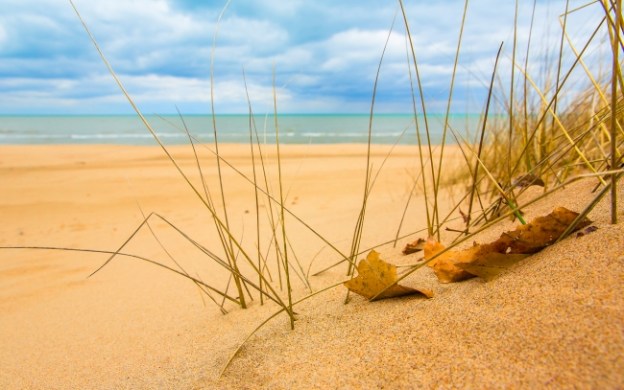
Our usual routines were fairly standard.  We’d park and unpack the car, each of us carrying the beach necessities according to our age and abilities.  We’d trudge the access path, through the dunes adorned with sea oats, pass through the rickety snow fence, and pick a spot that suited us all.

In short order, the umbrellas would be unfurled, the chairs unfolded, the blankets spread, and the toys strewn across the sand.  Peace would reign for Nana and Grandpa, watching the sleeping baby while her parents and older siblings hit the water.

beach-sand-grass-sunshine_tn2

On one such occasion, a small incident occurred which didn’t have much significance at the time.  In retrospect, however, it has become quite meaningful for me.

My daughter, my wife, and I embarked on a walk along the beach after the kids had finished splashing in the ocean.  Their dad stayed with them, helping build grand castles in the sand.

We decided to hike through the dunes on the way out, and come back along the shoreline.  I led off, sinking ankle-deep into the soft sand, feet clad in sandals to protect from the heat and the sandspurs.  After a few minutes, we came upon tracks in the sand, apparently made by some small creature, perhaps a mole.

What made the discovery unusual was that they suddenly stopped in a small depression in the sand, as if the mole had simply vanished.  The tracks ended without a trace.

My daughter suggested what might have happened.  The mole, she reckoned, had been taken by a predator, likely one of the falcons that frequent the area.  Indeed, on closer inspection, we could detect brush-marks in the sand, caused by the beating of a bird’s powerful wings.

We wended our way slowly, backtracking along the poor victim’s trail.  It occurred to me that, a scant few yards before the depression in the sand, the mole would have had no inkling it was about to die.  It was alive until it wasn’t.

Apparently, though, it knew it was under attack, for we found another, earlier depression in the sand where the bird had struck unsuccessfully.  The mole had jumped sideways, scurried under the protection of some sea-oats, then emerged again to flee along the sand.

Our backtracking ended when the trail curled away from the beach, into dense, long grasses, whence the mole had come.  We soon forgot about it as we continued our stroll, eventually heading back along the water’s edge to our grandchildren.

A few days later, I chanced to hear someone on the radio airily proclaiming that, if we all discovered the world was to end tomorrow, telephone lines everywhere would be jammed by people calling home to say all those things they had forgotten to say while there was still time.  Social media sites on the internet would crash from the traffic.  It made me think again of the mole whose tracks we had seen in the sand.

When it left its burrow for that final time, did it have its life in order?  Had it said all those things that matter to those who matter?  Or were there things it had left undone that should have been looked to sooner?

And I thought of myself.  Does my journey through life leave tracks in the sand for some other eye to see?  Am I subject to a mortal strike from some hidden foe?  And if, or when, it happens, am I prepared and at peace with those who care about me?

When I got right down to it, I didn’t see much difference between that mole and me.  Except one.  I’m still making tracks in the sand.  I still have time to ready myself for whatever is to come, and to be at peace with all who matter.

Such are the thoughts that arose as a result of a stroll along a sunny beach in Florida.

Mothers’ Day Again

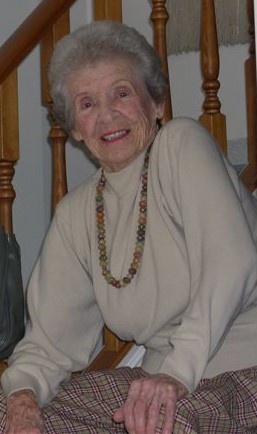
Another Mothers’ Day has passed, the sixth since my own mother passed away.  The living mothers in my family number nineteen in all: my wife, two daughters, three sisters, two sisters-in-law, ten nieces, and one grand-niece.  All were recognized and honoured by their children, many on social media, and it was lovely to witness.

But I still miss being able to pay homage to my own mother each year—to hear her voice, see her smile, smell her perfume; and mostly, to feel her arms around me.  We knew each other for sixty-seven years, with nary a breach in the trust and love we shared, and my world is emptier without her.

On her ninetieth birthday, four years before she died, I wrote this poem to convey what she had meant to me for so long.  I likened her to a tree that sheltered me until I dared to strike out on my own, and even thereafter.

At the time, I thought I had written it for her; but now, I suspect, I wrote it for me.


Mum April 04

My Tree

For ninety years and more, my tree has spread her boughs across my yard,

Festooned with leaves providing shade, standing tall and proud, on guard.

When I was young, and climbed up high into my tree, carefree and fleet,

Her branches hugged me safe and close, held fast my hands, secured my feet.

As I grew braver, I would stray beyond the fence that kept me in.

But at day’s end, I’d rush back home to settle ‘neath my tree again.

Her boughs would gently bend and blow about my head, and whisper soft,

And tell me of the wide world they had seen from high aloft.

Sometimes she’d bend, tossed by storms that raged around us, blowing fierce,

Yet, ne’er a storm could match her strength, nor through her loving shelter pierce.

Then, all too quickly, I was gone to seek a new yard, far away.

Yet always I’d return to hug my tree, and feel her gentle sway.

Too big by then to climb once more her branches, high o’erhead,

I still found comfort there, among the fallen leaves my tree had shed.

 ~  ~  ~  ~  ~

Past ninety years, yet still she stands, her canopy now drooping low,

Creaking, bending, in the winds that shake her branches, to and fro.

As spring and summer fast have fled, and fall has turned her leaves to gold,

My tree displays a majesty that can be neither bought, nor sold.

And I’ll remember all my days her love, like ripples in a pond,

Because I’m sheltered now by younger trees—the seeds she spawned.

For ninety years and more, my tree has spread her loving boughs each day

Above my head, to nurture me, and gently send me on my way.

Life and Death

Just what is it that makes life worth living, anyway?  Is there a universal, one-size-fits-all answer, or is the answer situational, dependent upon the circumstances in which we each find ourselves?

And what might that answer be?  Is it happiness?  Good health?  Sex?  Wealth?  Perhaps the ultimate aphrodisiac, power?  Or some combination of these?

The existentialists among us might claim the answer is personal fulfilment, harmony with the world around us, inner peace.  Alone though we are, they might say, we are nevertheless connected to others, but on our own terms.

The religious among us might declare life’s significance arises from a meaningful relationship with one’s creator, in whatever form that creator might be rendered.  At this point in time, however, they seem unable to reconcile their competing visions with everyone else’s.

The afflicted and dispossessed peoples of the world might proclaim that life, being an endless procession of hunger, thirst, and terror, is not worth living at all.  And who is any of us, never having experienced their realities, to disagree?

But let us suppose, cheerfully, that everyone we know has found ample reason to live, to carry on, to survive.  In the face, sometimes, of personal tragedy, severe illness, serious setbacks of whatever ilk, they have persevered, even prospered, and gladly proclaim life to be the greatest gift of all.  They are, from all appearances, joyful, optimistic, and strong.

I recognize myself among this happy crew.  Wanting for none of the necessities of life, surrounded by family who love me, blessed with friends who are supportive and caring, I rise each day with a positive outlook, sure this blissful state will continue for years to come.  To state the obvious, life is to be lived.

So what do I make of the current debate swirling around us about a person’s right to an assisted death when the time comes?  How do I square my belief in the meaning of life with a possible wish to end that life at some point?  Are these two concepts even compatible?

For me, it comes down to a fundamental, primal instinct that life exists beyond this earthly planet we inhabit.  The vast universe in which we float is, itself, alive—a pulsating burst of energy, ever-expanding, interminably large.  And an infinitely small fragment of that energy, in whatever form it manifests itself, is what powers life in me.  It is my life-source.  Some, more religious than I, might call it a soul.

So when my time is up, as surely it will be someday, I take it as an article of faith that my spark of life will rejoin the universe from which it sprang—still alive, still burning, but in a vastly different form.

universe1

Comforted by this belief, I do not fear death’s inevitability.  I do, however, harbour apprehensions about the manner in which that death might transpire.  Having been blessed, so far, to live a life worth living, I have no wish to spend whatever number of months or years in a diminished state, waiting helplessly for my life-source to reattach itself to that whence it came.

Perhaps I shall die suddenly one fine day.  Here one moment, gone in the next instant, no assistance required.  Still alive in the universe, to be sure, but departed from this realm.  I’d be happy about that—but not too soon, of course.

Lingering on, however, past the stage where my mortal coil can function properly, holds no attraction.  So I have come to the conclusion that I should be allowed and empowered to facilitate the escape of my spark of life from my failing body, and set it once again on its eternal journey in the universe.

The true meaning of life for me, it turns out, is the power, not to end it, but to release it from a failing, earthly body—freeing it to roam, as the poet, W. B. Yeats, once wrote, “…among a cloud of stars.”