Making Friends

Almost a half-century ago, an older colleague advised me to surround myself with friends who were, not only my age, but younger and older, as well. “With friends your age and younger, you’ll be sharing memories you’ve made together while still able to create new ones. And when you make friends with older people, you’ll learn a lot from their sharing with you the experiences they’ve had.” He didn’t tell me one is silver, the other gold, but I got the drift.

His advice made a lot of sense to me, and to this day, my wife and I can claim friends who are in their nineties and others in their twenties. “You never want to see older friends die,” my colleague said, “but they will. And when that happens, you’ll find solace in the company of the younger ones.”

 That same colleague also told me, tongue-in-cheek, “I don’t need to make more friends. I have trouble keeping up with the friends I already have!”

I didn’t get it at the time, but nearly fifty years on, I better understand what he was saying. We have many friends we barely get to see anymore, given the obligations we all have, the distance we live away from each other, and the vicissitudes of getting older. If it weren’t for social media, I doubt we’d even be in touch with some of them. It’s not that we don’t consider them friends anymore; rather, it’s an inability to keep up.

I first met the friend I’ve known longest when we were fifteen, and sixty-seven years later, that friendship endures. But we see each other in person only two or three times a year now, and even those few meetings seem to require a good deal of advance planning. Moreover, there’s always the chance that one or other of us will have to cancel because of unexpected illness.

I remember my mother in her later years, living longer than my father and most of her friends. Near the end, there was but one longtime friend left, and their children would drive them to an afternoon get-together. Eventually, though, even that proved impossible, and they were reduced to talking by phone—a poor substitute. I dread that day’s arrival for me and my friend.

On a brighter note, my wife and I have acquired five new adult friends over the past half-dozen years. Our five grandchildren have all attained the age of majority now, and are attending university or, having graduated, are working full-time. They all live away from home—two from our eldest daughter and her husband, three from our youngest and hers—but close enough to us that we see them frequently on holidays and family occasions.
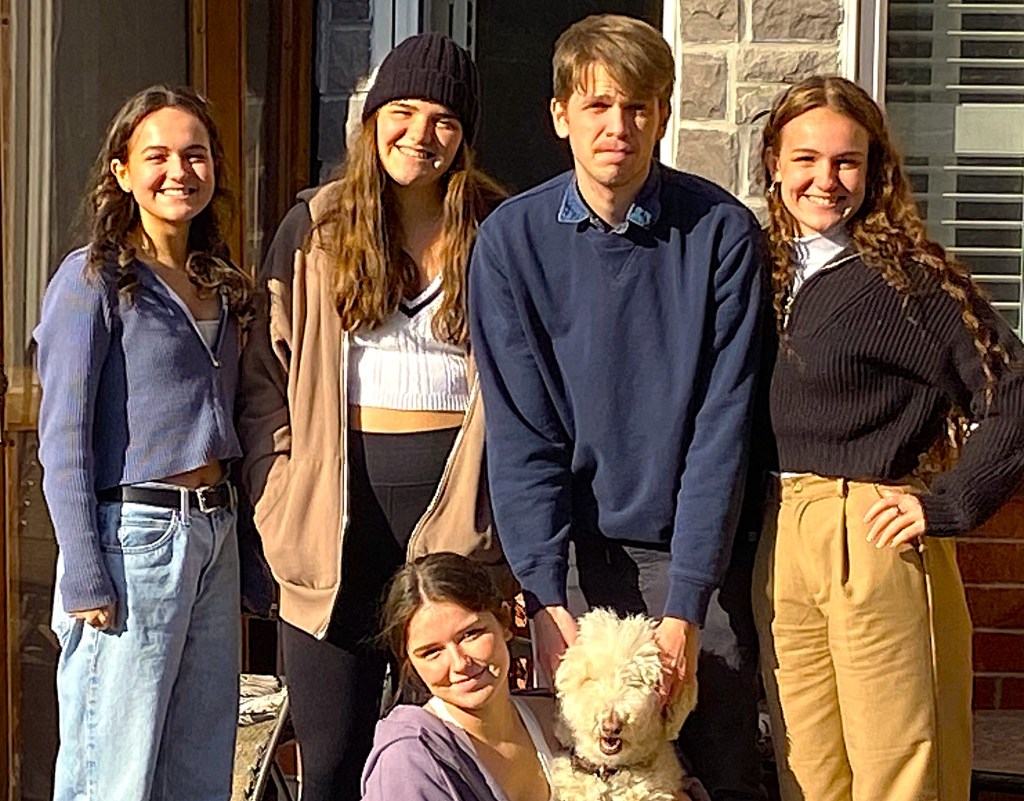
When they were children, we interacted with them lovingly, but with the slightly patronizing manner typical of conversations between elders who’ve seen and done it all and youngsters who are still finding their way. We never spoke to them in ‘baby-talk’, always recognized their unique intellect and agency, and considered them, not friends, but beloved grandchildren. And they regarded us, I think, as loving grandparents.

It’s different now, though. They’re still beloved by us, of course, and we by them; nothing could change that. But as they’ve grown into adulthood, they’ve become friends, not just grandkids. They’ve developed their own sets of values—thankfully, not identical to ours, nor to each other’s, but not in contradiction, either. They have their own viewpoints on issues facing them, and feel free to discuss those with us. They no longer accept everything we say as gospel, but they’re polite in their disagreements. And they back up their points of view with rational thought.

No longer are they participants in our world; instead, we have become participants in theirs.

As a young teacher, I remember cautioning parents of my students that, by helping children learn to think critically, we must accept the likelihood that they’ll think differently than we do about many things. It’s a delight now to find that is the case with our grandchildren. And a greater delight that it’s given us so much to talk about.

Three of them have come to visit us in Florida during the past year or so, all with boyfriends. So, we’ve been included in their conversations with each other, heard what they think about goings-on in the world, which has opened up new avenues of perspective for us. We’ve listened to their music, and they to ours. We’ve gone with them to the beach, to the mall, to restaurants, to the pool—all things we used to do with our older friends in years gone by.

When my colleague first told me the wisdom of cultivating friends of all ages, I confess I never anticipated some of those would be our grandchildren. But so it has turned out, and we are blessed.

As the familiar ditty advises, Make new friends, but keep the old…

Makin’ It Up!

Here is a poem from my latest anthology of prose and poetry, a collection of more than forty whimsical and topical essays and poems I’ve written as a member of the Pelican Pens writers’ group in South Florida.

Just released today, the book is entitled—

Makin’ It Up As I Go! Tales of a Flagrant Fabulist

It Just Isn’t Fair!
[prompt: the unfairness of life]

“It’s not fair!” I declare, disgruntled and mad,
“Why’s everything good now thought to be bad?
I’m angry about it, but what can I do?
How can I hang on to what I once knew?

“Why doesn’t Santa Claus still come to town,
With his reindeer and elves and fat belly round?
What’s wrong with allowing this old man to think
That he’ll bring me my toys, then be gone in a blink?

“And where’s the tooth fairy, who came in the night
To check ‘neath my pillow, but stayed out of sight,
And left a wee gift in exchange for my tooth?
Why doesn’t she come, now that I’m not a youth?

“What’s happened to Cupid, the elf with the bow
And his love-dipped arrows all ready to go?
Oh, where is he now each Valentines Day?
Did someone nefarious take him away?

“And how ‘bout the bunny with powerful legs
Who came every Easter with my favourite eggs?
It’s like he’s been cancelled by somebody vile,
For I haven’t seen him in such a long while.

“And whence the wee people, their shamrocks so green,
Hiding their gold in pots all unseen
At the end of the rainbows, their colours agleam?
Are leprechauns now nothing more than a dream?

“And last but not least, the sandman so wise,
Who came every night to shut down my eyes,
Is no longer part of my oft-sleepless night.
Have they taken him, too, out of sheer spite?

“It’s not fair!” I exclaim, both sad and chagrined,
“That somebody somewhere chose to rescind
My wonderful friends of childhood back there.
I hate it!” I cry. “It just isn’t fair!”

The book is available for purchase at this safe website—

https://www.lulu.com/spotlight/precept

Alone Again!

[NOTE: IF THIS COMPLETE BLOG-POST LIES IN THE BODY OF AN EMAIL, CLICK ON THE TITLE TO READ IT IN ITS NATURAL ENVIRONMENT ON MY BLOG-SITE. IF ONLY A LINK IS PROVIDED IN THE EMAIL, CLICK ON THAT.]

Have you ever found yourself absolutely alone in a crowded room—at a family gathering, perhaps, or a business function, a party with friends, a community meeting?  It would seem hard to accomplish that when one is surrounded by so many people, but I manage it all the time.

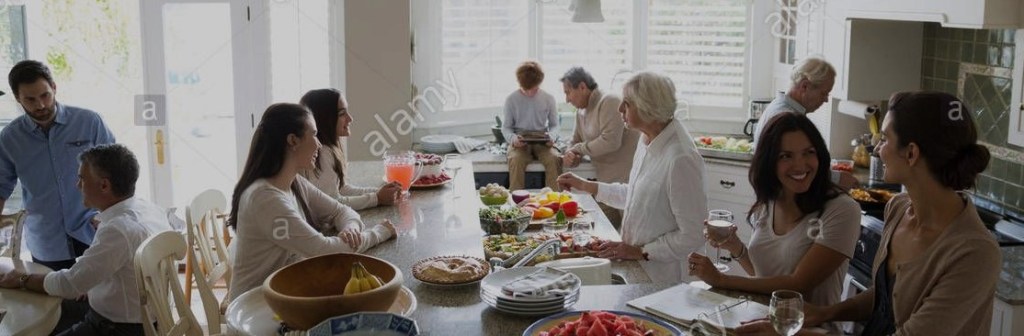
At a recent Mothers Day gathering with my two daughters, their husbands, my five grandchildren, two of their boyfriends, and my wife all in attendance, conversations were animated, exuberant, and loud.  I know, because there I was, perched on a stool around the large island in the middle of the kitchen (always our family’s favourite gathering place), surrounded by this multitude, yet strangely not involved in any of the conversations.  Nursing a glass of wine, I found myself eavesdropping on each different group in turn, quite interested in the latest news they all were sharing with one another about their work and school activities, yet not contributing a word myself.

But this is not a new phenomenon.  In fact, having become almost invisible on so many such occasions, I’m rarely even asked to contribute.

Over the years, I’ve often wondered if I’m naturally introverted, or maybe anti-social by nature.  From time to time, I’ve questioned my conversational skills or lack thereof.  I’ve even fallen prey every now and then to doubting my innate charm and charisma, and I’ve worried that perhaps no one holds me in high esteem.

Too many times, it seems, I’m at a restaurant with three or four couples, and I look up from my soup to find myself alone at our table.  I wonder if the others might be at the salad bar or in the washroom, perhaps—but all of them?  At the same time?

Or I might be at a dance, ten of us sharing a table, and I suddenly realize I’m sitting by myself again, while the others are up dancing or table-hopping.

The tedious jokes flow at these moments, naturally.  Seeing me alone, someone will ask in a loud voice if I’m dining tonight with all my friends.  Or someone will wonder if I said something to offend everyone in my party.

The problem is, I’ve never had an answer.

What I do know, however, is that I’m not one to blithely accept blame for my own perceived shortcomings.  I am a loving and capable person, after all—or so I want to believe—and I have choices.  For example, if people are ignoring me—or worse, don’t even realize I’m present—I can choose to consider it a flaw on their part, not mine.  The problem with that approach, however, is that many of them are people I love and admire, so it’s difficult to malign them, even secretly.

A better choice, I’ve discovered, is to adopt the stance that I am freely choosing to be alone in these various situations.  I’m doing it on purpose.  And why?  Well, because I’m a writer of fiction, and it’s a well-established fact that, to be effective, writers like me, who make stuff up, have to be keen observers of human nature.  After all, if we’re going to create believable characters out of whole cloth in our stories, we absolutely must possess a keen sense of what makes people tick in real life.  And the best way to do that, I’ve convinced myself, is by observing those around me, listening to them, getting a feel for them through what they do and what they say.

Interacting with people, I believe, is not good because I will inevitably corrupt the essence of who they are through my own conversational filters.  But by choosing to stand back, remaining aloof, I am better able to ascertain who they really are in their daily interactions.  They remain unblemished by any preconceived notions I might apply to them, and it is those untarnished attributes I will then bring to the creation of my own fictional characters, thereby improving the quality of my writing.

Or so I tell myself.

Nevertheless, I confess to a lingering and puzzling disappointment whenever I find myself alone again in large groups.  Recently, on the advice of someone I trust, I arranged to see a therapist renowned for helping folks like me.  My first appointment was yesterday, but to my surprise, it was a group-session—not something I had counted on.  After fetching the obligatory coffee, I took a seat in the circle and listened as each person in turn explained why he or she was there, what their last week had been like, how the others in their lives continued to let them down…and so forth and so on.  I found it fascinating, and was soon busy tapping notes surreptitiously into my phone.  I wasn’t sure that was allowed, but happily, no one seemed to notice what I was doing.

After an hour or so, I was fully-engrossed in reading over these notes, optimistic that I’d uncovered a gold-mine of observations I could use back at my writing-desk.  I looked up, eager to listen to whoever was next, and…well, you can probably imagine my shock when I discovered I was alone in the room.  The session had ended, the circle was broken, and no one had asked to hear from me.

Not knowing whether to laugh or cry, I chose the former.  These therapy sessions, I told myself, were going to prove a treasure-trove of inspiration for my writing.  And best of all, I was going to be able to gather whatever information I wanted with no one even knowing.  As in so many other instances, I was virtually invisible in the group.

No wonder I’m such a good writer!

Alone again! 

‘Til It’s Gone

Since the turn of the century, my wife and I have been blessed to spend six months a year in Florida.  During that period, we’ve lived under four American presidents—George W. Bush, Barack Obama, Donald Trump, and Joe Biden.

In that same timeframe in Canada, we’ve lived under four prime ministers—Jean Chretien, Paul Martin, Stephen Harper, and Justin Trudeau.

In Florida, we’ve made dozens of friends over that period, both fellow-Canadians and Americans, most of them snowbirds like us.  Given the constraints of time and distance, and the vicissitudes of age, we no longer see many of them as often as once we did, alas; but we have never stopped considering them friends.

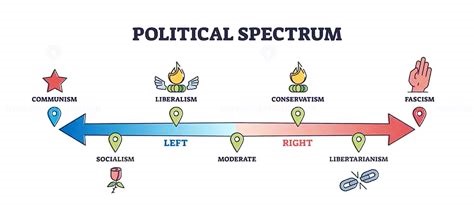
The majority, not all, are similar to us in the ideas we espouse, the values we cherish.  My wife and I consider ourselves socially progressive, left-leaning, but close to the centre—more Liberal than PC in Canadian political terms, more Democrat than GOP in the American context.  We instinctively distrust the fringe elements at both ends of the spectrum.

Some of our friends, though, are not so like-minded, being decidedly more right-of-centre than we.  With them we generally avoid politically-fraught conversations, preferring amity and camaraderie to confrontation and unpleasantness.  And it is indisputably true that all of them, regardless of viewpoint, are generous and kind in their dealings with us.

In the wider context, however—especially in the USA, but also in Canada to a lesser extent—we are currently witnessing an increasing divergence of opinion across social and political lines, accompanied by mistrust and hostility on both sides.  Socially, the divergence is epitomized by the divide between the privileged few at the top of the socio-economic ladder and the huddled masses near the bottom.  Politically, it is portrayed as the struggle between radical leftists (vilified by their foes as socialists) and ultra-right zealots (pilloried by their foes as fascists).

I must confess, my own political leanings are more socialist than fascist, more democratic than autocratic.

The struggle plays out across a large number of issues, a small sample of which includes: racism; LGBTQ2S+trans rights; reproductive rights; healthcare; voting rights; climate change; role and size of government; and religion.  It is the first and last on this list that I deem most problematic in both countries.

Racism is a persistent concern.  For many people in the USA, slavery is the unforgivable sin, the ineradicable stain on the national fabric, a transgression for which amends and restitution must be made.  For some, it is a part of history best left forgotten, as if all is right with the world—see no evil, hear no evil, speak no evil.  With good will on both sides, however, these two groups could likely find common ground at some point. 

But for others, a minority but a vocal one in both countries, racism remains a part of their ethos to this day—a deliberate allegiance to the notion of white supremacy.  There is a great fear among such folk that they are being dispossessed of their rightful place, that their privilege is being taken from them.  And they decry immigration policies that, in their opinion, indiscriminately admit people of colour.

Many of these people—perhaps too many—turn to demagogues to promote their cause, and those demagogues shamelessly court them to advance their own objectives.

Religion is another major problem.  The separation of church and state, the partition between religious and civil authority, is a fundamental tenet in the governance of both the USA and Canada.  Whether founded as democratic republic or parliamentary democracy, neither nation was envisaged by its founders to be a theocracy, ruled (or unduly influenced) by religious leaders.

Iran is a theocracy, as are Afghanistan, Saudi Arabia, Yemen, even Vatican City.  But neither the USA nor Canada was intended to be one.

Yet today, in both countries, an ugly, religious fundamentalism has reared its head—a fundamentalism of a warped Christian persuasion, a fundamentalism, it must be said, distant from the teachings of the Christ regarding love, tolerance, repentance, forgiveness, and peace—all of which, mind you, are universal tenets found in the gospels of other major religions.   

This fundamentalism preaches adherence to a narrow interpretation of biblical scripture, and seems (at least to this man) unduly restrictive of the rights of women.  It is as if a pseudo-godly Godzilla has arisen to guide us to the Gilead foreseen by Margaret Atwood.  I see the movement as an obscene fundamentalism that, in the words of the poet William Butler Yeats, slouches towards Bethlehem to be born.

I do not, of course, deny the freedom enjoyed by citizens of either country to freely practice their religions of choice, whether Christian or otherwise; I do, however, strongly decry all attempts by any group to foist their beliefs upon others for whom those beliefs do not apply.

And I do not for one moment believe that such religious fundamentalism should have any role at all in the governance of either of the countries in which I reside.  But whether or not that will come to pass depends upon us.

In 2016, in the American presidential election, a large number of voters declined to cast a ballot.  Whether that was through ignorance, through a belief their one vote would not make a difference, or because of a visceral, irrational hatred of Hillary Clinton, I do not know.  Perhaps all of the above.  But I do know what resulted from that election.  And I do fear what might happen again in 2024 if ignorance, apathy, and hatred govern people’s actions.

Likewise in Canada, I fear ignorance, a belief one vote will not make a difference, or a visceral, irrational hatred of our current PM will yield a similar, catastrophic result in 2025.

Martin Luther King, Jr. said in one of his speeches, the arc of the moral universe is long, but it bends toward justice.  It is up to each of us, I suppose, to determine what constitutes justice and where it might best be found, both socially and politically.  But whatever it is, and wherever it is, I believe it is forward, not backward; upward, not downward; toward the light, not into the darkness.

As Joni Mitchell famously sang, …don’t it always seem to go that you don’t know what you’ve got ‘til it’s gone!

I Have Never

I am a straight, white, elderly, married man.  In all my years, I have never had a friend who is anti-Semitic.  I have never had a friend who is racist or homophobic.  Nor have I ever had a friend who is misogynistic or xenophobic.

In all my life, I have never had a friend who is regressive or punitive.  I have never had a friend who is a bully or cruel.  Nor have I ever had a friend who is narcissistic or egomaniacal.

From time to time, I’ve encountered people who exhibit some of these attributes, of course, but I’ve always and quickly exiled myself from their presence.  Except when I’ve had no recourse, I have steadfastly abjured their company.

Throughout my life, I have had friends who are religious—and from several faiths—or atheist, even agnostic.  I have had friends who espouse differing political sentiments than I, but never aggressively so.  I have had friends with points of view different from mine on such issues as pro-life/pro-choice, gender equity, capitalism/socialism, green energy, global warming, pandemic mitigations, famine, warfare/diplomacy, the likelihood of life eternal after death, and more besides.

I have even had friends who disagree with me about my lifelong support of the Toronto Maple Leafs hockey team, for goodness sake!

But never have such disagreements interfered with our friendship because those I consider friends have at no time lowered themselves to crude, ignorant, or abusive rhetoric and behaviour in our discussions and encounters.  Nor have they ever resorted to violence to advance their views.

Rather, they have relied on logic, facts, and persuasion to win the day—as I have always tried (sometimes unsuccessfully) to do.

That’s less easy today, though, because of a problem we face with our global society—the unprecedented proliferation of supposed facts presented across the wide range of media outlets available to us.  Some of these deliberately masquerade as the truth, which promotes confusion and conflict—forcing us to question what is information, what is misinformation, what is disinformation—and as a result, to begin to query our own values and principles.  Critical thinking skills have never been more crucial, it seems to me—and in many quarters, alas, more lacking.

Healthy skepticism has always been a positive thing, I think, a part of those very critical thinking skills.  But noxious skepticism, knowingly force-fed to a naïve public by pernicious purveyors of media in pursuit of their own, oft-malign agendas, has the effect of reducing the level of societal discourse to the lowest common denominator.  Loud, vituperative, violent acts against each other and our governing bodies are increasingly the result.

In any free society founded on the people’s faith that their government will act in the public interest, such discord cannot be good.  Because when the public loses faith in our civil institutions, those institutions will crumble from within.  And they will take down with them the very foundations upon which they have been built and thrived—citizens’ rights and responsibilities, the rule of law, equality of opportunity for all.

There is little doubt that, as a collective, we could do a better job of acknowledging our responsibilities (rather than just demanding our rights), and of ensuring equality of opportunity for the dispossessed and marginalized among us.  But lacklustre performance aside, the bedrock values are legitimate.

In recent times, unfortunately, I have seen people elected to public office— ostensibly to serve the citizenry—speak and behave in ways that are definitely anti-Semitic, racist, homophobic, misogynistic, xenophobic, regressive, punitive, cruel, and narcissistic.  I have witnessed their acolytes and followers, to no one’s surprise, then ape them.  And they are all doing so—increasingly, it seems—in more extreme language and deed. 

Disturbingly, I no longer believe I can respectfully disagree with those folks about their points of view, as should be the norm in any democracy; instead, I fear I would be shouted down, verbally abused, perhaps physically attacked.

Such people are not my friends.  Nor, in my opinion, should they be yours.  We should be electing and supporting the very best from among us, not the opportunists, grifters, and self-seekers.  But to do that, we must bestir ourselves and, at the very least, engage in the process and cast our votes on election days.

Plato wrote, The heaviest penalty for refusing to engage…is to be ruled by someone inferior to yourself.

I have never wanted that.

A Party? No Thanks!

Another birthday, the eightieth since my actual day of birth, is looming.

If I have my way, there will be no party celebrations to mark the occasion—no gathering of friends, no gifts, and most mercifully, no public rendition of that ubiquitous birthday song by a bored, yet dutiful, cadre of restaurant servers.  Rather, the occasion will be marked by a fond embrace from the one who has been alongside for all but the first twenty of those eighty anniversaries.

For me, the party tradition has gone on too long.  It’s not only over now, it’s overrated.

The last big celebration I remember was on my twenty-first birthday, when my parents planned a party to honour the passage of their firstborn from boyhood to manhood—as if it had happened all at once on that given day. 

In 1802, Wordsworth memorably observed, The child is father of the man…, and so it has always seemed to me.  But truth be told, in all the years spent being a man since then, I don’t believe I ever left the boy behind.  He lurks behind the adult mask, only rarely emerging, as though fearing he’s no longer welcome.  But I still search him out sometimes, if only to reassure him.

I don’t really remember that twenty-first birthday party, of course, it having occurred almost sixty years ago.  But I do have photographs to remind me of the momentous occasion—washed-out Kodachromes of people who meant the most to me back then—some gone now to their spiritual reward, others, like me, to lingering adulthood.

My mother and dad grace several of the photos, beaming with parental pride (I’ve always chosen to assume), both of them decades younger than I am now.  How can that be, I wonder, and where did those years go? 

My siblings—a brother and three sisters—all stand with me in other pictures, our arms around each other, full of that relentless, youthful optimism that has not yet encountered the eroding onslaught of time.  It did assail us eventually, of course, but so far, all but my brother have survived.

A couple of close friends were present at that party, too, both mere weeks older than I, and eminently wiser (or so I imagined, given their earlier entry into manhood).  Both remain  fast and true friends to this day—and they, too, like me now, have reached the end of their eighth decade.  Imagine!

Most dear of all in those faded photos is my high school sweetheart, smiling happily, if a tad uncertainly, still getting to know the large, somewhat strange family whose son she was keeping company with. 

On that day, we were still two years removed from the moment when she would accept my offer of marriage, and she, I’m sure, had no idea right then that such a fate awaited her. Even I, it must be said, had only begun to suspect she might be the one. That longed-for wisdom prevailed, I suppose.

Anyway, that’s the last big celebration I recall.  There have been many so-called milestone birthdays along the way—the thirtieth (Never trust anyone over thirty!), the fortieth (Forty is the new thirty!), the fiftieth and sixtieth (the golden years, so dubbed by those who couldn’t avoid them), and even the seventieth (entry point to the last of the three stages of life: youth, adulthood, and You’re Lookin’ Good!). 

But the milestone birthdays never impacted momentously on me.  Each was just one more marker in a so-far-endless progression of years, gratefully attained, yet no more important than any of the others.

Among the most special greetings I receive on every birthday are those from my two daughters, both of whom endearingly insist that I’m not old, I look terrific, and I’m every bit as good as I once was.

“Hmm,” I tell them, “maybe I’m as good once as I ever was!”

For the past twenty-one years, I’ve been further blessed to hear from a younger set, my grandchildren, five in number now, who cannot for the life of them understand why there won’t be a big party on my special day, with balloons, and cake, and lots of presents.  Not to mention the goodie-bags they used to get at their friends’ birthday parties when they were younger.

“Don’t you like parties, Gramps?” one of my granddaughters once asked.

“Don’t you have any friends, Grandpa?” my grandson chimed in.

But I always told them I’ve had more birthdays than I have friends and family combined, and that on my birthday, I’m more than content just to have my grandchildren loving me.

“Oh, we love you, Gramps,” they affirm.  “But grown-up goodie-bags might still be a good idea, y’know.”

I do know.  My goodie-bag has been overflowing for eighty years.

Get the Message?

“So, lemme get this straight,” my companion says.  “If your phone rings, doesn’t matter where you are, you don’t answer it?  Not even if you know who it is?”

“Right,” I reply, “most of the time, anyway.  Unless it’s my wife or kids, or grandkids.  For them, I always answer.”

We’re walking along the lakefront on a sunny late-afternoon, enjoying the scenery, the other strollers, the kids flashing by on bikes and scooters, the sailboats out on the water.  A light breeze keeps us comfortable enough in the heat.

“So, what if it’s an emergency?” my friend asks.

“I figure whoever it is will call right back,” I say, “or leave a voicemail message.  Robocalls don’t do that, but people calling in an emergency will.  If nobody answers a bot’s call, it just moves on to the next random number.”

“You always check your voicemail?”

“I do,” I say.  “Maybe not immediately after the call, but frequently enough.”

“What if it’s a relative or close friend?”

“Same drill,” I tell him.  “I mean, I may choose to answer, but it depends on what I’m doing at the time.  I figure the phone is my servant, not the other way around.  It’s a tool that does its thing when I say so, but I don’t jump to its bidding.”

“Yeah, but it’s not the phone demanding your attention,” my companion protests.  “It could be a friend!”

“That’s right,” I nod.  “But if another friend called me right now, I wouldn’t ignore you to answer the call.  Why should you play second-fiddle when you’re right here with me?”

“Yeah, I can see that,” he concedes, before adding, “So, I imagine you never answer unknown callers, either.”

“Right.  Same logic.  But if they leave a message, I’ll soon know if I need to return the call or just forget about it.”

“Seems like an imperious attitude to me,” my companion says.  “What if everybody did that to you when you’re calling them?  How’d you like it?”

“Actually,” I say, “I wouldn’t mind.  Far as I’m concerned, it works the same both ways.  If my reason for calling is urgent, I’ll leave a voicemail message.  If it’s an emergency, I’ll still do that, but I’ll also keep calling—twice, three times, four, one right after the other.  I figure in that case, the person I’m calling will realize she or he should answer, that the calls aren’t random.”

“And if they don’t?”

I shrug.  “Well, some things are beyond my control,” I say.  “The important thing in cases like that is I try to get through and leave a message.”

“Seems like it’d be easier if everybody just answered every call,” my companion says.  “That way there’d be no wasted time.”

I shrug again.  “Depends, I guess.  Some people—like me, for instance—would think answering every call is a waste of time.  Every call?  C’mon!”

We walk in silence for awhile, pausing to let a flock of geese cross our path on their way from the water to the park lawn.

“So, if I call you, I won’t get an answer, right?” my companion says, still thinking about our conversation.  “And then, I hafta leave a message and wait for you to get back to me.  But what if I’m the one who’s busy when you do that?  Then what?”

“Then I can leave a message for you,” I argue, “which I’d do if my call was important.  But if I were just calling to touch base, I might not leave a voicemail at all.  No problem.  Either way, the ball’s in your court at that point.”

“And this works for you?”

“So far,” I grin, gently edging my friend to one side to let a couple of bicycles flash past, bells ringing loudly.

“Maybe I should give it a try,” he says uncertainly.  “I get a lotta calls, and sometimes I really wanta let ‘em go, y’know?  You think it could work for me?”

“You won’t know if you don’t try,” I reply.  “I had to work at it when I first…”

I’m interrupted by the insistent jangling of my companion’s phone.  With a stricken look on his face, he pulls it from his pocket, checks the screen, then puts it to his ear, turning his back as he does so.

I walk on, unperturbed, leaving him in privacy to deal with the call.  A hundred metres or so further along, I hear him call my name.  Turning, I see him, phone still fixed to his ear, motioning for me to wait.

In response, I put my hand to my own ear, pinkie and thumb cocked in the universal signal for Call me!, then carry on my merry way. 

I know I’ll get his message.

The Thin, Dark Veil

My Florida writers’ group prompt for this week is to write about a thin veil or veneer, and this is what I have come up with…not wishful thinking, but a fanciful, funereal tale—

* * * * * * *

For now we see through a glass, darkly; but then face to face…

I hear the mighty pipe organ, that King of instruments, pealing the melody I know so well—my favourite hymn, its words engraved on my heart—rolling majestically through the cavernous cathedral where so many times I have gathered with my family in this congregation.

Oh Lord, my God, when I in awesome wonder,
Consider all the worlds Thy hands have made…

I see the people who have come to mourn or celebrate, to lament or rejoice, depending on their view of me, I suppose.  I know all of them, the well-meaning grievers and the disbelieving voyeurs—though they seem distant despite their disconcerting closeness as they lean over my casket.  I cannot see them clearly, for it is as if a thin, dark veil lies across my eyes. 

I hardly recognize long-ago colleagues, much-aged now, and almost-forgotten neighbours from homes I have lived in over the years.  There are acquaintances and friends from bygone times, most of whom I have not seen in many a day.  Some whisper a few words as they pause over me, but I cannot hear them on account of the glorious music enveloping me—

I see the stars, I hear the rolling thunder
Thy power throughout the universe displayed…

Some of these folks, I believe, have come in sadness, while others, less charitably, are here to assure themselves that I have, indeed, crossed the bar.  Some will miss me, of that I am sure; others, not so much.  But really, how could it be otherwise?  Are there any among us who will be universally mourned at their time of passing?

There are those who are genuinely saddened by my leaving, however, and I see them, too—dimly, darkly—as they linger over me.  I recognize the two old men whom I have loved since we were ragamuffin boys, and their wives, tears gracing their faces, hands lovingly touching my cheek, though I cannot feel them.  One of them crosses herself as she hovers there, an angelic apparition, an ephemeral chimera, and although I have never been one to embrace obvious signs of piety, I am comforted by her simple gesture as the mighty organ swells—

Then sings my soul, my Savior God to Thee,
How great Thou art, how great Thou art…

And then at last there appear the people whom I love the most.  My vision is blurred and hazy through the veil, but I recognize my grandchildren—the adults they are now (strangely shape-shifting with the babies they were).  And I see my middle-aged daughters (inexplicably intermingling with the lovely little girls who graced my life once upon a time, and for all time).  Their eyes are smiling down at me, their grandpa, their daddy, even as their tears flow forth.

Coming at the very last, of course, is the stooped and wrinkled wife who has been there since the very beginning—mother and grandmother, boon companion—and she, too, is metamorphosing back and forth from the lissome lass she was to the weathered woman she has become.  And I understand, perhaps for the first time, the devotion expressed in Yeats’s poetic words: …one man…loved the sorrows of your changing face.

She stands above me for the longest time, my very life, yet not long enough before she is gone, leaving behind one final, sad smile.  And still I hear the magnificent music, its o’erarching crescendo anointing me, before fading to an other-worldly silence—

Then sings my soul, my Savior God to Thee,
How great Thou ar-r-r-t, how grea-ea-t Thou art…

And when the music stops, the thin, dark veil is lifted.  And as the hoped-for, everlasting light bursts forth, I do as the old man in Yeats’s poem did before me—I hide my face amid a cloud of stars.

Paulie

A friend of mine from our teenage years died recently, after a long, slow decline, taken from us before his time.  For more than fifty years, Paulie and I celebrated our friendship in the company of our wives, themselves close friends since high school, and our children.

We journeyed through many stages of life together—boyhood teammates and opponents in the sports we loved to play; young men starting out, full of hope and sure of success; new fathers, surprised at how quickly we got to that point; fellow-travellers far and wide, our growing families in tow; and eventually grandfathers, proud all over again of a new generation.  Through it all, we played our games and remained steadfast friends.

Our boyhoods were spent in the suburbs, where every community had its own park, and we spent hours there after school and on weekends.  We were from different neighbourhoods, but connected on those playing fields during the endless summers and wondrous winters, eager warriors on the ball-diamonds and hockey-rinks.  Especially the hockey-rinks.

In every park there was an outdoor ice pad or two, where neighbourhood fathers (and a few intrepid mothers) would stand every night, alone in the dark, flooding water on the rinks to provide fresh ice for the following day.  I’m not sure we thanked them enough back then, but we sure benefited from their dedication.

By the time we’d arrive at the rink, skates dangling from the hockey sticks propped on our shoulders, fresh snow had often fallen.  So the first kid to get there would take one of the shovels propped in the surrounding snowbanks, and start clearing the ice.  As more of us arrived, we’d take turns until the ice was cleaned off.  And then we’d lace up and the game would begin.

Paulie and I were habitués of those parks.

As adults, our careers took us in different directions, and to different cities.  But we talked frequently by phone—mostly about business, our families, and, of course, sports.  Especially hockey.  We never talked about dying and the hereafter, and what it might hold, not even near the end.  We weren’t afraid of it, I don’t think;  it was just too abstract to be contemplated.

But now it’s happened.  My friend has gone.

But where?  Where is he now, I wonder?  Or, more precisely, where is the essence of who he was?  His soul, some might call it.  In my sorrow, I’ve concocted a scenario that consoles me, regardless that it may sound far-fetched to others.  Paulie would understand.

There’s a celestial park somewhere, complete with a neighbourhood ice pad.  It’s covered with the whitest snow any of us has ever seen, and my friend is the first one there.  He’s grabbed a shovel, and he’s busy scraping the ice.

Sooner or later, I like to imagine, I’ll be joining him.  He knows that, so he’s not troubled.  And when that day arrives, when he sees me coming, he’ll stop for a minute, lean on his shovel, and shout in my direction.

“’Bout time ya got here!  Where ya been?”

I’ll shrug and wave a greeting, my wide smile letting him know how happy I am to see him again.

“Grab a shovel,” he’ll yell, as I stuff cold feet into my skates.  “This is hard work!”

But it won’t be, not really.  It will be joyous work—legs pumping, hearts pounding, breath forming around our heads, skate-blades cutting their cold, choppy sound in the ice.  Just like always…just like always.

In no time at all, the snow will be cleared, the ice will be ready.  And when it is, I choose to believe, we’ll toss a puck out on the ice, take up our sticks yet one more time, and play our game together, the game we always loved.  The way we loved each other.

Paulie and I2

Teammates again, friends forever.

Paul Joseph Boyer

26 July 1942 – 16 March 2017


The Unwelcome Guest

For many years, my wife and I lived in a beautiful home on a lake.  We enjoyed having friends visit us, and always bent every effort to make them feel welcome and appreciated.  It seemed only right, given our previous experiences.

welcome

You see, during the years before we owned our place, we had become perpetual guests, enjoying the vacation cottages owned by many of those very same friends.  We reveled in extended visits during the summer—always by invitation, of course.  But strangely, we were never invited to holiday at the same place twice.

And that was ever a mystery to me.  All our friends absolutely adore my wife, and appreciated that she brought food, drinks, bed-linen and towels, and an appropriate hospitality gift to thank our hosts for their graciousness.  As a person of some sensitivity and breeding, equally eager to be welcomed, I always tried to conduct myself as a valued guest, too.

That wasn’t as easy as it sounds, though, because it’s difficult to define what makes one welcome.  I tended to rely upon the timeworn standards; namely, go only when invited, make suitable noises of appreciation while there, and leave before being asked to.

On one visit, my host confided in me that, “Remember, guests are like fish.  After three days, they stink!”  On another occasion, a friend (out of earshot of his wife and mine) handed me a roll of toilet tissue, saying, “This is yours.  When it’s gone, so are you!”  I laughed heartily, sure he was being funny.  He wasn’t.

So over time, I came to realize that the things one host might require of me were not the same as that expected by another.  Consequently, my relief was immense when I came across a list of ‘do’s and don’ts’ for people planning to visit friends at their cottage.  Some twenty-odd items long, the list was chock-full of wonderful suggestions.  I spent a good deal of time studying these, and made plans for putting them into practice.  My wife merely shook her head; she is prescient, that woman.

Tragically, I came to learn I had wasted my endeavours.  On most of our visits, nothing worked as it was supposed to.  And because I put forth my utmost efforts, I can only conclude that the list of suggestions was faulty.

Take, for instance, the one that said, “Don’t ask if you can bring some friends.”  That made sense to me, so I didn’t ask.  I just invited a few people on my own, figuring they’d all get along once they got to know each other.  Not so much, as it turned out.

Another suggestion advised, “If there is one bathroom, limit your time in it.”  I did.  I made a point of rising each morning before anyone else, so I’d be in and out of the bathroom in under half an hour.

One recommendation puzzled me at first, until I realized the limitations of septic tanks.  It said, “Do not flush the toilet after every use.”  Since everyone seemed comfortable with that, despite the obvious (and odious) disadvantages, I went along with it.  I found it necessary, ‘though, to flush each time before I used it.

I was very good, too, about offering to “help with a few of the never-ending chores around the cottage.”  I was quick to clean up the wood-stain I spilled; I helped to re-install the screen door I accidentally walked through (the new netting had to be back-ordered); I accompanied my host in his boat to fetch a canoe that drifted away after I forgot to tie it to the dock.  The rocky shore it had washed up on scratched its painted finish, but it still floated (thankfully, since I was tasked with paddling it back).

canoe

My most heroic effort was when I dove down a number of times, unsuccessfully, trying to retrieve the small outboard motor I inadvertently dropped into the lake.  (Damn thing was heavy!)  I only stopped because I didn’t like swimming in the gasoline slick that appeared on the surface of the water—although I thought the colours were amazing!  The last I heard, the motor was finally located, recovered, and junked.

Ever determined to pointedly follow the advice from my list of ‘do’s and don’ts’, I was hurt when my hosts would decline my offer to “help with barbecuing and barbecuing duties.”  I was stunned when they would tell me not to bother to “fill the gas tanks after boating.”  And I was positively shocked when they would literally scream at me to “exercise caution when using power tools.”   They actually relieved me of the chainsaw I had fired up to cut kindling for the campfire I was planning.

The most hurtful moment came after lunch, on what turned out to be the final day of one such visit.  My hosts showed me a piece of cottage etiquette not covered by my list.  It said, “If we get to drinking on Sunday afternoon, and start insisting that you stay over until Tuesday, please remember that we don’t mean it!”

unwelcome2

Being a person of some sensitivity, as I have said, I eventually came to realize that my efforts to please my hosts were neither understood nor appreciated.  Which explains why my wife is still invited to these cottage-getaways—but for what are called girls’ weekends now—while I languish at home.

I really believe someone should revise that misbegotten list!