More and More Every Day

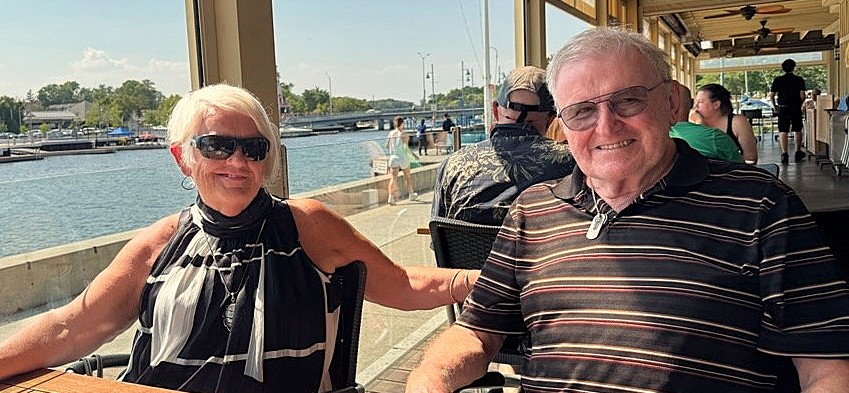
Earlier this week, I celebrated my wedding anniversary—fifty-eight years, all married to the same woman, the lissome lass I first dated when she was but sixteen.  We married four years later, embarked upon fulfilling careers, raised two lovely daughters, and retired to the life we now enjoy together…sixty-three years gone in the blink of an eye, it now seems. Egad!
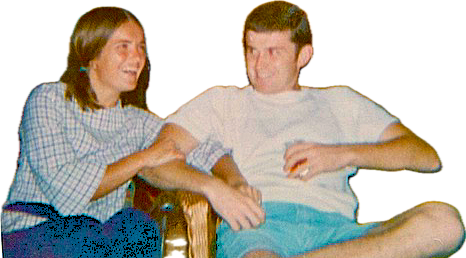
Friends probably view the longevity and success of our union from my wife’s point of view as a triumph of iron will over probability. From my viewpoint, however, it’s unquestionably a victory of blessed good fortune over whatever random fate I would otherwise have encountered.

Recently, at the behest of our daughters, we each decided to write a short memoir of our lives, intended only for family and close friends.  Mine, titled Being Me, is finished and in the hands of those I care most about; hers, titled My Story, is nearing completion. The trick, as we discovered in the writing, lay in knowing, not what to include, but what to leave out.

As we wrote, we shared memories sparked by old photos, slides, and home-movies produced through the years.  We were amazed by how much we had forgotten over time, and by how different our fuzzy memories sometimes were as we discussed the same events.

“That’s not how it happened!” I found myself declaring more than once, only to have my wife show me a faded snapshot that proved otherwise.  Admittedly, I’ve always had trouble remembering dates, so casting back to those bygone years wasn’t child’s play for me.

By the way, that trouble with dates persists even now, alas.  I recently showed up for a colonoscopy procedure after enduring the requisite purging prior to the visit, only to find I had the right day, the right time, but the wrong year! I was a whole year early! I’m still living that one down.

Through most of our marriage, my wife and I were enthusiastic participants in sports—baseball, curling, golf, hockey, tennis, skiing, swimming, to name but a few—both competitively and recreationally.  As we eased our way through middle age, entering inevitably into our senior years, many of those began to fall away. We found we could no longer glide across the arena or playing field with the same visions of grace and glory we’d previously enjoyed.  Father Time vanquishes everyone, we discovered, no matter how skilled or practised we might be.

An example for me was falling down in my follow-through a few times on the tee-boxes while smoking drives I’d always hit routinely…well, maybe not always, but occasionally.  My playing partners advised me to start wearing a bicycle helmet if I wanted to continue playing.

My exercise today consists of activities where I can’t fall down or off something. I favour the rowing machine, the treadmill (if I hang on), the stationary bike, or exercises conducted while lying on the floor.  Although not a Latin scholar, I find myself chanting under my breath as I work out: sic transit gloria mundi!

As with many things in a long marriage, my wife and I found we had to adjust and change to meet these new demands.  She spends the bulk of her time now, when she’s not reading or doing jigsaw puzzles, making gifts for family and friends out of clay, dichroic glass, and wood, an accomplished artisan.  I call her my boon companion in the arts.

Much of my time, of course, is spent writing—novels, anthologies of tales and poems, and posts on my blog—and listening to classical music.  I’m a prolific reader, as well, and give thanks constantly for online libraries.

Perhaps the biggest change for us is that we no longer find our children and grandchildren to be part of our lives, sharing our experiences; rather, we have become part of their lives, eagerly sharing their accomplishments and happenings. It is we who are the supporting actors now, and they the stars in the unfolding movies of their lives.  We’ve also discovered that this change is very comforting, to be loved and cared for by these essential people in our lives, even as ours wind down.

We still look ahead, however, to each new adventure that might come our way. One of my haiku poems illustrates that philosophy quite clearly—

more yesterdays now
than tomorrows, but it’s the
tomorrows that count


the sails of our youth,
once hoist, are mostly furled now---
though the winds still blow
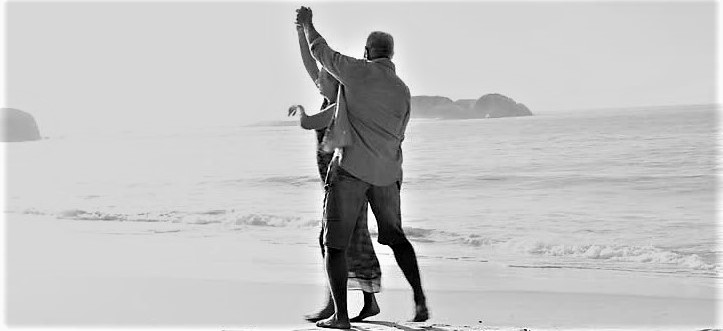
Back in 1964, when we were still dating prior to marrying, a popular singer, Al Martino, released one of his biggest hits, I Love You More and More Every Day. We adopted that as ‘our song’, and we used to sing snatches of it to each other.  Over the years, it faded for some reason from our minds, although we never abandoned its premise.  But I thought of that song on my recent anniversary day, and began to sing it to myself.  I had to look up the lyrics, of course, after all this time, but the melody was etched in my memory.

On a whim, I decided to record myself singing it on a karaoke track to present to my wife. Although I used to sing bass in a men’s a cappella barbershop chorus, my octogenarian voice is a tad quavery and shrill now, and my range is somewhat limited.  Nevertheless, the sincerity of my singing has not abated, and she at least recognized the song. Sort of.

As I think back to when she and I first met, as I try to remember all that has happened since, as I marvel at the lasting of our union, I find myself overwhelmingly grateful that we celebrated this latest anniversary together, and I offer this haiku to her to reflect those sentiments—

impossible dream!
many might have thought so, but
you made it come true

trusting all that’s passed,
moving forward in good faith,
hands clasped as always
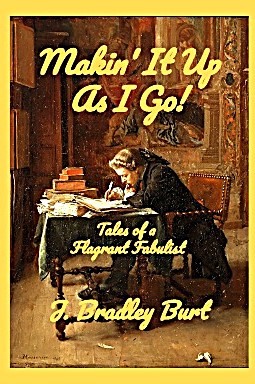
Makin’ It Up!

Here is a poem from my latest anthology of prose and poetry, a collection of more than forty whimsical and topical essays and poems I’ve written as a member of the Pelican Pens writers’ group in South Florida.

Just released today, the book is entitled—

Makin’ It Up As I Go! Tales of a Flagrant Fabulist

It Just Isn’t Fair!
[prompt: the unfairness of life]

“It’s not fair!” I declare, disgruntled and mad,
“Why’s everything good now thought to be bad?
I’m angry about it, but what can I do?
How can I hang on to what I once knew?

“Why doesn’t Santa Claus still come to town,
With his reindeer and elves and fat belly round?
What’s wrong with allowing this old man to think
That he’ll bring me my toys, then be gone in a blink?

“And where’s the tooth fairy, who came in the night
To check ‘neath my pillow, but stayed out of sight,
And left a wee gift in exchange for my tooth?
Why doesn’t she come, now that I’m not a youth?

“What’s happened to Cupid, the elf with the bow
And his love-dipped arrows all ready to go?
Oh, where is he now each Valentines Day?
Did someone nefarious take him away?

“And how ‘bout the bunny with powerful legs
Who came every Easter with my favourite eggs?
It’s like he’s been cancelled by somebody vile,
For I haven’t seen him in such a long while.

“And whence the wee people, their shamrocks so green,
Hiding their gold in pots all unseen
At the end of the rainbows, their colours agleam?
Are leprechauns now nothing more than a dream?

“And last but not least, the sandman so wise,
Who came every night to shut down my eyes,
Is no longer part of my oft-sleepless night.
Have they taken him, too, out of sheer spite?

“It’s not fair!” I exclaim, both sad and chagrined,
“That somebody somewhere chose to rescind
My wonderful friends of childhood back there.
I hate it!” I cry. “It just isn’t fair!”

The book is available for purchase at this safe website—

https://www.lulu.com/spotlight/precept

On Thinking

The French philosopher, Rene Descartes, is remembered among other things for his thesis: I think, therefore I am.  The notion is most commonly expressed, not in French or English, but in Latin: Cogito, ergo sum.

His premise was not, as is widely believed, that he exists because he can think; rather, it is that he is aware he exists because he is able to think.  That assumption presupposes that so-called lower forms of animal life, being non-sentient as far as we know, exist without knowing they exist.

Descartes appears not to have considered the possibility that some humans may also exist without full awareness, largely because of their demonstrated inability or willingness to think rationally.  But I digress.

In conversation with other folks, I occasionally hear them offer their opinion by beginning with the phrase, So, I think to myself…  I find that phrase redundant, because I can contemplate no other way of thinking; by definition, all thinking is to oneself, is it not?  Unless, as some would have it, a person is thinking out loud, which strikes me as verbalizing, not thinking.  Better, I suggest, to think first, speak second.

But as a counterpoint to that, people might deem praiseworthy the ability some folks have to think on their feet—to offer an opinion, receive feedback, and modify that opinion, all in the course of one conversation.  That facility is admirable, I suppose, but it can happen, of course, only if they’re standing; if they were seated, they would surely be thinking…well, on their tush, right?  And somehow, blowing it out their…you know…doesn’t seem as impressive.

I’ve long thought of thinking as a fluid process, a constant progression, a multi-directional flow, rather than as a static, linear plod from point A to point B.  And if that is so, then a graphic tracing of my thinking pattern would appear, not as a straight line, but as a higgledy-piggledy, zig-zagging line—frequently interrupted and intercepted, but always arcing upward toward higher illumination, I would hope.

As a writer, it’s my thinking that takes me far from my physical surroundings, even to the point of forgetting all about time and place.  As I wrote in haiku verse some time ago—

my thoughts, unbridled,
take me to worlds I ne’er will see,
nor have ever seen

my boundless thoughts are
like hot air balloons, slipping
bonds that tie me down

I wander freely
throughout the universe, yet
never leave my chair

There are two adages on thinking that I try to hold to, at least presently, and they both grace the résumés and bios that appear on my online, social-media sites.  The first is, Certainty is the enemy of an open mind…I think.  And the second is, Don’t believe everything you think.  Regular readers of this blog will know whether or not I’m successful in living up to those.

Certainty plagues many people after they’ve thought a subject through—or even when they have not—and then adopt a position they think is accurate or true, and stubbornly cling to that opinion, come hell or high water.  But I think every opinion we hold should be subject to periodic, critical study, the more frequently the better, in order to test its validity in the face of facts and evidence that can change from time to time.  Being overly-certain about one’s opinion can stifle that sort of examination.

The irony with this adage, however, is that I can’t be certain it’s correct, for to be so would violate its basic premise.  Like every other opinion I hold, it requires my constant scrutiny…at least, I think it does.

The notion of believing everything we think, just because we think it, likewise can lead to cognitive stagnation.  In everyday interactions, our behaviours are governed by what we think we should say or do at any given time, and there’s nothing wrong with that.  Guidelines are preferable to social anarchy.  But if, for example, I believe it’s safe to jaywalk across a busy thoroughfare just because I think it’s safe, and if I persist in that belief, the consequences to me could be catastrophic.  Better, I think, to examine my thinking in the light of facts before committing it to belief-status.

The irony with this second adage is it presents a danger that one will never commit to believing in anything.  I think that, too, could present a problem.

For those who’ve read this far, let me finish with an anecdote about two people engaged in a mild argument over some inconsequential subject.  “So, is that what you really think?” the woman asks, a touch of incredulity tinging her tone.

“I don’t think!  I know!” the man replies smugly. 

With barely a pause, the woman smiles condescendingly and says, “You know what?  I don’t think you know, either.”

And that could well be the case for all of us.  Even when we think we know, even when we are absolutely certain of it, we still might be mistaken.  The wise carpenter’s advice—measure twice, cut once—could easily be adapted and applied to our thinking process: think, rethink, then act.

I’ve done just that in this post…I think.

What say you?

Time-Travel Time

As a response to the weekly prompt from my Florida writers’ group, to write about incongruity, I have penned this haiku verse to describe the joys and wonders of the writing process.

Haiku is poetry of Japanese origin, written in English as seventeen syllables in three lines of five, seven, and five. It is unusual to string a number of them together to form one poem as I have done here.

through time I travel 
unrestrained, unimpeded,
here at my keyboard

imagination
carries me from here to there
through tapping fingers

fixed by mortal coil
though I am, my mind runs free
through the universe

in tales tall and true,
from realm to realm I wander,
unfettered, unbound

never knowing where
my next destination is,
or where I shall land

my relentless muse
pushes and pulls me along
the paths she chooses

compelling me to
explore her capricious whims,
to write what she sees

telling her stories
discovered along the way---
prose and poesy

unable to quell
her relentless siren-call,
nor desiring to

I follow my muse---
yet, incongruously, I
never leave my chair

Who Abides?

The Dude abides

That’s a line from the 1998 film, The Big Lebowski, which has achieved almost cult status.  The dude in question is the main character in the film, Jeff Lebowski—played by Jeff Bridges, and based on Jeff Dowd, a real-life friend of the moviemakers, Joel and Ethan Coen.

The significance of the line has evolved over time, from a simple declaration that the character exists, to a more profound interpretation that he endures the many perturbations in his life and survives them.  In other words, he not only is who he is, he is cool with it.

I, however, have always taken a slightly different meaning from the line, one more in harmony with the archaic meaning of the word abides—to remain, to continue, to stay—as in the old hymn, Abide With Me.  Under my interpretation, the Dude is defined by those traits and attributes that constitute his individuality, the personas he inhabits, and which remain a part of him to the end.

In the film, we see the Dude as he was at the age of forty or thereabouts, over a period of a week or so in 1990, a small sliver of time in what we might assume was a lengthy life.  We do not see him as he was in his formative years, nor do we see what he might have become in his dotage.  Thus, the character abides in our memories only as a sliver of his entire self.

By contrast, if I look at myself, I see a more complete range of the personas I have occupied from childhood to present-day, many of which have overlapped.  These include son, brother, student, friend, employee, husband, homeowner, father, investor, player-of-games, writer-of-books-and-blogs, singer-of-songs, traveller, retiree, and grandfather, to name a few.  Over time in these various guises, I have journeyed from self-centredness to a broader awareness of the world around me; from a laissez-faire perspective to a questioning of the status quo; from near-certainty in my thinking to more patience for countervailing arguments; from confidence in my physical prowess to a reluctant acknowledgment of my increasing frailty; from a blithe belief that life would last forever to a comfortable concurrence that it won’t.

As Gibran wrote, Life goes not backward, nor tarries with yesterday.

Several months back, I wrote some haiku verse about the link between boyhood and manhood, influenced by Wordsworth’s statement, the Child is father of the Man

from my aging eyes,

the boy I once was looks out—

hardly changed at all

now well beyond my

diamond jubilee, the

man is still the boy

While the sentiment is true in many ways, it is ultimately false, for I have had to abandon more of the incarnations I have lived than I’ve been able to maintain.  And many of those that abide are more passive now.  I am a father still, but not one who is actively needed on a daily basis by his children; I draw from my investments now, rather than adding to them; I am a player of far fewer games than during my halcyon days, and those that remain are much gentler; my travels are more curtailed, even in non-pandemic times; I roll creakily out of bed every morning—gratefully to be sure—but no longer bounding into each new day.

If, as the haiku verses claim, the man is still the boy, and if that boy is looking out unchanged, he must surely be exclaiming, What the hell happened?

Despite that, however, this tract should not be construed as a complaint, as a railing against the coming of the end-times.  It is intended, rather, as a wry observation of the inevitable decline that accompanies the march of time, to the accompaniment of  gentle, knowing laughter at the conceit that it could ever be otherwise.

The question does arise, though, as to who exactly I will be when I eventually cross the bar.  Which of these many personas will still be present to accompany me out, and how many more will have already taken their leave?  The answer, which matters to no one but me, lies partially in the list above; and I know it will not be I who will decide.

Still, I wonder.  I have been so many people over my almost four-score years—some of whom I liked, some I regret being, some lost to the fog of time, and some still a part of me.  In spite of my years, I remain convinced that I will continue to grow, to adopt new personas even as I shed longstanding ones.

Is that what we might have seen happen with the Dude if that long-ago movie had allowed a broader viewing of his life?  I like to think so.  And had that been the case, the opportunity might have helped me to find an answer to my own ultimate question.

Who abides?

Almost As One

you and I for years

becoming almost as one,

but with two faces

*  *  *  *  *  *  *  *

our togetherness,

heretofore by choice, rudely

thrust upon us now

couple1

as we, quarantined

by rampant pandemic, must

find ourselves anew

*  *  *  *  *  *  *  *

delving more deeply

into our relationship,

finding new connects

couple2

learning more about

what makes us who we are now,

as both you and me

*  *  *  *  *  *  *  *

trusting all that’s passed,

moving forward in good faith,

hands clasped as always

couple3

Five Cousins

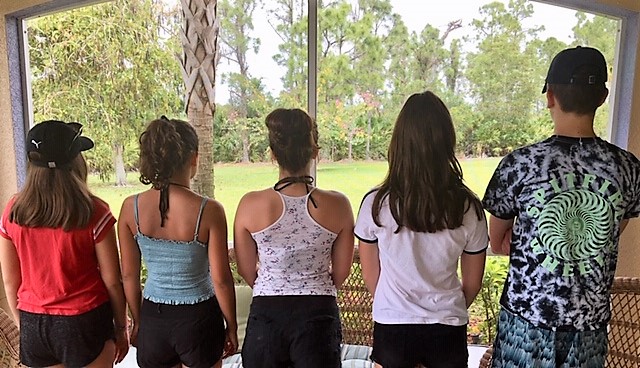
Longer ago than I care to think, the final one of our five grandchildren made her entrance into the family.  She joined an older sister and brother, and two cousins, both girls.  Because the five of them live close to each other in the same town, they’ve spent a lot of time together and have grown quite close.

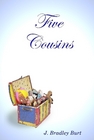
Ranging in age from seventeen to eleven, Ainsley, David, Alana, Naomi, and Abbey were the subjects of a book I published some years ago, a collection of poetry for and about them.  Titled Five Cousins, the book spun tales of their adventures at the various stages of life they had by then attained.

3 Cousins cover

Each of them received a copy from me one long-ago Christmas—signed, of course, with a suitable inscription.  At the time, the younger ones enjoyed having the poems read to them more than reading them themselves, but either way, their peals of laughter warmed the author’s heart.

Each of them had a section of the book, titled with their name, containing half-a-dozen or so poems with such titles as:  Ainsley Starting School; It’s David’s Day; Alana’s in Florida; Oh, Naomi, You’re the One; and Little Abbey’s Walking Now.

Over the years, these five cousins have seen a good deal of us, their Nana and Grandpa, often at our retirement home in Florida.  In one of life’s everlasting mysteries, they have grown older by leaps and bounds each year, while we elders have hardly aged at all!

[pause for muffled snickers of disbelief from amused grandchildren]

Regardless, it is a fact that three of them are now taller than we are; the eldest is off to university this fall; the second one will join her next year; the next two are halfway through high school; the youngest will soon enter junior high; and every one of them eats gobs more than we do!

As they have grown, their lives have gravitated less toward us and more to their friends; their interests have shifted away from us to their myriad interests and activities; the time we spend with them now is less than it used to be.  They face their futures now, rather than focusing back on what has been.

IMG_3292

Happily for us, they visited us in Florida this year—perhaps for the last time all together, as their lives will increasingly take them along paths diverging from ours.

That is natural, of course, and as it should be.  But their inexorable journey to their own destiny has me thinking I must write another collection of poems about them, and for them, before they leave the sanctuary of childhood for the last time.

I could do it for each of them separately, beginning with the eldest, and follow up for each succeeding one as they reach the age she is now.  Or I could do it as I did the first time, with poems about all of them, suitable to the stage each finds her- or himself at right now.

I think I favour the second option, given my own age.  Time, I increasingly find, is not to be taken for granted.

Anyway, here are five short pieces I have already written about them, collectively rather than individually, in haiku form.  The poems attempt to express my love for these five cousins, my hopes for them, and my unabashed pride in them.

smiling photographs

on the refrigerator—

loving grandchildren

*  *  *  *  *  *  *

grandchildren, our hope

for the future—as we were

once upon a time

*  *  *  *  *  *  *

free your grandchildren,

hug them close, then let them go—

they’ll e’er be with you

*  *  *  *  *  *  *

more yesterdays now

than tomorrows, but it’s the

tomorrows that count

grandchildren

Five Cousins e-book – http://www.lulu.com/spotlight/precept

Nothing Else Matters

I read an interesting post recently by an author, John Gorman*, who professed that life is essentially meaningless, that there’s no preordained destination for our journey.  Rather than searching fruitlessly for meaning in life, he wrote, we should be looking for the intrinsic value in the things we do along the way.

On the same day, I read another post by a different writer, Rachel McAlpine**, who mused poetically on the eventuality of her own death—

…I’ll be dead and I won’t know I’m dead because
the brain that could create, contain and comprehend that fact
has fled.

The two posts got me thinking about, guess what?  Death, and the value of life.  And here, in haiku form, are some conclusions I came to—

my thoughts, unbridled,

take me to worlds I ne’er will see,

nor have ever seen

The-Spirituality-and-Immortality-of-the-Soul

don’t fret the future,

focus fiercely on the now

where we live our lives

the now

the journey from womb

to tomb—no matter how long—

is but a fragment

immortal 2

I would have to live

forever to realize

I already died

live-a-life-of-purpose

nothing else matters

in the great, grand tapestry

if you are with me

together

See?  No worries.

*[John Gorman –  IG: @heygorman]  **[Rachel McAlpine – writeintolife.com/blog]


‘Though the Winds Still Blow

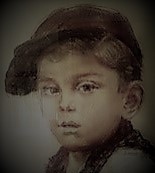
Reflections are imperfect, it’s true, but instructive, nonetheless.  They allow us to look back over those roads we followed in our youth, with a mind to mapping the ones we have yet to encounter.  Here are a few of mine, in haiku form—

from my aging eyes,

the boy I once was looks out—

hardly changed at all

portrait-of-boy1

Or so it can seem.  I know he’s with me, although I encounter him less frequently now in my daily pursuits.  Perhaps he struggles, as do I, against the inexorable weight of the years—

the boy is within

the man, still, but hard to find

as age o’ertakes him

boy 3

Despite that, however, the persistent, exuberant boy I once was still urges me forward on his youthful quests, unfettered as he is by the physical restraints enshrouding the me who is me now—

the sails of my youth,

once hoist, are often furled now,

‘though the winds still blow

sailing-ship

Do I regret that I can no longer join that boy to play as once I did, that I cannot oblige him as he coaxes me onward?  Of course!  But, do I regret the choices I made, whether wise or foolish, when I was him those many years ago?  Well, I have scant time to dwell on that—

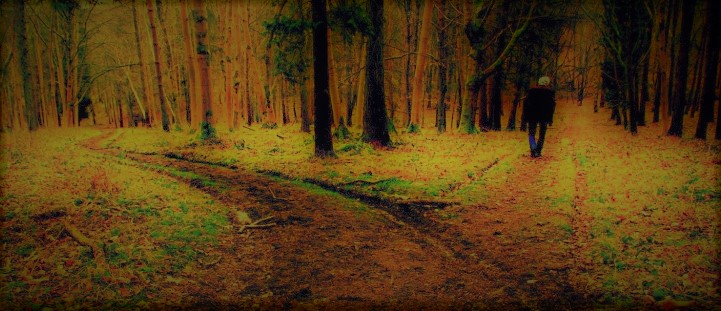
regrets?  some, maybe—

but I can’t go back to change

the pathways I’ve trod

two-roads-diverge

It’s the mapping of the road ahead that is most important to me now, however short or long it may prove to be, and the welcoming of each new adventure that awaits—

the uncertainty

of finishing pales next to

the joy of starting

fear 2

So, in spite of my inability now to cavort and engage in those many pursuits I all too often took for granted, I still search out that boy each day—hoping he will not tire of my company, welcoming his encouragement, remembering how I loved being him—

now well beyond my

diamond jubilee, the

man is still the boy

images


April

Geoffrey Chaucer, in the late 1300’s, wrote about April in his Canterbury Tales, praising its rains and warm winds for the restoration of life and fertility after the endless winter—

Whan that Aprille with his shoures soote/ The droghte of March hath perced to the roote…

But T. S. Eliot, another British poet, took quite a different view in 1922, in The Waste Land, where he savaged the month—

April is the cruellest month, breeding/ Lilacs out of the dead land, mixing/ Memory and desire, stirring/ Dull roots with spring rain…

The same month, two opposing points of view, left to the reader to determine which is the most apt.

My own outlook varies from time to time, depending, I suppose, upon my mood, the weather, and the company I keep.  I have often longed for the coming of April with its showers sweet, its promise of spring, only to be disappointed by its refusal to let go of winter.

Poetry is one means I employ to give voice to my feelings, sometimes optimistic, full of hope, and other times doubtful and despairing.  I find the Japanese haiku form especially appropriate—three lines of five, seven, and five syllables, respectively—to convey my conflicted state of mind.

By way of example, here are five haiku I have written dealing with April, each with a picture in harmony with my outlook.  I, too, leave it to you, the reader, to decide which of my moods is being conveyed by each—

peekaboo

sun plays peekaboo,
dancing ‘cross the wint’ry lake—
heralding the spring

peekaboo

teasing

april is cruel—
so the poet says—teasing
us falsely with spring

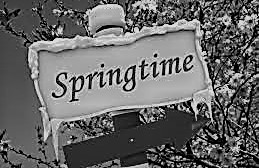
springtime

spring

joining in our walk,
tentatively, yet warmly—
sweet spring has returned

pring walk2

april fool

april can’t fool me,
that false harbinger of spring—
may is the gateway

rainy april

in the rain

dancing in the rain,
neither of us wet or cold—
warmly wrapped in love

in the rain

May the spring blossom anew for you…..in April, or whenever it arrives!