On the Horizon

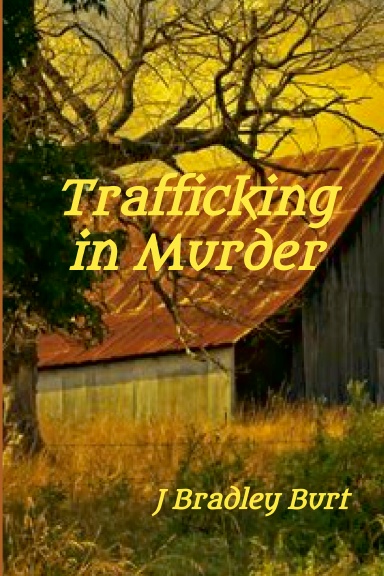
Two new books are on the horizon that you, as a regular (or even occasional) reader of this blog, are sure to enjoy.  The first is the twelfth novel in my crime-fiction series featuring two engaging, dynamic characters—Maggie Keiller and Derek Sloan.

Trafficking In Murder is set for release this coming fall, and it will take you on a similar tension-filled, as-it-happens journey that readers of the previous books in this mystery-thriller series have experienced.

The story is set against an all-too-true backdrop of human-trafficking—the smuggling and exploitation of vulnerable asylum-seekers hoping for a new life in Canada.

It all begins when an immigration Judge is attacked by an illegal refugee in her courtroom, and the violence spreads quickly into the community with assaults on innocent bystanders, a kidnapping scheme, and finally murder.

Because of their support for two innocent asylum-seekers embroiled in the turmoil that follows, Maggie and Derek become involved.   As events threaten to spiral out of control, they are drawn further into the local police investigation, which is tied into a broader investigation at the national level by the RCMP and Canadian Security Intelligence Services (CSIS).

Over a tumultuous two-week period, both Maggie and Derek are physically attacked, which only increases their determination to protect the people depending on them.  Working closely with retired and active police investigators, they work diligently to bring the evildoers to justice.

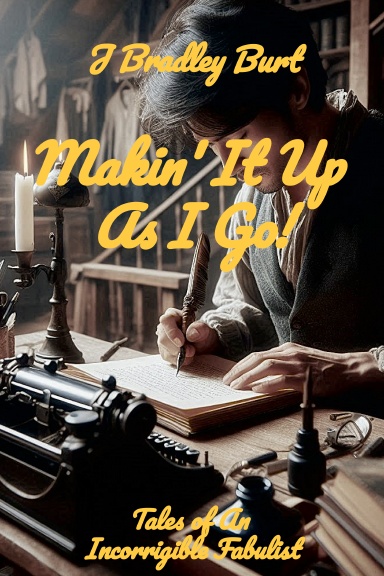
The second book on the horizon, Makin’ It Up As I Go: Tales of An Incorrigible Fabulist, is my tenth collection of short stories and poetry, all of them whimsical, humourous, or pointed in their outlook.  The book is scheduled to drop later this year or early in 2025.

The forty-plus tales are based on weekly prompts from my Florida writers’ group, the Pelican Pens, an eclectic gang of people who enjoy the creative outlet we share.  Four of our number have won awards from the Gulf Coast Writers Association for our work, and three of my winning pieces are included in this anthology.

If you enjoy reading the selections published here in TallandTrueTales, I know you will like both these books.  Once available, they may be found and purchased with all my other published works at this safe site—

https://www.lulu.com/spotlight/precept

Happy reading!

A Loss For Words

[NOTE: IF THIS COMPLETE BLOG-POST LIES IN THE BODY OF AN EMAIL, CLICK ON THE TITLE TO READ IT IN ITS NATURAL ENVIRONMENT ON MY BLOG-SITE. IF ONLY A LINK IS PROVIDED IN THE EMAIL, CLICK ON THAT.]

Most people who know me would likely tell you I am rarely, if ever, at a loss for words.  But they would also assure you, I trust, that I am far from being a blabbermouth.  My own opinion is that in most social situations, I can hold my own in conversation without becoming annoying or overbearing.

Most of the time, I listen; when appropriate, I ask questions.  If prompted, I will hold forth on a subject (if I know something about it), but not to the point of boring my friends to tears…I hope.

There is one situation, however, where all of the above is not true, perhaps the only circumstance where I find myself virtually unable to get a word in edgewise.  This unfortunate state of affairs occurs every time I find myself on a FaceTime call with my wife and daughters.  I hustle into the den with my iPad, leaving my wife with her screen in the living-room, so we won’t get feedback during the call.

When I say ‘unfortunate’, I mean for me, of course; for all I know, the ladies find it delightful when I sit, practically mute, at my end of the line.

The problem arises, not because my wife and daughters ramble endlessly on and on, not because they’re rude or inconsiderate, not because they delight in ignoring me, even politely.  Nothing could be farther from the truth.  In fact, they are all among the most considerate of creatures on the face of the earth, and they love me dearly.

No, the problem occurs almost every time we’re on a call because they appear to react faster than I do.  And to think faster, too, I suppose.  Regardless of the subject, I’m usually listening attentively as they express their various points of view, waiting for my brain to kick into gear as I consider an appropriate response.  The sad fact is that, by the time I have a response, one of them has already jumped back into the conversation ahead of me.

Another issue causing me a problem is their propensity to change subjects at the drop of a hat.  We might have spent five minutes batting a particular topic back and forth—the three of them talking while I listen—and Boom!  Without warning, one of them will introduce a brand-new thread, or ask about something entirely different from what we’ve been discussing. 

Even as my brain registers the change, a part of it is crying, silently and forlornly, that I haven’t yet kicked in my two cents’ worth on the first topic.

But they aren’t rude, as I have said, so at some point (perhaps noticing my silence), one of the girls might say, “What do you think, Dad?” 

“Ah…let’s see,” I reply, “can we go back to that first thing we were talking about?  I had a thought about that, but I couldn’t get in.”

The three of them laugh and roll their eyes at this, chide me to ‘keep with the tour’, then blithely resume their three-way conversation.  It’s probably just as well, I guess, because by the time I’m asked to chime in, I’ve often forgotten the point I wanted to make, anyway.

I must admit, though, all modesty aside, that I generally look surprisingly good on those FaceTime calls.  I sit up straight, look right into the camera (with an occasional peek at my own image), and keep myself centred in the screen.  They, by contrast, let the screen wobble all over the place as they walk from room to room tending flowers, picking up dirty clothes, starting early prep for supper, training their camera on their dogs.  It drives me crazy, but I can never worm my way into the conversation to ask them to stop.

I’ve explored various strategies to help, but none seems to.  I’ve tried holding up my hand, for example, when I want to cut in, but all I get is a return wave, as if they think I’m leaving the conversation.  “Bye, Dad!”

On more than one occasion, I’ve cut my video feed for a few seconds, hoping they’ll wonder if I’m okay, but all I hear is, “Looks like Dad has left the conversation!  Was it something we said?”

“No!” I want to shout, as I turn the video back on.  “It’s because I haven’t said anything!”  But they’re already talking about something else, so once again I can’t get in.

I recognize that the limitations of the FaceTime technology, marvellous though it is, play a part in exacerbating my dilemma.  The offset between audio and video transmission makes it difficult for me to pick the right moment to jump in—like watching a TV commentator interviewing someone far away, each of them experiencing a delay in hearing the other, resulting in dead air.  If I speak up too soon, while one of the girls is still talking, no one hears me; if I wait ‘til she’s finished, someone else has already started.

Still, I persist in taking part in these FaceTime calls, not only to hear what the girls have to say, but to look at them as they’re saying it.  And I console myself that, if ever I had anything pertinent and crucial to share with them, I probably did it years ago.  Whatever I might add now is probably just more of the same.

The ironic part of the whole thing, though, is after we’ve ended the call, I’ll wander back into the living-room and my wife will say, “Are you okay?  You didn’t have much to say today.”

And that always leaves me at a loss for words.

It Was You/It Was I/It Was We

It was you who dwelt inside me, it was I who knew you best.
It was you who warmed my spirit, it was I with whom you’d rest. 
It was you who shared my burden, it was I whose love was true.
It was you who’d lift me higher, it was I who soared with you.

It was I who lived inside you, it was you who made me whole,
It was I who’d lift your spirits, it was you who held my soul.
It was I who stood beside you, it was you who never failed, 
It was I who gave you purpose, it was you whose love prevailed.
It was we who were together, it was we who were o’erjoyed,
It was we who’d not be broken, it was we whose lives were buoyed.
It was we who faced the music, it was we who shared the blame,
It was we who clasped each other’s hands, it was we who overcame.

It was you who lived inside me. It was I who dwelt in you.
It was I who shared your burden. It was you whose love was true.
It was we who were e’er faithful. It was we who’d never bow.
It was we who stood, as still we do. It is we who’ve kept our vow.

Good News…and a Preview

As many of you know, I recently published my ninth collection of stories and poems, something I’m very pleased about.

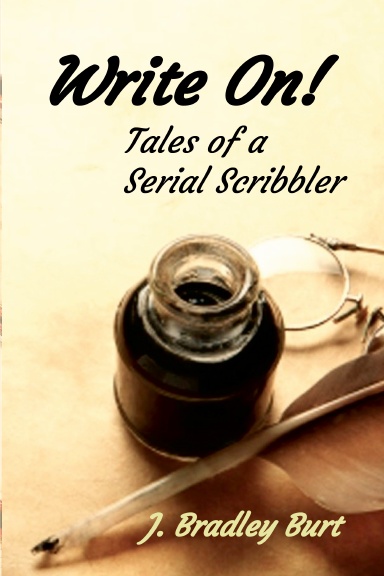
Titled Write On! Tales of a Serial Scribbler, it holds a trove of more than forty pieces I’ve written for the Pelican Pens, a group of enthusiastic writers here in southwest Florida. Each week, we meet to read our work to each other, to offer friendly encouragement, and to devise prompts to guide our creative juices for the following week.

After sending out my announcement the other day, it occurred to me that readers of this blog might like to read one of the short tales included in the book.  Titled And Off We Go, it’s founded on the prompt—embarking on a fateful journey.

I’ve entered this tale in the Gulf Coast Writers Association 2024 writing contest, a competition where I was fortunate enough to take home first-place a year ago with a piece titled But He Didn’t!

I hope you’ll enjoy this preview of what lies in store for you in Write On! Tales of a Serial Scribbler. You can see more of the book, and my other published books, at this safe link—https://lulu.com/spotlight/precept

And Off We Go

“Shall we go?”  The sepulchral voice is solemn, portentous, and it reverberates ominously in my ears.

Not yet…not yet!  I’m not ready…

I hear other voices, too, softer voices…my daughters, named for our favourite flowers so many years ago.  They’re talking quietly over me as I lie in a bed I cannot feel in a hospital room I cannot see, unable to speak or move.

“He can’t open his eyes,” Veronica says, “but I can see them moving behind his eyelids.”

“Yeah, I see that,” Jasmine agrees.  “I think he can hear us.”

“Can you, Dad?” Veronica asks softly.  “Can you hear us?”

Yes, yes, yes!  I’m right here…

“He can’t answer you, Vee,” Jasmine says sorrowfully.

She’s right, I can’t.  Everything was fine until…until…whatever day it was, I can’t remember…and that red wave washed over me, collapsing me on the floor for I don’t know how long.  And now here I am, wherever this is.

“Shall we go?” the voice resounds in my ears again, a honeyed basso-profundo, not at all impatient, yet determined nonetheless.

No, not yet!  It’s too soon…

“Keep stroking his hair, Jazz,” Veronica says.  “He always liked that.”

I did always like it, but I can’t feel a thing now.  I can only imagine how it feels, and the thought warms my heart.  I laugh inwardly, knowing my hair must be all askew.

“I love you, Daddy,” Jasmine whispers.  “I hope you know that.”

“He knows we love him, he knows,” Veronica says, and I imagine she is holding my arthritic hands in hers, gently massaging them, terribly weakened now when once they were so strong.  But I can feel nothing.

I lifted you high in these hands, Vee, high up over my head.  And Jazz, too!  And now…and now…

“Shall we go?”  The voice asks again, persistent though not offensive.

Not yet!  No!

“You don’t have to worry about us, Dad,” Veronica whispers.  “We’ll be fine.”

“She’s right, Daddy,” Jasmine adds.  “You and Mummy were the best, and we’ll be just fine.”

I know, I know…but I don’t want to go…

They’re right, of course, they will be fine, both with their own wee families now.  The little ones were here earlier with their daddies…at least I think they were…maybe not…but I’m sure I heard those four tiny voices telling me they love me.  I wanted to say it back to them, to wrap my arms around them, but…

“And don’t forget, Dad,” Veronica continues, “Mum said she’d be waiting for you to find her, remember?  She’ll be watching for you.”

Ah, their mother, my wife, my lifelong love…how I’ve missed her.  Despite a valiant struggle against the disease that wasted her, she left us a few years ago.  And yet, she never truly left us, you know?  I wonder if Vee is right, if she really will be waiting there, wherever there is…my darling Clementine…

“Shall we go?”  The voice is insistent, though not unkind.

No, please!  Not yet…

“I’m sure Mummy’s been missing you, Daddy,” Jasmine murmurs, and I can hear the sob catching in her throat.  “You were meant to be together for all time.”

“Exactly!” Veronica says, trying to lighten the mood.  “Like apple pie and cheese!  Like mustard and relish!”  She laughs softly as she gropes for more examples.

Jasmine joins in her sister’s laughter, and my heart dances to the sounds of their lilting voices.  “Yeah, or like Abbott and Costello!” she says.  “Like Jack and Jill!”

“Lady and the Tramp!” Veronica offers, and the laughter grows louder.  “Romeo and Juliet!”

“Omigod!” Jasmine gasps, their laughter rolling freely now.  “Tweedledum and Tweedledee!  Lancelot and Guinevere!  Sweet and sour!”

“Yin and yang,” Veronica says, and they stop on that one, as if it’s the perfect one to describe me and Clemmie.

“Shall we go?” a voice asks again…but it’s a different voice this time.  Frozen inside my immobile body, I cannot move, but I feel as if I’m turning around and there is Clemmie…as young and as fair as the first rose of summer.  She’s standing in the midway at the State Fair, pointing at the Tunnel of Love attraction, the one where we had our first, tentative kiss, where the sense we’d found something special first dawned on us.

“Shall we go?” she asks again, and her eyes are sparkling, her smile warm and welcoming.

“It’s okay, Dad,” Veronica whispers, “it’s okay to go.”

“Goodbye, Daddy,” Jasmine breathes.  “We love you.”

Goodbye, goodbye…I love you both…

And I reach for Clemmie’s hand, and off we go.
And Off We Go

The weekly prompt from my Florida writers’ group was to write a piece containing the phrase, “shall we go…”.  This fictitious tale is my response.

“Shall we go?”  The sepulchral voice is solemn, portentous, and it reverberates ominously in my ears.

Not yet…not yet!  I’m not ready.

I hear other voices, too, softer voices…my daughters, named for our favourite flowers so many years ago.  They’re talking quietly over me as I lie in a bed I cannot feel in a hospital room I cannot see, unable to speak or move.

“He can’t open his eyes,” Veronica says, “but I can see them moving behind his eyelids.”

“Yeah, I see that,” Jasmine agrees.  “I think he can hear us.”

“Can you, Dad?” Veronica asks softly.  “Can you hear us?”

Yes, yes, yes!  I’m right here!

“He can’t answer you, Vee,” Jasmine says sorrowfully.

She’s right, I can’t.  Everything was fine until…until…whatever day it was, I can’t remember…and that red wave washed over me, collapsing me on the floor for I don’t know how long.  And now here I am, wherever this is.

“Shall we go?” the voice resounds in my ears again, a honeyed basso-profundo, not at all impatient, yet determined nonetheless.

No, not yet!  It’s too soon.

“Keep stroking his hair, Jazz,” Veronica says.  “He always liked that.”

I did always like it, but I can’t feel a thing now.  I can only imagine how it feels, and the thought warms my heart.  I laugh inwardly, knowing my hair must be all askew.

“I love you, Daddy,” Jasmine whispers.  “I hope you know that.”

“He knows we love him, he knows,” Veronica says, and I imagine she is holding my arthritic hands in hers, gently massaging them, terribly weakened now when once they were so strong.  But I can feel nothing.

I lifted you high in these hands, Vee, high up over my head.  And Jazz, too!  And now…and now…

“Shall we go?”  The voice asks again, persistent though not offensive.

Not yet!  No!

“You don’t have to worry about us, Dad,” Veronica whispers.  “We’ll be fine.”

“She’s right, Daddy,” Jasmine adds.  “You and Mummy were the best, and we’ll be just fine.”

I know, I know…but I don’t want to go.

They’re right, of course, they will be fine, both with their own wee families now.  The little ones were here earlier with their daddies…at least I think they were…maybe not…but I’m sure I heard those four tiny voices telling me they love me.  I wanted to say it back to them, to wrap my arms around them, but…

“And don’t forget, Dad,” Veronica continues, “Mum said she’d be waiting for you to find her, remember?  She’ll be watching for you.”

Ah, their mother, my wife, my lifelong love…how I’ve missed her.  Despite a valiant struggle against the disease that wasted her, she left us a few years ago.  And yet, she never truly left us, you know?  I wonder if Vee is right, if she really will be there, wherever there is…my darling Clementine…

“Shall we go?”  The voice is relentless, insistent, though not unkind.

No, please!  Not yet.

“I’m sure Mummy’s been missing you, Daddy,” Jasmine murmurs, and I can hear the sob catching in her throat.  “You were meant to be together for all time.”

“Exactly!” Veronica says, trying to lighten the mood.  “Like apple pie and cheese!  Like mustard and relish!”  She laughs softly as she gropes for more examples.

Jasmine joins in her sister’s laughter, and my heart dances to the sounds of their lilting voices.  “Yeah, or like Abbott and Costello!” she says.  “Like Jack and Jill!”

“Lady and the Tramp!” Veronica offers, and the laughter grows louder.  “Romeo and Juliet!”

“Omigod!” Jasmine gasps, their laughter rolling freely now.  “Tweedledum and Tweedledee!  Lancelot and Guinevere!  Sweet and sour!”

“Yin and yang,” Veronica says, and they stop on that one, as if it’s the perfect one to describe me and Clemmie.

“Shall we go?” the voice asks again…but it’s a different voice this time.  Frozen inside my immobile body, I cannot move, but I feel as if I’m turning around and there is Clemmie…as young and as fair as the first rose of summer.  She’s standing in the midway at the State Fair, pointing at the Tunnel of Love attraction, the one where we had our first, tentative kiss, where the sense we’d found something special first dawned on us.

“Shall we go?” she asks again, and her eyes are sparkling, her smile warm and welcoming.

“It’s okay, Dad,” Veronica whispers, “it’s okay to go.”

“Goodbye, Daddy,” Jasmine breathes.  “We love you.”

Goodbye, goodbye…I love you both…

And I reach for Clemmie’s hand, and off we go.
Who Counts?

[ ED. NOTE: If you are an official FOLLOWER of this blog, you are receiving my posts fully displayed in the body of the email notifying you of each new post. To read the post in my actual blog-site format, click on the title at the top of the story in your email, and you will find it a much more enjoyable experience.]

Like many of you, I suspect, I was raised by a mother generous in the love she gave, and wise in her ways.  My four siblings and I benefited greatly from her counsel, and agree to this day that she was right about almost everything.

Whenever I was angry with my brother or one of my sisters, for example, she would caution me, If you have nothing good to say, don’t say anything at all.

Many of our relatives in my mother’s large, extended family were gregarious, well-informed on most subjects, opinionated, and frequently argumentative, so holiday gatherings occasionally became loud and disputatious.  At such moments, my mother would advise me, Sometimes it’s better to say nothing, even if they might think you don’t understand, than to open your mouth and prove it.

Occasionally, I would arrive home from school with some juicy bit of gossip, and she would say, If your friends are talking about other people behind their backs, you can be sure they talk about you when you aren’t there.  And when I would nod as if I understood, she would add, It’s always best to stick up for people who aren’t there.

Decades later, I encountered that last advice again in a landmark book by Stephen Covey, who exhorted his readers: Defend those who are absent—one of my mantras to this day.

A good number of my mother’s admonitions were homespun, she having been raised by descendants of  Scots/Irish farming-stock who had emigrated to eastern Ontario in the mid-nineteenth century.  It’s a long road that has no turning, she would tell me when I’d recount a tale of woe, feeling sorry for myself.  If I’d had a quarrel with a schoolmate, she would say, The road to a friend’s house is never long.  Or if I was sad and blue when things weren’t going well, she’d tell me, When things are dark, try to be the light that someone else can turn on.

I think of my mother often these days, and I miss her wisdom.  I wonder what she’d have to say about this world we live in now, with all its strife and turmoil. 

No one in our family was ever subjugated by an invading people, exploited and dispossessed of our native land.  None of us has ever been despised and disenfranchised because of our nationality, our ethnicity, our skin-colour, our religious beliefs, our gender orientation, our political preferences, our wealth or lack of it, our age, or any perceived disability.  Throughout our lives, in fact, we have been among the privileged of the earth.

Such is not the case for the human species as a whole, however.  Worldwide, a huge number of people are victimized by war, famine, drought, disease, and genocide, some to the point of death.  And for many of those who survive, barely, there is scant relief offered by others of our species.

The product of a random, evolutionary progression over millennia, we human beings at our most primal level are forever a tribally-oriented species.  We seek to be with our own, and are suspicious of any who are different.  We are intelligent, yes, but also egocentric, selfish, aggressive, predatory, manipulative, superstitious, and too often unforgiving.  And because these character traits often override the intelligence factor, is it any wonder we currently find ourselves in such a mess?

Many of the several wars consuming the planet right now, for instance, are the result of clashes among opposing superstitious beliefs—what we sanctimoniously call religion—where each protagonist claims there is no god but our own.  And as if that doesn’t constitute folly enough, consider that many historic wars were waged by our predecessors who claimed allegiance to the same god, even as they prayed to that deity by different names. 

Such foolishness, when earthly power was truly the false god they all desired!

We humans have allowed ourselves—perhaps through a callous disregard for our collective well-being, or maybe due gross ignorance of the consequences we soon shall face—to approach a point of no return.  We seem not to realize that the civilization we profess to admire is but the thinnest of veneers, perched precariously atop the baser instincts of our species.

My mother used to say, The circle is not complete until everybody is inside.  We should always try to make the circle wider, so that everyone can come in.

Decades later, I chanced upon remarkably similar advice, this time in one of Michael Connelly’s crime-novels, spoken by one of his fictional characters, Harry Bosch:  Everybody counts, or nobody counts.

Would our current state of world-affairs be better, I wonder, if we humans could ever adopt that premise?  If we could set aside our preoccupation with the many issues differentiating and separating us, and instead take up the humanistic character-traits we share that might bring us together?

I mean, who counts?

A Crowd of Stars

The youngest of my brothers-in-law died recently, following a long period of worsening, physical incapacity and illness.  He was the second of my generation to go, my younger brother having passed three years ago, and I suspect his death brought the spectre of the end-times somewhat closer to us all.

In addition to my sister, he left behind four children, three of whom are married, giving him three grandsons and two wee granddaughters.  At his private interment, his daughter and three sons spoke of him as a loving and beloved father, and there is no greater tribute I can imagine.  Eighteen of us exchanged reflections and prayers that day, spoken to each other and to him, designed to bring a sense of closure and peace to us all.  We were saddened, of course, by his passing, but relieved that his suffering was ended.

He was married to my sister for forty-five years, a loving union that brought credit upon them both.  I still remember dancing at their wedding, when none of us—so young and brash and full of piss-and-vinegar—could have imagined this day coming.  But it has now for him, as it must someday for all of us.

Deliberate and intentional in word and deed, especially as he grew older, my brother-in-law was rarely intemperate or harsh in his dealings with others.  A man of deep faith, he was loving and giving, and forgiving of others’ shortcomings.  Throughout his tribulations, he was confident that, as he approached the final crossing, he would meet his saviour on the other side.  I hope he has.

In her remarks, my sister said something I thought perfectly summed up his life and faith—from Matthew 25:23, “Well done, good and faithful servant; thou hast been faithful over a few things…enter thou into the joy of thy Lord.”

My wife shared many of those same understandings about what is to come with him, and I remember them engaged in deep conversation over the years, communicating their ideas and beliefs, their hopes for the hereafter.  By contrast, given my differing views, the exchanges I had with him tended to be temporal more than spiritual, though always sincere and affectionate.  He had a way of thinking before he spoke, and I constantly found myself leaning in to be sure not to miss what he might have to say.

The day after he passed, I wrote the following note to my sister—

When we get old, as some of us have, we think differently about death than when we were younger.  I won’t say we ever look forward to it, but we perhaps stop fearing it.

We think of death as a companion on our journey through life—way back in the throng at the beginning, but gaining on us as we begin slowing down.

We think of death, not as a spectre that will end things, but as an usher who will open the next door and allow us in.

Just as life ushered us in at the beginning of our journey through the here and now, death ushers us into the beginning of our next journey.  None of us knows what that journey will look like, but faith sustains us.

When I think of him now, and where he is, I think of these lines, adapted from the poem High Flight, by John Gillespie Magee, Jr.—

Oh!  he has slipped the surly bonds of earth
And dances the skies on laughter-silvered wings…
He has topped the wind-swept heights with easy grace…
Put out his hand and touched the face of God.

With that note, I also included one of my favourite poems, When You Are Old, by William Butler Yeats, the greatest of the Irish poets.  I imagine it as the song my brother-in-law might be singing now to my sister from wherever in this vast universe he finds himself, and I hope it comforts them both—

When you are old and grey and full of sleep,
And nodding by the fire, take down this book,
And slowly read, and dream of the soft look
Your eyes had once, and of their shadows deep;
How many loved your moments of glad grace,
And loved your beauty with love false or true,
But one man loved the pilgrim soul in you,
And loved the sorrows of your changing face;
And bending down beside the glowing bars,
Murmur, a little sadly, how Love fled
And paced upon the mountains overhead
And hid his face amid a crowd of stars.

Lest We All Die

Like most of us, I suppose, I have a set of values and principles to which I try to adhere.  Perhaps the most important of these is the belief that we should all treat each other with the same respect and dignity with which we hope to be treated.

But there are others I profess, too; among them—

  • love is better than hate;
  • honesty is better than mendacity;
  • tolerance is better than small-mindedness;
  • civility is better than rudeness;
  • rational thought is better than baseless opinion;
  • equity in race, gender, and economic security is better than inequity;
  • freedom is better than enslavement;
  • peaceful coexistence is better than open warfare;
  • rule of law in our collective society is better than anarchy; and
  • majority rule in our collective society, however flawed, is better than the tyranny of a minority.

Like many of us, I imagine, I try to inject the values I espouse into my daily doings.  At my age, alas, the range of those doings is growing increasingly smaller, my influence is shrinking among my social circle, and the spectre of irrelevance is looming ever larger.  Where once my thinking was valued and reflected upon by those around me, it is less entreated as the years slide by.

My greatest impact is felt now through the writing I do—or so I choose to convince myself.  In the almost three-hundred essays I have posted to this blog since its inception in January 2016, I have touched on a multitude of subjects influenced by my value-set, some of them repeatedly.  A partial list includes—

  • parenthood; children and grandchildren; family and friends; education of the young;
  • racial and gender inequality; socio-economic issues and child poverty; wealth inequity; discrimination and prejudice; women’s reproductive rights; aging; civility and respect; pandemic unpreparedness; the future of work; artificial intelligence; right-wing Christian nationalism; peaceful coexistence;
  • famine and food scarcity; freshwater scarcity; forced migration; climate change; biodiversity loss; water and air pollution; global warming; ecological collapse; overpopulation; species extinction;
  • government overreach; politics and authoritarianism; corruption; warfare and nuclear threats;
  • freedom of speech; media and a free press; big tech; alternative facts and disinformation; and  
  • humour and whimsy; reminiscences; childhood; life eternal.

I also believe that certainty is the enemy of an open mind, and that we should not believe everything we think.  Therefore, I remain quite prepared to hear about and learn from contrary viewpoints.

Unlike a few people who persist in doing so, I have never tried to impose my values on anyone through my writing.  I believe in persuasion, not mandate or fiat.  Everyone is free to read my blog-posts if they so choose; they are also, and importantly, free to agree or disagree with what I’ve written; and they are free to offer comment.  There is no pressure on anyone, explicit or implied, to come over to my way of thinking.

I accept other people’s right to believe as they do, to say what they wish, and to act as they will, but with one critical proviso—they are not free to harm anyone else in so doing, or to foist their beliefs on unwilling others.  

I know this view is not popular with the social, political, and religious zealots, partisans, and proselytizers who brook no dissent.  Nevertheless, I believe it is in keeping with my aforementioned values and principles, and I continue to espouse them.

To ensure our continued coexistence, my only plea is that we live and let live.

Lest we all die.

To Make An End

For last year’s words belong to last year’s language.  
And next year’s words await another voice.
And to make an end is to make a beginning.
                                                                    - T. S. Eliot

As another year draws to an end, and with it the approaching close of my eighth decade on this journey, I know I am among the most fortunate of my fellow-travellers.  For sixty years of my passage, I’ve been accompanied by the wonderful young woman I first met when she was but sixteen.  She is young no more, of course, but as W. B. Yeats wrote in When You Are Old (almost as if he had her in mind)---

How many loved your moments of glad grace,
And loved your beauty with love false or true,
But one man loved the pilgrim soul in you,
And loved the sorrows of your changing face.

I still do.

Also with me for fifty-plus years of my journey have been the two magnificent daughters who have graced their mother and me with their love, their friendship---and increasingly now, their protection against the failings of age.  When they were little, we made a pact to hug them close for as long as we could, then let them go when time dictated.  As you might expect, the hugging was easy; the letting-go was hard.

But it has been written that when we love someone, we should set them free, and if they come back, then their love is ours forever.  That has certainly been the case for us, for which I’m eternally grateful.  Our girls are women now, but as I’ve often told them, although they are no longer children, their mother and I will never stop being parents.

In due time, those women brought two wonderful men into our lives, and with them produced five wonderful babies of their own---four granddaughters and a grandson for us.  It was as if the cycle started up again, but with my wife and I one step removed this time---loving them, wishing the best for them, but somewhat distant from the immediacy of their lives.  We strive to remain relevant, of course, and they, in return, take pains to make it so.

Kahlil Gibran wrote of that in his meditation, On Children---

You may give them your love but not your thoughts,
For they have their own thoughts.
You may house their bodies but not their souls,
For their souls dwell in the house of tomorrow, 
Which you cannot visit, not even in your dreams.
You may strive to be like them, but seek not to make them like you.
For life goes not backward nor tarries with yesterday.

And in that last line lies the very essence of the joy and sadness, both, that are implicit in our lifelong journey.  Things begin.  Things end.  Things begin anew.  Or so it has always been for me, and will be for some time to come, I fervently hope.  But there will eventually come a moment, I know, when no next beginning will follow the final end.  Despite my reluctance to face that day, I do not fear it.  My approach to its inevitability is summed up in this final stanza from one of my own poems, I Haven’t the Time--- 

I haven’t the time for anger or rancor, or grumbling, self-pity, or frown.
Life’s about living, getting and giving full measure before it winds down.
When that day is nigh, as ‘twill be by and by, I hope it will be widely said,
That as man and boy, I strove for the joy of living until I was dead.

My closest companions along the way have certainly brought that hope closer to reality than it might otherwise have been.  To paraphrase the late Queen Elizabeth II, my dear family have been my strength and stay the entire way.  As we enter into 2023, I hope for all of you who read these posts that you will feel as blessed as I, and that the ending of this old year, no matter its triumphs or tragedies, will be a new and happy beginning for you.

To make an end is to make a beginning.

Happy New Year! 

The Reasons For the Season

It’s hard to believe, but this soon-to-be-upon-us Christmas will be the eightieth time I’ve celebrated the festive season with family.  I have no memory of the first five or six such occasions, and most of those that came after are a hodge-podge of recollections jumbled together across the years.

Although my extended family was a blend of Anglican, Roman Catholic, and Presbyterian church-goers, Christ was never the centre of our celebrations back then; family was always at the centre.  As a youngster, I was taught all about the virgin birth—the trek to Bethlehem, the sojourn in the stable, the babe in the manger, the shepherds and wise men who visited the creche—but the visitor I most looked forward to every year was Santa Claus.

It may amuse you to know that I still believe in the spirit of Santa, that jolly, old elf who freely gives us presents while taking nothing in return (save, perhaps, for cookies and milk).  I still hang up my stocking every Christmas Eve.

It may surprise you to learn that I still believe in the teachings of the Christ-child, too, despite the fact my knowledge of them springs from English translations of the writings of men (no women, alas), who told their tales in Hebrew and Greek long after the storied crucifixion.

It seems to me those teachings can be crystallized in two succinct statements attributed to Jesus: Love one another.  Treat everyone else as you would like to be treated.  There are world-religions other than Christianity that preach similar sentiments, of course, but I fear I know less about them than I’d like.  Nevertheless, I dream sometimes of what our world might be like today if all of us, regardless of creed, could adhere to those two maxims, person-to-person, nation-to-nation.

Despite my belief in his teachings, I confess I cannot be sure Christ was the divine son of the god to whom we attribute our creation—that beneficent father-figure who reigns over us from on high, portrayed so majestically in magnificent works of art over the centuries.  I simply don’t know if Christ really turned water into wine, raised Lazarus back to life, rose again from the dead, or will return someday in rapture and glory.  I was taught these things, never with any proof offered, though—because true faith requires no absolute proof.  Faith and proof are each other’s antithesis. But no matter; whether one believes Christ was divine or not, the truth of his teachings shines through for me. 

It pains me when I hear so-called Christians take those teachings, impart their own twist to them, and then insist that everyone else adhere to their interpretation.  I’ve read the entire Bible, some sections repeatedly, and I’ve yet to find the condemnation purported to come from Christ’s lips that is used by judgmental Christian proselytizers to justify the stances they spew forth on such issues as marriage equality, abortion, feminism, and science education, to name a few.  The Christ I know loves everyone.

Nevertheless, despite my difference of opinion with such folk, I respect their right to believe as they do—so long as they do not seek to interfere with my right to do the same.  Christ, it seems to me, invited people to accept his teachings; he did not force them.  It is wise, I think, to be wary of those who use Christ’s teachings to further their own ends, to rend us asunder.

Lest I appear to be doing that here, let me clarify that I am not; I am simply riffing on my understanding of the meanings of Christmas.  Both my continuing belief in a Santa Claus, and my endorsement of Christ’s two great maxims, are important aspects of the celebration for me.  But I readily acknowledge that others may feel differently.  I begrudge no one their right to hold and profess their own beliefs, even to disregard mine, and I do not seek to impose mine on anyone.  

In addition to the influences of Santa and Jesus on my understanding of Christmas, there are others whose interpretations reflect my own.  For example, in his famous story, A Christmas Carol, Charles Dickens described the occasion thusly—a good time: a kind, forgiving, charitable, pleasant time: the only time I know of in the long calendar of the year, when men and women seem by one consent to open their shut-up hearts freely, and to think of other people below them as if they really were fellow-passengers to the grave, and not another race of creatures bound on other journeys.

Kind, forgiving, charitable, pleasant, open hearts—these words echo the intent of Christ’s teachings, do they not?  It’s a pity such sentiments surface so infrequently in our interactions these days, except for a brief time at Christmas.

Another artist, Elvis Presley, released a song in 1966, written by his friend Red West, whose lyrics included this plaintive call—

Oh, why can’t every day be like Christmas?
Why can’t that feeling go on endlessly?
For if everyday could be just like Christmas,
What a wonderful world this would be.

Anyway, buoyed in the spirit of Christmas, I’m looking forward to my eightieth celebration with renewed hope that the true reasons for the season will once again manifest themselves—and, I fervently wish, pervade the new year to come. Surely then, we would find the way, know the truth, and approach the life to which we aspire.

A wonderful world it would be, indeed!