The Susiephone

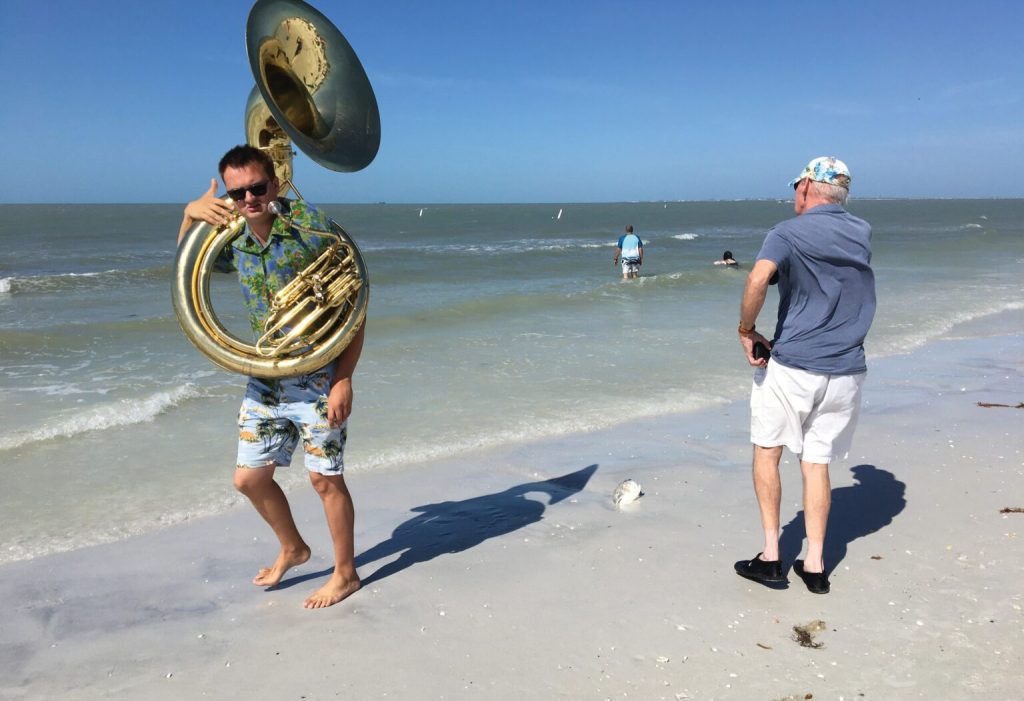
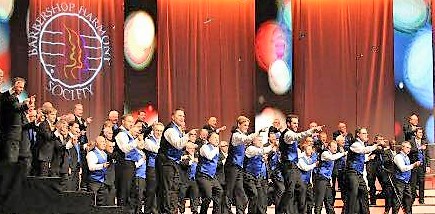
This is a story I’ve entered in the Florida Weekly 2025 Writing Contest, based on the first picture below, supplied by the newspaper.

“Where’s the parade, young feller?” the old man asked.

“No parade,” the young man replied, stopping for a moment.  “I’m on my way to my music lesson.”

“On the beach?” the old man chuckled, eyeing the younger man quizzically from under the bill of his cap.

“Just takin’ a shortcut to my teacher’s place.  He lives in a beach house down a-ways.”

“You in one o’ them there marchin’ bands?”

“Not yet,” the young man said, “but I hope to be.  Auditions start Monday.”

“Ain’t you a mite old to be in school?” the old man asked.  “No offence, but…”

The young man laughed.  “It’s a military band, not a school band.  I’m a Marine, and I’m tryin’ out for The President’s Own.”

“The president’s own what?” the old man asked.

“United States Marine Band,” the young man explained.  “America’s oldest, professional musical organization.”

“Old as me?” the old man chortled.  “I’m old as dirt!”

“Well, the band formed in 1798, when John Adams was President.  I’m pretty sure you’re not that old!”

The old man paused, as if adding up the numbers.  Then, scuffing the sand with his black loafers, he said, “Since when do Marines dress in swim-trunks an’ walk ‘round barefoot?”

“Never when I’m on duty,” the Marine replied.  “But when I’m walkin’ down the beach, I like to blend in with everybody.”

“Blend in?” the old man snorted.  “No way you blend in, young feller.  Not with that there thing you’re wearin’ ‘round your neck!”

The young man patted the instrument he was carrying.  “You noticed her, eh?  She’s a Sousaphone.  Weighs a ton, but she makes a lotta noise when I get ‘er goin’.”

“Who’s Susie?” the old man asked, eyebrows knitted, not sure he’d heard right.

“Who’s who?” the Marine asked.

“Susie!  The one you said owns that there phone thingy.”

After puzzling a moment, the Marine said, “There’s no Susie, sir.  This here’s a Sousaphone, named after John Philip Sousa, one of the Leaders of the Band.”

The old man gave that some thought.  “I thought the leader of the band was McNamara.”

“Sir?” the Marine said, confused again.

“Like in that old-timey song,” the old man said.  “You musta heard of it.”  And without further ado, he began to sing in a cracked falsetto, “Oh, me name is McNamara, I’m the leader of the band…”

The Marine waited politely ‘til the song was finished, then applauded the effort.  “You know, The President’s Own doesn’t feature vocalists, which is too bad, ‘cause I woulda recommended you.”

“Yeah, I used to be a pretty fair tenor,” the old man nodded.  “Still ‘member a lotta the old songs.”  After a moment, he added, “Used to be in the service, too.”

“Marine?”

“Army, 7th Cavalry, served in Korea.  Took a bullet in ‘53, hurt like a bugger, so they hadda ship me home.”  As he spoke, he lifted his shirt to show a scar on his left side, pink and ragged against his pale skin.  “Got me one o’ them there Purple Hearts, but I lost a few good pals over there, guys who never made it back.  If I coulda chose, I prob’ly woulda sooner played that there Susiephone in a band.”

The Marine studied the old man with renewed interest.  “So, how old are you now, sir?”

“Lemme see,” the old man said, gazing skyward.  “This here’s two-thousan’-an’-twenty-five, so that makes me ninety-one, I s’pose.”  He danced a little jig in the sand as if to contradict the truth.

“So, you were wounded in combat when you were only nineteen?” the Marine said, shifting the weight of the Sousaphone on his shoulder.

“Yessir,” the old man replied.  “Hurt like a bugger, like I said, an’ when I got home, I still hadda wait two more years to vote!  Wasn’t old enough to drink, neither, but I never let that stop me!”  He mimed chugging a beer as he said it.

The Marine gazed at the old man for a moment.  “Sir, do you know Rusty’s Crab Shack, just down the beach a-ways?”

“Sure, I know it!”

“Sir, if you meet me there after my lesson’s done, it would be my honour to stand you to a drink.  Can we do that?”

The old man’s face lit up.  “Young feller, there’s no way an old grunt like me is gonna turn down a free drink from a Marine.  I’ll see ya there!”

And as it turned out, it was more than one drink.

Singin’ the Songs

Regular readers here will know of my love for music in my life, whether performed by professional musicians in a concert hall or robust amateurs at a party.  I have genres I prefer, of course, as do most people, and I generally fancy instrumental versions of favourite songs to vocal renditions.  I find them more soothing, more conducive to creative thought and activity.

Most of my listening time occurs when I’m writing, as is the case right now, penning this essay, my head clad in earphones.  My first and abiding love is classical music—likely due the influence of my father, who often fell asleep with me on my bed at night as we listened to radio broadcasts of the great symphonies.  He frequently had stories to accompany the music, too, which made it all the more special.

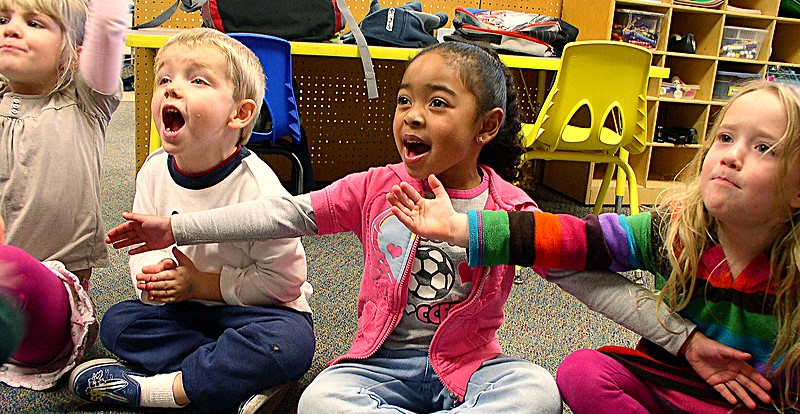
When I started school, one of my favourite activities was song-time, when the teacher would teach me and my classmates a new song.  Not all of us were thrilled, of course, but I was ever enthralled.  To this day, I love to join in the enthusiastic chorusing of the old songs with a group of friends.

And I can still remember (and occasionally sing to myself) some of those silly, little ditties we were taught in kindergarten and grade 1—

Your pail and shovel and wheelbarrow bring,
Let’s plant us a garden this morning in spring.
Dig little trenches, pull out all the weeds,
Pour in some water, and drop in the seeds.

Or this one—

Little yellow bird, little yellow bird,
Come flying with me.
We will build us a cozy corner
In the old apple tree.

There was one I particularly liked, although the lyrics saddened me—

“Come away,” sang the river to the leaves on the trees.
“Let me take you on a journey, and the world you will see.”
So, the leaves gently falling from the trees on the shore
Float away on the river, to come home nevermore.

It might have been the final phrase that bothered me, that they would never find their way home.  But the melody was lovely.

Making friends was very important to one just starting school, so this song had special meaning—

Make new friends, but keep the old.
One is silver, and the other gold.

At my advanced age now, the inherent truth of that sentiment has been borne out countless times.

Our earliest foray into the magic of the French language began with this song about a skylark, Alouette—

Alouette, gentille alouette,
Alouette, je te plumerai.
Je te plumerai la tête,
Et la tête, et la tête,
Alouette, Alouette
Oh-h-h-h-h...
Alouette, gentille alouette,
Alouette, je te plumerai.

There were several verses to this one, substituting le bec, le cou, les ailes, le dos, les pattes, and la queue for la tête, and the chorus had to include every one of them as they were introduced.  But we loved the challenge!

As little ones, we were always encouraged to be active and happy, and to let people know how we felt.  This song allowed us a way to do just that—

If you’re happy and you know it, clap your hands!
If you’re happy and you know it, and you really want to show it,
If you’re happy and you know it, clap your hands!

There were many variations on clapping your hands as we sang that one, and all of them caused much joy and laughter.

One of the songs I especially liked was this one, seeking love and happiness—

You are my sunshine, my only sunshine,
You make me happy when skies are gray.
You’ll never know, dear, how much I love you.
Please don’t take my sunshine away.

Over these past few years, I’ve been fortunate enough to spend many happy hours singing with a men’s chorus, and a fuller version of this is still one of our staples.  I’ve included a video clip that you will surely enjoy—

It’s seventy years and more since I learned many of these songs, and I’m amazed by the joy they still bring me.  After all this time, there are fewer things more fun than singin’ the songs.

Songs I Remember

For as long as I can remember, songs have been a major part of my life.  Even before memory, my mother was singing to me in the cradle.  And during my boyhood years, my dad constantly shared his love of music.

To this day, I remember many of the songs my mother sang: I Wonder Who’s Kissing Her Now, Sweet Little Alice Blue Gown, Always, What’ll I Do, and too many more to mention.

And I remember the classical music my dad and I would listen to on the radio as he tucked me in at bedtime: Prelude to Act III of Lohengrin, William Tell Overture, Light Cavalry Overture, Rhapsody In Blue, and so many others.  To this day, it’s my favourite genre, playing in my earbuds whenever I write.

When I started school, I discovered to my delight that learning new songs was a part of my curriculum, and I still remember the words and tunes to many of them—

Oats and beans and barley grow, oats and beans and barley grow,

You and I and everyone know how oats and beans and barley grow.

I didn’t actually know how those crops grew, of course, not then, but I learned the song and sang it endlessly.

Your rake and shovel and wheelbarrow bring,

Let’s plant us a garden this morning in spring,

Dig little trenches, pull out all the weeds,

Pour in some water and drop in the seeds.

I’ve never really liked gardening, but I did like singing that song.

While strolling through the park one day

In the merry, merry month of May,

I was taken by surprise by a pair of roguish eyes

While strolling through the park one day.

As a youngster, I had no idea what ‘roguish eyes’ were, but the lilting tune and the idea of being in the park instead of the classroom were appealing.  I even performed a tap-dance recital to that song.

“Come away,” sang the river to the leaves on a tree,

“Let me take you on a journey, and the world you will see.”

So, the leaves gently falling from the tree on the shore

Float away on the river to come home nevermore.

This one made me sad, and does even now, at the thought that those leaves would never come home again.  I couldn’t wrap my head around that.  Home, it seemed to me back then, was forever.

And so was singing, and music in general.  And thus it was that, sixty-plus years after starting school, I joined the bass section of a men’s barbershop chorus, eighty voices strong, where I found I could chime in on so many other songs I remembered from my youth: All Of Me, You Belong To Me, Let Me Call You Sweetheart, Loch Lomond, Peg O’ My Heart, Sentimental Journey, You Are My Sunshine, Me And My Shadow, and more just like those.

Singing with the chorus had become a bucket-list item for me by then, something I wish I’d done years before.  The harmonies and chords rippling down over the risers brought goosepimples every time, and once in a while I would even stop singing, the better to listen…surreptitiously, of course.

I’ve had to step down now, but here’s an audio clip of a recent performance, which I trust you’ll enjoy (best with earphones)—

I hope the last sound I ever hear, whenever that time may come, will be songs in my ear—sung by my mother, perhaps, or shared by my dad.  I’d be happy to hear any of these: Fare Thee Well, I’ll Be Seeing You, or even Beethoven’s Emperor Concerto.

As Edward Bulwer-Lytton wrote, Music, once admitted to the soul, becomes a sort of spirit, and never dies.

Tell ‘Em I’ll Be There

In my dream on this midsummer evening, I hear the harmonies wafting through the screen door and open windows, a ricky-tick piano accompanied by exuberant voices, men and women, some a tad off-key, but all in on the song—

In the cool, cool, cool of the evening,

When you’re lovin’ the summer air,

In the cool, cool, cool of the evening,

Save your boy a chair,

When the party’s gettin’ a glow on, and singin’ fills the air,

In the shank of the night, when the doin’s are right,

Well, you can tell ‘em I’ll be there.

I enter the familiar house—not as the twelve-year-old I was then, but the eighty-year-old I am now—and I move freely and unseen among the gathered throng.  All of them are there, as they always were, and I start in the kitchen where I see my mother, Dorothy, and her mother, Pearl, refilling bowls of snacks, washing and drying glasses, emptying and cleaning ashtrays.  The kitchen table is littered with mickey-bottles, partially-empty bottles of soda and ginger ale, and empty beer bottles.  But I remember from experience, it will be properly set for breakfast by morning.

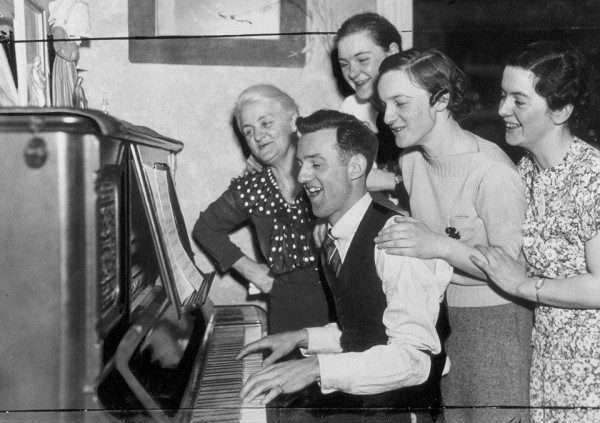
I wander into the dining-room where the assembled singers are sitting or standing near Mike, the next-door neighbour, who is perched on the stool in front of the upright piano, tickling the ivories, as Dad calls it.  Dad says he plays by ear, which always struck me funny because it’s his fingers that dance across the keyboard, responding to every shouted request for a song.  To keep him going, Dad makes sure he always has a bottle of Black Horse Ale by his right hand.

Mike’s wife, Claire, a tiny French-Canadian gamine, sits beside the piano, smiling shyly and swaying to the rhythms her husband is pumping out.  She speaks halting English, always has a drink in her hand which she rarely sips, and reminds me now of Leslie Caron.

Beside her is my mother’s father, Gordon, and his voice is among the loudest and truest in the raucous chorus.  The son of a banty Irishman, one of five boys, he is proud of still being welcome at any party with his own five children and their spouses.

Almost everyone is smoking, and the muggy air is redolent of cigarette and cigar, which I don’t mind, although I’ve never been a smoker.  A hazy, bluish pall hangs up near the white, popcorn ceiling, and will eventually yellow it, but no one is thinking about that right now.

It occurs to me that, except for my mother and father, every one of these people will die before they reach the age I am now, most in their seventies, some sooner.  But no one save I ponders that right now, either, and the songs keep a-coming.

I’m gonna buy a paper doll that I can call my own,

A doll that other fellows cannot steal.

And then the flirty, flirty guys with their flirty, flirty eyes

Will have to flirt with dollies that are real…

My mother has three sisters, Marie, Eunice, and Irene, and a brother, Jim, all of whom, like my mother, regale in the spotlight.  All of them are attractive, they all fancy themselves singers, and they are competitive with each other—although loving, of course.  But none wants to take a backseat, so they forever try to outdo each other.

Eunice is the best of them, I think, referred to more than once in a local newspaper as ‘the songbird of the north’, and her preferred style is like Peggy Lee or Connie Boswell—whispery, cool, seductive, sophisticated.  I think she’s enamored of a friend of my parents, Jack, and I watch as she purrs one of her songs to him—

You made me cry and walk the floor,

If you think I’ll crawl back for more,

Big Daddy. you’ve got a lot to learn…

Jim thinks of himself as Sinatra, not only in his style of singing, but in his expressions, how he dresses, how he carries himself, how he relates to others.  And I must admit, he does do more than passing justice to some of the classics, one of which I’m listening to now in the dining-room—

It’s quarter-to-three,

There’s no one in the place ‘cept you and me,

So set ’em up, Joe, I got a sad story you oughta know…

So make it one for my baby, and one more for the road.

It goes without saying, however, there are no solos in this crowd, not for long.  One person may have the floor for a few seconds, but only until the others recognize the song, and then the chorus begins anew.  Irene, she of the dancer’s legs, sings quietly, mostly to her husband, Bev, and he bestows his crooked grin on her as he listens—

Gonna take a sentimental journey,

Gonna set my heart at ease,

Gonna make a sentimental journey

To renew old memories…

I realize that’s what I’m doing, too, as I wander through the house, taking it all in.  The hallway between the kitchen and the dining-room has a closed door leading to the second-floor bedrooms, and I know if I open it, I’ll see my younger self seated on the stairs beside my brother, Allan, and my younger sister, Colleen—chins in hands, elbows propped on knees, listening to the music.  My other two sisters, Dale and Martii, both much younger, will doubtless be abed and asleep despite the din.  But I choose not to open the door.

Marie has the floor now, if only briefly, and in the imperious manner of the eldest child, the athletic one, she tells Mike the next tune he must play.  And as always, she sings it to Bob, her husband, and just like every other time she’s tried, she isn’t able to finish before choking up in tears—

You’ll never know just how much I love you,

You’ll never know just how much I care,

And if I tried, I still couldn’t hide my love for you,

Surely you know, for haven’t I told you so a million or more times…

When she stops, I find myself finishing it for her in my head, for it’s one of my favourite songs, and they are my favourite aunt and uncle.

…If there is some other way to prove that I love you,

I swear I don’t know how.

You’ll never know if you don’t know now.

Mike heads for a bathroom break, so Dad takes his place at the piano.  If he could be anything in life other than what he is, I imagine it would be a concert pianist.  But he isn’t, and so he limps through a very limited repertoire, concluding with his truncated version of the finale of Gershwin’s Rhapsody in Blue—which is decidedly not rhapsodic as he pounds it out.  And because it has no lyrics, it requires him to improvise in his boisterous baritone—

Da da da dah!

Da-da da-da da da da dah,

Da dah!

Da da da,

Da-DAH!

Mercifully, Mike comes back, beer in hand, with another for my father.  I watch in remembered awe as air bubbles dance inside the green, long-necked bottle they tip back for long swallows.  When Mike is seated again, the first song called for is Jack’s, and his gravelly bass rings out the familiar lyrics—

Chi-ca-go, Chi-ca-go, that toddlin’ town,

Chi-ca-go, Chi-ca-go, I’ll show you around.

Bet your bottom dollar you’ll lose the blues in Chi-ca-go,

The town that Billy Sunday could not shut down…

But I discover suddenly that the party I am so enjoying is beginning to shut down, at least for me.  I’m still there—this eighty-year-old apparition, unseen by anyone—but the scene around me is growing dimmer, the music fainter. And then I spy my mother, back from the kitchen, whispering to Mike at the piano, and everyone stops to listen as she sings a piece she has sung to me for as long as I can remember—

I wonder who’s kissing her now,

I wonder who’s showing her how…

I wonder if she ever tells him of me,

I wonder who’s kissing her now?

And when she is finished—as all around her slide away into the deepening fog of long-ago, all these people I loved and whose lives I enjoyed being part of—I sidle over to her and plant a lingering kiss on her cheek.

I used to ask her when she sang the song to the infant me what that now was, the now that was being kissed; in my childish innocence, I didn’t understand the word as a temporal reference, thought of it as a thing, like a nose or a forehead.  She would simply smile and kiss both of mine.

So now, on the cusp of waking—just before I find myself alone again in my dream, outside that house of yesteryear in the warm, summer night—I wonder if I might be allowed to join that party myself in some not-too-distant-future.  And in hopeful anticipation, I offer my own version of one of the songs to my mother and father—

In the cool, cool, cool of the evening,

Save your boy a chair…

In the cool, cool, cool of the evening,

I’ll find you anywhere,

When the family all ask about me, askin’ if I care,

If they’re wonderin’ if I will join ‘em on high—

Well, you can tell ‘em I’ll be there.

Karao-kay!

So, here’s the thing—you don’t have to be a good singer!  You don’t even have to be a mediocre singer!  All you need is that you like to sing.

For some time now, as some of you know, I’ve blended my bass voice with mates on the risers of a large men’s chorus, the mighty Harbourtown Sound.  And it’s been a comfort to me to know that no one listening would actually be able to pick my voice out of the throng.  I mean, I do contribute to the wondrous wall of sound we produce collectively, but my solo voice is anonymous, much to my liking.

However, on my last birthday, which took me past my mid-mid-seventies, my wife and two daughters gifted me with a karaoke machine.  Never in my wildest imaginings would I have thought to ask for such a thing—although, in my younger years, I did take part in more than one karaoke session, usually after a few beers in the company of good friends whose critical faculties were undoubtedly somewhat impaired.  In fact, I think I remember stepping up in one or two open-mic sessions, as well.

As I recall, I was never asked back to the same venue twice.

Still, I’ve discovered I love my new machine.  The internet is chock-full of karaoke versions of popular songs, arranged exactly as the original artists sang them, with the correct lyrics scrolling on the screen.  Copyright restrictions apply only if one intends to use them for commercial purposes, which I most assuredly do not.  After all, if it were my intent to sell any of the songs I record, I’d need a buyer, right? 

‘Nuff said.

Ballads are my preferred genre, some of them even older than I.  A partial list of artists whose songs I have attempted includes Pat Boone, Johnny Cash, Patsy Cline, Kris Kristofferson, Johnny Mathis, Willie Nelson, Jim Reeves, and Frank Sinatra.

Still to come, I hope:  Perry Como, Tennessee Ernie Ford, John Gary, perhaps even Pavarotti!  After all, I’m singing for an audience of one!

I’ve also essayed solo versions of songs by several different groups, including Abba, Simon & Garfunkel, The Beach Boys, The Irish Rovers, and The Platters.  Still on the horizon: The Everly Brothers, The Lettermen, The Seekers, and probably others I haven’t yet contemplated.

If you have assumed by now that my wife and daughters have inadvertently created a monster, I could hardly gainsay you.  But I’m benign, I assure you.

My process is to sit with the machine, which is connected by Bluetooth to a song dialled up on my laptop.  I sing it through a couple of times, adjusting the volume of the instrumentals as needed, boosting the mic volume up or down accordingly.  There is a reverb feature, too, which enhances my voice on most of the songs.

If I manage at some point to sound okay to my own ears, I record the song and add it to my little library.  Some of the songs, as you might imagine, are never recorded!

I quickly discover which of the songs will take me beyond my somewhat limited vocal range, and discard them.  Even with my bass singing voice, I can manage a falsetto if not too high, so that helps a little.  Breath control is the biggest single problem I encounter—running out of air before a phrase ends is never good, resulting in a cracked whimper that brings no joy to anyone ever.

Pitch problems are a concern, too, and I sometimes hear myself landing just short of the intended note—what a layperson might call singing flat.  That’s also associated with running short of breath, and can be corrected with proper breathing intervals.  I have yet to record even one song, however, without at least one pitchy problem.

But who cares!

I mentioned earlier that I sing for an audience of one.  That’s not entirely true, though, because I do send along those songs I’ve recorded to my wife and daughters—it’s they, after all, who unleashed the monster.  I also forward the recordings to my three long-suffering sisters, together with a plea that they resist the urge to tell me to stop.  I suggest to them they have three choices—

  1. enjoy the song,
  2. endure the song, or
  3. DELETE.

I implore them not to laugh as they listen (though I’ll never know if they do), nor compare me to the original artist.  Rather, I ask that they think of this as one, perhaps forlorn, attempt to make music with only a modicum of talent, for no other reason than the sheer joy of making music. 

And you, dear reader, might even try it yourself—in the shower, in your car—or, if you’re lucky, on your very own karaoke machine.

Karao-kay!

What Will Matter?

A friend from my barbershop chorus was talking with me the other day, and I was intrigued by his relentlessly-cheerful tone.  Not that I’m a negative sort, glumly sitting at my keyboard day after day, or on my smartphone, doom-scrolling through the social media universe.  Far from it, in fact.

doomscrolling

But even I couldn’t match my friend’s upbeat manner.  When I commented on that, he told me about some of the good things he was able to enjoy during this time of Covid-quarantine, as the days stretch into weeks, the weeks into months—things like family, reading, golfing, and (of course) singing, even virtually.

In the conversation, he referred to a passage he took inspiration from, penned by one Michael Josephson, a member of the Rotary club in Los Angeles, CA, which offers an upbeat message for any of us.  I liked it so much, I’m including it here in its entirety.

What Will Matter

Ready or not, some day it will all come to an end.
There will be no more sunrises, no minutes, hours or days.
All the things you collected, whether treasured or forgotten. will pass to someone else.
Your wealth, fame, and temporal power will shrivel to irrelevance.
It will not matter what you owned or what you were owed.
Your grudges, resentments, frustrations, and jealousies will finally disappear.
So too, your hopes, ambitions, plans, and to-do lists will expire.
The wins and losses that once seemed so important will fade away.
It won’t matter where you came from or what side of the tracks you lived on at the end.
It won’t matter whether you were beautiful or brilliant.
Even your gender and skin colour will be irrelevant.
So what will matter? How will the value of your days be measured?
What will matter is not what you bought but what you built, not what you got but what you gave.
What will matter is not your success but your significance.
What will matter is not what you learned but what you taught.
What will matter is every act of integrity, compassion, courage, or sacrifice that enriched, empowered, or encouraged others to emulate your example.
What will matter is not your competence but your character.
What will matter is not how many people you knew, but how many will feel a lasting loss when you’re gone.
What will matter is not your memories but the memories that live in those who loved you.
What will matter is how long you will be remembered,  by whom and for what.
Living a life that matters doesn’t happen by accident.
It’s not a matter of circumstance but of choice.
Choose to live a life that matters.
Michael Josephson

choices

The passage makes a lot of sense to me, and the final line is perfect.  Not simple to do, not by any means, but a worthy objective to pursue.

And in the end, that is what will matter.

Odes of Joy

I would wager the family farm (if I owned one) that not one in ten of you, dear readers, will know the meaning of this acronym:  SPEBSQSA.

It stands for the original, and still official, name of the Barbershop Harmony Society (BHS), founded eighty-one years ago, in 1938.  Since that time, loads of odes of joy have rung out across the world as men and women of all persuasions have come together in harmony.

quartet

The acronym translates as: Society for the Preservation and Encouragement of Barbershop Quartet Singing in America.  Quartets still flourish, but barbershop singing has since expanded to include large choruses.

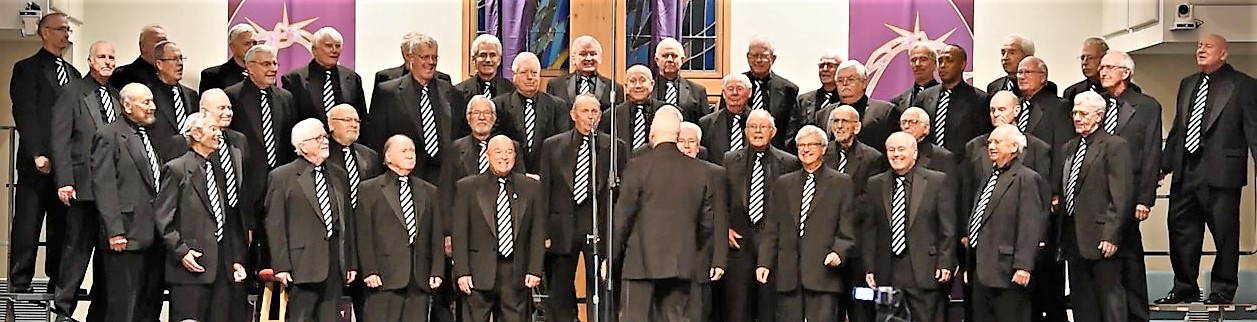
I mention this because a few years ago, a friend introduced me to the joys of singing in a men’s chorus—Harbourtown Sound, of Hamilton, Ontario.  Eighty-five men strong, HTS is a competition chorus that was ranked twenty-fourth in the world in 2018, out of more than a thousand barbershop choruses worldwide.

Harbourtown_2nd_Half Cropped(1)

The jubilant music the chorus produces can make the listener shiver with delight.

Just this past winter, that same friend invited me to join a second chorus—the Suncoast Statesmen, of Punta Gorda, Florida.  This great group, comprised almost equally of American stalwarts and Canadian snowbirds, is a performance chorus, eschewing the competitive experience in favour of a more relaxed approach.

snapshot2

Nevertheless, the music the chorus creates is both joyous and memorable.

I’ve written before in these pages about Harbourtown Sound, and one of those posts may be found at this safe link—

If you missed it, or even if you’d like to enjoy a reprise, check it out.  You’ll hear some wonderful music selections within the post.

The chorus, which this year is celebrating its fifteenth anniversary, will present its annual spring show, Making Great Music and Great Friends, on 12 May at the Burlington Performing Arts Centre.

The Suncoast Statesmen recently performed their annual spring show, Harmony Showcase, held in a large church in the area, before a sell-out crowd.  The chorus sang nine songs altogether, five in the first act, four in the second.  Between sets, a number of quartets and local high school student ensembles performed.

If you’re in the mood to hear some brilliant harmony, have a listen to these five songs, which may be found at this safe link—

Much has been written about the joys and benefits of singing, either alone or in an ensemble.  For me, it’s a little bit like rainfall—once it starts, it’s hard to stop.

choir2

He Was My Brother

My brother died today, the first of our generation to go.

We weren’t close, he and I—brothers by birth, but distant in life.  He was a complex man, troubled by emotional problems and addiction issues, and hard to help.

Since learning of his passing, I’ve been reflecting on his life and how it intertwined with mine.  As is often the way with me, it helps to write it down and share it.

The best parts of our relationship were during our childhood, so long ago now that I have to think hard to remember them.  We didn’t see each other much over the past five decades, nor did we speak very often by phone—telephone phobia being one of the fears he struggled with.  The last time I met with him, he looked older than I who am his elder by three years—hair gone white, walking only with assistance, racked by a persistent, phlegmy cough.

When we did meet over the years, it was almost always when he needed help.  I checked him into rehab clinics on three different occasions, lent him money, gave him a temporary bed, and after our parents’ deaths, managed his financial affairs—always feeling, I’m sorry to say, somewhat put-upon.  I could never understand why he seemed unable to respond to the many, well-intentioned interventions mounted by his sisters and me.

I have pictures of him as a young boy, nestled in the cocoon of parents and siblings, but almost no pictures of his adult years.  He always had a dreamy expression on his face in those pictures, as if he couldn’t quite grasp the notion that the onrushing realities of life would have to be faced.

He was highly intelligent, but seriously unable to apply his intellect to everyday problems and situations.  He wanted to be liked, but his social skills were lacking, to the point that he would frequently offend people without intending to.  And when he became frightened or frustrated, as he often did, he had a temper.

But he could display a quirky, astute sense of humour, too, and would smile quietly as the rest of us laughed at some of the things he said.  When at his best, he was unfailingly polite, almost Victorian in manner, and spoke deliberately in the most precise English.  Even when I, impatient with the pace of the conversation, would finish his sentences for him, he would continue on to finish in his own way, as if I hadn’t interrupted.  He could be a charmer.

He was a keen devotee of chess, a game at which he beat me regularly in our childhood, much to my chagrin.  He loved classical music, a trait we both learned from our father.  I remember listening to each other’s LP records and arguing about which was best—Tchaikovsky’s 1812 Overture or Rimsky-Korsakov’s Capriccio Espagnol; Bach’s Brandenburg Concertos or Mussorgsky’s Pictures at an Exhibition; Mozart’s Eine Kleine Nacht-Musik or Beethoven’s Piano Concerto No. 5, ‘Emperor’.  I find now that I love them all, and am glad we listened together.

clef

Reading was another of his passions, as it was for me, although our tastes were not the same.  Nevertheless, it was my brother who introduced me to Edgar Allen Poe and William Butler Yeats, two favourites to this day, and it was he who gave me my first copy of J.R.R. Tolkien’s trilogy, Lord of the Rings, perhaps my all-time favourite story.

It would have been nice if all that had continued into adulthood.  But it didn’t, and no amount of wishing will make it so.

Given his afflictions and general health near the end, I feel little sorrow at his passing—rather, I am grateful that his problems are over and he is at peace.  I picture him now, embarking upon the next phase of his eternal journey through the universe, unencumbered by his mortal restraints, free and open wide to whatever may come.

If I choose to remember him only through the good things from our time together on this earth, so be it.  If I choose to believe we loved each other despite the many obstacles, then it is so.  He was more than his illnesses and sufferings, after all.

He was my brother.

Only Words?

Away back in 1967, the year I was married, an Australian boy band, the Bee Gees, wrote and recorded a song entitled Words.  The chorus of that song became an anthem of sorts for a generation of young people—

words

As an author and blogger, words are my stock and trade.  And the writing of those words can be, of necessity, a lonely endeavour, deliberately shut away from the everyday toil and turmoil that too often consumes us.

Which is why I beg to differ with the sentiment of the Bee Gees’ statement.  Words, in fact, are not all we have.  When music is added to words, the result can provide a tremendous emotional impact for an audience fortunate enough to be part of it.  And when that music is made in the company of others, the loneliness and solitude of the writing process is greatly mitigated.

The men’s chorus to which I belong, Harbourtown Sound, provides teamwork, mutual support, and a sense of purpose to everyone who is a part of it.  And our audiences tell us they experience those same things when they listen to our performances.

See and hear for yourself by listening to a recent rehearsal tape, recorded in the setting in the picture below, punctuated in a couple of places by exhortations from the directors.

HTS Rehearsal

If you aren’t convinced by the blend of words and music here presented, well…..I guess all I can say is that I’m at a loss for words.


Poetry and Song

Every child is an artist (Pablo Picasso).

In an era when the Arts are under attack in our schools, depriving young people of the opportunity to develop and nurture their creative wellspring—the very thing that will sustain them throughout their lives—it is a joy to be able to spread good words in poetry, pictures, and song.

ice on the water,

white sheets atop the blue deeps—

reflecting the sun

ice on lake

imagination—

like hot air balloons, slipping

bonds that tie me down

balloons

asleep together,

intertwined, we bind our souls

with each breath we take

asleep

impossible dream?

many might have thought so, but

you made it come true

in the rain

more yesterdays now

than tomorrows, but it’s the

tomorrows that count

dawn3

shoulder to shoulder,

a capella voices raised—

united in song

Art enables us to find ourselves and lose ourselves

at the same time (Thomas Merton).