The Susiephone

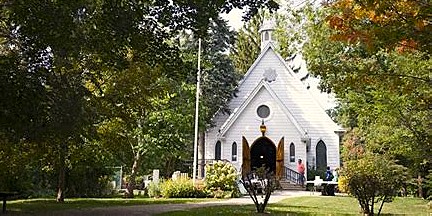
This is a story I’ve entered in the Florida Weekly 2025 Writing Contest, based on the first picture below, supplied by the newspaper.

“Where’s the parade, young feller?” the old man asked.

“No parade,” the young man replied, stopping for a moment.  “I’m on my way to my music lesson.”

“On the beach?” the old man chuckled, eyeing the younger man quizzically from under the bill of his cap.

“Just takin’ a shortcut to my teacher’s place.  He lives in a beach house down a-ways.”

“You in one o’ them there marchin’ bands?”

“Not yet,” the young man said, “but I hope to be.  Auditions start Monday.”

“Ain’t you a mite old to be in school?” the old man asked.  “No offence, but…”

The young man laughed.  “It’s a military band, not a school band.  I’m a Marine, and I’m tryin’ out for The President’s Own.”

“The president’s own what?” the old man asked.

“United States Marine Band,” the young man explained.  “America’s oldest, professional musical organization.”

“Old as me?” the old man chortled.  “I’m old as dirt!”

“Well, the band formed in 1798, when John Adams was President.  I’m pretty sure you’re not that old!”

The old man paused, as if adding up the numbers.  Then, scuffing the sand with his black loafers, he said, “Since when do Marines dress in swim-trunks an’ walk ‘round barefoot?”

“Never when I’m on duty,” the Marine replied.  “But when I’m walkin’ down the beach, I like to blend in with everybody.”

“Blend in?” the old man snorted.  “No way you blend in, young feller.  Not with that there thing you’re wearin’ ‘round your neck!”

The young man patted the instrument he was carrying.  “You noticed her, eh?  She’s a Sousaphone.  Weighs a ton, but she makes a lotta noise when I get ‘er goin’.”

“Who’s Susie?” the old man asked, eyebrows knitted, not sure he’d heard right.

“Who’s who?” the Marine asked.

“Susie!  The one you said owns that there phone thingy.”

After puzzling a moment, the Marine said, “There’s no Susie, sir.  This here’s a Sousaphone, named after John Philip Sousa, one of the Leaders of the Band.”

The old man gave that some thought.  “I thought the leader of the band was McNamara.”

“Sir?” the Marine said, confused again.

“Like in that old-timey song,” the old man said.  “You musta heard of it.”  And without further ado, he began to sing in a cracked falsetto, “Oh, me name is McNamara, I’m the leader of the band…”

The Marine waited politely ‘til the song was finished, then applauded the effort.  “You know, The President’s Own doesn’t feature vocalists, which is too bad, ‘cause I woulda recommended you.”

“Yeah, I used to be a pretty fair tenor,” the old man nodded.  “Still ‘member a lotta the old songs.”  After a moment, he added, “Used to be in the service, too.”

“Marine?”

“Army, 7th Cavalry, served in Korea.  Took a bullet in ‘53, hurt like a bugger, so they hadda ship me home.”  As he spoke, he lifted his shirt to show a scar on his left side, pink and ragged against his pale skin.  “Got me one o’ them there Purple Hearts, but I lost a few good pals over there, guys who never made it back.  If I coulda chose, I prob’ly woulda sooner played that there Susiephone in a band.”

The Marine studied the old man with renewed interest.  “So, how old are you now, sir?”

“Lemme see,” the old man said, gazing skyward.  “This here’s two-thousan’-an’-twenty-five, so that makes me ninety-one, I s’pose.”  He danced a little jig in the sand as if to contradict the truth.

“So, you were wounded in combat when you were only nineteen?” the Marine said, shifting the weight of the Sousaphone on his shoulder.

“Yessir,” the old man replied.  “Hurt like a bugger, like I said, an’ when I got home, I still hadda wait two more years to vote!  Wasn’t old enough to drink, neither, but I never let that stop me!”  He mimed chugging a beer as he said it.

The Marine gazed at the old man for a moment.  “Sir, do you know Rusty’s Crab Shack, just down the beach a-ways?”

“Sure, I know it!”

“Sir, if you meet me there after my lesson’s done, it would be my honour to stand you to a drink.  Can we do that?”

The old man’s face lit up.  “Young feller, there’s no way an old grunt like me is gonna turn down a free drink from a Marine.  I’ll see ya there!”

And as it turned out, it was more than one drink.

Under the Lawn

IF YOU ARE RECEIVING THIS POST IN YOUR EMAIL INBOX, CLICK ON THE TITLE OF THE POST TO READ IT IN ITS NATURAL SETTING ON MY BLOGSITE.

The weekly prompt from my Florida writers’ group was “the lawn”, and this is my response. An additional challenge was to tell a story with a twist.

My daddy complained each time that it rained,
Soaking into our green, front lawn.
“The rain makes grass grow!” he’d curse, soft and low,
Wishing it just would be gone.
But when the sun came, it also got blame
For helping the grass to grow.
For that always meant my daddy got sent
Outside in the heat to mow.

He had a lawnmower with which he would lower
The height of each blade of grass,
But it took him hours, avoiding Mum’s flowers,
Or she would hand him his ass!
He’d curse and he’d moan, a tad overblown,
Back and forth across the lawn,
Cutting the grass down, his face in a frown,
Until at last he was done.

But then one sad day, he looked o’er my way,
Saw me lounging by the pool.
“It’s ‘bout time we shared this job,” he declared.
“You’re makin’ me look the fool!”
I wasn’t impressed at ending my rest
To take over his irksome task,
But I gave it a go if only to show
All he had to do was ask.

But Daddy was quick once I took a lick,
And soon the job was all mine!
I sweated and toiled while Daddy, well-oiled,
Got a tan in the warm sunshine.
And now it was him who went for a swim
While I pushed that mower hard,
Cursed the rain and sun, just like he had done,
For growing grass in our yard.

But now, I don’t mow the lawn when it grows,
I just let it go to seed.
And nobody’s there to utter a care
That everywhere there’s a weed!
I’m back by the pool, and everything’s cool,
For at long last, Daddy’s gone
To his final rest…and have you already guessed?
I buried him under the lawn!

That Was That!

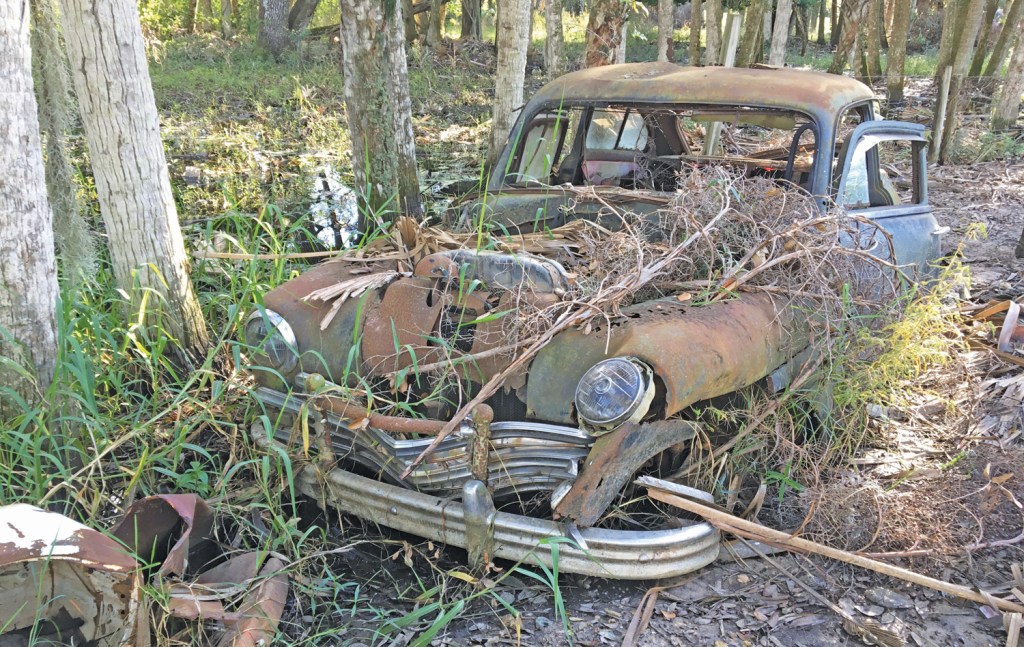
The following piece is my response to a prompt for the Florida Weekly 2025 writing contest, to write a story no more than 750 words, about the accompanying photo of an old car abandoned in the woods.

“Nosiree!  I plumb don’t b’lieve that, Jed!”  A trail of acrid smoke rose into the cool, autumn air from the pipe clenched in the old man’s mouth.

“I’m tellin’ ya, Ezra, it’s the honest-to-Jehosophat truth.  My daddy tol’ me hisself afore he passed.  That there vee-hicle’s been rottin’ in the woods since you an’ me was puppies!”

“Yessir, that part’s true, but all’s I can say ‘bout t’other part is your pappy was mistook!  That vee-hicle was built in Dee-troit city in the 1940s, ‘bout the time you an’ me come into the world.  Bonnie an’ Clyde was killed by revenooers back in the dirty-thirties, so no way they was gallivantin’ ‘round in that vee-hicle!”

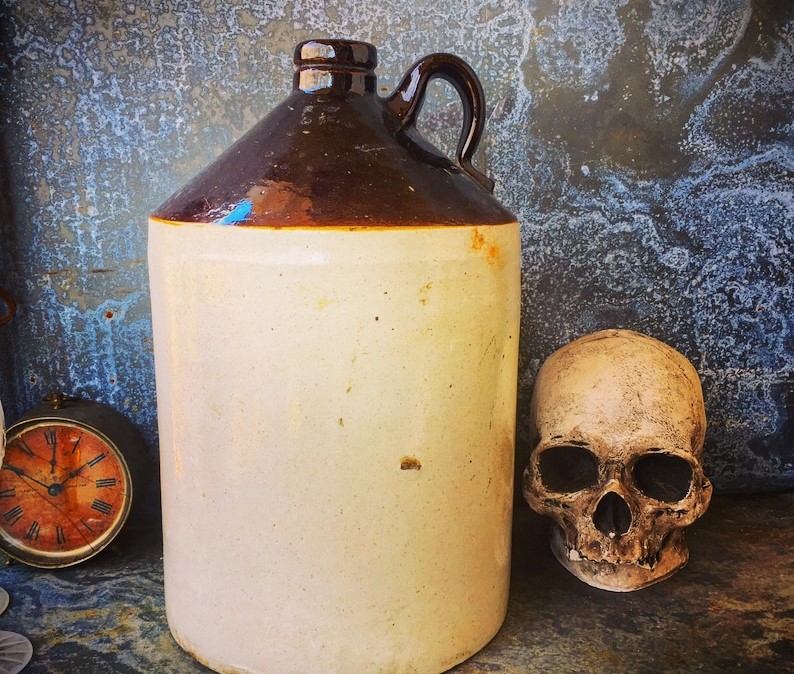
The old men were rocking in ancient chairs on the decrepit porch of Jed’s cabin, a jug of homebrew on the floor between them.  Idly watching leaves fluttering to the ground in the gentle breeze, they were chewing over a favorite topic of conversation in their backwoods community.

Jed took a deep draw on his own pipe.  “Well, if’n you’re so sure ‘bout that, what’s your story?  How else could that ol’ wreck come to roost in the middle of the woods?”

“Way I heard it,” Ezra opined, wiping his mouth after a swig from the jar, “some city-slicker come to town drivin’ ‘er, an’ he run afoul of ol’ man Jackson.”

“Sheriff Jackson?” Jed asked, reaching for the jug.  “Ol’ Hick’ry?  He was a mean ‘un, so’s I ever heard.  Not a boy to fool with!”

“My ol’ man thought so,” Ezra nodded, banging his pipe against the side of his chair.  Watching the dottle fall to the wooden floor, he waited a moment to ensure it was extinguished.  “Daddy got hisself locked up more’n once by that boy.”

“Yeah, my ol’ man, too!” Jed said with a toothless grin.  “But what ‘bout that there city-boy?  What happened to him?”

“You ever looked inside that vee-hicle?” Ezra asked.

“Nosiree!” Jed declared.  “Laid eyes on ‘er once or twice through the trees while huntin’, but never wanted to get close.  Word is, she’s haunted!  Way I heard it, Bonnie an’ Clyde is still inside!”

“Bullcrap!” Ezra exclaimed.  “I already tol’ ya, they was dead an’ gone afore that vee-hicle ever rolled off the Dee-troit line!  But you’re right, she is haunted, sure as I’m sittin’ here!  Way I heard it, that city-slicker’s still inside, sittin’ behind the wheel big as life…only dead as a doornail.”

“What in tarnation happened to him?”

“Like I said, he got hisself mixed up with Ol’ Hick’ry.  Folks say it was over messin’ with the ol’ man’s daughter, if mem’ry serves.  My daddy said she was a right pretty gal.”

“Messin’ with her?” Jed echoed, taking another swallow.  “Messin’ how?”

“Not sure,” Ezra shrugged as he repacked his pipe with low-country, natural Virginia.  Striking a match on the side of the rocker, he puffed deeply a few times, then finished, “But she was a right pretty gal, like I said.”

“Don’t ‘member her,” Jed said.  “Sounds like I mighta missed somethin’.”

“Nah, she was way older’n us, Jed.  When her an’ that city-boy was mixin’ it up, you an’ me woulda still been pullin’ girls’ pigtails in grade school.”

“I only got to grade eight,” Jed said, “but by cracky, I was pullin’ more’n pigtails by then!”

The lifelong friends laughed at that, then sat in silence for several minutes, puffing and drinking contentedly, happy in the autumnal forest they’d never left.

“You really think that city-boy’s still in that vee-hicle?” Jed asked finally.  “Be nothin’ much left by now, if’n he is.”

“Hard to say,” Ezra replied.  “I ‘spect all’s we’d find if we was to go lookin’ is a pile of old bones, maybe a skull grinnin’ at us.  But don’t matter, nohow.  My ol’ bones ain’t gonna skedaddle that far, not no more.”

“I hear ya,” Jed agreed.  “But listen, what happened to Ol’ Hick’ry’s daughter?  Where’d she get to?  Maybe she’s out there in the vee-hicle with him.”

“Dunno,” Ezra said, brushing a fly from his forehead.  “All’s I know is Bonnie an’ Clyde ain’t out there.  Not ‘less they rose up from the dead like Laserman…that guy in the Bible!”

“You sure?” Jed said.

“Yessiree!” Ezra said, smacking the arm of his chair.  “An’ I’ll tell ya why.  That there vee-hicle out there’s a Stoodiebaker, but Bonnie an’ Clyde drove ‘emselves a Dodger!”

And that was that!

The Landlord

The prompt from my weekly writers group in Florida was to write a piece focusing on an aspect of character development. This post is an excerpt from a chapter in one of my novels, ‘Delayed Penalty’. Can you discern the personalities of these two characters from their conversation?

“Yeah, she lives here.  What’s this all ‘bout?  She in trouble?”  Dicky Lister was slouched in the doorway to the landlord’s apartment, a beer can in his hand.

“When did you last see her?” Detective Billie Radford asked.

Scratching his head, Lister said, “I dunno.  Coupla days ago, maybe.  Me an’ the tenants don’t exchange Christmas gifts, y’know.”  Radford noticed flakes of dandruff on his shoulders as he scratched his hair.

“Did you happen to see her sometime on the twenty-fourth, Christmas Eve?”

“Yeah, I guess, but early on.  Me an’ Lizzie don’t hang up our stockin’s for Santa together, neither,” he smirked knowingly.  “Wouldn’t of minded, though.”

“Her name is Lissa,” Radford said, “not Lizzie.  She’s been missing since Christmas Day, and I’d like to see her room.  I need you to let me in.”

Lister drew back a step, took a swig from the can.  “Nah, I can’t do that, Detective.  I got a key an’ all, but I never go in somebody’s room if they ain’t ‘round.”

Radford smiled disarmingly.  “Oh, I’m sure you don’t, Mr. Lister.  But it’s very important that I check her room, and I’m asking you once more, politely, to open it for me.  Otherwise, I can come back with a warrant, and in that case, we’ll make a point of searching the entire building.  That will be a lot more aggravation for you, I can assure you.”  As she spoke, she made a point of turning to look up at the ceiling in the hallway behind her.

“Whatta you lookin’ at?”

Nothing really, and that’s a problem!  I don’t see smoke-alarms or sprinkler-heads in the corridor, which, as I’m sure you know, is a violation of code for a rooming-house.  That’s not something I’d normally concern myself with, but I’m wondering if the fire marshal’s office has granted you an exemption for that?”

Lister’s beady eyes narrowed.  “Oh, so you’re gonna report me for that?  You friggin’ lady-cops, man!  You got nothin’ better to do?”

“I do have something better to do,” Radford said, still smiling.  “I have to write a report about my visit here today, but if I don’t have a look at Lissa’s room, I won’t have anything to report.  So in that case, I suppose I’ll have to report the code violations.”

“You friggin’ cops!” Lister hissed again.  “Always makin’ trouble for us little guys.  Wait here a second ‘til I get the key.”  He closed the door unceremoniously in her face.

As she waited, Radford sent a text to the fire marshal’s office about the violations.

“Only thing worse’n a real cop is a lady-cop!” Lister sniffed a few moments later on the way to Lissa’s room.  As they passed through what passed for a front vestibule, he tossed his empty beer can on top of an overflowing garbage can.

Once he had the door unlocked, Radford said, “Thank you, Mr. Lister.  I’ll let you know when I’m finished here.”

After she closed the door on him, Lister offered a middle-digit salute before stamping back to his apartment to fetch another beer.  “Cops suck!” he yelled, knowing she’d be able to hear him through the paper-thin walls.  “You better not report me!  An’ I’m gonna tell Lizzie a cop was goin’ through her stuff!”

Ignoring his threats, Radford did a cursory walk-through of the bedroom and bathroom, saw nothing out of the ordinary for a young woman living on her own.  A more thorough search of her closet, dresser, and bedside table also yielded nothing of much interest.  The only curious thing that caught her eye was a black bra in the top drawer of the dresser—curious because it was flecked with what looked like…dandruff.

Yeah, he never visits tenants’ rooms when they’re out!  The pervert!

After taking a picture without disturbing anything, Radford put on a pair of plastic gloves and placed the bra in a plastic evidence-bag.  

On her way out, she taped two strips of yellow crime-scene tape diagonally across the door to the room, and photographed that, too.  Back in the vestibule, still gloved, she took a picture of Lister’s discarded beer can on the garbage can, then put it inside another evidence-bag.

Might be nothing.  But if the guy lied about never going into tenants’ rooms, maybe he’s lying about Lissa’s whereabouts, too.  We’ll check the DNA.

She didn’t bother to tell Lister she was leaving.

Makin’ It Up!

Here is a poem from my latest anthology of prose and poetry, a collection of more than forty whimsical and topical essays and poems I’ve written as a member of the Pelican Pens writers’ group in South Florida.

Just released today, the book is entitled—

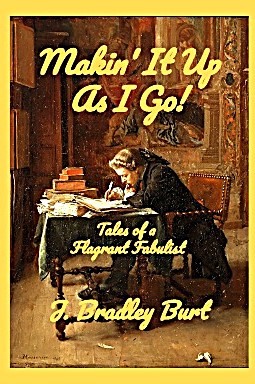
Makin’ It Up As I Go! Tales of a Flagrant Fabulist

It Just Isn’t Fair!
[prompt: the unfairness of life]

“It’s not fair!” I declare, disgruntled and mad,
“Why’s everything good now thought to be bad?
I’m angry about it, but what can I do?
How can I hang on to what I once knew?

“Why doesn’t Santa Claus still come to town,
With his reindeer and elves and fat belly round?
What’s wrong with allowing this old man to think
That he’ll bring me my toys, then be gone in a blink?

“And where’s the tooth fairy, who came in the night
To check ‘neath my pillow, but stayed out of sight,
And left a wee gift in exchange for my tooth?
Why doesn’t she come, now that I’m not a youth?

“What’s happened to Cupid, the elf with the bow
And his love-dipped arrows all ready to go?
Oh, where is he now each Valentines Day?
Did someone nefarious take him away?

“And how ‘bout the bunny with powerful legs
Who came every Easter with my favourite eggs?
It’s like he’s been cancelled by somebody vile,
For I haven’t seen him in such a long while.

“And whence the wee people, their shamrocks so green,
Hiding their gold in pots all unseen
At the end of the rainbows, their colours agleam?
Are leprechauns now nothing more than a dream?

“And last but not least, the sandman so wise,
Who came every night to shut down my eyes,
Is no longer part of my oft-sleepless night.
Have they taken him, too, out of sheer spite?

“It’s not fair!” I exclaim, both sad and chagrined,
“That somebody somewhere chose to rescind
My wonderful friends of childhood back there.
I hate it!” I cry. “It just isn’t fair!”

The book is available for purchase at this safe website—

https://www.lulu.com/spotlight/precept

Making the Bed

~ CLICK ON THE TITLE IN THE BODY OF THIS EMAIL NOTICE TO READ MY BLOG POST IN ITS NATURAL SETTING ~

Do you make your bed right after you get up in the morning?  Or after you’ve washed and dressed?  Or at all?

I do, and have for almost eighty years.  It’s the first thing I do after stumbling out of bed—or maybe the second if the bathroom beckons urgently.  The only exception to the rule is if my wife is still abed when I awake, but that is not a frequent occurrence.

It was my mother who got me started, around the time I was five years old if memory serves.  She was a stickler for cleanliness and neatness, and I, being the eldest of five siblings, was her first opportunity to test her mothering skills.

Her instructions were quite specific, and I still follow them to this day.  Begin by brushing wrinkles out of the bottom sheet with my hand, then tuck in its corners—no contoured sheets in those bygone days.  Next, pull the top sheet up to neck-level, then do the same with the blankets on top of it (usually two in number), smoothing them as I go.  Plump up my pillow and straighten the pillowcase, then centre it below the headboard.  And finally, drape the bedspread atop everything, ensuring it hangs evenly off the floor on both sides of the bed, and at the bottom, then tuck the top neatly under the front edge of the pillow.

Complicating matters was the fact that my bedcover had three wide, brown stripes running top to bottom on its beige base colour, and woe betide me if those stripes didn’t run parallel to the edges of the bed when I was finished.  I can remember mornings when I was sent back upstairs from the kitchen two or three times to remake the bed before I was allowed to start eating.  I hated cold oatmeal, so it didn’t take me long to learn the valuable lesson that a job worth doing is worth doing right…the first time!

My brother, three years younger than I, eventually faced the same challenges.  I can still see that little boy studying me intently, trying to mimic my every move on the twin bed that sat opposite mine.  He didn’t like cold oatmeal either!

My mother’s bed, shared with my father, was always made up immaculately, of course, except on washing day, when she’d strip the bed down to the mattress, turn it or flip it if she thought it necessary, then remake the bed with a clean set of sheets.

The day came when my brother and I had to do the same with our beds, another learning exercise we didn’t enjoy.  Eventually, so too did my sisters, but I always thought they were given more leeway than my brother and I received.

I’m sure I asked my mother more than once why we had to go through this exercise every day.  “We’re gonna hafta un-make it tonight!” I probably whined.

As best I recall, her reasoning ran like this: making my bed when I got up meant that, no matter what else I might do that day, I’d have accomplished something!

In the beginning, I probably had to ask what that big word meant, but I must have got the gist pretty quickly.  My mother was all about accomplishment, achievement, the attaining of goals, and she imbued her five children with that attitude.

Nevertheless, now that I’ve attained a ripe, old age, the question could be asked why I persist to this day in making my bed.  The answer might be habit, I suppose, and an aversion to change, for I do value predictability and stability.  Or perhaps I’m secretly trying to please her still, long after she has left the stage.  Maybe I possess the same inner drive for order and perfection that defined her, that impelled her.  Whatever the reason, it seems a little late in the game for me to learn to love a messy, unmade bed.

The bed I make up now is quite different from the one I started with, of course.  A king-size model, it requires me to climb atop it to straighten the sheets and blankets in the middle, where I can’t reach them while standing on the floor.  Manhandling the bedcover into place—now called a sham, a coverlet, a counterpane—is a man-sized chore, even as my man size is diminishing steadily.

Rather than one pillow, or even two, to plump and place, there are ten in all—two my wife and I rest our heads on overnight, two larger ones in fancy slipcases to be placed in front of those, and six smaller ones to place on the bed, not haphazardly, but precisely, symmetrically, and balanced.

There are days when I feel I need a nap after pulling it all together, but alas, I lack the will to pull the covers down when I’ve just made them up.

So, I soldier on, making my bed every morning, always glad when I enter the bedroom later in the day to see the display of my fidelity to the lessons I was taught.  And best of all, it allows me to think of my mother every day, to thank her for the lessons she insisted I learn.

I must confess, though—I have never learned to fancy cold oatmeal!  

Another Excellent Read!

TEN BILLION DOLLARS AWARDED BY COURTS TO TWENTY-ONE ONTARIO FIRST NATIONS!

In the latest novel in my acclaimed Maggie Keiller/Derek Sloan crime series, the dramatic consequences of this actual treaty settlement unfold in Port Huntington, a small resort town on the shores of Georgian Bay.  And once again, Maggie and Derek become inextricably involved in personal grievances boiling to the surface among various interests, involving vandalism, extortion, violence, and murder.

Be sure to read this exciting story, available now for purchase at—

https://www.lulu.com/spotlight/precept

You will find complete information on my published books by pressing the My Books tab at the top of this page.

As always, thanks for reading my blog, and for your interest in my writing!

Singin’ the Songs

Regular readers here will know of my love for music in my life, whether performed by professional musicians in a concert hall or robust amateurs at a party.  I have genres I prefer, of course, as do most people, and I generally fancy instrumental versions of favourite songs to vocal renditions.  I find them more soothing, more conducive to creative thought and activity.

Most of my listening time occurs when I’m writing, as is the case right now, penning this essay, my head clad in earphones.  My first and abiding love is classical music—likely due the influence of my father, who often fell asleep with me on my bed at night as we listened to radio broadcasts of the great symphonies.  He frequently had stories to accompany the music, too, which made it all the more special.

When I started school, one of my favourite activities was song-time, when the teacher would teach me and my classmates a new song.  Not all of us were thrilled, of course, but I was ever enthralled.  To this day, I love to join in the enthusiastic chorusing of the old songs with a group of friends.

And I can still remember (and occasionally sing to myself) some of those silly, little ditties we were taught in kindergarten and grade 1—

Your pail and shovel and wheelbarrow bring,
Let’s plant us a garden this morning in spring.
Dig little trenches, pull out all the weeds,
Pour in some water, and drop in the seeds.

Or this one—

Little yellow bird, little yellow bird,
Come flying with me.
We will build us a cozy corner
In the old apple tree.

There was one I particularly liked, although the lyrics saddened me—

“Come away,” sang the river to the leaves on the trees.
“Let me take you on a journey, and the world you will see.”
So, the leaves gently falling from the trees on the shore
Float away on the river, to come home nevermore.

It might have been the final phrase that bothered me, that they would never find their way home.  But the melody was lovely.

Making friends was very important to one just starting school, so this song had special meaning—

Make new friends, but keep the old.
One is silver, and the other gold.

At my advanced age now, the inherent truth of that sentiment has been borne out countless times.

Our earliest foray into the magic of the French language began with this song about a skylark, Alouette—

Alouette, gentille alouette,
Alouette, je te plumerai.
Je te plumerai la tête,
Et la tête, et la tête,
Alouette, Alouette
Oh-h-h-h-h...
Alouette, gentille alouette,
Alouette, je te plumerai.

There were several verses to this one, substituting le bec, le cou, les ailes, le dos, les pattes, and la queue for la tête, and the chorus had to include every one of them as they were introduced.  But we loved the challenge!

As little ones, we were always encouraged to be active and happy, and to let people know how we felt.  This song allowed us a way to do just that—

If you’re happy and you know it, clap your hands!
If you’re happy and you know it, and you really want to show it,
If you’re happy and you know it, clap your hands!

There were many variations on clapping your hands as we sang that one, and all of them caused much joy and laughter.

One of the songs I especially liked was this one, seeking love and happiness—

You are my sunshine, my only sunshine,
You make me happy when skies are gray.
You’ll never know, dear, how much I love you.
Please don’t take my sunshine away.

Over these past few years, I’ve been fortunate enough to spend many happy hours singing with a men’s chorus, and a fuller version of this is still one of our staples.  I’ve included a video clip that you will surely enjoy—

It’s seventy years and more since I learned many of these songs, and I’m amazed by the joy they still bring me.  After all this time, there are fewer things more fun than singin’ the songs.

A Musical Gift of Love

And here she is, the singing rage, Miss Patti Page, with her latest hit, Tennessee Waltz…

The year was 1951, and my brother and I were home in bed with chickenpox, the longest week we’d ever spent in our young lives.  To help our mother avoid losing her mind as she coped with our whimpering and complaining, Dad had moved the large, Motorola console radio from the living room to our bedroom.  It was heavy, and I still remember his red face, and the huffing and puffing, that accompanied the move down the long hallway to our room.  It took a while to adjust the antenna, too, to ensure we got proper reception.

With the entertainment that radio provided during those seemingly-endless days in bed—together with toys, comics, children’s books, and board games—my brother and I managed to allow Mom some brief periods of respite.

All that week, we fell asleep at night to broadcasts of The Lone Ranger, Mark Trail, Amos ‘n’ Andy, and The Shadow.  Having that radio in our bedroom was almost enough to make us wish the chickenpox would hang around a while longer.  Almost!

The bedroom was small, with one dormer window, and our twin beds were separated by a table whose top was taken up by a small lamp and two coasters, upon which sat our water glasses.  On the two shelves underneath, one for each of us, our respective playthings were stored…my brother’s haphazardly, mine orderly.

The first time we heard Tennessee Waltz on the radio, my brother immediately piped up, “That’s my favourite song!”, thus preventing me from claiming it.  Not to be undone, however, I quickly claimed Patti Page’s other big hit, Mockin’ Bird Hill, as my property.  Every time either song came on the air, our bedroom would become eerily quiet as we listened avidly, singing along silently in our tousled heads.

When we eventually dared to accompany the singer aloud, neither of us was allowed to sing the other’s song.  Singing along in our heads was permitted, but by mutual consent, our live performances were strictly proscribed.

As if to ensure our claim to our song would not be usurped by a treacherous brother, each of us would reiterate our ownership every time our favourite came on.  “Tennessee Waltz is my song!” my brother would insist, and for good measure one day, he added, “An’ Patti Page is my favourite singer!”

He was in love with this woman we had never seen, and truth be told, so was I.

By some unspoken rule, however, we both understood that the singer herself could not be claimed as one’s own, and so the next time Mockin’ Bird Hill came on, I chirped, “That’s my favourite song, an’ Patti Page is my favourite singer!”  And, while our mother was in the room one day, I added, “She’s prob’ly as pretty as Mom!”

Mom smiled at that.

But my brother immediately protested, “No, she’s not!  Mom is prettier!”

Our mother smiled at that, too.

The chickenpox finally ran their course, of course, and life went back to normal.  But to this day, I can still sing the entire Tennessee Waltz, and all three verses and the chorus of Mockin’ Bird Hill.  I’m probably off-key in a few spots here and there, but it’s seventy-five years ago that I learned them, so that’s not too shabby.

My brother is gone now, as is Patti Page, but whenever I sing those two songs, usually just to myself, out of filial loyalty and respect for those childhood rituals, I always kick off Tennessee Waltz with the preface, “my brother’s favourite song”.  And if he were still here to hear me, he’d probably say, “Damn right!”

And I know he’d settle back and listen politely as I announce, “An’ here’s my favourite song, Mockin’ Bird Hill!” before launching into it. I won’t do that here, of course, but here’s the lady herself to sing it.

We were lucky, my brother and I, to have shared that musical gift of love.

The Lonely, Silvery Rain

The thirteenth novel in my Maggie Keiller/Derek Sloan crime series will be published later this year, titled The Lonely, Silvery Rain. Here is an excerpted chapter from that book, slightly modified for this blog-post. If you have read previous books in the series, you will recognize the two characters here.

When Old Scratch, as Senator Nicholl disdainfully referred to death, came calling for the final time on a warm, drizzly, late-morning in October, he found Nicholl dozing in his favourite rocking chair on the wide, open-air verandah of his century home.  The rain was thrumming on the shingled roof, dripping off the overhanging eaves, spilling like a shimmering, crystalline waterfall to the gardens below.

Before his spectral visitor crept in, Nicholl had been engrossed in a pleasant dream, delivering a stem-winder of a stump speech on another political campaign trail, surrounded by a throng of friends and constituents in someone’s farmyard.  Balancing on a rickety, upside-down milking-bucket, he stood above everyone, so even those at the far reaches of the crowd could see him.  He felt he’d never been in finer voice until, gearing up for the customary, full-throated culmination to his peroration, he discovered he’d forgotten what he was about to say.  The shock was profound.

Groping vainly in his dream to remember the remarks eluding him, his mouth continued moving, though no sound emerged.  Then, without warning, the bottom abruptly dropped away beneath him, as if someone had kicked the bucket out from under his feet.  The world whirled and spun dizzyingly as he toppled, flinging his arms out in a futile attempt to catch himself.  Despite the confusion and fear engulfing him, however, he still tried to finish, a campaigner to the end.

Wait!  My speech!  I’m purt’ near done…

But the dream turned nightmarish, and a misty, reddish haze descended across his eyes, and then…and then…

Senator Milford Nicholl, the simple, hometown boy-made-good, eased back in his rocking chair, sighed a fare-thee-well, and went to his eternal rest.

The many well-wishers who stopped in later that afternoon found Gloria, his wife of sixty years, shaken but composed, unbelieving but accepting, sad but relieved that her husband’s travails were over.

“He knew he was on borrowed time,” she told them softly, “and I could tell he knew his days were winding down.  A wife always knows these things…”  Her throat filled up, and she stopped to wipe away tears. 

“Just a few days ago,” she whispered after a moment or two, summoning a small smile, “we talked about the possibility of one of us dying.  And you know Milly’s sense of humour.  He said something to the effect that he wasn’t afraid to die, he just didn’t want to be there when it happens.”  

The mourners laughed at that, and a few shared more of the homespun witticisms they remembered flowing from Nicholl’s febrile mind.  Eventually, Gloria told them she really would like time alone.  “I’ll pray a little,” she said, “cry a little, laugh a little.  There’ll be time enough later to reminisce some more.  And I’ll call you if I need to, I promise.”

As everyone took their leave, Gloria waved from the verandah, then sat and rocked slowly in her husband’s favourite chair, his abandoned walker standing forsaken beside it.  The rain was gentler now, but its sibilant pit-a-patting on the roof was still audible, its runoff still dripping off the eaves into the lush gardens below, covered by sodden, autumn-hued leaves.  The unseasonably warm breeze caressed her, enveloping her in a blanket of solace.

She already understood she’d be missing Milly constantly from now on—his irrepressibility, his cornball turns-of-phrase, his devotion to the community—and most of all, his love for her, his very presence.  She counted herself lucky to have been his partner and to have known such happiness.

Her grief over losing him would linger long, of course.  She knew mourning is not something that can be quantified or measured by time.  But at this particular moment, she was at peace with his passing, attuned to the happy memories she would cherish forever, resigned to the loneliness she knew would envelop her from time to time.  They were all part of everyone’s journey through life.

But for right now, she was snuggled in Milly’s chair, at one with the inevitable rhythms of life and death, at one with herself, her soul in harmony with the comforting cadence of the rain.

The lonely, silvery rain.