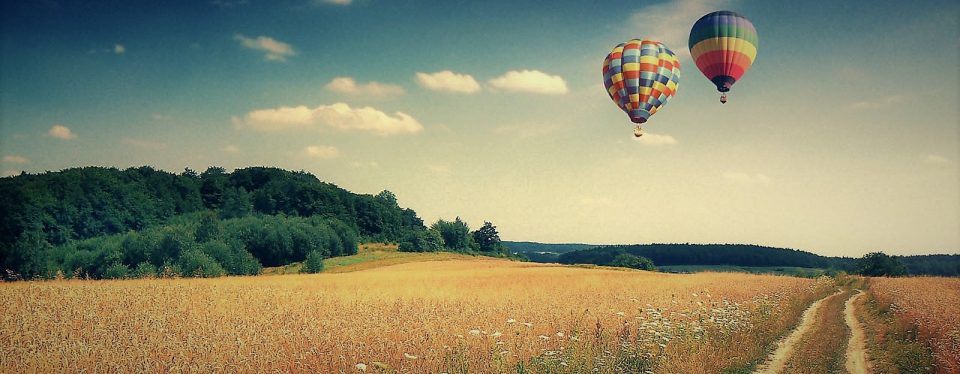
The Solitary Sign

Last summer, in the company of friends, my wife and I went hiking along an old railway line in the Ontario north country.  The right-of-way—a narrow slash through the bush, now largely overgrown—cut and curved its endless path ahead of us.  Still visible in the grass were chunks of pitch-blacked ties, no longer lying in perfect file, but strewn hither and yon, as if by some careless hand.  No trace of rails remained, for it’s a hundred years and more since last a timber train huffed along that route.

logging train2

Near the lake, a trail intersected the line, a logging road unused for years before we came, a route from nowhere to no place.  Young trees, waist-high, stood randomly where once the creaking wagons rolled, weighed down by wood for the insatiable logging trains.

One sign remained, a solitary sentry through all the years—a St. Andrews cross, no longer white if ever it was, clinging to a pitted post to warn of trains that come again no more.  Its comrades on other lines proclaim, in stark, black letters:  STOP! LOOK! LISTEN!  But this sign stood mute, alone, forsaken.  And yet, steadfastly on guard.

I reached out my hand to it as we passed by, feeling the rough-hewn wood of its ancient post, and I was touched by its devotion to duty.  An apt sentiment from a source I couldn’t quite pinpoint  came to mind:  They also serve who only stand and wait.

Further on, close by the lake, the abandoned line sat high on gravel banks.  And there we stopped, to rest, to read, to paint, to write.  We scrabbled down through scrub and dust to water’s edge, beneath an end-of-summer sun that skipped and danced its way across the calm, cooling water.

We lingered awhile in silence, content simply to be looking at what was there to see.  The trees that rimmed the lake reached tall to the sky—but also, reflected as in glass, plunged down to the depths—each greener than the others.  Waterbugs, countless little boatmen, skittered atop the surface, for all the world like shooting stars across the roof of night.  Dragonflies went blitzing by, blue-green-bottle bodies darting and shimmering like liquid fire.  And there, against the cobalt sky, a great blue heron winged its way from view.
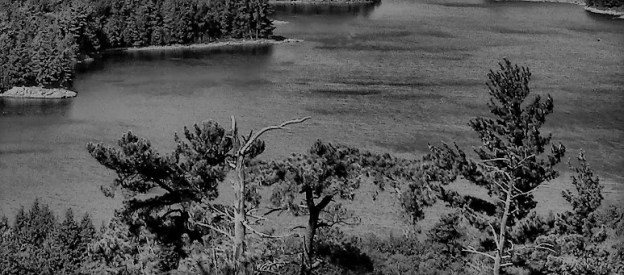
Killarney-Provincial-Park-Ontario

No one spoke.  We sat and listened, for there was much to hear.  The water lapped,  embracing the shore, then rolled back on itself.  A loon called, hauntingly, from far down the lake, and a bullfrog added in his thrumming call.   A breeze sighed softly through a stand of silver birch and maple.  Behind us, in the bush beyond the rail line, a branch or tree came crashing down.

Later on, we swam, the water closing round us like a satin veil.  Frothy trails of foam flowed behind us, quicksilver tails, as we thrashed along, spurred by fantasies of monstrous fishes down below.  And each of us, in our own way, celebrated our being there in that place and time.

On our way back out along the right-of-way, we paused once more by the old logging road.  No wagon rolled, no bullwhip cracked, no whistle sounded its mournful call.  The warning sign seemed out of place at first, a superfluous relic from a once and distant age.

And yet…and yet, it served us still, for didn’t we pay heed?  Nary a train would ever pass this way again, the last one long-since consigned to the halls of history.  But that old sign had helped us, nevertheless, to find what we might easily have missed.  The wonders of a world were there, but wonders that too often go unseen, unheard in our pell-mell rush to…to where exactly?

It’s only when we stop, to look, to listen, that we can truly see, that we can really hear.

That solitary sign, stalwart against the march of time, still showed the way.
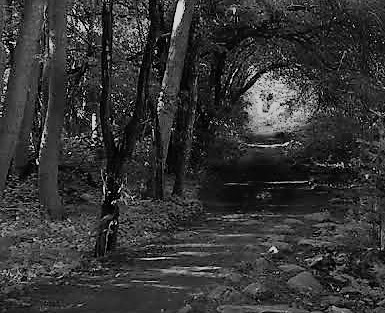
trail2


Happy Birthday, Eh?

Six syllables, sliding sibilantly over the tongue—ses-qui-cen-ten-ni-al.  One-hundred-and-fifty years as a nation, a vision struggling hesitantly to life on 1 July 1867.  Christened the Dominion of Canada, we were four provinces united against the manifest-destiny expansionism of the mighty republic to the south, but nestled still in the colonial arms of the imperial British embrace.

330px-Fathers_of_Confederation_LAC_c001855

The first priority of this new nation?  To fulfil the calling of its soon-to-be-adopted motto: Ad Mari usque ad Mare—from sea to sea, the Atlantic on the east, the Pacific to the west.  And eventually, a third sea, the Arctic to the north.

And so it happened, the inevitable northward and westward reach, propelled and supported by the building of a transcontinental railway.  After the original four provinces—New Brunswick, Nova Scotia, Ontario, and Quebec—there followed: Manitoba, 1870; British Columbia, 1871; Prince Edward Island, 1873; Saskatchewan and Alberta, 1905; and Newfoundland, 1949.

Along the way, three massive territories joined the mix: Northwest Territories, 1870; Yukon, 1898; and Nunavut, 1999.

Now, here we sit in 2017, Canada, the true north, strong and free.

And what exactly is it we celebrate on this sesquicentennial?  What have we accomplished as a nation?  What are the values we stand for?  How do our actions and behaviours, both collectively and individually, demonstrate those values?

What does our country do for us?   Even more importantly, what do we do for our country?

It has been noted by critics, perhaps jealous of our good fortune to be situated on the northern half of the North American continent, that too many of us are apathetic about the affairs of our country—to which, in response, some of us simply shrug our shoulders.  Others, though, rally to the causes of the day, to try to influence the course of events, the outcomes, the future.

There is a long list of accomplishments of which we might be justifiably proud.  In the realm of medicine, the discovery of penicillin, insulin, and stem cells; in the sciences, the first light bulb, the telephone, Canadarm, and IMAX; on the world stage, international trade agreements, endeavours to control the deleterious effects of industrialization on climate, efforts to support peacekeeping initiatives around the world, a robust military response in defence of freedom during several major wars, and our welcoming of refugees displaced by global conflicts, regardless of their ethnicity, religion, or skin colour; and in a more frivolous vein, the invention of peanut butter, the WonderBra, basketball, and Superman.

Of course, there are chapters in our history that might, with today’s sensibilities, bring a sense of shame: the exploitation and displacement of Indigenous peoples, and the horrors of residential schools; the trivialization and suppression of women’s rights; the mistreatment of Chinese and black immigrants; the expulsion and internment of Japanese-Canadians; and the continued exportation of asbestos to developing nations, even after it was banned in Canada.

None of these might happen today because of a singular document: the Canadian Charter of Rights and Freedoms, adopted in 1982.

charter

Governments of the day, to be fair, have apologised for the worst of these past crimes, and have established commissions and inquiries to seek a better way going forward.  But it is questionable, still, how much influence their reports and recommendations have had, or will have, on the future; witness the Truth and Reconciliation Commission, or the Missing and Murdered Indigenous Women and Girls Commission, and assess for yourself their lasting effects on national affairs.

As in everything, actions speak more loudly than words.

Still, when I ask myself if there is any country in the world I would prefer to live in, rather than in Canada, my answer is a resounding No!

canada

Despite the tumult and the shouting perpetually foist on us by the lunatic-left and rabid-right of the political spectrum, we are a people that wants leadership to govern from the centre.  We favour moderation, not extremes; tolerance, not xenophobia; dialogue, not diatribe; ideas, not ideology.

Do these tendencies render us apathetic?  I hope not.  Rather, I choose to think of us as slow to anger, quick to forgive, strong in the face of adversity, proud of what we have accomplished, and determined, not only to rectify the errors of the past (even if all too slowly at times), but to avoid similar mistakes in the future.

Canada has had one-hundred-and-fifty years of practice with the concept of nationhood now, and still she carries on—both because of and in spite of, the behaviour and attitudes of her citizenry.  Count me as one who is proud to be called Canadian.

Happy Birthday, eh?


The Reach of a Father’s Love

Friends of ours lost their only child several years ago, the victim of a relentless disease.  He left behind a grieving wife, two young children, and a sparkling future.

In the years since, our friends have doted on their grandchildren, taking great delight in watching them grow from infants to toddlers, and onward to adolescence.  They’ve invested time with them, knowing they can never make up for the loss of a father, but determined to keep his memory alive.

A while after their son’s death, I wrote a piece to commemorate his life and the legacy he left behind.  I post it here now, adapted somewhat, to mark the advent of another Fathers’ Day

The little boy is eight-years-old, and loves to visit his grandparents at the family cottage.  For him, every day is an adventure, a surprise, a delight, as he wanders the woods, swims in the lake, and fishes the waters in the old, wooden skiff.

For the older folks, these activities hearken to an earlier time with another fair-haired lad, and they treasure the memories, even as they create new ones.

A while back, the little boy was in the musty basement of the cottage with his grandpa, when he made a great discovery.  “Grampy, what’s this?” he cried, pointing to a bright-yellow model boat.

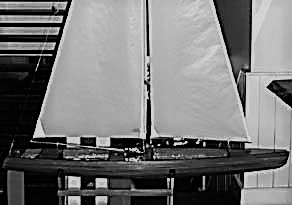
Sitting astride its pedestal on top of an old workbench, the craft was almost three feet long—a racing boat, bred for speed, its tall sails still unfurled.  Three small passengers huddled in the cockpit, as if awaiting the starting gun for an impending race.

sailboat5

“Oh, that?” his grandpa replied.  “That’s a boat your daddy built a long time ago.  He used to race her on the lake with his remote control.”  He lifted a dusty metal box down from an overhead shelf.  Two toggle switches protruded from the top, and a long antenna jiggled slightly as he set it down.  “This is how you make the boat go where you want it to.”

“Can I make it go, Grampy?”

“Mmm, I don’t think so, l’il guy.  I don’t think she works anymore.”  Together they lifted the cowling off the boat, behind the drivers, and peered at the mysteries of the small motor inside.

“It smells funny,” the little boy said.

“That’s oil you smell,” his grandpa replied.  “Your daddy always made sure he kept her cleaned and oiled.  He really liked this boat.”

“What’s her name?”

“Your daddy called her The Yellow Flash.  Here’s her name on the back, just the way he painted it.”

“Can I make her go, Grampy?” the little boy asked again.

The old man shook his head.  “The batteries are probably dead,” he said, “and look at these wires.  They’re corroded at the junction plates.  The sails are pretty ratty, too.”

“Well, can we fix her?” the little boy said.

His grandpa stared at him for a few moments, a faraway look in his eye.  “Y’know,” he said finally, “maybe we can.  Shall we give it a try?”

sailboat

Over the next couple of weeks, the two of them dismantled the boat in order to clean every part, separating the batteries and wires that would need replacing.  They opened the remote box and cleaned it out as best they could, removed the sails for a gentle cleaning.  On his next trip to the city, the old man took the hull and box to a hobby-shop, where the owner walked him through the steps needed to restore the boat to operation.

On the little boy’s next visit to the cottage, they began the rebuilding process.  As they soldered new wires in place, the little boy was fascinated.  His grandpa let him set the new batteries in their proper slots, showing him how to ensure the contacts were touching.  He watched as the little boy lovingly polished the hull, restoring it to its original gleaming glory.

Together, they replaced the sails, and tested the remote box, working the toggles to control the boat’s tiny propeller and rudder while it still sat on its dry-dock pedestal.

“She works, Grampy!  She works!”

“I think she does, l’il guy.  Shall we put her in the water?”

And so they did.  Carrying her gingerly down the slope to the dock, they lowered her carefully into the lake.  From a silent vantage point on the rocks, I watched them—a grandfather and his son’s son, with his son’s boat, launching their labour of love.

“Which one is the driver?” the little boy asked, pointing to the three small figures in the cockpit.

“Well, this one is you,” his grandpa said, indicating the figure in the middle.  “You’re the skipper.”

“Okay,” said the little boy.  “Then this one on the right will be you, and this can be my daddy over here.”

The old man had to look away for a moment to collect himself.

“What if the waves tip her over?” the little boy asked, suddenly apprehensive.

“Well, it’s pretty calm right now, l’il guy.  I think she’ll be okay.”

“But what if she goes way out there and we can’t bring her back?”

“She’ll come back,” his grandpa said.  “She’ll come back.”

sailboat3

As they perched on the dock, legs dangling over the water, the old man gave the boat a push away from shore.  The little boy, the remote box between his knees, began to steer her—hesitantly at first, with fitful starts and stops, over-correcting erratically.  But in moments he was sure, and the boat skimmed atop the surface, speeding and curving gracefully, immediately responsive to his commands.

I watched the boat for awhile, then turned my attention to the old man and the boy.  Their faces were split with grins, happily alight, as they raced The Yellow Flash to and fro along the shoreline.

“Take a turn, Grampy,” the little boy yelled, handing the remote box to his grandpa.  And he squealed with delight when the old man almost capsized her, righting her just in time.

“Grampy?” the little boy said after a while.

“Mmm?” his grandpa replied, seeming lost in reverie.

“I love my daddy’s boat!”

“I love her, too,” the old man said, leaning in close to his grandson.  “And I love you, l’il guy, very much.”

I left them on the dock, locked in silent communion.  And it may only have been my imagination, but when I stole a glance back, I could swear I saw a third person there—ephemeral but real, lovingly watching them both.

At once apart from, yet a part of, the old man and the boy.

And I marveled at the reach of a father’s love.

father-son-and-grandfather-fishing

A Pompous Ass? Me?

Across the span of almost fifty years, I still recall the awful moment when I learned I was a pompous ass.  I wasn’t told directly, nor in those words, but rather through an overheard remark from one early-twenties lady to another—both of whom I had earnestly been trying to impress.

The actual statement, I believe, was, “You know he’s full of shit, right?”

Had I not stopped unexpectedly just after leaving their company, bending out of view to tie a shoelace, I might never have known.

surely not

There I was, a handsome young man (if I may say), gainfully-employed, socially-acceptable—though, perhaps, a tad taken with my own opinion—hearing for the first time that my efforts to ingratiate myself in their favour were unappreciated.

Even worse, mocked.

Surely not! I raged.

It took me some time to digest that unwelcome revelation; in fact, my first instinct was to reject it.  Further attempts to win over the winsome duo proved fruitless, however, and that fact finally forced me to re-examine my approach.

Whatever I eventually changed must have been enough, thankfully, for I have been happily married for fifty years to a lovely lady who apparently did not share the opinion of the others.

I mention this episode now, not because it still bothers me—for I have long-since accepted that, sometimes, I am indeed full of shit—but because I have been watching a relatively-new actor on the world’s political stage strut his stuff.  And I wonder what those two young ladies would have thought of him.

There are words that come to mind:  charlatan, popinjay, imposter, fraud, narcissist.  None of which would matter in the slightest if they were applied to me.  Alas, I am writing of the president of the United States of America, and whoever occupies that office does matter.

He, in my opinion, is a pompous ass.  And it pains me to think I might ever have been regarded in that same light.

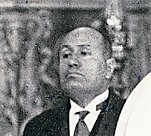
He poses theatrically when the mood strikes, tiny eyes narrowed to what he must assume is a steely gaze, lips pursed, chin thrust forward aggressively.  And he holds the pose for as long as his attention span will allow—seconds only, but enough to engrave it on the public consciousness when repeated often enough.

He reminds me of nothing so much as a fascist leader of the 1930’s who affected such Caesar-like poses.

mussolinTrump

He boasts openly of a callous, abusive approach to women who are not significant to him, except insofar as they might mollify his carnal desires.  He grabs them at will, and….wait for it….according to him, they like it!

What are we to make of this mountebank?

More importantly, what do other world leaders make of him?  At a recent gathering of G7 leaders, as he was pontificating over a statement about his country’s changing stance on the Paris climate change accord, those leaders were seen rolling their eyes and smirking at his buffoonery.  Openly.

Did he even notice?

At a recent Arab-Islamic-American summit in Saudi Arabia, he was feted in a manner which he must surely have deemed his due.  Among the kings, emirs, and sultans of fifty nations, he primped and preened like a man to the manor born.

But how do those eminences really regard him?  As a competent and effective leader, their equal in diplomatic affairs?  As a trusted ally?  Or as an easily-duped patsy, susceptible to flattery and fawning, and groomed now to help them accomplish their own geopolitical and economic goals?

We shall see in due course.  But his colleagues on the world stage remind me very much of the lovely young ladies who gutted me so expertly those many years ago.

A pompous ass?  The president of the United States of America?

Surely not!

The Right to Be Wrong

Among the inalienable rights we enjoy in democratic societies is the right to be wrong.  We have an unfettered right to make a choice about our fundamental values, our publicly-stated opinions, and our actions—and to express these choices.

We bear a burden for holding this right, however, in that we are expected to (and can often be made to) accept responsibility for the consequences of our choices.

This notion has become more significant for me recently, as I watch in horrified fascination the shenanigans of the so-called ‘leader of the free world’, and his enablers, in the great republic to the south of us.

The circumstance of being wrong is a subjective concept.  How do we know, how can we determine absolutely, when someone is wrong?  Is there a conclusive test?  Do we always know right away, or does it sometimes take a long time to figure it out?

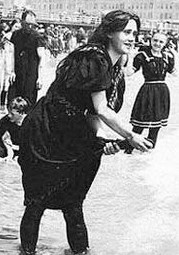
In fact, there are societal norms in place to govern our interactions and behaviours; but most of them evolve over time, as each succeeding generation shapes the world to its liking.  An action considered wrong for my Victorian grandmother (like appearing on the beach in a two-piece bathing suit) would certainly not be condemned today.

bather

The norms come into existence in one of two ways.  They are legislated for our common good by duly-elected representatives, or they are adopted by people at large as benchmarks for social intercourse.  Regardless of their source, they become truly effective only when they enjoy a high degree of acceptance among those for whom they are intended.  It has been called governance with the consent of the governed.

An example of the legislative method is the imposition of speed limits for vehicles on publicly-owned roadways; it is clearly wrong to exceed the posted limits.  An example of the adoptive method is the attitude towards smoking, particularly around other people; even in jurisdictions where smoking is not yet illegal, it is definitely frowned-upon to subject others to second-hand smoke.

Of course, in neither form, legislated or adopted, do our societal norms enjoy universal approval.  There are countless scofflaws in the general population who pay only lip-service at best to those they consider trivial.  Have you, for instance, ever exceeded a posted speed limit?  I confess I have.  And there are people who, despite both the social opprobrium and scientific evidence attesting to the effects of smoking, who still choose to light up.

More importantly, and more dangerously, we have fringe groups among us who vigorously, sometimes violently, oppose those norms they disagree with.  If that were not the case, abortion clinics would not be bombed; temples, mosques, and churches would not be defaced with hateful graffiti; and people would not be denigrated and harassed because of skin-colour, gender, sexual orientation, age, or disability.

Thankfully, such violent actions are widely considered wrong in a democratic society.  And, wherever possible, punished.

In the distant past, Isaac Newton famously hypothesized that for every action, there is an equal and opposite reaction.  Known as Newton’s Third Law of Motion, it pertained to the physics of interactions between two opposing forces.

We might think of the relationship between behaviour and consequences in a similar, though not identical, manner.  The first begets the second.  If I drop a crystal goblet on a tile floor, for instance, the goblet shatters; if I stroll through an afternoon shower sans umbrella, my clothing becomes soaked; if I bite down on my tongue while chewing, I experience pain.  Such natural consequences are the result of the behaviours immediately preceding them.

Logical consequences are different, but no less substantial.  If I drop that crystal goblet while examining it in the store, I will almost certainly have to pay for it.  If I speed through a residential neighbourhood (even if I am fortunate not to strike a pedestrian), I may be cited by a traffic cop, leading to the payment of a substantial fine.  Logical consequences are imposed as a result of our behaviours by outside authorities empowered to do so.

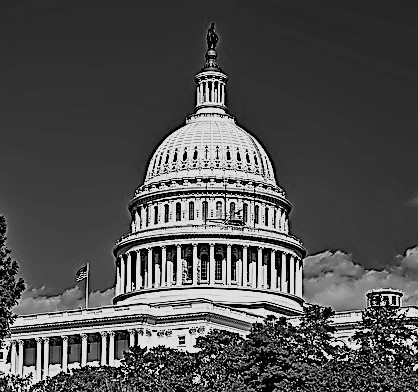
All of which brings me back to my dismay at the disarray I witness almost daily in the USA.  People elected to govern on behalf of the people who elected them behave, instead, in their own selfish interests.  They make decisions, not on the basis of how a particular matter might benefit their constituents or their country, but on whether it will improve their chances for re-election.  They take positions, not representing those who voted for them, but the moneyed interests who finance their pursuits.

washington-d-1607774_960_720

They spend their time, not enacting legislation to benefit all citizens, but fighting their partisan, internecine battles in a sadly-ritualistic dance to the death.

And at the forefront, a bombastic, narcissistic showman, ignorant in the ways of leadership, determined above all to have his way.  To win!
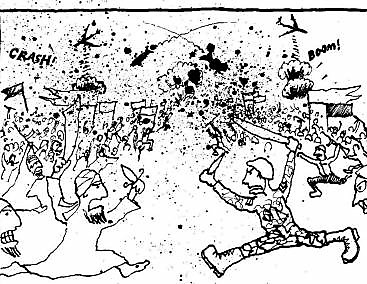
Can the great republic be wrong in the fateful choice it made just six months ago?  And if so, what will be the consequences for the nation, and for the rest of the world?

We have an inalienable right to be wrong, it is true.  But never in my memory have the potential consequences of being wrong been so enormous.  I want to cry out—

How can you be so stupid?  Fix this!  More important than your right to be wrong is your duty to be right!

And, helpless to affect matters, I continue to watch.


By the Numbers

By demographic definition, I am what is sometimes not-so-flatteringly referred to as a WASP—a white, Anglo-Saxon protestant.  As such, I am in a sub-group of white-skinned people currently comprising approximately 80% of Canada’s population.  Not all white people are protestant, of course, nor are they all of Anglo-Saxon descent.  And neither are they all native-born.  But a good many of us are aging.

The other 20% of the population is made up of visible minorities—mainly South Asian, Chinese, Black, Filipino, Latin American, Arab, Southeast Asian, West Asian, Korean, and Japanese—and aboriginal people belonging to First Nations.  Not all of the visible minority people are native-born, either; approximately two-thirds of their number emigrated from other countries.  And many of them are young.

Immigration to Canada originates from almost two hundred countries, and immigrants number nearly seven million people of a total population of 35.85 million today.  Among this cohort is every skin colour imaginable.

ethnics2

Statistics Canada projects that more than half of immigrants in Canada will be Asian-born by 2036, if recent trends continue. At the same time, the share of European immigrants will decline by about half, to about 16 per cent.  More people will belong to a visible-minority group in the next twenty years, and the share of the working-age population who are members of a visible minority will reach up to 40%.  South Asians will remain the largest group, followed by Chinese.  In cities like Toronto, Vancouver, Calgary, and Winnipeg, visible minorities could become the majority.

These visible minority projections do not include the aboriginal population.  A previous Statistics Canada projection to 2036 found the share of indigenous people in the population will grow as high as 6.1%, from 4.4 % in the 2011 census.

The total share of immigrants in Canada’s population is expected to reach up to 30% by 2036, which would be the highest since 1871.  Canada, as it marks its 150th birthday, already boasts one of the highest shares of foreign-born people in the developed world, and it appears the trend will continue.

Canada may also become more secular as the share of people who report having no religion continues to grow—up to about one-third of the population presently, compared with 24% in 2011.  At the same time, the number of people affiliated with non-Christian religions will reach about 15% of the population, up from 9% now.

religions3

One of the factors influencing these changes is the birth rate in Canada.  The last year the replacement-level fertility rate of 2.1 children per woman was reached—meaning couples, on average, had produced enough children to replace themselves—was 1971. In 2011, the total fertility rate was 1.61 children per woman, up slightly from the record low of 1.51 about a decade earlier.  Data from other studies, when examined, show that non-white mothers have higher fertility rates than the Canadian average drawn from all ethnic and religious groups.

For the first time, a study in 2015 found the number of Canadians over 65 to be larger than the number of citizens under 15.  Throughout the history of our social welfare system, there has been a large base of people at the bottom of the pyramid whose taxes have helped to support those at the top.  Now, that pyramid has been inverted, and the question arises as to how fewer taxpayers will be able to support pensioners who are living longer than ever before.

[Projections based on population models from the 2011 National Household Survey]

So what might all these statistics signify?  Why do they matter?

There are several implications, I think.  First, if Canada is to endure and prosper, immigration must continue apace.  No nation will survive in this age if its population is shrinking, or aging, without replenishment.

Second, our tolerance for religious and ethnic groups other than our own (regardless of who was here first or came later) must continue.  The numbers project a declining percentage of white Caucasians in an increasingly diverse, multi-ethnic Canadian population, all of whom must live harmoniously side-by-side if the country is to survive.  Hatred and vitriol will serve none of us well.

Another effect is a growing need for education, training, and retraining in order to equip citizens for the workplaces they will encounter.  With the advent of artificial intelligence and robotics, many of yesterday’s (and today’s) jobs will become obsolete.  The challenge is to ensure that young people—the workers of the future on whose productivity we will all depend—do not suffer a similar fate.

training

It is not a matter of propounding the concept of a global economy, or abhorring it; rather, it is the need to face the reality that we are irreversibly set upon that path.  The objective must be to maintain Canada’s uniqueness among the nations of the world, even as we become both trading partners and rivals with them.

As a nation, we will not be able to do that if we allow our cherished rights and freedoms to be trampled in endless, internal squabbles among ethnic groups, religious groups, and pro- and anti-immigration forces.  A free society, by its very definition, must evolve to accommodate all those who inhabit it.

I am a WASP, yes.  But first, I am a Canadian, with all that such status implies.  So, too, are my fellow-citizens, whether or not they look like me, worship as I do, speak the same first language, or honour the same traditions.  In Canada, there must be room for all of us.

From sea to sea to sea.

So, Who Won?

In all the history of warfare between nations, one of the adversaries has almost always been declared the winner.  In the Peloponnesian War, it was Sparta; in the Punic Wars, Rome; in the Norman Conquest, William of Normandy; in the War of the Roses, Edward VII of the House of Tudor; in the American War of Independence, the newly-formed USA; and in both the First and Second World Wars, Britain, France, the USA, and their allies.

On more than one occasion, ‘though, armed conflict has ceased with no winner declared.  In 1953, for example, an armistice brought fighting to an end between North and South Korea.  No peace treaty was ever signed; a demilitarized zone was created to separate the two countries.  Hostilities ceased, but a mutual hostility has continued to this day.

korea2

That struggle on the Korean peninsula was not the only war fought between north and south armies.  Almost a century earlier, the USA endured its Civil War; southern forces, the rebels, opened hostilities with an assault on Fort Sumter in 1861, and ended the fighting with a formal surrender at Appomattox in 1865.  In this war, the northern forces defending the union were the winners.

civil war

(In a strange twist, and unlike almost any other conflict, where defeated leaders have been vilified by the victors, heroes from both sides in this war have been venerated by succeeding generations—Lincoln and Grant from the North, Lee and Stonewall Jackson from the South.)

The official history of these wars, and every other war, has been written by the victors.  And any attempt to counter their accounts has generally been ineffective in supplanting the approved versions.  We know who won because the winners told us.

It’s worth considering, however, if future wars will similarly boast clear winners and definite losers.  Or will everyone lose?

The world is presently on tenterhooks, wondering where the simmering tensions between North Korea and the USA will take us.  Whenever one side in a conflict is headed by a preening, egotistical, autocratic, and impulsive leader, we have a right to worry.  But in this case, both sides are thus afflicted, and both, to some extent, have (or are feared to have) access to nuclear weapons.

trump kim

It is an irony of diplomacy among nations that treaties and accords are signed by various and sundry allies in an effort to keep the peace.  But it is those same mutual-defence agreements that pull nations into war when one of the signatories is attacked from outside.  Secure in our North American fortress, Canada has never gone to war because she was attacked, but because she was bound to defend her allies who were.

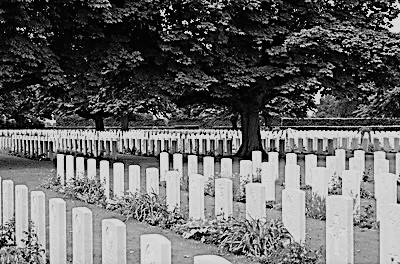
There are no exact, universally agreed-upon figures, but in the First World War, almost 31 million military personnel from all nations were killed in action.  In the Second World War, nearly 25 million were killed.  In the Korean conflict, almost 1.2 million military personnel were killed.

Ask those deceased veterans who won the wars.

Civilian casualties are another matter.  Almost 7 million lost their lives in WWI, nearly 55 million in WWII, and 2.7 million during the Korean conflict.

Ask those poor souls who won the wars.

bayeux-war-jp5

In the next war, if there is one—perhaps pitting the USA and its allies against North Korea and its allies—one can only imagine what the death tolls might be.  The current population of Seoul, the capital of South Korea, is approximately 25 million.  The city is well within the range of North Korean bombardment.  The population of Pyongyang, North Korea’s capital, is close to 4 million, and it, too, lies within range of enemy attack.

Imagine the horror of a nuclear strike against either city, or a chemical or biologic-pathogen attack.  Imagine the carnage that would follow.  Strike would be followed by counter-strike, the targets would multiply, and any nation that dared join the fray would leave itself open to similar attacks.

If past examples are anything to go by, such hostilities might well lead to a world-wide conflagration, where even western-hemisphere nations would be affected.  It might not last long, but it would almost surely be the most deadly conflict of all time.  And as we know, the hangover from nuclear detonations or man-made epidemics would alter living conditions on the entire planet, perhaps threatening everyone still alive to witness it.

cockroaches

One might imagine (if one had a macabre sense of humour) a cluster of cockroaches amidst the ruins, perhaps the only survivors.  After surveying the desecration, one might turn to the others with a quizzical expression.

“So, who won?”

The Eyes Have It

“All my men!  Here now!  All-l-l my men!”

The cry would ring out across the schoolyard, almost every recess or lunch-break, and hordes of eight-, nine-, and ten-year-old boys would scamper to a grove of elm trees adjacent to the playground.

The boy they rallied around was an object of ridicule among my friends, we grade-eight boys playing soccer and baseball.  We had no time for his foolishness.

A classmate of ours, he called himself Marvellous Marv, without a shred of embarrassment.  We called him Starvin’ Marvin, and not because he didn’t have enough to eat.  He was porcine, in fact, taller than I, but physically uncoordinated, and somehow out-of-place wherever he was.  The girls we sought to impress thought he was icky.

Once gathered, his acolytes would listen to whatever he was telling them there in the shade of the trees.  And then, at his signal, they would swarm across the soccer pitch, across the ball diamond, sixty or seventy strong, yelling like banshees.  They never accosted any of us—we were older and bigger, after all—and they never stopped, even when we’d trip as many of them as we could, angry at the interruption to our games.  They simply picked themselves up and kept running, rendezvousing eventually back in the trees where he awaited them.  Never once did he accompany them on their wild raids.

Marvin’s voice had deepened sooner than most of ours, so his clarion call to his much-younger followers was quite distinct.  But his eyes, not his voice, were his most distinctive feature, squeezed between plump cheeks and eyebrows, squinting pig-like at everything and everyone.  We used to wonder why his younger acolytes continually obeyed him, but I think it was probably the impact of his eyes.  Although unafraid of him personally, even we were unsettled when he’d stare at one us in class, as he often did.  There was a disturbing aspect to his eyes, as if the brain behind them were somehow untethered from our reality.

Today, as I contemplate influential people we’ve come to know in our society—political, military, entertainment, criminal—I try to understand what it is that makes them attractive to many of their peers.  Lots of easy reasons spring to mind: a compelling message, brute force, overarching talent, a pathological audacity, a promise to make us great again.  None of these, however, would be sufficient on its own if we did not become convinced that the person, him- or herself, is authentic.  Conviction is key.

And it’s in the eyes we find that messianic fervor, that zealous certitude, that passionate persuasion that ensnares us.  That conviction.

Consider the gazes cast upon us by some historic influencers, for better or worse, during the past century—

manson1   rasputin2


Evil or brilliant?

loren1   bardot1

Safe or dangerous?

trump1   ali2


Mad or conniving?

trudeau1meir1

Stone-cold or warm and loving?

newman3     churchill1

Visionary or murderous?

When I see their full faces revealed, I’m drawn to the eyes of these people, even if just in photographs.  In person, I imagine, I would be transfixed.  But I don’t know if I could ascertain their true character or purpose by simply returning their steady stare.  I could easily be fooled.

It’s been said that a person’s eyes are windows into the soul; deep wells from which we are often compelled to drink; pools of mystery into which we sometimes plunge, occasionally in spite of our better judgment.  Our eyes may be sorrowful, laughing, blazing, blank, wide, squinty, even Irish—and, for the most part, unremarkable.

Not so for those who aspire to lead us, and for many who have in the past—whether in war or peace, good times or bad, for good or evil.  More often than not, they captivate us with their remarkable, magnetic eyes.  We can easily be misled, and have been in that same past, because we misread the message those eyes convey.

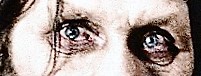
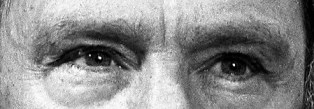
The eyes portrayed in this piece are, left to right, top to bottom:  Charles Manson, Grigorii Rasputin, Sophia Loren, Brigitte Bardot, Muhammad Ali, Donald Trump, Pierre Trudeau, Golda Meir, Paul Newman, and Winston Churchill.   Some we venerate, some we abhor.

But all have influenced us, and others continue to—in part because, despite our best intentions, we cannot help being drawn into those compelling eyes.

The eyes have it.


Resurrection Relevance

Another Christian observance of Easter is upon us, with its celebration of the resurrection of Christ, the man whom many consider to be the Son of God.

cross

During his brief time on earth, Jesus preached peace, tolerance, faith, forgiveness—and, perhaps most importantly, love for all humankind, even one’s enemies.  In return, he promised eternal life for all who believed and acted in accordance with these precepts.

As a child, I learned quickly that one of my mother’s interpretations of his teachings was that I must not fight with other children.  She was very firm about this.  During my early school years, it seemed like good advice; I was a friendly little guy, and others seemed to like me just fine.

schoolyard

As I got older, however, I learned that not every kid subscribed to her viewpoint.  Some of the classmates I encountered in the older grades were quite aggressive, to the point of being bullies, and for a while I was at a loss as to how to cope.  That was one of the reasons, maybe, that I became a fast runner.

Alas, it was not always possible to escape the marauders, so fighting became the only alternative to being pummelled and punished repeatedly.  It was safer to stand up to the bullies, even if I lost the fight, than to do nothing.

My father quietly helped me with the dilemma of disobeying my mother by suggesting that, although her sentiments were correct, fighting back when attacked was okay.  Starting a fight was really the thing to avoid.

I still remember an occasion in my mid-teens, when my mother agreed to accompany my father to watch me play a hockey game, the first time she had done so.  About halfway through, I became involved in a fight on the ice, not one I started, and was ejected, along with my opponent.  My mother was, by all accounts, aghast.

hockey fight

Although I played recreational hockey for another forty years, she never attended another of my games.

That incident shapes my outlook today when I consider the state of humankind on the planet we all inhabit.  Christ was not the only person to preach peace and love; many devout prophets professing other faiths have advanced the same messages.

But just as not every Christian follows Christ’s teachings obediently, so, too, do some adherents of other religions also stray from their prophets’ words.

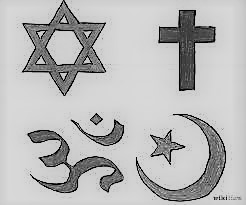
The situation is complicated by the fact that there are also false prophets from all religions, who have preached a wilfully-distorted or violent version of the message, demanding their adherents forcefully convert everyone to what they call the true faith—and failing that, to kill them.  They have existed under many guises—the Christian Crusades, Islamic jihad, radical Zionism, the Hindu saffron terror, and so many more.

They survive even today, in a god-eat-god world.

'Its a god eat god world.'

If we assume that the vast majority of people alive right now want to live in peace and harmony—perhaps not anxious to love their neighbours, but at least happy to leave them alone—then why is there so much warfare and bloodshed across the globe?  Are we being driven to demise by the bloodthirsty minority, the zealots, and (as a friend likes to call them) the lunatic fringe?

As a questioning Christian at yet another Easter (believing in the wisdom of Christ’s teachings, but unsure about the promise of a heavenly hereafter), I see benefit in acknowledging, if not a literal resurrection, at least a continuing relevance of his message.  And further benefit in acknowledging the similarities between that message and those of other great prophets of different faiths.

Back in that long-ago schoolyard, there was ample space for me to run from those who would harm me.  On this increasingly-crowded planet Earth, however, whither can we flee from the radicals and fanatics seemingly bent on our destruction?

Shall we turn the other cheek, perhaps to be slaughtered?  Shall we fight back, perhaps ensuring mutual annihilation?

Or shall we continue to do what we can to spread those universal messages of peace, tolerance, faith, forgiveness—and, perhaps most importantly, love for all humankind, even our enemies?

love

It is up to all of us in the end.  Or it will be the end of us.

The Supreme Power

Rudyard Kipling wrote these lines in 1902, the beginning to a small poem about his daughter:

I keep six honest serving-men/(They taught me all I knew);/Their names are What and Why and When/And How and Where and Who…

Five of those interrogative words, whether rendered in English or any other language, enable us to ask the fundamental questions of all mankind.

What is the meaning of life?  Why are we here?  When did life begin?  Where are we headed?

And the most fundamental of all:  Who created us?

Throughout the millennia, mankind has striven to find meaningful answers, and has codified those answers in various constructs: dogma, commandment, or science.  The first of these forms the basis for religious belief, the second for a stable, civil order, the third for progress.

One may ask, however, whether the answers so far obtained have been beneficial to our understanding of our existence.  It might be argued, for example, that the plethora of religious beliefs espoused by so many have led us, not to an utopian bliss, but into almost-endless warfare as we seek to establish the predominance of our own set of beliefs.  Think of wars fought in the name of Judaism, Christianity, or Islam, either to preserve or spread those creeds.

wars

Or consider the nearly-numberless dictators and rulers over the ages who have demanded fealty and obedience from their subjects, only to have their empires crumble into disarray: Persia, Athens and Sparta, Egypt, Carthage, Imperial Rome, the Ottoman Empire.  Their names are legendary—Cyrus the Great, Leonidas, Rameses the Great, Hannibal, Augustus Caesar, Suleiman the Magnificent—but their legacies are reduced to historical footnotes.

And what of more modern empires, be they economic or military—the British Commonwealth, America, Russia, China?  Are they truly stable models of order and good government, destined to last forever?

Even science, that bastion of fact-based evidence, can mislead us.  At various times in history, scientific evidence demonstrated conclusively (at least to some) that the world is flat, the earth is at the centre of the solar system, there are canals on Mars, and life as we know it would end on Y2K.  So, who is to say the theories we espouse today are any more reliable—that evolution, not creation, has brought us to our present state; that our very existence is imperilled by global warming; or that the universe we inhabit is endlessly expanding?

The most fundamental question (Who created us?) can be deconstructed into two oppositional queries.  The first:  were we, in fact, created by some supreme power?  And the contrary second:  did we create the notion of a supreme power to help explain our existence?

Worldwide, the answer from untold billions of people to the first of these is Yes!  And, perhaps not so strangely, the answer to the second, from different people, is also Yes!

Truth be told, I have offered up affirmative answers to both queries at various points in my life, believing each at the time.  I have flip-flopped on many occasions.  But even as I answer, more questions form in my mind.

If there is a supreme power (variously portrayed paternalistically in different religions as Yahweh, Jehovah, Allah, Krishna, and so many more), why did it create us?  Is there some magnificent purpose behind it all?  Were we put here to love and nurture one another, in a grand homage to our creator?  Or were we created to murder each other, providing a somewhat cruel spectacle for the amusement of our maker?  Was there, perhaps, no purpose at all, just a random experiment quickly forgotten by a supreme power that is, at one and the same time, our initiator and destroyer?

god 3

Conversely, if there is not a supreme power—if, in fact, mankind created that notion to soothe our fears and protect us from our most base instincts, lest we annihilate ourselves—then what?  Are we alone in the universe, left to our own devices?   Are we nothing more than a tiny fluke in the cosmic sea?

Religious folk, theists, profess to both adore and fear their maker, as well they might in their longing for life-eternal, rewarding their faithfulness.  Non-religious folk, atheists, proclaim no god (though some may fear an unknown afterlife).

And those in the middle—the ones too sophisticated to fall for the charade of a supreme power, yet too fearful to deny its existence—what of them?

I do not know the answers to any of these questions.  But I favour the idea that there is a creator, that we and our universe could not have sprung spontaneously from nothing.  That’s not provable, mind you.  It’s faith.

This much, however, I do know to be true.  As I survey the world around me—with its endless stream of callous and fervent punishments inflicted on some of us by others of us, and with the threat of nuclear or environmental destruction looming ever more forbiddingly in our future—I despair.

If there is a supreme power, but one uncaring toward, and indifferent to, our plight, (s)he must be laughing hysterically at our hapless ways.

Equally, if a supreme power exists as a loving and compassionate being, (s)he must look upon us with pity and sorrow.  And weep.

And most frightening of all:  what if there really is…..nothing?

nothing