The Right to Be Wrong

Among the inalienable rights we enjoy in democratic societies is the right to be wrong.  We have an unfettered right to make a choice about our fundamental values, our publicly-stated opinions, and our actions—and to express these choices.

We bear a burden for holding this right, however, in that we are expected to (and can often be made to) accept responsibility for the consequences of our choices.

This notion has become more significant for me recently, as I watch in horrified fascination the shenanigans of the so-called ‘leader of the free world’, and his enablers, in the great republic to the south of us.

The circumstance of being wrong is a subjective concept.  How do we know, how can we determine absolutely, when someone is wrong?  Is there a conclusive test?  Do we always know right away, or does it sometimes take a long time to figure it out?

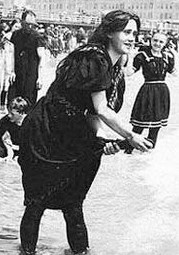
In fact, there are societal norms in place to govern our interactions and behaviours; but most of them evolve over time, as each succeeding generation shapes the world to its liking.  An action considered wrong for my Victorian grandmother (like appearing on the beach in a two-piece bathing suit) would certainly not be condemned today.

bather

The norms come into existence in one of two ways.  They are legislated for our common good by duly-elected representatives, or they are adopted by people at large as benchmarks for social intercourse.  Regardless of their source, they become truly effective only when they enjoy a high degree of acceptance among those for whom they are intended.  It has been called governance with the consent of the governed.

An example of the legislative method is the imposition of speed limits for vehicles on publicly-owned roadways; it is clearly wrong to exceed the posted limits.  An example of the adoptive method is the attitude towards smoking, particularly around other people; even in jurisdictions where smoking is not yet illegal, it is definitely frowned-upon to subject others to second-hand smoke.

Of course, in neither form, legislated or adopted, do our societal norms enjoy universal approval.  There are countless scofflaws in the general population who pay only lip-service at best to those they consider trivial.  Have you, for instance, ever exceeded a posted speed limit?  I confess I have.  And there are people who, despite both the social opprobrium and scientific evidence attesting to the effects of smoking, who still choose to light up.

More importantly, and more dangerously, we have fringe groups among us who vigorously, sometimes violently, oppose those norms they disagree with.  If that were not the case, abortion clinics would not be bombed; temples, mosques, and churches would not be defaced with hateful graffiti; and people would not be denigrated and harassed because of skin-colour, gender, sexual orientation, age, or disability.

Thankfully, such violent actions are widely considered wrong in a democratic society.  And, wherever possible, punished.

In the distant past, Isaac Newton famously hypothesized that for every action, there is an equal and opposite reaction.  Known as Newton’s Third Law of Motion, it pertained to the physics of interactions between two opposing forces.

We might think of the relationship between behaviour and consequences in a similar, though not identical, manner.  The first begets the second.  If I drop a crystal goblet on a tile floor, for instance, the goblet shatters; if I stroll through an afternoon shower sans umbrella, my clothing becomes soaked; if I bite down on my tongue while chewing, I experience pain.  Such natural consequences are the result of the behaviours immediately preceding them.

Logical consequences are different, but no less substantial.  If I drop that crystal goblet while examining it in the store, I will almost certainly have to pay for it.  If I speed through a residential neighbourhood (even if I am fortunate not to strike a pedestrian), I may be cited by a traffic cop, leading to the payment of a substantial fine.  Logical consequences are imposed as a result of our behaviours by outside authorities empowered to do so.

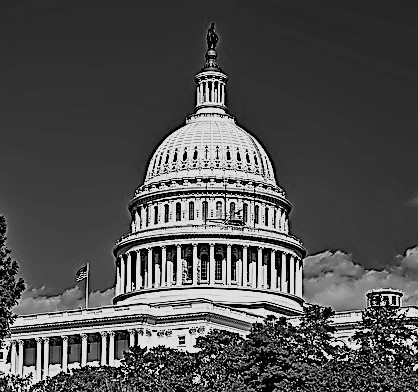
All of which brings me back to my dismay at the disarray I witness almost daily in the USA.  People elected to govern on behalf of the people who elected them behave, instead, in their own selfish interests.  They make decisions, not on the basis of how a particular matter might benefit their constituents or their country, but on whether it will improve their chances for re-election.  They take positions, not representing those who voted for them, but the moneyed interests who finance their pursuits.

washington-d-1607774_960_720

They spend their time, not enacting legislation to benefit all citizens, but fighting their partisan, internecine battles in a sadly-ritualistic dance to the death.

And at the forefront, a bombastic, narcissistic showman, ignorant in the ways of leadership, determined above all to have his way.  To win!

Can the great republic be wrong in the fateful choice it made just six months ago?  And if so, what will be the consequences for the nation, and for the rest of the world?

We have an inalienable right to be wrong, it is true.  But never in my memory have the potential consequences of being wrong been so enormous.  I want to cry out—

How can you be so stupid?  Fix this!  More important than your right to be wrong is your duty to be right!

And, helpless to affect matters, I continue to watch.


By the Numbers

By demographic definition, I am what is sometimes not-so-flatteringly referred to as a WASP—a white, Anglo-Saxon protestant.  As such, I am in a sub-group of white-skinned people currently comprising approximately 80% of Canada’s population.  Not all white people are protestant, of course, nor are they all of Anglo-Saxon descent.  And neither are they all native-born.  But a good many of us are aging.

The other 20% of the population is made up of visible minorities—mainly South Asian, Chinese, Black, Filipino, Latin American, Arab, Southeast Asian, West Asian, Korean, and Japanese—and aboriginal people belonging to First Nations.  Not all of the visible minority people are native-born, either; approximately two-thirds of their number emigrated from other countries.  And many of them are young.

Immigration to Canada originates from almost two hundred countries, and immigrants number nearly seven million people of a total population of 35.85 million today.  Among this cohort is every skin colour imaginable.

ethnics2

Statistics Canada projects that more than half of immigrants in Canada will be Asian-born by 2036, if recent trends continue. At the same time, the share of European immigrants will decline by about half, to about 16 per cent.  More people will belong to a visible-minority group in the next twenty years, and the share of the working-age population who are members of a visible minority will reach up to 40%.  South Asians will remain the largest group, followed by Chinese.  In cities like Toronto, Vancouver, Calgary, and Winnipeg, visible minorities could become the majority.

These visible minority projections do not include the aboriginal population.  A previous Statistics Canada projection to 2036 found the share of indigenous people in the population will grow as high as 6.1%, from 4.4 % in the 2011 census.

The total share of immigrants in Canada’s population is expected to reach up to 30% by 2036, which would be the highest since 1871.  Canada, as it marks its 150th birthday, already boasts one of the highest shares of foreign-born people in the developed world, and it appears the trend will continue.

Canada may also become more secular as the share of people who report having no religion continues to grow—up to about one-third of the population presently, compared with 24% in 2011.  At the same time, the number of people affiliated with non-Christian religions will reach about 15% of the population, up from 9% now.

religions3

One of the factors influencing these changes is the birth rate in Canada.  The last year the replacement-level fertility rate of 2.1 children per woman was reached—meaning couples, on average, had produced enough children to replace themselves—was 1971. In 2011, the total fertility rate was 1.61 children per woman, up slightly from the record low of 1.51 about a decade earlier.  Data from other studies, when examined, show that non-white mothers have higher fertility rates than the Canadian average drawn from all ethnic and religious groups.

For the first time, a study in 2015 found the number of Canadians over 65 to be larger than the number of citizens under 15.  Throughout the history of our social welfare system, there has been a large base of people at the bottom of the pyramid whose taxes have helped to support those at the top.  Now, that pyramid has been inverted, and the question arises as to how fewer taxpayers will be able to support pensioners who are living longer than ever before.

[Projections based on population models from the 2011 National Household Survey]

So what might all these statistics signify?  Why do they matter?

There are several implications, I think.  First, if Canada is to endure and prosper, immigration must continue apace.  No nation will survive in this age if its population is shrinking, or aging, without replenishment.

Second, our tolerance for religious and ethnic groups other than our own (regardless of who was here first or came later) must continue.  The numbers project a declining percentage of white Caucasians in an increasingly diverse, multi-ethnic Canadian population, all of whom must live harmoniously side-by-side if the country is to survive.  Hatred and vitriol will serve none of us well.

Another effect is a growing need for education, training, and retraining in order to equip citizens for the workplaces they will encounter.  With the advent of artificial intelligence and robotics, many of yesterday’s (and today’s) jobs will become obsolete.  The challenge is to ensure that young people—the workers of the future on whose productivity we will all depend—do not suffer a similar fate.

training

It is not a matter of propounding the concept of a global economy, or abhorring it; rather, it is the need to face the reality that we are irreversibly set upon that path.  The objective must be to maintain Canada’s uniqueness among the nations of the world, even as we become both trading partners and rivals with them.

As a nation, we will not be able to do that if we allow our cherished rights and freedoms to be trampled in endless, internal squabbles among ethnic groups, religious groups, and pro- and anti-immigration forces.  A free society, by its very definition, must evolve to accommodate all those who inhabit it.

I am a WASP, yes.  But first, I am a Canadian, with all that such status implies.  So, too, are my fellow-citizens, whether or not they look like me, worship as I do, speak the same first language, or honour the same traditions.  In Canada, there must be room for all of us.

From sea to sea to sea.

So, Who Won?

In all the history of warfare between nations, one of the adversaries has almost always been declared the winner.  In the Peloponnesian War, it was Sparta; in the Punic Wars, Rome; in the Norman Conquest, William of Normandy; in the War of the Roses, Edward VII of the House of Tudor; in the American War of Independence, the newly-formed USA; and in both the First and Second World Wars, Britain, France, the USA, and their allies.

On more than one occasion, ‘though, armed conflict has ceased with no winner declared.  In 1953, for example, an armistice brought fighting to an end between North and South Korea.  No peace treaty was ever signed; a demilitarized zone was created to separate the two countries.  Hostilities ceased, but a mutual hostility has continued to this day.

korea2

That struggle on the Korean peninsula was not the only war fought between north and south armies.  Almost a century earlier, the USA endured its Civil War; southern forces, the rebels, opened hostilities with an assault on Fort Sumter in 1861, and ended the fighting with a formal surrender at Appomattox in 1865.  In this war, the northern forces defending the union were the winners.

civil war

(In a strange twist, and unlike almost any other conflict, where defeated leaders have been vilified by the victors, heroes from both sides in this war have been venerated by succeeding generations—Lincoln and Grant from the North, Lee and Stonewall Jackson from the South.)

The official history of these wars, and every other war, has been written by the victors.  And any attempt to counter their accounts has generally been ineffective in supplanting the approved versions.  We know who won because the winners told us.

It’s worth considering, however, if future wars will similarly boast clear winners and definite losers.  Or will everyone lose?

The world is presently on tenterhooks, wondering where the simmering tensions between North Korea and the USA will take us.  Whenever one side in a conflict is headed by a preening, egotistical, autocratic, and impulsive leader, we have a right to worry.  But in this case, both sides are thus afflicted, and both, to some extent, have (or are feared to have) access to nuclear weapons.

trump kim

It is an irony of diplomacy among nations that treaties and accords are signed by various and sundry allies in an effort to keep the peace.  But it is those same mutual-defence agreements that pull nations into war when one of the signatories is attacked from outside.  Secure in our North American fortress, Canada has never gone to war because she was attacked, but because she was bound to defend her allies who were.

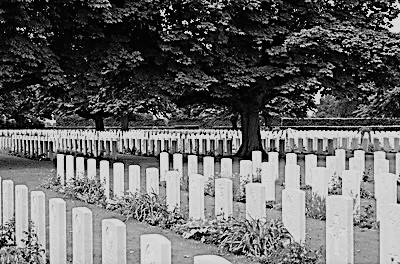
There are no exact, universally agreed-upon figures, but in the First World War, almost 31 million military personnel from all nations were killed in action.  In the Second World War, nearly 25 million were killed.  In the Korean conflict, almost 1.2 million military personnel were killed.

Ask those deceased veterans who won the wars.

Civilian casualties are another matter.  Almost 7 million lost their lives in WWI, nearly 55 million in WWII, and 2.7 million during the Korean conflict.

Ask those poor souls who won the wars.

bayeux-war-jp5

In the next war, if there is one—perhaps pitting the USA and its allies against North Korea and its allies—one can only imagine what the death tolls might be.  The current population of Seoul, the capital of South Korea, is approximately 25 million.  The city is well within the range of North Korean bombardment.  The population of Pyongyang, North Korea’s capital, is close to 4 million, and it, too, lies within range of enemy attack.

Imagine the horror of a nuclear strike against either city, or a chemical or biologic-pathogen attack.  Imagine the carnage that would follow.  Strike would be followed by counter-strike, the targets would multiply, and any nation that dared join the fray would leave itself open to similar attacks.

If past examples are anything to go by, such hostilities might well lead to a world-wide conflagration, where even western-hemisphere nations would be affected.  It might not last long, but it would almost surely be the most deadly conflict of all time.  And as we know, the hangover from nuclear detonations or man-made epidemics would alter living conditions on the entire planet, perhaps threatening everyone still alive to witness it.

cockroaches

One might imagine (if one had a macabre sense of humour) a cluster of cockroaches amidst the ruins, perhaps the only survivors.  After surveying the desecration, one might turn to the others with a quizzical expression.

“So, who won?”

The Eyes Have It

“All my men!  Here now!  All-l-l my men!”

The cry would ring out across the schoolyard, almost every recess or lunch-break, and hordes of eight-, nine-, and ten-year-old boys would scamper to a grove of elm trees adjacent to the playground.

The boy they rallied around was an object of ridicule among my friends, we grade-eight boys playing soccer and baseball.  We had no time for his foolishness.

A classmate of ours, he called himself Marvellous Marv, without a shred of embarrassment.  We called him Starvin’ Marvin, and not because he didn’t have enough to eat.  He was porcine, in fact, taller than I, but physically uncoordinated, and somehow out-of-place wherever he was.  The girls we sought to impress thought he was icky.

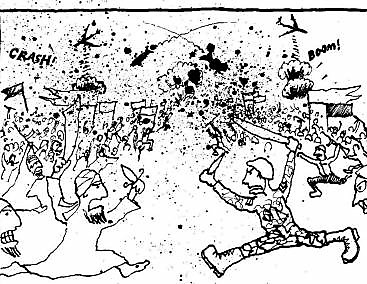
Once gathered, his acolytes would listen to whatever he was telling them there in the shade of the trees.  And then, at his signal, they would swarm across the soccer pitch, across the ball diamond, sixty or seventy strong, yelling like banshees.  They never accosted any of us—we were older and bigger, after all—and they never stopped, even when we’d trip as many of them as we could, angry at the interruption to our games.  They simply picked themselves up and kept running, rendezvousing eventually back in the trees where he awaited them.  Never once did he accompany them on their wild raids.

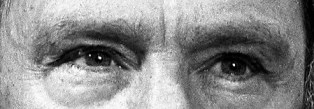
Marvin’s voice had deepened sooner than most of ours, so his clarion call to his much-younger followers was quite distinct.  But his eyes, not his voice, were his most distinctive feature, squeezed between plump cheeks and eyebrows, squinting pig-like at everything and everyone.  We used to wonder why his younger acolytes continually obeyed him, but I think it was probably the impact of his eyes.  Although unafraid of him personally, even we were unsettled when he’d stare at one us in class, as he often did.  There was a disturbing aspect to his eyes, as if the brain behind them were somehow untethered from our reality.

Today, as I contemplate influential people we’ve come to know in our society—political, military, entertainment, criminal—I try to understand what it is that makes them attractive to many of their peers.  Lots of easy reasons spring to mind: a compelling message, brute force, overarching talent, a pathological audacity, a promise to make us great again.  None of these, however, would be sufficient on its own if we did not become convinced that the person, him- or herself, is authentic.  Conviction is key.

And it’s in the eyes we find that messianic fervor, that zealous certitude, that passionate persuasion that ensnares us.  That conviction.

Consider the gazes cast upon us by some historic influencers, for better or worse, during the past century—

manson1   rasputin2


Evil or brilliant?

loren1   bardot1

Safe or dangerous?

trump1   ali2


Mad or conniving?

trudeau1meir1

Stone-cold or warm and loving?

newman3     churchill1

Visionary or murderous?

When I see their full faces revealed, I’m drawn to the eyes of these people, even if just in photographs.  In person, I imagine, I would be transfixed.  But I don’t know if I could ascertain their true character or purpose by simply returning their steady stare.  I could easily be fooled.

It’s been said that a person’s eyes are windows into the soul; deep wells from which we are often compelled to drink; pools of mystery into which we sometimes plunge, occasionally in spite of our better judgment.  Our eyes may be sorrowful, laughing, blazing, blank, wide, squinty, even Irish—and, for the most part, unremarkable.

Not so for those who aspire to lead us, and for many who have in the past—whether in war or peace, good times or bad, for good or evil.  More often than not, they captivate us with their remarkable, magnetic eyes.  We can easily be misled, and have been in that same past, because we misread the message those eyes convey.

The eyes portrayed in this piece are, left to right, top to bottom:  Charles Manson, Grigorii Rasputin, Sophia Loren, Brigitte Bardot, Muhammad Ali, Donald Trump, Pierre Trudeau, Golda Meir, Paul Newman, and Winston Churchill.   Some we venerate, some we abhor.

But all have influenced us, and others continue to—in part because, despite our best intentions, we cannot help being drawn into those compelling eyes.

The eyes have it.


Resurrection Relevance

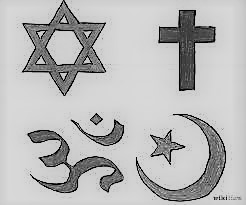
Another Christian observance of Easter is upon us, with its celebration of the resurrection of Christ, the man whom many consider to be the Son of God.

cross

During his brief time on earth, Jesus preached peace, tolerance, faith, forgiveness—and, perhaps most importantly, love for all humankind, even one’s enemies.  In return, he promised eternal life for all who believed and acted in accordance with these precepts.

As a child, I learned quickly that one of my mother’s interpretations of his teachings was that I must not fight with other children.  She was very firm about this.  During my early school years, it seemed like good advice; I was a friendly little guy, and others seemed to like me just fine.

schoolyard

As I got older, however, I learned that not every kid subscribed to her viewpoint.  Some of the classmates I encountered in the older grades were quite aggressive, to the point of being bullies, and for a while I was at a loss as to how to cope.  That was one of the reasons, maybe, that I became a fast runner.

Alas, it was not always possible to escape the marauders, so fighting became the only alternative to being pummelled and punished repeatedly.  It was safer to stand up to the bullies, even if I lost the fight, than to do nothing.

My father quietly helped me with the dilemma of disobeying my mother by suggesting that, although her sentiments were correct, fighting back when attacked was okay.  Starting a fight was really the thing to avoid.

I still remember an occasion in my mid-teens, when my mother agreed to accompany my father to watch me play a hockey game, the first time she had done so.  About halfway through, I became involved in a fight on the ice, not one I started, and was ejected, along with my opponent.  My mother was, by all accounts, aghast.

hockey fight

Although I played recreational hockey for another forty years, she never attended another of my games.

That incident shapes my outlook today when I consider the state of humankind on the planet we all inhabit.  Christ was not the only person to preach peace and love; many devout prophets professing other faiths have advanced the same messages.

But just as not every Christian follows Christ’s teachings obediently, so, too, do some adherents of other religions also stray from their prophets’ words.

The situation is complicated by the fact that there are also false prophets from all religions, who have preached a wilfully-distorted or violent version of the message, demanding their adherents forcefully convert everyone to what they call the true faith—and failing that, to kill them.  They have existed under many guises—the Christian Crusades, Islamic jihad, radical Zionism, the Hindu saffron terror, and so many more.

They survive even today, in a god-eat-god world.

'Its a god eat god world.'

If we assume that the vast majority of people alive right now want to live in peace and harmony—perhaps not anxious to love their neighbours, but at least happy to leave them alone—then why is there so much warfare and bloodshed across the globe?  Are we being driven to demise by the bloodthirsty minority, the zealots, and (as a friend likes to call them) the lunatic fringe?

As a questioning Christian at yet another Easter (believing in the wisdom of Christ’s teachings, but unsure about the promise of a heavenly hereafter), I see benefit in acknowledging, if not a literal resurrection, at least a continuing relevance of his message.  And further benefit in acknowledging the similarities between that message and those of other great prophets of different faiths.

Back in that long-ago schoolyard, there was ample space for me to run from those who would harm me.  On this increasingly-crowded planet Earth, however, whither can we flee from the radicals and fanatics seemingly bent on our destruction?

Shall we turn the other cheek, perhaps to be slaughtered?  Shall we fight back, perhaps ensuring mutual annihilation?

Or shall we continue to do what we can to spread those universal messages of peace, tolerance, faith, forgiveness—and, perhaps most importantly, love for all humankind, even our enemies?

love

It is up to all of us in the end.  Or it will be the end of us.

The Supreme Power

Rudyard Kipling wrote these lines in 1902, the beginning to a small poem about his daughter:

I keep six honest serving-men/(They taught me all I knew);/Their names are What and Why and When/And How and Where and Who…

Five of those interrogative words, whether rendered in English or any other language, enable us to ask the fundamental questions of all mankind.

What is the meaning of life?  Why are we here?  When did life begin?  Where are we headed?

And the most fundamental of all:  Who created us?

Throughout the millennia, mankind has striven to find meaningful answers, and has codified those answers in various constructs: dogma, commandment, or science.  The first of these forms the basis for religious belief, the second for a stable, civil order, the third for progress.

One may ask, however, whether the answers so far obtained have been beneficial to our understanding of our existence.  It might be argued, for example, that the plethora of religious beliefs espoused by so many have led us, not to an utopian bliss, but into almost-endless warfare as we seek to establish the predominance of our own set of beliefs.  Think of wars fought in the name of Judaism, Christianity, or Islam, either to preserve or spread those creeds.

wars

Or consider the nearly-numberless dictators and rulers over the ages who have demanded fealty and obedience from their subjects, only to have their empires crumble into disarray: Persia, Athens and Sparta, Egypt, Carthage, Imperial Rome, the Ottoman Empire.  Their names are legendary—Cyrus the Great, Leonidas, Rameses the Great, Hannibal, Augustus Caesar, Suleiman the Magnificent—but their legacies are reduced to historical footnotes.

And what of more modern empires, be they economic or military—the British Commonwealth, America, Russia, China?  Are they truly stable models of order and good government, destined to last forever?

Even science, that bastion of fact-based evidence, can mislead us.  At various times in history, scientific evidence demonstrated conclusively (at least to some) that the world is flat, the earth is at the centre of the solar system, there are canals on Mars, and life as we know it would end on Y2K.  So, who is to say the theories we espouse today are any more reliable—that evolution, not creation, has brought us to our present state; that our very existence is imperilled by global warming; or that the universe we inhabit is endlessly expanding?

The most fundamental question (Who created us?) can be deconstructed into two oppositional queries.  The first:  were we, in fact, created by some supreme power?  And the contrary second:  did we create the notion of a supreme power to help explain our existence?

Worldwide, the answer from untold billions of people to the first of these is Yes!  And, perhaps not so strangely, the answer to the second, from different people, is also Yes!

Truth be told, I have offered up affirmative answers to both queries at various points in my life, believing each at the time.  I have flip-flopped on many occasions.  But even as I answer, more questions form in my mind.

If there is a supreme power (variously portrayed paternalistically in different religions as Yahweh, Jehovah, Allah, Krishna, and so many more), why did it create us?  Is there some magnificent purpose behind it all?  Were we put here to love and nurture one another, in a grand homage to our creator?  Or were we created to murder each other, providing a somewhat cruel spectacle for the amusement of our maker?  Was there, perhaps, no purpose at all, just a random experiment quickly forgotten by a supreme power that is, at one and the same time, our initiator and destroyer?

god 3

Conversely, if there is not a supreme power—if, in fact, mankind created that notion to soothe our fears and protect us from our most base instincts, lest we annihilate ourselves—then what?  Are we alone in the universe, left to our own devices?   Are we nothing more than a tiny fluke in the cosmic sea?

Religious folk, theists, profess to both adore and fear their maker, as well they might in their longing for life-eternal, rewarding their faithfulness.  Non-religious folk, atheists, proclaim no god (though some may fear an unknown afterlife).

And those in the middle—the ones too sophisticated to fall for the charade of a supreme power, yet too fearful to deny its existence—what of them?

I do not know the answers to any of these questions.  But I favour the idea that there is a creator, that we and our universe could not have sprung spontaneously from nothing.  That’s not provable, mind you.  It’s faith.

This much, however, I do know to be true.  As I survey the world around me—with its endless stream of callous and fervent punishments inflicted on some of us by others of us, and with the threat of nuclear or environmental destruction looming ever more forbiddingly in our future—I despair.

If there is a supreme power, but one uncaring toward, and indifferent to, our plight, (s)he must be laughing hysterically at our hapless ways.

Equally, if a supreme power exists as a loving and compassionate being, (s)he must look upon us with pity and sorrow.  And weep.

And most frightening of all:  what if there really is…..nothing?

nothing


Avoiding the Truth

How we know when politicians are lying to us, the old story goes, is that their lips are moving.  Cynical as that point of view may be, I find it increasingly difficult to believe what I hear from elected officials, be they municipal, provincial, or federal.

Mind you, it is rarely, if at all, that I actually have a face-to-face conversation with government office-holders.  My contact with them comes through newspapers and periodicals, the broadcast media (mainly television), and the innumerable digital streaming platforms that seem to be rapidly taking over the information age.

I have long been a quasi-political junkie—more queasy now than quasi, alas—‘though I have never aspired to enter the fray directly.  Perhaps, given my background as a student of history, I’ve always enjoyed seeing events unfold in real-time, even if vicariously through reading about or watching the news of the world.  My first visceral, voyeuristic exposure to that happened shortly after the Kennedy assassination, when I watched a Dallas hoodlum shoot the alleged assassin on live TV.  The blunt shock of that resonates still in my memory.

Oswald

So today, many years after that seminal event in broadcast history, I still read about, watch, and listen to the newsmakers of our present era.  But it is in the visual media that they look most real, even if sounding less than authentic.  And over time, I have come to accept everything I see and hear from them with a healthy dose of skepticism.

The main reason, I think, is that they never seem to answer the questions asked of them.  I have seen them in front of their supporters, in media scrums, at formal press briefings, even in parliamentary Question Period, deliberately avoiding a direct reply to a clearly-stated question.

If I were to be charitable, I might concede that, perhaps, they are not lying to us.  Maybe they are merely obfuscating.  Evading.  Deflecting.  Or maybe they really believe what they are telling us.  Or, most ominously, maybe they don’t know the answers.

But if I am to be honest, I think they are lying.  Deliberately.  Through their teeth.

Imagine, if you will, that you are watching a televised (or streamed) interview, conducted by a respected journalist, with me as the subject (and in order for this metaphor to work, you must also imagine that I might be a world-renowned, best-selling author worthy of the journalist’s time).  Listen to the questions the interviewer poses, listen to my answers, and determine for yourself which of my responses, if any, constitute a direct reply, or an honest one.

I’ll give you the score at the end of the interview.

Q.  Thank you for sitting down with me today. Do you consider yourself a worthy successor to the likes of Hemingway, Steinbeck, and Faulkner?

A.  I appreciate the comparison. You’re very gracious in your praise.

Q.  Yes, but what about those other writers?

A.  You know, of course, that they were American, right? And I’m not.

Q.  Okay, so what is it about your writing that so captivates your audience?

A.  Writers write, and readers read. There’s a difference.

Q.  Well, sure. But how is it that you’ve captured readers’ imaginations so thoroughly?  What sets you apart?

A.  Asked and answered. Next question?

Q.  Ummm…okay, what are you working on now? Can we look forward to another blockbuster?

A.  The great thing about our capitalist system in North America is that market forces determine what’s up or what’s down.

Q.  There are rumors abounding that a Nobel Literature Prize might be in your future.  Any thoughts about that?

A.  Alfred Nobel was a great humanitarian, an example to us all.  And I really like Bob Dylan.

Q.  Alright, let’s switch gears for a moment. Have you ever experienced what the pundits call ‘writer’s block’?

A.  You know, the wonderful Italian operatic composer, Gioachino Rossini, never wrote another masterpiece after the age of thirty-seven. Isn’t that interesting?

Q.  Yes, but what does Rossini have to do with your writing process?

A.  One or the other of his operas is always playing in the background when I write.

Only one of these eight answers was straight-up honest, rather than misleading or outright untrue—the final one.  The rest were as if taken from prepared talking-points, to be used regardless of the questions asked.

That, in a nutshell, is what I find so annoying about politicians today.  With few exceptions, and but for rare occasions, they refuse to tell me the truth.

What is the truth about climate change?

What is the truth about the mid-east peace process?

What is the truth about the sub-prime mortgage scandal?

What is the truth about the nuclear arms race?

What is the truth about our planet’s impending freshwater shortage?

I don’t know the answers to these questions, and nor do you, I suspect, because our elected leaders refuse us the information that would help us make informed decisions.

It seems not to matter who they are—a dreamy prime minister, a buffoon president, a thuggish dictator—none comes clean with us.

politico

In the burgeoning development of artificial intelligence, AI, I wonder if there is perhaps a glimmer of hope that we might someday be governed by unemotional, clear-thinking, moralistic leaders—smart machines—unimpeded by the failings of human arrogance.

But no, that would be too ridiculous to contemplate, a substitution of artificial intelligence for the limited or nefarious intelligence we deal with today.

Wouldn’t it?

What’s the Difference?

Readers of this blog will know that my wife and I, both Canadians, have been travelling in South Africa for almost six weeks.  During that time, family members and friends have been receiving pictures and short updates almost daily, chronicling our adventures.

The question I’ve been hearing from them most often is, “What’s the difference between the two countries?”

Well, there are obvious differences, of course, and some more subtle—none of them in any way threatening, but many quite interesting.

Take driving, for instance.  South Africans drive the opposite side of the road—the right-side, which we would call the wrong side, rather than the left-side, which for us is the right side.  They drive smaller vehicles than many of those found on North American highways, which is a good thing because most of the roads are narrower than we are accustomed to.

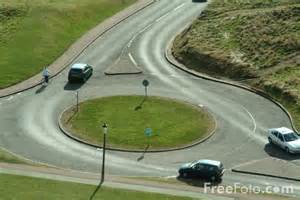
There are fewer traffic lights, except in the most urban areas, the preference being for roundabouts, many more than are found in Canada.  Entering and exiting those roundabouts is tricky at first, what with everyone coming at us the wrong way.

roundabout

But South African drivers are remarkably polite, and forgive our mistakes with a cheery wave.  Honking horns are almost never heard.

Another difference is the language, or at least how it’s spoken.  English is the universally-accepted tongue, the lingua franca, but there are many others one overhears everywhere—Afrikaans, Dutch, and nine indigenous languages.  The most unique of these is Xhosa (pronounced klozsa in English), and known as the clicking language for its eighteen click-consonants produced at three different parts of the mouth.  It’s delightful to listen to, impossible for us to replicate.

Xhosa-children

English is spoken with a distinct South African dialect (although some of our hosts along the way have joked that it is we who speak with an accent).

“Eh?” we reply.

Terminology and phraseology differ, too; petrol for gas, braii for barbecue, lay-by for lookout, and takeaway for take-out are some examples of the former.  My favourite phrase is the usual South African response we hear when we thank someone for a service or favour rendered.  Unlike the ubiquitous reply in Canada, “No problem!” (which always seems rather impersonal, as if the person being thanked couldn’t care less), we hear the much more thoughtful term, “My pleasure!” (pronounced play-zhar).

It’s music to our ears.

Food, and the whole dining experience, are differences we’ve noted in our travels, as well.  Almost every restaurant, even the ‘white-linen tablecloth’ variety, accepts casual dress; not sloppy or scant attire, to be sure, but smart, summery ensembles.  In a country where summertime temperatures can soar into the mid-40’s, that makes eminent sense to me.

We can dine on many of our favourites from home—beefsteak, lamb, fish, and chicken, for example—but more exotic choices are available.  And delicious.  Springbok, kudu, and ostrich steaks are popular, as are varieties of fish not available in Canada, such as kingklip (my preference).  And the recipes, many of which are of Dutch and indigenous origin, are a delight to our palates.

The wines are superb (which is not to imply that all Canadian wines are inferior), and the favourable exchange-rate between the Rand and our dollar makes them quite inexpensive.  We’ve visited numerous wineries in the Worcester/Robertson/McGregor regions of the Western Cape for tastings, lunches, and dinners, and have yet to be disappointed.

wines2

It is a fact, however, that the best vintages are not exported to Canada, so it’s been a real pleasure to sample them here.  A recent host told us that one of the more commonly-stocked South African wines available to us at home is considered by locals to be “our plonk!

Perhaps the biggest difference we’ve noted on our journey is the contrast between what we expected to see, and what we’ve actually discovered.  The garden route region we’ve travelled is a magnificent montage of mountains, oceans, vineyards, and the vast majesty of the Klein Karoo (a semi-desert valley between two mountain ranges, home to many wineries and beautiful wilderness areas).  South Africa has been more spectacular, more beautiful, more dramatic—and therefore different—than anything we could have anticipated.

Underberg16Apr01-Drakensberg-Mountains-panor

But it has been said in other quarters that all of us would be more profitably recompensed if we chose to focus, not so much on what makes us different, as on what makes us alike.  In that vein, we’ve found there is one significant similarity between this country and our own—the warmth and hospitality of the people we have encountered.

The lingering memory of our travels, lasting long after all the photographs of all the remarkable sights we’ve seen have been viewed and shared, will be of the South African people.  Were it not for the love of our own country, and for the family and friends who are there, I believe I could live here quite happily.

So, I suppose all the differences amount to not much difference at all.

The Big Five

On our odyssey through the southeastern territories of South Africa, we’ve heard a lot about the big five.  In many cases, those making such references assumed we knew who, or what, they are.

So as not to appear uninformed, I tried to figure the answer out for myself.  In Capetown, we had visited a public square populated by four statues, one each for three Nobel Peace Prize winners—Desmond Tutu, F.W. de Klerk, and Nelson Mandela—and a Nobel Literature Prize winner, John Coetzee.   Much is known about these men, and I thought they would be worthy members of such a group.

dscn1306

Drawing on my distant study of history, I supposed the fifth member of the big five might be Jan Smuts, a Boer commando who fought the British before becoming prime minister of the country in 1919, and a staunch defender of the Commonwealth, serving in Churchill’s Imperial War Cabinet during WWII.

But I was wrong, not only about Smuts, but all of them.  Despite the reverence and admiration in which they are held, none is part of the big five.

Perhaps, then, I wondered if the reference might be to cities—Pretoria, the administrative capital; Capetown, the legislative capital, home to the nation’s parliament; and Bloemfontein, the judicial capital.  To that august list, I figured I could add Johannesburg and Durban, for example, to round out the group.

Wrong again.  Cities are not referred to as the big five, either.

Still determined to demonstrate my knowledge of the country, but somewhat anxious now about my misfires, I seized upon what I should have known from the start.  The country’s top tourist destinations must surely constitute the list.  There is no question about the plenitude of such attractions; the dilemma would be narrowing them down to only five from a list that includes, among others:

  • Table Mountain, looming high over Capetown;
  • the Cango Caves, stretching beneath the mountains near Oudtshoorn;
  • the Cape Point Nature Preserve, almost the southernmost tip of the country;
  • the Addo Elephant National Park;
  • the wild animal safaris of Kwandwe Nature Preserve;
  • Robben Island, a former penal colony where none other than Mandela was imprisoned, and now a UNESCO World Heritage Site;
  • the Kwa-Zulu Natal battlefields, including Roarke’s Drift, a magnet for history buffs such as I;
  • Boulders Beach, with its colony of African penguins; or
  • the highest bungee jump in Africa, off the Bloukrans Bridge.

bloukrans_bridge_bungy

Once again, however, I was mistaken.  None of South Africa’s geographical or historical wonders are part of the big five.

Finally, I swallowed my pride and asked someone who would know, a friend and fellow-traveller who has visited the country on several occasions.  She was only too happy to solve the puzzle.

The phrase originally referred to wild animals native to Africa that are considered by big-game hunters the most difficult to hunt…on foot.  The term has been co-opted by tour operators who conduct wildlife safaris for eager tourists, although the danger is much less for us than for hunters.

In no particular order, the big five includes:  the African elephant, the Black rhinoceros, the Cape buffalo, the African leopard, and the African lion—none of which I would like to come upon while on foot.

big-five

In a safari truck, however?  Well, that’s a different matter, and it’s exactly what we’ll be doing as we enter the fourth week of our travels in this marvellous country.  And I’m hoping to shoot every one of them during our early-morning and early-evening game-drives over three days.  But I’ll be shooting with a camera, of course, not a gun.

I could never fathom the fascination for taxidermied heads, mounted on a hunter’s wall, as if to trumpet the bravery of a man or woman with a gun, up against an unarmed animal—even if one of the big five.

But I’ll be happy to show off any photographs I might get right here in this blog!


The Dark Continent

From early childhood I was fascinated by stories of Africa, peculiarly referred to as the dark continent.  As a young boy, I devoured the tales of Tarzan of the Apes, in both book and comic-book formats, and later through television and movies.  I fancied the entire continent covered in thick jungle, which I would effortlessly travel as Tarzan did, swinging on innumerable vines from tree to tree to tree.

The fact that I wasn’t strong enough to climb the rope-swing in my own backyard didn’t seem to intrude upon those dreams.

Later, as my interest in history grew, I moved on to stories of the intrepid, imperialistic adventurers who sought to colonize the continent for their respective European nations.  Men (they were always men) from Belgium, Britain, France, and Germany rushed to claim vast domains on behalf of king and country.  I imagined myself striding in the company of such worthies as Mungo Park, Richard Burton, John Speke, David Livingstone, Henry Morton Stanley, and Cecil Rhodes, bringing glory and honour to the homeland.

rhodes

In the space of little more than forty years, beginning in 1870, European control of Africa jumped from 10 percent of its landmass to 90 percent, a stunning demonstration of greed and expansionism.  The most avaricious nation was Britain, which controlled vast tracts, including the Nile valley and the Suez Canal after invading Egypt in 1882.

It didn’t occur to me back then that such heroic deeds resulted in enslavement of the indigenous peoples, and wholesale looting of the continent’s plentiful natural resources—gold, silver, diamonds, salt, petroleum, and cocoa beans among them.  In my callow innocence, I gave no thought to the consequences suffered by the conquered.

Eventually I graduated to a study of the more complex history of warfare in Africa, struggles between European empires fought on African soil.  The Dutch, French, and British, who fought initially against indigenous peoples to steal their land, found themselves inevitably clashing with each other over competing claims.  The most famous of such conflicts are, perhaps, the first and second Boer Wars fought by Dutch settlers against British imperialists in what is now South Africa, the tales of which captured my imagination completely.

No less a personage than Winston Churchill, then a young subaltern in the British army, first made a name for himself after a daring escape from a Boer prisoner-of-war camp.  In school, we learned to sing a stirring song, Marching to Pretoria, which was sung by British soldiers as they made their victorious way to the Boers’ capital city.  I think I was the only one of my classmates to have any inkling of its significance.

My understanding of Africa, therefore, was heavily influenced by a British bias; he who wins the wars writes the history, after all.

Never in my life, however, did I actually visit the dark continent.  Not until now, that is.  As I write this post, I’m sitting in a beautiful room in Aquavit, a delightful Bed & Breakfast overlooking the town of Plettenberg Bay in South Africa, with a view of the Indian Ocean to the left and smoky, blue mountains all around.  Our hosts, Linda and Ole, are not imperialistic plunderers from the past, but expat Americans who call this country home.

aquavit3

It is nothing like the Africa of my youthful ruminations.  The flora and fauna are different from what I’m familiar with, but they are different, too, from the jungle tangle I might have expected from my Tarzan reading.  On our journey by car along the byways of the southeastern coast, we have seen our share of animals not found in North America, of course—baboons, zebras, ostriches, an astonishing variety of antelope—and we shall see many more on an upcoming safari adventure.

Despite the warring history I once lapped up, we have found no enemies of any political persuasion or ethnic background; only a warm, hospitable people who wave and smile at every opportunity.  It has been easy during the three weeks we’ve been travelling here to learn to feel at home.

In the company of good friends, Evelyn and Larry, we have stood at the Cape of Good Hope with the Atlantic Ocean lapping at our feet, and climbed high up on Cape Point, almost the southernmost tip of the country.  We have swum in the Indian Ocean and walked the sandy beaches it pounds with its endless surf.  We have ventured into several off-road places—Table Mountain near Capetown, which we conquered via cable-car; the De Hoop Nature Reserve, where we encountered penguins unique to South Africa; a remote farmhouse where we were treated to a delicious luncheon of salads, cheeses, breads, and wine, all home-grown and produced.  And we have boldly gone under the ground, into the renowned Cango Caves, where we were amazed by the subterranean beauty of the eerie caverns.

dscn1543

The English words to the national anthem truly sum up my impressions of this marvellous country, now that I have seen even a part of it:

Ringing out from our blue heavens, /From the depths of our sea, /Over our everlasting mountains, /Where the echoing crags resound!

Sounds the call to come together, /And united we shall stand, /Let us live and strive for freedom /In South Africa our land!

It has been the trip of a lifetime, and we have three weeks still to go.