Lest We All Die

Like most of us, I suppose, I have a set of values and principles to which I try to adhere.  Perhaps the most important of these is the belief that we should all treat each other with the same respect and dignity with which we hope to be treated.

But there are others I profess, too; among them—

  • love is better than hate;
  • honesty is better than mendacity;
  • tolerance is better than small-mindedness;
  • civility is better than rudeness;
  • rational thought is better than baseless opinion;
  • equity in race, gender, and economic security is better than inequity;
  • freedom is better than enslavement;
  • peaceful coexistence is better than open warfare;
  • rule of law in our collective society is better than anarchy; and
  • majority rule in our collective society, however flawed, is better than the tyranny of a minority.

Like many of us, I imagine, I try to inject the values I espouse into my daily doings.  At my age, alas, the range of those doings is growing increasingly smaller, my influence is shrinking among my social circle, and the spectre of irrelevance is looming ever larger.  Where once my thinking was valued and reflected upon by those around me, it is less entreated as the years slide by.

My greatest impact is felt now through the writing I do—or so I choose to convince myself.  In the almost three-hundred essays I have posted to this blog since its inception in January 2016, I have touched on a multitude of subjects influenced by my value-set, some of them repeatedly.  A partial list includes—

  • parenthood; children and grandchildren; family and friends; education of the young;
  • racial and gender inequality; socio-economic issues and child poverty; wealth inequity; discrimination and prejudice; women’s reproductive rights; aging; civility and respect; pandemic unpreparedness; the future of work; artificial intelligence; right-wing Christian nationalism; peaceful coexistence;
  • famine and food scarcity; freshwater scarcity; forced migration; climate change; biodiversity loss; water and air pollution; global warming; ecological collapse; overpopulation; species extinction;
  • government overreach; politics and authoritarianism; corruption; warfare and nuclear threats;
  • freedom of speech; media and a free press; big tech; alternative facts and disinformation; and  
  • humour and whimsy; reminiscences; childhood; life eternal.

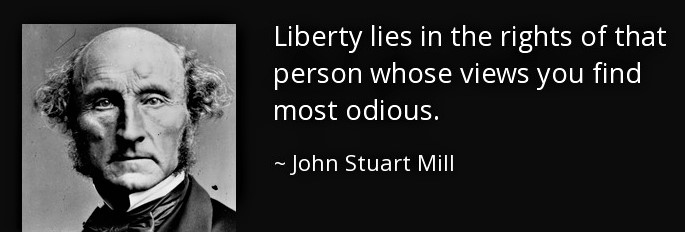
I also believe that certainty is the enemy of an open mind, and that we should not believe everything we think.  Therefore, I remain quite prepared to hear about and learn from contrary viewpoints.

Unlike a few people who persist in doing so, I have never tried to impose my values on anyone through my writing.  I believe in persuasion, not mandate or fiat.  Everyone is free to read my blog-posts if they so choose; they are also, and importantly, free to agree or disagree with what I’ve written; and they are free to offer comment.  There is no pressure on anyone, explicit or implied, to come over to my way of thinking.

I accept other people’s right to believe as they do, to say what they wish, and to act as they will, but with one critical proviso—they are not free to harm anyone else in so doing, or to foist their beliefs on unwilling others.  

I know this view is not popular with the social, political, and religious zealots, partisans, and proselytizers who brook no dissent.  Nevertheless, I believe it is in keeping with my aforementioned values and principles, and I continue to espouse them.

To ensure our continued coexistence, my only plea is that we live and let live.

Lest we all die.

The Smartest Guy

During my working career, sometimes I was the smartest guy in the room.  But only sometimes.  Fortunately for me, in many of the situations where I wasn’t, I was the highest-ranking guy in the room, so the smartest folks, if they wanted corporate decisions and actions to go their way, had to convince me of the merits of their positions.

On occasion, that was relatively easy for them, because the evidence in favour of their arguments was plentiful and conclusive, and I’d have had to be the dumbest guy in the room not to understand that.  But I was never the dumbest guy, so in matters where there seemed only one reasonable course of action, not much convincing was needed. 

Other times, though, those smarter folks in the room would present conflicting data to me, sufficient to rule out an obvious choice, and that’s where the need to be convincing became paramount.  Whenever I was presented with two or more sets of factual data, each suggesting plausible courses of action, the art of persuasion became more significant.  And in such cases, I could always be persuaded by logic and passion.

Early on in my career, before I‘d reached the point where I was the arbiter in such scenarios, I watched as other smart folks made their pitches—sometimes in concert with me, sometimes in opposition—to those who would ultimately decide the matters in question.  And I learned that, absent overwhelming evidence in favour of one option or another, the most effective presentation of the differing bodies of evidence usually won the day.

Most of the folks to whom I reported along the way—men and women both—considered themselves the smartest guys in the room.  But just in case they might be wrong, all of them surrounded themselves with subordinates who might be—and who often were, in fact.  More importantly, the most effective of my bosses listened closely to their people, allowing themselves to be swayed by facts, logic, and passion—usually in that order.

I soon learned that passion alone would rarely, if ever, win the day with the smartest guys in the room.  For them, facts and logic were essential; they were, after all, rational beings.  But whenever reams of facts and heaps of logic offered divergent paths that might plausibly be followed, emotion entered the arena—enthusiasm, zeal, fervour, each of which is an essential part of the art of persuasion. 

Over time, I noticed the people who had the most success at winning over the decision-makers embodied similar characteristics, employed similar methods.  They were open and transparent about themselves, for example, and allowed others a chance to know them on a personal level, to learn what they stood for, what they valued.  When talking with someone, they focused exclusively on that person in the moment—leaning in, making eye contact, smiling and nodding when appropriate—all of which had the effect of making the person feel singularly important—even the boss.

The effective influencers were highly-visible in the workplace, too, and always asked pertinent questions of others in conversations and meetings to solicit their viewpoints.  They listened actively to the responses they received, sometimes saying them back, perhaps in their own words—not just to indicate understanding, but often to reframe the discussion in their direction.  They tried to establish links between colleagues’ ideas and their own, seeking to achieve synthesis—and eventually, consensus.

All of them were consensus-builders, but the consensus they strove for invariably skewed toward their own desired outcomes.  They would acknowledge and commend the results suggested by others’ proposals, then meld them with their own to offer higher-order outcomes, often coupled with a variety of strategies and tactics to achieve them.

One of the most effective of these tactics was their engaging habit of beginning their responses to others’ ideas with a phrase like, “Yeah, I agree…” or, “Yeah, I like that…”.  And then they’d segue to their own proposal by adding something like, “And if we were to combine that concept with this one…”, the point of which was to move the needle on the consensus-meter in their direction.

Without exception, all these folks who were successful at winning others over had a keen sense of anticipation, a nose to the wind for what might be coming, perhaps unexpectedly, and they made sure they were prepared with contingency plans.  I took notice of how they always had responses at the ready for questions that might never get asked, for objections that may never be raised.  They radiated readiness and competence, and as a result encouraged confidence in their abilities on the part of those around them.

With few exceptions, these smart folks with whom I worked were well-intentioned, not self-serving or conniving.  Almost all of us had the best interests of the organization at heart, and each of us believed the option we were advancing in a particular circumstance, even where it differed from colleagues’ proposals, was the best alternative for the organization.  We competed, yes, but for the overall good.

After I eventually ascended to the arbiter’s chair, the critical factor for me in favouring one proposed course of action over another was integrity—each person’s integrity, definitely, but also the underlying validity and foundation of her or his proposal.  The credibility of both the person and the proposal were paramount.  When those were in place, when the data and logic were clear, I was ready to be convinced, to be persuaded.

Even today, long-since retired, I consider the importance of having to be the smartest guy in the room over-rated.  One could be merely a shade above average in a roomful of average—hence, the smartest in the room—yet not particularly well-equipped to make critical decisions.

Far more important for decision-makers, I have always thought, is to encircle themselves with folks with the potential to be the smartest guy, and then encourage them, listen to them, take direction from them, and earn their commitment to a final consensus—a consensus that may ultimately combine elements of several proposals.

Now, if you’ve read this far, it’s possible that you disagree with me about some or all of my thinking, so feel free to persuade me otherwise.

I can be reached.

Tell ‘Em I’ll Be There

In my dream on this midsummer evening, I hear the harmonies wafting through the screen door and open windows, a ricky-tick piano accompanied by exuberant voices, men and women, some a tad off-key, but all in on the song—

In the cool, cool, cool of the evening,

When you’re lovin’ the summer air,

In the cool, cool, cool of the evening,

Save your boy a chair,

When the party’s gettin’ a glow on, and singin’ fills the air,

In the shank of the night, when the doin’s are right,

Well, you can tell ‘em I’ll be there.

I enter the familiar house—not as the twelve-year-old I was then, but the eighty-year-old I am now—and I move freely and unseen among the gathered throng.  All of them are there, as they always were, and I start in the kitchen where I see my mother, Dorothy, and her mother, Pearl, refilling bowls of snacks, washing and drying glasses, emptying and cleaning ashtrays.  The kitchen table is littered with mickey-bottles, partially-empty bottles of soda and ginger ale, and empty beer bottles.  But I remember from experience, it will be properly set for breakfast by morning.

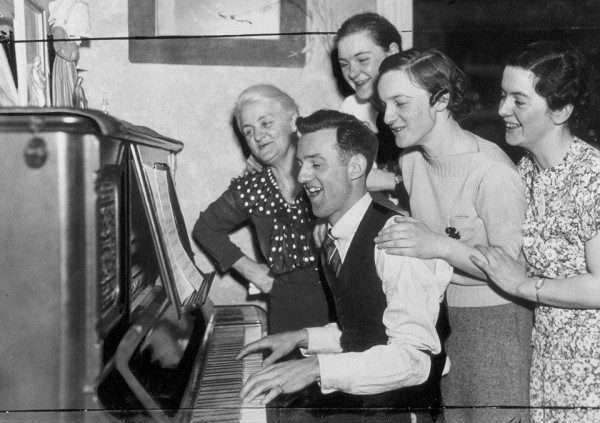
I wander into the dining-room where the assembled singers are sitting or standing near Mike, the next-door neighbour, who is perched on the stool in front of the upright piano, tickling the ivories, as Dad calls it.  Dad says he plays by ear, which always struck me funny because it’s his fingers that dance across the keyboard, responding to every shouted request for a song.  To keep him going, Dad makes sure he always has a bottle of Black Horse Ale by his right hand.

Mike’s wife, Claire, a tiny French-Canadian gamine, sits beside the piano, smiling shyly and swaying to the rhythms her husband is pumping out.  She speaks halting English, always has a drink in her hand which she rarely sips, and reminds me now of Leslie Caron.

Beside her is my mother’s father, Gordon, and his voice is among the loudest and truest in the raucous chorus.  The son of a banty Irishman, one of five boys, he is proud of still being welcome at any party with his own five children and their spouses.

Almost everyone is smoking, and the muggy air is redolent of cigarette and cigar, which I don’t mind, although I’ve never been a smoker.  A hazy, bluish pall hangs up near the white, popcorn ceiling, and will eventually yellow it, but no one is thinking about that right now.

It occurs to me that, except for my mother and father, every one of these people will die before they reach the age I am now, most in their seventies, some sooner.  But no one save I ponders that right now, either, and the songs keep a-coming.

I’m gonna buy a paper doll that I can call my own,

A doll that other fellows cannot steal.

And then the flirty, flirty guys with their flirty, flirty eyes

Will have to flirt with dollies that are real…

My mother has three sisters, Marie, Eunice, and Irene, and a brother, Jim, all of whom, like my mother, regale in the spotlight.  All of them are attractive, they all fancy themselves singers, and they are competitive with each other—although loving, of course.  But none wants to take a backseat, so they forever try to outdo each other.

Eunice is the best of them, I think, referred to more than once in a local newspaper as ‘the songbird of the north’, and her preferred style is like Peggy Lee or Connie Boswell—whispery, cool, seductive, sophisticated.  I think she’s enamored of a friend of my parents, Jack, and I watch as she purrs one of her songs to him—

You made me cry and walk the floor,

If you think I’ll crawl back for more,

Big Daddy. you’ve got a lot to learn…

Jim thinks of himself as Sinatra, not only in his style of singing, but in his expressions, how he dresses, how he carries himself, how he relates to others.  And I must admit, he does do more than passing justice to some of the classics, one of which I’m listening to now in the dining-room—

It’s quarter-to-three,

There’s no one in the place ‘cept you and me,

So set ’em up, Joe, I got a sad story you oughta know…

So make it one for my baby, and one more for the road.

It goes without saying, however, there are no solos in this crowd, not for long.  One person may have the floor for a few seconds, but only until the others recognize the song, and then the chorus begins anew.  Irene, she of the dancer’s legs, sings quietly, mostly to her husband, Bev, and he bestows his crooked grin on her as he listens—

Gonna take a sentimental journey,

Gonna set my heart at ease,

Gonna make a sentimental journey

To renew old memories…

I realize that’s what I’m doing, too, as I wander through the house, taking it all in.  The hallway between the kitchen and the dining-room has a closed door leading to the second-floor bedrooms, and I know if I open it, I’ll see my younger self seated on the stairs beside my brother, Allan, and my younger sister, Colleen—chins in hands, elbows propped on knees, listening to the music.  My other two sisters, Dale and Martii, both much younger, will doubtless be abed and asleep despite the din.  But I choose not to open the door.

Marie has the floor now, if only briefly, and in the imperious manner of the eldest child, the athletic one, she tells Mike the next tune he must play.  And as always, she sings it to Bob, her husband, and just like every other time she’s tried, she isn’t able to finish before choking up in tears—

You’ll never know just how much I love you,

You’ll never know just how much I care,

And if I tried, I still couldn’t hide my love for you,

Surely you know, for haven’t I told you so a million or more times…

When she stops, I find myself finishing it for her in my head, for it’s one of my favourite songs, and they are my favourite aunt and uncle.

…If there is some other way to prove that I love you,

I swear I don’t know how.

You’ll never know if you don’t know now.

Mike heads for a bathroom break, so Dad takes his place at the piano.  If he could be anything in life other than what he is, I imagine it would be a concert pianist.  But he isn’t, and so he limps through a very limited repertoire, concluding with his truncated version of the finale of Gershwin’s Rhapsody in Blue—which is decidedly not rhapsodic as he pounds it out.  And because it has no lyrics, it requires him to improvise in his boisterous baritone—

Da da da dah!

Da-da da-da da da da dah,

Da dah!

Da da da,

Da-DAH!

Mercifully, Mike comes back, beer in hand, with another for my father.  I watch in remembered awe as air bubbles dance inside the green, long-necked bottle they tip back for long swallows.  When Mike is seated again, the first song called for is Jack’s, and his gravelly bass rings out the familiar lyrics—

Chi-ca-go, Chi-ca-go, that toddlin’ town,

Chi-ca-go, Chi-ca-go, I’ll show you around.

Bet your bottom dollar you’ll lose the blues in Chi-ca-go,

The town that Billy Sunday could not shut down…

But I discover suddenly that the party I am so enjoying is beginning to shut down, at least for me.  I’m still there—this eighty-year-old apparition, unseen by anyone—but the scene around me is growing dimmer, the music fainter. And then I spy my mother, back from the kitchen, whispering to Mike at the piano, and everyone stops to listen as she sings a piece she has sung to me for as long as I can remember—

I wonder who’s kissing her now,

I wonder who’s showing her how…

I wonder if she ever tells him of me,

I wonder who’s kissing her now?

And when she is finished—as all around her slide away into the deepening fog of long-ago, all these people I loved and whose lives I enjoyed being part of—I sidle over to her and plant a lingering kiss on her cheek.

I used to ask her when she sang the song to the infant me what that now was, the now that was being kissed; in my childish innocence, I didn’t understand the word as a temporal reference, thought of it as a thing, like a nose or a forehead.  She would simply smile and kiss both of mine.

So now, on the cusp of waking—just before I find myself alone again in my dream, outside that house of yesteryear in the warm, summer night—I wonder if I might be allowed to join that party myself in some not-too-distant-future.  And in hopeful anticipation, I offer my own version of one of the songs to my mother and father—

In the cool, cool, cool of the evening,

Save your boy a chair…

In the cool, cool, cool of the evening,

I’ll find you anywhere,

When the family all ask about me, askin’ if I care,

If they’re wonderin’ if I will join ‘em on high—

Well, you can tell ‘em I’ll be there.
A Party? No Thanks!

Another birthday, the eightieth since my actual day of birth, is looming.

If I have my way, there will be no party celebrations to mark the occasion—no gathering of friends, no gifts, and most mercifully, no public rendition of that ubiquitous birthday song by a bored, yet dutiful, cadre of restaurant servers.  Rather, the occasion will be marked by a fond embrace from the one who has been alongside for all but the first twenty of those eighty anniversaries.

For me, the party tradition has gone on too long.  It’s not only over now, it’s overrated.

The last big celebration I remember was on my twenty-first birthday, when my parents planned a party to honour the passage of their firstborn from boyhood to manhood—as if it had happened all at once on that given day. 

In 1802, Wordsworth memorably observed, The child is father of the man…, and so it has always seemed to me.  But truth be told, in all the years spent being a man since then, I don’t believe I ever left the boy behind.  He lurks behind the adult mask, only rarely emerging, as though fearing he’s no longer welcome.  But I still search him out sometimes, if only to reassure him.

I don’t really remember that twenty-first birthday party, of course, it having occurred almost sixty years ago.  But I do have photographs to remind me of the momentous occasion—washed-out Kodachromes of people who meant the most to me back then—some gone now to their spiritual reward, others, like me, to lingering adulthood.

My mother and dad grace several of the photos, beaming with parental pride (I’ve always chosen to assume), both of them decades younger than I am now.  How can that be, I wonder, and where did those years go? 

My siblings—a brother and three sisters—all stand with me in other pictures, our arms around each other, full of that relentless, youthful optimism that has not yet encountered the eroding onslaught of time.  It did assail us eventually, of course, but so far, all but my brother have survived.

A couple of close friends were present at that party, too, both mere weeks older than I, and eminently wiser (or so I imagined, given their earlier entry into manhood).  Both remain  fast and true friends to this day—and they, too, like me now, have reached the end of their eighth decade.  Imagine!

Most dear of all in those faded photos is my high school sweetheart, smiling happily, if a tad uncertainly, still getting to know the large, somewhat strange family whose son she was keeping company with. 

On that day, we were still two years removed from the moment when she would accept my offer of marriage, and she, I’m sure, had no idea right then that such a fate awaited her. Even I, it must be said, had only begun to suspect she might be the one. That longed-for wisdom prevailed, I suppose.

Anyway, that’s the last big celebration I recall.  There have been many so-called milestone birthdays along the way—the thirtieth (Never trust anyone over thirty!), the fortieth (Forty is the new thirty!), the fiftieth and sixtieth (the golden years, so dubbed by those who couldn’t avoid them), and even the seventieth (entry point to the last of the three stages of life: youth, adulthood, and You’re Lookin’ Good!). 

But the milestone birthdays never impacted momentously on me.  Each was just one more marker in a so-far-endless progression of years, gratefully attained, yet no more important than any of the others.

Among the most special greetings I receive on every birthday are those from my two daughters, both of whom endearingly insist that I’m not old, I look terrific, and I’m every bit as good as I once was.

“Hmm,” I tell them, “maybe I’m as good once as I ever was!”

For the past twenty-one years, I’ve been further blessed to hear from a younger set, my grandchildren, five in number now, who cannot for the life of them understand why there won’t be a big party on my special day, with balloons, and cake, and lots of presents.  Not to mention the goodie-bags they used to get at their friends’ birthday parties when they were younger.

“Don’t you like parties, Gramps?” one of my granddaughters once asked.

“Don’t you have any friends, Grandpa?” my grandson chimed in.

But I always told them I’ve had more birthdays than I have friends and family combined, and that on my birthday, I’m more than content just to have my grandchildren loving me.

“Oh, we love you, Gramps,” they affirm.  “But grown-up goodie-bags might still be a good idea, y’know.”

I do know.  My goodie-bag has been overflowing for eighty years.

To Make An End

For last year’s words belong to last year’s language.  
And next year’s words await another voice.
And to make an end is to make a beginning.
                                                                    - T. S. Eliot

As another year draws to an end, and with it the approaching close of my eighth decade on this journey, I know I am among the most fortunate of my fellow-travellers.  For sixty years of my passage, I’ve been accompanied by the wonderful young woman I first met when she was but sixteen.  She is young no more, of course, but as W. B. Yeats wrote in When You Are Old (almost as if he had her in mind)---

How many loved your moments of glad grace,
And loved your beauty with love false or true,
But one man loved the pilgrim soul in you,
And loved the sorrows of your changing face.

I still do.

Also with me for fifty-plus years of my journey have been the two magnificent daughters who have graced their mother and me with their love, their friendship---and increasingly now, their protection against the failings of age.  When they were little, we made a pact to hug them close for as long as we could, then let them go when time dictated.  As you might expect, the hugging was easy; the letting-go was hard.

But it has been written that when we love someone, we should set them free, and if they come back, then their love is ours forever.  That has certainly been the case for us, for which I’m eternally grateful.  Our girls are women now, but as I’ve often told them, although they are no longer children, their mother and I will never stop being parents.

In due time, those women brought two wonderful men into our lives, and with them produced five wonderful babies of their own---four granddaughters and a grandson for us.  It was as if the cycle started up again, but with my wife and I one step removed this time---loving them, wishing the best for them, but somewhat distant from the immediacy of their lives.  We strive to remain relevant, of course, and they, in return, take pains to make it so.

Kahlil Gibran wrote of that in his meditation, On Children---

You may give them your love but not your thoughts,
For they have their own thoughts.
You may house their bodies but not their souls,
For their souls dwell in the house of tomorrow, 
Which you cannot visit, not even in your dreams.
You may strive to be like them, but seek not to make them like you.
For life goes not backward nor tarries with yesterday.

And in that last line lies the very essence of the joy and sadness, both, that are implicit in our lifelong journey.  Things begin.  Things end.  Things begin anew.  Or so it has always been for me, and will be for some time to come, I fervently hope.  But there will eventually come a moment, I know, when no next beginning will follow the final end.  Despite my reluctance to face that day, I do not fear it.  My approach to its inevitability is summed up in this final stanza from one of my own poems, I Haven’t the Time--- 

I haven’t the time for anger or rancor, or grumbling, self-pity, or frown.
Life’s about living, getting and giving full measure before it winds down.
When that day is nigh, as ‘twill be by and by, I hope it will be widely said,
That as man and boy, I strove for the joy of living until I was dead.

My closest companions along the way have certainly brought that hope closer to reality than it might otherwise have been.  To paraphrase the late Queen Elizabeth II, my dear family have been my strength and stay the entire way.  As we enter into 2023, I hope for all of you who read these posts that you will feel as blessed as I, and that the ending of this old year, no matter its triumphs or tragedies, will be a new and happy beginning for you.

To make an end is to make a beginning.

Happy New Year! 

The Reasons For the Season

It’s hard to believe, but this soon-to-be-upon-us Christmas will be the eightieth time I’ve celebrated the festive season with family.  I have no memory of the first five or six such occasions, and most of those that came after are a hodge-podge of recollections jumbled together across the years.

Although my extended family was a blend of Anglican, Roman Catholic, and Presbyterian church-goers, Christ was never the centre of our celebrations back then; family was always at the centre.  As a youngster, I was taught all about the virgin birth—the trek to Bethlehem, the sojourn in the stable, the babe in the manger, the shepherds and wise men who visited the creche—but the visitor I most looked forward to every year was Santa Claus.

It may amuse you to know that I still believe in the spirit of Santa, that jolly, old elf who freely gives us presents while taking nothing in return (save, perhaps, for cookies and milk).  I still hang up my stocking every Christmas Eve.

It may surprise you to learn that I still believe in the teachings of the Christ-child, too, despite the fact my knowledge of them springs from English translations of the writings of men (no women, alas), who told their tales in Hebrew and Greek long after the storied crucifixion.

It seems to me those teachings can be crystallized in two succinct statements attributed to Jesus: Love one another.  Treat everyone else as you would like to be treated.  There are world-religions other than Christianity that preach similar sentiments, of course, but I fear I know less about them than I’d like.  Nevertheless, I dream sometimes of what our world might be like today if all of us, regardless of creed, could adhere to those two maxims, person-to-person, nation-to-nation.

Despite my belief in his teachings, I confess I cannot be sure Christ was the divine son of the god to whom we attribute our creation—that beneficent father-figure who reigns over us from on high, portrayed so majestically in magnificent works of art over the centuries.  I simply don’t know if Christ really turned water into wine, raised Lazarus back to life, rose again from the dead, or will return someday in rapture and glory.  I was taught these things, never with any proof offered, though—because true faith requires no absolute proof.  Faith and proof are each other’s antithesis. But no matter; whether one believes Christ was divine or not, the truth of his teachings shines through for me. 

It pains me when I hear so-called Christians take those teachings, impart their own twist to them, and then insist that everyone else adhere to their interpretation.  I’ve read the entire Bible, some sections repeatedly, and I’ve yet to find the condemnation purported to come from Christ’s lips that is used by judgmental Christian proselytizers to justify the stances they spew forth on such issues as marriage equality, abortion, feminism, and science education, to name a few.  The Christ I know loves everyone.

Nevertheless, despite my difference of opinion with such folk, I respect their right to believe as they do—so long as they do not seek to interfere with my right to do the same.  Christ, it seems to me, invited people to accept his teachings; he did not force them.  It is wise, I think, to be wary of those who use Christ’s teachings to further their own ends, to rend us asunder.

Lest I appear to be doing that here, let me clarify that I am not; I am simply riffing on my understanding of the meanings of Christmas.  Both my continuing belief in a Santa Claus, and my endorsement of Christ’s two great maxims, are important aspects of the celebration for me.  But I readily acknowledge that others may feel differently.  I begrudge no one their right to hold and profess their own beliefs, even to disregard mine, and I do not seek to impose mine on anyone.  

In addition to the influences of Santa and Jesus on my understanding of Christmas, there are others whose interpretations reflect my own.  For example, in his famous story, A Christmas Carol, Charles Dickens described the occasion thusly—a good time: a kind, forgiving, charitable, pleasant time: the only time I know of in the long calendar of the year, when men and women seem by one consent to open their shut-up hearts freely, and to think of other people below them as if they really were fellow-passengers to the grave, and not another race of creatures bound on other journeys.

Kind, forgiving, charitable, pleasant, open hearts—these words echo the intent of Christ’s teachings, do they not?  It’s a pity such sentiments surface so infrequently in our interactions these days, except for a brief time at Christmas.

Another artist, Elvis Presley, released a song in 1966, written by his friend Red West, whose lyrics included this plaintive call—

Oh, why can’t every day be like Christmas?
Why can’t that feeling go on endlessly?
For if everyday could be just like Christmas,
What a wonderful world this would be.

Anyway, buoyed in the spirit of Christmas, I’m looking forward to my eightieth celebration with renewed hope that the true reasons for the season will once again manifest themselves—and, I fervently wish, pervade the new year to come. Surely then, we would find the way, know the truth, and approach the life to which we aspire.

A wonderful world it would be, indeed!

A Canadian’s American Thanksgiving

“You’re Canadian, right?  From Canada.”

“Right,” I replied.  “And right again.”

My neighbour from across the street continued, “So you celebrate two Thanksgivings, right?  One at home and one here in Florida.”

“Right again,” I smiled.  “On both counts.”

“Well then, I sure hope you got enough to be thankful for,” he said as he sauntered away.

I found myself thinking about that as I lay barely awake in bed this morning, long before dawn, wishing I were still asleep.  In Canada, we celebrate Thanksgiving on the second Monday of every October, and this year we had gathered, as usual, with our two daughters’ extended families—numbering twenty-two with our granddaughters’ boyfriends added to the mix.

I first dated my wife when she was a lissome lass of sixteen, and neither of us ever went with anyone else after that.  For sixty years, we have celebrated Thanksgivings together, and once upon a long time ago, hosted the family events.  But we are honoured elders now, along with the other grandparents, and at our age, find the celebrations a tad tiring, if still wonderfully joyous.  When someone asked what we are thankful for this year, we agreed on the big five—our family, our friends, our two homes, our financial security, and our continued good health.  And then we raised a glass to the hope they will continue for some time to come.

American Thanksgiving falls on the fourth Thursday of every November, some six weeks after ours, and so, being in Florida by then, we celebrate it, too.  More quietly, though, as if somewhat apologetic (as Canadians are wont to be) for our privilege and good fortune.

As I lay abed this morning, pondering these thoughts—half-awake, wanting to be asleep—I could sense more than see my wife beside me.  Both of us were lying on our backs, she snoring ever so gently—as I had likely been doing, too, before stirring.  And it slowly dawned on me that we were holding hands, our fingers loosely interlaced by our sides.

I smiled quietly into the darkness of the pre-dawn bedroom, acknowledging, not for the first time, that this is what I am most thankful for.  No matter where I am.

Happy Thanksgiving!

You’re So Vain

This week’s prompt from my Florida writers’ group is to write a story, fewer than five hundred words, for STROLL, a local publication.

A friend I met sixty-five years ago in high school will soon celebrate his eightieth birthday, as I will shortly afterwards.  We stood up for each other at our weddings, and I did that again at his second wedding, a few years after his first wife passed.  He named his first son after me.  I have two daughters, neither of whom is named for him, but they love him dearly.

A long-since retired art teacher, he is a painter of some renown, with water-colours hanging in the homes of several distinguished collectors, including the recently-crowned King Charles III.  Likewise retired, I am the author of eighteen books of fiction, with worldwide sales numbering…I don’t know, in the hundreds?  Maybe?  Anyway, both of us garner numerous hits on various search-engines.

My friend was always a personable and handsome man, and he knew it.  In our younger years, it used to be said of him that he never met a looking-glass he didn’t like.  Mutual friends would joke that he’d never be alone as long as he could find a mirror.  When we’d stroll downtown together, I’d laughingly reproach him for constantly checking his reflection in storefront windows.

“It’s never going to get any better,” I’d chide.  “Gravity wins!”

He’d flash his trademark crooked smile.  “Yeah, but we don’t have to let it pull us down, right?”  And he’d steal another quick glance at the window.

I met my friend for coffee at The Forum the other day, and as I was parking, I saw him waiting on the sidewalk for me, studying his image in the restaurant’s plate-glass window.  Indeed, I saw myself growing larger in that same reflection as I walked over to join him.

Clapping an arm around his stooped shoulders, I crooned an off-key variation on a Carly Simon hit from days gone by—You’re so vain, you prob’ly think you look amazing…

Leaning into me, he chuckled ruefully.  “Yeah, once upon a time, I guess.  But d’you know what I was thinking just now, watching you come up behind me?”

“Let me guess,” I ventured.  “You were probably hoping this weird-looking old guy approaching you would spring for coffee today.”

“Not a bad idea,” he laughed.  “But no, I was actually thinking how happy I am to see you.  The day is coming when one of us will be staring at a reflection like this, and the other one won’t be there.”

“There’s a happy thought,” I said.  But, alas, I knew it to be true.

For several moments, both of us examined our images in the glass—slightly bent, frailer than we’d like, each leaning a little on the other.  When we turned to hug one another, it was a long hug.  A moist-eyed hug.

And then we went for coffee.  My treat.

Lilt and Flow

There are few things I find more pleasurable than hearing the lilt and flow of poetry read aloud, especially if read by a skilled orator or by a loving family member.

My father was both, and it was he who read one of my abiding favourites, The Night Before Christmas, a classic tale by Clement Moore, on every one of the sixty Christmas times we shared before his death. Here are the beginning stanzas—

My siblings and I would lie in our beds, literally quivering with anticipation as we listened to that familiar tale, and I miss hearing my Dad read it to this day.

Another favourite poetic tale is The Highwayman by Alfred Noyes, which I first heard read aloud by a high school English teacher who loved her calling.  Here is the first stanza—

The final stanza before the coda sent shivers up and down my spine as I sat listening in the classroom, and so it still does—

That same teacher also introduced me to one of my favourite poets, Robert Service, whose rhythmic cadences entrance me even now, especially The Cremation of Sam McGee.  Here are the first two stanzas

So enamored am I of that rhythm and rhyme scheme that I have even written similar poems of my own, pale comparisons, but still a joy to read aloud.  Here is a stanza from one example, I Haven’t the Time

As a young father, I would often read this excerpt from Kahlil Gibran’s poem, On Children, to my own daughters as I tucked them into bed.  Although too young to grasp its full meaning, they seemed to enjoy the sound of my voice as I pondered the deeper implications of the verse—

I think my all-time favourite poem is When You Are Old, penned by my all-time favourite poet, William Butler Yeats. It speaks of the eternal nature of love and loss, and evokes in me both sadness and an abiding happiness each time I hear it—

I think I shall die before I am finished discovering more and more poetry whose lilt and flow lifts my soul, and I wonder if doing so will still be possible in the afterlife.  What joy I would find meandering the roads of eternity while listening to symphonic music from the maestri, and hearing great poetry from the masters read aloud.

And who knows, perhaps that is the way it will be, as this stanza from J.R.R. Tolkien’s poem, Roads Go Ever On, might imply—

Whether it will be so or not, I have always loved the lilt and flow of the spoken word. I hope you do, too.

Versions of History

Historians play a significant role in describing the thin veneer of civilization under which we live, in that their stories of our past colour the perception of our present and shape the direction of our future.  But the history of which they write—that is, the actual unfolding of events—comes to us in three broad forms: 1) the unvarnished facts, the scarcest type; 2) the more palatable account-of-record, the most frequent type; and 3) the revisionist version, the most recent and pernicious type.

Take this example of the first type, the actual events.  A young boy, often bullied at school, brings his new yo-yo to the schoolyard.  While showing it off proudly to his friends, he is accosted by a bigger boy who takes the yo-yo, dazzles the assembled kids with a flourish of tricks, then claims it for his own.  To forestall any backlash, the bigger boy gives the smaller boy his old yo-yo, along with a threat that he will be beaten if he complains.  The smaller boy, unhappily accepting his lot, would likely write the history of events like this.

The second type, a more palatable account if the bigger boy writes the story, might read like this.  A young boy, often bullied at school, brings a new yo-yo to the schoolyard as a gift for the bigger boy who, he hopes, will protect him from his tormentors in exchange for the gift.  The bigger boy graciously accepts the new yo-yo, agrees to defend the smaller boy, and in a spirit of generosity, presents him with his old yo-yo.  The smaller boy gratefully accepts his lot.

Both these versions take on added import if I mention that the smaller lad is an Indigenous boy from the rez, or a Black boy from the wrong side of the tracks, while the bigger boy is the scion of an influential White family from the better part of town.

The third type of history-writing, the revisionist version, might present the incident like this.  A White boy who brings his new yo-yo to school to show it off to his friends notices an Indigenous boy, or perhaps a Black boy, eyeing the yo-yo enviously.  Being a compassionate soul, the bigger boy generously gives his old yo-yo to the smaller kid, who is overjoyed to accept it from his munificent benefactor.

These made-up examples are just that, intended to illustrate the differences among the three versions of history we encounter.  But only the first example is a true account of what actually transpired.

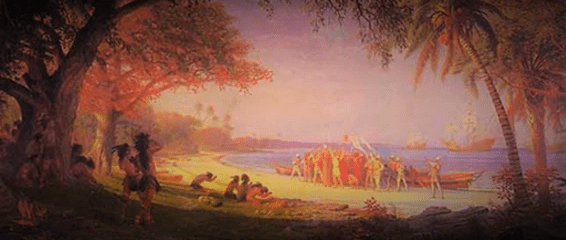
I—like most of you, I suspect—grew up being taught the second type of history at school, the palatable account-of-record.  I learned, for instance, that Columbus discovered the Americas in 1492, and that great European nations such as England, France, and Spain undertook to spread the Christian gospel to the heathens who inhabited those vast, new lands.  I was taught that Christian evangelizers, in their zeal to spread their religion and culture, gathered Indigenous children in schools far from family and home to provide them an education. 

I did not learn in school that the original inhabitants had lived on those lands for millennia before the arrival of the White colonizers, nor did I learn that the invaders brought disease and death to the original peoples whose gold and furs they coveted.  I did not learn in school about the horrors of residential schools for Indigenous children, nor about the treaties our government agreed to and then broke.  Those learnings came much later.

That more palatable version of history also taught me in school that anti-Semitism was an integral part of the Kulturelle Überzeugungen of the wicked Nazi regime during WW II, and that the Japanese devils waging unprovoked war in the Pacific were spawned by an evil, expansionist empire that had to be destroyed.  Both these facts were undoubtedly true.

But I did not learn in school that my own country, in a burst of anti-Semitic fervor, turned away a boatload of Jewish refugees in 1939, people fleeing the Nazis.  Nor did I learn of the internment camps in my country to which Japanese-Canadian citizens were exiled during the years 1942-1949, their homes and possessions stripped from them.  Those learnings, too, came later.

The revanchistes among us, those who would revise our history, try to tell us now that things like this did not happen—or if they did, it was for the best of reasons.  They tell us the people making the decisions in such matters were ‘men of their times’ acting under the moral imperatives of the day, and should not be caviled or condemned by woke commentators holding them to account under today’s standards, standards which have changed radically over the intervening years.  These revisionists, it seems, don’t want our children to learn unsavoury truths from our history, lest that knowledge corrupt the pristine past they prefer to present.

The problem is, although neither the palatable or revisionist versions of history accurately reflect what actually transpired, they can and do obscure or even alter the truth, affecting our perception and understanding of past events—and thus, perhaps, shaping our future actions.

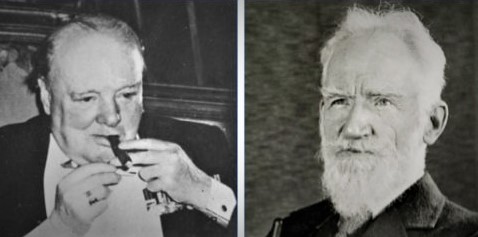
As Winston Churchill famously wrote, Those who fail to learn from history, are doomed to repeat it.  His countryman and frequent foil, George Bernard Shaw, wrote, We learn from history that we learn nothing from history.

Regardless of which of these men is closest to the truth, what I have learned is that our history-of-record is, for the most part, what the powers-that-be in our society want it to be.  Moreover, that record can change to accommodate the whims and needs of the present realities as perceived by those powerful influencers.  We are not, for the most part, presented with the unvarnished facts from our history.  And that being so, it is not possible that our present and future behaviours can be shaped for the better by learning from our past.  

We fool ourselves by thinking otherwise.

We save ourselves by seeking the truth.