On Etiquette

A decade or so ago, after almost forty years of marriage, my wife left me.  Oh, it was nothing permanent, thank goodness—just a weekend excursion she took with one of our daughters, who was visiting us in Florida with her two girls.  They left me to look after our grandchildren.

I was delighted, of course, not only because I love the girls, but because I knew it would give me an opportunity to put into practice all those theories about dealing with children that I’m forever espousing to my wife.

 Hah!  So much for that plan!

It wasn’t that my theories were without merit.  They were based on an assumption that children—and adults, for that matter—are responsible for their own behaviour, and should be held accountable for the consequences of that behaviour.  Pretty simple, really.  Our world might well be a better place if more people subscribed to that thinking.

consequences3

Now, before I go any further, please don’t get the impression that I ever told my wife how to raise our own two daughters.  Far from it!  She always brought her own common-sense approach into play during the many hours she spent with them.

But I couldn’t resist the opportunity—after I’d been away from fatherhood for so long—to put my theories into practice, dispassionately and all-knowingly, with my granddaughters.

However, I didn’t reckon on the fact that my daughter had learned the lessons of effective parenting only-too-well from my wife.  And the extent to which she’d been successful was brought home to me that weekend.

Right from the get-go, no matter how hard I tried, I couldn’t find any fault with my grandchildren.  On both mornings, they got up and made their beds, got themselves washed and dressed, and then wakened me.  Gently, with a kiss.

After breakfast, which they helped me make, they cleaned off the table without being reminded.  Then off they went, outside to play until it was time to walk to the pool—their favourite pastime.  The closest we got to a confrontation was when they asked if they could go barefoot.  I told them about fire-ants, and they readily dropped the subject.

pool

It was quite frustrating, because I wasn’t getting any opportunities to practice my pet theories.  Finally, however, I figured my chance had come.  We went out for dinner that first night, to a local place offering bbq ribs as the house specialty, and that’s what we ordered.  It was the perfect moment to direct the girls in the proper etiquette for dining out.

I tried to begin when the salads arrived, but I wasn’t fast enough.

“Use the small fork for your salad, Gramps,” offered the youngest before I could tell her the same thing.  I nodded obediently.

When I tried to say something else a few moments later, the oldest said, “Gramps, you shouldn’t talk with food in your mouth, remember?”  I nodded again, in guilty agreement.

Then, a minute or so later, while I was still watching for some breach of etiquette from them, the youngest piped up again.  “Please don’t let the fork scrape against your teeth, Gramps.  And your napkin should be on your lap in case you drop something.”  I hastily complied.

When the platter of ribs arrived, I received more advice from the oldest—even before I had done anything wrong.  “It’s okay to pick up the ribs in your hands, Gramps, but don’t lick your fingers.  Just wipe them on your napkin.”

ribs

“Gramps, don’t eat so fast,” said the youngest a few minutes later, “or you’ll get a tummy-ache.”

This went on through the entire meal.  I was lectured to, scolded, and encouraged, all at the same time, by my own grandchildren.  Worst of all, I couldn’t get a word in edgewise.  Probably because, eating so fast, my mouth was always full.

But then, at long last, I found a way to seize the upper hand.  It was time to pay the bill, and I was the only one with money!  Confidently, I marched with the kids up to the cashier, flashing a broad smile at her as I pulled out my wallet with a flourish.  Rather than returning my smile, she merely looked at me—somewhat curiously, I thought.

Nevertheless, I paid the bill masterfully, adding just the right amount for a gratuity.  As we left, I bestowed one final, beaming smile on the cashier.  And again, she didn’t return it.

After we climbed back into our car, I turned to the two girls.

“There!” I said.  “That’s how you settle up after a good meal.”  I just knew they’d be impressed, and I smiled condescendingly at the two of them.

Ewww, Gramps!” they chorused in unison.  “You’ve got a big piece of meat stuck between your front teeth!”

Alas, being a grandpa isn’t always easy!

food 4

Empress of the Garden

Very recently, I came upon some pictures of the neighbourhood where my parents purchased the last home they would ever own—a home where I spent the final ten years of my boyhood.  The pictures, old black-and-whites, had been taken before all the homes were built, and the streets were still dirt-tracks.  No one yet occupied any of the finished homes.  The cars and construction vehicles parked helter-skelter were like a virtual museum of 1950’s-era vehicles.

home

It wasn’t long, however, before we and our new neighbours were moving in—into freshly-painted homes, with tidy lots of newly-laid grass, driveways of impossibly-white gravel, and (for the most part) no trees.

But my family was singularly fortunate in that, along our side of the rear property line, a row of mature trees stood, there for years before the developer arrived, perhaps marking the boundary between some long-ago farmer’s fields.

Our house was set amidst them—tall, ancestral trees, most of them, old enough that they could have known our grandparents’ names, and their parents before them.  To my young eyes, they seemed to reach endlessly to the sky, then bow over, protectively, to shield us from the world.

In short order, my parents established a garden around and beneath those trees.  Some were big trees, with trunks wide enough to hide behind, others were smaller, with branches dipping low enough to allow us to climb.

trees 5

On the hottest of summer days, my siblings and I could return from playing in nearby parks to collapse in the cool, welcoming shade.  In the crispness of autumn afternoons, we could jump and hide in (and scatter) the piles of fallen leaves my father had spent hours raking together.  He never seemed to mind.

At dusk on a cold winter’s evening, we could stare through frosted windows at the skeleton branches, stark against the darkling sky.  And in the rebirthing spring, we could search out budding maple-keys, housing seeds, peel them back, and stick them on our noses.

They were of many kinds, our trees.  The maple, which we tried to tap one spring to make syrup, but unsuccessfully.  An oak, scattering acorns on the ground for us to collect, and which brought the squirrels.  A beautiful beech, with its lovely bark and spreading foliage.  And a large, gnarled weeping willow that we used to hide under, its branches trailing snakily along the ground.

The oldest and most important of all our trees, however, was an elm.  Standing firmly on a small rise at the back of the garden, she reigned over the other trees (in my mind’s eye, anyway).  Encircling her base was a large rockery, broken in one spot by a narrow walkway of flagstone steps leading from the lawn up to the base.  At the top sat an old bench, which we always referred to as our throne.

But we rarely played our games in or around the elm tree, as we did with all the others.  At various times, we had swings attached to sturdy branches of some, and knotted ropes hanging from others.  For a while, we had a treehouse roosting in one of our trees, complete with a crude ladder nailed to the trunk.  And, of course, we climbed in as many of them as we could, playing at being pirates, or Tarzan of the Apes, or Robin Hood’s merry men.

elm 4

But, we didn’t play in the elm tree.  Somehow, she seemed too stately to suffer our nonsense gladly.  She rose, tall and columnar, to a great height, before spreading her branches, fan-like, over the trees around her.  They looked to be paying homage to her, perhaps because she’d been there forever.  For us, she made the yard a wonderful and safe place to be.

The empress of our garden.

But then, one sad summer, her leaves turned brittle and brown, and began to fall before their time.  During the other trees’ glory of autumn-colour, she was already bare.  When the following spring arrived, she budded only partially as disease spread through her limbs, and in the ensuing summer she shed her leaves early again.  When next the spring came with its hope of new life, she was dead.

For us, so young, her death seemed incomprehensible.

She remained standing for another year, maybe two, a haunting, spectral reminder of what she had been.  When her rotting branches began to break and fall off with increasing frequency, she had to be taken down.  And then, all that remained of her former grandeur was a large, wide stump on top of the small rise.

I still remember, quite clearly, sitting on the ground one day beside that forlorn nubbin.  I was simply looking at our garden, when it suddenly struck me just how small it really was.  Our trees no longer seemed so grand without their empress, nor so inviting.

boy 3

It was about that time, I think, that I began to put away my childhood games.

Mayday! Mayday!

Another pagan festival is almost upon us, the celebration of Mayday, which I dread with every ounce of my being.  It rolls around on the first of May, of course, and is observed in several countries around the world.

In its most malign form, it features a display of armed forces by autocratic nations eager to boast of their military might.  More benignly, it involves an innocent dance around a maypole by young lasses and lads, joyously welcoming the spring.

maypole-on-the-country-vector

But honestly, for me, the second is worse than the first.

Almost seventy years ago, when I was in grade one, I was one of those youngsters conscripted as a maypole dancer.  All the rosy-cheeked girls wore frocks and crinolines, and bright bows in their hair.  I and the other boys, all involuntary participants, wore jodhpur-type pants, shirts and ties, and sickly smiles.

We had been relentlessly rehearsed in the dance by our teacher, a lovely lady most of the time, but a tenacious taskmaster on this occasion.  Our mothers and grandmothers were gathered in the schoolyard to marvel at their darlings (this was in the day when everybody’s fathers went off to work, while mothers stayed home), and the children in the older grades were brought outside to watch, too.

The dance itself was not meant to be overly-complicated.  We stood in a circle around the pole, each of the boys facing a girl, whose back was to the next boy.  We all held one end of our own long, bright ribbon in our hands; mine was red.  The other ends were affixed to the top of the maypole—in this case, a steel volleyball stanchion.  When the music started, the idea was for the boys to shuffle counter-clockwise around the pole, while the girls went clockwise, bobbing and weaving around each other, first inside, then outside, thereby layering the maypole with cascading colours of ribbon from top to bottom.

We had to sing a song while we cavorted, an old tune that none of us liked—While strolling through the park one day/ In the merry, merry month of May,/ I was taken by surprise/ By a pair of roguish eyes,/ I was scared but I didn’t run away.

Believe me, every one of the boys wanted to run away, but we were too scared of our teacher to bolt.

teacher4

Anyway, right after the first or second turn around the maypole, singing that stupid song, the top end of my ribbon came off the pole, fluttering pathetically to the ground.  Thunderstruck by the disaster, I stopped dead in my tracks, which immediately caused a bumping and crashing among all the other dancers.  The singing died away, unlamented by the singers.

Had I not been too young to know the international distress call, I would probably have screeched, “Mayday!  Mayday!”

Quick as a flash, my teacher grabbed my hand and pulled me to one side, my ribbon trailing me, then got the others going again.  The synchronicity was ruined, of course, because the odd number of boys couldn’t zig correctly around an even number of zagging girls.

Every boy in that circle was probably wishing he was me, safely out of it, but I was mortified.  I couldn’t look at my mother and grandmother, so ashamed was I of my faux pas.  The only consoling thing was my teacher’s hand, softly stroking the back of my head.  I still love that woman.

Afterwards, everyone adjourned to the gym for tea and cookies (milk for the kids).  My mother and grandmother tried to reassure me, saying how much they had enjoyed the show, but all I could see were the faces of the other kids, some of them smiling smugly because they hadn’t been the one to mess up.

At some point, my grandmother took the ribbon from my hand and went off somewhere.  I scarcely noticed.  But after a few minutes, back she came with it, now gloriously fashioned into a large bow, with loops and knots galore.  It was beautiful, but I was too caught up in my internal anguish to acknowledge it.  A few moments later, my grandmother disappeared again.

After a while, we all went outside so some of the mothers could take pictures of the maypole.  I had to be convinced by my mother to revisit the scene of my shame, but imagine my surprise when I got there, only to see a big, bright red bow adorning the pole.  My bow!

big-bow-clipart-10

Those with cameras—little black boxes they peered into from above, shading the viewfinder from the sun with their hands—took picture after picture of all the dancers clustered in front of the maypole.

“Bradley’s bow!  Bradley’s bow!” the kids chanted, faces alight.

And at last a smile broke through on my face, too.  I may have been a klutz during the dance, but the pole was a smashing success because of me and my bow.  Or, perhaps more accurately, because of my grandmother and her love.

But regardless, Mayday has never since been my favourite of festivals.

Those black-and-white snapshots inside their scalloped frames are long gone now, of course.  Yet I still remember my teacher’s kindness, my mother’s proud smile, and my glorious bow.  And I have never forgotten my grandmother’s love for me.

I have, however, never danced around another maypole!

Boyhood Heroes

If you’re of a certain age or gender (and being Canadian could help), you may score well on this little sports quiz from my boyhood.  Give yourself one point for every athlete you can identify from the nicknames listed below; they are all North American because international sport had not registered in my consciousness way back then.  The answers are found at the end of this essay—

a) the Rocket; b) the Golden Jet; c) Number 4; d) the Bambino; e) the Yankee Clipper;     f) the King; g) Slammin’ Sam; h) the Rifle; i) Rocket Rod; j) The Greatest.

As a boy, I began to idolize sports heroes as soon as I gained an understanding of the games they played.  Throughout my teenage years, and into young manhood, that veneration gradually lessened; but I did hold onto an admiration for what they could do on their respective fields of play.  And even today, although I have learned such heroes are mere mortals, I retain an appreciation for their role in shaping me.
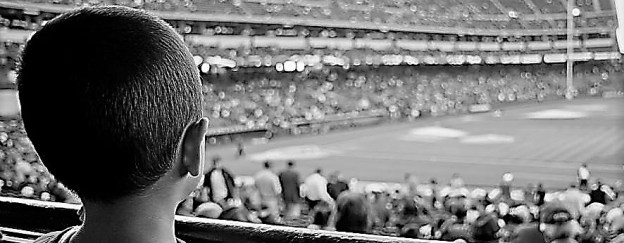
boy at ballgame

When I was about twelve years old, a favourite uncle (himself a renowned amateur athlete in his youth) gave me a copy of a book he had read and enjoyed.  It was written in 1954 by Grantland Rice, an American sportswriter from the so-called Golden Age of American sport, the 1920’s to the 1940’s.  Its title is The Tumult and the Shouting, and I have it still.

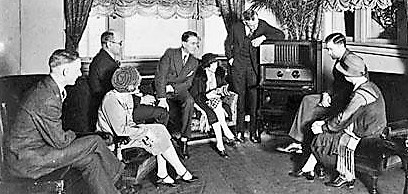
A memoir of sorts, it tells of Rice’s life as a sports journalist, writing about the athletes he encountered over a working lifetime, people he regarded as heroes.  During the course of fifty-plus years, by his own account, he wrote 67,000,000 words—22,000 newspaper columns, 7000 sets of verse, and 1000 magazine articles—while also holding forth on radio broadcasts for over thirty years.  This was in a day when most people never got to see their sports idols and had to rely solely on what they read in print or heard over the airwaves.

For them, and much later for me, Rice was a gateway into a world that seemed magical, unsullied by the realities of the mundane lives we led.
loc_family_radio

The parts of the book I most enjoyed in the beginning were the pictures of Rice hobnobbing with the athletes he covered, many of whom were also personal friends.  But I also came to love the more-than-twenty chapters devoted to these sports icons of a bygone era—people I had heard of, but who had long since left the building—in which Rice regaled me with stories of their exploits, both on and off the field.

In the years since, I have learned that many of these heroes had feet of clay, that they were subject to all the prejudices and shibboleths of their time.  Some became little more than lost souls when the games at which they excelled ended for the final time.  But the book doesn’t focus on those later, sadder times; rather, it tells of the athletic brilliance these men and women exhibited during their prime.  And for a lucky few, the glory never faded, even as their youth and prowess did.

If you are of my vintage, you will doubtless remember the names of many of the heroes celebrated in the book.  From baseball, there is the scurrilous Ty Cobb (the Georgia Peach), some of whose records still stand today; Lou Gehrig (the Iron Horse) who died too soon of ALS, a disease now named for him; and the inimitable Babe Ruth (the Sultan of Swat), cornerstone of the feared Murderers’ Row of NY Yankee hitters.  All three are in the Baseball Hall of Fame.

Murderers--Row

From golf, there is the only man to win all four Grand Slam events in one year, Bobby Jones, who did it in 1930, and who later co-founded the famed Masters tournament; Babe Didrickson Zaharias (the Other Babe), a woman who was also a three-time Olympic medallist in track and field; and ‘Bantam Ben’ Hogan, a Career Grand Slam winner, widely considered to be the finest technician the game has produced.  All three are in the Golf Hall of Fame.

Football (where the ‘big-time’ was college ball, not the pro variety) contributed its share of heroes, including Harold ‘Red’ Grange (the Galloping Ghost from Illinois); Jim Thorpe (World’s Greatest Athlete from Carlisle), an Indigenous man who won Olympic gold in decathlon and pentathlon; and Bronislau ‘Bronko’ Nagurski, a Canadian-born fullback who excelled at Minnesota.  All three are in the Pro Football Hall of Fame.

From boxing, which was in its heyday back then, Rice mentions Jack Dempsey (the Manassa Mauler), world heavyweight champion for eight years; James Joseph ‘Gene’ Tunney, who twice defeated Dempsey—most famously in the fight known forever after as ‘the long count’—and who reigned as both light-heavyweight and heavyweight champion during that time; and Joe Louis (the Brown Bomber), world heavyweight champion for thirteen years, who endeared himself to Americans with his knockout triumph in 1938 over a German fighter who was thought to represent the growing Nazi menace.  All three are in the Boxing Hall of Fame.

louis

There were far fewer ‘big-time’ sports devoted to women than to men during Rice’s time, but, in addition to Zaharias, he gives prominent space in his book to Helen Wills Moody (Little Miss Poker Face) and Maureen Connolly (Little Mo) of tennis fame; Sonja Henie (Pavlova of the Ice) in figure skating; and Esther Williams (America’s Mermaid) in swimming.

All in all, over the course of 368 pages, there are numerous other athletes whose names I knew who are mentioned.  A partial list would include: Eddie Arcaro, Tommy Armour, ‘Dizzy’ Dean, Jimmy Demaret, George Gipp (Win one for the Gipper!), Walter Hagen (the Haig), Joe Jackson (Shoeless Joe), Cornelius ‘Connie’ Mack, Byron Nelson, Branch Rickey, Jackie Robinson, Gene Sarazen (the Squire), ‘Big Bill’ Tilden, and Cy Young.

He references famous combinations, as well:  baseball’s Joe Tinker, Johnny Evers, and Frank Chance of the Chicago Cubs, their lethal double-play skills immortalized in a 1912 poetic refrain, Tinker to Evers to Chance.  He mentions football’s Notre Dame backfield—Jim Crowley, Elmer Layden, Don Miller, and Harry Stuhldreher—of whom he wrote following a 1924 win over Army: Outlined against a blue-gray October sky, the Four Horsemen rode again…  And that is how they are remembered to this day.

04.four-horsemen

There are even references to several famous racehorses, which (being a devotee of the Sport of Kings), Rice considered athletes of another sort:  Citation, Count Fleet, Exterminator, Man o’ War, Seabiscuit, War Admiral, and Whirlaway.

As a youngster, I couldn’t get enough of these tales of grace and glory.  It did seem to me as I read them, though, that the athletes being lauded were all old; indeed, they were much older than I.  But today, looking at their pictures, I am struck by how young they were in their prime.

I believed then, and to some extent now, as well, that there is a simple beauty inherent in athletic contests between two individuals, or two teams.  If the scandals surrounding the doping of athletes can be set aside, if the corruption at the top of the world bodies that control sports can be ignored, if we can strip the competition among athletes down to its purest essence, that beauty can be appreciated.

On a level playing field, the best of the competitors will win, the losers will embrace the fact that they gave their best, and that is as it should be.  It is the sentiment that helped to shape my approach to life.

And that, in a nutshell, is why The Tumult and the Shouting still graces my bookshelf, overflowing as ever with the tales of my boyhood heroes.

orr

Answers to the quiz:

Hockey – a) Maurice Richard; b) Bobby Hull; c) Bobby Orr

Baseball – d) Babe Ruth; e) Joe Dimaggio

Golf – f) Arnold Palmer; g) Sam Snead

Football – h) Sam Etcheverry

Tennis – i) Rod Laver

Boxing – j) Muhammad Ali

From My Aging Eyes

from my aging eyes,

the boy I once was looks out—

hardly changed at all

portrait-of-boy1

I was born before D-Day, before V-E Day, before V-J Day.  If you don’t recognize those occasions, you’re most likely younger than I.  World War II was the single biggest event in the lives of the generation before mine, and the year I entered the world, it was still raging on.

When I was born, I joined almost 2.5 billion other souls on the planet.  In North America, the average cost of a house like the one we eventually lived in was $3600, and the average annual wage was only $2000.  My future father-in-law, then a callow twenty-one-year-old, earned $800 that year, the first time he filed an income tax return.  A new car, for those who could afford one, cost about $900, and the gasoline to fuel it cost fifteen cents per gallon.  A bottle of Coca-Cola cost five cents.

1943_ford_coupe

Among the people born in the same year as I (and you’ll recognize their names more readily than mine) were Arthur Ashe, Robert de Niro, John Denver, Bobby Fischer, George Harrison, Mick Jagger, Janis Joplin, John Kerry, Billie Jean King, Peter Marsh, Jim Morrison, and Lech Walesa.  Seven of them are no longer with us.

Major world leaders included William Lyon Mackenzie King here in Canada, Winston Churchill, Adolf Hitler, Benito Mussolini, Franklin Roosevelt, Jan Christiaan Smuts, and Joseph Stalin—many of whom didn’t like each other at all.

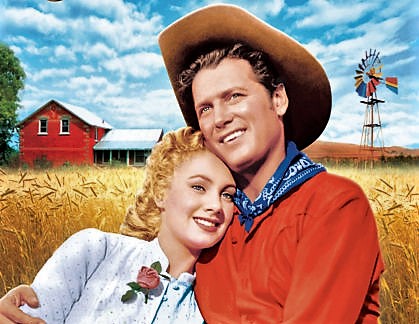
Among the popular films my parents went to see in the year I was born were For Whom the Bell Tolls, Heaven Can Wait, Lassie Come Home, The Titanic, and the winner of the Academy Award, Mrs. Miniver.  Frank Sinatra and Glenn Miller were music icons of the day, and Oklahoma opened on Broadway.

oklahoma2

Some of the most popular books published that year included A Tree Grows in Brooklyn by Betty Smith, Being and Nothingness by Jean-Paul Sartre, The Little Prince by Antoine de Saint-Exupéry, The Fountainhead by Ayn Rand, The Ministry of Fear by Graham Greene, and Thirty Seconds Over Tokyo by Ted. A. Lawson.  My favourite (which, of course, I was not able to read until six or seven years later) was Thunderhead by Mary O’Hara.

The New York Yankees won the World Series that year, the Detroit Red Wings won the Stanley Cup, and Count Fleet won the Kentucky Derby, but both the U.S. Open in golf and Wimbledon in tennis were cancelled because of the war.

Invention, spurred on by the wartime effort, saw the development of the aqualung, the Colossus computer used to decode the German Enigma encryption, the ever-popular Slinky toy, and silly putty.  The Manhattan Project to develop the atomic bomb, which cost almost two billion dollars, was well underway.

atom bomb3

Nachos were invented the year I was born, and remain popular to this day.  The ABC radio network began broadcasting that year, launched by the founder of the Life-Savers candy company.  The Philip Morris tobacco company unveiled an ad that, for the first time, acknowledged smokers’ cough, although they blamed it on other cigarette brands.  The chairman of IBM conceded that “…there is a world market for maybe five computers.”  And a Swiss chemist discovered the hallucinogenic properties of LSD—presumably on a trip.

I was born well before the following technological marvels we take for granted today became commonplace:  duct tape, television, Tupperware, credit cards, waterproof diapers, transistors, defibrillators, supersonic aircraft, cat litter, the Zamboni, crash-test dummies, aerosol paint, teleprompters, airbags, barcodes, heart-lung machines, WD-40, zipper storage bags, automatic sliding doors, radar guns, computers, hard disk drives, silicon chips, videotape, lasers, spandex, artificial turf, the Pill, LED’s, Buffalo wings, 8-track tapes,  CD’s, space travel, personal computers, the internet, and smartphones.

I was not, however, born before the Wright brothers first took flight (as my sons-in-law are wont to claim).

brothers-wright3

But hey, lest this looking-back convey the impression that I long for the good old days, whatever they were, let me assure you that such is far from the truth.  In fact, as I approach my seventy-fifth birthday, I look forward to the changes yet to come—just as I marvelled at those occurring during my life so far—and with the same boyish enthusiasm as ever.

As Dylan so memorably wrote and sang, the times they are a-changin’.  But somewhere inside this gnarly old man, there still resides the precocious boy who spawned him, surprised he has not changed.

closing in on my

diamond jubilee, the

man is still the boy

man and boy1

          Have a happy birthday, old man!


Secret Valentine

(first posted 12 February 2016)

In a recent telephone conversation, one of my granddaughters reminded me that Valentine’s Day is coming round again.

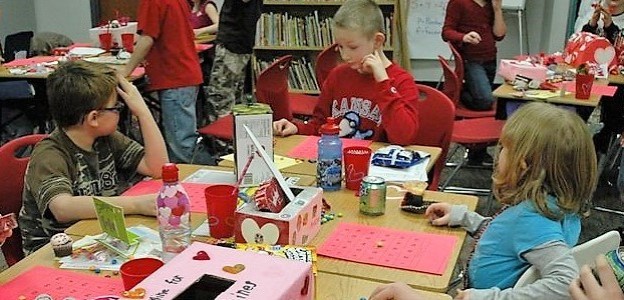
She didn’t ask if I would be her valentine again this year, as I have been for most of her six years, which would have been nice.  No, instead she mentioned that she’d be giving a valentine to every one of her classmates at school.

“Every one of them?” I exclaimed, mildly astonished.  “Don’t you have, like, one special valentine?”

“No, Gramps,” she replied.  “That’s not how it works.  In grade one, you give everybody a valentine.  All the kids do.”

galore_valentines_kids

I wondered how many youngsters there were in her class for whom she was planning to buy a valentine card.  After all, how many valentines can a six-year-old handle?

“How can one person have so many valentines? I protested.  “Being somebody’s valentine is supposed to be a special thing.  Won’t people wonder why you’re giving everyone a card?”

“Gramps! You don’t understand!  They won’t know who gave the valentines to them.  Mummy’s going to help me print ‘Guess Who?’ on all of them.  My name won’t be there.”

“Okay, wait a minute, l’il guy,” I said.  “Let me get this straight.  You’re going to give valentines to every kid in your class…”

“And my teacher,” she cut in.

“And your teacher,” I continued.  “But, you’re not going to put your name on them, so nobody will know that you gave them a valentine.  I don’t get it.”

“Oh, they’ll know, Gramps.  Everybody knows.  They just won’t know which valentine I gave them.  That’s the fun of it.”

That’s the fun of it?  Back when I was a kid, the fun of it was in deciding whom I would ask to be my special valentine.  To which little girl would I dare to offer a valentine card?  And who would accept it without laughing?  Or worse, not accept it at all?

shy boy

There was a certain delicious risk involved back then, a risk that made the whole exercise worthwhile.  After all, asking someone to be your special valentine meant you were sort of sweet on her (or him, if you were a girl).

But, times change, and so do valentine cards.  Now, they don’t ask someone to be your valentine; instead, they proclaim ‘Happy Valentine’s Day’!  They’ve become indistinguishable from birthday cards, for goodness’ sake.

Anyway, I wished my granddaughter well with her plans.  I harboured the faint hope that perhaps I’d still receive one from her—with her name on it!

Afterwards, I kept thinking about our conversation.  Anonymous valentine cards made no sense to me.  But, my granddaughter had stated, “They’ll know…”

Well, who’s to say?  Maybe they will.  It occurred to me that I’ve always sent anonymous, loving wishes to my own two daughters—back when they were growing up, and even now, as they raise their own children.  I never thought of that as silly.

good night

At night, after they were asleep, I had the habit of whispering in their ears, to tell them how much I loved them.  They hardly stirred as I did it, and they never mentioned it the following day.  And, every day now, when thoughts of them cross my mind, I still send little messages of love their way.  I always believed that, somehow, they would know I was telling them.  Anonymously, as it were.

So, maybe my wee granddaughter is right.  Perhaps it isn’t such a ridiculous notion.  In fact, I’m even hoping to receive a valentine this year from ‘Guess Who?’

I’ll know.

guess who

Wrong Number!

As a young man, I never used to like the telephone!  Oh, I knew it was a wonderful invention, a labour-saving tool, and a life-saver in time of emergency.  And I was aware that it brings old friends together and ties families more closely to one another.  I understood that it is, indeed, a modern marvel.

rotary_phone1

But I never liked it.  In the first place, I never felt at ease when I was talking to someone on the phone.  When I couldn’t see the person to whom I was speaking, it didn’t feel right to me.

In the second place, my phone always seemed to ring at the most inopportune moments; for example, when I had just sat down to dinner, when I was busily engrossed in some leisure-time activity, or (most annoying of all) when I was the only one home to answer it.  Although it was located in a central part of the house, I never seemed to be close by when it rang.

But, without a doubt, the worst thing about the telephone was the wrong number.  And it didn’t seem to matter whether I was doing the calling or receiving the call.  Wrong numbers were a pain in the neck!

Whenever I dialed a wrong number, I was immediately apologetic to the person who answered.  I knew that my own carelessness had put the other party out, and I tried to make amends.  However, my efforts were invariably met with some sort of angry or impolite response.  It usually began right after I realized I’d dialed incorrectly.

wrong-number-phone

“Oh…oh, I’m sorry,” I would stammer.  “I guess I have the wrong number.”

“Obviously!” would come the reply, followed closely by an abrupt banging of the receiver in my ear.

What bothered me even more, though, was when I answered a call from someone who had the wrong number, because I still ended up being the bad guy.

“Hello?” I would answer.

“Jenny there?”

“No, I’m sorry,” I would start to say, “but you have…”

“Where is she?”

“Uh…I don’t know.  You’ve dialed…”

“Who’s this?” the caller would demand, cutting me off again.

“It’s me,” I would reply lamely, “and there’s no one here by the name of…”

“What number is this?”

And when I would give it, I’d get a snarling rejoinder, like, “That’s not the number I want!”

I was never quick enough to miss that banging receiver.  Worse, I was left with the feeling that it was all my fault for even thinking of answering when the call was for Jenny (or whomever the person had asked for).

On more than a few occasions, I actually resorted to dirty tricks, more to avoid the unpleasantness than out of any malicious intent.

“Just a minute,” I sometimes replied when the caller asked for someone I’d never heard of.  I then laid the receiver by my phone, placed a cushion over it, and forgot about it.  After a few minutes, the caller would get tired of waiting and hang up.  When next I passed by the phone, I gently replaced the receiver.

off hook

Occasionally I would respond by saying, “Jenny?  She left quite a while ago.  She should be at your place any minute!  Tell her to call when she gets there.”

And I’d hang up first.

Or, more than once, I asked the name of the caller, told them to wait, then made a show of yelling for the non-existent person to come to the phone.

“Jenny!  Phone for you.  It’s Alice!”

After a few seconds, knowing the caller could hear me, I’d yell again, “No way, Jenny!  If you don’t wanta talk to her, you tell her!  Not me!”

Sometimes I could hear the caller bang the receiver down from ten feet away.

I never believed that any great harm would arise from these tactics, and it sure made me feel better.  I might even have taught those careless callers to be a little more conscientious when dialing.

Somewhere along the way, I discovered the best and most effective way to deal with those nuisance calls, and it was relatively simple.  It did take some measure of will-power, and it required a little practice at first to get the hang of it.  And I no longer had to spend time dreaming up new tricks.

When the phone rang, if I thought it might be a wrong number, I didn’t answer!

Brilliant!

Of course, with the advent of smartphones, all my reasons for disliking the phone have evaporated.  Now, I can see the person to whom I’m talking, so that excuse is gone.  I’m never too far from the phone to answer a call, because it’s always with me.  There are no wrong numbers, because the name of the caller flashes on my screen.

call

But the biggest reason I have for changing my mind is that, as I’ve grown older and somewhat less active, seeing old friends less and less often, I crave the connection with people.  Instead of willing that old black phone not to ring, I now yearn to hear the ringtones in my pocket.

And so, I confess a dark secret to you.  Now—even when I know it’s a wrong number, even when I don’t recognize the name of the caller, even if I’ve been happily reading in my armchair, or dozing quietly—I answer the call.  If it’s for Jenny, I don’t care anymore.  I have even chatted happily with many fast-talking telemarketers, who quickly become anxious to get off the line with what they must assume is a befuddled, old geezer.

I love the telephone!

Also Known As

For most of my growing-up years, I wanted a nickname so badly it hurt.  But it never came to pass.  Not once did I ever have a proper sobriquet bestowed on me.

As one who spent a whole lot of time playing team sports, I knew countless other boys by their nicknames—Dingo, Big-Guy, Scoop, Madge (short for Magic-Man), and, rather unkindly, Lard.  When I think of them now, I can’t even remember their real names.  Nor do I picture them as the old men they surely must be; rather, I see them as they were back then—immortals, in a way.

chevy youth baseball

But I was not fated to be one of those ‘also known as’ guys.  My coaches forever called me by my surname or my jersey number.

Twelve!  You’re on deck!  Get out there!

If you are of my era, a Canadian childhood spanning the 40’s, 50’s and into the 60’s, and if you were a sports fan, you will know that our greatest heroes all had nicknames.

In basketball—the Stilt, the Big O, the Cooz, The Mailman, Pistol Pete.  In baseball—Teddy Ballgame, Joltin’ Joe, the Barber, Stan the Man, the Mick.

In football—Crazy Legs, Broadway Joe, the Deacon, Sweetness, Mean Joe.  In golf—the Squire, Slammin’ Sam, the Hawk, the King, the Golden Bear.

In hockey, my favourite of games—Mr. Zero, the Rocket, Boom-Boom, the Big M, the Roadrunner, Cujo, the Dominator, Number 4.

Female athletes, too, had nicknames, ranging across a number of sports—the Babe, Little Mo, Mighty Mouse, Tiger, Moses, the Swiss Miss, Flo Jo, the Black Widow.

nancy_green_lange_chamonix_history

[*The real names of these athletes are shown at the end of this post.]

But I never had a nickname.

At one point—desperate for a nom de guerre I could call my own, and because I was a year younger than my compadres in school and sport—I began to call myself The Kid.  I think I became a legend in my own mind.  In conversation with friends, I would say, The Kid did this…or The Kid did that…

To my chagrin, the nickname never caught on.  Nor did the practice of referring to myself in the third person, although it did garner me a lot of strange looks.

There were times during these years that I suffered the experience of being called a variety of names by others not favourably disposed towards me—loser, dork, pencil-neck, to name a few, plus some even less polite.  But those were not nicknames; proper nicknames had to be given in recognition of one’s accomplishments, talents, or character.

Sticks and stones…I would mutter quietly.  The Kid is above all that!

The closest I ever came to acquiring a nickname was at the end of my playing days, striving mightily to keep up with skaters twenty years younger than I in old-timers’ hockey.  But it wasn’t my teammates who conferred it; it was my opponents, muscling me unceremoniously along the boards.

hockey2

Outta the way, Grampaw!

Not exactly what I’d always aspired to be known as.

So, as you might expect, it has come as something of a relief to me that now, at this ripe old age, I have finally acquired a nickname I can be proud of.  Mind you, I bestowed it myself, to designate me as a ‘teller of tales tall and true’.

I am Talebender.

*Famous Athletes’ Real Names—

  • Wilt Chamberlain, Oscar Robertson, Bob Cousy, Karl Malone, Pete Maravich.
  • Ted Williams, Joe Dimaggio, Sal Maglie, Stan Musial, Mickey Mantle.
  • Elroy Hirsch, Joe Namath, David Jones, Walter Payton, Joe Greene.
  • Gene Sarazen, Sam Snead, Ben Hogan, Arnold Palmer, Jack Nicklaus.
  • Frankie Brimsek, Maurice Richard, Bernie Geoffrion, Frank Mahovlich, Yvan Cournoyer, Curtis Joseph, Dominik Hasek, Bobby Orr.
  • Mildred Didrikson Zaharias, Maureen Connelly, Elaine Tanner, Nancy Greene, Althea Gibson, Martina Hingis, Florence Joyner, Jeanette Lee.


It Matters to Me

It’s the most wonderful time of the year…

From as far back as I can remember, the Christmas season has always been my favourite.  And it’s true even more now, in my mid-seventies, than it was as a child.

When I stop to think about the reasons for that, I suppose it has to do with the different meanings that Christmas has for me.  Although I can think of many, there are three significant beliefs that stick out.

…with the kids jingle-belling, and everyone telling you, “Be of good cheer…”

None of the three has anything to do with the endless sparring between the commercial and religious aspects of the season—where we find Santa Claus in every shopping mall, serenaded by traditional carols blasted over a tinny sound system.  Or coming to town on a huge sleigh pulled by plastic reindeer.  Were I to dwell on that, the whole season would be spoiled.

santa 2

Neither are my feelings affected by the view of Christmas as a pagan festival, the embodiment of which is old St. Nick, rather than as a true celebration of the birth of Christ.  For me, the two concepts are not mutually exclusive.

It’s the hap-happiest season of all…

As a matter of fact, Santa Claus is one of the things I like best about Christmas.  For the record, I still believe in him.  Every Christmas—under the somewhat curious stare of my grandchildren, who are all sophisticated now to the point of pretending to pretend—I hang up my stocking, just as I have for more than seventy years.

“Gramps, you don’t still believe in Santa, do you?” my youngest granddaughter asks.  She watches me closely as I frame a reply.

“Sure do,” I say.  “I mean, I don’t know if there really is a Santa Claus, but it’s more fun to act as if there is.  Believing in Santa is one of the things that make Christmas so much fun.”

stocking

I don’t know if she agrees with me, but it’s reassuring to note that she still hangs up her own stocking.

The second thing of significance for me about the Christmas season is the good feeling prompted by memories of Christmases past.  It’s always been a time for family members to come together.

With those holiday greetings and gay, happy meetings when friends come to call…

For years, my parents’ house was the destination on Christmas Day, eventually giving way to my home, where my wife and I raised our two daughters.  Grandparents, uncles and aunts, cousins, and friends would all drop in, often staying for the opening of the gifts, and dinner afterwards.  And, without fail, they would reminisce about their own childhood Christmas seasons, sharing their happy, nostalgic memories with us.

…tales of the glories of Christmases long, long ago…

It’s different today, of course, because our daughters have children of their own.  Theirs are the homes we gather at now, with in-laws and friends of their generation.  And, to my everlasting surprise, we have become the old folks—observers rather than directors of the goings-on around the tree.

Worst of all—as the oldest one gathered there, I have to wait ‘til the very end to open my stocking.

…parties for hosting, marshmallows for toasting, and caroling out in the snow…

christmas_carolers

But, regardless of where we are, the things that haven’t changed are the feelings of love and joy we all share at this time of year.

The third thing of importance to me is the fact that Christmas does mark the birth of Christ.  I believe the question of historical accuracy is irrelevant.  The very fact of his birth, whatever the actual date, is a symbol of our hope for peace on earth.  It stands as a beacon of the promise for salvation in a world fraught with danger and despair for many.

I have absolutely no difficulty in integrating these three different notions of Christmas.  For me, they come together nicely—the fun and excitement of Santa Claus, the love and laughter of times with family, and our renewing joy at the birth of Christ.

There’ll be much mistletoeing and hearts will be glowing when loved ones appear…

Perhaps the thread that ties the three together is the idea of faith, the idea of choosing to believe.  Christmas is my favourite time of the year, but for reasons that are neither irrefutable nor provable.  Faith doesn’t abide proof.

nativity_Bloch

My beliefs are valid only because I deem them so.  I want to believe in them, so I do.  And, therefore, Christmas represents a magical time for me—especially now, knowing I have more of them behind me than ahead.

Softly-falling snow, gaily-twinkling lights, the wonderful music, the excited laughter of grandchildren, and a peace that surpasses all understanding—all join to herald the coming of another Christmastime, a time to celebrate, to remember, to rejoice and give thanks.

It’s the most wonderful time of the year…

And it matters to me!


Eradicating Polio

Music hath charms to soothe a savage breast…

So wrote William Congreve in his poem, The Mourning Bride, in 1697.

More than three centuries later, in my own lifetime, there has been practically nothing so savage in choking the life from the breasts of innocent children than the scourge of polio.  During the mid-part of the twentieth century, polio paralyzed or killed over half a million people a year worldwide.

Everyone who grew up in the years of my childhood came to dread the very word.  Who among us does not remember the iron lung—a lifesaving device for so many of the afflicted, but a terrifying monster in our minds—lurking in wait, a spectre that haunted our dreams.

polio-national museum of health and med

Those of us who managed to remain healthy all knew of someone who was not so fortunate.  Richard Rhodes, an American historian and journalist, wrote of polio in his autobiography, A Hole in the World:

Polio was a plague. One day you had a headache and an hour later you were paralyzed. How far the virus crept up your spine determined whether you could walk afterward or even breathe. Parents waited fearfully every summer to see if it would strike. One case turned up and then another. The count began to climb. The city closed the swimming pools and we all stayed home, cooped indoors, shunning other children. Summer seemed like winter then.

Today—thanks largely to the development of effective vaccines, and mass immunization programmes—the disease has been almost eradicated.

Almost.

In 1988, there were an estimated 350,000 reported cases of polio worldwide; by 2016, that number was 37, a remarkable decrease of 99%.  And yet, it lives.

The global effort to combat the disease has been tremendously effective, but as long as even one child remains infected, children everywhere are at risk.  A failure to completely eradicate the disease could spark a resurgence all over the world.

And so, to the power of music to combat all that is savage.  A men’s chorus of which I am a proud member, Harbourtown Sound, recently partnered with Rotary International in support of their Polio Plus campaign, hailed as “one of the finest humanitarian projects the world has ever known”.  Rotary fundraising has enabled the inoculation of more than 2.5 billion children, at a cost of $1.3 billion.

Twenty-one local Rotary Clubs recently joined with our chorus in a special Christmas concert to add to this global initiative.  Thanks to those committed Rotarians, to philanthropic sponsors working with them, and to the organizational efforts of one of our singers, a Rotarian, more than $130,000 was raised in one afternoon.

3_International_2015_side_shot

For us on stage, it was a labour of love, singing glorious songs of the season—melodies as familiar to us today as the fear of the polio scourge was in days gone by.  For those in the audience, it was more than just a concert; it was an opportunity through their generosity to assist in the eradication of polio forever.

The Rotary International outreach is described at this website—

https://my.rotary.org/en/take-action/end-polio

More information about Harbourtown Sound can be found at our website—

http://www.harbourtownsound.ca/,

or on our Facebook homepage—

https://www.facebook.com/harbourtownsound/?fref=nf

HTS award