Lust and Power

In a 1976 interview for Playboy magazine, the 39th president of the United States, Jimmy Carter, said, “I’ve committed adultery in my heart many times.”  This was in response to a question about his views on the Bible’s admonitions about adultery, and was a paraphrase of Christ’s teachings in Matthew 5: 28—“I tell you that anyone who looks on a woman with lust in his heart has already committed adultery.”

carter

Many were aghast that so prominent a man would admit that, thereby damaging his political standing.  Others saw it as an honest answer from a pious man, acknowledging his imperfections.  Still others saw it as a cynical ploy—embracing both arrogance and humility—wanting to appear virtuous in the face of temptation, thus enhancing his political position.

Whatever it was, it is extremely unlikely Carter was the only man to have sinned in that fashion, although most of us would not choose to admit it.

There is obviously a difference between the so-called evil of lust and the widely-accepted blessing of love—but perhaps not so great a gap as might be imagined.  Lust is relatively easy to define: a strong, sexual desire; a sensuous appetite (regarded by many today as sinful).  Its blunt hunger can be satiated, at least temporarily, through participation in a sex act with someone else, or even alone.

Love is a softer sentiment, usually involving sexual attraction, but also embracing such emotions as friendship, protectiveness, tolerance, forgiveness, happiness, fulfilment, and mutual respect.  It is something that, although freely given, must also be earned.  In a truly loving relationship, the quest for love is never satiated, but yearned for, and given, all the more.

It cannot be disputed that the propagation of our species has relied upon the sexual attraction between men and women, their lust for each other.  If two people also found love in their coupling, that was a bonus.  Love for one another was not required in order to produce offspring.

Image result for free pictures of caveman and cavewoman

Biologically speaking, lust can drive a person to have sexual relations with more than one partner of either gender, and more than once with each.  And so it is with love.  There is no biological impediment to falling in love with, and entering into a loving relationship with, multiple partners—although obviously, no children will result from a union of partners of the same gender.

Over time, and for a multitude of reasons, monogamous marriages became the norm in our culture.  Although men and women could fall in love with more than one person, the law allowed us to marry but one at a time.  However, the standing of each person in the conjugal union was unequal.  For a long time, women were considered to be, if not the property of their husbands, at least subordinate to them.  Power resided with the men. That status has changed ever so slowly, only beginning a hundred years or so ago.
At the time the Dominion of Canada was formed, a decade before the birth of the great Republic to the south, our fathers of confederation and their founding fathers espoused equality for all.  But that noble ideal was to be applied only to the propertied classes—almost all of whom were male, white, rich, and protestant.  Others of different gender, race, wealth, and religion were scarcely considered, except as property, workers, or servants.

Money and power were all that really mattered, and both resided with men.

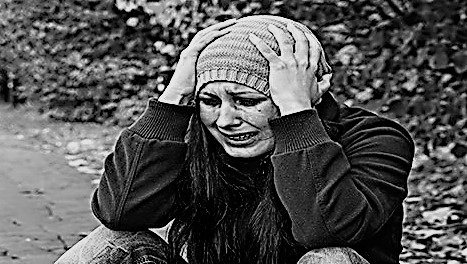
Thus, it continued to be possible for men who lusted after women (or other men, or children) to prey upon them with relative impunity.  Might makes right, as the adage has it, and fear can make cowards of us all.  For the victims, suffering the abuse in silence was often more palatable than facing the public shaming and loss of employment that would crush them if they complained—assuming they would have been believed in the first place.

Depressed Tenage Girl

Jimmy Carter was honest in his admission.  But I wonder, is it possible all men harbour such thoughts from time to time, even if only a relatively small number act on them?  I cast no stones at him.

I also wonder, does power corrupt only men?  Would women who come to power be immune to its seductive persuasions?  And would any act on them?

Sexual misbehaviour of any sort is unacceptable, a monstrous issue only now being brought to the broader public arena.  But I believe it is power, not lust, that is the driving force behind such behaviour.  Any of us might experience lustful feelings, just as any of us might fall in love.  But only the most powerful, the most arrogant, the most sociopathic among us would mobilize those feelings into unwanted actions, forced upon unwilling victims, solely for our own gratification.

It is as if the predators, when seized by a biological imperative, say to themselves, Because I can, I will.  And who is to deny me?

And so, it is time, as many are saying—time to expose and shame those who are found guilty of transgressions, time to re-assess the accepted perquisites of power, time to educate our young people as to what is deemed acceptable in social intercourse, time to redefine the relationship between men and women.

2018_FP_TIMES_UP_BANNER

It is more than time.

Wrong Number!

As a young man, I never used to like the telephone!  Oh, I knew it was a wonderful invention, a labour-saving tool, and a life-saver in time of emergency.  And I was aware that it brings old friends together and ties families more closely to one another.  I understood that it is, indeed, a modern marvel.

rotary_phone1

But I never liked it.  In the first place, I never felt at ease when I was talking to someone on the phone.  When I couldn’t see the person to whom I was speaking, it didn’t feel right to me.

In the second place, my phone always seemed to ring at the most inopportune moments; for example, when I had just sat down to dinner, when I was busily engrossed in some leisure-time activity, or (most annoying of all) when I was the only one home to answer it.  Although it was located in a central part of the house, I never seemed to be close by when it rang.

But, without a doubt, the worst thing about the telephone was the wrong number.  And it didn’t seem to matter whether I was doing the calling or receiving the call.  Wrong numbers were a pain in the neck!

Whenever I dialed a wrong number, I was immediately apologetic to the person who answered.  I knew that my own carelessness had put the other party out, and I tried to make amends.  However, my efforts were invariably met with some sort of angry or impolite response.  It usually began right after I realized I’d dialed incorrectly.

wrong-number-phone

“Oh…oh, I’m sorry,” I would stammer.  “I guess I have the wrong number.”

“Obviously!” would come the reply, followed closely by an abrupt banging of the receiver in my ear.

What bothered me even more, though, was when I answered a call from someone who had the wrong number, because I still ended up being the bad guy.

“Hello?” I would answer.

“Jenny there?”

“No, I’m sorry,” I would start to say, “but you have…”

“Where is she?”

“Uh…I don’t know.  You’ve dialed…”

“Who’s this?” the caller would demand, cutting me off again.

“It’s me,” I would reply lamely, “and there’s no one here by the name of…”

“What number is this?”

And when I would give it, I’d get a snarling rejoinder, like, “That’s not the number I want!”

I was never quick enough to miss that banging receiver.  Worse, I was left with the feeling that it was all my fault for even thinking of answering when the call was for Jenny (or whomever the person had asked for).

On more than a few occasions, I actually resorted to dirty tricks, more to avoid the unpleasantness than out of any malicious intent.

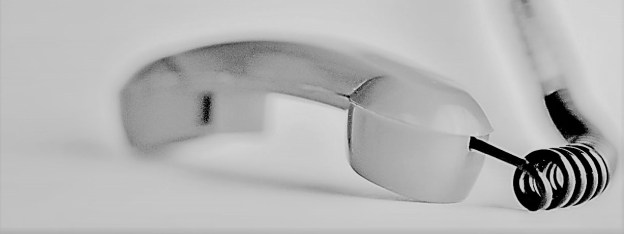
“Just a minute,” I sometimes replied when the caller asked for someone I’d never heard of.  I then laid the receiver by my phone, placed a cushion over it, and forgot about it.  After a few minutes, the caller would get tired of waiting and hang up.  When next I passed by the phone, I gently replaced the receiver.

off hook

Occasionally I would respond by saying, “Jenny?  She left quite a while ago.  She should be at your place any minute!  Tell her to call when she gets there.”

And I’d hang up first.

Or, more than once, I asked the name of the caller, told them to wait, then made a show of yelling for the non-existent person to come to the phone.

“Jenny!  Phone for you.  It’s Alice!”

After a few seconds, knowing the caller could hear me, I’d yell again, “No way, Jenny!  If you don’t wanta talk to her, you tell her!  Not me!”

Sometimes I could hear the caller bang the receiver down from ten feet away.

I never believed that any great harm would arise from these tactics, and it sure made me feel better.  I might even have taught those careless callers to be a little more conscientious when dialing.

Somewhere along the way, I discovered the best and most effective way to deal with those nuisance calls, and it was relatively simple.  It did take some measure of will-power, and it required a little practice at first to get the hang of it.  And I no longer had to spend time dreaming up new tricks.

When the phone rang, if I thought it might be a wrong number, I didn’t answer!

Brilliant!

Of course, with the advent of smartphones, all my reasons for disliking the phone have evaporated.  Now, I can see the person to whom I’m talking, so that excuse is gone.  I’m never too far from the phone to answer a call, because it’s always with me.  There are no wrong numbers, because the name of the caller flashes on my screen.

call

But the biggest reason I have for changing my mind is that, as I’ve grown older and somewhat less active, seeing old friends less and less often, I crave the connection with people.  Instead of willing that old black phone not to ring, I now yearn to hear the ringtones in my pocket.

And so, I confess a dark secret to you.  Now—even when I know it’s a wrong number, even when I don’t recognize the name of the caller, even if I’ve been happily reading in my armchair, or dozing quietly—I answer the call.  If it’s for Jenny, I don’t care anymore.  I have even chatted happily with many fast-talking telemarketers, who quickly become anxious to get off the line with what they must assume is a befuddled, old geezer.

I love the telephone!

The Sneezer

My father was a prodigious sneezer.  As children, my siblings and I would delight in watching his frantic scramble for the handkerchief he invariably carried in his back pocket, seeing his face scrunch up in anticipation of the looming explosion, hearing the violent expulsion of air from his lungs.

Getting at the handkerchief was often problematic, especially when he was seated.  Without warning, he’d burst from his chair, sometimes spilling to the floor any of us children unlucky enough to have been sitting on his lap.  Pawing frantically at his pocket, turning away from anyone present, he’d pull the white cloth out, shake it quickly, and plant it firmly across his mouth.  Once in a while he was late getting it in place, which would elicit frustrated mutterings between sneezes.

We thought this routine was especially funny when carried out at church, in the middle of another long sermon.  Or while he was on the phone.

sneezer1

During his fumblings for the handkerchief, he’d squeeze his eyes tightly shut, wrinkle his slightly bent nose, and tilt his head backwards, looking for all the world as if he was beseeching the heavens to spare him.  His Adam’s apple, never particularly noticeable at other times, would bob up and down with his every stifled gasp.

And the noise!  Depending on the severity of the sneezes, or how quickly they came upon him, the noise could be loud trumpeting, loud wheezing, even loud hissing.  Always loud.  We were never disappointed in the range of noises he could muster.

A-roo-pha-a-!  A-roo-pha-a!  we might hear.  Or A-ree-cha-a-a!  A-ree-cha-a-a!  Sometimes A-chintz-ish!  A-chintz-ish!  There seemed no end to the variety of forms his sneezes could take.  But always, they were six times repeated before he seemed able to stop.  I think we first learned to count by marking my father’s sneezes.

My mother, always proper, would roll her eyes, frown, and sometimes admonish him for his attention-seeking ways.  That’s how she regarded them.  Genteel people, she maintained, would sneeze into their handkerchiefs so quietly as not to disturb those around them.  And they would never draw attention to themselves in so garish or boorish a manner.

sneezer3

At her words, my father would nod agreement and point a finger randomly at her as he completed each cycle of sneezes.  But he never changed.  Not once as I grew up did I hear a gentle sneeze from him.  No discreet Ker-choo!  No soft A-choo!

He’s gone now, of course, and I’m older by far than he was when I first began to marvel at his sneezes.  Over the years, I’ve become quite aware of the power of genetic coding as I’ve lived with my own daughters—and my wife—bemusedly berating me for my own sneezing habits.  I believe, at least in this one small way, I am my father reincarnate.

Allergy season is a disaster for me, and every season seems to boast one or more allergens that trigger my sneeze reflex.  Remembering my father’s sneezing, I’ve striven mightily to conform to my mother’s admonitions to him.

But honestly, have you ever tried to suppress a sneeze?  Successfully?  If you can, you’re among the blessed of the world.  I marvel when I see someone turn their face into their sleeve and emit a barely audible Mmm-ffft!  They behave as if that simple act is nothing.

When I try, my eyes begin to water, my breath comes in short gasps, and I can’t continue talking, so preoccupied am I with the tickle in my nostrils that just won’t go away.  And it’s always to no avail, anyway.  I’ve even tried clamping my hand over my mouth, only to have the eruption through my nose.  That’s not pleasant, handkerchief or not!

To my chagrin, I’ve discovered that my grandchildren may have inherited the sneezing curse.  I watched one of the girls recently, doing as she’s been taught, sneezing into the crook of her elbow rather than into her hand.  I thought this a much healthier way of proceeding until I saw her wipe the residue off her sleeve with…you guessed it, her hand!

sneezer2

And my grandson—what a sneezer he was as an infant.  I even wrote a poem for him, so taken was I with his prowess.  It was entitled Ebenezer Sneezer, and he laughs at it still.

But alas, it’s still I who commands the attention of all around me when I have to sneeze.  Although I remember my father fondly for so many reasons—his sense of humour, his kindness, his pride in his ever-growing family— his sneezing proclivities bedevil me to this day.

You may laugh at my concern, thinking it trivial, but it’s the only thing in my life where I can truly say, “It’s nothing to sneeze at!”

sneezer4


Alphabet Soup

Some of my friends are devotees of alphabet soup.  Not the kind they eat, mind you, but the sort that litters the space following their names.

They pattern themselves, perhaps, after Sir Winston Churchill, wartime leader of Great Britain, whose alphabet soup looked something like this:  KG, OM, CH, TD, PC, FRS, Hon. RA.  These stand for, respectively: Knight of the Garter, Order of Merit, Companion of Honour, Territorial Decoration, Her Majesty’s Most Honourable Privy Council, Fellow of the Royal Society, and Royal Academician.

churchill

Grand titles all, redolent of Empire, conquest, and victory.  And I have no doubt there were others he could have added.

My friends’ titles, of course, are somewhat more modest.  Not for them the Order of the British Empire (OBE), Order of Canada (OC), Royal Victorian Order (GCVO), or other such high-falutin’ honours.  Theirs are somewhat more pedestrian, though all respectable and praiseworthy.

Unfortunately, I can’t lay claim to any of them.

My brother, for instance, followed his name with UELD, denoting United Empire Loyalist Descendant.  Loyalists were people living in the original Thirteen Colonies when the American Revolution separated them from England.  Many fled to what is now Canada, loyal to the Crown, and my brother believed himself descended from them.

If he’s right, I, too, must be one.  However, a loyalist to the British was a scurrilous traitor to the Americans, so, with a nod to my many years of residence in the U.S. during Canadian winters, I have eschewed using the designation.

A close friend includes CSPWC behind his name—member of the Canadian Society of Painters in Water Colour.  Unlike some, this is an appellation that must be earned, not merely tacked on.  Membership is bestowed only upon artists whose submitted works are judged worthy by a distinguished jury of their peers, and many who aspire to it fall short.

That’s because the primary criterion is talent, of which I am in scant supply.  My watercolour experiences began and ended with mixing Kool-Aid.

Several of my friends hold academic honours, the most distinguished of which is a Ph. D, Doctor of Philosophy.  Another holds an Ed. D, Doctor of Education, and I even know one person who can boast an LL. D, Doctor of Laws, although she is not a practicing lawyer.  A number of others merit M.A. after their names, Master of Arts, or M.Sc., Master of Science.  And a whole passel has earned the right to display B.A., Bachelor of Arts, and B.Sc., Bachelor of Science, on their letterheads.

Graduation-Gown-19.01.17

More than a few of these learned folks graduated either cum laude, magna cum laude, or summa cum laude, Latin for “with honour”, “with great honour”, and “with highest honour”.  The latter is generally reserved for students who graduate with a perfect academic record.  I can’t imagine such a thing!  On a provincial math exam many years ago, I scored a derisory 11%—probably for spelling my name correctly.

My paltry post-nominals, were I to use them, would be B.Ed. (Bachelor of Education) and B.A. (Hons).  The abbreviation in parentheses would be justified only because I submitted a full thesis prior to graduation.  As for honours, I should probably include summa cum fortuna, “with the greatest of luck”.  When you compare my credentials to those of my friends, you can see why I generally choose not to sprinkle addenda after my signature.

Mind you, once upon a time there were two such acronyms I could rightfully claim.  I held an OTC, Ontario Teacher’s Certificate, during my working career, and was entitled to use OCT, Member of the Ontario College of Teachers, until my retirement.  I never printed these on my letterhead, however, since my ‘clients’ were children in an elementary school classroom.  They already knew I was the teacher!

teacher-clipart-ncE74e57i

I flatter myself in one regard, though, by positioning myself alongside the aforementioned Winston Churchill.  We are, both of us, writers—men of letters, articulate and erudite, authors of several published works.  Our titles reside (perhaps not side-by-side, but equivalently) in the files of the Library of Congress.  I like to think the biggest difference between us is that, while he wrote non-fiction, I stick to making up stories.

That doesn’t make him a truth-teller and me a fantasist, of course; after all, much of his work was the writing of history, a genre known for notorious exercises in revisionism.  Unlike many historians, I don’t alter the facts; I merely invent them.

As for honours, forget for a moment that Churchill won a Nobel Prize in Literature in 1953, whereas I did not.  That was not a fair competition for I was but ten years old at the time, still struggling to master cursive writing.

nobelprize-medal-peace

I am much older now, but it would appear my own Nobel Prize is still likely some way off in the future.  Way, way off, some would say.

In any event, there is one post-nominal you’ll see me proudly using if you ever receive one of my calling cards.  After my name, boldly printed on the front, is the singular word author.

That will have to do.  I hate alphabet soup!


From Sapiens to Omnipotentus

Science is pretty clear that Homo sapiens has been populating the planet for more than 200,000 years—a considerably longer time than the Christian story would have us believe.  The Garden of Eden was purportedly created some six thousand years ago, and most archaeologists believe it was located near the convergence of the Tigris and Euphrates rivers, at a spot now submerged in the Persian Gulf.

The_Temptation_in_the_Garden_of_Eden_by_Jan_Brueghel_the_elder

But in fact, forms of earlier human life have been documented as far back as two-and-a-half-million years.  Our human predecessors—part of the animalia family, the vertebrata subphylum, the mammalia class, the primates order, the homininae subfamily, and the Homo genus—include, among others, such species as Homo habilis, Homo erectus, Homo heidelbergensis, and Homo neanderthalensis.  All are now extinct.

As a child raised in a Christian home, I was taught, and came to believe, that man was created in God’s own image.  (As an aside, I was also taught that woman was created from a rib of that man—which, if not an original sin, was at the very least an original prioritizing of importance.  As a further aside, I later came to understand that the Christian stories depicting this creation were written by men, which explained that version of events.)

Somewhere along the way, I was also exposed to the tantalizing question: did God create us, or did we create God?

Humans alive today—let me group women and men together as humankind for purposes of this essay—are members of the Homo sapiens sapiens subspecies, which we are told has been in existence for perhaps 70,000 years.  Were we, through some magical time-warp, able to confront some of our earliest sapiens predecessors, we would scarcely recognize them as human.  I cannot imagine what they would think of us.

Self-Domesticated-Apes

Nevertheless, biologically, genetically, we are virtually identical.

Pictures of earlier Homo peoples, reconstructed from archaeological findings, show they looked quite different than we do.  They behaved differently, too, living in an environment quite distinct from ours.  It seems obvious that, over the millennia, humankind has evolved to accommodate the changing conditions.  But beneath the skin, beyond the discrepancies in physical appearance, we are related as a part of the same family in the same fashion that any of us are related to our grandparents.  The earliest humans so far identified through fossil evidence—perhaps Homo ardipithecus or Homo australopithecus—were part of humankind.

When I was first taught that humankind was created in God’s image, I made the completely valid assumption that God, therefore, looked like us.  His many depictions in the magnificent paintings of the masters only proved it—a stern, majestic, bearded being, (male, of course), clothed in white raiment, surrounded by angelic hosts, allowing the tip of one finger to be touched by a mere mortal reaching in supplication.

1200px-Creación_de_Adán_(Miguel_Ángel)

But I have long since wondered, can that be so?  If humankind was, indeed, created in his image, perhaps he actually looks like our earliest ancestors, hairy and ape-like—unless, he, too, has evolved across the centuries (which I concede is a real possibility).  This would not contradict the creation story, merely situate it in a much earlier timeframe.

Such speculation, however, leads me to an even more intriguing question.  It seems indisputable that Homo sapiens sapiens is continuing to evolve.  Our marvellous brains have led us to the cusp of some wonderful, perhaps terrifying, advances in medical science—advances which have allowed us to live our full span of years, and more, relatively free of the scourges of premature death, when compared to those who came before us.

Cloning sheep, so astonishing a feat a mere handful of years ago, was just the beginning.  Purposeful studies today in such fields as stem-cell research, human genome-mapping, in vitro fertilization, nanotechnology, and artificial intelligence, to name a few, are moving us beyond the boundaries of what we have always understood to be true of our mortal selves.

Will humankind, in the not-so-distant future, be able to create human life?  And maybe code it to follow a certain, predetermined path of development?  Will our brains, perhaps conjoined with, or replaced by, digital, adaptive intelligence be able to take us to another evolutionary stage?  From Homo sapiens sapiens to, let us say, Homo sapiens omnipotentus?

binary-1536617_960_720

Will humankind in that case become, not cast in God’s image, but God?  Is that the evolutionary future of the being that created us in the first place?  To become us?

It has been written that we are one with God.  Perhaps, some day in the future, we shall be so.

It’s the Rich Wot Gets the Pleasure

My parents considered themselves members of the ‘upper-middle class’, and took pains to ensure that we children understood that.  I’m not sure I ever did, though, although we were neither rich nor poor.

Most of my growing-up years were spent in a modest, suburban home, on a standard-sized lot, in a neighbourhood of similar families, none of whom had everything they might have wished for.  I was ten years old before we acquired our first black-and- white television set, for example; I was sixteen before we got our first car, a ten-year-old British import handed down from my grandfather.  As a matter of fact, hand-me-downs were integral to our lives.

suburb

We knew there were lots of families who had more material wealth than we did, but they didn’t live in our community.  Their homes were larger and boasted swimming pools, two-car garages, and paved driveways, with proper kerbs, not ditches, lining their streets.  We knew there were people with far less than we had, too, but we would encounter them only infrequently, and were taught it was best to avoid them.

So we did realize, I suppose, that we were in the middle between the rich and the poor, between the so-called upper and lower classes.  But the finer distinctions within this middle class were lost on us.  It mattered not that one kid’s father drove a bus, while another’s worked in an office.  No one cared if somebody’s mother had a job, while another’s was a stay-at-home Mum.  Blue-collar and white-collar meant nothing to us.  Knowing we were loved and safe was all that mattered.

As an old rock song attested, …Here [we were], stuck in the middle with you.

stuck

One of my grandmothers used to sing an old British pub-song, in a fake Cockney accent, to the great amusement of her grandchildren, and it seemed to reinforce the fact that we were solidly and safely middle-class—

It’s the rich wot gets the pleasure,

It’s the poor wot gets the blame,

‘Tis the same the ‘ole world over,

I’n’t it a bloomin’ shame!

Mind you, as we grew older, we were encouraged—strenuously—to strive for as much as we could get, to never be satisfied with less.  It was important, we were taught, to pursue an education; to find, not a job, but a career; to plan for the future; in short, to rise above our station in life.

Inevitably, some of us took that advice, and some of us did not.

Today, I’m led to believe by pundits and prophets that the middle class is disappearing as the wealth-gap widens between the rich and the poor—or, perhaps more accurately, between the few rich and the multitudinous poor.  I admit it’s hard for me to comprehend that, because I’ve never been either fabulously rich or ruinously poor.  Being in the middle has always seemed a good place to be.

I recently finished an interesting book—Sapiens, by Yuval Noah Harari—that delves into why, despite a professed passion for equity and fairness in our modern, liberal society, our species continues to divide ourselves into castes—cultural, religious, and economic.  I’m about to begin a sequel, Homo Deus, which looks at where we are likely headed.  Harari does not paint a rosy picture.

An overly-simplified conclusion I am drawing from this reading (as one ensconced in our privileged, first-world setting) is that some people appear comfortable with their lot, no matter how mundane it may be, apparently satisfied so long as their basic needs are met.  Others, fewer in number, do not accept that status quo, and try to break new trails.  Some plod along their life-journey, eyes cast on the path beneath their feet (or, more likely, on the smartphone in their hands), while others, more curious, more ambitious, look for alternate routes to follow, even if that means foregoing some of the more immediate gratification they might otherwise enjoy.  Sort of like the proverb of the grasshopper and the ant.

grasshopper

But why do we make the choices we do?  Why are some of us seemingly content to muddle along in what I might call a state of arrested development—consumed by our electronic gadgets and devices, immersed in our own narrow worlds, uninterested in the broader issues of our time, and desperate to believe we are going to be looked after?

Looked after by whom?  The rich?

A new ruling class of people—those who rouse themselves to effort and endeavour, who pay attention to what is happening around them and in the wider world, and who consciously think about the consequences of their actions—is rapidly moving ahead of its less-diligent cohort.  And the space between them—call it intellectual-gap or achievement-gap—will only exacerbate the wealth-gap we publicly decry.

Recent studies are demonstrating that an over-dependence on electronic gadgetry, an inability to pry oneself away from those seductive pixels of delight, is changing the human brain’s learning patterns.  And not for the better.  In its extreme, this change will render addicted users incapable of thinking for themselves, dooming them to a dreary lifetime of mindless, eight-second sound-bites and 280-character communications.  In virtual servitude to those who rise above.

It hearkens back to the maxim of Roman times, the trick to keeping the rabble in their place—Give them their bread and circuses.  Already there are disturbing signs that much of the populace cares for not much more.  And technology has provided it to them in the palms of their hands.

170729164127-cell-phone-walking-file-full-169

The day may or may not come when all of us will live out our daily existence like so many drones and worker bees, ruled by entities possessed of artificial intelligence.  That remains to be seen.  But until that day, it is almost a certainty that the strivers among us will assert dominion over the slackers—a triumph of directed, purposeful intellect over superficial intelligence.

Given all this, I would change the words to my grandmother’s ditty—

It’s the thinkers and strivers wot will get the pleasure,

It’s the complacent plodders wot will get the blame…

Just wait.

Also Known As

For most of my growing-up years, I wanted a nickname so badly it hurt.  But it never came to pass.  Not once did I ever have a proper sobriquet bestowed on me.

As one who spent a whole lot of time playing team sports, I knew countless other boys by their nicknames—Dingo, Big-Guy, Scoop, Madge (short for Magic-Man), and, rather unkindly, Lard.  When I think of them now, I can’t even remember their real names.  Nor do I picture them as the old men they surely must be; rather, I see them as they were back then—immortals, in a way.

chevy youth baseball

But I was not fated to be one of those ‘also known as’ guys.  My coaches forever called me by my surname or my jersey number.

Twelve!  You’re on deck!  Get out there!

If you are of my era, a Canadian childhood spanning the 40’s, 50’s and into the 60’s, and if you were a sports fan, you will know that our greatest heroes all had nicknames.

In basketball—the Stilt, the Big O, the Cooz, The Mailman, Pistol Pete.  In baseball—Teddy Ballgame, Joltin’ Joe, the Barber, Stan the Man, the Mick.

In football—Crazy Legs, Broadway Joe, the Deacon, Sweetness, Mean Joe.  In golf—the Squire, Slammin’ Sam, the Hawk, the King, the Golden Bear.

In hockey, my favourite of games—Mr. Zero, the Rocket, Boom-Boom, the Big M, the Roadrunner, Cujo, the Dominator, Number 4.

Female athletes, too, had nicknames, ranging across a number of sports—the Babe, Little Mo, Mighty Mouse, Tiger, Moses, the Swiss Miss, Flo Jo, the Black Widow.

nancy_green_lange_chamonix_history

[*The real names of these athletes are shown at the end of this post.]

But I never had a nickname.

At one point—desperate for a nom de guerre I could call my own, and because I was a year younger than my compadres in school and sport—I began to call myself The Kid.  I think I became a legend in my own mind.  In conversation with friends, I would say, The Kid did this…or The Kid did that…

To my chagrin, the nickname never caught on.  Nor did the practice of referring to myself in the third person, although it did garner me a lot of strange looks.

There were times during these years that I suffered the experience of being called a variety of names by others not favourably disposed towards me—loser, dork, pencil-neck, to name a few, plus some even less polite.  But those were not nicknames; proper nicknames had to be given in recognition of one’s accomplishments, talents, or character.

Sticks and stones…I would mutter quietly.  The Kid is above all that!

The closest I ever came to acquiring a nickname was at the end of my playing days, striving mightily to keep up with skaters twenty years younger than I in old-timers’ hockey.  But it wasn’t my teammates who conferred it; it was my opponents, muscling me unceremoniously along the boards.

hockey2

Outta the way, Grampaw!

Not exactly what I’d always aspired to be known as.

So, as you might expect, it has come as something of a relief to me that now, at this ripe old age, I have finally acquired a nickname I can be proud of.  Mind you, I bestowed it myself, to designate me as a ‘teller of tales tall and true’.

I am Talebender.

*Famous Athletes’ Real Names—

  • Wilt Chamberlain, Oscar Robertson, Bob Cousy, Karl Malone, Pete Maravich.
  • Ted Williams, Joe Dimaggio, Sal Maglie, Stan Musial, Mickey Mantle.
  • Elroy Hirsch, Joe Namath, David Jones, Walter Payton, Joe Greene.
  • Gene Sarazen, Sam Snead, Ben Hogan, Arnold Palmer, Jack Nicklaus.
  • Frankie Brimsek, Maurice Richard, Bernie Geoffrion, Frank Mahovlich, Yvan Cournoyer, Curtis Joseph, Dominik Hasek, Bobby Orr.
  • Mildred Didrikson Zaharias, Maureen Connelly, Elaine Tanner, Nancy Greene, Althea Gibson, Martina Hingis, Florence Joyner, Jeanette Lee.


While We May

It’s inevitable, I think, that many of us will ponder our lives and our place in the world as the current year draws to a close.  And we may well wonder what the impending new year will hold for us.  In the words of an old song—

…what lies ahead?/Will we have rainbows day after day?

I believe it’s a quirk of our human nature that we often fail to appreciate what we have until we no longer have it.  Many are the things that become dear to us when their very existence is threatened—things that might have received but passing notice before the threat arose.

This tendency, doubtless familiar to most of us, seems to begin early in our lives.  I’ve observed young children on numerous occasions while they were playing with their toys.  Inevitably, when someone picks up a different toy, the children immediately focus on that one as the only thing that will satisfy their needs.  The moment they can’t have it, so it appears, is the same moment they realize what a treasure it is.

This habit stays with us as we grow older.  In his classic story, Tom Sawyer, Mark Twain provides a wonderful example of what can happen when people seem to be losing something, even if they never actually possessed it.

tom sawyer

Remember the tale?  Young Tom tricks his friends into whitewashing Aunt Polly’s fence, in order to avoid the chore himself.  By presenting it to them as an opportunity available to only a select few, and one that would not last long, he duped them into a hankering for something they would normally have avoided—afraid of losing the chance to take advantage.

The quirk remains into our adult years, as well.  You’ll recognize it when, after walking around all day in a pair of new shoes, you remember how comfortable the old ones were, the ones you didn’t want anymore.  And you wish you hadn’t thrown them away.

Or you’ll know it when your grandkids come for a long-overdue visit, one you’ve been looking forward to.  And then, only a few hours after your wish is realized, you begin to pine for the peace and quiet of your everyday life.  You can’t wait ‘til it’s time for them to leave.  You’re exhausted!

You’ll experience the same feeling of loss if a power blackout strikes, and you find yourself walking from room to room, absent-mindedly flicking light switches in vain.  All that electricity you took for granted, gone!

no lights 2

There are so many things we have, not just material possessions, that we passively accept as the norm.  Not through arrogance or selfishness, necessarily, but because they seem always to be with us.  Being with us, they become accepted; having accepted, we become indifferent.

Perhaps the greatest of these unheralded treasures, as we grow older, is good health.  Most of us grew up without serious medical problems, the normal childhood ailments notwithstanding.  We accept good health as our due—to the extent that, when we do come down with something, we feel resentful and put-upon.

“I never get sick,” we complain to anyone who will listen.  “How can this be happening to me?

Some time ago, I visited our family physician because of a persistent virus that had hold of me.  While I was sitting in the waiting room, her receptionist mentioned that she’d had a devil of a time locating my file.

“I finally found it in the dead file,” she said.

“The dead file!” I exclaimed.  “Hey, I’m not that old!”

freemedicalcheckupsmall

She laughingly explained that the dead file was for patients who hadn’t had a routine physical exam during the past five years.

Five years!  I was stunned to realize I hadn’t had a checkup in all that time.  I suppose, because I was feeling just fine, I’d assumed it would always be so.  After all, good health is only what I deserve, right?  That’s how it is.

Until it isn’t.

Nowadays, as I approach the three-quarter-century mark more quickly than I would like, the advent of a brand-new year doesn’t hold the same promise for me that once it did.  I no longer wish for, or expect, endless rainbows.

I would be happy, I have discovered, to hang on to what I have.

My focus has turned to acknowledging my blessings, appreciating them more fully, and not taking them for granted.  And chief among those, I am finding, is continued good health.

good health

It behooves me, I believe, to accept the responsibility to make that happen.  While looking to whatever future awaits me, for however long, I must strive not to abuse the good health I currently enjoy.  There are elements of our North American lifestyle that are proven killers—killers even of people, such as I, who have always taken their well-being for granted.

Of course, it’s difficult to imagine that I might fall victim, for, as Edward Young wrote almost three hundred years ago—

All men think all men mortal but themselves.

But nearly four hundred years ago, Robert Herrick, wrote—

Gather ye rosebuds while ye may,/Old time is still a-flying,/

And this same flower that smiles today/Tomorrow will be dying.

rosebuds

That tomorrow is but a day away.  So, today is all the time we have to protect what is, indeed, a most prized possession.  We owe it to ourselves to guard and nurture our good health.

While we may.


A Writer’s View

I’m occasionally asked about the art of writing by those who read my blog-posts and books, but I’m usually caught off-guard, quite unprepared to give a cogent answer.  I was better primed for an industry online interview, however—an edited transcript of which is shared in this post.

Q. What is it you enjoy most about writing?

I enjoy the freedom to do whatever I want in the first-draft stages—creating credible characters, inventing dialogue, describing events, contriving plausible story-lines.

But even more, I enjoy the rewriting, where I can change things, reconstruct situations, alter outcomes.  I love having the opportunity to shape and re-shape the fictional world I’ve created in each story—almost like a wizard, going back in time with the power to change what originally happened.

wizard

Q. What is your writing process?

I write everything down as soon as possible after it occurs to me —essays, short stories, blog-posts, episodes for my novels—sometimes in the wee, small hours of the morning when the thoughts tumbling in my brain won’t let me sleep.  Later, when the frenzy of first-draft has abated, I rewrite them to see where, or if, they fit in the overall picture.

I often spend hours on end in the process, even to the point of missing lunch or dinner.  I’m amazed when I discover that four or five hours might have passed before I paused for breath, so to speak. For me, writing is an alternate universe, one in which I easily lose myself.

Q. Do you remember the first story you ever wrote?

I remember the first story I wrote as an adult.  It was titled The Leaving, and was included in two of my published collections of tales.  It told of the conflicting joy and sadness associated with the realization that my two daughters were growing up, leaving their childhood behind.  It was predicated on a credo my wife and I adopted in their upbringing—hug them close, then let them go.  The hugging was easy, of course; the letting-go not so much.

hugging

Q. What prompted you to try writing a novel?

In the beginning, it was an attempt to answer the question as to whether or not I could do it.  And it took a long time to figure out—five years from inception to publication.  I was hoping to accomplish a number of things, the first being just to finish it; while I had been writing stories and poetry for a long time, I had never attempted a novel.

Additionally, I wanted to tell a story that would prove difficult for readers to resist.  I wanted to relate that story mainly through dialogue among the characters—in their respective voices.  I discovered, however, that the telling of some events had to be in my own narrator’s voice.  I also wanted to create convincing characters in whom readers might invest—little knowing at the time that I would become so attached to two of them that a series would follow.  They feel like friends now—to the point where, rather than creating their story in each successive book, I’ve come to feel like I’m simply recording it as it unfolds.

Q. How many books have you published?

To my astonishment, there are five novels now: By Precept and Example, 2007; Until He Killed Her, 2010; Lockdown, 2012; First Do No Harm, 2015; and the most recent, Missing and Murdered, 2017.  Each of the stories is told against a backdrop of contemporary events taking place at the time of publication.

9 Missing cover

There are also three books of collected stories: On Top of the Grass: Tales of a Snowbird in Florida, 2008; It Matters to Me: Tales of a Young Father, 2010, and The Passing Parade: Tales of a Bemused Bystander, 2017.

All the books can be found, in print or e-book formats, at a number of locations, including http://www.amazon.ca and http://www.barnesandnoble.ca.  They are also available online at http://www.lulu.com/spotlight/precept.

Q. What are you working on now?

I’m currently working on a sixth novel in the Maggie Keiller/Derek Sloan crime series, and I hope to have a fourth collection of tales, Tall and True: Tales of a Peripatetic Blogger, published in 2018.

Q. When you’re not writing, how do you spend your time?

I spend a lot of time reading—more, perhaps, than writing.  And I sing bass with an a capella men’s chorus, Harbourtown Sound, which is both enjoyable and time-consuming.  The chorus website is http://www.harbourtownsound.ca/.

hts

I also try to stay active in golf, tennis, cycling, swimming, and other physical pursuits.

Q. Who are your favorite authors?

There are several, including John D. MacDonald, James Lee Burke, Lee Child, Michael Connelly, Elmore Leonard, John Sandford, and Randy Wayne White—all of whom write in my preferred genre. I also enjoy authors from different genres—Bill Bryson, Don DeLillo, Cormac McCarthy, J. R. R. Tolkien, and Winston Churchill, to name a few.


It Matters to Me

It’s the most wonderful time of the year…

From as far back as I can remember, the Christmas season has always been my favourite.  And it’s true even more now, in my mid-seventies, than it was as a child.

When I stop to think about the reasons for that, I suppose it has to do with the different meanings that Christmas has for me.  Although I can think of many, there are three significant beliefs that stick out.

…with the kids jingle-belling, and everyone telling you, “Be of good cheer…”

None of the three has anything to do with the endless sparring between the commercial and religious aspects of the season—where we find Santa Claus in every shopping mall, serenaded by traditional carols blasted over a tinny sound system.  Or coming to town on a huge sleigh pulled by plastic reindeer.  Were I to dwell on that, the whole season would be spoiled.

santa 2

Neither are my feelings affected by the view of Christmas as a pagan festival, the embodiment of which is old St. Nick, rather than as a true celebration of the birth of Christ.  For me, the two concepts are not mutually exclusive.

It’s the hap-happiest season of all…

As a matter of fact, Santa Claus is one of the things I like best about Christmas.  For the record, I still believe in him.  Every Christmas—under the somewhat curious stare of my grandchildren, who are all sophisticated now to the point of pretending to pretend—I hang up my stocking, just as I have for more than seventy years.

“Gramps, you don’t still believe in Santa, do you?” my youngest granddaughter asks.  She watches me closely as I frame a reply.

“Sure do,” I say.  “I mean, I don’t know if there really is a Santa Claus, but it’s more fun to act as if there is.  Believing in Santa is one of the things that make Christmas so much fun.”

stocking

I don’t know if she agrees with me, but it’s reassuring to note that she still hangs up her own stocking.

The second thing of significance for me about the Christmas season is the good feeling prompted by memories of Christmases past.  It’s always been a time for family members to come together.

With those holiday greetings and gay, happy meetings when friends come to call…

For years, my parents’ house was the destination on Christmas Day, eventually giving way to my home, where my wife and I raised our two daughters.  Grandparents, uncles and aunts, cousins, and friends would all drop in, often staying for the opening of the gifts, and dinner afterwards.  And, without fail, they would reminisce about their own childhood Christmas seasons, sharing their happy, nostalgic memories with us.

…tales of the glories of Christmases long, long ago…

It’s different today, of course, because our daughters have children of their own.  Theirs are the homes we gather at now, with in-laws and friends of their generation.  And, to my everlasting surprise, we have become the old folks—observers rather than directors of the goings-on around the tree.

Worst of all—as the oldest one gathered there, I have to wait ‘til the very end to open my stocking.

…parties for hosting, marshmallows for toasting, and caroling out in the snow…

christmas_carolers

But, regardless of where we are, the things that haven’t changed are the feelings of love and joy we all share at this time of year.

The third thing of importance to me is the fact that Christmas does mark the birth of Christ.  I believe the question of historical accuracy is irrelevant.  The very fact of his birth, whatever the actual date, is a symbol of our hope for peace on earth.  It stands as a beacon of the promise for salvation in a world fraught with danger and despair for many.

I have absolutely no difficulty in integrating these three different notions of Christmas.  For me, they come together nicely—the fun and excitement of Santa Claus, the love and laughter of times with family, and our renewing joy at the birth of Christ.

There’ll be much mistletoeing and hearts will be glowing when loved ones appear…

Perhaps the thread that ties the three together is the idea of faith, the idea of choosing to believe.  Christmas is my favourite time of the year, but for reasons that are neither irrefutable nor provable.  Faith doesn’t abide proof.

nativity_Bloch

My beliefs are valid only because I deem them so.  I want to believe in them, so I do.  And, therefore, Christmas represents a magical time for me—especially now, knowing I have more of them behind me than ahead.

Softly-falling snow, gaily-twinkling lights, the wonderful music, the excited laughter of grandchildren, and a peace that surpasses all understanding—all join to herald the coming of another Christmastime, a time to celebrate, to remember, to rejoice and give thanks.

It’s the most wonderful time of the year…

And it matters to me!