Making Friends

Almost a half-century ago, an older colleague advised me to surround myself with friends who were, not only my age, but younger and older, as well. “With friends your age and younger, you’ll be sharing memories you’ve made together while still able to create new ones. And when you make friends with older people, you’ll learn a lot from their sharing with you the experiences they’ve had.” He didn’t tell me one is silver, the other gold, but I got the drift.

His advice made a lot of sense to me, and to this day, my wife and I can claim friends who are in their nineties and others in their twenties. “You never want to see older friends die,” my colleague said, “but they will. And when that happens, you’ll find solace in the company of the younger ones.”

 That same colleague also told me, tongue-in-cheek, “I don’t need to make more friends. I have trouble keeping up with the friends I already have!”

I didn’t get it at the time, but nearly fifty years on, I better understand what he was saying. We have many friends we barely get to see anymore, given the obligations we all have, the distance we live away from each other, and the vicissitudes of getting older. If it weren’t for social media, I doubt we’d even be in touch with some of them. It’s not that we don’t consider them friends anymore; rather, it’s an inability to keep up.

I first met the friend I’ve known longest when we were fifteen, and sixty-seven years later, that friendship endures. But we see each other in person only two or three times a year now, and even those few meetings seem to require a good deal of advance planning. Moreover, there’s always the chance that one or other of us will have to cancel because of unexpected illness.

I remember my mother in her later years, living longer than my father and most of her friends. Near the end, there was but one longtime friend left, and their children would drive them to an afternoon get-together. Eventually, though, even that proved impossible, and they were reduced to talking by phone—a poor substitute. I dread that day’s arrival for me and my friend.

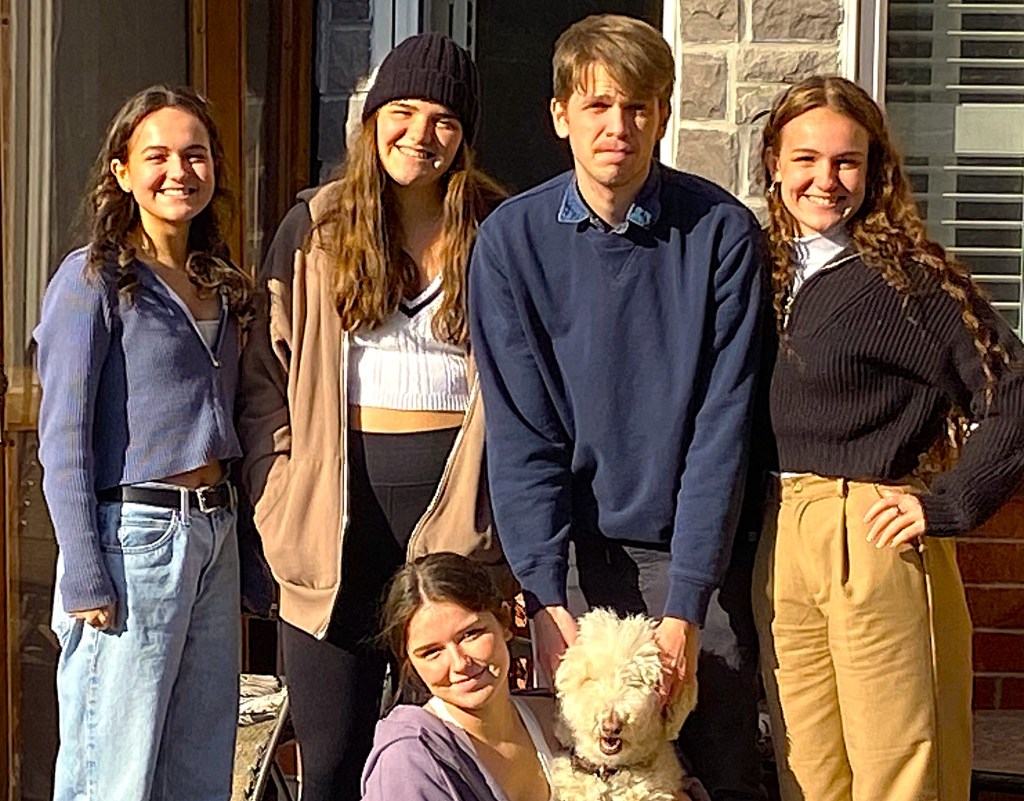
On a brighter note, my wife and I have acquired five new adult friends over the past half-dozen years. Our five grandchildren have all attained the age of majority now, and are attending university or, having graduated, are working full-time. They all live away from home—two from our eldest daughter and her husband, three from our youngest and hers—but close enough to us that we see them frequently on holidays and family occasions.

When they were children, we interacted with them lovingly, but with the slightly patronizing manner typical of conversations between elders who’ve seen and done it all and youngsters who are still finding their way. We never spoke to them in ‘baby-talk’, always recognized their unique intellect and agency, and considered them, not friends, but beloved grandchildren. And they regarded us, I think, as loving grandparents.

It’s different now, though. They’re still beloved by us, of course, and we by them; nothing could change that. But as they’ve grown into adulthood, they’ve become friends, not just grandkids. They’ve developed their own sets of values—thankfully, not identical to ours, nor to each other’s, but not in contradiction, either. They have their own viewpoints on issues facing them, and feel free to discuss those with us. They no longer accept everything we say as gospel, but they’re polite in their disagreements. And they back up their points of view with rational thought.

No longer are they participants in our world; instead, we have become participants in theirs.

As a young teacher, I remember cautioning parents of my students that, by helping children learn to think critically, we must accept the likelihood that they’ll think differently than we do about many things. It’s a delight now to find that is the case with our grandchildren. And a greater delight that it’s given us so much to talk about.

Three of them have come to visit us in Florida during the past year or so, all with boyfriends. So, we’ve been included in their conversations with each other, heard what they think about goings-on in the world, which has opened up new avenues of perspective for us. We’ve listened to their music, and they to ours. We’ve gone with them to the beach, to the mall, to restaurants, to the pool—all things we used to do with our older friends in years gone by.

When my colleague first told me the wisdom of cultivating friends of all ages, I confess I never anticipated some of those would be our grandchildren. But so it has turned out, and we are blessed.

As the familiar ditty advises, Make new friends, but keep the old…

More and More Every Day

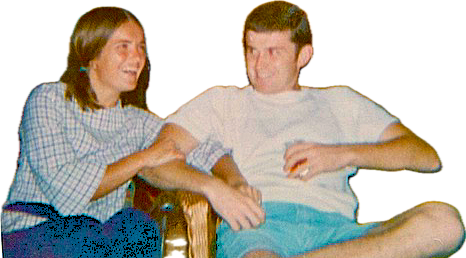
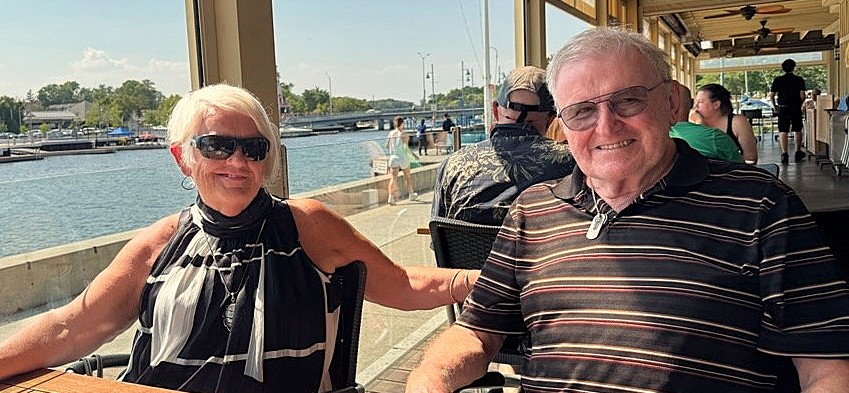
Earlier this week, I celebrated my wedding anniversary—fifty-eight years, all married to the same woman, the lissome lass I first dated when she was but sixteen.  We married four years later, embarked upon fulfilling careers, raised two lovely daughters, and retired to the life we now enjoy together…sixty-three years gone in the blink of an eye, it now seems. Egad!

Friends probably view the longevity and success of our union from my wife’s point of view as a triumph of iron will over probability. From my viewpoint, however, it’s unquestionably a victory of blessed good fortune over whatever random fate I would otherwise have encountered.

Recently, at the behest of our daughters, we each decided to write a short memoir of our lives, intended only for family and close friends.  Mine, titled Being Me, is finished and in the hands of those I care most about; hers, titled My Story, is nearing completion. The trick, as we discovered in the writing, lay in knowing, not what to include, but what to leave out.

As we wrote, we shared memories sparked by old photos, slides, and home-movies produced through the years.  We were amazed by how much we had forgotten over time, and by how different our fuzzy memories sometimes were as we discussed the same events.

“That’s not how it happened!” I found myself declaring more than once, only to have my wife show me a faded snapshot that proved otherwise.  Admittedly, I’ve always had trouble remembering dates, so casting back to those bygone years wasn’t child’s play for me.

By the way, that trouble with dates persists even now, alas.  I recently showed up for a colonoscopy procedure after enduring the requisite purging prior to the visit, only to find I had the right day, the right time, but the wrong year! I was a whole year early! I’m still living that one down.

Through most of our marriage, my wife and I were enthusiastic participants in sports—baseball, curling, golf, hockey, tennis, skiing, swimming, to name but a few—both competitively and recreationally.  As we eased our way through middle age, entering inevitably into our senior years, many of those began to fall away. We found we could no longer glide across the arena or playing field with the same visions of grace and glory we’d previously enjoyed.  Father Time vanquishes everyone, we discovered, no matter how skilled or practised we might be.

An example for me was falling down in my follow-through a few times on the tee-boxes while smoking drives I’d always hit routinely…well, maybe not always, but occasionally.  My playing partners advised me to start wearing a bicycle helmet if I wanted to continue playing.

My exercise today consists of activities where I can’t fall down or off something. I favour the rowing machine, the treadmill (if I hang on), the stationary bike, or exercises conducted while lying on the floor.  Although not a Latin scholar, I find myself chanting under my breath as I work out: sic transit gloria mundi!

As with many things in a long marriage, my wife and I found we had to adjust and change to meet these new demands.  She spends the bulk of her time now, when she’s not reading or doing jigsaw puzzles, making gifts for family and friends out of clay, dichroic glass, and wood, an accomplished artisan.  I call her my boon companion in the arts.

Much of my time, of course, is spent writing—novels, anthologies of tales and poems, and posts on my blog—and listening to classical music.  I’m a prolific reader, as well, and give thanks constantly for online libraries.

Perhaps the biggest change for us is that we no longer find our children and grandchildren to be part of our lives, sharing our experiences; rather, we have become part of their lives, eagerly sharing their accomplishments and happenings. It is we who are the supporting actors now, and they the stars in the unfolding movies of their lives.  We’ve also discovered that this change is very comforting, to be loved and cared for by these essential people in our lives, even as ours wind down.

We still look ahead, however, to each new adventure that might come our way. One of my haiku poems illustrates that philosophy quite clearly—

more yesterdays now
than tomorrows, but it’s the
tomorrows that count


the sails of our youth,
once hoist, are mostly furled now---
though the winds still blow

Back in 1964, when we were still dating prior to marrying, a popular singer, Al Martino, released one of his biggest hits, I Love You More and More Every Day. We adopted that as ‘our song’, and we used to sing snatches of it to each other.  Over the years, it faded for some reason from our minds, although we never abandoned its premise.  But I thought of that song on my recent anniversary day, and began to sing it to myself.  I had to look up the lyrics, of course, after all this time, but the melody was etched in my memory.

On a whim, I decided to record myself singing it on a karaoke track to present to my wife. Although I used to sing bass in a men’s a cappella barbershop chorus, my octogenarian voice is a tad quavery and shrill now, and my range is somewhat limited.  Nevertheless, the sincerity of my singing has not abated, and she at least recognized the song. Sort of.

As I think back to when she and I first met, as I try to remember all that has happened since, as I marvel at the lasting of our union, I find myself overwhelmingly grateful that we celebrated this latest anniversary together, and I offer this haiku to her to reflect those sentiments—

impossible dream!
many might have thought so, but
you made it come true

trusting all that’s passed,
moving forward in good faith,
hands clasped as always

Songs I Remember

For as long as I can remember, songs have been a major part of my life.  Even before memory, my mother was singing to me in the cradle.  And during my boyhood years, my dad constantly shared his love of music.

To this day, I remember many of the songs my mother sang: I Wonder Who’s Kissing Her Now, Sweet Little Alice Blue Gown, Always, What’ll I Do, and too many more to mention.

And I remember the classical music my dad and I would listen to on the radio as he tucked me in at bedtime: Prelude to Act III of Lohengrin, William Tell Overture, Light Cavalry Overture, Rhapsody In Blue, and so many others.  To this day, it’s my favourite genre, playing in my earbuds whenever I write.

When I started school, I discovered to my delight that learning new songs was a part of my curriculum, and I still remember the words and tunes to many of them—

Oats and beans and barley grow, oats and beans and barley grow,

You and I and everyone know how oats and beans and barley grow.

I didn’t actually know how those crops grew, of course, not then, but I learned the song and sang it endlessly.

Your rake and shovel and wheelbarrow bring,

Let’s plant us a garden this morning in spring,

Dig little trenches, pull out all the weeds,

Pour in some water and drop in the seeds.

I’ve never really liked gardening, but I did like singing that song.

While strolling through the park one day

In the merry, merry month of May,

I was taken by surprise by a pair of roguish eyes

While strolling through the park one day.

As a youngster, I had no idea what ‘roguish eyes’ were, but the lilting tune and the idea of being in the park instead of the classroom were appealing.  I even performed a tap-dance recital to that song.

“Come away,” sang the river to the leaves on a tree,

“Let me take you on a journey, and the world you will see.”

So, the leaves gently falling from the tree on the shore

Float away on the river to come home nevermore.

This one made me sad, and does even now, at the thought that those leaves would never come home again.  I couldn’t wrap my head around that.  Home, it seemed to me back then, was forever.

And so was singing, and music in general.  And thus it was that, sixty-plus years after starting school, I joined the bass section of a men’s barbershop chorus, eighty voices strong, where I found I could chime in on so many other songs I remembered from my youth: All Of Me, You Belong To Me, Let Me Call You Sweetheart, Loch Lomond, Peg O’ My Heart, Sentimental Journey, You Are My Sunshine, Me And My Shadow, and more just like those.

Singing with the chorus had become a bucket-list item for me by then, something I wish I’d done years before.  The harmonies and chords rippling down over the risers brought goosepimples every time, and once in a while I would even stop singing, the better to listen…surreptitiously, of course.

I’ve had to step down now, but here’s an audio clip of a recent performance, which I trust you’ll enjoy (best with earphones)—

I hope the last sound I ever hear, whenever that time may come, will be songs in my ear—sung by my mother, perhaps, or shared by my dad.  I’d be happy to hear any of these: Fare Thee Well, I’ll Be Seeing You, or even Beethoven’s Emperor Concerto.

As Edward Bulwer-Lytton wrote, Music, once admitted to the soul, becomes a sort of spirit, and never dies.

Tell ‘Em I’ll Be There

In my dream on this midsummer evening, I hear the harmonies wafting through the screen door and open windows, a ricky-tick piano accompanied by exuberant voices, men and women, some a tad off-key, but all in on the song—

In the cool, cool, cool of the evening,

When you’re lovin’ the summer air,

In the cool, cool, cool of the evening,

Save your boy a chair,

When the party’s gettin’ a glow on, and singin’ fills the air,

In the shank of the night, when the doin’s are right,

Well, you can tell ‘em I’ll be there.

I enter the familiar house—not as the twelve-year-old I was then, but the eighty-year-old I am now—and I move freely and unseen among the gathered throng.  All of them are there, as they always were, and I start in the kitchen where I see my mother, Dorothy, and her mother, Pearl, refilling bowls of snacks, washing and drying glasses, emptying and cleaning ashtrays.  The kitchen table is littered with mickey-bottles, partially-empty bottles of soda and ginger ale, and empty beer bottles.  But I remember from experience, it will be properly set for breakfast by morning.

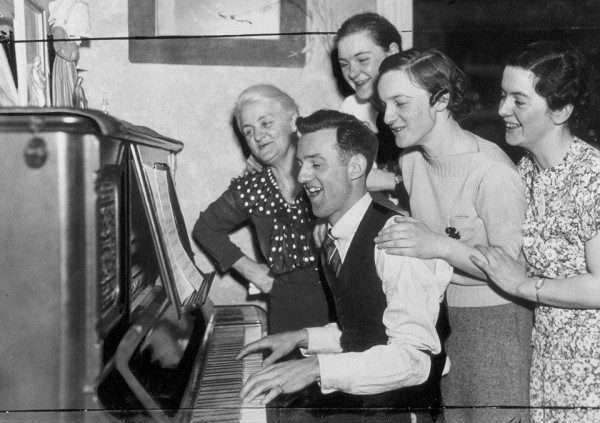
I wander into the dining-room where the assembled singers are sitting or standing near Mike, the next-door neighbour, who is perched on the stool in front of the upright piano, tickling the ivories, as Dad calls it.  Dad says he plays by ear, which always struck me funny because it’s his fingers that dance across the keyboard, responding to every shouted request for a song.  To keep him going, Dad makes sure he always has a bottle of Black Horse Ale by his right hand.

Mike’s wife, Claire, a tiny French-Canadian gamine, sits beside the piano, smiling shyly and swaying to the rhythms her husband is pumping out.  She speaks halting English, always has a drink in her hand which she rarely sips, and reminds me now of Leslie Caron.

Beside her is my mother’s father, Gordon, and his voice is among the loudest and truest in the raucous chorus.  The son of a banty Irishman, one of five boys, he is proud of still being welcome at any party with his own five children and their spouses.

Almost everyone is smoking, and the muggy air is redolent of cigarette and cigar, which I don’t mind, although I’ve never been a smoker.  A hazy, bluish pall hangs up near the white, popcorn ceiling, and will eventually yellow it, but no one is thinking about that right now.

It occurs to me that, except for my mother and father, every one of these people will die before they reach the age I am now, most in their seventies, some sooner.  But no one save I ponders that right now, either, and the songs keep a-coming.

I’m gonna buy a paper doll that I can call my own,

A doll that other fellows cannot steal.

And then the flirty, flirty guys with their flirty, flirty eyes

Will have to flirt with dollies that are real…

My mother has three sisters, Marie, Eunice, and Irene, and a brother, Jim, all of whom, like my mother, regale in the spotlight.  All of them are attractive, they all fancy themselves singers, and they are competitive with each other—although loving, of course.  But none wants to take a backseat, so they forever try to outdo each other.

Eunice is the best of them, I think, referred to more than once in a local newspaper as ‘the songbird of the north’, and her preferred style is like Peggy Lee or Connie Boswell—whispery, cool, seductive, sophisticated.  I think she’s enamored of a friend of my parents, Jack, and I watch as she purrs one of her songs to him—

You made me cry and walk the floor,

If you think I’ll crawl back for more,

Big Daddy. you’ve got a lot to learn…

Jim thinks of himself as Sinatra, not only in his style of singing, but in his expressions, how he dresses, how he carries himself, how he relates to others.  And I must admit, he does do more than passing justice to some of the classics, one of which I’m listening to now in the dining-room—

It’s quarter-to-three,

There’s no one in the place ‘cept you and me,

So set ’em up, Joe, I got a sad story you oughta know…

So make it one for my baby, and one more for the road.

It goes without saying, however, there are no solos in this crowd, not for long.  One person may have the floor for a few seconds, but only until the others recognize the song, and then the chorus begins anew.  Irene, she of the dancer’s legs, sings quietly, mostly to her husband, Bev, and he bestows his crooked grin on her as he listens—

Gonna take a sentimental journey,

Gonna set my heart at ease,

Gonna make a sentimental journey

To renew old memories…

I realize that’s what I’m doing, too, as I wander through the house, taking it all in.  The hallway between the kitchen and the dining-room has a closed door leading to the second-floor bedrooms, and I know if I open it, I’ll see my younger self seated on the stairs beside my brother, Allan, and my younger sister, Colleen—chins in hands, elbows propped on knees, listening to the music.  My other two sisters, Dale and Martii, both much younger, will doubtless be abed and asleep despite the din.  But I choose not to open the door.

Marie has the floor now, if only briefly, and in the imperious manner of the eldest child, the athletic one, she tells Mike the next tune he must play.  And as always, she sings it to Bob, her husband, and just like every other time she’s tried, she isn’t able to finish before choking up in tears—

You’ll never know just how much I love you,

You’ll never know just how much I care,

And if I tried, I still couldn’t hide my love for you,

Surely you know, for haven’t I told you so a million or more times…

When she stops, I find myself finishing it for her in my head, for it’s one of my favourite songs, and they are my favourite aunt and uncle.

…If there is some other way to prove that I love you,

I swear I don’t know how.

You’ll never know if you don’t know now.

Mike heads for a bathroom break, so Dad takes his place at the piano.  If he could be anything in life other than what he is, I imagine it would be a concert pianist.  But he isn’t, and so he limps through a very limited repertoire, concluding with his truncated version of the finale of Gershwin’s Rhapsody in Blue—which is decidedly not rhapsodic as he pounds it out.  And because it has no lyrics, it requires him to improvise in his boisterous baritone—

Da da da dah!

Da-da da-da da da da dah,

Da dah!

Da da da,

Da-DAH!

Mercifully, Mike comes back, beer in hand, with another for my father.  I watch in remembered awe as air bubbles dance inside the green, long-necked bottle they tip back for long swallows.  When Mike is seated again, the first song called for is Jack’s, and his gravelly bass rings out the familiar lyrics—

Chi-ca-go, Chi-ca-go, that toddlin’ town,

Chi-ca-go, Chi-ca-go, I’ll show you around.

Bet your bottom dollar you’ll lose the blues in Chi-ca-go,

The town that Billy Sunday could not shut down…

But I discover suddenly that the party I am so enjoying is beginning to shut down, at least for me.  I’m still there—this eighty-year-old apparition, unseen by anyone—but the scene around me is growing dimmer, the music fainter. And then I spy my mother, back from the kitchen, whispering to Mike at the piano, and everyone stops to listen as she sings a piece she has sung to me for as long as I can remember—

I wonder who’s kissing her now,

I wonder who’s showing her how…

I wonder if she ever tells him of me,

I wonder who’s kissing her now?

And when she is finished—as all around her slide away into the deepening fog of long-ago, all these people I loved and whose lives I enjoyed being part of—I sidle over to her and plant a lingering kiss on her cheek.

I used to ask her when she sang the song to the infant me what that now was, the now that was being kissed; in my childish innocence, I didn’t understand the word as a temporal reference, thought of it as a thing, like a nose or a forehead.  She would simply smile and kiss both of mine.

So now, on the cusp of waking—just before I find myself alone again in my dream, outside that house of yesteryear in the warm, summer night—I wonder if I might be allowed to join that party myself in some not-too-distant-future.  And in hopeful anticipation, I offer my own version of one of the songs to my mother and father—

In the cool, cool, cool of the evening,

Save your boy a chair…

In the cool, cool, cool of the evening,

I’ll find you anywhere,

When the family all ask about me, askin’ if I care,

If they’re wonderin’ if I will join ‘em on high—

Well, you can tell ‘em I’ll be there.

Being the Same

The highlight of the last spring-break holiday for two of our granddaughters was, unquestionably, a week-long visit from a friend of theirs.  They hadn’t seen each other since her family moved from their old neighbourhood more than two years ago, to one of the middle-east oil states where her parents are both employed.

Iraq oil facility AFP

The visit had been arranged months in advance—a period of time which passed like centuries, I’m sure, for our granddaughters.  During the weeks leading up to the arrival, the girls became quite concerned about something, and it simmered inside for a while.  Nana and I happened to be with them when they decided to talk about it.

“Gramps,” the youngest began, “do you think when Susie gets here, she’ll be just the same as she was?”

I tried to respond honestly, but without causing undue concern.

“No, I don’t think she’ll be exactly the way you remember her, because she’s been gone for quite awhile.  She’ll probably be a little different, just as you guys are a bit different than you were then.  You’re older now, you’ve experienced things without Susie, and all of that has changed who you used to be.  And remember, she’s had a whole lot of different experiences, too, since you last saw her.”

“But, Gramps,” declared the eldest, “I don’t want her to be different!  I want her to be the same!”

It’s an old dilemma, one I recognize from my own life.  I often find myself wishing something could be the same as it used to be.  Usually, it’s something nostalgic, and generally, I’m remembering it more fondly than I should.  The arc of the universe, for me, seems to curve towards rose-coloured glasses.

nostalgia 2

My memories frequently play tricks on me, and I tend to believe things were better way back when.  But in fact, I probably had more things to worry about, and not as many blessings to be thankful for, as I have at present.

“Why don’t you wait ‘til Susie gets here,” I suggested to our granddaughters, “and see for yourself if anything’s changed with her?  I bet you’ll find everything’s okay.”

Their apprehensive faces told me they weren’t feeling reassured, but they gamely accepted my counsel.

Well, the big day finally arrived.  According to their mother, our granddaughters’ worries seemed to evaporate in the heat of joy and excitement when they met Susie and her parents at the airport.  There was a good deal of kissing and hugging, some surreptitious sizing-up on the part of all three girls, and a great deal of nervous giggling.

Their first few hours together were spent asking and answering questions—the questions tumbling out almost more quickly than the ensuing answers.  My daughter told us later that, at first, the questions appeared to focus on similarities, the things the kids still had in common.  Only later, after these had been confirmed—a comfort level established—did the questions turn to what Susie’s new home was like, what was different about her school, and who her new friends were.

friends 2

By the second day, apparently, they were thick as thieves, just as they had always been.

The next time I saw our granddaughters, I asked how the visit had gone, and how they felt, now that they’d seen their old friend again.  I wondered aloud if they felt their fears had been warranted.

“You were right, Gramps,” the eldest replied.  “Susie was different than she used to be.  But she was sort of the same, too.”

“Yeah,” her sister chimed in.  “And she thought the two of us had changed, too.  But, that’s okay.”

“We figure it’s like this, Gramps,” the eldest said.  “Always being the same isn’t so important when you’re still friends.”

I liked that observation.  And I told them so.

friendship-day

The Reach of a Father’s Love

Friends of ours lost their only child several years ago, the victim of a relentless disease.  He left behind a grieving wife, two young children, and a sparkling future.

In the years since, our friends have doted on their grandchildren, taking great delight in watching them grow from infants to toddlers, and onward to adolescence.  They’ve invested time with them, knowing they can never make up for the loss of a father, but determined to keep his memory alive.

A while after their son’s death, I wrote a piece to commemorate his life and the legacy he left behind.  I post it here now, adapted somewhat, to mark the advent of another Fathers’ Day

The little boy is eight-years-old, and loves to visit his grandparents at the family cottage.  For him, every day is an adventure, a surprise, a delight, as he wanders the woods, swims in the lake, and fishes the waters in the old, wooden skiff.

For the older folks, these activities hearken to an earlier time with another fair-haired lad, and they treasure the memories, even as they create new ones.

A while back, the little boy was in the musty basement of the cottage with his grandpa, when he made a great discovery.  “Grampy, what’s this?” he cried, pointing to a bright-yellow model boat.

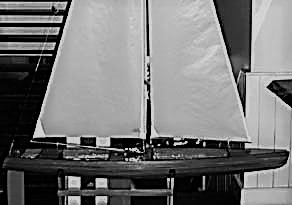
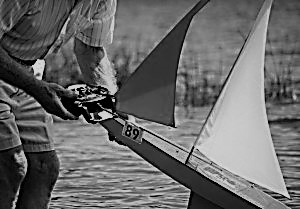
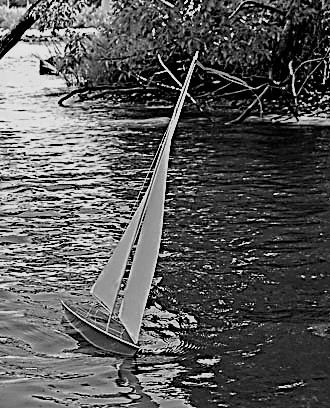
Sitting astride its pedestal on top of an old workbench, the craft was almost three feet long—a racing boat, bred for speed, its tall sails still unfurled.  Three small passengers huddled in the cockpit, as if awaiting the starting gun for an impending race.

sailboat5

“Oh, that?” his grandpa replied.  “That’s a boat your daddy built a long time ago.  He used to race her on the lake with his remote control.”  He lifted a dusty metal box down from an overhead shelf.  Two toggle switches protruded from the top, and a long antenna jiggled slightly as he set it down.  “This is how you make the boat go where you want it to.”

“Can I make it go, Grampy?”

“Mmm, I don’t think so, l’il guy.  I don’t think she works anymore.”  Together they lifted the cowling off the boat, behind the drivers, and peered at the mysteries of the small motor inside.

“It smells funny,” the little boy said.

“That’s oil you smell,” his grandpa replied.  “Your daddy always made sure he kept her cleaned and oiled.  He really liked this boat.”

“What’s her name?”

“Your daddy called her The Yellow Flash.  Here’s her name on the back, just the way he painted it.”

“Can I make her go, Grampy?” the little boy asked again.

The old man shook his head.  “The batteries are probably dead,” he said, “and look at these wires.  They’re corroded at the junction plates.  The sails are pretty ratty, too.”

“Well, can we fix her?” the little boy said.

His grandpa stared at him for a few moments, a faraway look in his eye.  “Y’know,” he said finally, “maybe we can.  Shall we give it a try?”

sailboat

Over the next couple of weeks, the two of them dismantled the boat in order to clean every part, separating the batteries and wires that would need replacing.  They opened the remote box and cleaned it out as best they could, removed the sails for a gentle cleaning.  On his next trip to the city, the old man took the hull and box to a hobby-shop, where the owner walked him through the steps needed to restore the boat to operation.

On the little boy’s next visit to the cottage, they began the rebuilding process.  As they soldered new wires in place, the little boy was fascinated.  His grandpa let him set the new batteries in their proper slots, showing him how to ensure the contacts were touching.  He watched as the little boy lovingly polished the hull, restoring it to its original gleaming glory.

Together, they replaced the sails, and tested the remote box, working the toggles to control the boat’s tiny propeller and rudder while it still sat on its dry-dock pedestal.

“She works, Grampy!  She works!”

“I think she does, l’il guy.  Shall we put her in the water?”

And so they did.  Carrying her gingerly down the slope to the dock, they lowered her carefully into the lake.  From a silent vantage point on the rocks, I watched them—a grandfather and his son’s son, with his son’s boat, launching their labour of love.

“Which one is the driver?” the little boy asked, pointing to the three small figures in the cockpit.

“Well, this one is you,” his grandpa said, indicating the figure in the middle.  “You’re the skipper.”

“Okay,” said the little boy.  “Then this one on the right will be you, and this can be my daddy over here.”

The old man had to look away for a moment to collect himself.

“What if the waves tip her over?” the little boy asked, suddenly apprehensive.

“Well, it’s pretty calm right now, l’il guy.  I think she’ll be okay.”

“But what if she goes way out there and we can’t bring her back?”

“She’ll come back,” his grandpa said.  “She’ll come back.”

sailboat3

As they perched on the dock, legs dangling over the water, the old man gave the boat a push away from shore.  The little boy, the remote box between his knees, began to steer her—hesitantly at first, with fitful starts and stops, over-correcting erratically.  But in moments he was sure, and the boat skimmed atop the surface, speeding and curving gracefully, immediately responsive to his commands.

I watched the boat for awhile, then turned my attention to the old man and the boy.  Their faces were split with grins, happily alight, as they raced The Yellow Flash to and fro along the shoreline.

“Take a turn, Grampy,” the little boy yelled, handing the remote box to his grandpa.  And he squealed with delight when the old man almost capsized her, righting her just in time.

“Grampy?” the little boy said after a while.

“Mmm?” his grandpa replied, seeming lost in reverie.

“I love my daddy’s boat!”

“I love her, too,” the old man said, leaning in close to his grandson.  “And I love you, l’il guy, very much.”

I left them on the dock, locked in silent communion.  And it may only have been my imagination, but when I stole a glance back, I could swear I saw a third person there—ephemeral but real, lovingly watching them both.

At once apart from, yet a part of, the old man and the boy.

And I marveled at the reach of a father’s love.

father-son-and-grandfather-fishing

Diddle

“I used to diddle myself,” he said, slurping a spoonful of soup.

“Uncle Fred!” I hissed, trying to shush him, afraid diners at other tables would overhear.  “You can’t say stuff like that out loud.”

“Why not?” he said.  “I did it all the time, sometimes in front of people.  They all knew right away it was me.”

“You didn’t!” I said, horrifying visions of men’s-room madness running rampant through my brain.

“Used a scribbler,” he said.  “And a pencil.  No mo-beel phones back then, no selfers.  People used to say I should’ve been a cartoonist.”

“A scribbler?” I said.  “And a pencil?  You mean you used to doodle yourself?”

That’s what I said,” he said, sipping more soup.  “Characterchers.”

“Uncle Fred, you mean caricatures,” I said, relief washing over me.

notebook-with-pencil-clipart-5

He spoke like that all the time, so I should have been prepared.  Ask him what he had for breakfast, for instance, and he might reply, “Broached eggs, toast, and piecemeal bacon.”

When my siblings and I visited him on a Saturday, he would cook drilled cheese sandwiches for us at lunchtime.  For dinner we might have macaretti and meatballs.

He was a master, unknowingly, of the malapropism, the substitution of an incorrect word for one sounding similar—its origin from the French mal a propos, meaning not appropriate.  The English playwright, Richard Sheridan, named one of his characters Mrs. Malaprop, and imbued her speech with countless examples.

I’m not sure my uncle ever read Sheridan, but he would probably not have recognized the errors—illegible for eligible, reprehend for comprehend, malevolence for benevolence, and so many others.

Not that he was unintelligent.  It was always a pleasure to hear him hold forth on topics of interest, never ranting or railing, simply expressing well-reasoned opinions.  He loved classical music, as do I, especially the nine tympanies of Beethoven.  He was a great baseball lover, a fan initially of the New York Yankers, and then latterly of the Toronto Blue Jades.  And he was a political junkie, always eager to discuss the follies of our elected reprehensibles.

A lifelong Tory, my uncle fondly referred to two of his favourite prime ministers as Chiefenbaker and Moroney, and praised their performance in the federal parlourment.  He called the bicameral bodies the Synod and House of Commoners (although that last one might have been intentional).

Talking with and listening to him was ever an enjoyable experience, and unintentionally hilarious.  “Those are two beautiful, wee girls,” he told me one time, referring to my daughters.  “I hope they’ll grow up depreciating the simple things in life.  Like their mother.”  Even my wife laughed at that attempt at a compliment.

“Invest your money wisely,” he would admonish me on occasion.  “Plan for your future, which is all ahead of you.  Frugality and persimmony are virtues.”

He had a host of other gems, too, all of which made sense once the chuckling stopped.

“Fresh fruit and veggies will keep you regular.  You’ll never be dissipated.”

“Be respectful and polite with people you meet.  Most of ‘em are well-indentured.

“Don’t be boastful.  Self-defecation is a good thing.”

“Get some exercise every day.  Don’t let yourself become sedimentary.”

Aunt Helen was used to it, of course, rarely raising an eyebrow.  I suspect she was never quite sure if he was naturally inclined to err, or slyly having everyone on.  But either way, she wasn’t above giving it right back to him every now and then.

“What’s for dinner?” he asked one night.

“Steak and kiddley pie,” she said, deadpan.

a_meal_of_a_homemade_steak_and_kidney_pie_cg3p2658869c_th

“You mean kidney pie, Helen,” he corrected.

And without so much as a pause, she replied, “I said kiddley, diddle I?”

I miss them both.


Fathers, Sons, and Trains

Again this year, I know I’ll receive warm hugs and kisses from my daughters in recognition of yet another Fathers’ Day, my forty-fifth such occasion.  It never grows old.

We dads grow old, however, despite our best efforts.  And in so doing, we lose our own fathers as they board the last train to glory, to borrow from Arlo Guthrie.  My dad departed the station more than a dozen years ago, but he remains with me almost daily in my thoughts.  And never more so than on Fathers’ Day.

When I was a young boy, he would often take me to local railroad crossings to watch the big steam locomotives and their endless caravans go storming by.  I treasured those occasions because I would have his undivided attention, a not-so-frequent circumstance in a family that eventually numbered five children.  He enjoyed the time with me, too, I’m sure; but he loved those trains even more than I, a boyhood fascination he never lost.  He was truly a railwayman, if only in his dreams.

https://s-media-cache-ak0.pinimg.com/736x/23/67/c0/2367c020ad92968a83fc8070d32a375d.jpg

Not once did it occur to me as a lad to ask him if his own father had taken him to see the trains, so caught up with the spectacle was I.  I’ve often wondered since if he might have been fondly recalling such times with his dad, even as he was standing beside his son.

At the time of his passing, I wrote these lines to commemorate what he meant to me, and they comfort me still—

The Railwayman

You’d take me down beside the rails to watch the trains go storming by,

And tell me all those wond’rous tales of engineers who sat on high,

In cabs of steel, and steam, and smoke; of firemen in their floppy hats,

The coal they’d move, the fires they’d stoke, as o’er the hills and ‘cross the flats

The locomotives huffed and steamed, their whistles blowing long and loud.

And one small boy, he stood and dreamed beside his daddy, tall and proud.

Terrifying monsters were they, bearing down upon us two, who

Felt their force on that steel highway, hearts a-racing—loving, true.

I’d almost flinch as on they came toward us, with their dragon-face

A-belching, spewing, throwing flame and steam and smoke o’er ev’ry place.

But you’d stand fast beside the track, and, oh! the spectacle was grand.

So, unafraid, I’d not step back, ‘cause you were there holding my hand.

Oh, Railwayman, oh, Railwayman, I’m glad you knew when you grew old,

How much I loved you—Dad, my friend, who shared with me your dreams untold.

Oh, Railwayman, oh, Railwayman, if I, beside you once again,

Could only stand safe in your hand, awaiting with you our next train.

Now, all aboard, Dad…all aboard!

Happy Fathers’ Day to all who, like me, are both fathers and sons.  We are blessed.


Mothers’ Day Again

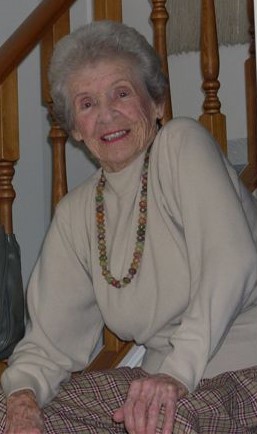
Another Mothers’ Day has passed, the sixth since my own mother passed away.  The living mothers in my family number nineteen in all: my wife, two daughters, three sisters, two sisters-in-law, ten nieces, and one grand-niece.  All were recognized and honoured by their children, many on social media, and it was lovely to witness.

But I still miss being able to pay homage to my own mother each year—to hear her voice, see her smile, smell her perfume; and mostly, to feel her arms around me.  We knew each other for sixty-seven years, with nary a breach in the trust and love we shared, and my world is emptier without her.

On her ninetieth birthday, four years before she died, I wrote this poem to convey what she had meant to me for so long.  I likened her to a tree that sheltered me until I dared to strike out on my own, and even thereafter.

At the time, I thought I had written it for her; but now, I suspect, I wrote it for me.


Mum April 04

My Tree

For ninety years and more, my tree has spread her boughs across my yard,

Festooned with leaves providing shade, standing tall and proud, on guard.

When I was young, and climbed up high into my tree, carefree and fleet,

Her branches hugged me safe and close, held fast my hands, secured my feet.

As I grew braver, I would stray beyond the fence that kept me in.

But at day’s end, I’d rush back home to settle ‘neath my tree again.

Her boughs would gently bend and blow about my head, and whisper soft,

And tell me of the wide world they had seen from high aloft.

Sometimes she’d bend, tossed by storms that raged around us, blowing fierce,

Yet, ne’er a storm could match her strength, nor through her loving shelter pierce.

Then, all too quickly, I was gone to seek a new yard, far away.

Yet always I’d return to hug my tree, and feel her gentle sway.

Too big by then to climb once more her branches, high o’erhead,

I still found comfort there, among the fallen leaves my tree had shed.

 ~  ~  ~  ~  ~

Past ninety years, yet still she stands, her canopy now drooping low,

Creaking, bending, in the winds that shake her branches, to and fro.

As spring and summer fast have fled, and fall has turned her leaves to gold,

My tree displays a majesty that can be neither bought, nor sold.

And I’ll remember all my days her love, like ripples in a pond,

Because I’m sheltered now by younger trees—the seeds she spawned.

For ninety years and more, my tree has spread her loving boughs each day

Above my head, to nurture me, and gently send me on my way.