“You’ll Never Know” is the Academy Award-winning song from way back in 1943. Now, seventy-seven years later, it’s also the title of a story from my latest book—-“I Haven’t the Time: Tales of a Woke Wayfarer”.
If you have ten minutes or so, you can hear me read the story in the attached video—-and sing the song—-on the latest edition of “Reading Out Loud”,
You’ll find it at this YouTube link—-
If you enjoy the video, please feel free to pass it along to others who may appreciate it.
Earlier Reading Out Loud videos may be found under the List of Posts button at the top of this page.
If you have ten minutes or so, I think you’ll enjoy watching the latest episode of my video-series, Reading Out Loud.
In this episode, I am reading three short poems from my latest collection of tales, I Haven’t the Time: Tales of a Woke Wayfarer, which will be published later in November.
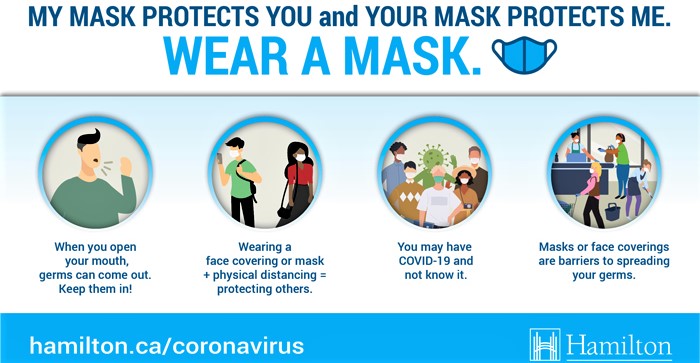
In the midst of the global COVID-19 pandemic, the worst such event in more than a century, a prominent political leader recently told her constituents, If you want to wear a mask, go ahead. You are free to do so. If you don’t want to wear a mask, don’t be shamed into it. That is your right.
Really? In the middle of the pandemic, does this not seem illogical? The best scientific evidence indicates pretty clearly that, by wearing a mask while around other people, we can severely limit the transmission of the virus—thereby protecting those around us, our family, friends, and fellow-citizens.
For comparison’s sake, I’ve modified the woman’s statement to apply to other situations, to see if they would make sense—to see if they might impinge on another person’s rights. You be the judge.
If you want to stop your car at a red light, go ahead. You are free to do so. If you don’t want to stop, don’t be shamed into it. That is your right.
Can you imagine the potential carnage?
If you want to wear seatbelts while driving, go ahead. You are free to do so. If you don’t want to wear them, don’t be shamed into it. That is your right.
Can you imagine the increase in personal injury?
If you want to drive while sober, go ahead. You are free to do so. If you want to drive while impaired by alcohol or drugs, don’t be ashamed about it. That is your right.
Can you imagine the inevitable devastation?
If you don’t want to smoke in a public setting, that’s fine. You are free not to do so. If you do want to smoke there, don’t be shamed by it. That is your right.
Can you imagine the outcry?
If you want to use the store’s escalator to go up one floor, go ahead. You are free to do so. If you want to push your way back down on the up-escalator, don’t be ashamed to do it. That is your right.
Can you imagine the confusion and anger?
Of course, there are all manner of situations where an individual person’s choice to do something, or not do it, will engender no meaningful effect on others. For example, If you want to wear winter boots after a heavy snowfall, go ahead. You are free to do so. If you don’t want to wear boots, don’t be shamed into it. That is your right.
Another example: If you want to study for your final exams, go ahead. You are free to do so. If you don’t want to study, don’t be shamed into it. That is your right.
And a third: If you don’t want to wear a paisley tie with a striped shirt, plaid jacket, and check slacks, just don’t. You are free not to do so. But if you do want to, don’t be ashamed about it. That is your right.
None of these three personal decisions is likely to have a profound effect on someone else’s autonomy, unlike the first statement and its five adaptations. And that, of course, is the whole point.
A familiar maxim, first promulgated by an obscure legal philosopher, Zechariah Chafee, Jr., holds that a person’s right to swing his arms freely ends where the other person’s nose begins. In other words, your personal rights are not allowed to impinge on mine.
John Stuart Mill, in his famous work, On Liberty, postulated: The maxims are, first, that the individual is not accountable to society for his actions, in so far as these concern the interests of no person but himself. Advice, instruction, persuasion, and avoidance by other people if thought necessary by them for their own good, are the only measures by which society can justifiably express its dislike or disapprobation of his conduct.
Secondly, that for such actions as are prejudicial to the interests of others, the individual is accountable, and may be subjected either to social or to legal punishment, if society is of opinion that the one or the other is requisite for its protection.
I have long been of the opinion that Mill’s work provides us with a near-perfect definition of the boundary between our individual rights and our societal obligations. And when I apply that definition to the exhortations of public health officials during the pandemic that we all wear a mask when out and about in the company of others, I find their pleas to be eminently logical.
It seems to me, therefore, that if government determines the actions of some people are, in Mills’s words, prejudicial to the interests of others—in this case, the general health and welfare of the citizenry—the wearing of masks in public places should be mandated by government officials. I further believe that scofflaws who flout the requirement should, also in Mills’s words, be subjected…to legal punishment.
The same controversy will arise, I’m sure, when vaccines against COVID-19 become available to the general populace. Some of us will line up eagerly to get it; others will dig in their heels, perhaps proclaiming, If I don’t want to get vaccinated, that’s my right. I am free not to do so.
To them, I would say, If you don’t want to get vaccinated, that’s fine. That is your right. But if you want to present yourself in community settings where people congregate—such as malls, schools, churches, or city parks—don’t be surprised when you are denied access. That is our right.
Like any chain, our society is only as strong as its weakest link.
The sudden death and subsequent resurrection of RileyMoynes—-more a serendipitous circumstance than a major miracle—-unfolded an hour before dusk under a cloudless sky on an empty stretch of northern Ontario highway.
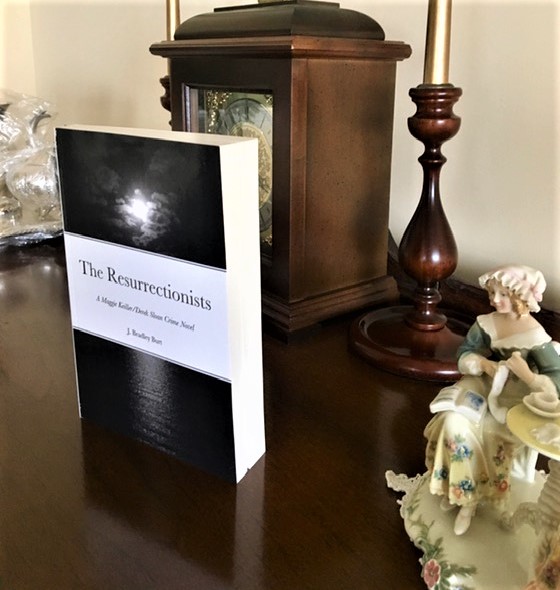
So begins the seventh novel in my Maggie Keiller/Derek Sloan crime-thriller series, a story that will capture and hold your attention from beginning to end. The book is intended for a mature audience, and is available online now from my author spotlight page—http://www.lulu.com/spotlight/precept
If you haven’t had a chance to read the free previews I sent out of the first two chapters—or watched my video-reading of them—they may be found at these safe links—
I hope you will check out the previews, and I hope you will visit my author spotlight page as you consider purchasing the book. In addition, please share this note with anyone you think might be interested. I know I’m biased, but The Resurrectionists is a heck of a good story!
Here is a preview of the second chapter of my new book, The Resurrectionists, which is slated to appear by the end of this month. The book is intended for a mature audience.
If you would prefer to hear me reading the chapter aloud, a video preview may be found by scrolling to the bottom.
2
final week of april, saturday afternoon
Sincerity oozed from every pore, as obvious as the sheen ofsweat on her forehead, although not nearly as genuine.
“I keep tellin’ you,” she said. “I don’t know ‘bout the money, I don’t know ‘bout the drugs. The guns, yeah, I knew Beau had guns. Far’s I know, he bought ‘em legally.”
Dani Austin was practiced at shaping the truth to fit any situation, but the detectives facing her in the squalid interview room were accomplished at recognizing lies. The big guy was Barnett, early-fifties, tie loosened, ogling her obviously and unapologetically. The woman was Lavery, a wiry brunette, mid-thirties, eyes narrowed as she appraised Austin. Neither seemed impressed with her story.
“You know a wife can’t be forced to testify against her husband, right?” Lavery said. “Whatever you tell us here can’t be used in court, and Beaumanoir never has to know.” She was leaning back, one arm tossed carelessly over the back of her chair, acting cool. Austin could see a holstered gun nestled against the side of the woman’s breast.
“Me an’ Beau aren’t married,” Austin said.
“He says you are,” Barnett said. “Says you been together two years now.”
“Together, yeah,” Austin said, “but not married. I been stayin’ with him, havin’ a good time, waitin’ ‘til somethin’ better comes along.”
“An’ now it has, right?” Lavery said. “You and this guy, Dylan O’Toole?”
“Tool-man?” Austin said. “What about him?”
“Beaumanoir says you and O’Toole been doing the dirty behind his back,” Barnett said. “Says he found out a few days ago. Says the money and drugs we found in the house must belong to O’Toole. Or you.”
Austin forced a laugh. “Are you kiddin’? If Beau thought Tool-man was screwin’ me, the guy would be dead. Same as you would, Detective, if Beau saw how you been lookin’ me up an’ down for the past hour.”
Might as well let him know I know.
“Don’t flatter yourself, Ms. Austin,” the detective said, shifting in his chair, miffed at being confronted. “I wouldn’t fuck you with someone else’s dick.”
“Yeah, you would,” Austin shot back. “You an’ your dyke partner, both. But I don’t swing her way.”
The detectives couldn’t resist a sidelong glance at each other, each knowing the truth of the jibe, but neither willing to acknowledge it in front of Austin.
Leaning forward, not so cool now, Lavery said, “O’Toole lives with you and Beaumanoir, right?”
“Wrong, Detective,” Austin said, sure she’d hit the mark about the woman’s sexual preference. “Me an’ Beau live together, just a regular twosome. Tool-man lives downstairs, rents the basement apartment.”
“That’d be the same basement where we found the drugs and money?” Lavery said. “And the guns?”
With a shrug, Austin said, “The guns, yeah. In a cupboard in the furnace-room. Drugs an’ money? Beats me. Beau musta had somethin’ goin’ on the side.”
“He says it was O’Toole’s stash,” Barnett said. “Swears you and O’Toole were screwing each other, and both of you were screwing him by dealing drugs without him knowing.”
“Yeah, well he would say that, wouldn’t he?” Austin said. Placing
both hands flat on the table, she said, “Think about it! It’s Beau’s house, not mine. It’s him who belongs to a biker-gang, not me. You really think me an’ some numb-nuts renter are dealers? Puh-leeze!”
“Okay, you’re trying to convince us you weren’t boinking O’Toole, right?” Lavery said, leaning back, trying for cool again. “And even though both of you lived in the house, neither of you knew anything about what was going down. That the story you’re trying to sell us?”
“I’m not sellin’ you anything, Detective,” Austin said, imparting a double-meaning to her words. “I’m givin’ it to you for free.”
When Lavery’s eyebrows lifted querulously, Austin added, “The truth, that is. Nothin’ else!”
Barnett cut through the sexual undertone. “So why should we believe you over Beaumanoir?”
“Up to you, I guess,” Austin said, eyes still on Lavery. “I’m a law-abidin’ girl.” Her gaze switched back to Barnett. “Ask Tool-man if Beau’s tellin’ the truth.”
“We would if we could find him,” Barnett said. “Nobody’s seen the guy in almost a week. We figure he took a powder after Beaumanoir discovered you and him fucking each other. But I’m thinking you already know that.” He leaned in, daring her to contradict him.
Austin did know that. Beaumanoir had surprised them in O’Toole’s bed by coming home early last Tuesday, and a brief fight had ensued. O’Toole got the better of it, and when Beaumanoir had retreated, shouting threats, vowing retribution, Austin had convinced her lover to take off. He’d been reluctant to leave her alone, but had finally agreed when she swore she’d join him as soon as it was safe. He’d promised to call her when he got settled somewhere.
She’d fled to a friend’s place to escape Beaumanoir’s wrath, staying a couple of nights with Debbie and her dogs. When she went back, it was only to pack a few essentials, but Beaumanoir had been waiting, disconsolate, and pleaded with her not to leave. Despite her unfaithfulness, he really was smitten.
She’d agreed, reluctantly, to stay, not knowing yet where O’Toole might have landed, and the next three days had passed mostly uneventfully—although Beaumanoir, prone to mood-swings, had hit her a couple of times when anger and frustration got the best of him. To protect herself, she’d protested that O’Toole had forced himself on her, but Beaumanoir wasn’t buying it.
The prospect of further physical violence bothered her, knowing his volatile nature firsthand. But it had bothered her more that O’Toole was gone, and she waited anxiously to hear from him.
At dawn this morning, she and Beaumanoir had been awakened by the unexpected police raid and taken in separate vehicles to the downtown detachment. Shortly before noon, Austin had been offered doughnuts and lukewarm coffee before being brought to the interview room. She hadn’t seen Beaumanoir since the raid.
“Look, I got no idea where Tool-man is,” Austin said, responding to Barnett’s assertion. “Me an’ him were not gettin’ it on, period, end of story. Beau’s makin’ all this shit up ‘cause he knows you got him cold. I never saw the money, I never saw any drugs. He knows I’ll tell you the truth, so he’s spinnin’ you like a kid’s toy to save his own skin. You think he cares about me? Look what he did to me.”
Both detectives had noticed the bruising and cuts. They marred a pretty face, framed by curly black hair, cut short in a page-boy. Her eyes were mesmerizing—almond-shaped, with clear, brown irises—although one was blackened. Even clad in a track-suit, her figure was unmistakable. She reminded Lavery of Betty Boop.
“I got bruises all over me,” Austin continued. “You’re gonna hafta take my word for that, though.” She glanced again at Lavery.
“Yeah, my heart bleeds for you,” Lavery said, wishing a strip-search could be authorized.
“What-ever,” Austin said. “So listen, I got places to be an’ people to see. You gonna charge me or let me go? If you’re chargin’ me, I want a lawyer.”
The detectives checked wordlessly with each other, and Barnett said, “We’re releasing you for now, but don’t leave Thunder Bay. We’ll probably need to talk again, once we have a few more chats with Beaumanoir. Could be you’ll be charged with living off the avails of crime.”
“I don’t live off Beau,” Austin said. “Got my own job. I’m a PSW over at the seniors’ centre. My money’s my own!”
“Yeah, and you’re still a virgin,” Barnett scoffed. “I get it.”
Switching gears, Austin asked, “Beau gonna make bail?”
Both detectives shrugged.
“He gets out, he’s gonna come lookin’ for me,” Austin said.
“Like I said before,” Lavery smirked, “my heart bleeds for you.”
* * * * * * *
Austin never went back to Beaumanoir’s house. After her release, she took a cab to a nondescript strip-mall in the east end. In a garbage-littered laneway behind the stores was a row of garages, one of which was locked. With a glance up and down the lane, Austin unlocked it, flicked the light-switch, and rolled the door down behind her.
Two motorcycles sat in the middle of the floor, covered by tarps, assorted socket wrenches lying beside them. An array of junk littered the rest of the space, but Austin paid it no attention. Kneeling in front of a large, cluttered workbench at the rear, she pulled a couple of cardboard boxes from underneath. A third box, smaller than the others, was at the rear. From this box, she removed a manila envelope, heavy in her hands, and dumped its contents on the floor—a dozen bundles of currency, each held together by large elastic bands.
Oh yeah! I knew this would come in handy.
Counting it quickly, ensuring the total was the same as she remembered, eighteen thousand dollars, she stuffed eleven of the bundles back in the envelope, then shoved it into her small backpack. The remaining bundle went into her pocket.
She then took a smaller envelope from the box. Inside was her passport, a copy of her birth certificate, and a provincial certificate entitling her to work as a PSW, a personal support worker. The most important thing right now, though, was an expired Secure Certificate of Indian Status in her mother’s name, identifying her as a member of the Odishkwaagamii band, a First Nations community near Port Huntington. That certificate was her ticket to disappearing so Beaumanoir could never find her.
Christened Daniis Tabobundin, she’d been born on the reserve twenty-eight years ago to Marjorie Tabobundin and the charming Irishman who’d fathered her, Sean Austin. They’d married a few months later, changed their surname to his, and left the reserve for Thunder Bay. But the new husband and father was gone before two years were out. Too ashamed to go back to Odishkwaagamii, her mother had stayed on in the Lakehead, working multiple jobs to make ends meet.
After completing high school, Austin had worked a minimum-wage job in order to help. When her mother died, she’d enrolled in a part-time course at Confederation College to obtain her diploma as a PSW. With her certificate, a job soon followed at a seniors’ centre that had seen better days, providing a boost to her income. But nowhere near the level she wanted. Hence, her relationship with Beaumanoir.
Today was a day she had planned for, knowing Beaumanoir’s luck would eventually run out. The leader of the Midwich Bloods, he’d been peddling fentanyl and cocaine since before she met him, and had been happy to lavish money and good times on her.
‘Til I met Tool-man. That was the end of me an’ Beau.
Over several months, she had squirrelled away money she skimmed from the large sums of used bills he’d bring home in his saddlebags, proceeds from his illegal dealings. After they’d been lovers for awhile, he’d trusted her to do the counts for him, never imagining she’d try shorting him. She made regular deposits to his account, even purchased GIC’s in his name, and never took too much at any one time. Beaumanoir had no idea.
Not too swift.. Mean, though. He’ll come lookin’ for me.
Her time with Beaumanoir, enjoying no shortage of money, was the first time she’d been able to live anywhere close to the manner she had long desired. But she considered him a bottom-feeder, and herself better than that.
Before leaving the garage, she took a long look around—wondering if there was something else she could use, ensuring there’d be no trace of her left behind. On impulse, she opened one of the drawers in the tall, portable tool-stand belonging to Beaumanoir. As she’d expected, three handguns were inside, each wrapped in a hand-towel.
One of them, a small S&W Bodyguard .38 Special, was perfect for what she wanted, and she’d actually fired it before, at the gun-range with Beaumanoir. It, too, went into the backpack, still in the towel, along with a box of shells.
After relocking the door, the key found its way into a sewer grate. And after a few seconds’ deliberation, so, too, did her phone.
Can’t risk Beau trackin’ me, usin’ the phone. If the cops find this place, tough luck for him. If they don’t, their bad. Either way, I got no link to it now.
A second cab took her to the city’s main bus terminal, where she bought an overnight ticket to Toronto. With a few hours before departure, she visited a couple of clothing stores, paid in cash, packed her purchases and envelope of money into a larger backpack she bought, and had a light supper in the terminal diner.
By midnight, she was sleeping soundly on the half-empty bus, but with no intention of riding all the way to Toronto. With Thunder Bay in the rearview mirror, Beaumanoir was already a fading memory, and Dani Austin was about to die, to vanish completely. With the resurrection of Daniis Tabobundin, she would return as a prodigal daughter to her birthplace at Odishkwaagamii.
It didn’t occur to her until later that, having ditched her phone, there was no way now for O’Toole to contact her.
This is a preview of the first chapter of my new book, The Resurrectionists, which is slated to appear later this fall. If you would prefer to hear me reading the chapter aloud, a video preview may be found by scrolling to the bottom.
1
final week of april, friday night
The sudden death and subsequent resurrection of RileyMoynes—-more a serendipitous circumstance than a major miracle—-unfolded an hour before dusk under a cloudless sky on an empty stretch of northern Ontario highway.
Behind the wheel of a battered pickup truck of dubious vintage, Moynes appeared on his way from nowhere to who-knows-where, drinking and smoking as he drove. He’d fought alcoholism and a pernicious three-pack-a-day habit for forty years, losing the battle every step of the way. With no family or friends he knew of, he was truly a solitary wayfarer.
But right now, for the first time in what seemed like forever, he found himself on a long-awaited, clear path to salvation.
* * * * * * *
Six years ago, Moynes had been the getaway driver for three armed robbers who made off with a half-million dollars from a trucking firm east of Toronto, a firm owned by the Beaumanoir crime family in Montreal. The money—from a series of drug deals, fifty packs of recently-issued polymer hundred-dollar bills—had been freshly-laundered through the firm. Security guards had shot two of the thieves during the robbery—one of whom died minutes later in the car. His comrades left him there when they transferred to a second vehicle they had stashed. Hours later, the second robber had also died after they reached Kingston. He, too, had been abandoned when Moynes and the ringleader switched cars yet again. None of the four had known each other long, so neither of the survivors wasted time mourning the departed.
The plan had changed dramatically, however, when Moynes’s accomplice decided he no longer needed his driver. On the darkened, deserted highway near Cornwall, he’d pointed his gun at Moynes, still behind the wheel, and ordered him to pull over. Climbing out the passenger-side, he told him to shut off the ignition and get out of the car. Moynes, no genius, nevertheless knew what would happen if he complied, so he didn’t.
When he stamped on the accelerator, the passenger door swung violently shut, knocking the gun from the man’s hand. Gravel sprayed as the car rocketed from the shoulder, careening wildly on to the asphalt. Seconds later, Moynes thought he heard gunshots, but nothing hit the car. And then he was free, the sole custodian of more money than he’d ever dreamed of.
But there were two flies in the ointment—the robber he’d left behind, and the crime family whose money he had. Moynes knew the man wouldn’t rest until he found him and dispatched him for good. And he knew about the Beaumanoir mob; they’d be no less relentless until they reclaimed their money.
The good news was the money was untraceable. The police might investigate for awhile, but they’d have no leads and the case would dry up. All Moynes had to do was disappear until everything settled down.
Never the bravest of men—hence, his role as driver, rather than gun-toting robber—Moynes had gone to roost. But not in the Maritimes, which had been the plan. In a used pickup he bought in Cornwall after ditching the getaway car, he’d headed randomly north and west instead, arriving by chance in the tourist town of Port Huntington on the shores of Georgian Bay. After skimming twenty-thousand dollars from the take, he deposited the rest in two large safety-deposit boxes in a local bank.
As he’d expected, the robbery was headline news for a couple of weeks, the initial daily reports eventually giving way to weekly rehashes, and finally nothing at all. Moynes avidly scanned the newspapers and kept a few clippings until the story disappeared.
A few months later, leaving his meagre belongings in a locker in the fleabag rooming-house where he’d been living—spending frugally, trying to be invisible—Moynes had headed north to Thunder Bay, hoping to find work. Knowing his erstwhile accomplice was still on the loose, and fearful of the Beaumanoir gang, he judged it too risky to start spending the bulk of the stolen money.
He paid his landlady to store some belongings, promising to send her a stipend each month. He also prepaid the bank for the boxes, ten full years. When he left, he’d taken a further thirty-thousand dollars with him, not knowing when it would be safe to come back for the rest. He had to be sure he would not be found.
Within a few weeks of his arrival in the Lakehead, he’d found work as a drug mule, moving product from the city’s main supplier—the Midwich Bloods, a local biker-gang—to neighbourhood dealers. Three months later, he’d learned to his horror that the leader of the Bloods was named Armand Beaumanoir, a nephew of the Montreal crime boss whose money he’d helped steal. It had scared the bejeezus out of him, but he’d kept a low profile, working with the man’s underlings, never meeting him face-to-face, biding his time until he could safely reclaim the stolen stash.
Five interminable years later, after hearing on the TV news that the surviving robber had been shot to death in an underworld slaying in Quebec, he’d reckoned it was finally time. Elated and relieved, he had left Thunder Bay, headed for Port Huntington, ready to reclaim the riches of his felonious past.
* * * * * * *
At the moment, however, he wasn’t feeling good. His chest was tight, his jaw ached, and he knew he’d piss himself if he didn’t stop soon. Even as the thought crossed his mind, a scenic-lookout parking area loomed ahead on the right. Pulling in abruptly, he didn’t notice a hitchhiker slouched on the guardrail at the entrance to the ramp.
The hitchhiker saw him, though—-saw the vehicle skid to a stop, saw the brake lights flash and go dark, saw the driver’s door open, saw Riley Moynes fall out of the truck on to the pavement. And lie quite still.
With a glance at the empty highway, the hitchhiker grabbed his two backpacks and trotted the hundred meters to the truck, its engine still idling. He reached inside to turn it off, stepping over Moynes as he did so. The interior of the truck smelled like booze, cigarettes, and something really bad. The only sounds the hitchhiker heard were the wind sighing in the dark valley below the lookout, the pinging of the truck’s engine as it cooled, and his own breathing.
Kneeling down, he pressed his finger against the fallen man’s neck, felt nothing. He waited several seconds, glancing again at the highway. In more than two hours, this was the only southbound vehicle to come by, and he’d been resigning himself to another cold night under the stars.
With the light fading quickly, the hitchhiker made up his mind. Despite a measure of distaste, he went through the dead man’s pockets, found a battered wallet containing one credit card, still active, and thirty-five dollars. An Ontario driver’s licence and provincial health card, both valid, provided the hitchhiker a name and address. Their embossed pictures of the skinny, bearded man bore a very slight resemblance to the hitchhiker, currently sporting his own five-day growth—close enough that he figured he could pass for the guy if necessary. There was also a government card with the man’s social insurance number, and what appeared to be two safety-deposit box keys stashed under a small flap.
In the man’s windbreaker pocket, he found two envelopes, one with a letter inside, which he tucked away to read later. The other contained a small, plastic baggie holding a dozen white pills. Stuffing everything into a pocket on one of his backpacks, the hitchhiker turned to the truck.
The stench inside was so thick that he went around to the passenger door. After some tugging and screeching of metal on metal, he got it open, allowing the nighttime air to flow through the cab. The glove compartment was chock-full of junk, most of which he piled on the seat, until he found the vehicle ownership and insurance certificate he was looking for. He grunted with satisfaction when he saw the truck was registered to the same name on the driver’s licence.
Next, he scoured under the seats—warily, because something really stank. A styrofoam box of partially-eaten food was the culprit, and he dropped it on the pavement. A moment later, he found a crumpled bag containing almost five thousand dollars, mostly in fifties and twenties. That, too, went into his backpack.
The man’s flip-top cellphone lay in the cluttered console. A quick check showed no contacts, no favourites, no recent calls, and the hitchhiker slipped it into his pocket.
It appeared luck might finally be breaking his way. He’d been on the run for four days after his landlord in Thunder Bay, the leader of a motorcycle gang, had discovered the hitchhiker had been sleeping with the man’s girlfriend. And indeed, that was how it had started, two attractive people drawn to each other. But their affair had quickly escalated to something more serious, and the two had been planning to run off together.
Their bad luck in being discovered changed the plan somewhat, but she was waiting to hear from him when he landed somewhere safe. Knowing the guy would enlist his biker-friends to exact revenge, the hitchhiker had hit the road. Between rides, he’d been increasingly worried about being caught on foot, far from anywhere. Until right now.
Spying a metal waste-can by the guardrail, he trundled it over to the truck. The accumulated garbage from the cab went into it, including a nearly-empty mickey of rye, a crumpled pack of cigarettes, and the box of spoiled food. After a moment’s hesitation, the man retrieved the baggie containing the pills from his backpack and added it to the can.
The can itself then went over the rail. It took several seconds before its noisy descent down the cliff-wall was halted in the forest below.
That left only the dead man and the truck. With some effort, the hitchhiker hauled the dishevelled body to the edge, humped it over the rail, and let it go. It made much less noise as it fell than the metal can had.
He kept the phone, figuring if someone tried to locate the man by pinging its location, it would be better to dispose of it somewhere else. The truck, of course, he commandeered, along with the dead man’s identity. By driving with the windows down, the smell was tolerable, and he was soon a long way down the road. At a gas station where he stopped for a pee, he broke the phone in half and tossed it in a drainage ditch. He also read the letter, apparently from a former landlady, telling the man she’d be getting rid of the stuff he’d left with her if he wasn’t in touch by the end of the month.
Her return address was the same as the one on the man’s driver’s licence, River Street in Port Huntington. By midnight, the hitchhiker was halfway there, driving south, figuring an anonymous rooming-house in a small, rural town was as good a place as any to hole up. He spared no thought to the two men he had left behind—the hitchhiker-on-the-run he had been until recently, and the dead man who’d been dropped unceremoniously over the cliff.
In one fell swoop, the hitchhiker had effectively managed his own disappearance, eluding a beating or worse from a vengeful boyfriend; and Riley Moynes, a desperate man on the cusp of realizing his dreams, had died and been resurrected.
The author, reading Chapter 1, as part of his Reading Out Loud series
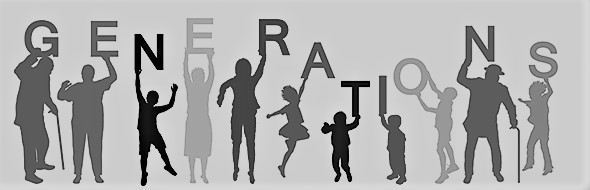
More years ago than I like to think, I was born right here in Canada. Both my parents were born here, as well, in the mid-teens of the twentieth century. Before them, in the waning years of the nineteenth century, their parents were also born here—making me a third-generation, native-born Canadian.
When I hearken back to the fourth generation of my predecessors, however, I encounter people I never knew—my great-grandparents, people who were not born in Canada. Their surnames, patronyms from eight separate families, give some clues as to their country of origin.
On my maternal side four generations ago, a female McDonald married a male McKinnon, and a female Duck married a male Roche. Some years later, a female McKinnon would marry a male Roche, thereby positioning themselves to eventually become my grandparents.
On my paternal side in that same generation, a female O’Dell married a male Smyth, and a female Thompson married a male Burt. Much later, a female Smyth would marry a male Burt, thus also setting themselves up to become my grandparents.
That last surname, of course, was passed down the patriarchal lineage to me, the first-born grandchild on both sides, when a female Roche, my mother, married a male Burt, my father.
All eight of my great-grandparents’ families, so far as I know, hailed originally from the United Kingdom or northern Europe. But there were more differences among them in the beginning than similarities. The eight who became my great-grandparents were born in Scotland, France, Ireland, England, or the still-young United States of America, to parents whose families were of anglo-, celtic, germanic, and franco- backgrounds. They were schoolteachers and tradesmen, milliners and small business owners, clerks and farmers; they were Presbyterian, Lutheran, Roman Catholic, and Anglican.
Around the middle of the nineteenth century, these eight people emigrated to the new land that would later become Canada, all of them in the company of their own parents—sixteen people of whom I have no knowledge. Although all arrived directly from their respective homelands, the two born in America were known thereafter as United Empire Loyalists, for having returned north to the British sphere of influence.
After settling in this new land, and marrying as I have described above, each of the four new couples, none of whom knew each other, settled in what was then Upper Canada—which became the province of Ontario after Confederation in 1867—living in what is now Perth County, the Niagara Region, and Toronto. Each couple began their own families, spawning eighteen children who survived to adulthood, among whom were my grandparents.
Despite the myriad differences among them—birthplace, ethnic heritage, occupation, religion—there was one striking similarity; every one of them was white. None of them were slaveowners, of course, that practice having been constrained by the Act to Limit Slavery in Upper Canada, and abolished outright in 1833. Nor were they members of the wealthy, landed gentry, the people who came to govern the land in a fashion modelled after the British parliament.
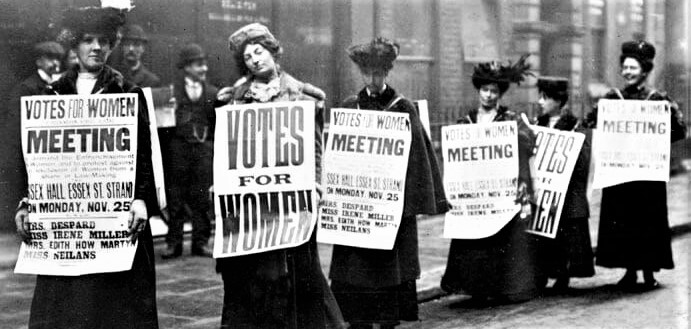
Rather, they were part of the faceless but industrious wave of immigrants who bent their efforts to making a modest place for themselves in their new home. Although my great-grandfathers had the right to vote from the time they arrived, it was not until 1917 that my great-grandmothers were legally able to vote provincially, and 1918 before they could do so federally.
In fact, though, some of them would have waited even longer because of their husbands’ unwillingness to allow them the opportunity (male primacy). I imagine one or two might have passed away without ever having exercised that right.
Although I recognize the kinship I have with my four great-grandfathers, I fear I would not like them (if I could travel back in time), because the values and attitudes they espoused—in keeping with prevailing mores of that period, to be sure—would be in stark contrast to my own, cultivated and nurtured by a more enlightened era.
Still and all, without those women and men, I would not be here to reflect on the lives they lived. So I try to honour them for their fortitude and perseverance, and celebrate them for the genetic legacy they passed down through three generations to my mother and father.
Across all those years, bearing all those names, eight people became four couples, who produced four people who became two couples, who produced my parents, who produced me.
And now I, having long ago become a couple with my wife, have produced two children who became couples, who have produced our five grandchildren—extending us now to six generations. None of my grandchildren has yet become part of a couple, but if family history is any indicator, they will, I’m sure.
The joining of eight families here in Canada, four generations ago, an intricate dance that began circa 1840, has lasted into 2020, 180 years in all.
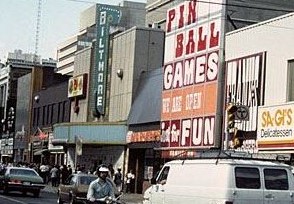
During my long-ago university days, a friend and classmate in our journalism programme enticed me on several occasions to skip classes and spend our days in the local movie theatres. Curtailed by our austere budgets, we patronized the seedier of those—the Biltmore, the Rio, the Roxy—often getting three features, two cartoons, a newsreel, and a couple of previews for the price of admission.
After being indoors from shortly after nine in the morning until well after four in the afternoon, lunching on salted cashews and soda, I frequently saw the journey home on public transit through squinting eyes, and with a flickering headache.
Such reckless behaviour did not seriously impede our academic progress, happily. Despite our truant ways, both of us managed to graduate on schedule, thanks to the great gift of being able to write well and on deadline. I soon enrolled in a teacher-training programme, which led me to the path I followed for the next thirty-years-plus.
My friend, on the other hand, sought and gained immediate employment with a small city newspaper where, among other assigned duties, she quickly established herself as the resident movie critic. I was never sure how stringent the requirements were for that role, though, because most of the films we enjoyed had featured such luminaries as Vincent Price, Peter Lorre, and Boris Karloff, starring in such films as The House of Usher, The Raven, and Pit and the Pendulum.
Not exactly boffo hits at the box office!
On the occasion of my friend’s retirement a few years ago, I sent her a sincere note of congratulations and remembrance, hearkening back to those golden school days of yore where she had received the best training for her work as a critic from the most unlikely of sources.
And just for fun, to show her the havoc that would have ensued had I followed that same career path, I sent along my imagined synopsis of several award-winning movies from the 1920s to the 2010s, picking one from each decade. My list is reproduced below, including the names of their respective directors—
1920s The Kid (Charlie Chaplin)
A woebegone tramp, homeless and alone, finally finds happiness living in an abandoned boxcar with a baby goat.
1930’s City Lights (Charlie Chaplin)
An impoverished, old lamplighter in 1890s New York almost changes history when he tries to discourage Thomas Edison from inventing the lightbulb.
1940s All the King’s Men (Robert Rossen)
The king of a faraway land finds that neither he, nor any of his men, can repair his breakfast egg that was accidentally broken when it fell off a high wall.
1950s Twelve O’Clock High (Henry King)
Jack Kerouac writes a literary masterpiece after discovering the joy of smoking dope continuously as soon as he wakens every morning.
1960s Some Like It Hot (Billy Wilder)
A young chef in the czarist court discovers that, although the czarina does not like pease porridge hot—preferring it nine days old and cold—some do.
1970s Carrie (Brian De Palma)
In a remake of Birth of a Nation (1915), the birth and early activism of Carrie, a radical member of the temperance movement, is chronicled.
1980s Full Metal Jacket (Stanley Kubrick)
In a film adaptation of the classic tale of Ivanhoe, a solitary knight in shining armor sets out on a quest to gain entry to King Arthur’s Round Table.
1990s Men in Black (Barry Sonnenfeld)
Two undertakers, known as the fishin’ morticians, enter a salmon-fishing contest, spawning a host of jokes when their prize catch is already embalmed.
2000s There Will Be Blood (Paul Thomas Anderson)
A food critic in Los Angeles learns what else he will find on his plate when he orders his prime-rib extra-rare.
2010s Spring Breakers (Harmony Korine)
Two grossly-overweight friends find work in a mattress and box-spring factory, testing new products before they go to market.
Some time after sending off my note, I received a lovely reply from my old friend, assuring me of her continuing regard, but with no commentary on my list. It may be that, despite her job, she had never reviewed the films I cited, and so accepted my synopses at face value.
Or, more probably, she assumed I have taken leave of my senses.
But that’s alright. I always wanted to be her friend, but I never wanted to be a movie critic!
The Giller Prize long list was announced last week, and wouldn’t you know it, my seventh novel, The Resurrectionists, is not yet off the press and ready for distribution! Talk about bad timing!
But the good news is that it’s due out later this fall.
A half-million dollars in stolen money is being laundered by two desperate lovers on the run from a criminal gang. To evade the pursuers hunting them, the woman resurrects a name from her past and disappears into a First Nations reserve near Port Huntington, a tourist town on Georgian Bay. Her lover, after a chance encounter with a dying stranger on a lonely, northern highway, takes on the man’s identity. Despite these efforts to escape their pursuers, the newly-resurrected lovers find the gang still hot on their trail, even as new problems arise with their money-laundering scheme. Unable to flee without being discovered, they turn to Maggie Keiller and Derek Sloan for help, and a series of grisly murders soon follows. Maggie and Derek, quickly drawn into the ensuing police investigation, help to unmask a large, international drug-smuggling ring. At the same time, Maggie is working to rescue a teenage girl who is being sexually abused in her home by one of the smuggling ringleaders. As the threads of these events weave together, Maggie and Derek find themselves in mortal danger from the criminals they are attempting to bring to justice. And as the story reaches its climax, two wicked surprises unfold, shocking everyone involved.
I’ll be sure to let everyone know when the book does appear, and will shortly publish a preview of chapters 1 and 2 right here on my blog.
Do you ever wonder at the chaos and disruption going on all around us during these tumultuous times, and wonder what to make of it all?
I certainly do, and the only way I seem able to make sense of it is to examine things through a very simple example. A long, long time ago, I attended elementary school in a big city where everybody looked like me. And as every Christmas season rolled around, the entire school was festooned in merry decoration—more of the Santa Claus variety than church décor, mind you.
Gaily-festooned trees inhabited every classroom, and carols of the season played before and after class on the public address system. Every pupil in the school understood everything about the rituals and the reasons for marking the occasion because, almost without exception, we were a middle-class, white, Christian community.
Years later, I found myself employed as a teacher, then principal and superintendent, in the same school system. But oh, how things had changed. The schools were populated still by Christians, but in ever-diminishing numbers, as the city grew to include people from all over the world. They were of all colours, from a multitude of nations, speaking different languages, practicing different religions.
By the late 1980’s, the school jurisdiction included not just Christians and Jews, but students who were Muslim, Hindu, Sikh, Buddhist, and more. We welcomed them, of course; they were all children, all happy to be in Canada, all eager to learn, all wanting to belong. We made a point to celebrate our differences, even as we rejoiced in our togetherness.
Our mission was to empower every student to learn, to achieve success, and to participate responsibly in a pluralistic, global society.
Christmas was still important, naturally, to our Christian families, but equally important to the newcomer families were the religious celebrations of their different faiths. And because there were many of those, the schools gradually moved from their previously-universal focus on only one to smaller-scale acknowledgements of them all.
In short, we changed. We encouraged coexistence and tolerance. And to me, immersed in the evolving culture, the change seemed both natural and justified. But to some, particularly among those heretofore part of the WASP establishment, the transformation was abhorrent.
Those people are taking our country away from us! If they come here, they should follow our ways! If they don’t like it, they should go back where they came from!
Racism and bigotry—which had always existed, if not always visibly—became ever more prevalent.
In the 1990’s, I moved to a smaller, rural jurisdiction well north of the city. To my astonishment, I found the schools under my aegis there to be almost identical to those I had attended in the 1950’s. As I visited the schools at Christmas, I felt as if I had stepped backwards in time. Almost everyone was white; almost everyone, including the Indigenous families, was Christian. As opposed to the seventy-six languages spoken by the families of students at the high school where my wife had worked in the city, the entire community spoke only three—English, French, and Ojibwe.
To my dismay, however, I found the same racism and bigotry among some (although by no means all) of the local populace.
Why do the Frenchies get their own schools? They should go to Quebec if they want to speak French!
How come the Indians get a free education? Us taxpayers are paying for it!
Today, more than twenty years later, as I look at events going on in the larger world around us, I hear and see many of the same sorts of things, most often from those who have always enjoyed the privilege and advantage that come from having been part of the establishment. Racism, misogyny, homophobia, transphobia, xenophobia—expressed in all manner of vile ways across social media, particularly. And too often voiced, or encouraged, by people who purport to be leaders.
The reason such things happen, I believe, is fear. It is our fear of change—the fear of being displaced, overtaken, cast aside. Collectively, we seem unable to recognize that there is enough here for all of us, that hoarding what we have from others diminishes, not only the hoard, but the hoarders, as well.
So, I try to remember how, back in those long-gone, halcyon school-days, we tried to accommodate each other—people of all races, all religions, all genders, all socio-economic circumstances. I try to remind those of my cohort from that era of the same thing. And I try to convince the younger generations, those who have grown up in a meaner, less-tolerant, get-it-while-you-can society, how it could be so much better if we put ourselves in the shoes of the other.
That really is the only way I can make sense of it all.