And Still, The Seekers

In the early 1960’s, back when we first learned rock ‘n’ roll was here to stay, my favourite songs were not from the likes of Elvis (the King), Jerry Lee (the Killer), or any of the other superstar singers of the time—Dion, Ricky, Roy, or even Chubby and Fats.

Nor was my preferred music drawn from the best-selling albums of the mega-bands—The Beatles, The Rolling Stones, The Beach Boys, CCR, or any of the others.

I did enjoy them all, mind you, and many more besides—The Mamas & the Papas, Dylan, The Moody Blues, Aretha, The Platters, Buddy Holly, The Supremes, and Ray Charles (the Genius).

10637127-rock-n-----roll--teddy-boys

If you liked early rock ‘n’ roll, and I did, these were all great artists among a plethora of others too numerous to mention.

I, however, favoured folk music.  Not that I was an habitué of coffee-houses, with their pungent substances and aromas, both drinkable and inhalable.  And I certainly was no one’s idea of a flower-child or long-haired hippie.  I had a buzz-cut, for goodness sake!

Truth be told, a square is what I was.  What today one might call a dork, a dweeb, a wally.

So inevitably, I became an unofficial folkie, listening to wonderful artists from as far back as the 1940’s—Seeger, The Weavers, Woody (and later Arlo), The Blue Grass Boys, Baez, The New Christy Minstrels, Buffy, Simon & Garfunkel, Odetta, The Kingston Trio, Lightfoot, Peter, Paul & Mary, and Joni, to name but a few.

So well-known are these performers, even today, that I’m able to list many with only their first or last names.  And there are innumerable others not even on this brief roll.

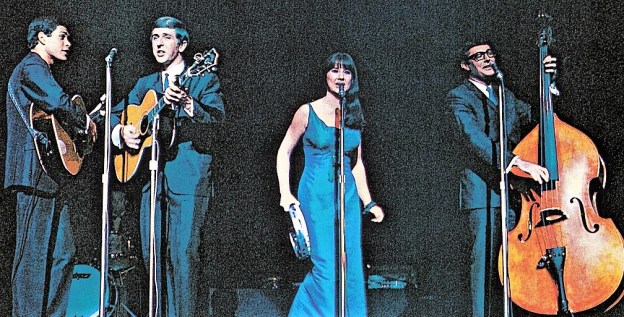
All of which is but a prelude to my introduction of my all-time favourite folk singers, the incomparable group from Australia—The Seekers.

seekers

Unlike many of their contemporaries, their names are not as well-known individually, but their music certainly was.  The only surviving band from the ‘60s, anywhere in the world, with the original founding members (albeit with an interruption along the way), they compiled an amazing list of firsts in their heyday—

  • first group ever to reach No. 1 on the UK charts with their first three singles,
  • first Australian group to reach No. 1 in the USA,
  • first Australian group to reach No. 1 in the UK,
  • first Australian group to reach No. 1 with a debut song,
  • first concert artists ever to draw more than 200,000 people to a concert,
  • three worldwide No. 1 hits (The Carnival Is Over; I’ll Never Find Another You; Georgy Girl), and
  • quadruple Platinum for their 1994 live-in-concert video, 25 Year Reunion Celebration (which knocked Michael Jackson’s Thriller 10th Anniversary video off the No. 1 spot).

It wasn’t their awards that attracted me to The Seekers, however.  It was the music!  Three instrumentalists—Athol Guy on bass, Keith Potger and Bruce Woodley on banjo, guitar, and keyboard—backed up the lead singer, Judith Durham, augmenting the crystal clearness of her voice with subtle harmonies.

Whether you’re a musician or music-lover, if you want to do your ears a good turn, you have to listen to someone with perfect pitch.  Perfect pitch means hitting the real notes—their core sound—and singers who have it can do that.  Judith Durham had it in spades, and it was her voice that initially attracted fans to the music the group produced.

The Seekers were the final act in the closing ceremonies of the 2000 Paralympic Games in Melbourne, and their performance of one of their signature songs sparked both joy and tears in the athletes assembled in front of them, as attested to in this link—

They had so many hit songs, most in the folk genre, some crossing into the spiritual category, that it’s impossible to list them all here.  Some of my particular favourites are—

  • Allentown Jail,
  • A World Of Our Own,
  • If You Go Away,
  • Morningtown Ride,
  • Silver Threads and Golden Needles,
  • Sinner Man,
  • The Leaving Of Liverpool, and
  • When The Stars Begin To Fall.

The last one in the list, for which I’ve provided a link, is my all-time fave, as fresh in my mind today as when I first heard it more than fifty years ago—

If you want to listen to any of the songs for which I haven’t provided a link, they can be found on YouTube, and they’re well worth the time.

In 2010/2011, the group toured Australia and New Zealand with Andre Rieu and his famed Johann Strauss Orchestra, packing every venue.  This final link, however, is to their 50th anniversary concert at Albert Hall, London in 2014, described at the time as ‘one big hug of a tour’—

I enjoy The Seekers as much today as I did when I sported that long-ago buzz-cut.  I hope you will, too.


Lying? No, Storytelling!

“What’s the most interesting thing that happened to you today?” he’d ask.  My grandpa, puffing on his pipe.

Pleased to have his attention, and anxious to keep it, I’d rack my brain for a response.  Growing up in the suburbs in the 1950’s was pretty mundane.  Nothing of great interest ever seemed to happen to me.

So, I’d make things up.  Not lying, exactly.  Storytelling.

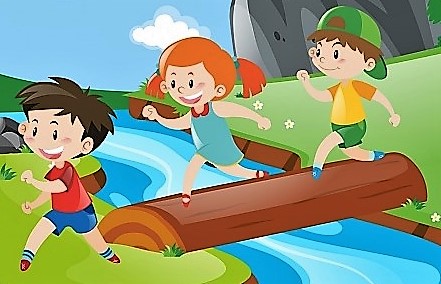
“I fell in the creek today,” I might tell him.  “Tried to walk across the log, but my foot slipped off .”

kids-crossing-a-river_1308-616

“How’d you get out?” he’d ask, wisps of smoke curling around his head.

“Wasn’t deep,” I’d say.  “But don’t tell my Mum.”

“Nope,” he’d say.  “Be best not to go near the creek anymore, though.”  And he’d give me a broad wink.

On another occasion, I might tell him that my bike got stolen, but I managed to get it back.  Heroically.

“Wasn’t it locked” he’d ask.

“Yeah, the lock was across the forks of the back wheel.  But the guys who took it just picked it up and carried it.  That’s how I caught up to ‘em.”

“What did you say to them?”

“Nothin’ Grandpa.  When they heard me comin’, they dropped the bike and ran away.  I guess I scared ‘em off.”

“Sounds like,” he’d say.  “Maybe you should fasten your wheel to the bike rack from now on.  Be hard to take that.”  His blue eyes would sparkle, and I’d love that I made that happen.

He never tired of asking the same question, and I never got tired of answering.  I might have told him how I won the game for our team when I made the game-ending catch of a long fly-ball in centrefield.

“Jus’ like Willie Mays!” I’d say, omitting the fact that I had actually stumbled and fallen, slid to an ignominious stop, only to have the ball land on my stomach, where I frantically clutched it.

ballplayer

“Mays is one of the greats,” he’d say.  “You caught it over your shoulder, like he did?  Wish I could have seen it.  Next time, though, try to keep the ball in front of you.  Those over-the-shoulder catches are pretty rare.”  And he’d flash me a knowing smile.

As a grandfather myself now, I know he knew I was padding the truth.  But I didn’t know back then.  I thought it was okay, because it brought us closer together.

He lived to a ripe old age, and in the last few years before he died, he was slowed considerably.  When I’d visit with him, it seemed our roles were reversed.  Now it was I asking the questions, and he searching for answers that would keep me there longer.  I always asked the old chestnut.

“So, what’s the most interesting thing that happened to you today, Grandpa?”

He no longer smoked his pipe, but he’d stroke his mouth as if still holding it, and I could almost hear the gears meshing inside his head.

“Nothing much today,” he’d say.  “But did I ever tell you about the time I saved your father from drowning?  Fell off the dock while we were fishing at the lodge up near Bala, no life-preserver.  I reached down, grabbed his collar, and hauled him straight out of the water.  Poor little guy cried like a baby.  That was pretty interesting, I’ll tell you.”

dock3

I’d heard the story many times, of course, and my father had debunked it every time.  “The water was shallow,” he told me.  “I jumped in, and waded ashore.  And I did have a life-preserver on.  Dad loves to tell the story, though.”

Of course, I never let on that I didn’t believe what my grandpa was telling me.  I remember hearing how he met the King, back in 1939, when he and the Queen, on their tour of Canada, visited the hospital where my grandpa was recuperating from surgery.

“I had a picture of the two of us,” he’d say.  “Don’t know what ever happened to it.  Your grandma must’ve thrown it out.  But that was really interesting!”

Grandma would only smile when I asked about that picture.  “Grandpa was in the hospital in 1937,” was all she’d say.

I heard about the lawn-bowling championship he won, the skip of a Dominion championship team in 1909.  According to him, the mantel clock that still sits in my home was the prize awarded for the victory.

clock2

“There’s no plaque on it, Grandpa,” I once told him.  “How come they didn’t put your name on it?”  The wistful look he gave me made me wish I hadn’t asked.

“Ah, they gave us all a letter,” he said.  “Signed by the prime minister, Mr. Borden.  That’s why your father’s middle name is Borden.  No idea where that letter is now.  But that’s pretty interesting, don’t you think?”

I nodded in agreement, and was circumspect enough not to mention that the prime minister in 1909 was Wilfrid Laurier.  My father was born in 1911, right after Robert Borden’s election.

By then, my grandpa’s eyes no longer sparkled as in days of yore.  But he’d still wink at me while telling his stories, and smile whimsically.  Kind of like my smile now, when I listen to my own grandchildren telling me about the momentous events in their lives.

And when they ask me about the interesting things in my day, I try not to lie to them.  Elaborating is not the same as lying.

“Nothing much today,” I tell them.  “But did I ever tell you about the time I saved my brother from the big kid across the road who was beating him up?  I ended up with a bloody nose and a black eye, but that kid never picked on my brother again.  That was pretty interesting.”

400-08651135

“Really, Gramps?” they marvel.  Or pretend to.

Of course, I don’t tell them the real reason my brother was safe afterwards; the kid’s family moved away.

To this day, I have a warm feeling inside when I remember my grandpa, and those conversations we used to have.  And I love the exchanges now with my grandchildren, swapping tales about our lives.

Not lying, exactly.  Storytelling.

Which is what I do.

Gone Fishin’!

When we lived on the lake, I was often asked by old friends about my retirement activities, and what I did to amuse myself all the livelong day.  Most of them assumed I did a lot of fishing.  And they were right, to a point.

In my opinion, there are few pleasures in life to compare to the joys of fishing.  But only, of course, if it’s done properly—that is, my way.

stock_fishing-1024x6561

It’s probably true that there are as many ways to fish as there are people who go fishing.  So, the proper procedures will be defined differently by each of us.  My routine would undoubtedly be totally inappropriate for anyone else.

I developed it as a younger man camping in the wilds of northern Ontario, and it was perfection, itself—or almost, since there was one flaw, which I shall come to shortly.

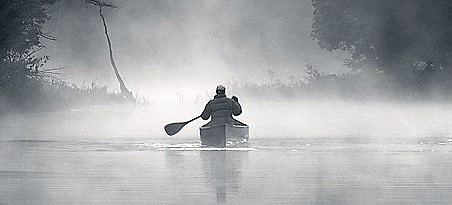
As I remember it, the proper fishing excursion began quite early in the morning, when all save the birds were still asleep.  I would rise quietly, so gently as to pass unnoticed by comrades on my way from the tent to the water’s edge.  The canoe, already laden with the necessary gear, would be launched smoothly, silently, into the mist-enshrouded lake.

My body would stretch exultantly as the paddle cut deeply through the water’s ebony surface.  For a time, nothing would be heard but the soothing hiss of the canoe across the lake.  My happiness was absolute.

canoe2

I’d watch as the mist lifted, a curtain rising before an audience of one.  Wet, wraith-like wisps would seek to flee the warming sun—frantic, elusive phantoms ruthlessly pursued until thrust from its gaze.

I’d be well offshore when the sun brought the forest alight in greens, bouncing and careening its way through the translucent leaves.  Dark shade-spots would climb the stretching tree-trunks, dance across leaves turned to face the morning light, and then suddenly vanish.

The lake—its diamond-dancing surface reflecting morning back to bluing sky—would part before my craft, bowing away in widening ripples to lap gently against the shore of a small inlet I might find.  I was in awe of the panorama of sunlit trees reflected in the mirrored mere—quicksilver, green, and cold.

The lilting lament of a loon might be all that would break the silence.  Great granite slabs, topped by bush and trees, slanted from on high down into the lake, which tossed back their image from its glassy depths.

lake

Peace would reign, rampant upon nature’s canvas.

Alas, it would not last.  For to begin fishing was to interrupt that sylvan sequence of morning life, to disturb its natural ebb and flow.  Yet, not to cast a line was to deny the purpose of the visit.

And therein lay the flaw in my perfect way to fish.  The act of fishing became almost a sacrilege in nature’s cathedral of calm, and thus devoid of any joy.  All the pleasure had come from just being there.

So, I had to adapt in order to come to grips with the incongruity of being a fisherman who didn’t like to fish.  I made sure my tackle-box always contained a book or two, a novel, perhaps, or a chosen book of verse.  It held my harmonica, a ‘one-man band’ with which I could while away countless hours.  And there was always a camera, loaded and ready.

tackle box

In short, I still went fishing, but I did not fish.  When I’d reach the perfect spot, I’d cease my paddling, sink back in the bottom of the canoe, and just drift ‘til it was time to go back.

Water-bugs would skitter their erratic dash across the water, an occasional fish would jump with a splash.  When a kingfisher darted down to stand on the prow of the canoe, I knew I’d become a piece of the very scene I was observing.

I was one with my surroundings—at once apart and a part.

fish cove

There were inevitable questions, of course, when I’d return from an excursion.  Where did I fish?  What bait was I using?  Did I catch anything?

I’d reply that nothing was biting, or that there were only a few nibbles.

In that respect, I guess, I was like all true fishermen.  I would never tell anyone where I’d found my favourite fishing-hole.

That would have spoiled it.

Modern Sins

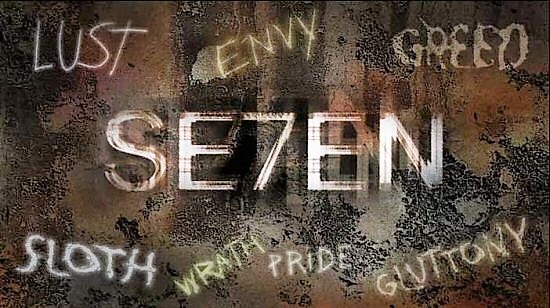
Most readers of this blog will know—or know how to find out—the names of the seven deadly sins, according to Judaeo-Christian orthodoxy.  They are, in alphabetical order, envy, gluttony, greed, lust, pride, sloth, and wrath.

Seven-deadly-sins

Less known, perhaps, are seven contrasting virtues:  kindness, temperance, charity, chastity, humility, diligence, and patience.  A focus on these in our daily lives is thought to provide a shield from the deadly sins.

By way of comparison, the four vices identified in Islamic tradition are concupiscence (gluttony and lust), cowardice, ignorance, and tyranny.  The contrasting virtues are chastity, courage, wisdom, and justice.

In Sikh philosophy, five vices, whose purpose is to steal one’s common sense, are identified:  attachment, conceit, greed, lust, and rage.  By contrast, the virtues identified are compassion, humility, love, and truth.

There is a remarkable similarity among these—attesting, perhaps, to a universal quest for righteousness and enlightenment across all humankind.

It is all too easy, of course, to succumb to the temptations of the vices, regardless of our religious and ethical upbringing.  Much of the history of the world may be laid at the feet of those who chose to embark upon a darker path than our enlightened selves would have followed.

7357308-terrorism-word-collage-on-white-background-illustration

Despite those missteps, however, we have arrived at this place, in this time, with the same choice facing us—a commitment to the virtues or an embracing of the vices.  I choose to believe—admittedly, less with evidence and more with hope—that our better natures will take us down the right path.

On a more pedestrian level, there are other, perhaps-lesser vices that bedevil us today in our quest for nirvana.  As with the major vices cited earlier, they are linked to corresponding virtues that are too often missing in our commonplace activities.

Intellectual laziness is one such vice.  So many people today are content to take whatever they might hear or read at face-value.  They make no attempt to question its source, its veracity, or even its consequences.  Critical thinking—the application of logic, surely an essential virtue—is non-existent for them.  Advertising agencies, corporate behemoths, and politicians love such folks.

Farther along the same spectrum are the people who actively deny the truths of science and history.  Absolute certainty—the refusal to accommodate opposing thoughts and opinions—leads them to see the world through only one lens.  And often a faulty one, more prism than glass.  They believe everything they think.  Left to themselves, they may not do much damage.  But when they ascend to positions of influence, the danger is palpable.  The virtue of open-mindedness—a tolerance and consideration of others’ viewpoints—is sorely lacking.

Another everyday vice is the desire for instant gratification.  Too many of us prefer not to think about the future, and how it will be affected by the choices we make today.  “I’m alright, Jack!” is a phrase that springs to mind.  This tendency may be forgiven in third-world countries, where vast populations are concerned only with their next meal, their next drink of water.  But for us in the developed world, the profligate, endless consumption of the resources of our finite planet with little thought to their replenishment verges on the criminal.  It’s been said that we have not inherited the planet from our forebears; rather, we have borrowed it from those yet to come.  Yet we do not behave as if we believe that.  The virtue of responsible stewardship is sadly lacking.

earth

Egocentrism—a belief that I alone occupy the centre of the universe—is yet another modern vice.  It manifests as a position of entitlement, the notion that you don’t matter as much as I do.  Regardless of my socio-economic standing, I deserve the same things you do, whether earned or not.  It’s a me-first attitude, aimed at placing me on a par with the most-privileged among us, demoting you and everyone else to subservient positions.  In short, it tears our civilized, communal society asunder.  It exists, I believe, in the absence of altruism, the virtue of selflessness, the presence of a social conscience.

Of all these vices, this last one—the absence of a social conscience—may be the direst for the future of humankind.  Either we are each others’ keeper, or we are not.

together

As a wise man once said, faced with a choice of cohesion or division, “If we do not hang together, we shall surely hang separately.”

Philosophy 101

Philosophy 101 posed an interesting question:  If a tree falls in the forest, and no one is there to witness it, does it make a noise?

“Of course it does,” one person might answer.  “Noise is governed by the laws of physics, regardless of human presence.”

“Not so fast,” another person might argue.  “Sound waves from any source emit no noise on their own.  It is only when they are received that those waves generate noise.”

Which, if either, is the correct answer?  I’ve heard persuasive arguments mounted on both sides of the question, but I’ve always been struck by the impossibility of being able to prove either position.  One cannot be simultaneously there and not-there when the tree falls in order to determine if it makes a noise.

And it probably doesn’t matter, anyway.  The tree fell.  Who cares?

tree

Here’s another question:  If a person is unaware that (s)he is doing wrong, does the action still constitute wrongful behaviour?

“Of course it does,” one person might say.  “The concept of right and wrong is an absolute, and ignorance of the wrongfulness is no excuse.”

“Not so fast,” another person might argue.  “The concept and definition of right vs. wrong are not universally-accepted.  They are ethnocentric, based upon cultural and religious teachings, only some of which might overlap.”

Here once again, as with the first question, one might shrug off the relevance or importance of the answer.  We already know bad things often happen to good people, so what difference does it make if they are the result of unknowing wrongdoing or merely random happenstance?  The result is the same.  Who cares?

Well, the answer to this second question, I believe, does matter, indeed.

I’ve been thinking a good deal about this since beginning work on a novel, my fifth, which has as its backdrop the national inquiry into missing and murdered Indigenous women and girls currently underway in Canada.  Researching the subject leads, inescapably, to a list of similar situations—the forced sterilization of Indigenous women, and the forced relocation of Indigenous children and their enrollment in residential schools, to cite but two examples—both undertaken as official government policy well into the twentieth century.

res school

Most Canadians now, I think, see these actions for what they are: atrocities.  To those who don’t, I would simply ask, “What if they were to come for you, or your children, tomorrow?  Because of your skin-colour, perhaps.  Or your religious beliefs, your sexual orientation, or your political stance.”

Governments today, federally and provincially, are apologizing and attempting to make amends to the descendants of those who were victimized.  Some Canadians, it is true, believe such efforts are unwise and unnecessary, given that it was not we who committed the deeds, but our predecessors.

It begs another question:  Why should we be held accountable for the actions of people who died long before we were even born?

In answering this question, it’s instructive, I think, to try to determine if those actions were wilful or merely misguided.

Did those in authority in that earlier time think they would somehow improve the Anglo-Saxon bloodlines of our populace by sterilizing Indigenous women to prevent the birth of what some of them termed defectives?

Did our predecessors know—even as they did it—that they were wrong to uproot children from their families, to send them far away, to inflict the terrors of residential schools upon them?

Or, were they just trying to do the right thing, what the orthodoxy of those imperialistic times demanded, the assimilation of conquered, native peoples into the colonial mainstream?

“Of course they were right,” one person might claim.  “They weren’t monsters!  Many of them were clergy, nuns, teachers, all doing what they believed to be right.”

“Not so fast,” another person might say—especially a person of Indigenous descent.  “They were rapacious invaders who took everything from our forebears—their land, their culture, their language, and their children.  Would they have considered it right and just, had the tables been turned?”

I suspect the truth lies, to some extent, in both answers.  Surely there were good and faithful people among the newcomers who believed they were doing God’s will, just as there were avaricious adventure-capitalists, determined to seize the riches of the new land for king and country (and their shareholders).

But the fact is, most Canadians today have come to a realization that those actions were wrong, regardless of motive.  Even if the best among our predecessors were unaware they were acting wrongfully, their actions still constitute wrongful behaviour by today’s standards.  And, they were knowingly carried out with government approval under the banner of Canada—under an authority that endures from generation to generation.

kid

So, here is a fourth question:  If hundreds of thousands of Indigenous people who lived in territory under the jurisdiction of Canada were severely mistreated by their government, and if no one alive today was there to witness it, does it matter, and should the government of today be held to account for those misdeeds?

The answer to this last question will not be found in Philosophy 101.  But I choose to believe you and I, if we seek the truth, will find it.

Within ourselves.

Unreal, Baby!

Virtual reality.  The term itself is an oxymoron.  How can something be virtual—that is, not physically existing—and at the same time real—that is, actually existing?

In the techno-world we inhabit, however, such a dichotomy is not only possible, it is pervasive.  Today, we can slip behind a high-tech, VR mask and subject ourselves to almost any experience we desire.

Examples might include free-falling from a bungee-platform without the cord, performing magic alongside Harry Potter, or doing open-heart surgery on a patient who is thousands of miles away.

None of these things is really happening, but you feel as if they are.

vr

Artificial intelligence—another contradiction of terms.  How can something that is artificial, not genuine, be mistaken for intelligence, an innate, genuine ability to discover and utilize knowledge and skills?

Yet today, we know of many tasks being performed by AI machines that were formerly the sole purview of human beings.

Smartphone banking, Siri or Alexa speaking to us from our computers, and the genius of Pandora in predicting our musical tastes are but three examples.

We know these robots and techno-bots are not really human, but they do many of the things only we could do, once upon a time.

check_600

Augmented reality.  This is a somewhat more easily-understood concept, where the elements of a real-world environment are supplemented by computer-generated sensory input—sound, video, graphics, or GPS data—almost as an overlay to the reality being observed.

Anyone who has played Pokemon Go, or who has modified a facial selfie with the addition of a dog’s ears and nose, has experienced AR.

pokemon

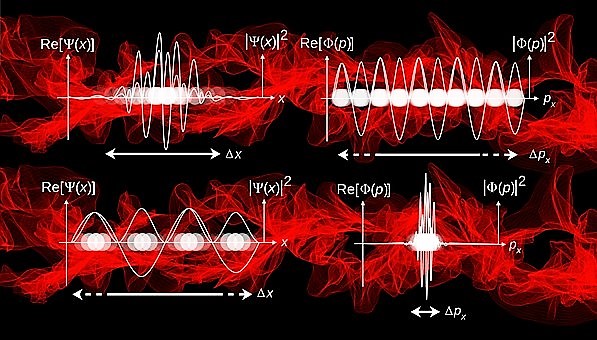
Quantum computing—based on quantum theory, the nature and behaviour of matter at an atomic and sub-atomic level—is still in an embryonic stage, but it’s what enables these modern-day paradoxes.  Quantum computers, once fully developed, will function in multiple states, and perform tasks using all possible permutations, simultaneously.  Like the human brain can do.

The difference between that and the technology we know today dwarfs the span between the abacus of ancient times and today’s supercomputers by many-fold.

A revolution is upon us.

fractal-1240898__340

So, what do we do, we mere mortals, as the transformation hurtles toward us?  Do we resist, as Luddites of old?  And if we tried, would it make any difference?  Would we be drowned by the waves of change?

Or, do we embrace the onslaught, strive to understand it, seek to control the extensive influence it will have on us?  Do we even know how we would do that?

Perhaps a third alternative—chill out and accept whatever change is approaching.  Will it be a saviour to humankind, taking us in spite of our shortcomings to a more perfect state of existence, a Valhalla?

Or might it be more akin to what W. B. Yeats, the great poet, called, a…rough beast, its hour come round at last, [slouching] towards Bethlehem to be born?

Much depends, I think, on our continuing, collective will to exert control over our environment, a hallmark of human beings since first we stood upright on two legs.  We have unfailingly stridden toward our future, determined to overcome (or, failing that, to adapt to) the challenges we have faced.  We have never shirked from that reality.

But in a VR world—where reality is virtual and nothing is authentic—how do we continue to do that?  Blind to the physical world around us, and to its authenticity, enslaved behind our masks to the make-believe worlds we will have chosen, we will be tossed like so much flotsam and jetsam on the seas of change.

quantum-mechanics-1525470__340

Will we collectively continue to assert our dominance over the world in which we live, or will we succumb to the comforts of AI entities we have created, with their false promises and reassurances?

Of all the pestilences that might afflict our world over the next decade—nuclear war, pandemic disease, mass starvation, lack of potable water, catastrophic climate change—the most likely, in my view, is the ascension of artificial intelligence in all its forms, and the threat they will pose to humankind.

Dictators of the past, to consolidate and expand their power over their citizens, adhered to an ancient Roman maxim, postulated by Juventus:  panem et circenses[Give them] bread and circuses.  Distract the rabble, entertain them, and they will leave you alone to work your will.

Is that we have today—VR, AI, AR, and their ilk—a techno-version of the circus?  Will quantum computing spell the end of our human autonomy as it quickly subverts our will to compete?

A decade ago, the question would have been unthinkable.  Now, not so much.

Unreal, baby!

nature-laptop-outside-macbook

The Solitary Sign

Last summer, in the company of friends, my wife and I went hiking along an old railway line in the Ontario north country.  The right-of-way—a narrow slash through the bush, now largely overgrown—cut and curved its endless path ahead of us.  Still visible in the grass were chunks of pitch-blacked ties, no longer lying in perfect file, but strewn hither and yon, as if by some careless hand.  No trace of rails remained, for it’s a hundred years and more since last a timber train huffed along that route.

logging train2

Near the lake, a trail intersected the line, a logging road unused for years before we came, a route from nowhere to no place.  Young trees, waist-high, stood randomly where once the creaking wagons rolled, weighed down by wood for the insatiable logging trains.

One sign remained, a solitary sentry through all the years—a St. Andrews cross, no longer white if ever it was, clinging to a pitted post to warn of trains that come again no more.  Its comrades on other lines proclaim, in stark, black letters:  STOP! LOOK! LISTEN!  But this sign stood mute, alone, forsaken.  And yet, steadfastly on guard.

I reached out my hand to it as we passed by, feeling the rough-hewn wood of its ancient post, and I was touched by its devotion to duty.  An apt sentiment from a source I couldn’t quite pinpoint  came to mind:  They also serve who only stand and wait.

Further on, close by the lake, the abandoned line sat high on gravel banks.  And there we stopped, to rest, to read, to paint, to write.  We scrabbled down through scrub and dust to water’s edge, beneath an end-of-summer sun that skipped and danced its way across the calm, cooling water.

We lingered awhile in silence, content simply to be looking at what was there to see.  The trees that rimmed the lake reached tall to the sky—but also, reflected as in glass, plunged down to the depths—each greener than the others.  Waterbugs, countless little boatmen, skittered atop the surface, for all the world like shooting stars across the roof of night.  Dragonflies went blitzing by, blue-green-bottle bodies darting and shimmering like liquid fire.  And there, against the cobalt sky, a great blue heron winged its way from view.

Killarney-Provincial-Park-Ontario

No one spoke.  We sat and listened, for there was much to hear.  The water lapped,  embracing the shore, then rolled back on itself.  A loon called, hauntingly, from far down the lake, and a bullfrog added in his thrumming call.   A breeze sighed softly through a stand of silver birch and maple.  Behind us, in the bush beyond the rail line, a branch or tree came crashing down.

Later on, we swam, the water closing round us like a satin veil.  Frothy trails of foam flowed behind us, quicksilver tails, as we thrashed along, spurred by fantasies of monstrous fishes down below.  And each of us, in our own way, celebrated our being there in that place and time.

On our way back out along the right-of-way, we paused once more by the old logging road.  No wagon rolled, no bullwhip cracked, no whistle sounded its mournful call.  The warning sign seemed out of place at first, a superfluous relic from a once and distant age.

And yet…and yet, it served us still, for didn’t we pay heed?  Nary a train would ever pass this way again, the last one long-since consigned to the halls of history.  But that old sign had helped us, nevertheless, to find what we might easily have missed.  The wonders of a world were there, but wonders that too often go unseen, unheard in our pell-mell rush to…to where exactly?

It’s only when we stop, to look, to listen, that we can truly see, that we can really hear.

That solitary sign, stalwart against the march of time, still showed the way.

trail2


Happy Birthday, Eh?

Six syllables, sliding sibilantly over the tongue—ses-qui-cen-ten-ni-al.  One-hundred-and-fifty years as a nation, a vision struggling hesitantly to life on 1 July 1867.  Christened the Dominion of Canada, we were four provinces united against the manifest-destiny expansionism of the mighty republic to the south, but nestled still in the colonial arms of the imperial British embrace.

330px-Fathers_of_Confederation_LAC_c001855

The first priority of this new nation?  To fulfil the calling of its soon-to-be-adopted motto: Ad Mari usque ad Mare—from sea to sea, the Atlantic on the east, the Pacific to the west.  And eventually, a third sea, the Arctic to the north.

And so it happened, the inevitable northward and westward reach, propelled and supported by the building of a transcontinental railway.  After the original four provinces—New Brunswick, Nova Scotia, Ontario, and Quebec—there followed: Manitoba, 1870; British Columbia, 1871; Prince Edward Island, 1873; Saskatchewan and Alberta, 1905; and Newfoundland, 1949.

Along the way, three massive territories joined the mix: Northwest Territories, 1870; Yukon, 1898; and Nunavut, 1999.

Now, here we sit in 2017, Canada, the true north, strong and free.

And what exactly is it we celebrate on this sesquicentennial?  What have we accomplished as a nation?  What are the values we stand for?  How do our actions and behaviours, both collectively and individually, demonstrate those values?

What does our country do for us?   Even more importantly, what do we do for our country?

It has been noted by critics, perhaps jealous of our good fortune to be situated on the northern half of the North American continent, that too many of us are apathetic about the affairs of our country—to which, in response, some of us simply shrug our shoulders.  Others, though, rally to the causes of the day, to try to influence the course of events, the outcomes, the future.

There is a long list of accomplishments of which we might be justifiably proud.  In the realm of medicine, the discovery of penicillin, insulin, and stem cells; in the sciences, the first light bulb, the telephone, Canadarm, and IMAX; on the world stage, international trade agreements, endeavours to control the deleterious effects of industrialization on climate, efforts to support peacekeeping initiatives around the world, a robust military response in defence of freedom during several major wars, and our welcoming of refugees displaced by global conflicts, regardless of their ethnicity, religion, or skin colour; and in a more frivolous vein, the invention of peanut butter, the WonderBra, basketball, and Superman.

Of course, there are chapters in our history that might, with today’s sensibilities, bring a sense of shame: the exploitation and displacement of Indigenous peoples, and the horrors of residential schools; the trivialization and suppression of women’s rights; the mistreatment of Chinese and black immigrants; the expulsion and internment of Japanese-Canadians; and the continued exportation of asbestos to developing nations, even after it was banned in Canada.

None of these might happen today because of a singular document: the Canadian Charter of Rights and Freedoms, adopted in 1982.

charter

Governments of the day, to be fair, have apologised for the worst of these past crimes, and have established commissions and inquiries to seek a better way going forward.  But it is questionable, still, how much influence their reports and recommendations have had, or will have, on the future; witness the Truth and Reconciliation Commission, or the Missing and Murdered Indigenous Women and Girls Commission, and assess for yourself their lasting effects on national affairs.

As in everything, actions speak more loudly than words.

Still, when I ask myself if there is any country in the world I would prefer to live in, rather than in Canada, my answer is a resounding No!

canada

Despite the tumult and the shouting perpetually foist on us by the lunatic-left and rabid-right of the political spectrum, we are a people that wants leadership to govern from the centre.  We favour moderation, not extremes; tolerance, not xenophobia; dialogue, not diatribe; ideas, not ideology.

Do these tendencies render us apathetic?  I hope not.  Rather, I choose to think of us as slow to anger, quick to forgive, strong in the face of adversity, proud of what we have accomplished, and determined, not only to rectify the errors of the past (even if all too slowly at times), but to avoid similar mistakes in the future.

Canada has had one-hundred-and-fifty years of practice with the concept of nationhood now, and still she carries on—both because of and in spite of, the behaviour and attitudes of her citizenry.  Count me as one who is proud to be called Canadian.

Happy Birthday, eh?


The Reach of a Father’s Love

Friends of ours lost their only child several years ago, the victim of a relentless disease.  He left behind a grieving wife, two young children, and a sparkling future.

In the years since, our friends have doted on their grandchildren, taking great delight in watching them grow from infants to toddlers, and onward to adolescence.  They’ve invested time with them, knowing they can never make up for the loss of a father, but determined to keep his memory alive.

A while after their son’s death, I wrote a piece to commemorate his life and the legacy he left behind.  I post it here now, adapted somewhat, to mark the advent of another Fathers’ Day

The little boy is eight-years-old, and loves to visit his grandparents at the family cottage.  For him, every day is an adventure, a surprise, a delight, as he wanders the woods, swims in the lake, and fishes the waters in the old, wooden skiff.

For the older folks, these activities hearken to an earlier time with another fair-haired lad, and they treasure the memories, even as they create new ones.

A while back, the little boy was in the musty basement of the cottage with his grandpa, when he made a great discovery.  “Grampy, what’s this?” he cried, pointing to a bright-yellow model boat.

Sitting astride its pedestal on top of an old workbench, the craft was almost three feet long—a racing boat, bred for speed, its tall sails still unfurled.  Three small passengers huddled in the cockpit, as if awaiting the starting gun for an impending race.

sailboat5

“Oh, that?” his grandpa replied.  “That’s a boat your daddy built a long time ago.  He used to race her on the lake with his remote control.”  He lifted a dusty metal box down from an overhead shelf.  Two toggle switches protruded from the top, and a long antenna jiggled slightly as he set it down.  “This is how you make the boat go where you want it to.”

“Can I make it go, Grampy?”

“Mmm, I don’t think so, l’il guy.  I don’t think she works anymore.”  Together they lifted the cowling off the boat, behind the drivers, and peered at the mysteries of the small motor inside.

“It smells funny,” the little boy said.

“That’s oil you smell,” his grandpa replied.  “Your daddy always made sure he kept her cleaned and oiled.  He really liked this boat.”

“What’s her name?”

“Your daddy called her The Yellow Flash.  Here’s her name on the back, just the way he painted it.”

“Can I make her go, Grampy?” the little boy asked again.

The old man shook his head.  “The batteries are probably dead,” he said, “and look at these wires.  They’re corroded at the junction plates.  The sails are pretty ratty, too.”

“Well, can we fix her?” the little boy said.

His grandpa stared at him for a few moments, a faraway look in his eye.  “Y’know,” he said finally, “maybe we can.  Shall we give it a try?”

sailboat

Over the next couple of weeks, the two of them dismantled the boat in order to clean every part, separating the batteries and wires that would need replacing.  They opened the remote box and cleaned it out as best they could, removed the sails for a gentle cleaning.  On his next trip to the city, the old man took the hull and box to a hobby-shop, where the owner walked him through the steps needed to restore the boat to operation.

On the little boy’s next visit to the cottage, they began the rebuilding process.  As they soldered new wires in place, the little boy was fascinated.  His grandpa let him set the new batteries in their proper slots, showing him how to ensure the contacts were touching.  He watched as the little boy lovingly polished the hull, restoring it to its original gleaming glory.

Together, they replaced the sails, and tested the remote box, working the toggles to control the boat’s tiny propeller and rudder while it still sat on its dry-dock pedestal.

“She works, Grampy!  She works!”

“I think she does, l’il guy.  Shall we put her in the water?”

And so they did.  Carrying her gingerly down the slope to the dock, they lowered her carefully into the lake.  From a silent vantage point on the rocks, I watched them—a grandfather and his son’s son, with his son’s boat, launching their labour of love.

“Which one is the driver?” the little boy asked, pointing to the three small figures in the cockpit.

“Well, this one is you,” his grandpa said, indicating the figure in the middle.  “You’re the skipper.”

“Okay,” said the little boy.  “Then this one on the right will be you, and this can be my daddy over here.”

The old man had to look away for a moment to collect himself.

“What if the waves tip her over?” the little boy asked, suddenly apprehensive.

“Well, it’s pretty calm right now, l’il guy.  I think she’ll be okay.”

“But what if she goes way out there and we can’t bring her back?”

“She’ll come back,” his grandpa said.  “She’ll come back.”

sailboat3

As they perched on the dock, legs dangling over the water, the old man gave the boat a push away from shore.  The little boy, the remote box between his knees, began to steer her—hesitantly at first, with fitful starts and stops, over-correcting erratically.  But in moments he was sure, and the boat skimmed atop the surface, speeding and curving gracefully, immediately responsive to his commands.

I watched the boat for awhile, then turned my attention to the old man and the boy.  Their faces were split with grins, happily alight, as they raced The Yellow Flash to and fro along the shoreline.

“Take a turn, Grampy,” the little boy yelled, handing the remote box to his grandpa.  And he squealed with delight when the old man almost capsized her, righting her just in time.

“Grampy?” the little boy said after a while.

“Mmm?” his grandpa replied, seeming lost in reverie.

“I love my daddy’s boat!”

“I love her, too,” the old man said, leaning in close to his grandson.  “And I love you, l’il guy, very much.”

I left them on the dock, locked in silent communion.  And it may only have been my imagination, but when I stole a glance back, I could swear I saw a third person there—ephemeral but real, lovingly watching them both.

At once apart from, yet a part of, the old man and the boy.

And I marveled at the reach of a father’s love.

father-son-and-grandfather-fishing

A Pompous Ass? Me?

Across the span of almost fifty years, I still recall the awful moment when I learned I was a pompous ass.  I wasn’t told directly, nor in those words, but rather through an overheard remark from one early-twenties lady to another—both of whom I had earnestly been trying to impress.

The actual statement, I believe, was, “You know he’s full of shit, right?”

Had I not stopped unexpectedly just after leaving their company, bending out of view to tie a shoelace, I might never have known.

surely not

There I was, a handsome young man (if I may say), gainfully-employed, socially-acceptable—though, perhaps, a tad taken with my own opinion—hearing for the first time that my efforts to ingratiate myself in their favour were unappreciated.

Even worse, mocked.

Surely not! I raged.

It took me some time to digest that unwelcome revelation; in fact, my first instinct was to reject it.  Further attempts to win over the winsome duo proved fruitless, however, and that fact finally forced me to re-examine my approach.

Whatever I eventually changed must have been enough, thankfully, for I have been happily married for fifty years to a lovely lady who apparently did not share the opinion of the others.

I mention this episode now, not because it still bothers me—for I have long-since accepted that, sometimes, I am indeed full of shit—but because I have been watching a relatively-new actor on the world’s political stage strut his stuff.  And I wonder what those two young ladies would have thought of him.

There are words that come to mind:  charlatan, popinjay, imposter, fraud, narcissist.  None of which would matter in the slightest if they were applied to me.  Alas, I am writing of the president of the United States of America, and whoever occupies that office does matter.

He, in my opinion, is a pompous ass.  And it pains me to think I might ever have been regarded in that same light.

He poses theatrically when the mood strikes, tiny eyes narrowed to what he must assume is a steely gaze, lips pursed, chin thrust forward aggressively.  And he holds the pose for as long as his attention span will allow—seconds only, but enough to engrave it on the public consciousness when repeated often enough.

He reminds me of nothing so much as a fascist leader of the 1930’s who affected such Caesar-like poses.

mussolinTrump

He boasts openly of a callous, abusive approach to women who are not significant to him, except insofar as they might mollify his carnal desires.  He grabs them at will, and….wait for it….according to him, they like it!

What are we to make of this mountebank?

More importantly, what do other world leaders make of him?  At a recent gathering of G7 leaders, as he was pontificating over a statement about his country’s changing stance on the Paris climate change accord, those leaders were seen rolling their eyes and smirking at his buffoonery.  Openly.

Did he even notice?

At a recent Arab-Islamic-American summit in Saudi Arabia, he was feted in a manner which he must surely have deemed his due.  Among the kings, emirs, and sultans of fifty nations, he primped and preened like a man to the manor born.

But how do those eminences really regard him?  As a competent and effective leader, their equal in diplomatic affairs?  As a trusted ally?  Or as an easily-duped patsy, susceptible to flattery and fawning, and groomed now to help them accomplish their own geopolitical and economic goals?

We shall see in due course.  But his colleagues on the world stage remind me very much of the lovely young ladies who gutted me so expertly those many years ago.

A pompous ass?  The president of the United States of America?

Surely not!