Resurrection Relevance

Another Christian observance of Easter is upon us, with its celebration of the resurrection of Christ, the man whom many consider to be the Son of God.

cross

During his brief time on earth, Jesus preached peace, tolerance, faith, forgiveness—and, perhaps most importantly, love for all humankind, even one’s enemies.  In return, he promised eternal life for all who believed and acted in accordance with these precepts.

As a child, I learned quickly that one of my mother’s interpretations of his teachings was that I must not fight with other children.  She was very firm about this.  During my early school years, it seemed like good advice; I was a friendly little guy, and others seemed to like me just fine.

schoolyard

As I got older, however, I learned that not every kid subscribed to her viewpoint.  Some of the classmates I encountered in the older grades were quite aggressive, to the point of being bullies, and for a while I was at a loss as to how to cope.  That was one of the reasons, maybe, that I became a fast runner.

Alas, it was not always possible to escape the marauders, so fighting became the only alternative to being pummelled and punished repeatedly.  It was safer to stand up to the bullies, even if I lost the fight, than to do nothing.

My father quietly helped me with the dilemma of disobeying my mother by suggesting that, although her sentiments were correct, fighting back when attacked was okay.  Starting a fight was really the thing to avoid.

I still remember an occasion in my mid-teens, when my mother agreed to accompany my father to watch me play a hockey game, the first time she had done so.  About halfway through, I became involved in a fight on the ice, not one I started, and was ejected, along with my opponent.  My mother was, by all accounts, aghast.

hockey fight

Although I played recreational hockey for another forty years, she never attended another of my games.

That incident shapes my outlook today when I consider the state of humankind on the planet we all inhabit.  Christ was not the only person to preach peace and love; many devout prophets professing other faiths have advanced the same messages.

But just as not every Christian follows Christ’s teachings obediently, so, too, do some adherents of other religions also stray from their prophets’ words.

The situation is complicated by the fact that there are also false prophets from all religions, who have preached a wilfully-distorted or violent version of the message, demanding their adherents forcefully convert everyone to what they call the true faith—and failing that, to kill them.  They have existed under many guises—the Christian Crusades, Islamic jihad, radical Zionism, the Hindu saffron terror, and so many more.

They survive even today, in a god-eat-god world.
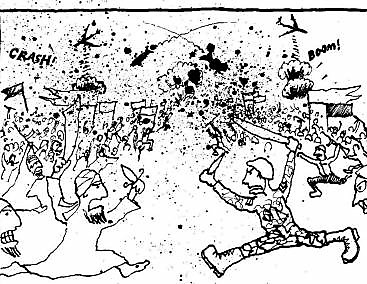
'Its a god eat god world.'

If we assume that the vast majority of people alive right now want to live in peace and harmony—perhaps not anxious to love their neighbours, but at least happy to leave them alone—then why is there so much warfare and bloodshed across the globe?  Are we being driven to demise by the bloodthirsty minority, the zealots, and (as a friend likes to call them) the lunatic fringe?

As a questioning Christian at yet another Easter (believing in the wisdom of Christ’s teachings, but unsure about the promise of a heavenly hereafter), I see benefit in acknowledging, if not a literal resurrection, at least a continuing relevance of his message.  And further benefit in acknowledging the similarities between that message and those of other great prophets of different faiths.

Back in that long-ago schoolyard, there was ample space for me to run from those who would harm me.  On this increasingly-crowded planet Earth, however, whither can we flee from the radicals and fanatics seemingly bent on our destruction?

Shall we turn the other cheek, perhaps to be slaughtered?  Shall we fight back, perhaps ensuring mutual annihilation?

Or shall we continue to do what we can to spread those universal messages of peace, tolerance, faith, forgiveness—and, perhaps most importantly, love for all humankind, even our enemies?

love

It is up to all of us in the end.  Or it will be the end of us.

Paulie

A friend of mine from our teenage years died recently, after a long, slow decline, taken from us before his time.  For more than fifty years, Paulie and I celebrated our friendship in the company of our wives, themselves close friends since high school, and our children.

We journeyed through many stages of life together—boyhood teammates and opponents in the sports we loved to play; young men starting out, full of hope and sure of success; new fathers, surprised at how quickly we got to that point; fellow-travellers far and wide, our growing families in tow; and eventually grandfathers, proud all over again of a new generation.  Through it all, we played our games and remained steadfast friends.

Our boyhoods were spent in the suburbs, where every community had its own park, and we spent hours there after school and on weekends.  We were from different neighbourhoods, but connected on those playing fields during the endless summers and wondrous winters, eager warriors on the ball-diamonds and hockey-rinks.  Especially the hockey-rinks.

In every park there was an outdoor ice pad or two, where neighbourhood fathers (and a few intrepid mothers) would stand every night, alone in the dark, flooding water on the rinks to provide fresh ice for the following day.  I’m not sure we thanked them enough back then, but we sure benefited from their dedication.

By the time we’d arrive at the rink, skates dangling from the hockey sticks propped on our shoulders, fresh snow had often fallen.  So the first kid to get there would take one of the shovels propped in the surrounding snowbanks, and start clearing the ice.  As more of us arrived, we’d take turns until the ice was cleaned off.  And then we’d lace up and the game would begin.

Paulie and I were habitués of those parks.

As adults, our careers took us in different directions, and to different cities.  But we talked frequently by phone—mostly about business, our families, and, of course, sports.  Especially hockey.  We never talked about dying and the hereafter, and what it might hold, not even near the end.  We weren’t afraid of it, I don’t think;  it was just too abstract to be contemplated.

But now it’s happened.  My friend has gone.

But where?  Where is he now, I wonder?  Or, more precisely, where is the essence of who he was?  His soul, some might call it.  In my sorrow, I’ve concocted a scenario that consoles me, regardless that it may sound far-fetched to others.  Paulie would understand.

There’s a celestial park somewhere, complete with a neighbourhood ice pad.  It’s covered with the whitest snow any of us has ever seen, and my friend is the first one there.  He’s grabbed a shovel, and he’s busy scraping the ice.

Sooner or later, I like to imagine, I’ll be joining him.  He knows that, so he’s not troubled.  And when that day arrives, when he sees me coming, he’ll stop for a minute, lean on his shovel, and shout in my direction.

“’Bout time ya got here!  Where ya been?”

I’ll shrug and wave a greeting, my wide smile letting him know how happy I am to see him again.

“Grab a shovel,” he’ll yell, as I stuff cold feet into my skates.  “This is hard work!”

But it won’t be, not really.  It will be joyous work—legs pumping, hearts pounding, breath forming around our heads, skate-blades cutting their cold, choppy sound in the ice.  Just like always…just like always.

In no time at all, the snow will be cleared, the ice will be ready.  And when it is, I choose to believe, we’ll toss a puck out on the ice, take up our sticks yet one more time, and play our game together, the game we always loved.  The way we loved each other.

Paulie and I2

Teammates again, friends forever.

Paul Joseph Boyer

26 July 1942 – 16 March 2017


Threescore and Ten

When we were very young, the biblical threescore-and-ten seemed a lifetime away—as, indeed, it has been.  But in a few short days, my partner, my lover, my wife, will complete her seventieth year, thus beginning her eighth decade.  C’est incroyable!

We met when she was sixteen, courted for five years, then married, a loving relationship that carries on to this day—fifty-four years from high school to septuagenarian sweethearts.

 donna-1970-2


A few years ago, when we lived in a forest home on a lake, I wrote this poem for her, and I include it here to mark my best friend’s seventieth birthday—

Sunlight,

Slowly streaming, peering, through tree branches

Seeming reaching up and out to touch it

And be touched.

Dark shade-spots, never-lasting, shift on forest-run

And up the stretching trunks,

To dance ‘cross leaves turned up to see the sun.

Water,

Reflecting morning back to bluing sky

Above, from fiery diamond-dance of light

Atop the waves.

The lake awakes as light turns trees of green to gold

And traps their images

In mirrored mere, quicksilver, green and cold.

Mist,

Wet, wraithlike trails of dew that do not seek

The morn, but rather gather, clutched, and drift,

And look to hide

Until, discovered by the sun’s relentless rays,

Surrender to the light

That thrusts elusive phantoms from its gaze.

Breezes,

Approaching shyly, coming on to shore,

From jigging o’er the watertops and waves

That lap the land.

With sighs they softly rise to stir the trees awake,

Then us, through mesh that screens

The out from in, and stubborn sleep from wake.

I stir,

And lying on the bed in my repose,

With eyes still closed, I draw a morning breath

Into my soul.

And then, eyes opening to the world dawning anew,

I also turn to see the morning sun…

And it is you.

donna-dec-03

It is you, indeed!

Diddle

“I used to diddle myself,” he said, slurping a spoonful of soup.

“Uncle Fred!” I hissed, trying to shush him, afraid diners at other tables would overhear.  “You can’t say stuff like that out loud.”

“Why not?” he said.  “I did it all the time, sometimes in front of people.  They all knew right away it was me.”

“You didn’t!” I said, horrifying visions of men’s-room madness running rampant through my brain.

“Used a scribbler,” he said.  “And a pencil.  No mo-beel phones back then, no selfers.  People used to say I should’ve been a cartoonist.”

“A scribbler?” I said.  “And a pencil?  You mean you used to doodle yourself?”

That’s what I said,” he said, sipping more soup.  “Characterchers.”

“Uncle Fred, you mean caricatures,” I said, relief washing over me.

notebook-with-pencil-clipart-5

He spoke like that all the time, so I should have been prepared.  Ask him what he had for breakfast, for instance, and he might reply, “Broached eggs, toast, and piecemeal bacon.”

When my siblings and I visited him on a Saturday, he would cook drilled cheese sandwiches for us at lunchtime.  For dinner we might have macaretti and meatballs.

He was a master, unknowingly, of the malapropism, the substitution of an incorrect word for one sounding similar—its origin from the French mal a propos, meaning not appropriate.  The English playwright, Richard Sheridan, named one of his characters Mrs. Malaprop, and imbued her speech with countless examples.

I’m not sure my uncle ever read Sheridan, but he would probably not have recognized the errors—illegible for eligible, reprehend for comprehend, malevolence for benevolence, and so many others.

Not that he was unintelligent.  It was always a pleasure to hear him hold forth on topics of interest, never ranting or railing, simply expressing well-reasoned opinions.  He loved classical music, as do I, especially the nine tympanies of Beethoven.  He was a great baseball lover, a fan initially of the New York Yankers, and then latterly of the Toronto Blue Jades.  And he was a political junkie, always eager to discuss the follies of our elected reprehensibles.

A lifelong Tory, my uncle fondly referred to two of his favourite prime ministers as Chiefenbaker and Moroney, and praised their performance in the federal parlourment.  He called the bicameral bodies the Synod and House of Commoners (although that last one might have been intentional).

Talking with and listening to him was ever an enjoyable experience, and unintentionally hilarious.  “Those are two beautiful, wee girls,” he told me one time, referring to my daughters.  “I hope they’ll grow up depreciating the simple things in life.  Like their mother.”  Even my wife laughed at that attempt at a compliment.

“Invest your money wisely,” he would admonish me on occasion.  “Plan for your future, which is all ahead of you.  Frugality and persimmony are virtues.”

He had a host of other gems, too, all of which made sense once the chuckling stopped.

“Fresh fruit and veggies will keep you regular.  You’ll never be dissipated.”

“Be respectful and polite with people you meet.  Most of ‘em are well-indentured.

“Don’t be boastful.  Self-defecation is a good thing.”

“Get some exercise every day.  Don’t let yourself become sedimentary.”

Aunt Helen was used to it, of course, rarely raising an eyebrow.  I suspect she was never quite sure if he was naturally inclined to err, or slyly having everyone on.  But either way, she wasn’t above giving it right back to him every now and then.

“What’s for dinner?” he asked one night.

“Steak and kiddley pie,” she said, deadpan.

a_meal_of_a_homemade_steak_and_kidney_pie_cg3p2658869c_th

“You mean kidney pie, Helen,” he corrected.

And without so much as a pause, she replied, “I said kiddley, diddle I?”

I miss them both.


And the Beat Goes On

Away back when, wiggling in my mother’s womb, I listened to her loving heartbeat.  In that steady, reassuring cadence, I heard the most intimate murmurings of her soul—the fears and doubts she harboured, the hopes and aspirations she nurtured.

Many of those, of course, were focused on me, her firstborn child.

Will I deliver a healthy baby?  Will I be a good mother?  Will I give him a happy, successful start to his life?  Will I make him proud of me?

She couldn’t know the answers to those questions, of course.  Not then, not yet.  But she was an extraordinary woman, my mother, and she turned her formidable mind and powerful will to the shaping of our lives together.  To make it so.

mother-and-childIn time, four more children followed, my siblings, and I hope they, too, were attuned to the musings and melodies she would have had for them.  I heard her refrains for me, echoing and resonating in that remembered, rhythmic beating of her heart, until the day she died.  Even now, whenever I’m confronted with challenges and doubts, a quiet, firm voice speaks to me from deep inside, offering care, counsel, and courage.  Her voice.
So the beat goes on.

When my two daughters were born, I strove from the beginning to insinuate myself into their wee hearts, yearning to know the singing of their souls.  I imagined I could hear it, modulated by their intrepid heartbeats, and my own soul sang back to them, every chance I got, conveying my doubts and fears, my hopes and aspirations.

Will I be here for you when you need me?  Will I make you proud of me?  Will you love me unconditionally, as I already love you?

I proudly watched as they grew from infancy to adulthood, strong, independent, and loving.  And I was humbled time and time again, realizing I was the nexus between these remarkable women, my mother and my daughters.  A biological bond, and more, I hoped—a protector, a guide, and ultimately an unabashed admirer.

My wife—a fiercely-loving mother in her own right—had as great an influence as I, perhaps greater, on our girls.  But it is I who connects them with my mother.

And now our daughters are themselves mothers—five wonderful grandchildren for Nana and me.  Their hearts beat now in harmony with the hearts of their children, their souls connect with the same passion we once shared.  I cannot know for certain, but I imagine these young mothers sing the same heart-songs, straight from the soul, that I first heard from my mother.

Will I always be your friend?  Will I live up to what you expect of me?  Will I be the mother you would have me be?

Knowing my daughters as I do, I believe they will answer those eternal questions affirmatively and beyond doubt, just as I witnessed with my mother.  For they possess the very same hearts—beating the very same rhythms for those same good reasons—forever crooning the songs of the soul I first heard in the womb.

And the beat goes on.

Now He’s Yours

When he was nine or ten months old, our grandson made a new friend.  Although quite small at the time, he was nevertheless much bigger than his friend—a little brown teddy-bear, stuffed with cotton-fill, hand-crocheted by his Nana.

Our little boy was troubled at night during his first several months, restlessly tossing in bed when he was supposed to sleep.  Colic, wetting, and unnamed fears conspired to keep him awake in spite of his obvious fatigue.

Yet, within a couple of weeks of meeting his new friend, he began sleeping much more soundly.  He would hold his teddy-bear tightly in his arms when he was tucked into bed.  Hours later, one might find the two of them, still closely snuggled, apparently a source of comfort and peace to each other.

As infancy gave way to boyhood, the pattern didn’t change.  The two friends, parted during daylight hours, would never fail to meet again at nightfall, falling asleep in each other’s company.

In due time, our grandson was old enough and eager to trundle off to school.  Over the course of his first two years, he formed strong relationships with new-found friends.  He learned to play with them, to share the same experiences, to discover the wonders of the wider world around them.

But always, at day’s end, when all his other friends were home, our grandson came back to his teddy-bear.  And the teddy-bear was his faithful friend.

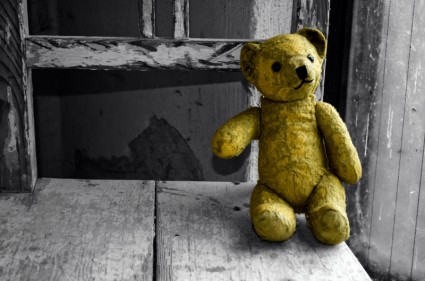
old_teddy_bear_

One day, a schoolmate came for an overnight visit.  Our grandson—somewhat abashedly, I think, now that he was eight years old—put his teddy-bear aside, out of sight of his visitor.

“Don’t you want your teddy?” his mother whispered quietly before turning off the light.

“Not tonight,” came the muted reply.  So the teddy-bear was placed in the back of the closet.  And forgotten.

Some months later, in the company of other friends who were visiting, our grandson came across the teddy-bear while searching in the closet for another toy.

“Hey!” exclaimed one of the other boys, picking it up curiously.  “Is this your teddy-bear, or what?”

“Nah,” our grandson said.  “It used to be mine when I was just a kid.”  He took it from his friend and tossed it carelessly back in the closet.

A few days later, his mother asked him about the teddy-bear when he came home from school with his friends in tow.

“I’m packing up some stuff for the church bazaar this coming weekend,” she said.  “I thought I’d throw in your teddy-bear, unless you still want it.”

With a quick glance at his friends, our grandson said, “I don’t want it.  You can give it away.”

So, the friendship died.  And our grandson didn’t seem to miss his oldest friend; not, at least, until the day of the bazaar.

bazaar2

Wandering among the rows of tables with his Nana and me, idly fingering his only dollar, he heard a woman nearby, scolding her toddler son.

“No!” she told him firmly.  “I told you we can’t buy it.  Now stop your crying!”

Our grandson moved closer.  And there on the table, all but reaching out to the crying child, was his old teddy-bear.  Alone, without his friends around, our grandson looked almost ashamed that the teddy-bear should even be there.  He stared at his old friend for several moments, until, seized by impulse, he proffered his dollar to the saleswoman behind the table, grabbed up the teddy-bear, and took it to the little boy.

“Here,” he said, gruffly.  “He used to be mine, but now he’s yours.  Hold on to him.”

The youngster did.  And the teddy-bear, resurrected, wrapped his arms around his new little friend.

As we walked away, our grandson looked at me.  “What’s wrong, Gramps?  Have you got tears in your eyes?”

I lied and said no.

Trusty Sidekick

As a young boy, I loved the Saturday afternoon matinees at our neighbourhood movie theatre.  Whenever I could earn or scrounge the twenty-five cents needed for admission, popcorn, and a soft drink, I’d be there, wide-eyed in the dark, lost for a couple of hours in the fantasies played out before me.

The matinees usually consisted of a serialized short, with a cliff-hanger at the end of every episode, a cartoon, and a main feature.  At some point along the way, all but the serials began to appear in colour.  Imagine!

My favourites were westerns—cowboys and Indians, as we thought of them in those innocent, bygone days—and I quickly developed a fondness for the rugged heroes who rode the purple sage.

In the early fifties, my parents acquired a television, black and white, of course, and Saturday mornings after breakfast became prime viewing time.  With a lineup of westerns and cartoons, it was almost as good as being at the movies.  I still remember my parents turning the TV off if I was still in my pyjamas, or if my bed wasn’t made, when I settled on the carpet to watch.

It wasn’t long ‘til I realized that every cowboy hero had a trusty sidekick.  And years before I became aware of such concepts as racism or ageism, those sidekicks were men of diverse ethnicity, many of them old enough to be grandfathers.  With perhaps one exception, there were no women.

cowboy pic

The Lone Ranger, my ultimate hero, had Tonto, an American Indian.  Hopalong Cassidy had ‘California’ Carlson, a bewhiskered, bowlegged geezer.  And the Cisco Kid had Pancho, both Hispanics with huge sombreros.

There were others, as well.  Gene Autry, with ‘Smiley’ Burnett, and later Pat Buttram; ‘Wild Bill’ Hickok, with ‘Jingles’ P. Jones; and Roy Rogers, with ‘Gabby’ Hayes, and later Pat Brady.  Rogers, the self-styled ‘King of the Cowboys’, also had the only female sidekick, Dale Evans (who, off-screen, was his wife).

The heroes were always the stars of their movies and TV shows, of course, while the sidekicks played supporting roles.  And for a long time, I—being impressionable and loving attention—imagined I was the star in a real-life ‘movie’ of my own, assuming all around me were my supporting actors.  Parents, siblings, friends—all trusty sidekicks, playing out their backup roles.

It never occurred to me back then that others might not feel the same way.  For a long time, I didn’t perceive myself as a supporting actor in someone else’s story.  Egocentricity, I learned years later, is one of the stages children pass through on their way to maturity; but apparently, I took my own sweet time on that journey.  I was blessed, I now realize, with family and friends who either didn’t care about my delusions of greatness, or simply tolerated my selfish illusions out of the goodness of their hearts.

Eventually, the truth dawned that it was a fallacy to suppose I was the lead actor in everyone else’s movies.  I came to realize that all of them were, legitimately, the stars of their own stories, and I, at best, a trusty sidekick—or, in some cases, merely a bit-player.

Getting married firmly cemented that truth for me, and becoming a father further reinforced it.  I came to know the importance of being there for those dear to me, in effect earning their support in return, rather than just expecting it.

My lingering love of movies has me glued every year to telecasts of the Academy Awards, when the year’s best performances and productions are honoured by the industry.  Oscars for Best Actor and Best Actress seemed to me the most coveted prizes when I first began to tune in.  But my perception has shifted over the years.

My grandchildren, five in all, are leading rich, exciting lives as they move from childhood to adolescence, discovering all life has to offer.  They love me, and I them, but I’m hardly relevant anymore to their everyday experiences.

My daughters are mature, liberated women, pursuing rewarding careers alongside their husbands.  They love me, too, but I orbit their stars now, not the reverse.

And my wife?  Well, she remains the epitome of an autonomous woman—secure enough to keep seeking new adventures, caring enough to reach a hand back for me, her trusty sidekick.

That egocentric world I once carelessly inhabited is gone forever.  At a point now where I have more yesterdays than tomorrows, I find security and an abiding comfort in being part of the cast in my loved-ones’ life-movies.

And I wonder how different a world we might have if every person on the planet—regardless of race, gender, religious belief, sexual orientation, political leaning—could win an award as Best Supporting Actor, or Best Supporting Actress, in the lives of everyone around them.

That’s an Oscar I would happily accept!

Oscar pic

Tracks in the Sand

One long-ago February, when winter’s white enveloped the north, one of our daughters came with her family to visit us in Florida.  The favourite activity for our grandson and granddaughter (the third of the clan being still an infant, unable to express her opinion) was going to the ocean, to the beach.

Our usual routines were fairly standard.  We’d park and unpack the car, each of us carrying the beach necessities according to our age and abilities.  We’d trudge the access path, through the dunes adorned with sea oats, pass through the rickety snow fence, and pick a spot that suited us all.

In short order, the umbrellas would be unfurled, the chairs unfolded, the blankets spread, and the toys strewn across the sand.  Peace would reign for Nana and Grandpa, watching the sleeping baby while her parents and older siblings hit the water.

beach-sand-grass-sunshine_tn2

On one such occasion, a small incident occurred which didn’t have much significance at the time.  In retrospect, however, it has become quite meaningful for me.

My daughter, my wife, and I embarked on a walk along the beach after the kids had finished splashing in the ocean.  Their dad stayed with them, helping build grand castles in the sand.

We decided to hike through the dunes on the way out, and come back along the shoreline.  I led off, sinking ankle-deep into the soft sand, feet clad in sandals to protect from the heat and the sandspurs.  After a few minutes, we came upon tracks in the sand, apparently made by some small creature, perhaps a mole.

What made the discovery unusual was that they suddenly stopped in a small depression in the sand, as if the mole had simply vanished.  The tracks ended without a trace.

My daughter suggested what might have happened.  The mole, she reckoned, had been taken by a predator, likely one of the falcons that frequent the area.  Indeed, on closer inspection, we could detect brush-marks in the sand, caused by the beating of a bird’s powerful wings.

We wended our way slowly, backtracking along the poor victim’s trail.  It occurred to me that, a scant few yards before the depression in the sand, the mole would have had no inkling it was about to die.  It was alive until it wasn’t.

Apparently, though, it knew it was under attack, for we found another, earlier depression in the sand where the bird had struck unsuccessfully.  The mole had jumped sideways, scurried under the protection of some sea-oats, then emerged again to flee along the sand.

Our backtracking ended when the trail curled away from the beach, into dense, long grasses, whence the mole had come.  We soon forgot about it as we continued our stroll, eventually heading back along the water’s edge to our grandchildren.

A few days later, I chanced to hear someone on the radio airily proclaiming that, if we all discovered the world was to end tomorrow, telephone lines everywhere would be jammed by people calling home to say all those things they had forgotten to say while there was still time.  Social media sites on the internet would crash from the traffic.  It made me think again of the mole whose tracks we had seen in the sand.

When it left its burrow for that final time, did it have its life in order?  Had it said all those things that matter to those who matter?  Or were there things it had left undone that should have been looked to sooner?

And I thought of myself.  Does my journey through life leave tracks in the sand for some other eye to see?  Am I subject to a mortal strike from some hidden foe?  And if, or when, it happens, am I prepared and at peace with those who care about me?

When I got right down to it, I didn’t see much difference between that mole and me.  Except one.  I’m still making tracks in the sand.  I still have time to ready myself for whatever is to come, and to be at peace with all who matter.

Such are the thoughts that arose as a result of a stroll along a sunny beach in Florida.

Fathers, Sons, and Trains

Again this year, I know I’ll receive warm hugs and kisses from my daughters in recognition of yet another Fathers’ Day, my forty-fifth such occasion.  It never grows old.

We dads grow old, however, despite our best efforts.  And in so doing, we lose our own fathers as they board the last train to glory, to borrow from Arlo Guthrie.  My dad departed the station more than a dozen years ago, but he remains with me almost daily in my thoughts.  And never more so than on Fathers’ Day.

When I was a young boy, he would often take me to local railroad crossings to watch the big steam locomotives and their endless caravans go storming by.  I treasured those occasions because I would have his undivided attention, a not-so-frequent circumstance in a family that eventually numbered five children.  He enjoyed the time with me, too, I’m sure; but he loved those trains even more than I, a boyhood fascination he never lost.  He was truly a railwayman, if only in his dreams.

https://s-media-cache-ak0.pinimg.com/736x/23/67/c0/2367c020ad92968a83fc8070d32a375d.jpg

Not once did it occur to me as a lad to ask him if his own father had taken him to see the trains, so caught up with the spectacle was I.  I’ve often wondered since if he might have been fondly recalling such times with his dad, even as he was standing beside his son.

At the time of his passing, I wrote these lines to commemorate what he meant to me, and they comfort me still—

The Railwayman

You’d take me down beside the rails to watch the trains go storming by,

And tell me all those wond’rous tales of engineers who sat on high,

In cabs of steel, and steam, and smoke; of firemen in their floppy hats,

The coal they’d move, the fires they’d stoke, as o’er the hills and ‘cross the flats

The locomotives huffed and steamed, their whistles blowing long and loud.

And one small boy, he stood and dreamed beside his daddy, tall and proud.

Terrifying monsters were they, bearing down upon us two, who

Felt their force on that steel highway, hearts a-racing—loving, true.

I’d almost flinch as on they came toward us, with their dragon-face

A-belching, spewing, throwing flame and steam and smoke o’er ev’ry place.

But you’d stand fast beside the track, and, oh! the spectacle was grand.

So, unafraid, I’d not step back, ‘cause you were there holding my hand.

Oh, Railwayman, oh, Railwayman, I’m glad you knew when you grew old,

How much I loved you—Dad, my friend, who shared with me your dreams untold.

Oh, Railwayman, oh, Railwayman, if I, beside you once again,

Could only stand safe in your hand, awaiting with you our next train.

Now, all aboard, Dad…all aboard!

Happy Fathers’ Day to all who, like me, are both fathers and sons.  We are blessed.


Mothers’ Day Again

Another Mothers’ Day has passed, the sixth since my own mother passed away.  The living mothers in my family number nineteen in all: my wife, two daughters, three sisters, two sisters-in-law, ten nieces, and one grand-niece.  All were recognized and honoured by their children, many on social media, and it was lovely to witness.

But I still miss being able to pay homage to my own mother each year—to hear her voice, see her smile, smell her perfume; and mostly, to feel her arms around me.  We knew each other for sixty-seven years, with nary a breach in the trust and love we shared, and my world is emptier without her.

On her ninetieth birthday, four years before she died, I wrote this poem to convey what she had meant to me for so long.  I likened her to a tree that sheltered me until I dared to strike out on my own, and even thereafter.

At the time, I thought I had written it for her; but now, I suspect, I wrote it for me.


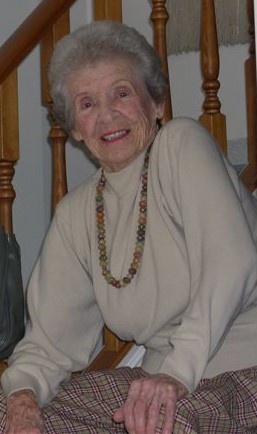
Mum April 04

My Tree

For ninety years and more, my tree has spread her boughs across my yard,

Festooned with leaves providing shade, standing tall and proud, on guard.

When I was young, and climbed up high into my tree, carefree and fleet,

Her branches hugged me safe and close, held fast my hands, secured my feet.

As I grew braver, I would stray beyond the fence that kept me in.

But at day’s end, I’d rush back home to settle ‘neath my tree again.

Her boughs would gently bend and blow about my head, and whisper soft,

And tell me of the wide world they had seen from high aloft.

Sometimes she’d bend, tossed by storms that raged around us, blowing fierce,

Yet, ne’er a storm could match her strength, nor through her loving shelter pierce.

Then, all too quickly, I was gone to seek a new yard, far away.

Yet always I’d return to hug my tree, and feel her gentle sway.

Too big by then to climb once more her branches, high o’erhead,

I still found comfort there, among the fallen leaves my tree had shed.

 ~  ~  ~  ~  ~

Past ninety years, yet still she stands, her canopy now drooping low,

Creaking, bending, in the winds that shake her branches, to and fro.

As spring and summer fast have fled, and fall has turned her leaves to gold,

My tree displays a majesty that can be neither bought, nor sold.

And I’ll remember all my days her love, like ripples in a pond,

Because I’m sheltered now by younger trees—the seeds she spawned.

For ninety years and more, my tree has spread her loving boughs each day

Above my head, to nurture me, and gently send me on my way.